

Orthotics for Nursing Professionals: The Complete Relief & Prevention Guide
Evidence-backed guidance for nurses, RNs, surgical techs, and all healthcare workers on their feet all shift long.
Orthotics for nursing professionals are custom-fabricated or supportive shoe inserts engineered to counteract the extreme physical demands placed on healthcare workers' feet and lower limbs during long clinical shifts. If you are a nurse, surgical technician, or hospital physician, foot pain is not a minor inconvenience — it is a documented occupational hazard that shortens careers and degrades patient care performance.
According to research published in the Journal of Occupational Health, nurses walk an average of 4 to 5 miles per 12-hour shift on hard hospital floors. That level of sustained mechanical stress makes foot and lower limb disorders one of the leading occupational health complaints across every healthcare specialty — from bedside nursing to operating room staff. Critically, the consequences extend well beyond sore feet: chronic foot pain accelerates musculoskeletal injury, impairs reaction times, and is a primary driver of early career exit in the nursing profession.
This guide covers everything a nursing professional needs to know about orthotics — what they are, how they work, which conditions they address, how to get them, what features to insist on, and how to make them last. It is the most thorough resource available on this topic, built specifically for the demands of healthcare work. For a deeper walkthrough, see our Posted Heel Orthotics: Meaning, Benefits & Who Needs Them.
The Occupational Reality: Why Nurses Are at Extreme Risk for Foot Problems
Nursing demands a physical output that rivals many athletic occupations — except nurses perform it in restrictive footwear, on concrete and linoleum floors, without recovery time. Unlike athletes who rotate shifts and have off-seasons, nurses often work three to five consecutive 12-hour shifts per week. The cumulative mechanical load is enormous.
The factors that make nursing uniquely hazardous for the feet include:
- Hard, unforgiving surfaces: Hospital floors — polished concrete, ceramic tile, and laminate — offer zero shock absorption, transferring every footfall directly into joints and soft tissue.
- Prolonged standing without movement: Tasks like charting, administering IV medications, and surgical scrub holding require static standing, which generates more foot pressure than walking.
- Rapid, unpredictable movement: Emergency pivots, quick sprints to patient rooms, and frequent direction changes stress the plantar fascia, Achilles tendon, and ankle ligaments.
- Shift length: Standard 12-hour shifts with minimal seated rest periods mean feet rarely decompress. Each hour of standing adds incremental tissue fatigue.
- Footwear limitations: Dress codes and infection control protocols restrict footwear choices, often pushing nurses toward shoes that prioritize appearance or easy-clean surfaces over biomechanical support.
- Body weight amplification: When walking, the force on the plantar fascia can reach 2 to 3 times body weight. At nursing's step volumes, even minor structural imbalances amplify into significant injury over time.
The predictable result is a high prevalence of occupational foot disorders. Studies consistently show that over 70% of nurses report regular foot or lower limb pain. The most common clinical presentations include:
- Plantar fasciitis — inflammation of the fibrous band along the foot's underside, causing stabbing heel pain that is worst with the first steps of each shift For a deeper walkthrough, see our Can customorthotics.com Help With Plantar Fasciitis Pain Relief?.
- Metatarsalgia — forefoot burning and pressure from repetitive load on the ball of the foot
- Arch collapse (adult-acquired flatfoot) — progressive loss of medial arch height from ligament fatigue
- Achilles tendinitis — tendon inflammation from overuse and inadequate calf muscle support
- Heel bursitis — inflammatory swelling of the bursal sac beneath the heel
- Bunion progression — lateral deviation of the big toe accelerated by improper footwear and biomechanical imbalance
- Stress fractures — microfractures in metatarsal bones from repetitive high-load impact
- Knee, hip, and lower back pain — secondary to foot misalignment traveling up the kinetic chain For a deeper walkthrough, see our Can Orthotics Help Relieve Knee Pain Effectively?.
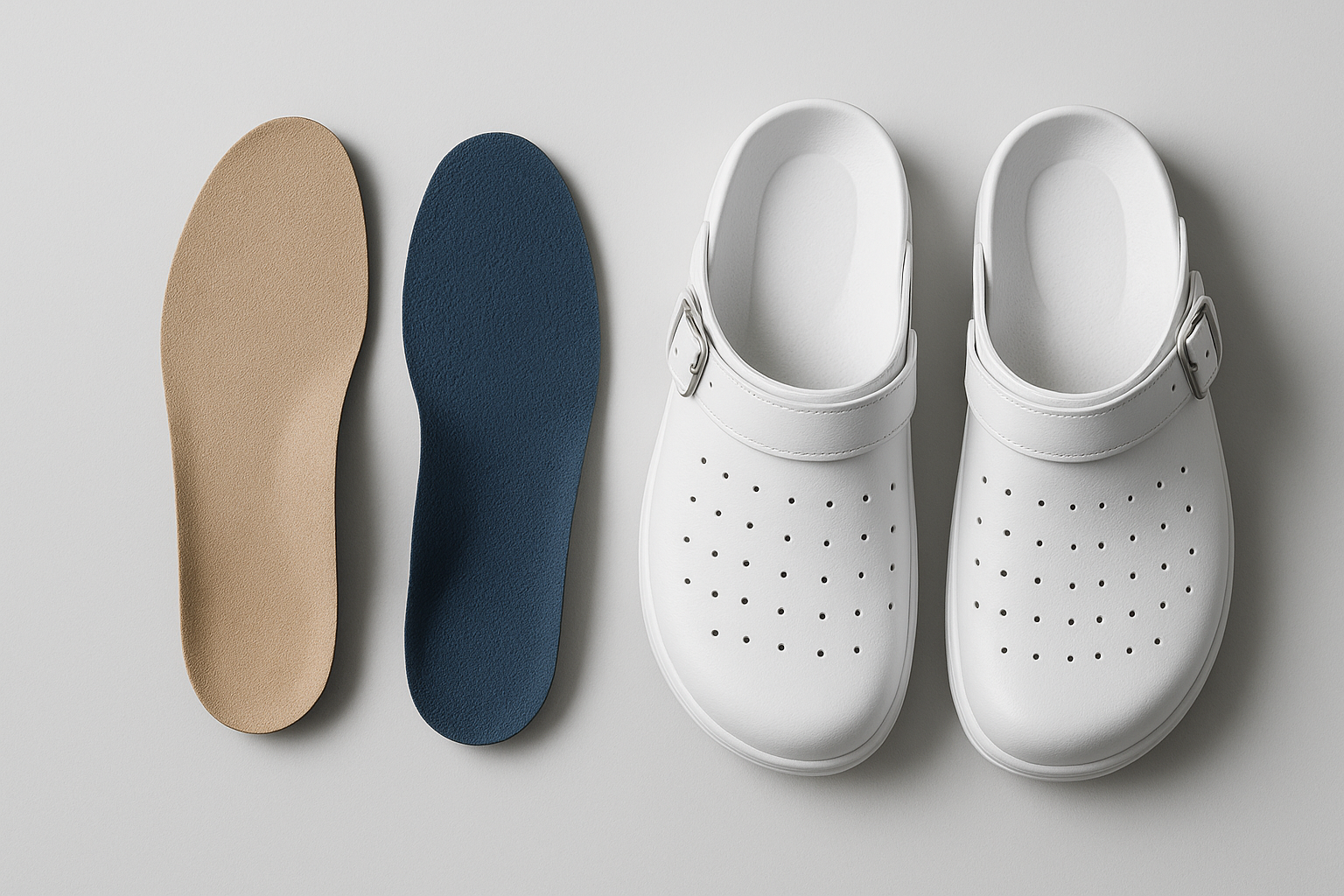
Custom orthotics for nursing professionals are designed to fit standard nursing footwear and provide all-day biomechanical support. For a deeper walkthrough, see our Postural Support Orthotics: Relief & Better Alignment.
What Are Orthotics for Nursing Professionals? A Clear Explanation
Orthotics for nursing professionals are prescription or prefabricated shoe inserts that correct biomechanical imbalances, redistribute plantar pressure, cushion high-impact zones, and support the foot's natural architecture during prolonged standing and walking. Unlike generic drugstore insoles, professionally designed orthotics are engineered to interact with your specific foot anatomy — not a statistical average.
There are three main categories:
1. Custom Functional Orthotics
Fabricated from individual molds of each patient's feet by a licensed podiatrist. Designed to control abnormal motion — particularly overpronation — using semi-rigid or rigid materials. These provide the highest level of biomechanical correction and are the gold standard for nurses with structural foot problems or chronic pain.
2. Custom Accommodative Orthotics
Also custom-fabricated, but focused on pressure redistribution and cushioning rather than motion control. Made from softer EVA or viscoelastic materials. Ideal for nurses with diabetic foot concerns, severe metatarsalgia, or extreme pressure sensitivities.
3. Prefabricated (Over-the-Counter) Insoles
Mass-produced for average foot dimensions. Can provide temporary symptomatic relief but lack the precision to correct underlying structural issues. Generally appropriate only as a short-term measure while awaiting custom devices, or for nurses with no existing biomechanical problems.
For a detailed breakdown of which foot conditions each orthotic type addresses, the team at customorthotics.com has published a comprehensive guide on what foot problems custom orthotics can help with. For a deeper walkthrough, see our Does CustomOrthotics.com Provide Orthotics Designed for Heel Spurs?.
Custom vs. Over-the-Counter: Why the Difference Is Critical for Nurses
A nurse logging 12,000 to 18,000 steps per shift on hard floors is not an average user. Generic insoles are designed for average activity levels and average foot shapes. The engineering gap between a mass-produced foam insert and a custom-fabricated orthotic is significant:
Research supported by the American Orthopaedic Foot and Ankle Society consistently demonstrates that custom orthotics outperform generic insoles for chronic foot conditions. For nurses, where the demands are extreme and the consequences of inadequate support compound daily, this distinction is not trivial — it is clinically significant.
Full-Body Benefits: How Orthotics for Nursing Professionals Help Beyond the Feet
The feet are the base of the body's kinetic chain. Every structural deficiency at the foot level — an uncorrected overpronation, a collapsed arch, an unbalanced heel strike — transmits compensatory stress upward through the ankles, knees, hips, and lumbar spine. Correcting the foundation with properly fitted orthotics for nursing professionals therefore produces benefits that extend throughout the entire body.
Nurses who use well-fitted orthotics consistently report:
- Dramatic reduction in heel and arch pain, especially plantar fasciitis flares that previously made the start of every shift excruciating For a deeper walkthrough, see our Plantar Fasciitis Orthotic Solutions That Actually Work.
- Decreased forefoot pressure and relief from metatarsalgia burning during long stretches of standing
- Reduced knee pain associated with overpronation and patellofemoral stress syndrome For a deeper walkthrough, see our Orthotics for Knee Pain: Relief, Causes & Best Fit Guide.
- Hip alignment improvement that reduces bursitis and iliotibial band tightness
- Significant lower back fatigue relief during and after 12-hour shifts
- Improved energy levels — less effort spent compensating for poor alignment means more physical reserves at shift's end
- Better balance and stability during rapid pivots and emergency responses
- Prevention of chronic conditions that would otherwise require injections, physical therapy, or surgical intervention
📊 Important statistic:
A study in the International Journal of Nursing Practice found that nurses using foot orthotics reported a 38% reduction in musculoskeletal discomfort scores after eight weeks of consistent use — with the greatest improvements seen in heel, arch, and lower back regions.
For nurses in standing-intensive roles across all healthcare specialties, this comprehensive resource explains the full mechanism: custom foot supports for standing jobs — a full guide.
Orthotics for Every Healthcare Role: Not Just Bedside Nurses
While "orthotics for nursing professionals" most commonly refers to registered nurses and LPNs, the foot demands of hospital work affect every clinical role. Custom orthotics deliver measurable benefits across the full spectrum of healthcare occupations:
🏥 Surgeons & Surgical Technicians
OR staff often stand completely stationary for 3 to 8+ hour procedures on hard surgical suite floors. Static standing generates sustained plantar pressure — orthotics with metatarsal pads and strong arch support are essential.
🚨 Emergency Department Staff
ER nurses and physicians face the most unpredictable movement patterns — bursts of sprinting followed by static charting. Orthotics with reinforced lateral support and responsive cushioning handle this dynamic load cycle best.
🧪 Laboratory & Pharmacy Staff
Lab technicians and pharmacists stand at benches for extended periods, creating a similar static load profile to OR staff. Cushioned accommodative orthotics with full-length support address their specific needs.
🩺 Hospitalists & Attending Physicians
Rounding physicians walk extensive distances across hospital campuses. The combination of high step counts and dress shoe requirements makes orthotics that fit formal footwear especially valuable.
🦽 Physical & Occupational Therapists
Therapists spend shifts actively assisting and moving patients, combining high step counts with physical exertion. Semi-rigid orthotics that support both motion control and cushioning address this combined demand.
🧹 Nursing Assistants & Care Aides
CNAs often have the highest physical activity levels of any hospital staff, performing patient transfers, bathing, and repositioning on top of constant walking. Durable, shock-absorbing orthotics are particularly critical for this group.
How to Get Custom Orthotics as a Nursing Professional: Step-by-Step
Obtaining professional-grade orthotics for nursing professionals is a structured process, but it does not have to be time-consuming or disruptive to your schedule. Here is the full pathway:
-
Schedule a consultation.
Begin with a free phone consultation with a licensed podiatrist. Describe your current symptoms in detail — heel pain onset, arch soreness timing, forefoot burning during or after shifts. Also share how many hours you work per shift, your typical footwear, and your primary walking surface. This context allows the specialist to recommend the most appropriate orthotic type and material specification for your clinical environment before any assessment has even begun.
-
Undergo a comprehensive foot and gait assessment.
The podiatrist evaluates your arch type (flat, neutral, or high), heel alignment, degree of pronation or supination, and the mechanics of your gait cycle. This biomechanical assessment identifies the root structural causes of your pain — not just the symptoms — and forms the diagnostic basis for your orthotic prescription. A thorough assessment distinguishes a rigid flat foot from a flexible one, which changes the orthotic design significantly.
-
Create a precise foot impression mold.
An accurate three-dimensional impression of your feet is captured — either in-clinic with foam casting or through a mail-in foam impression kit. This mold records the exact contours of your plantar surface, arch height, heel shape, and forefoot width. It is the engineering blueprint from which your orthotics are fabricated. No generic approximation can replicate this level of anatomical precision.
-
Fabrication and material selection.
Based on your assessment findings, the podiatrist selects appropriate shell materials (polypropylene, graphite carbon fiber, EVA, or hybrid composites) and top cover materials (leather, moisture-wicking fabric, or cushioned foam). The orthotic is then precision-fabricated to your mold specifications, with any condition-specific additions — metatarsal pads, heel wedges, or forefoot posting — incorporated at this stage.
-
Receive your orthotics and begin the break-in protocol.
Once your custom devices arrive, follow a structured break-in schedule: start by wearing them for 2 to 3 hours on your first day, increasing by 1 to 2 hours daily. This gradual approach allows the intrinsic foot muscles, plantar fascia, and posterior leg muscles to adapt to the corrected alignment without soreness. Most nurses achieve full-shift comfort within 10 to 14 days. Do not attempt to wear new orthotics through a complete 12-hour shift on day one.
-
Schedule follow-up assessments annually.
Return to your podiatrist for annual check-ins, or whenever you notice changes in comfort, fit, or the recurrence of symptoms. Foot anatomy can shift gradually — weight changes, pregnancy, and aging all alter arch height and heel pad thickness. Annual review ensures your orthotics continue to perform optimally and can be refinished, adjusted, or replaced before small issues become clinical problems.
Remote Ordering: The Solution for Nurses With Demanding Schedules
Night shift nurses, travel nurses, and those in rural or underserved areas often cannot access local podiatric appointments. The podiatrist-owned team at customorthotics.com — with over 20 years of experience and an A+ BBB rating — has addressed this barrier with a fully remote ordering pathway. A professional foam impression kit is mailed directly to you. You complete the impression at home, return it, and your fully custom orthotics are fabricated by experienced podiatric professionals and delivered to your door.
Every step is guided by expert staff who specialize in orthotics for healthcare workers. The result is professional-grade, fully custom foot support — without requiring time off or multiple clinic visits. This is especially valuable given that nurses are among the professionals least likely to prioritize their own healthcare appointments while caring for others.
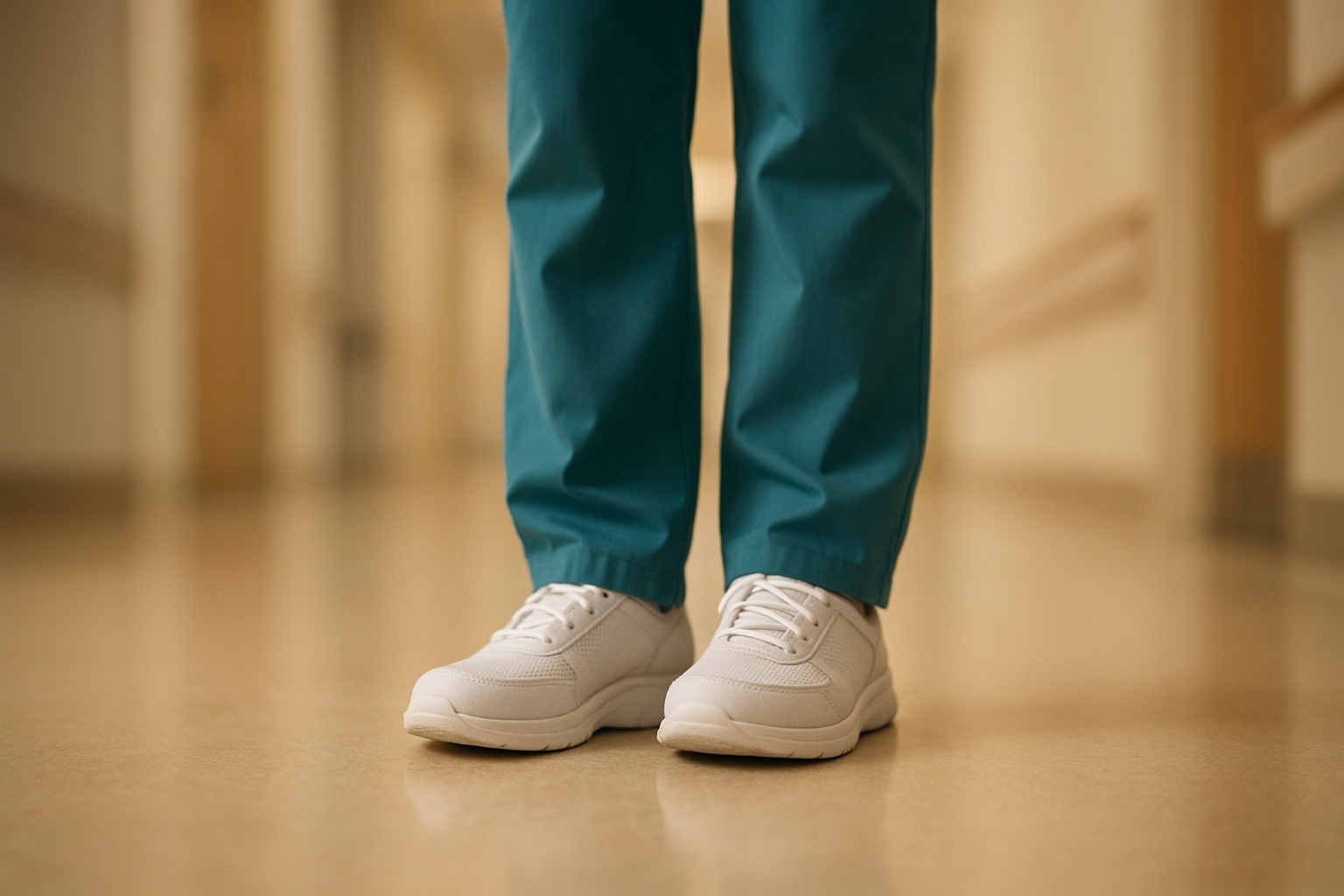
Properly fitted orthotics allow nurses to complete long shifts with less fatigue and reduced risk of long-term musculoskeletal injury.
What to Look for in Orthotics Designed for Healthcare Workers
Not all orthotics are appropriate for nursing. Healthcare-specific demands require a distinct combination of features. When evaluating orthotics for nursing professionals, insist on the following:
- Deep heel cups (18mm or greater depth): Cradle the heel's fat pad and prevent it from spreading, dramatically reducing impact force transfer on each step across hard floors.
- Precisely matched arch support: The arch profile must correspond to your actual arch type. A support designed for a neutral arch will irritate a high arch and under-support a flat foot. This is where custom fabrication is irreplaceable.
- High-density, durable cushioning materials: EVA, polyurethane, or viscoelastic foam with appropriate durometer ratings. The material must resist compression fatigue — cheap foam bottoms out quickly under the step volumes nurses generate.
- Metatarsal pad placement: A properly positioned metatarsal pad redistributes forefoot pressure proximal to the metatarsal heads, directly reducing metatarsalgia pain and forefoot burning during extended standing.
- Low-profile shell design: Orthotics for nurses must fit comfortably inside nursing clogs, athletic-style work sneakers, and supportive closed-toe shoes without elevating the heel excessively or compressing the toe box.
- Moisture-wicking, antimicrobial top cover: A breathable surface layer manages the heat and perspiration generated during a 12-hour shift. Antimicrobial treatment prevents odor and bacterial buildup in clinical environments.
- Rearfoot and forefoot posting options: Wedge postings applied to the heel or forefoot of the shell correct varus or valgus alignment — particularly important for nurses with significant overpronation or supination.
- Durable shell material appropriate to body weight and activity: Polypropylene is the standard for most nurses. Carbon fiber graphite shells offer a thinner profile for dress-shoe-style footwear without sacrificing support. Heavier individuals or those with very high step counts may benefit from reinforced composite shells.
Pairing Orthotics With the Right Nursing Footwear
Even the most precisely fabricated orthotic is limited by the structural quality of the shoe it sits inside. A well-designed orthotic in a structurally collapsed shoe will fail to deliver its intended correction. When selecting footwear to pair with your orthotics, look for:
- A firm, non-flexible midsole (the shoe should not bend easily through the middle)
- A removable factory insole (to accommodate orthotic volume)
- Sufficient toe box width for your foot type
- A heel counter that does not collapse under lateral pressure
- A sole material with adequate grip for wet clinical floors
For guidance on matching orthotics to different footwear contexts, this resource covers the subject thoroughly: the best orthotics for everyday use — a complete guide. For a deeper walkthrough, see our Podiatrist Recommended Insoles Worth Trying: A Complete Buyer's Guide.
Condition-Specific Guide: Which Orthotics Work Best for Each Nursing Foot Problem
Different foot conditions require different orthotic approaches. Here is a condition-by-condition breakdown for nursing professionals:
Plantar Fasciitis
Best orthotic approach: Semi-rigid functional orthotic with a deep heel cup and medial arch support that offloads tension from the plantar fascial insertion at the calcaneus. A heel cushion or gel pad add-on reduces morning strike pain. Plantar fasciitis is the most common condition in nursing professionals and responds exceptionally well to custom orthotic intervention.
Metatarsalgia
Best orthotic approach: Full-length orthotic with a precisely placed metatarsal pad proximal to the metatarsal heads. This redistributes forefoot pressure across a broader plantar surface area, directly relieving the burning and aching at the ball of the foot during prolonged standing.
Flat Feet (Overpronation)
Best orthotic approach: Rigid or semi-rigid functional orthotic with a medial heel wedge (rearfoot varus posting) and full medial arch support. The posting corrects the inward rolling of the heel, preventing the arch collapse that drives knee and hip pain secondary to flat-footedness.
High Arches (Supination / Underpronation)
Best orthotic approach: Cushioned accommodative orthotic with a high lateral arch fill and forefoot cushioning. High-arched feet are rigid shock absorbers — soft accommodative support compensates for the arch's inability to flatten and dissipate impact forces naturally.
Achilles Tendinitis
Best orthotic approach: Semi-rigid orthotic with a slight heel lift (3 to 6mm) to reduce tension on the Achilles tendon insertion, combined with arch support that prevents the overpronation that often precipitates Achilles overloading. The heel lift reduces the excursion demand on the tendon with each step.
Bunions (Hallux Valgus)
Best orthotic approach: Full-length accommodative orthotic that off-loads the first metatarsophalangeal joint and corrects the underlying overpronation that drives bunion progression. A toe separator or forefoot spacer can be added for additional relief. Orthotics do not reverse a bunion but can significantly slow progression and reduce pain.
Special Considerations: Orthotics for Pregnant Nursing Professionals
For nurses who are pregnant, foot health enters a critical category of its own. Pregnancy triggers the release of relaxin — a hormone that increases ligament laxity throughout the body, including the plantar fascia and intrinsic foot ligaments. The result is often progressive arch flattening, increased foot width, and a significant increase in plantar pressure — all occurring simultaneously with the added physical demands of nursing shifts.
Pregnant nurses who remain on their feet during pregnancy without orthotic support risk:
- Permanent arch reduction that persists postpartum
- Severe plantar fasciitis that worsens progressively through the third trimester
- Accelerated lower back and sacroiliac pain from altered gait mechanics
- Edema-related foot swelling that causes shoe fit problems and increased pressure
Custom orthotics during pregnancy are not merely helpful — they are often clinically necessary for nurses continuing to work through their second and third trimesters. For a complete exploration of this topic, see: custom orthotics for pregnancy comfort and support guide. For a deeper walkthrough, see our Children's Custom Orthotics: A Parent's Complete Guide.
Caring for Your Orthotics: Maximizing Lifespan on the Clinical Floor
Nurses put more mileage on their orthotics than virtually any other occupational group. Proper maintenance is essential to maximizing device lifespan and sustained performance:
- Clean weekly: Remove orthotics from shoes and wipe down with a damp cloth and mild soap. Allow to air dry completely — never use direct heat sources, which degrade EVA and adhesive bonds.
- Rotate between two pairs of shoes: Allowing the orthotic to fully decompress and dry between shifts prevents compression fatigue and microbial buildup.
- Inspect the top cover quarterly: The top cover typically wears faster than the shell. Many podiatrists can replace the top cover at a fraction of the cost of a new orthotic, extending device life significantly.
- Replace when the shell shows visible deformation: If the orthotic no longer lies flat, shows cracks, or has lost its shape, it is no longer providing the designed correction — replacement is necessary.
- Do not share orthotics: Custom orthotics are fabricated to your foot mold. Using someone else's device — even briefly — can create new alignment problems. For a deeper walkthrough, see our Can I Order Custom Orthotics Online?.
- Store in a dry location: Prolonged moisture exposure degrades adhesives and some shell materials. Remove orthotics from damp shoes after each shift.
With proper care, high-quality custom orthotics for nursing professionals typically last 2 to 5 years under clinical workload. Nurses working five 12-hour shifts per week may be at the lower end of that range, making annual podiatric check-ins especially important.
Understanding the Cost of Custom Orthotics for Nursing Professionals
The investment in custom orthotics for nursing professionals should be evaluated against the total cost of the alternative — ongoing OTC insole purchases, physical therapy co-pays, anti-inflammatory medications, lost shifts from injury, and in severe cases, surgical intervention. The economic case is compelling:
Cost Comparison Over 3 Years
- Custom orthotics (quality provider): $200–$800 one-time, lasting 3–5 years. Cost per year: $65–$160. For a deeper walkthrough, see our How Do I Order Custom Orthotics Online?.
- OTC insoles (quality brand, replaced every 3–6 months): $40–$80 × 2–4 replacements/year = $80–$320/year.
- Physical therapy for plantar fasciitis: $150–$300 per session × 6–12 sessions = $900–$3,600 per episode.
- Plantar fasciitis cortisone injection: $200–$400 per injection, with multiple injections often required.
- Surgical intervention (plantar fasciotomy): $5,000–$15,000+ depending on coverage and facility.
Many health insurance plans cover custom orthotics in full or in part when prescribed by a licensed podiatrist for a diagnosed foot condition. FSA (Flexible Spending Account) and HSA (Health Savings Account) funds can also be applied to custom orthotic purchases. Check your specific plan details and ask your podiatrist for appropriate diagnosis coding to maximize coverage.
Quick Answer: Orthotics for nursing professionals are professionally designed shoe inserts — ideally custom-fabricated from individual foot molds by a licensed podiatrist — that provide targeted arch support, heel cushioning, metatarsal pressure relief, and full biomechanical correction. They reduce foot pain, lower limb fatigue, and the risk of chronic musculoskeletal conditions caused by long shifts on hard clinical floors. For nurses, they are among the most cost-effective occupational health investments available.
Frequently Asked Questions About Orthotics for Nursing Professionals
What are orthotics for nursing professionals?
Orthotics for nursing professionals are custom-fabricated or prefabricated shoe inserts designed to support, cushion, and biomechanically align the feet of healthcare workers who spend long shifts standing and walking on hard clinical floors. They address conditions including arch pain, heel pain, plantar fasciitis, metatarsalgia, and the secondary knee, hip, and lower back problems that result from foot misalignment.
Why do nurses need orthotics more than most other workers?
Nurses walk an average of 4 to 5 miles per 12-hour shift on hard, shock-absorbing floors. Combined with the demands of rapid pivoting, emergency response sprints, and prolonged static standing during procedures, the cumulative mechanical load on a nurse's feet far exceeds that of most occupational groups. This makes them highly susceptible to plantar fasciitis, arch collapse, metatarsalgia, and Achilles tendinitis — all conditions that orthotics for nursing professionals directly prevent and relieve.
Are custom orthotics better than over-the-counter insoles for nurses?
Yes, significantly. Custom orthotics are fabricated from individual foot molds, providing precise arch support, heel alignment, and pressure distribution specific to your unique foot anatomy. OTC insoles are engineered for statistical averages and cannot correct underlying biomechanical problems. For nurses logging thousands of steps per shift, this distinction is clinically meaningful — generic insoles provide temporary comfort at best, while custom orthotics address root causes.
What foot conditions do orthotics help nurses with?
Orthotics for nursing professionals effectively address plantar fasciitis, metatarsalgia, flat feet and arch collapse, high arches, Achilles tendinitis, heel bursitis, bunion progression, stress fractures, and the secondary knee, hip, and lumbar pain caused by foot misalignment. Each condition benefits from a specific orthotic design — which is why a professional assessment is essential to match the device to the diagnosis.
How long do custom orthotics last for a working nurse?
High-quality custom orthotics typically last 2 to 5 years for nursing professionals, depending on shift frequency, body weight, and material quality. The top cover often wears faster than the shell and can be replaced separately to extend device life. Annual podiatric check-ins allow for timely adjustments before performance degrades.
Can orthotics fit inside nursing clogs, sneakers, and surgical shoes?
Yes. Custom orthotics for nursing professionals can be designed to fit a wide range of clinical footwear, including Dansko-style nursing clogs, athletic work sneakers, and clean-room surgical shoes. A podiatrist customizes the shell thickness and profile to match your specific footwear, ensuring a proper fit without crowding the toe box or elevating the heel uncomfortably.
How do I get custom orthotics as a nurse?
Start by consulting a podiatrist who will assess your foot structure, gait mechanics, and symptoms. At customorthotics.com, nurses can schedule a free phone consultation or order online using a mail-in foam impression kit, making the process fully accessible without requiring clinic attendance. This is particularly valuable for nurses with irregular schedules or those in areas without local podiatric services.
Do orthotics help with leg and back pain during nursing shifts?
Yes. The foot is the base of the body's kinetic chain. By correcting foot alignment and improving shock absorption, orthotics reduce the compensatory stress that propagates upward through the ankles, knees, hips, and lumbar spine. Nurses consistently report significant reductions in lower back and leg fatigue after transitioning to properly fitted custom orthotics.
What is the difference between rigid, semi-rigid, and soft orthotics for nurses? For a deeper walkthrough, see our What Are the Best Orthotic Options for Treating Plantar Fasciitis?.
Rigid orthotics (carbon fiber, hard polypropylene) provide maximum biomechanical correction for structural problems like severe overpronation. Soft orthotics (EVA, viscoelastic foam) focus on cushioning and pressure relief for conditions like metatarsalgia or diabetic foot. Semi-rigid orthotics combine a supportive shell with cushioned top cover materials — this design is the most commonly prescribed for nursing professionals because it balances correction with all-day comfort across high step volumes.
How much do custom orthotics for nurses typically cost, and does insurance cover them? For a deeper walkthrough, see our Which Podiatrist Owned Businesses Offer Custom Orthotics Online?.
Custom orthotics for nursing professionals generally range from $200 to $800 depending on materials, complexity, and provider. Many health insurance plans cover orthotics in full or in part when prescribed by a podiatrist for a diagnosed foot condition. FSA and HSA funds can also be applied. Over 2 to 5 years of use, the annual cost is typically lower than the combined cost of recurring OTC insole replacement, co-pays, and physical therapy.
Can orthotics prevent foot problems from developing in new nurses?
Absolutely. Orthotics used prophylactically from the start of a nursing career significantly reduce the cumulative mechanical stress that leads to plantar fasciitis, arch collapse, and Achilles tendinitis over time. Proactive foot support is far more effective and less costly than treating chronic pain after the structural damage has accumulated. New nurses are strongly encouraged to seek a baseline podiatric assessment before foot pain develops.
Are orthotics important for pregnant nurses specifically?
Yes — and critically so. Pregnancy-related hormonal changes cause ligament laxity throughout the foot, leading to arch flattening, increased foot width, and elevated plantar pressure. Pregnant nurses who continue working without orthotic support risk permanent arch reduction, severe plantar fasciitis, and accelerated lower back pain. Custom orthotics provide essential structural support for this uniquely vulnerable combination of occupational and physiological demands.
What should I look for when choosing orthotics as a nurse?
Prioritize custom fabrication from a licensed podiatrist, a deep heel cup (18mm+ depth), arch support matched to your specific arch type, high-density cushioning that resists compression fatigue, a metatarsal pad for forefoot pressure relief, a moisture-wicking antimicrobial top cover, and a low-profile shell that fits your clinical footwear without crowding. Avoid orthotics that rely solely on marketing claims rather than individual biomechanical assessment.
Conclusion: Your Feet Carry Every Patient You Treat
Orthotics for nursing professionals represent one of the most evidence-backed, high-return investments a healthcare worker can make in their long-term career health. The physical toll of nursing accumulates quietly — one 12-hour shift at a time, on floors that never give, in shoes that rarely provide enough. But the damage is not inevitable. Properly fitted, custom-fabricated orthotics address the root biomechanical causes of foot pain rather than masking the symptoms, delivering measurable relief that extends from the heel to the lower back and throughout every subsequent shift.
Whether you are a new nurse establishing your first clinical wardrobe, a seasoned RN managing a years-long battle with plantar fasciitis, a surgical technician standing motionless through six-hour procedures, or a pregnant nurse trying to safely complete your third trimester on the floor — the right orthotic support changes the daily experience of healthcare work in a way that nothing else can match.
The podiatrist-owned team at customorthotics.com — with over 20 years of specialized experience and an A+ BBB rating — brings genuine clinical expertise to every device they fabricate. Their remote ordering process is designed specifically for people like you: healthcare professionals who spend their days caring for others and rarely have time to care for themselves. A free phone consultation, a mail-in foot impression kit, and a pair of precision-fabricated orthotics delivered to your door. That is the full process.
Your feet carry you through every shift. Every patient. Every emergency.
Give them the professional support they deserve — and discover the difference that truly custom orthotics for nursing professionals make from your very first shift wearing them.