

Posted heel orthotics are custom-molded shoe inserts that use a precision-angled wedge built into the heel to correct how your foot strikes the ground with every step. Unlike generic insoles that only cushion the foot, a true posted heel actively realigns the rearfoot — the heel and ankle complex — before abnormal motion travels upward into the knees, hips, and lower back. This distinction matters because millions of people quietly live with heel pain, plantar fasciitis, and shifting arches that generic, off-the-shelf arch-support insoles were never engineered to fix. Below, we break down exactly what posted heel orthotics are, how the correction works in degrees and materials, who actually needs one, what it costs, and how the fitting process unfolds from first consultation to final adjustment — everything a shopper comparing store-bought insoles to true custom correction needs to know.
What Is a Posted Heel Orthotic?
A posted heel orthotic is a rigid or semi-rigid wedge attached to the underside of the heel section of a custom foot orthotic, angled to tilt the foot inward or outward before it fully contacts the ground. In simple terms, it works like a precision shim that redirects the way weight travels through your foot. This correction happens specifically at the rearfoot — the heel and ankle region — so the misalignment is controlled at its source rather than being allowed to travel up into the knees and hips.
Orthotics themselves are custom-made shoe inserts shaped from an individual's own foot, which sets them apart from generic, mass-produced insoles. According to Wikipedia's overview of orthotics, these devices are designed to support, align, or correct the function of movable body parts. A posted heel takes that idea a step further by adding a precise, measured angle instead of just a flat, cushioned shape. For a deeper technical breakdown of how this works, our complete guide to rearfoot posting covers the mechanics in far more depth, and our guide to why heel posts matter for foot health explains the everyday impact in plain language.
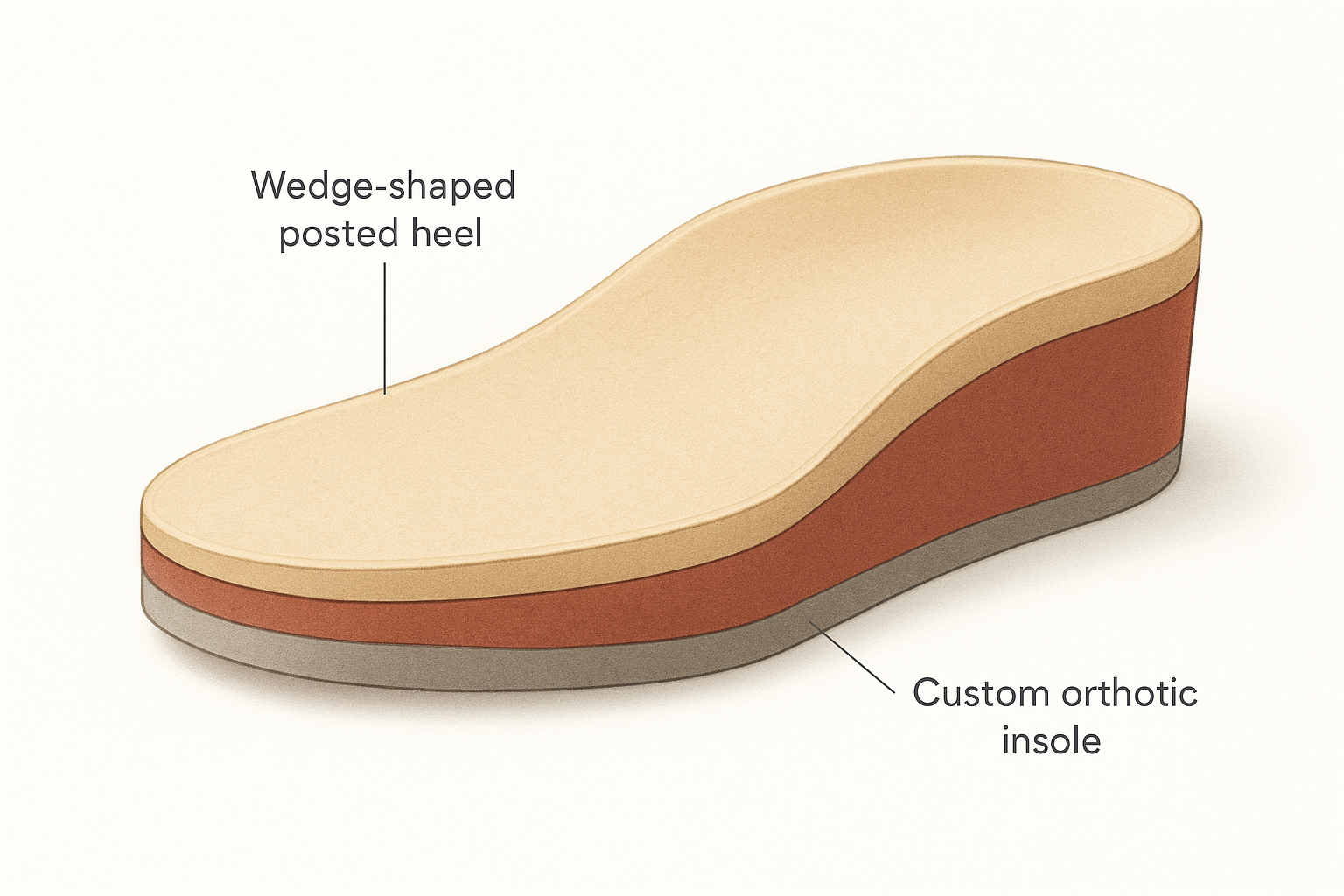
A posted heel adds a corrective wedge that changes how the foot contacts the ground.
How a Heel Post Corrects Foot Alignment
A heel post corrects alignment by controlling the direction and speed of the foot's natural rolling motion, called pronation. Normally, the foot rolls slightly inward with each step to absorb shock. However, excessive rolling — known as overpronation — puts strain on the arch, ankle, and lower leg. Consequently, a medial posted heel adds material to the inner edge of the orthotic to slow that inward roll before it becomes a problem.
In contrast, a lateral posted heel addresses the opposite problem, supination, where the foot rolls outward and places excess pressure on the outer edge of the foot. Furthermore, because every person's gait pattern differs, the exact posting angle must be measured individually rather than applied generically. This is precisely why off-the-shelf inserts and stock arch supports rarely solve rearfoot alignment problems the way a custom-molded device can — a theme we return to below when comparing posted heel orthotics against shelf insoles directly.
Posting Angles, Materials, and Rigidity: The Science Behind the Wedge
Most clinicians measure posting corrections in degrees, typically ranging from 2° to 6° of medial or lateral tilt, though more extreme cases can require additional angulation. In particular, a small 2° to 3° post is common for mild overpronation, while 4° to 6° is often reserved for moderate-to-significant rearfoot instability. Above all, the correct angle is never guessed — it comes directly from gait analysis and the neutral-position mold discussed later in this guide.
Materials matter too. A rigid post, often made from polypropylene, holds its corrective angle firmly and suits athletic or high-impact use. A semi-rigid post, typically built from dense EVA foam or cork composites, flexes slightly for added comfort while still maintaining meaningful correction. Meanwhile, a fully soft post offers cushioning but little true realignment — which is why shoppers comparing posted heel orthotics to soft, generic insoles should understand that softness alone does not equal correction.
- Rigid polypropylene posting: best for running, sports, and higher-impact daily wear.
- Semi-rigid EVA or cork posting: a comfortable middle ground for everyday walking and standing jobs.
- Soft posting: gentler correction, sometimes chosen for sensitive, diabetic, or arthritic feet.
Who Needs Posted Heel Orthotics? Signs, Symptoms, and Conditions
People who notice uneven shoe wear, chronic heel pain, or a visible inward or outward tilt when they walk are often good candidates for posted heel orthotics. In particular, this feature is frequently recommended for plantar fasciitis, heel spurs, flat feet, and general rearfoot instability. According to the National Institute of Arthritis and Musculoskeletal and Skin Diseases, plantar fasciitis is one of the most common causes of heel pain, and correcting mechanical strain is a key part of managing it.
The American Podiatric Medical Association estimates that roughly 75% of Americans will experience some type of foot health problem in their lifetime, and structural misalignment is a leading contributor, according to the American Podiatric Medical Association. As a result, many of these cases respond far better to targeted correction than to generic cushioning alone. If heel spurs are part of your specific concern, our article on custom orthotic solutions for heel spurs explains exactly how posting factors into treatment.
Beyond diagnosed conditions, posted heel orthotics also benefit runners with recurring shin splints, retail and healthcare workers who stand for long shifts, and people recovering from ankle sprains who need extra rearfoot stability. Similarly, anyone with one leg functionally shorter than the other, or a noticeably asymmetrical walking pattern, may find that a posted heel resolves compensations elsewhere in the body — such as lower back tightness that seemingly has nothing to do with the feet.
Posted Heel Orthotics vs. Off-the-Shelf Arch Support Insoles
Many shoppers researching foot pain solutions end up comparing custom posted heel orthotics against pre-made, off-the-shelf arch support insoles sold in drugstores and sporting goods retailers. On the surface, both slide into a shoe and both claim to help with pronation. In reality, though, the mechanics are quite different, and understanding that difference is the single most important thing a buyer can learn before spending money on either option.
Off-the-shelf insoles are built in a handful of standardized sizes and arch-height categories — low, medium, and high — with a fixed shape that fits an "average" foot. They rarely include a true, measured posting angle; instead, most rely on a raised arch bump and heel cushioning to generally support foot shape. Consequently, they can feel comfortable right away, yet they do little to correct a specific individual's rearfoot motion, since no two people pronate or supinate to exactly the same degree.
Posted heel orthotics, on the other hand, start with a mold or scan of your actual foot held in a neutral position, followed by a gait assessment that measures precisely how your foot moves. Therefore, the posting angle built into the final device is calculated for your body, not for an average customer. If you have already tried generic insoles without lasting relief, that is often the clearest sign your issue is a rearfoot alignment problem that only true posted heel orthotics — not another round of shelf insoles — will resolve.
| Feature | Off-the-Shelf Insoles | Posted Heel Orthotics |
|---|---|---|
| Fit basis | Standard shoe-size ranges | Custom mold of your own foot |
| Posting angle | Rarely measured or adjustable | Individually calculated in degrees |
| Clinical involvement | Self-selected, no assessment | Podiatrist gait assessment and follow-up |
| Best for | Mild, general discomfort | Diagnosed overpronation, supination, chronic heel pain |
Types of Posted Heel Designs: Full-Length, Three-Quarter, and Sulcus
Not every posted heel orthotic looks the same, since length and coverage vary based on the patient's needs and footwear style. Below are three common configurations available through a custom fabrication process, each suited to a different lifestyle or shoe type.
- Full-length orthotics with heel post — ideal for maximum support across the entire foot, often used for athletic footwear or high-impact daily activity.
- Three-quarter length orthotics with heel post — a versatile option that fits well in dress shoes and low-profile footwear while still correcting rearfoot motion.
- Sulcus length orthotics with heel post — extends slightly further forward for added forefoot contact, often recommended for diabetic or sensitive feet.
How Custom Orthotics Are Fitted With a Posted Heel
Fitting a posted heel correctly requires more than guesswork; it follows a specific clinical process from start to finish. Here is exactly how it typically works.
- Initial consultation and gait assessment: A podiatrist reviews your medical history and watches you walk to identify abnormal foot motion, such as overpronation or supination, that a posted heel could correct.
- Casting a mold of the foot: A precise mold or digital scan of each foot is taken while it is held in a neutral position, capturing the exact shape needed for an accurate custom orthotic.
- Determining the posting angle: Using the gait analysis and mold, the podiatrist calculates the precise medial or lateral posting angle required to correct your specific alignment issue.
- Fabricating the orthotic: Skilled technicians build the wedge directly into the heel of the orthotic shell using durable materials that maintain the corrective angle through daily wear.
- Fitting and final adjustments: The finished orthotic is fitted into your shoes, checked for comfort, and refined during a follow-up visit if needed.

A gait assessment helps determine the correct posted heel angle before fabrication begins.
Posted Heel vs. Standard Heel Cup: Key Differences
It helps to see the difference side by side, since these two features are often confused. A standard heel cup mainly cushions, while a posted heel actively corrects motion.
| Feature | Standard Heel Cup | Posted Heel |
|---|---|---|
| Primary function | Cushioning and shock absorption | Corrects foot angle and motion |
| Customization level | Generic fit | Individually measured angle |
| Best for | Mild discomfort or general support | Overpronation, supination, structural pain |
Choosing the Right Shoes for Your Posted Heel Orthotics
A posted heel can only do its job if the shoe around it cooperates. In particular, footwear needs enough internal depth to accommodate the added thickness of the wedge without crowding your toes, plus a firm heel counter — the structured back of the shoe — that keeps your heel from shifting sideways off the corrective angle.
Lace-up shoes and structured athletic sneakers generally pair best with posted heel orthotics, since laces allow you to snug the shoe around the device for stability. Meanwhile, very flexible, flat, or slip-on shoes with minimal structure can undermine the correction, because the shoe itself flexes in ways that fight against the posting. For work environments, look for boots with a stable heel base and removable factory insole so the custom device sits at the correct height.
What Do Custom Orthotics With a Heel Post Cost?
Custom posted heel orthotics typically cost more upfront than mass-produced insoles, since the price reflects an individual foot mold, a professional gait assessment, and hands-on fabrication rather than a factory mold repeated thousands of times. That said, many patients find the higher initial cost worthwhile because a properly posted device is built to address the actual cause of pain, rather than requiring repeated replacement of shelf insoles that never quite solve the problem.
Insurance coverage varies by plan and by diagnosis. Some plans partially or fully reimburse custom orthotics when they are medically prescribed for a documented condition such as plantar fasciitis or diabetic foot complications, often billed under standard durable medical equipment codes. In addition, many patients use FSA or HSA funds toward the cost. Therefore, it's worth confirming your specific benefits before ordering, and a consultation is the most reliable way to get an accurate, itemized quote for your situation.
Break-In Period and Common Mistakes to Avoid
Even a well-made posted heel orthotic can underperform if it is not used correctly. For example, switching straight from regular shoes to posted orthotics without a gradual break-in period often causes soreness that people mistake for a poor fit. Similarly, wearing them in shoes without enough internal depth or heel stability, as discussed above, can prevent the posting from working as intended.
Above all, skipping the follow-up fitting appointment is a mistake worth avoiding, since minor posting adjustments are common after the first few weeks of wear. A helpful reference for general foot-health context is MedlinePlus's overview of foot injuries and disorders, which outlines how mechanical strain contributes to many common conditions. Therefore, it's worth discussing your progress with your podiatrist rather than assuming the initial fit is final. You can learn more or start a consultation directly through customorthotics.com.
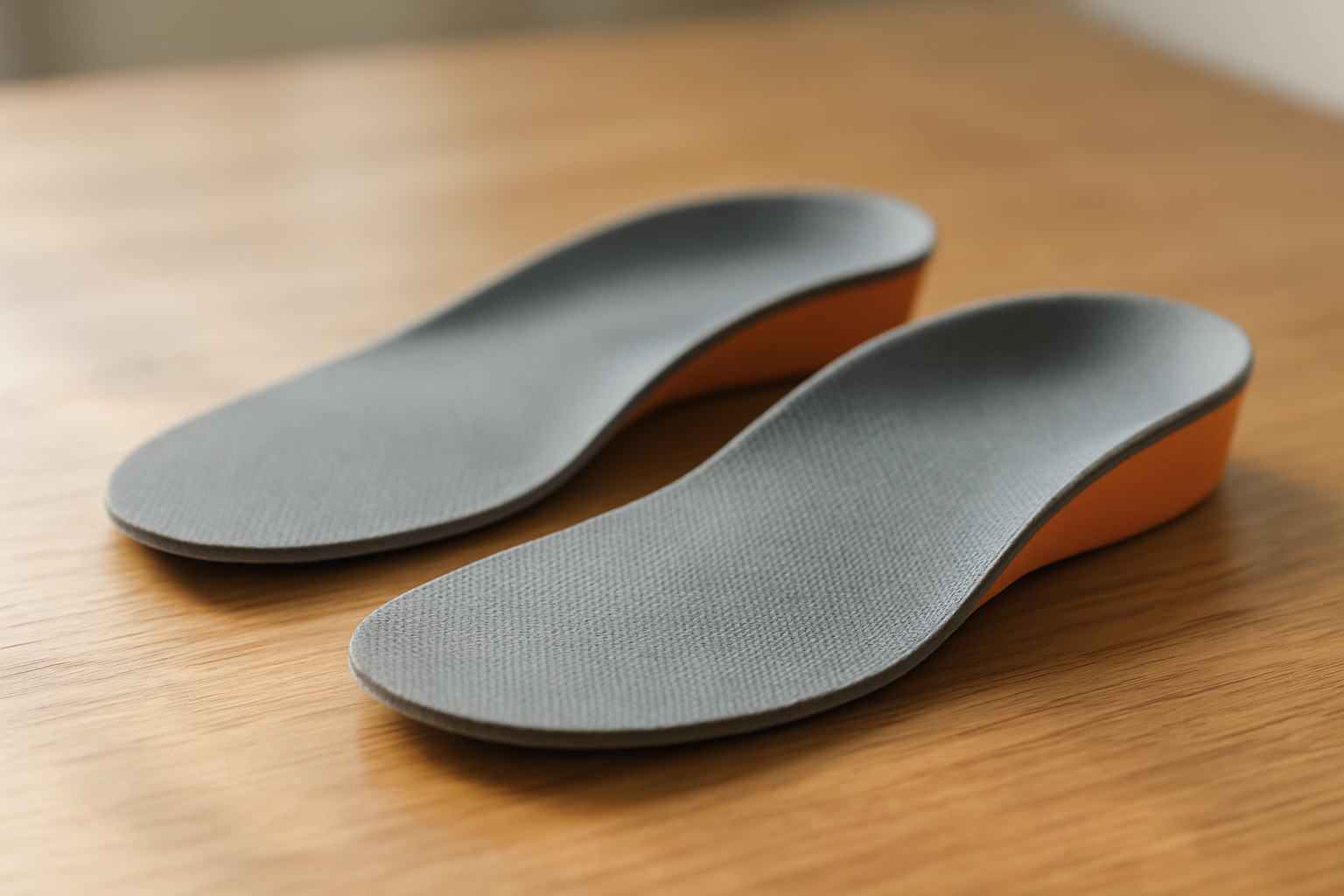
Custom orthotics with a posted heel are built individually for each patient's foot mold.
Ready to Find Out If You Need Posted Heel Orthotics?
This podiatrist-owned practice has more than 20 years of experience fabricating fully custom orthotics from individual foot molds, backed by an A+ Better Business Bureau rating. Call for a complimentary consultation or order online through customorthotics.com.
Frequently Asked Questions About Posted Heel Orthotics
What is a posted heel?
A posted heel is a wedge built into the heel of a custom orthotic that tilts the foot inward or outward to correct abnormal motion. It is designed to control the rearfoot before misalignment travels up the leg.
How does a posted heel correct overpronation?
A posted heel adds a wedge on the inner edge of the orthotic, which slows down the inward rolling motion of the foot during walking or running. This reduces stress on the arch, ankle, and knee joints.
Why do podiatrists recommend posted heel orthotics?
Podiatrists recommend posted heel orthotics because they address the root cause of biomechanical pain rather than just cushioning the foot. This targeted correction often prevents secondary issues in the knees and hips.
What is the difference between a posted heel and a standard heel cup?
A standard heel cup only cushions and cradles the heel, while a posted heel actively changes the angle of foot contact with the ground. The posted version is a corrective feature, not just a comfort feature.
Are posted heel orthotics the same as the arch support insoles sold in stores?
No. Store-bought arch support insoles are made in standard sizes and rarely include a true, measured posting angle. Posted heel orthotics are molded from your individual foot and posted at an angle calculated from your own gait.
How much do posted heel orthotics cost?
Custom posted heel orthotics typically cost more than off-the-shelf inserts because they require a mold of your individual foot and hands-on fabrication. Pricing varies by provider, materials, and posting complexity, so a consultation is the best way to get an accurate quote.
How long does it take to get used to posted heel orthotics?
Most people adjust to posted heel orthotics within one to two weeks of gradual wear. Starting with a few hours per day and slowly increasing use helps the foot adapt comfortably.
What conditions benefit from a posted heel?
Posted heel orthotics commonly help with plantar fasciitis, heel spurs, overpronation, flat feet, and general rearfoot instability. They are especially useful for conditions caused by uneven weight distribution.
Can a posted heel be added to any orthotic?
A posted heel can be added to most custom orthotic designs, including full-length, three-quarter-length, and sulcus-length devices. However, the exact posting angle must be customized to each patient's gait.
What's the difference between medial and lateral heel posting?
Medial posting adds material on the inner side of the heel to control overpronation, while lateral posting adds material on the outer side to control supination. The correct choice depends entirely on a person's individual gait pattern.
How is the heel posting angle measured?
The posting angle is measured in degrees during a gait assessment and neutral-position foot mold, typically ranging from about 2° to 6° of medial or lateral tilt depending on the severity of the alignment issue.
Can posted heel orthotics be worn in running shoes or athletic footwear?
Yes, posted heel orthotics are frequently built into full-length designs specifically for athletic and running shoes, since these shoes offer the depth and heel structure needed to support a rigid or semi-rigid posting angle.
What common mistakes do people make with posted heel orthotics?
A common mistake is switching to posted heel orthotics too quickly instead of breaking them in gradually. Another mistake is wearing them in shoes that don't have enough depth or stability to support the posting correctly.
How are posted heel orthotics fitted?
Fitting posted heel orthotics involves a gait assessment, a mold of the foot, and biomechanical analysis to determine the correct posting angle. The orthotic is then fabricated and adjusted during a follow-up fitting.
Are posted heel orthotics covered by insurance?
Some insurance plans cover custom orthotics with a posted heel when prescribed for a diagnosed medical condition. Coverage varies widely, so it's worth checking with your provider before ordering.
How do I know if I need a posted heel?
Signs you may need a posted heel include uneven shoe wear, chronic heel or arch pain, and a visible inward or outward roll of the ankle when walking. A podiatrist can confirm the need through a gait and mold assessment.
Final Thoughts on Posted Heel Orthotics
In summary, posted heel orthotics are far more than a comfort feature; they represent a targeted correction that changes how your foot strikes the ground and reduces strain throughout the lower body. Whether you're dealing with plantar fasciitis, heel spurs, or general overpronation, this posting technique addresses the mechanical cause rather than masking the symptom the way generic arch-support insoles often do. Consequently, working with an experienced podiatrist to determine the correct posting angle, material, and orthotic length can make the difference between temporary relief and lasting comfort. If you suspect posted heel orthotics could help your specific foot condition, reach out for a complimentary consultation through customorthotics.com to take the first step toward pain-free movement.