

A heelpost is the wedge-shaped piece of material built into the rear portion of an orthotic device that stabilizes the heel bone and controls how it moves when the foot strikes the ground. In particular, this small but critical component often determines whether an orthotic simply cushions the foot or actually corrects the underlying mechanical problem causing pain. For anyone researching custom foot support, understanding the heelpost is a good place to start.
Because the rear foot absorbs the first shock of every step, a poorly aligned heel can send stress traveling up through the ankles, knees, and lower back. As a result, podiatrists frequently design the heelpost first when building a custom orthotic, then layer arch and forefoot support around it. This guide explains what a heelpost does, the different types available, and how a properly fitted one is made.
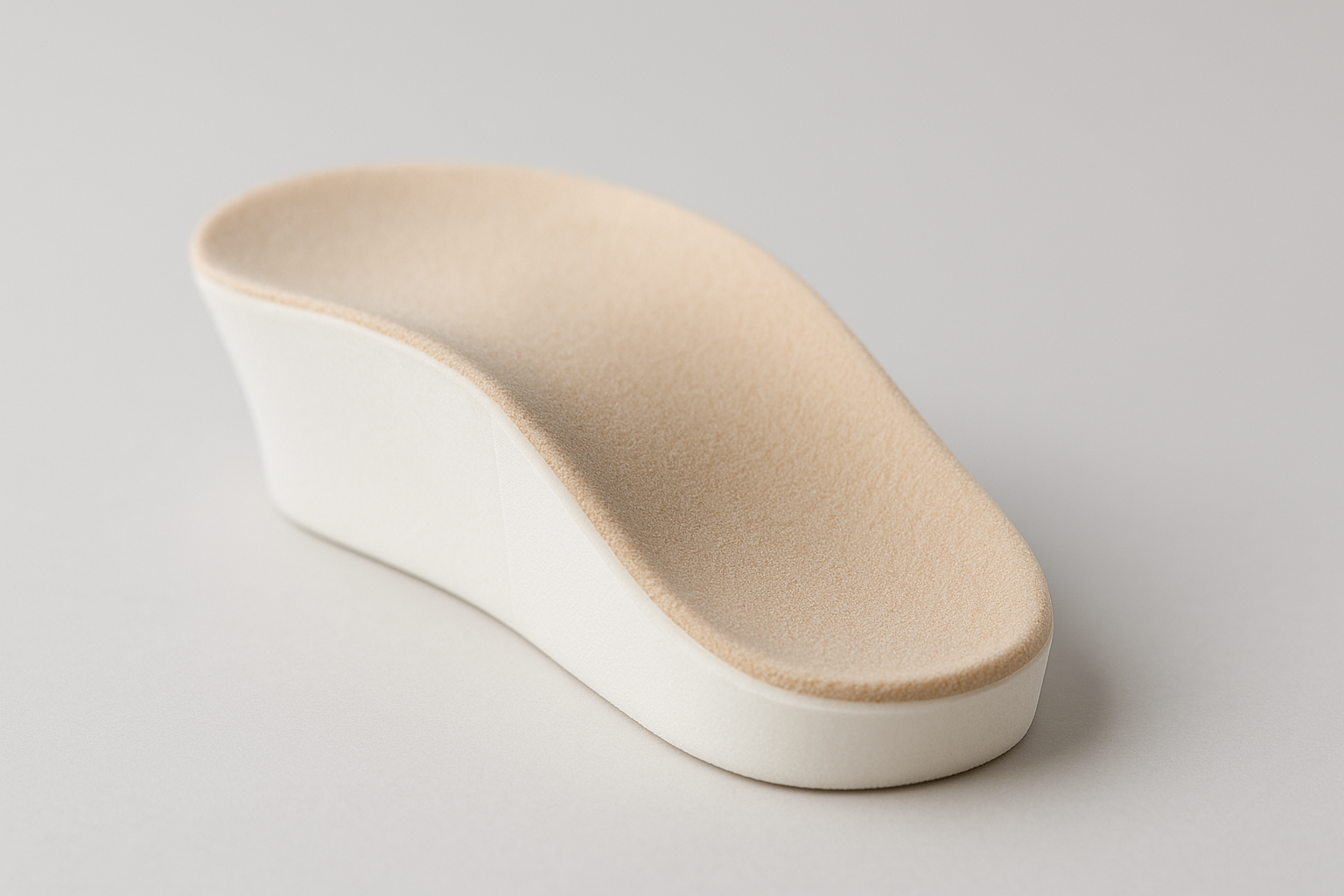
A close-up view of a heelpost, the angled wedge that stabilizes the rear foot in a custom orthotic.
What Is a Heelpost?
A heelpost is a rigid or semi-rigid wedge attached to the underside of the heel cup on an orthotic device. It tilts the heel to a corrected angle, controlling excess inward or outward rolling of the foot during walking or running.
Specifically, the heelpost is measured and angled based on how the patient's calcaneus, or heel bone, sits relative to the ground. Consequently, a heelpost that is too shallow will offer little correction, while one that is too steep can feel uncomfortable or cause new imbalances. Custom fabrication, rather than a one-size insole, allows the angle to be tailored precisely to the individual's foot mechanics, as explained in more detail in this complete guide to rear foot posting.
How Does a Heel Post Work in Custom Orthotics?
A heel post works by changing the surface angle under the heel so the foot lands and rolls through a more neutral path. In other words, instead of letting the heel collapse inward or tip outward, the wedge redirects that motion toward a healthier alignment.
This correction matters because the rear foot sets the pattern for the rest of the step. Therefore, if the heel rolls too far inward, a condition called overpronation, extra strain travels up through the arch, shin, and knee. Similarly, if the heel rolls outward too much, supination, pressure concentrates on the outer edge of the foot and ankle. According to information published on the Wikipedia entry on orthotics, rearfoot posting is one of the most established biomechanical corrections used in podiatric devices today.
Above all, the goal is not to force the foot into an unnatural position but to guide it back toward its own healthy range of motion. This is why a molded, custom-built heelpost tends to outperform generic wedges found in drugstore insoles.
Types of Heel Posts: Medial, Lateral, and Neutral
There are three common heelpost configurations, each addressing a different biomechanical pattern.
- Medial heel post: Placed on the inner side of the heel to reduce overpronation, which is the most frequently prescribed type.
- Lateral heel post: Placed on the outer side of the heel to control supination and reduce ankle instability.
- Neutral heel post: Provides stability without pushing the heel in either direction, often used for general support.
In addition, some patients benefit from a combination approach, where the heelpost angle changes slightly between the heel strike phase and the push-off phase of the gait cycle. For a broader look at how postural correction ties into overall alignment, see this resource on postural support orthotics.
Quick answer: A heelpost is a wedge built into the rear of an orthotic that corrects how the heel rolls during walking, reducing strain on the foot, ankle, and lower back. It is custom-angled based on an individual foot mold rather than mass-produced.
Who Needs Rearfoot Posting?
Not everyone requires a heelpost, but certain signs point to a rearfoot alignment problem. For instance, uneven wear on the inside or outside edge of shoe soles often signals excess pronation or supination.
Likewise, chronic heel pain, recurring ankle sprains, or nagging knee discomfort can trace back to a misaligned heel strike. According to the National Institute of Arthritis and Musculoskeletal and Skin Diseases, heel pain is among the most common foot complaints treated in the United States, and mechanical correction is frequently part of the treatment plan (NIH, heel pain overview). Consequently, a podiatrist-led gait assessment is the most reliable way to confirm whether rearfoot posting will help.
People who stand or walk for long hours at work, runners with a history of overuse injuries, and older adults with flattening arches are common candidates. Meanwhile, individuals with structurally healthy, neutral feet may only need cushioning rather than a corrective wedge.

A podiatrist captures a foot mold, a required step for fabricating an accurately angled heelpost.
How Custom Orthotics With a Heelpost Are Made
Fabricating a custom orthotic with a properly angled heelpost follows a consistent process, whether the patient visits in person or orders remotely through an online platform.
- Schedule a consultation and foot assessment. During a complimentary consultation, the podiatrist examines gait, foot structure, and pressure points to determine whether a medial, lateral, or neutral heelpost will best correct rearfoot alignment.
- Take a custom mold of the foot. The podiatrist captures a precise three-dimensional mold or scan in a neutral resting position, ensuring the heelpost angle matches the patient's unique rearfoot motion.
- Fabricate the orthotic shell with the heelpost. Technicians build the shell around the mold and attach the heelpost wedge at the calculated angle, reinforcing the material so it holds shape under daily pressure.
- Fit, test, and adjust. At a follow-up fitting, the podiatrist checks how the heelpost affects stance and gait, then makes small grinding or padding adjustments until the support feels balanced.
This hands-on approach is why podiatrist-fabricated devices, such as the full length orthotic with heel post, are built directly from an individual mold rather than trimmed from a generic template. Patients can browse the full range of options in the custom orthotics collection or start with a phone consultation.
Heelpost vs. Off-the-Shelf Insoles
Off-the-shelf insoles rarely include a true heelpost because they are manufactured in bulk without individual foot measurements. Instead, most drugstore insoles rely on generic arch bumps that flex under body weight and offer little rearfoot control.
By contrast, a custom-molded heelpost is fabricated to match the exact angle of a person's heel strike. As a result, custom orthotics tend to provide more consistent correction over time, though they typically cost more upfront than mass-produced alternatives. The American Podiatric Medical Association notes that properly fitted orthotic devices are a recognized part of conservative treatment for many rearfoot conditions (APMA).
Common Mistakes When Choosing a Heel Post
One frequent mistake is buying a generic insole and assuming it functions the same as a custom heelpost. However, without an individual mold, the wedge angle is essentially a guess rather than a measured correction.
Another mistake is skipping the follow-up fitting. Since feet change slightly with age, weight, and activity level, an orthotic that fit well a year ago may need a minor adjustment now. Finally, some patients wear a new heelpost for a full day right away instead of breaking it in gradually, which can cause unnecessary soreness.
Frequently Asked Questions About Heelpost
What is a heelpost in custom orthotics?
A heelpost is a wedge-shaped piece built into the rear of an orthotic that stabilizes the heel bone and controls its motion during walking. It is angled to correct excessive rolling of the foot toward the inside or outside.
How does a heelpost differ from a heel cup?
A heel cup simply cradles the heel for cushioning, while a heelpost is angled and rigid enough to actively change how the heel strikes the ground. Many custom orthotics combine both features for comfort and correction.
Why do podiatrists add a heelpost to orthotic devices?
Podiatrists add a heelpost to control rearfoot alignment and reduce abnormal stress on the ankles, knees, and lower back. This targeted support addresses the root cause of pain rather than just cushioning the foot.
How much does a custom orthotic with a heelpost cost?
Custom orthotics with a heelpost typically cost more than generic insoles because they require an individual mold and hands-on fabrication. Pricing varies by provider, so requesting a consultation is the best way to get an accurate quote.
How long does it take to get used to a heelpost?
Most people adjust to a new heelpost within one to two weeks of gradual daily wear. Starting with short periods and increasing wear time helps the foot adapt comfortably.
Can a heelpost help with plantar fasciitis?
Yes, a properly angled heelpost can reduce strain on the plantar fascia by improving rearfoot alignment and limiting excessive pronation. It is often combined with arch support for more complete relief.
What is the difference between a medial and lateral heel post?
A medial heel post sits on the inner side of the heel to control overpronation, while a lateral heel post sits on the outer side to control supination. The podiatrist chooses the placement based on gait analysis.
Do off-the-shelf insoles include a heel post?
Most off-the-shelf insoles do not include a true heelpost because they are mass-produced without individual foot measurements. Only custom orthotics molded to a specific foot can provide an accurately angled heelpost.
How long do custom orthotics with a heelpost typically last?
Custom orthotics with a heelpost generally last three to five years with regular use, depending on activity level and shell material. Annual check-ins with a podiatrist help catch wear before it affects support.
What common mistakes should I avoid when choosing a heelpost?
A common mistake is choosing a generic insole instead of a molded device, since the heelpost angle needs to match individual foot mechanics. Skipping a professional gait assessment often leads to poor correction or discomfort.
Is a heelpost suitable for children or only adults?
A heelpost can benefit children with flexible flatfoot or gait irregularities, not just adults. Pediatric orthotics are adjusted more frequently as the child's foot continues to grow.
How do I know if I need a heelpost?
Signs you may need a heelpost include uneven shoe wear, recurring heel pain, or a visible inward or outward roll of the ankle when walking. A podiatrist can confirm the need through a physical gait evaluation.
Can a heelpost be adjusted after fabrication?
Yes, most heelposts can be ground down or built up slightly during a follow-up fitting to fine-tune the correction angle. Significant changes in foot structure may eventually require a new mold.
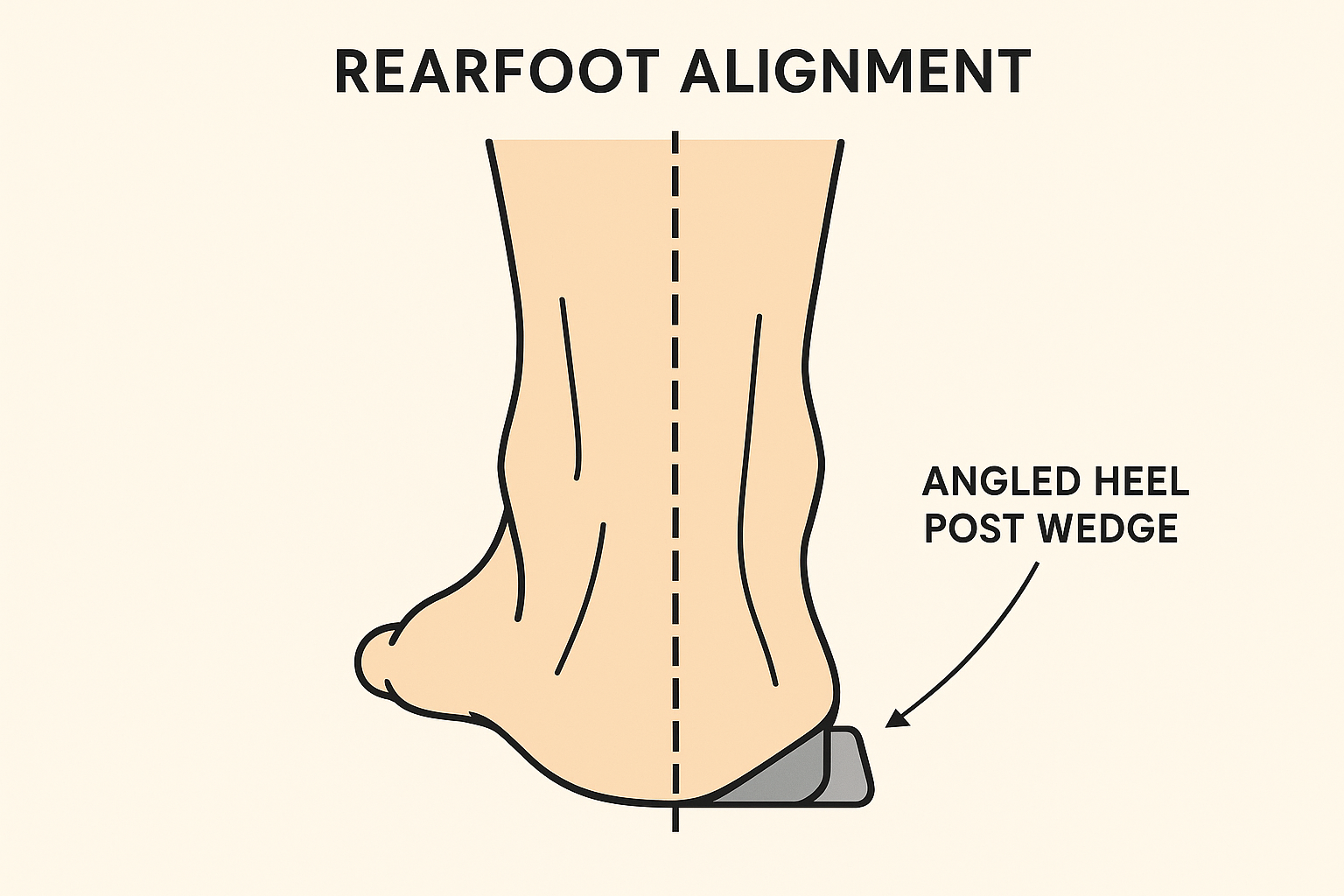
An illustration of rearfoot alignment, showing how a correctly angled heelpost redirects heel motion.
Final Thoughts on Choosing the Right Heelpost
In summary, a heelpost is a small but powerful part of a custom orthotic that corrects rearfoot alignment, reduces pain, and supports healthier movement patterns over time. Because everyone's gait is different, the most reliable results come from a device molded specifically to an individual foot rather than a generic insole.
If you suspect uneven heel wear, chronic foot pain, or ankle instability, a podiatrist-led evaluation is the logical next step. You can learn more about the fabrication process, browse orthotic options, or request a consultation directly through customorthotics.com, or explore additional articles on the custom orthotic blog to keep learning about rearfoot support and foot health.