

Postural support orthotics are custom-molded shoe inserts that realign the feet from the ground up, correcting the mechanical faults that drag the ankles, knees, hips, and spine out of balance. Because the feet carry every step of body weight, even a slight tilt at ground level can echo upward, showing up later as chronic back pain, an aching hip, or knee strain that never seems to resolve. In this guide, we cover everything a store-bought insole or a generic product page cannot: exactly how postural support orthotics work, who they help most, how they compare to off-the-shelf inserts, and how back, knee, and hip pain connect directly back to what is happening inside your shoes.
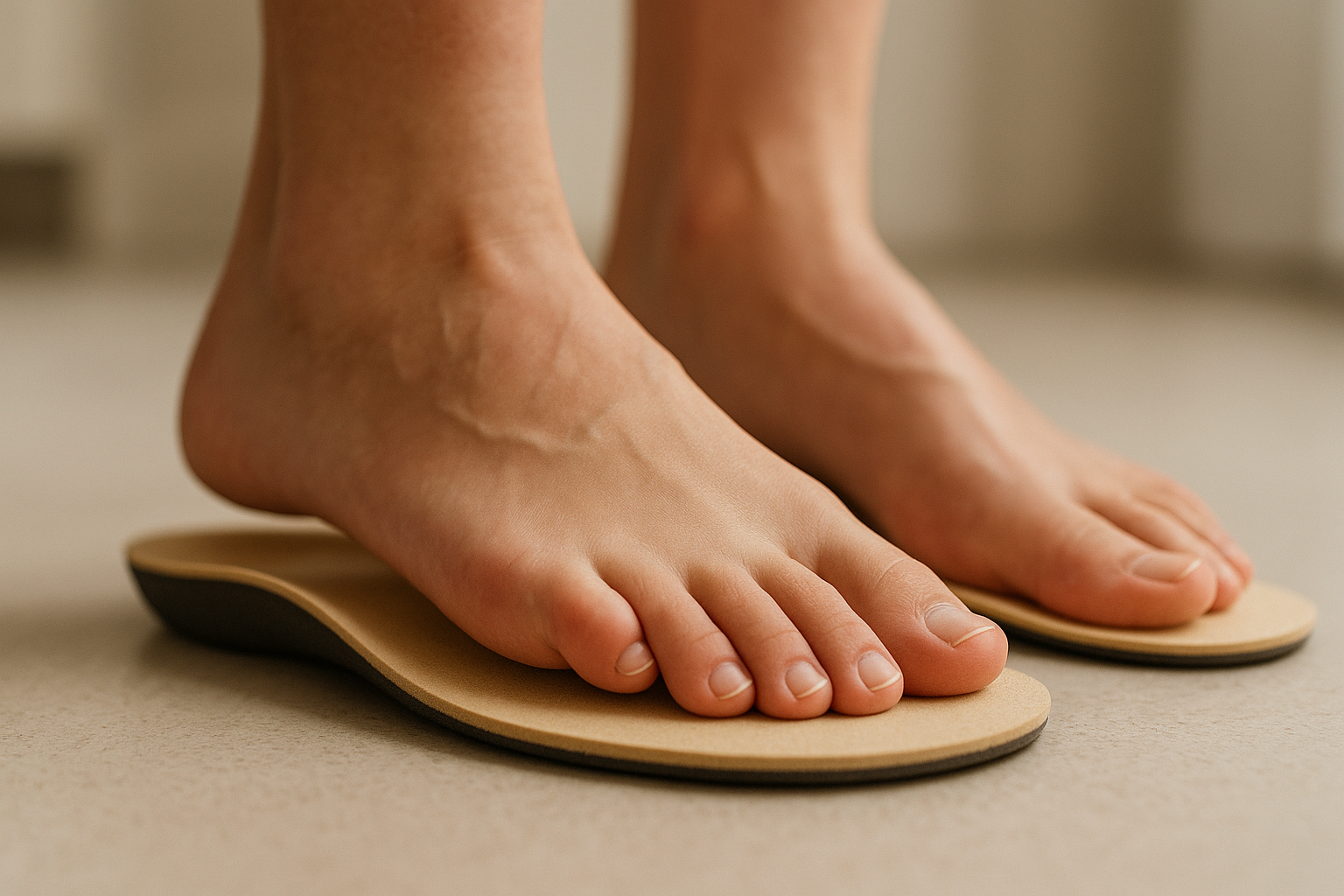
Postural support orthotics are shaped around each patient's own foot mold for a precise, corrective fit.
What Are Postural Support Orthotics?
Postural support orthotics are custom-fabricated insoles created from a direct mold of your feet, engineered specifically to correct alignment issues that influence overall posture. Unlike mass-produced insoles, they are shaped to match each foot's unique contours, offering targeted correction rather than generic cushioning. As a result, they help distribute body weight evenly and reduce the compensatory strain that travels up through the legs and spine.
Specifically, these devices address structural issues such as overpronation (when the foot rolls too far inward), collapsed arches, or a mild leg-length discrepancy. Consequently, poor foot mechanics often force the knees, hips, and lower back to compensate, producing discomfort far from the feet themselves. According to the American Podiatric Medical Association, roughly 77% of adults have experienced foot pain that affected daily activity, which underscores how common these underlying imbalances are. As explained on Wikipedia's overview of orthotics, custom devices correct the root mechanical issue rather than simply masking a symptom.
How Postural Support Orthotics Improve Body Alignment
Your feet function as the foundation of what podiatrists call the kinetic chain, a series of connected joints that work together during standing and walking. Therefore, when a foot lands incorrectly, whether rolling too far inward or bearing weight unevenly, that misalignment travels upward. In contrast, a properly supported foot maintains a neutral position, allowing the ankle, knee, and hip to stack correctly above it.
Postural support orthotics work by cradling the arch, cupping the heel, and, when needed, adding a heel post to control excess motion. Above all, this stability reduces the small, repetitive compensations that eventually lead to fatigue and pain throughout the entire body, not just the feet.
The Foot-to-Spine Connection
Similarly, the pelvis and lower spine respond to whatever is happening at the feet. For example, if one foot pronates more than the other, the pelvis can tilt slightly, creating a functional leg-length difference and uneven shoulder height. In addition, research summarized by the National Institutes of Health has linked poor foot mechanics to compensatory changes in gait and spinal loading.
Consequently, correcting foot position with well-fitted orthotics can ease strain further up the chain. For patients dealing with chronic back discomfort, this connection is often the missing piece of the puzzle, and it is exactly the kind of root-cause explanation that a simple product listing never provides.
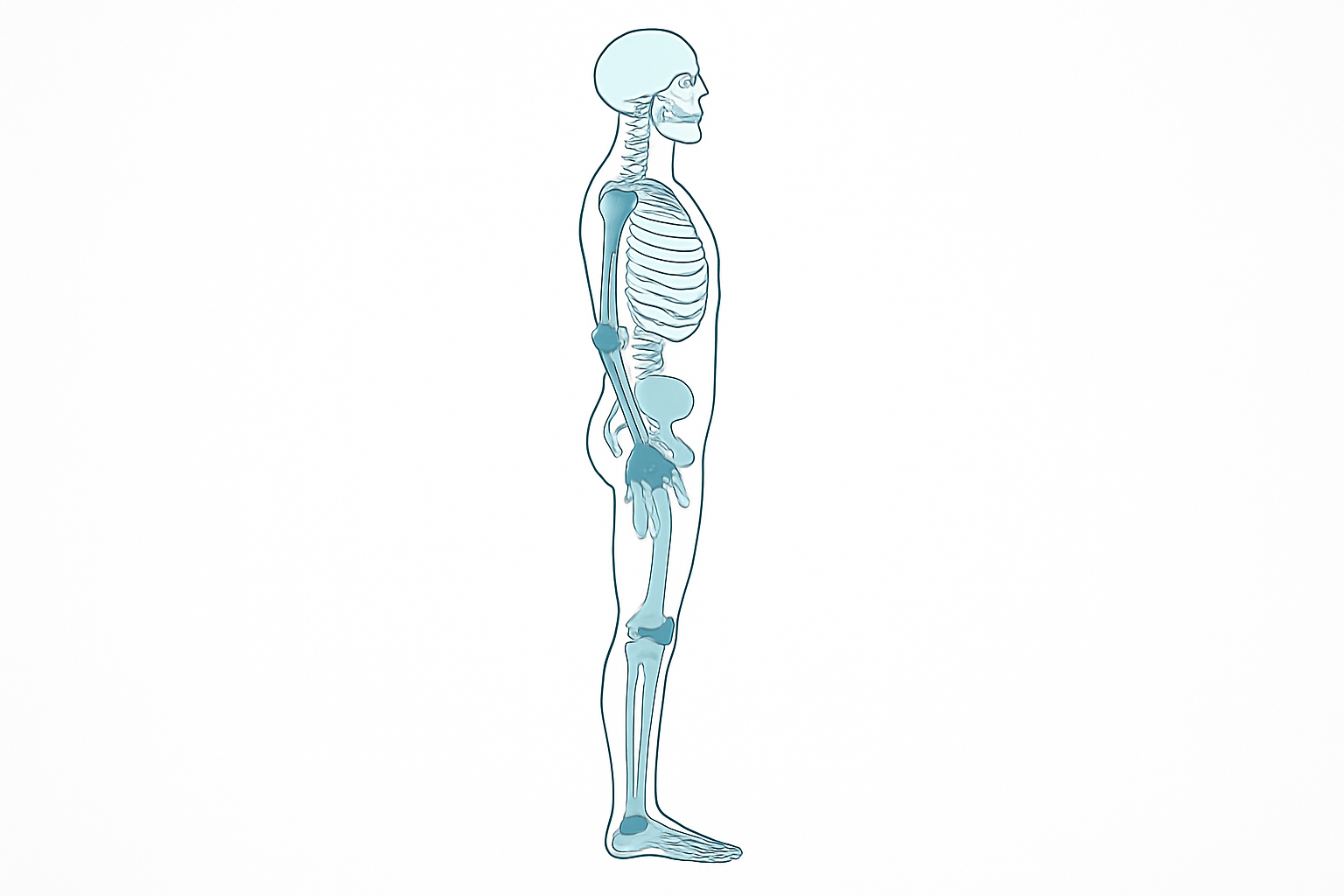
Foot alignment influences the entire kinetic chain, from the ankles up through the spine.
Signs You May Benefit From Postural Alignment Orthotics
It isn't always obvious that foot mechanics are behind a posture problem. However, a few common signs tend to appear together in patients who benefit most from custom orthotic support.
- Uneven wear patterns on the outside or inside of your shoe soles
- One shoulder or hip that sits visibly higher than the other
- Recurring lower back pain with no clear injury
- Knee discomfort that worsens during walking or standing
- Flat arches, high arches, or feet that roll inward noticeably
If several of these signs sound familiar, an evaluation with a podiatrist can determine whether postural support orthotics are an appropriate next step, rather than guessing at a firmness level off a shelf.
Postural Support Orthotics for Back, Knee, and Hip Pain
Back, knee, and hip pain are three of the most common reasons people search for postural support orthotics in the first place. However, simply browsing a shelf of products by pain category does not explain why the feet are involved at all. In particular, understanding the mechanism behind each type of pain makes it much easier to choose a device that actually addresses the cause rather than the symptom.
Back Pain and Foot Alignment
Lower back pain frequently begins with an unstable base. Specifically, when one foot overpronates more than the other, the pelvis rotates slightly to compensate, which pulls the lumbar spine out of its natural curve. Over months or years, this repetitive micro-strain can produce the dull, recurring ache many patients describe. In contrast, once postural support orthotics stabilize the arch and heel, the pelvis has less reason to compensate, and lumbar loading tends to normalize. For readers who want the full picture on how foot support connects to whole-body pain relief, this complete guide to orthotic foot support and pain relief goes into further detail.
Knee Pain and Postural Orthotic Support
Knee pain often traces back to poor tracking of the kneecap, which is heavily influenced by how the foot and lower leg rotate during each step. Therefore, when overpronation causes the shin to rotate inward, the knee is forced to twist slightly with every stride, an issue that adds up over thousands of steps a day. Postural support orthotics reduce this inward rotation at its source, easing the rotational stress placed on the knee joint. Similarly, athletes and runners with recurring knee discomfort often notice meaningful improvement once the underlying foot mechanics are corrected.
Hip Pain and Pelvic Alignment
Hip pain, particularly on one side only, often signals a pelvic tilt caused by uneven weight distribution between the feet. As a result, one hip may bear more load than the other during walking and standing, leading to irritation of the surrounding muscles and tendons. Above all, correcting foot alignment with properly fitted postural support orthotics helps level the pelvis, which in turn reduces the asymmetrical loading that drives this type of hip discomfort.
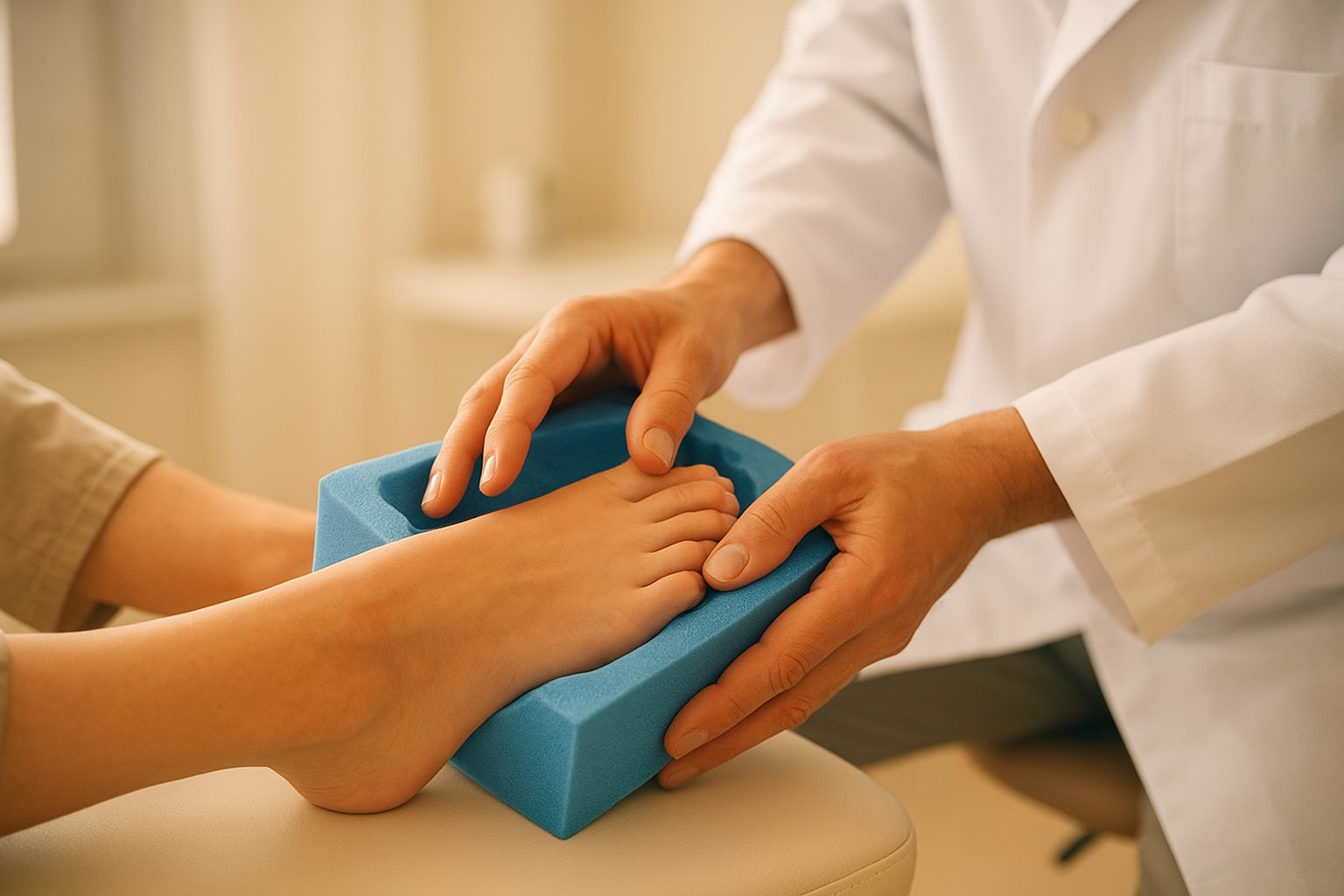
Every pair starts with a precise mold, the foundation of any effective postural support orthotics fitting.
How Custom Orthotics Are Made: A Step-by-Step Process
Fabricating a truly custom orthotic device involves more than trimming a generic insole to size. Instead, the process follows a precise sequence designed around each patient's unique foot structure.
- Schedule a consultation. Patients start with a complimentary phone consultation directly with a podiatrist to review symptoms, footwear habits, and relevant medical history before any mold is taken.
- Capture a foot mold. A detailed impression of each foot is taken at rest and under light weight-bearing pressure, capturing the true shape of the arch and heel rather than an estimated shoe size.
- Fabricate the device. Skilled technicians build the orthotic shell around the mold, incorporating features such as a reinforced heel post for added stability, similar to the options in the full-length orthotic with heel post.
- Fit and adjust. Once complete, the orthotics are tested inside the patient's own shoes, with fine adjustments made to pressure points until the fit feels balanced and comfortable.
- Follow up on progress. After a break-in period, patients check in with the podiatrist to confirm the orthotics are correcting alignment as intended and to address any lingering discomfort.
Postural Correction Insoles vs Off-the-Shelf Inserts
Drugstore shelves are lined with inexpensive insoles that promise arch support, so it's fair to ask how they compare to postural correction insoles built from an actual mold. The short answer: fit and specificity make the difference.
Generic inserts are molded to an average foot shape, which means they may cushion but rarely correct. In contrast, custom orthotics are shaped around the exact geometry of each patient's foot, targeting the specific point where pronation or arch collapse begins. As a result, they tend to hold up longer and produce more consistent results, a point explored further in this guide to how custom orthotics elevate comfort and performance.
Furthermore, off-the-shelf inserts typically lack the option for a heel post or targeted forefoot adjustments, features that matter most for postural correction. Therefore, patients dealing with structural misalignment, rather than simple foot fatigue, usually see better outcomes with a custom-molded option.
Rigid, Semi-Rigid, and Soft Orthotic Types
Not every postural issue calls for the same level of firmness. Rigid orthotics, typically made from firmer plastics or carbon composites, offer maximum control over motion and suit patients with significant overpronation or structural instability. Semi-rigid designs, on the other hand, blend correction with a degree of shock absorption, making them a common choice for everyday walking and standing. Soft, accommodative orthotics prioritize cushioning over control and tend to suit patients with arthritis or highly sensitive feet who need pressure relief above all else. Consequently, matching the material to the condition, not just the shoe, is what separates an effective device from an uncomfortable one.
Who Benefits Most From Orthotic Postural Support?
Postural orthotics aren't limited to one type of patient. However, certain groups tend to notice the difference more quickly because their daily demands place extra strain on foot alignment.
Athletes and active individuals, for example, place repetitive impact through the feet during running, jumping, or quick direction changes. Consequently, even small alignment issues become amplified over thousands of strides, as outlined in this guide to orthotics for active lifestyles.
Older adults represent another group that often benefits significantly. As we age, the fat pad under the heel thins and arches can flatten further, both of which affect balance and posture. For that reason, many seniors find meaningful pain relief through custom support, a topic covered in more depth in this overview of orthotic solutions for seniors. In addition, people who stand or sit for long stretches at work, along with those recovering from injury, frequently benefit from the added stability that postural support orthotics provide, a need addressed directly in this guide to custom foot supports for standing jobs.
Choosing the Right Postural Support Orthotics for Your Needs
Selecting the right device starts with understanding how much coverage and control your feet actually need. For patients with mild pronation or those who mainly need arch support inside casual or athletic shoes, a 3/4-length orthotic often provides enough correction without adding bulk.
In contrast, patients dealing with more significant misalignment, heel pain, or the need for maximum control typically do better with a full-length design that includes a reinforced heel post. Above all, the right choice depends on gait, footwear, and the underlying condition being addressed, which is why a professional evaluation matters more than guesswork.
The team at customorthotics.com offers a complimentary consultation directly with a podiatrist, whether by phone or through their online ordering platform, making it straightforward for both local and remote patients to get properly evaluated before committing to a device. For additional background on foot health standards, the American Podiatric Medical Association also publishes patient resources worth reviewing.
Caring for Your Orthotics and Knowing When to Replace Them
Even a well-made device needs upkeep. Wipe orthotics down regularly, let them air dry away from direct heat, and rotate them between pairs of shoes when possible to extend their lifespan. However, watch for warning signs such as visible flattening of the arch, cracking along the shell, or the return of pain that had previously resolved. In particular, these signs usually mean the device has broken down structurally and can no longer provide the postural support it was built for, at which point a replacement fitting is worth scheduling.
Frequently Asked Questions
What are postural support orthotics?
Postural support orthotics are custom-molded shoe inserts built from an impression of your own feet, designed to correct alignment issues that affect posture. They stabilize the foot so the ankles, knees, hips, and spine can rest in a more balanced position.
How do postural support orthotics correct posture?
They cradle the arch and heel to control excess motion such as overpronation, which reduces the compensations that travel up through the legs and lower back. By stabilizing foot mechanics, they help the entire kinetic chain stay in better alignment.
Why does foot alignment affect the spine?
The feet, knees, hips, and spine form a connected chain, so uneven weight distribution at the foot can tilt the pelvis and shift spinal loading. Over time, this can contribute to lower back pain and uneven shoulder height.
How long does it take to get used to custom orthotics?
Most patients adjust within one to three weeks of gradual daily wear. Starting with a few hours per day and slowly increasing wear time helps the feet and muscles adapt comfortably.
How much do custom postural orthotics cost?
Costs vary depending on the design, materials, and whether features like a heel post are included, so pricing is best confirmed during a consultation. A complimentary consultation can clarify options and pricing before ordering.
Are postural support orthotics covered by insurance?
Coverage depends on the individual insurance plan and whether the orthotics are deemed medically necessary. Patients should check directly with their provider, since some plans reimburse part of the cost with proper documentation.
What's the difference between custom orthotics and store-bought insoles?
Custom orthotics are molded to the exact shape of an individual's feet, while store-bought insoles are mass-produced to an average foot shape. This difference means custom devices target the specific point of imbalance rather than offering generic cushioning.
Can postural support orthotics help with lower back pain?
Yes, when back pain stems from foot-driven misalignment, correcting the foot position can reduce compensatory strain in the lower back. They are not a cure for every back condition, so a professional evaluation helps confirm the underlying cause.
Can postural support orthotics help with knee pain?
Yes, when knee discomfort stems from overpronation or misaligned tracking caused by poor foot mechanics, correcting foot position with postural support orthotics can reduce abnormal stress on the knee joint. However, structural knee conditions still warrant a full medical evaluation.
Can postural support orthotics help with hip pain?
Yes, hip pain linked to pelvic tilt or uneven leg length often eases once the feet are properly aligned, since postural support orthotics help stabilize the base the pelvis rests on. As with any joint pain, a podiatrist should confirm the foot is truly the contributing factor.
How long do custom orthotics typically last?
Well-made custom orthotics generally last between three and five years with regular use. Lifespan depends on activity level, body weight, and how well the device is cared for over time.
What common mistakes should I avoid when choosing orthotics?
A common mistake is choosing a generic insole based on shoe size alone rather than an actual foot mold and gait assessment. Another is skipping the follow-up fitting, which can leave pressure points uncorrected.
Do athletes need a different type of postural orthotic?
Active individuals often need orthotics designed for impact absorption and quick directional changes, sometimes with a firmer heel post for added control. Because repetitive motion amplifies small imbalances, precise fitting matters even more for athletes.
How is a custom orthotic mold taken?
A podiatrist or technician captures an impression of each foot at rest and under light weight-bearing pressure, recording its true shape. This mold becomes the template used to fabricate the finished orthotic device.
Can seniors benefit from postural support orthotics?
Yes, seniors often benefit significantly since aging can thin the heel's natural padding and flatten the arches, affecting both balance and posture. Custom support can ease discomfort and improve stability during daily walking.
Final Thoughts
In summary, postural support orthotics address alignment issues at their source, the feet, rather than simply masking discomfort in the back, knees, or hips. Because the feet, knees, hips, and spine work together as one connected chain, correcting foot mechanics often eases strain that shows up far from where it actually begins. Whether you're an athlete, an office worker, or a senior managing balance changes, a properly fitted custom device can make a meaningful difference.
Ultimately, the most reliable way to know if postural support orthotics are right for you is a professional evaluation. A complimentary consultation with a podiatrist can help determine the right design, whether that's a 3/4-length insole or a full-length option with a heel post, so you can move forward with confidence.