

Custom foot supports for work are the single biggest upgrade you can make if your job keeps you standing, walking, or lifting for eight, ten, or even twelve hours straight. Generic drugstore insoles and even premium prefabricated inserts can soften the blow of a hard shift, but they cannot correct the underlying structural issues causing your pain. This guide breaks down exactly what custom foot supports for work are, how they compare to semi-custom and off-the-shelf alternatives, what they're made of, who benefits most, and how to get fitted — so you can finish your shift standing tall instead of limping to the car.
Quick Answer: Custom foot supports for work are podiatrist-designed orthotic inserts molded directly from an individual's feet — not mass-produced from a generic shoe last. Because they're built from your exact arch height, heel shape, and pressure map, they correct alignment and distribute weight far more precisely than semi-custom or off-the-shelf work insoles, reducing foot, knee, and lower-back fatigue during long shifts.
What Are Custom Foot Supports for Work?
Custom foot supports for work are orthotics — inserts placed inside shoes to correct foot position and cushion pressure points — fabricated from a direct mold of a patient's feet. Unlike drugstore insoles or even trim-to-fit "semi-custom" work insoles sold in generic small/medium/large sizing, they are built to match the exact shape, arch height, and pressure distribution of the wearer. As a result, they target the specific demands of a person's job, whether that means standing on concrete for ten hours or walking miles across a warehouse floor.
In particular, a podiatrist evaluates your gait, posture, and footwear before creating the mold. Consequently, the finished device isn't guesswork — it's a precise tool built around how your feet actually move under load. For a deeper overview of how these devices work across different situations, see this complete guide to personalized foot orthotics.
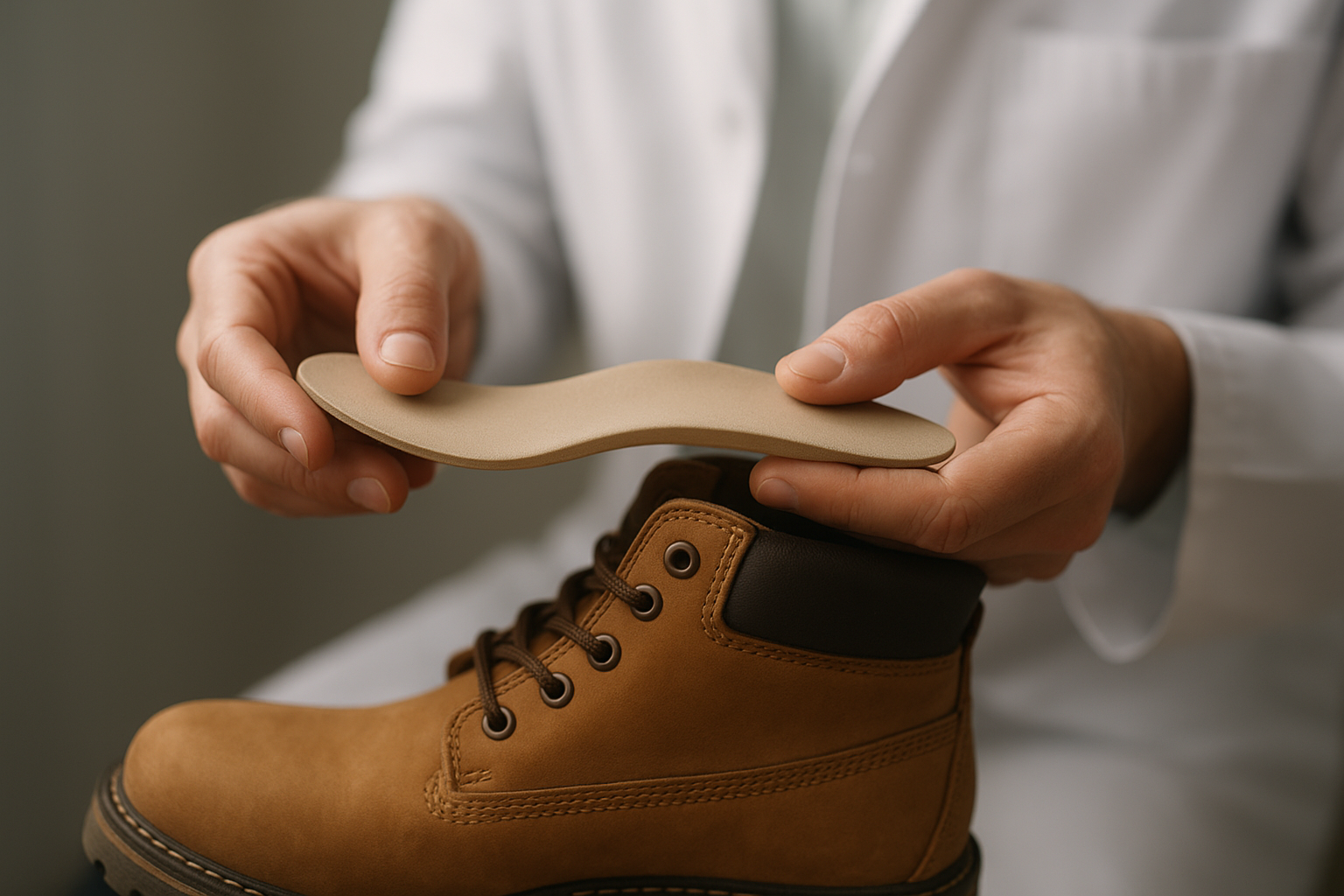
A podiatrist carefully fits custom foot supports for work into a pair of everyday work boots.
Custom Foot Supports for Work vs. Semi-Custom and Off-the-Shelf Insoles
Many popular work insole brands sell what's often marketed as a "semi-custom" or "premium" solution: a semi-rigid plastic shell, a layer of shock-absorbing foam, and a deep heel cradle, available in a handful of stock sizes with a trim-to-fit outline. These products are a genuine improvement over flimsy foam insoles, and they typically address one or two arch-height categories — low, medium, or high — using a general shape guessed from your shoe size.
However, that's still an estimate, not a measurement. Your left foot and right foot are rarely identical, and a stock "medium arch" shell can't account for that. In contrast, custom foot supports for work start from a direct mold of your actual feet, so the arch height, heel cup depth, and metatarsal cushioning are shaped to your anatomy — not to a size chart.
| Feature | Custom Foot Supports for Work | Semi-Custom / Off-the-Shelf Insoles |
| Fit basis | Direct mold of your feet | Stock shell sized by shoe size |
| Arch matching | Exact arch height and shape | Low / medium / high category only |
| Left/right differences | Accounted for individually | Same shape both feet |
| Professional evaluation | Podiatrist assesses gait and posture | Self-selected online or in-store |
| Typical lifespan | 3–5 years | 6–12 months |
The Wikipedia entry on orthotics describes this category of devices as tools designed to support, align, or correct musculoskeletal function — a description that highlights why precision matters. Above all, a properly fitted custom device addresses the root cause of discomfort instead of simply masking symptoms with extra padding.
What Goes Into a Great Work Insole: Materials and Construction
Whether custom-molded or mass-produced, quality work insoles generally share a few construction principles worth understanding. Specifically, a supportive shell — semi-rigid in stock insoles, precision-shaped in custom devices — stabilizes the arch. Meanwhile, layered cushioning in the heel and forefoot absorbs shock from concrete, tile, or steel decking.
A moisture-wicking top cover keeps feet drier during long shifts, which matters for anyone in kitchens, warehouses, or healthcare settings where shoes rarely come off. In addition, a deep heel cradle keeps the fat pad under your heel bone in place, reducing the "flattening" effect that causes heel pain by mid-shift.
The difference with custom foot supports for work is that every one of these elements — shell rigidity, cushioning density, heel cradle depth — is tuned to your specific foot instead of a generic template. For instance, someone with a rigid, high arch typically needs a softer shell and more forefoot padding, while someone with flexible flat feet usually needs firmer arch reinforcement. A podiatrist makes that call based on your actual foot mechanics, not a size chart guess.
Why Standing or Walking All Day Takes a Toll on Your Feet
Prolonged standing places continuous strain on the arches, heels, and lower back. Over time, this strain can contribute to plantar fasciitis (inflammation of the thick band of tissue along the bottom of the foot), shin splints, and even chronic joint pain. According to research summarized by the CDC's National Institute for Occupational Safety and Health (NIOSH), workers who stand for more than four hours per shift report significantly higher rates of lower-limb fatigue than those in seated roles.
Furthermore, jobs like nursing, retail, food service, and warehouse work rank among the most physically demanding on the feet. In fact, the U.S. Bureau of Labor Statistics notes that many of the fastest-growing occupations involve extended standing or walking. Similarly, the Occupational Safety and Health Administration (OSHA) recognizes prolonged standing as an ergonomic risk factor that employers are encouraged to address through anti-fatigue mats, footwear standards, and rest breaks. Without proper support, this repetitive strain can accumulate into long-term structural problems.
Signs You Might Need Custom Orthotics for Your Job
Not everyone needs custom orthotics right away, but certain warning signs suggest it's worth a consultation. For instance, recurring heel or arch pain that worsens by the end of a shift is a common indicator. Similarly, uneven wear patterns on your work shoes often point to imbalances that generic insoles can't correct.
- Heel or arch pain that intensifies during the last few hours of a shift
- Numbness, tingling, or swelling in the feet after standing all day
- Lower back or knee discomfort with no other obvious cause
- Uneven or excessive wear on the outer or inner edge of your work shoes
- Off-the-shelf and semi-custom insoles that stopped helping after a few months
In addition, numbness, swelling, or lower back discomfort after long days on your feet may signal that your current footwear isn't providing adequate support. If any of these sound familiar, a complimentary consultation with a podiatrist can help clarify whether custom foot supports for work are the right next step.
Arch Types and Support Levels: Why "Low, Medium, High" Isn't Enough
Most stock work insoles are sold in three arch categories — low, medium, and high — chosen by eyeballing your foot or answering a quick quiz. Admittedly, this system helps narrow the field. However, it treats "medium arch" as if every medium arch behaves the same way under load, which simply isn't true.
Two people with a "medium" arch height can have completely different pronation patterns (the way the foot rolls inward during walking), different heel widths, and different pressure points under the forefoot. Consequently, one person's "perfect fit" insole can feel wrong for someone with an identical arch measurement but different foot mechanics. Custom foot supports for work solve this by measuring your actual pressure distribution, not just arch height, during the fitting process.
How to Get Custom Foot Supports for Work: A Step-by-Step Process
Getting fitted for custom orthotics is more straightforward than many people expect. Below is the typical process from consultation to finished product. For a deeper walkthrough, see our Custom Foot Molds: Complete Guide to Getting Fitted.
- Schedule a complimentary consultation. Call or use the online platform at customorthotics.com to speak directly with a podiatrist about your job duties, footwear, and current pain points before any mold is taken.
- Get a precise mold of your feet. The podiatrist captures the exact shape, arch height, and pressure points of each foot using a hands-on molding process rather than a generic foot scan or size chart.
- Discuss your work environment. Because standing on concrete differs from climbing ladders or driving a forklift, the podiatrist tailors cushioning density and support zones to match your specific occupational demands.
- Receive your custom-fabricated orthotics. Skilled technicians build the device from your individual mold, ensuring the finished product fits your work shoes or boots precisely and comfortably.
- Break them in and follow up. Wear the new supports gradually over one to two weeks, starting with a few hours a day, and contact the podiatrist if adjustments are needed for comfort or fit.
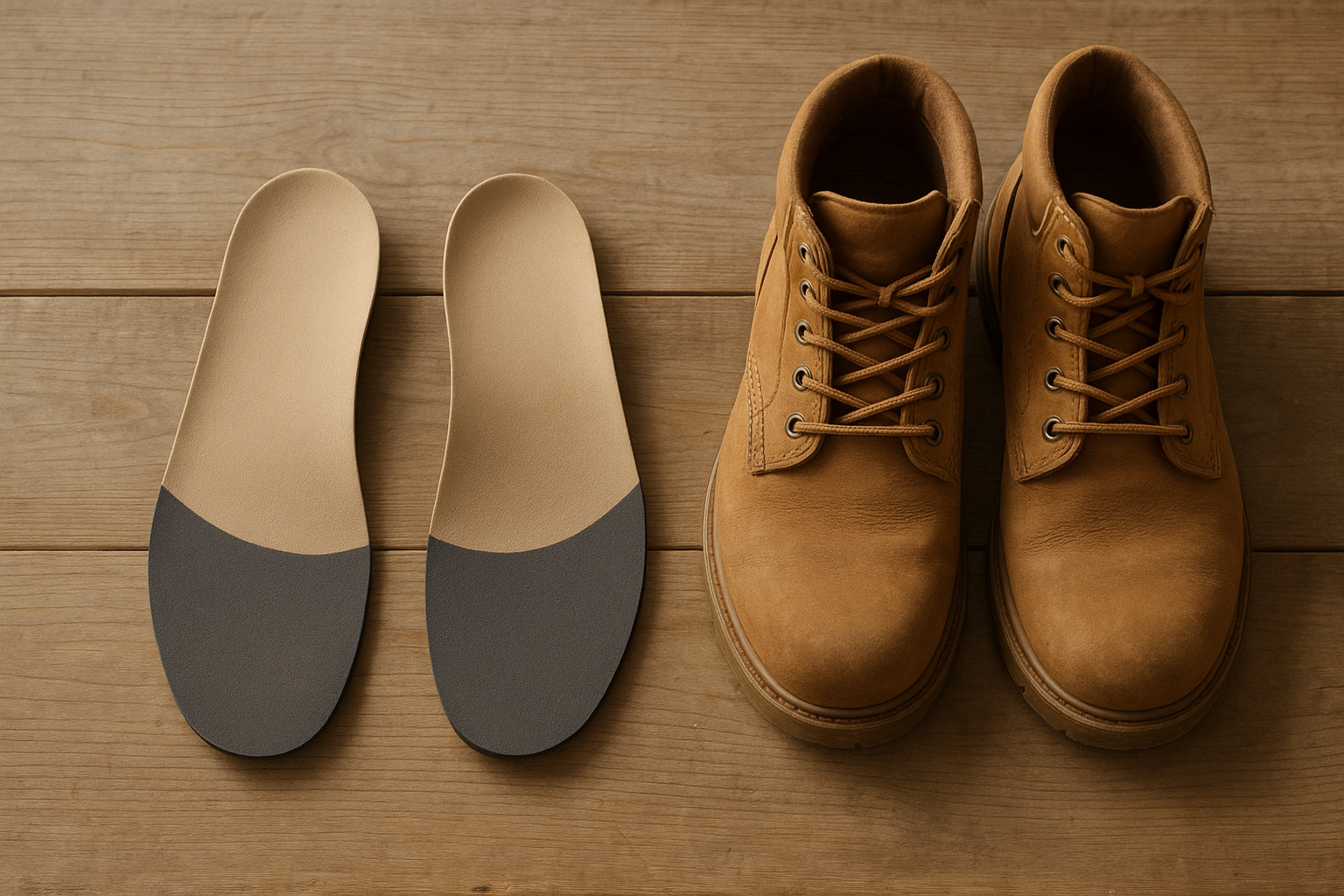
Finished orthotic devices ready to be placed inside a pair of everyday work boots.
Best Jobs and Industries That Benefit from Personalized Foot Orthotics
Nurses, teachers, retail associates, and warehouse employees frequently spend six or more hours a day on hard flooring. Similarly, construction workers, chefs, and delivery drivers face repetitive strain from walking, climbing, or standing in one spot for extended periods. In each of these cases, personalized foot orthotics help distribute weight more evenly and reduce fatigue.
Healthcare and Nursing
Nurses and healthcare aides often walk five or more miles per shift on hospital floors. As a result, arch fatigue and heel pain are extremely common, and custom foot supports for work can reduce the cumulative impact of that mileage.
Warehouse, Retail, and Food Service
Concrete and tile floors offer almost no natural shock absorption. Therefore, workers in these settings benefit from both cushioning and structural correction, not cushioning alone.
Construction and Trades
Uneven terrain, ladders, and heavy steel-toe boots add extra strain. Consequently, custom foot supports for work are frequently built with reinforced shells to handle this added load safely.
For a broader look at how foot support needs shift across different daily routines, this complete guide to foot support for everyday activities covers additional scenarios beyond the workplace.
Choosing the Right Work Orthotics for Specific Foot Conditions
Not all foot problems are the same, so the right work orthotics depend on the underlying condition. For example, employees with flat feet often need extra arch reinforcement, while those with forefoot pain may benefit from targeted metatarsal cushioning. If you're managing flat feet specifically, this guide to foot support for flat feet outlines relief options in more detail.
Meanwhile, workers dealing with ball-of-foot pain (often called metatarsalgia) from standing on hard surfaces may want to explore a dedicated metatarsal support option alongside their custom insole. According to the Mayo Clinic, plantar fasciitis pain is often worst with the first steps after rest, which is precisely the pattern many standing-job workers describe first thing each shift. A podiatrist can help determine which combination best matches your specific job and condition.
Fit and Compatibility: Work Boots, Steel Toes, and Safety Shoes
A common concern with any work insole is whether it will actually fit inside safety footwear. Fortunately, custom foot supports for work are fabricated with your specific shoe or boot type in mind, so the podiatrist accounts for internal volume, steel-toe clearance, and lacing structure during the fitting process — not after the fact.
In contrast, trim-to-fit stock insoles rely on you cutting along printed size lines, which can shift the insole's shape and reduce its effectiveness if trimmed incorrectly. Because custom devices are built directly from your mold, there's no cutting, guessing, or risk of removing material from the wrong spot.
Cost, Insurance, and Long-Term Value
Custom orthotics typically cost more upfront than mass-produced insoles, whether generic drugstore inserts or premium semi-custom brands. However, they last three to five years with proper care, compared to six to twelve months for many stock insoles. As a result, the total cost of ownership often favors the custom option once you account for replacement frequency.
Additionally, some insurance plans and HSA/FSA accounts partially cover custom foot supports for work when a podiatrist documents medical necessity, though coverage varies widely by provider. It's best to check with your insurer and request an itemized invoice for reimbursement purposes.
Caring for Your Custom Foot Supports
Proper care extends the life of any orthotic device. Wipe them down regularly with a damp cloth, and avoid drying them near direct heat sources, since high temperatures can warp the material. In addition, rotating between two pairs of work shoes gives each set of orthotics time to fully air out between shifts, which also helps control odor and moisture buildup.
It's also worth checking in with your podiatrist periodically, especially if your job duties change or discomfort returns. Consequently, small adjustments early on can prevent bigger problems down the road, and most reputable providers offer follow-up visits as part of the fitting process.
Frequently Asked Questions About Custom Foot Supports for Work
What are custom foot supports for work?
Custom foot supports for work are podiatrist-designed orthotic inserts molded directly from a patient's feet to relieve pain and improve alignment during long shifts. They differ from drugstore or semi-custom insoles because they match each person's exact foot shape and job demands.
How long does it take to get custom orthotics made?
Most custom orthotics take two to four weeks to fabricate after the initial mold is taken. Turnaround can vary slightly depending on design complexity and current production schedules.
Are custom foot supports for work covered by insurance?
Some insurance plans partially cover custom foot supports for work when a podiatrist documents medical necessity, though coverage varies widely by provider. It's best to check with your insurer and request an itemized invoice for reimbursement.
How much do custom orthotics cost compared to store-bought insoles?
Custom orthotics typically cost more upfront than mass-produced insoles, but they last longer and address specific foot problems rather than offering generic cushioning. Many patients find the investment pays off through reduced pain and fewer replacements over time.
How long do custom work orthotics last?
With regular use, custom orthotics generally last three to five years before needing replacement. Heavy daily wear in demanding jobs may shorten that lifespan somewhat.
Can custom foot supports help with plantar fasciitis at work?
Yes, custom orthotics are commonly recommended for plantar fasciitis because they redistribute pressure away from the inflamed arch and heel tissue. Consequently, many workers experience noticeable relief within the first few weeks of consistent use.
What jobs benefit most from custom foot orthotics?
Nurses, retail employees, warehouse staff, teachers, and construction workers often benefit most since their roles require hours of standing or walking. In particular, anyone on hard flooring for extended periods tends to see the biggest improvement.
What's the difference between custom orthotics and generic insoles?
Custom orthotics are built from an individual mold of a person's feet, while generic insoles are mass-produced in standard sizes. As a result, custom devices target specific pressure points and structural imbalances that generic products cannot address.
Are custom foot supports better than premium semi-custom work insoles?
For mild, general discomfort, semi-custom insoles can help. However, for persistent pain or diagnosed foot conditions, custom foot supports for work generally outperform them because they're shaped from an actual foot mold rather than a stock arch category.
How do I know if I need custom foot supports for my job?
If you experience recurring foot, knee, or back pain after shifts, or notice uneven shoe wear, it may be time to consult a podiatrist. A complimentary consultation can help determine whether custom foot supports for work are the right solution.
What common mistakes do people make when choosing work insoles?
A common mistake is assuming all insoles fit all shoes and foot types equally well. Another is waiting until pain becomes severe before seeking a professional evaluation instead of addressing it early.
Can I wear custom orthotics in steel-toe boots or safety shoes?
Yes, custom orthotics can typically be fitted for steel-toe boots, work boots, and other safety footwear. The podiatrist accounts for the shoe type during the fitting process to ensure proper fit and support.
How often should I replace my custom foot supports?
Most custom foot supports should be reassessed every three to five years, or sooner if cushioning flattens or pain returns. Regular check-ins with a podiatrist help ensure the device still matches your foot's needs.
Do custom foot supports for work require a break-in period?
Yes, most people need one to two weeks to gradually adjust to custom foot supports for work. Wearing them for a few hours daily at first helps the feet adapt comfortably.
Can custom orthotics be transferred between different pairs of work shoes?
In many cases, custom orthotics can be moved between similar shoe styles, though a snug, supportive fit is essential. However, very different footwear types may require a separate pair for optimal performance.
What's the best way to care for custom foot supports?
Wipe custom foot supports with a damp cloth regularly and allow them to air dry away from direct heat. Rotating between two pairs of work shoes can also extend the life of the orthotic.
Final Thoughts on Custom Foot Supports for Work
Ultimately, custom foot supports for work are a practical investment for anyone whose job keeps them on their feet for hours at a time. Rather than masking discomfort with generic or semi-custom cushioning, these podiatrist-designed devices address the specific structural causes behind foot, knee, and back pain. As a result, workers in physically demanding roles often see meaningful improvements in comfort, posture, and endurance that off-the-shelf products simply can't match.
If you're ready to explore your options, a complimentary consultation is a simple first step toward a more comfortable workday. Whether you're managing flat feet, plantar fasciitis, or general fatigue, visiting customorthotics.com connects you directly with a podiatrist who can guide you through the process from mold to finished product.