

Custom foot molds are the physical starting point for every orthotic device that actually fits — capturing your foot's arch height, heel angle, and pressure points before a lab shapes anything around them. Unlike the pre-formed insoles sold in pharmacies, a mold accounts for your specific anatomy, so the finished orthotic supports the foot you actually have instead of an averaged-out version of it. If heel pain, flat feet, or aching arches have never quite responded to generic inserts, then understanding how custom foot molds are captured, compared, and turned into a wearable device is the logical next step. This guide goes further than most overviews of foot casting: it breaks down every molding method in detail, compares weight-bearing and non-weight-bearing techniques, and answers the practical questions patients ask before ever booking an appointment.
Quick answer: Custom foot molds are physical or digital impressions of an individual's feet, taken in a corrected, neutral position, that podiatrists and orthotic labs use to fabricate devices precisely matched to that person's foot shape, arch height, and pressure pattern — something an off-the-shelf insole can never replicate.
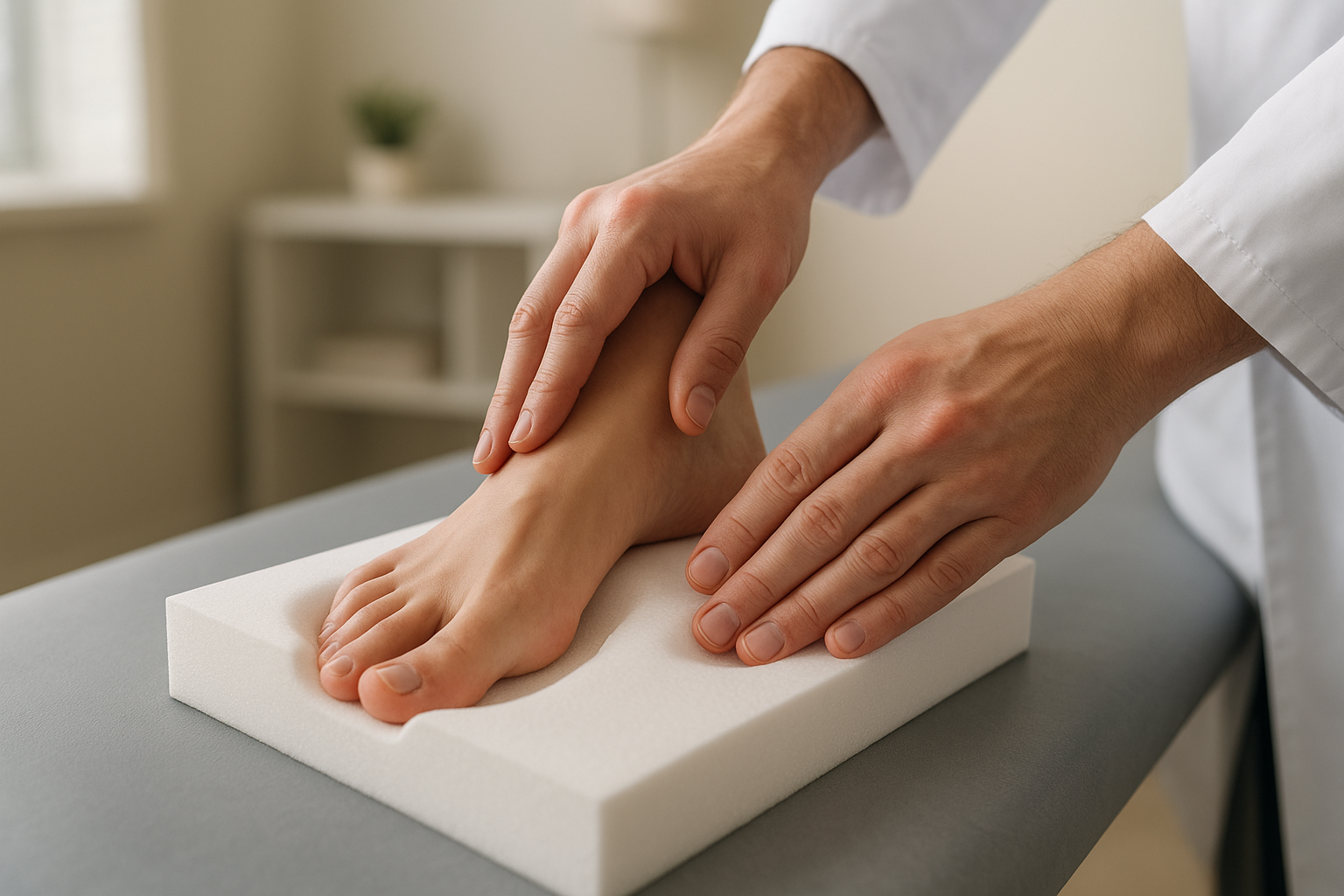
Custom foot molds captured in a foam impression box form the starting point for a fully personalized orthotic. For a deeper walkthrough, see our Custom Foot Orthotics for Seniors: A Complete Guide.
What Are Custom Foot Molds, Exactly?
Custom foot molds are three-dimensional impressions of a patient's feet, taken while the foot rests in a specific neutral or corrected position rather than its natural, relaxed posture. Podiatrists and orthotic specialists use foam boxes, plaster casts, or digital scanners to create these impressions. Because every foot is different, no two custom foot molds are ever quite the same — even between a person's own left and right foot.
This distinction matters because it separates true medical-grade fabrication from mass-produced insoles. As explained in this complete guide to personalized foot orthotics, the mold itself is what allows a lab to reproduce your arch height, heel angle, and pressure distribution in the finished device. In addition, the foot structure that orthotics are engineered around directly informs how much correction the finished product needs to provide, which is why the molding step cannot be rushed or approximated.
The Casting Process Explained: Neutral Position vs. Resting Foot Position
The single biggest factor separating an accurate mold from a wasted appointment is foot position. When a foot is allowed to rest naturally, it often rolls inward (pronates) or collapses through the arch under its own weight. Consequently, a mold taken from a relaxed foot bakes that collapse directly into the final orthotic instead of correcting it.
To avoid this, trained clinicians hold the foot in what is often called the subtalar neutral position — a technical term for the point at which the ankle joint sits neither over-pronated nor over-supinated. In plain language, it is the "true" alignment of the foot before gravity and body weight distort it. Holding this position during molding means the resulting device supports your foot the way it is supposed to move, not the way it collapses when tired or under load. This is precisely the step that separates a clinically fabricated orthotic from a kiosk-style insert built from a quick footprint scan.
Foam Box, Plaster Casting, and Digital Scanning: Comparing Custom Foot Mold Methods
Not all custom foot molds are captured the same way. Three methods dominate modern practices, and each has distinct strengths depending on the condition being treated and the lab producing the final device.
Foam Box Impressions
The foot is pressed into a dense foam block in the corrected neutral position, leaving a reverse impression. This method is fast, inexpensive, and comfortable, which is why it remains the most widely used option for routine orthotic fittings.
Plaster of Paris Casting
Plaster bandages are wrapped around the foot while it is suspended in neutral position, then removed once set to create a positive mold. Because the foot never bears weight during capture, this technique is widely regarded as the most accurate way to preserve arch height for patients with severe deformities, diabetic foot changes, or significant biomechanical imbalances.
Digital 3D Scanning
A handheld or platform-based scanner maps the foot's surface using structured light or laser sensors, producing a digital file instead of a physical cast. This approach is fast and easy to store or email to a lab, though its accuracy still depends entirely on whether the clinician holds the foot in neutral position during the scan — the technology does not correct for operator error.
In short, no single method is universally "better." Instead, the right choice of custom foot molds depends on the patient's condition, the practitioner's training, and the fabrication lab's preferred workflow. For a deeper technical breakdown of each stage, this step-by-step guide to how custom foot molds are made covers the quality checks labs run before shipping a finished device.
Why Custom Foot Molds Matter for Foot Health
Generic insoles are built around average foot shapes, which means they rarely address the root cause of pain. Custom foot molds, on the other hand, allow a device to be shaped around your actual anatomy rather than an approximation. As a result, pressure gets redistributed exactly where you need it, instead of where a manufacturer guessed it should go.
This precision is especially important for conditions like plantar fasciitis, a common cause of heel pain described in detail by the Mayo Clinic. Furthermore, properly fitted orthotic devices help a majority of patients with chronic foot pain see measurable improvement within weeks. For a broader look at available solutions, this overview of custom orthotics for foot pain breaks down which options fit different conditions.
How Custom Foot Molds Are Made: Step-by-Step
Understanding the fabrication process helps explain why custom foot molds cost more than store-bought inserts yet deliver far better results. Below is the typical sequence a podiatrist follows. For a deeper walkthrough, see our Custom Arch Support Inserts: Complete Buyer's Guide.
- Initial foot and gait assessment: The podiatrist examines your feet, reviews your medical history, and watches you walk to spot structural imbalances that need correcting.
- Select the molding method: Depending on your condition, the specialist chooses a foam box, plaster wrap, or digital scanner, weighing accuracy against speed and comfort.
- Capture the impression: Your foot is held in a neutral, corrected position so the mold reflects proper alignment rather than a collapsed resting posture.
- Send the mold to a fabrication lab: Technicians use the mold as a template to shape a rigid or semi-rigid shell that matches your foot's exact contours.
- Fit and adjust: During a follow-up visit, the fit is checked inside your actual shoes and fine-tuned for comfort and support.
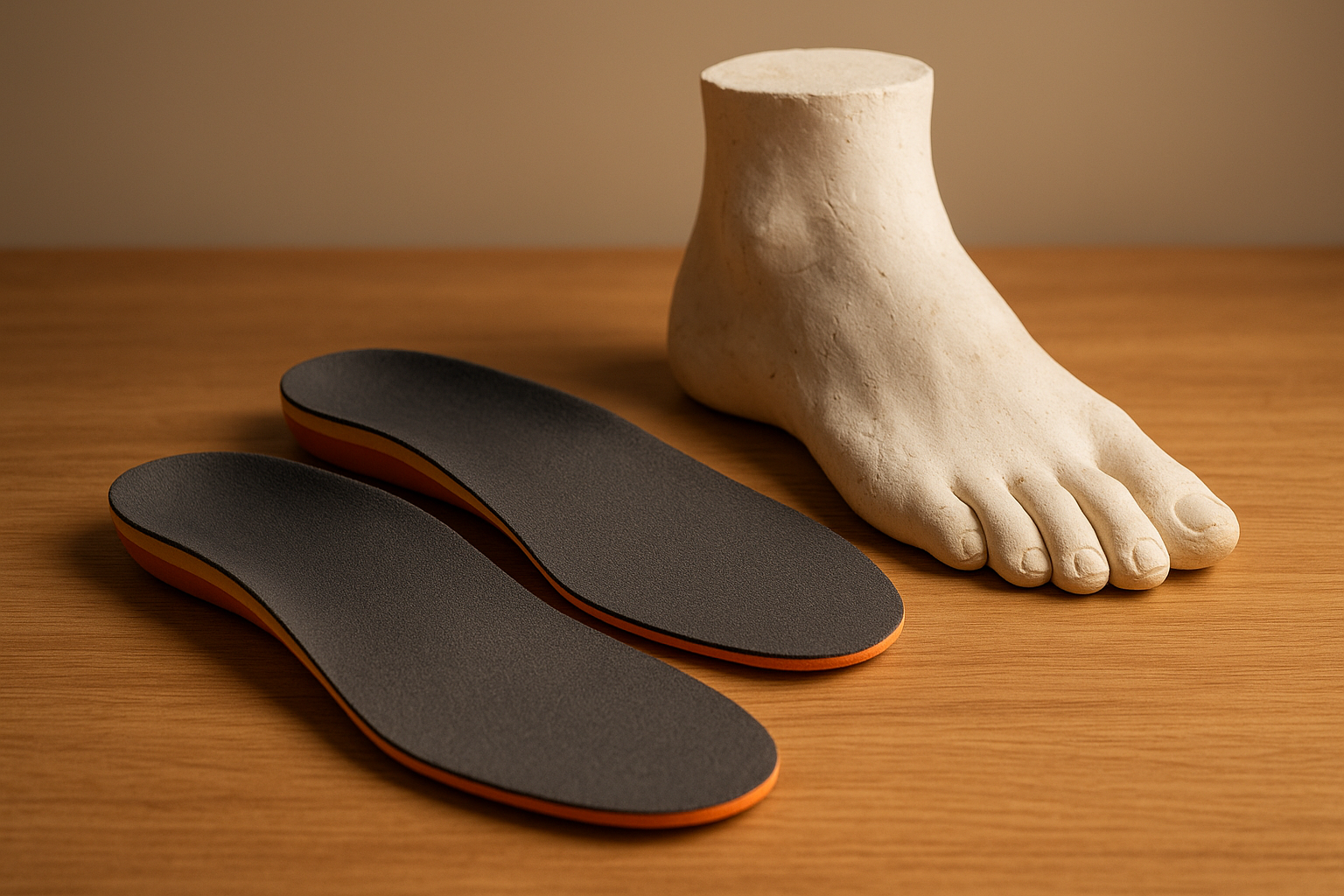
The plaster cast on the left becomes the finished orthotic on the right, shaped precisely from the original custom foot molds. For a deeper walkthrough, see our Custom Foot Supports for Standing Jobs: The Complete Guide.
Custom Foot Molds vs. Off-the-Shelf Insoles: What's the Real Difference?
The biggest difference comes down to fit. Off-the-shelf insoles are manufactured in a handful of sizes meant to fit "most" feet, while custom foot molds guarantee a device shaped to one specific foot. Consequently, patients with flat feet, high arches, or asymmetrical foot shapes tend to see far better outcomes with molded orthotics than with generic cushioning.
Cost is another consideration. Store-bought inserts are cheaper upfront, but they often need replacing every few months and rarely correct underlying biomechanical issues. In contrast, orthotics built from custom foot molds are a longer-term investment designed to last several years while addressing the actual cause of discomfort, not just the symptoms. According to MedlinePlus, structural issues like flatfeet can worsen over time without proper support, which is exactly the gap that a molded device is designed to close.
Weight-Bearing, Semi-Weight-Bearing, and Non-Weight-Bearing Casting Techniques
Beyond the molding material itself, clinicians also choose how much body weight the foot bears during the impression. This decision significantly changes how the finished orthotic behaves.
Non-Weight-Bearing (Suspension) Casting
The foot is suspended off the ground entirely, allowing the practitioner to hold it in a fully corrected neutral position without gravity interfering. This technique typically produces the most accurate custom foot molds for patients with rigid deformities, since it captures the foot's true architecture rather than its compressed shape under load.
Semi-Weight-Bearing Casting
Here, the patient bears a small, controlled portion of body weight on the foot while it remains guided into neutral alignment. This middle-ground approach is often used for flexible foot types, since it still respects the corrected position while acknowledging how the foot behaves under mild load.
Full Weight-Bearing Casting
The patient stands fully on the molding material, which is faster but allows the arch to flatten under body weight. This method is sometimes used for accommodative orthotics meant purely for cushioning rather than structural correction, but it is generally considered less precise for patients who need real biomechanical support.
Who Needs Custom Foot Molds?
Not everyone requires custom foot molds, but certain groups benefit significantly. People with diabetes, arthritis, flat feet, high arches, or chronic heel and arch pain are common candidates. Similarly, athletes recovering from repetitive stress injuries often rely on molded orthotics to correct gait issues that generic insoles cannot fix.
Occupations matter too. Anyone who spends long shifts on their feet, such as nurses, retail workers, or factory staff, may find that custom foot supports for standing jobs reduce fatigue and prevent long-term joint strain. Above all, if pain has persisted for more than a few weeks despite rest and over-the-counter inserts, it is worth having a professional assessment before symptoms become chronic.
What to Expect During Your Foot Molding Appointment
Most appointments begin with a short conversation about your symptoms, footwear habits, and activity level. Afterward, the podiatrist examines your feet visually and may ask you to walk a short distance so they can study your gait. This assessment stage is critical, since it determines how much correction the finished orthotic needs to provide.
Once the assessment is complete, the actual molding takes just 15 to 30 minutes. There is no pain involved, though you may feel gentle pressure as your foot is guided into position. According to guidance from the National Institute of Arthritis and Musculoskeletal and Skin Diseases, properly supported feet play a meaningful role in preventing secondary joint and back problems over time, which is one more reason to prioritize an accurate mold from the start.
Common Foot Conditions Treated With Custom-Molded Orthotics
Because custom foot molds capture the exact structure of a foot, they can be engineered to address a wide range of conditions rather than a single generic complaint. Common examples include:
- Plantar fasciitis: Heel and arch pain from inflammation of the plantar fascia band.
- Flat feet (pes planus): Arches that collapse under load, straining ligaments and tendons.
- High arches (pes cavus): Rigid arches that concentrate pressure on the heel and ball of the foot.
- Overpronation and oversupination: Excessive inward or outward rolling of the foot during walking.
- Diabetic foot complications: Reduced sensation that requires precise, pressure-relieving support.
- Bunions and hammertoes: Structural changes that need extra room and targeted cushioning.
Since each of these conditions changes how weight travels through the foot, the mold — not the finished insole material — is what allows a lab to build support specific to each diagnosis rather than a one-size-fits-all shape.
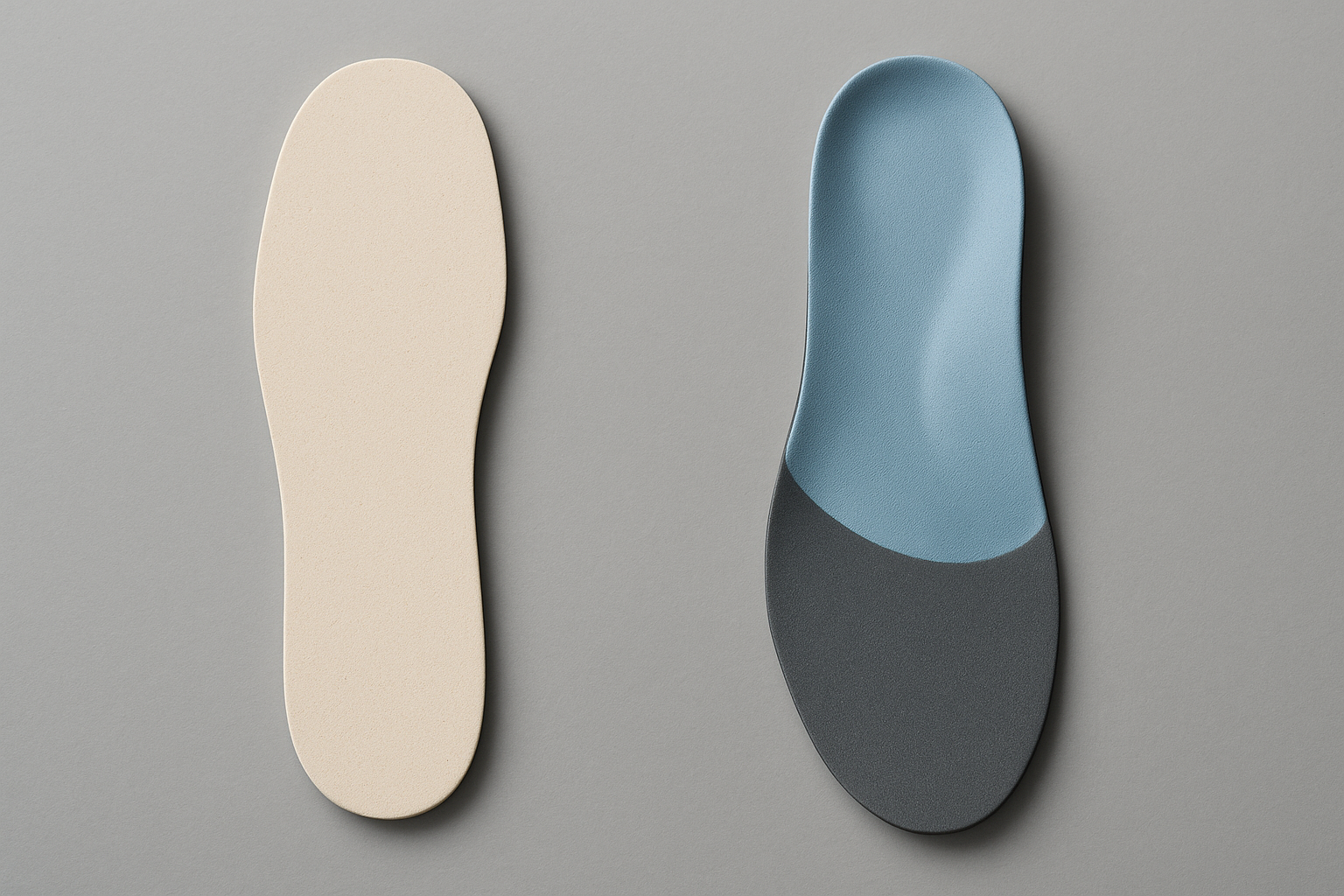
A generic insole beside an orthotic built from custom foot molds, showing the difference in contouring and support. For a deeper walkthrough, see our Custom Foot Orthotics for Arch Support: Full Guide.
Choosing the Right Provider for Your Custom Orthotic Molds
Not all providers offer the same level of craftsmanship. Since custom foot molds form the basis for the entire orthotic, accuracy at this stage directly determines how well the finished product performs. Look for a podiatrist-owned practice with hands-on fabrication experience rather than a retail kiosk relying on generic templates.
Patients who prefer ordering remotely can still get an accurate result. If you are wondering where to get personalized insoles made for your shoes, many practices now combine an at-home mold kit with a complimentary phone consultation. It also helps to compare options directly, and this guide to the best place to get custom orthotics online walks through what separates a reputable remote provider from one cutting corners. You can learn more about this process directly at customorthotics.com, where a podiatrist-owned team with more than 20 years of experience and an A+ Better Business Bureau rating fabricates orthotics from individual foot molds for both local and remote patients.
Cost, Insurance Coverage, and Turnaround Time for Custom Foot Molds
Custom foot molds and the orthotics fabricated from them typically cost more upfront than mass-produced insoles, largely because of the clinical assessment, skilled labor, and lab materials involved. However, that higher initial price often pays off over time, since a well-made device can last three to five years compared to insoles that wear out within months.
Insurance coverage varies by plan and diagnosis. Some policies reimburse a portion of the cost when a physician documents a qualifying condition, such as diabetes or a diagnosed structural deformity, while others treat orthotics as an out-of-pocket wellness expense. As for timing, capturing the mold itself takes 15 to 30 minutes, but fabricating the finished orthotic typically takes two to four weeks depending on the lab's workload and the complexity of the device.
Common Mistakes to Avoid When Getting Custom Foot Molds
Even a well-intentioned appointment can go wrong if a few key details are overlooked. Being aware of these pitfalls in advance helps ensure the mold — and therefore the finished orthotic — actually solves the problem.
- Letting the foot rest in a relaxed position: This bakes existing collapse or misalignment directly into the finished device.
- Skipping the gait assessment: Without observing how you walk, a provider may miss the actual source of pain.
- Wearing the wrong shoes to the fitting: Bringing the footwear you actually wear daily helps ensure the orthotic fits properly once finished.
- Choosing price over craftsmanship: The cheapest mold is rarely the most accurate one, and an inaccurate mold guarantees a disappointing result.
Frequently Asked Questions About Custom Foot Molds
What are custom foot molds?
Custom foot molds are precise impressions of a person's feet, taken with foam boxes, plaster casts, or digital scanners, that capture exact shape and pressure points. They serve as the blueprint used to fabricate a personalized orthotic device.
How are custom foot molds made?
A specialist assesses your gait and foot structure, then captures an impression while your foot is held in a neutral or corrected position. The mold is then sent to a lab where technicians shape an orthotic to match its contours.
Do custom foot molds hurt?
No, the process is painless. Most patients feel only gentle pressure as their foot is guided into a foam box or plaster wrap.
How long does it take to get custom foot molds made?
Taking the mold itself usually takes 15 to 30 minutes during a consultation. However, fabricating the finished orthotic from the mold typically takes two to four weeks.
How much do custom orthotics from foot molds cost?
Prices vary depending on materials and complexity, but custom orthotics generally cost more upfront than off-the-shelf insoles. In exchange, they last longer and address structural issues rather than masking symptoms.
Custom foot molds vs. 3D foot scans: which is more accurate?
Both methods can be highly accurate when performed correctly. Traditional molds physically capture foot shape, while 3D scans use digital imaging, and many practices combine both.
How often should custom foot molds be redone?
Most podiatrists recommend updating your molds every two to three years, or sooner if weight, activity level, or foot condition changes.
Can custom foot molds help with plantar fasciitis?
Yes, orthotics built from custom foot molds can reduce strain on the plantar fascia by redistributing pressure correctly. Many patients notice relief within a few weeks of consistent use. For a deeper walkthrough, see our Online Ordering Custom Foot Orthotics: Complete Guide.
What's the difference between custom foot molds and off-the-shelf insoles?
Custom foot molds are taken from your individual feet, so the resulting orthotic matches your exact shape. Off-the-shelf insoles use generic sizing that cannot account for arch height or gait patterns. For a deeper walkthrough, see our How Do Custom Foot Arch Supports From CustomOrthotics.com Compare to Regular Ins.
Do I need a doctor's referral to get custom foot molds?
In most cases, no referral is required since many podiatrist-run practices offer direct consultations. That said, insurance reimbursement sometimes requires documentation from a physician.
Can custom foot molds be made at home?
Some at-home kits exist, but they are generally less precise than molds taken under clinical supervision. For lasting results, professional guidance is recommended.
What common mistakes should I avoid when getting custom foot molds?
A common mistake is letting your foot rest in an uncorrected position during molding, which produces an inaccurate impression. Skipping a proper gait analysis beforehand can also lead to orthotics that miss the root problem.
How long do orthotics made from custom foot molds last?
Well-made custom orthotics typically last three to five years with proper care. Durability depends largely on materials used and how often the device is worn. For a deeper walkthrough, see our Custom Crafted Orthotics: What to Know Before You Buy.
What's the difference between foam box casting and plaster casting for custom foot molds?
Foam box casting presses the foot into dense foam and is faster and cheaper, while plaster casting suspends the foot off the ground for a more precise, non-weight-bearing capture. Plaster is generally preferred for complex deformities, while foam works well for routine fittings.
Will insurance cover custom foot molds and the orthotics made from them?
Coverage depends on your specific plan and diagnosis. Some insurers reimburse part of the cost when a physician documents a qualifying medical condition, while others classify orthotics as an elective expense not covered under standard plans.
Final Thoughts on Custom Foot Molds
Ultimately, custom foot molds are what separate a truly personalized orthotic from a generic insole guessed at from a size chart. They capture the exact shape, arch height, and pressure points of your feet, giving a podiatrist everything needed to fabricate a device built specifically for you — whether that mold is taken with a foam box, a plaster wrap, or a digital scanner. Whether you are managing plantar fasciitis, structural imbalances, or the daily strain of a standing job, starting with an accurate mold captured in the correct neutral position is the foundation for lasting relief.
If chronic foot pain has been holding you back, consider scheduling a consultation with a podiatrist-owned practice that fabricates orthotics directly from custom foot molds rather than mass production templates. Doing so ensures the finished device fits your feet, and only your feet, precisely.