

Personalized foot orthotics are custom-fabricated shoe inserts prescribed to match the exact shape, pressure pattern, and biomechanical needs of your individual feet. Unlike generic cushioned insoles found in pharmacies, these devices are engineered from a precise mold or 3D scan of your foot, making them one of the most targeted solutions available for chronic foot pain, alignment problems, and mobility issues.
Millions of people live with daily foot discomfort that affects their posture, knees, hips, and lower back. However, many do not realize that a properly fitted orthotic device can address the root cause rather than simply masking the symptoms. In this guide, you will find everything you need to know — from how orthotics work to how to get fitted and what to expect during recovery.
What Are Personalized Foot Orthotics and How Do They Work?
Personalized foot orthotics are medical devices placed inside footwear to support, align, and correct the mechanical function of the foot and lower limb. They work by redistributing ground reaction forces, correcting the angle at which your foot contacts the ground, and reducing excessive stress on soft tissues and joints.
Because every foot is structurally unique, a device built for one person's arch height and pressure distribution will not effectively treat another person's condition. Therefore, the personalization aspect is not a luxury — it is a clinical necessity. According to the Wikipedia entry on orthotics, these devices are designed to modify the structural and functional characteristics of the neuromuscular and skeletal system.
Common Conditions Treated by Custom Insoles
Custom orthotics are prescribed for a wide range of musculoskeletal conditions. Some of the most frequently treated issues include:
- Plantar fasciitis — inflammation of the tissue band along the bottom of the foot, causing sharp heel pain
- Flat feet (pes planus) — collapsed arches that cause overpronation and downstream joint stress
- High arches (pes cavus) — rigid arches that limit shock absorption and cause lateral foot pain
- Bunions and metatarsalgia — forefoot deformities and pressure-related pain
- Achilles tendinitis and shin splints — overuse injuries linked to poor biomechanical alignment
- Knee, hip, and lower back pain — secondary conditions that originate from faulty foot mechanics
For example, someone with flat feet who overpronates places excess rotational force on their knees with every step. As a result, a custom orthotic that corrects pronation can dramatically reduce knee pain without any direct treatment to the knee itself.
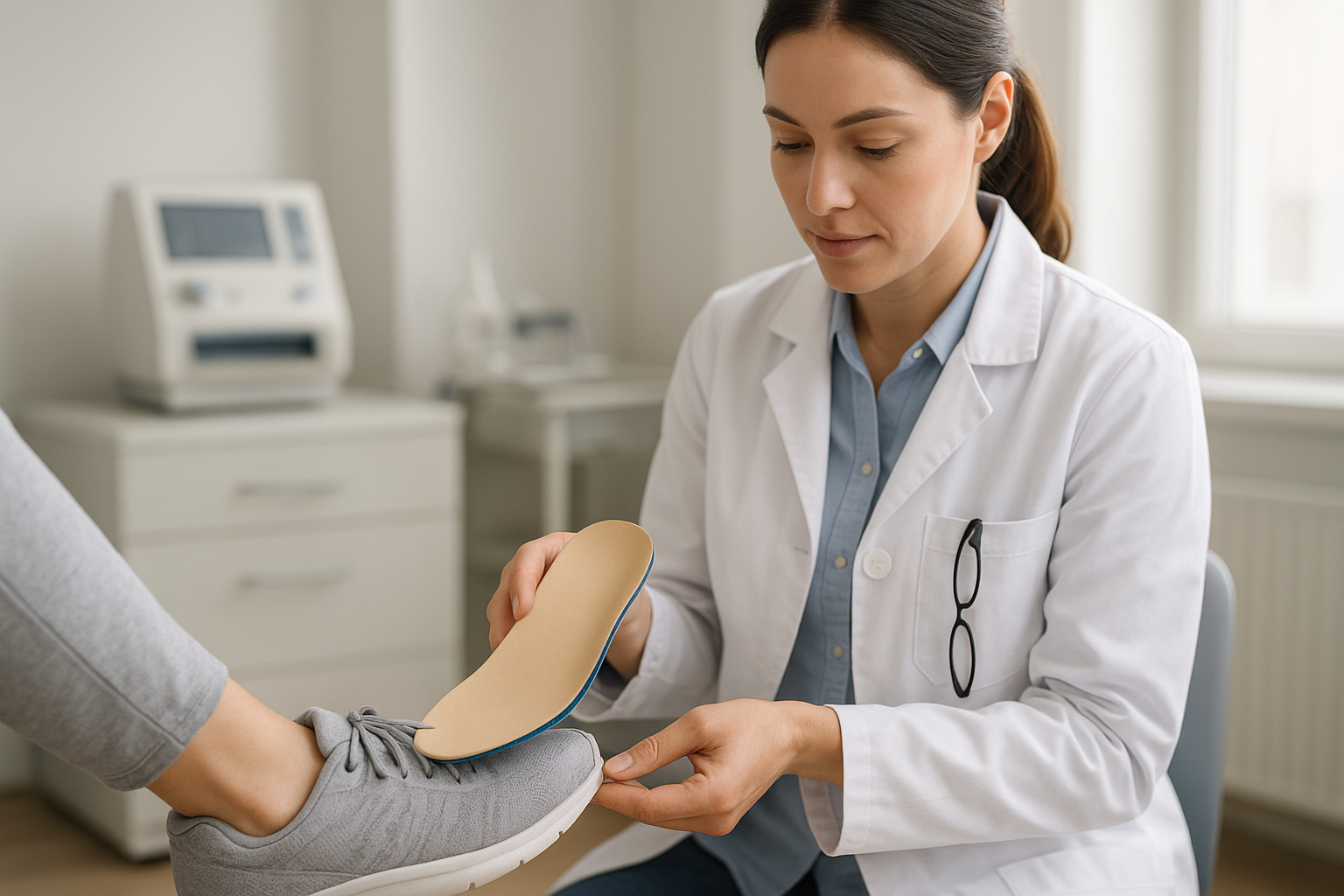
A specialist fitting personalized foot orthotics — the process begins with a thorough biomechanical assessment.
Types of Custom Orthotic Devices
Not all orthotics are built the same way. In practice, there are three primary categories, and your specialist will recommend one based on your diagnosis:
Rigid Orthotics
Made from hard materials such as carbon fiber or firm plastic, rigid orthotics control motion in the subtalar and midtarsal joints. They are typically used for conditions like severe overpronation and are best suited for walking or dress shoes.
Semi-Rigid Orthotics
These combine a firm base layer with cushioning top materials to balance motion control and comfort. They are commonly prescribed for athletes and active individuals who need both support and shock absorption.
Soft Orthotics
Constructed from compressible foam or gel materials, soft orthotics primarily absorb shock and relieve pressure points. They are often recommended for diabetic foot care, arthritis, and elderly patients who need cushioning above all else.
Step-by-Step: How to Get Fitted for Custom Orthotics
Getting fitted for orthotics is a structured clinical process. Here is what to expect at each stage:
Consult a Podiatrist or Orthopedic Specialist
Book an appointment with a licensed professional who can review your medical history, symptoms, and activity level. This initial consultation determines whether orthotics are medically appropriate for you.
Undergo a Gait Analysis and Foot Assessment
Your specialist will observe your walking pattern and examine your foot structure, arch height, and joint flexibility. Additionally, pressure-mapping technology may be used to identify high-load areas on your sole.
Get a Foot Cast or 3D Scan
A plaster cast, foam impression box, or digital 3D scan captures the precise contours of your foot. Modern clinics increasingly use 3D scanning because it is faster and produces highly accurate data for the fabrication lab.
Wait for Lab Fabrication
Your foot data is sent to a specialist orthotics laboratory, where technicians craft your devices from the prescribed materials. Fabrication typically takes one to three weeks, though some providers offer faster turnaround.
Attend a Fitting Appointment
Finally, you return to your provider to receive your finished orthotics. Your specialist will check the fit, make any minor adjustments, and give you a gradual break-in schedule to follow at home.
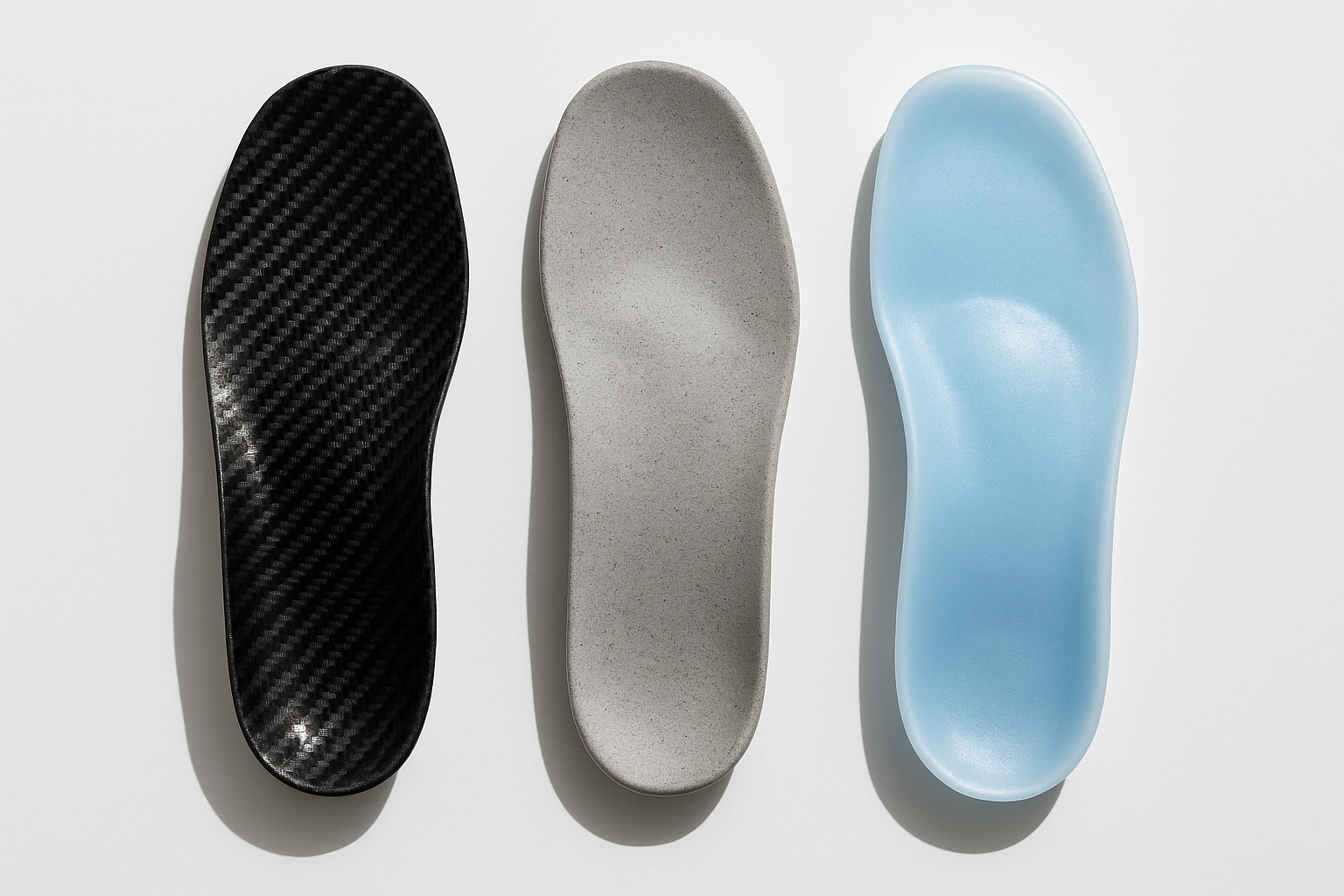
Different orthotic materials serve different purposes — your specialist will match the type to your specific condition.
Cost, Insurance, and What to Expect Financially
Custom orthotics typically range from $200 to $800 per pair, depending on the materials used, the complexity of your condition, and your provider's location. While this may seem significant compared to a $20 pharmacy insole, the clinical effectiveness and longevity — usually two to five years — make them a sound long-term investment.
Many private health insurance plans and flexible spending accounts (FSAs) partially or fully cover custom orthotics when they are prescribed by a licensed medical professional. Therefore, it is worth contacting your insurer before your appointment to understand your coverage and whether a referral is required.
For detailed information on ordering and pricing options, customorthotics.com provides a helpful overview of what to expect from the custom fabrication process.
Breaking In Your Orthotics: What Most People Get Wrong
One of the most common mistakes people make is wearing their new orthotics all day immediately after receiving them. Because custom orthotics actively change the way your muscles and joints load and move, your body needs time to adapt. Rushing this process can cause soreness, blisters, or even temporary worsening of symptoms.
Instead, follow a gradual break-in protocol. Start with one to two hours of wear on the first day, then increase by one hour per day over the following two to three weeks. Meanwhile, continue wearing your previous footwear for the remaining hours until your body has fully adjusted.
Additionally, it is important to wear your orthotics in appropriate footwear. Shoes with a removable insole and adequate depth are essential — otherwise the orthotic will not sit correctly and its therapeutic effect will be compromised. Your provider can recommend compatible shoe styles for your lifestyle and activity level.
How Long Do Results Take and When Should You Follow Up?
Most people begin to notice meaningful pain relief within four to eight weeks of consistent orthotic use. However, full biomechanical correction — including changes in muscle recruitment patterns and joint loading — can take three to six months of regular wear.
Follow-up appointments are an important part of the process. Your provider will typically schedule a check-in at four to six weeks to assess how you are responding and whether any adjustments are needed. Furthermore, annual reviews help ensure that your orthotics remain appropriate as your body changes over time.
If you experience persistent discomfort, new pain, or notice that the orthotic has shifted or worn unevenly, contact your provider promptly rather than continuing to wear a device that may no longer be functioning correctly.

With the right support underfoot, daily movement becomes noticeably more comfortable within weeks of consistent wear.
Frequently Asked Questions
What are personalized foot orthotics?
Personalized foot orthotics are custom-fabricated shoe inserts designed from a precise mold or scan of your individual foot. Unlike over-the-counter insoles, they address your specific biomechanical needs, correcting alignment and redistributing pressure across the foot.
How are custom orthotics different from store-bought insoles?
Store-bought insoles are mass-produced for average foot shapes and provide general cushioning only. Custom orthotics are prescribed and fabricated to match your exact foot geometry and target your specific condition, making them significantly more effective for clinical issues.
What conditions can personalized foot orthotics treat?
They are commonly used to treat plantar fasciitis, flat feet, high arches, bunions, Achilles tendinitis, shin splints, and knee or lower back pain caused by poor foot alignment.
How long does it take to get custom orthotics made?
Fabrication typically takes one to three weeks after your assessment and casting appointment. Some clinics offer expedited services that can deliver orthotics within a few business days for an additional fee.
How much do custom orthotics cost?
Custom orthotics generally range from $200 to $800 depending on materials, complexity, and provider. Many insurance plans partially cover the cost when prescribed by a licensed podiatrist or physician, so always check your benefits first.
How long do custom orthotics last?
High-quality custom orthotics typically last two to five years with proper care. They may need adjustment or replacement sooner if your foot shape changes significantly, you gain or lose weight, or the materials show visible wear.
Do I need a prescription for personalized foot orthotics?
Yes, a prescription from a podiatrist, orthopedic surgeon, or physician is typically required for true custom orthotics. This ensures the device is medically appropriate and is often necessary for insurance reimbursement.
How long does it take to adjust to wearing custom orthotics?
Most people need one to four weeks to fully adjust. It is recommended to start wearing them for just a few hours per day and gradually increase the duration so your muscles and joints can adapt without strain.
Can children wear personalized foot orthotics?
Yes, children can benefit from custom orthotics, particularly for flat feet, in-toeing, or other developmental foot conditions. A pediatric podiatrist can assess whether orthotics are appropriate based on the child's age, activity level, and specific diagnosis.
What is the fitting process like?
The process involves a gait analysis, a physical examination of your feet and lower limbs, and either a plaster cast, foam impression, or 3D digital scan. This data is sent to a lab where your devices are fabricated to precise specifications.
Can I wear custom orthotics in any shoe?
Custom orthotics work best in shoes with a removable insole and adequate depth. Your orthotist may also create sport-specific or dress-shoe versions so you are supported across different activities and footwear styles.
Are there different types of custom orthotics?
Yes — rigid orthotics use hard materials for motion control, semi-rigid orthotics balance support and flexibility for active users, and soft orthotics provide cushioning and pressure relief for conditions like diabetes or arthritis. Your specialist will recommend the right type for your needs.
The Bottom Line on Custom Foot Support
Personalized foot orthotics represent one of the most evidence-backed, non-invasive interventions available for a wide range of foot, ankle, knee, and lower back conditions. Because they are built around the precise geometry and biomechanical profile of your foot, they deliver a level of therapeutic precision that no off-the-shelf product can replicate.
If you are living with persistent foot pain or have been told your gait is contributing to joint problems, consulting a podiatrist is the most important first step. From there, the process is straightforward, and the results — for most people — are genuinely life-changing. For further guidance on the fabrication and ordering process, visit customorthotics.com to explore your options.
In short, investing in the right support today can protect your joints, improve your posture, and keep you moving comfortably for years to come.