

Custom foot orthotics for arch support are precision-molded medical devices built from an exact impression of your own feet, and they remain the single most reliable way to correct the structural imbalances that cause chronic heel, arch, and joint pain. Unlike the arch supports you'll find at a pharmacy or order through a one-size-fits-all online quiz, a genuine custom orthotic starts with a hands-on assessment from a podiatrist — a doctor who specializes in foot and ankle care — who studies your gait, arch height, and pressure points before any device is built. As a result, the finished product matches the unique geometry of your foot rather than an average shape pulled from a size chart. In particular, people living with flat feet, high arches, plantar fasciitis, or metatarsal pain often notice measurable relief once they switch from mass-produced inserts to a properly fitted custom device. Throughout this guide, we explain exactly how custom foot orthotics for arch support are diagnosed, molded, fabricated, and fitted, plus how to tell a true custom orthotic apart from a marketing gimmick.
Quick answer: Custom foot orthotics for arch support are individually molded devices — not adjustable pads or one-size inserts — designed to correct foot alignment and redistribute pressure evenly. Because they're built from an impression or 3D scan of your own foot, taken after a professional gait assessment, they consistently outperform off-the-shelf insoles for chronic pain, structural imbalances, and mobility limitations.
What Are Custom Foot Orthotics for Arch Support?
Custom foot orthotics for arch support are rigid or semi-rigid devices molded from an individual's foot to correct alignment and redistribute pressure evenly across the sole. Unlike over-the-counter insoles, they are prescribed and fabricated only after a podiatrist assesses gait, arch type, and specific pain points. Consequently, they address the underlying biomechanical cause of foot pain rather than simply cushioning the symptoms.
In practice, this means two people who both describe themselves as having "flat feet" might receive very different orthotics depending on how their weight shifts while walking. Therefore, an accurate diagnosis matters just as much as the fabrication itself. According to the general overview of orthotics on Wikipedia, these devices are widely used across podiatry, physical therapy, and orthopedics to manage a range of lower-limb conditions. For a broader look at every arch-support option available today, our complete guide to lasting arch relief is a helpful companion resource.
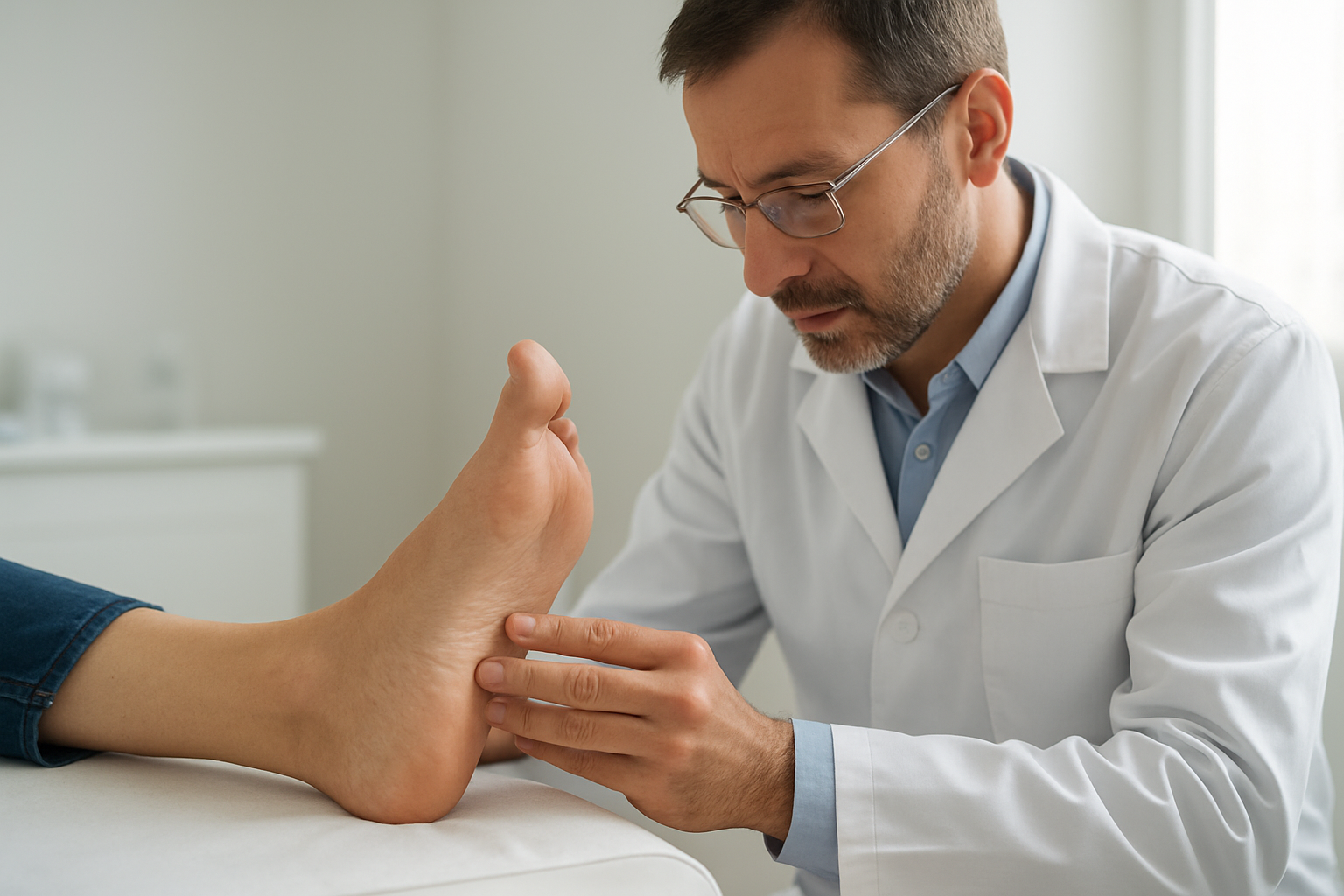
A thorough foot assessment is the first step toward properly fitted custom foot orthotics for arch support. For a deeper walkthrough, see our Custom Foot Molds: Complete Guide to Getting Fitted.
How Custom Orthotics Differ From Off-the-Shelf Arch Supports
Off-the-shelf arch supports are manufactured in a handful of standard sizes meant to fit an "average" foot shape. In contrast, custom orthotic inserts are built from a mold or digital scan of your actual foot, so the contour matches your arch precisely. This distinction matters because even small mismatches in arch height can shift pressure onto the wrong areas of the foot, which in turn can aggravate rather than relieve pain.
Furthermore, custom devices allow a podiatrist to specify material stiffness, correction angles, and topcover thickness based on your diagnosis. For example, someone with a rigid high arch typically needs different cushioning than someone with a flexible flat foot. If you're comparing daily-wear options in the meantime, this guide to insoles that provide good arch support for daily use breaks down what separates a decent insole from an inadequate one.
Understanding Your Arch Type: Low, Neutral, and High Arches
Before any orthotic is designed, it helps to know which of the three general arch categories your foot falls into. Low arches, often called flat feet, tend to collapse inward during walking, a motion known as overpronation. Neutral arches distribute weight fairly evenly and rarely need aggressive correction. High arches, on the other hand, don't absorb shock as efficiently, so impact concentrates on the heel and ball of the foot — a pattern called supination.
The Wet Footprint Test: A Quick At-Home Arch Check
Although this simple test can't replace a professional gait assessment, it gives you a rough starting point. Wet the sole of your foot, step firmly onto a paper bag or dark pavement, and look at the resulting print. A print that shows almost the entire foot suggests a low arch, a print with a thin curved band along the outer edge suggests a neutral arch, and a print showing only the heel and ball connected by a thin sliver suggests a high arch. Once you have a general sense of your arch type, our complete guide to lasting arch relief explains what each arch type typically needs from a support device.
Signs You May Need Arch Support Inserts
Certain symptoms suggest it's time to look beyond generic cushioning. Heel pain that's worst first thing in the morning, aching arches after standing for long periods, or uneven wear patterns on your shoe soles are all common indicators. Similarly, recurring ankle rolling or unexplained knee discomfort can sometimes trace back to poor foot alignment rather than a knee problem itself.
If any of these symptoms sound familiar, it's worth reading through how to find foot arch supports that really work before assuming a generic insole will solve the problem. In many cases, a short consultation with a podiatrist can clarify whether custom fabrication is genuinely necessary or whether a lower-cost option would suffice.
The Biomechanics of Arch Support: Why Alignment Matters
Your foot is the foundation of an interconnected kinetic chain that runs from your ankle to your hip and lower back. Consequently, when the arch collapses or fails to absorb shock properly, the resulting strain doesn't always stay in the foot. Overpronation, for instance, can rotate the shin and knee inward, while a rigid high arch can transmit excess impact straight up the leg with every step.
The Mayo Clinic's overview of flatfeet notes that untreated structural imbalances can contribute to ankle, knee, and back pain over time. That's precisely why custom foot orthotics for arch support are designed around your entire movement pattern, not just the shape of your heel. Above all, correcting alignment at the foot is often the most direct way to reduce strain further up the chain.
The Fabrication Process: From Foot Mold to Finished Orthotic
Understanding the fabrication process helps set realistic expectations for timelines and cost. Below is the typical sequence a podiatry practice follows when creating custom foot orthotics for arch support.
- Initial consultation and assessment: A podiatrist reviews your medical history, examines your gait, and identifies structural issues such as flat feet or high arches that need correcting.
- Taking the mold or scan: The practice captures a precise three-dimensional impression of each foot using a plaster mold, foam box, or digital scanner for accuracy.
- Writing the prescription: The podiatrist specifies material stiffness, arch height, and corrective posting based directly on the assessment findings from step one.
- Lab fabrication: Skilled technicians build the orthotic shell and topcover by hand, shaping the device to match the mold and the prescribed corrections precisely.
- Fitting and follow-up: During a fitting appointment, the podiatrist checks shoe compatibility and comfort, then makes small adjustments so the orthotic performs as intended.
Because each step depends on the previous one, skipping the assessment or rushing the mold usually leads to a poor fit. Therefore, most reputable practices, including podiatrist-owned labs, build extra time into the schedule for a proper follow-up adjustment.
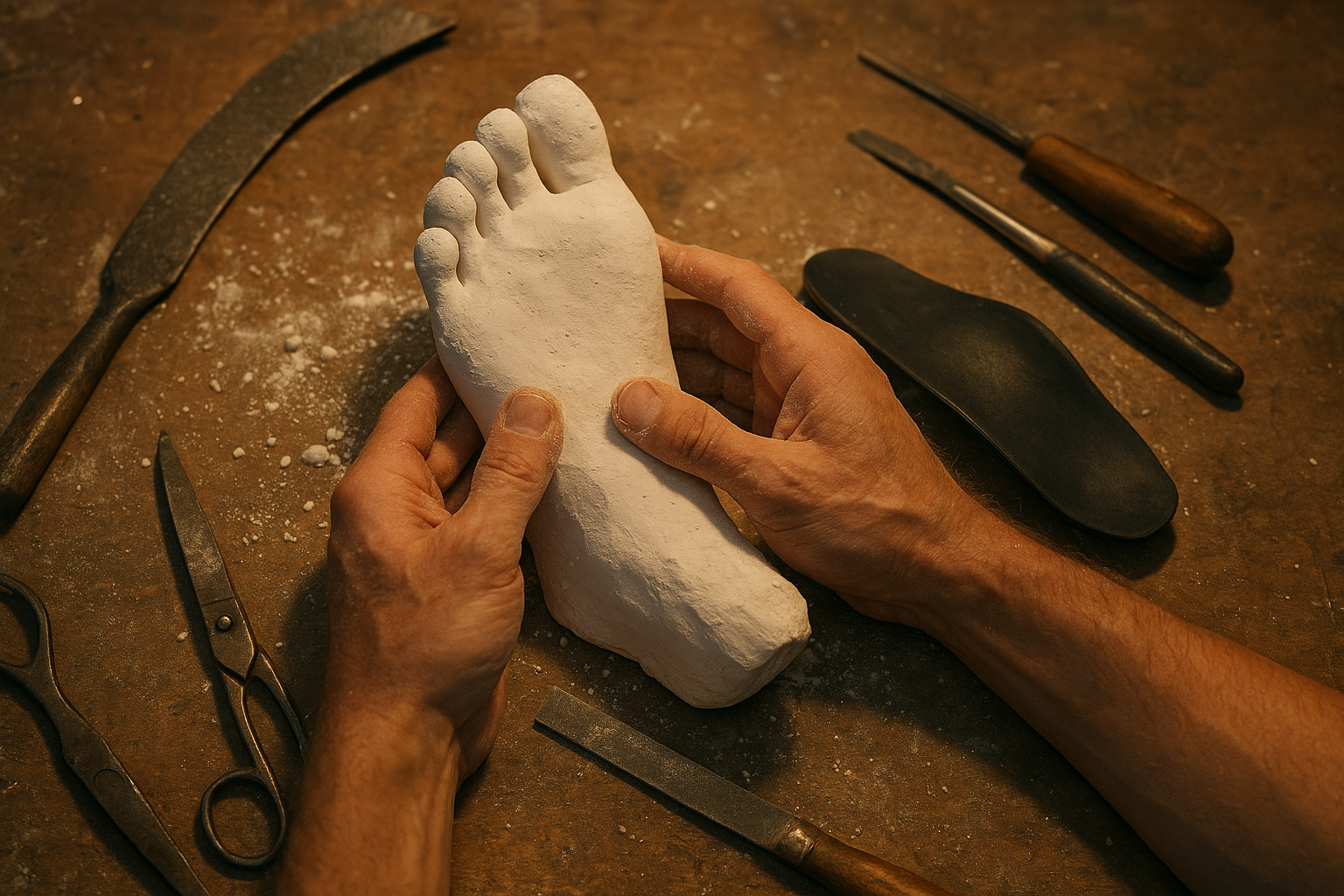
Skilled hand fabrication is what separates a true custom device from a mass-produced insole.
Materials Used in Custom Orthotics: Rigid, Semi-Rigid, and Soft
Material choice shapes how an orthotic feels and performs just as much as the shape of the mold does. Podiatrists typically choose from three broad categories, and each one serves a different biomechanical need.
Rigid Orthotics: Polypropylene and Carbon Fiber
Rigid devices are usually made from polypropylene or carbon fiber, materials chosen specifically to control excess motion and correct structural misalignment. Because they don't compress under body weight, they're often prescribed for moderate to severe overpronation or supination.
Semi-Rigid Orthotics: Layered Composites
Semi-rigid orthotics combine layers of softer, flexible materials with firmer support elements. As a result, they balance correction with comfort, which makes them a common choice for athletes and anyone whose activity level demands both stability and shock absorption.
Soft Orthotics: EVA Foam and Cork
Soft orthotics rely on cushioned materials such as EVA foam or cork to absorb shock rather than control motion. Consequently, they're frequently recommended for diabetic patients, arthritic feet, or anyone with limited tolerance for firm pressure points.
Key Benefits of Custom Arch Support Orthotics
Custom arch support orthotics offer several advantages over generic alternatives. Above all, they target the specific cause of discomfort rather than just cushioning the surface. In addition, they can improve overall posture and gait efficiency by correcting how weight travels through the foot, ankle, and knee.
Research published through the National Center for Biotechnology Information has linked properly fitted orthotic devices to measurable reductions in plantar pressure and pain scores among patients with chronic foot conditions. Similarly, the American Podiatric Medical Association recognizes custom orthotics as a standard conservative treatment option before considering more invasive interventions. For a closer look at premium options, this comparison of premium insoles with good arch support is a useful next read.
Custom Orthotics for Specific Foot Conditions
Not every painful foot condition responds the same way to arch support, so it helps to understand how orthotics are tailored to specific diagnoses. For a deeper walkthrough, see our How Are Custom Foot Molds Made? Complete Guide to Methods, Steps & Quality.
Plantar Fasciitis
Plantar fasciitis involves inflammation of the ligament running along the bottom of the foot. Custom orthotics support the arch directly, which reduces the tension pulling on that ligament with every step.
Flat Feet and Overpronation
For flat feet, orthotics rebuild arch contour and control the inward roll of the ankle, which in turn stabilizes the knee and hip above it.
Metatarsalgia and Ball-of-Foot Pain
Metatarsalgia causes sharp pain across the ball of the foot, often from repetitive impact or an unusually high arch. If this sounds like your situation, our detailed breakdown of the best arch supports for metatarsal foot pain covers cushioning placement in far more depth than a general arch-support article ever could.
High Arches and Supination
High, rigid arches don't absorb shock well, so orthotics for this arch type typically add cushioning at the heel and forefoot rather than relying purely on rigid correction.
Choosing Between 3/4 Length and Full-Length Custom Orthotics
Not every custom orthotic needs to run the full length of the shoe. 3/4 length devices stop before the toes and work well in narrower or dress shoes where space is limited, while full-length options provide additional cushioning and are often preferred for athletic or work footwear.
If you're unsure which style fits your lifestyle, browsing the 3/4 length orthotics product page is a practical starting point. For patients specifically dealing with a naturally high arch, this orthotics for high arches guide explains fit and support considerations in more detail.
True Custom Orthotics vs. Online "Custom-Fit" Insoles
A growing number of websites now sell "custom" insoles built purely from an online quiz, a smartphone photo, or a mail-in foam impression kit with no clinical assessment involved. While convenient, this approach skips the single most important variable: a trained professional identifying why your foot hurts in the first place.
In contrast, genuinely custom foot orthotics for arch support are built after a podiatrist examines your gait in motion, checks joint flexibility, and reviews your medical history. Consequently, the prescription behind the device reflects an actual diagnosis rather than an algorithm's best guess from a photo. If a product is labeled "custom" but never involves a licensed clinician, it's worth asking exactly how your foot shape was measured and by whom before committing to a purchase.
How Much Do Custom Foot Orthotics Cost?
Cost varies depending on materials, design complexity, and whether the device covers a partial or full foot length. Generally, custom orthotics cost more upfront than drugstore insoles, but they're built to last several years with proper care, which often makes the per-year cost comparable or lower.
Some insurance plans partially reimburse custom orthotics when a podiatrist documents medical necessity, and many patients can also use HSA or FSA funds toward the cost since orthotics typically qualify as an eligible medical expense. Therefore, it's worth asking your provider whether pre-authorization is possible before committing to a purchase. Many practices, including options available through customorthotics.com, also offer complimentary consultations so you can weigh the cost against your specific symptoms first.
Break-In Period, Wearing Schedule, and Common Mistakes
One frequent mistake is assuming any firm insole qualifies as "custom" simply because it's marketed that way. In reality, true custom orthotics require an individual mold or scan taken by a clinician, not just an adjustable arch pad. Another common error is skipping the break-in period, which can cause temporary soreness that gets mistaken for a poor fit.
A sensible wearing schedule starts with one to two hours on day one, adding an extra hour or two each day until the orthotic feels natural for a full day of activity. Additionally, wearing custom orthotics in shoes with inadequate depth or structure can undermine their effectiveness entirely. For that reason, it's helpful to review a wearing schedule with your podiatrist during the fitting appointment, rather than guessing at the right pace on your own.
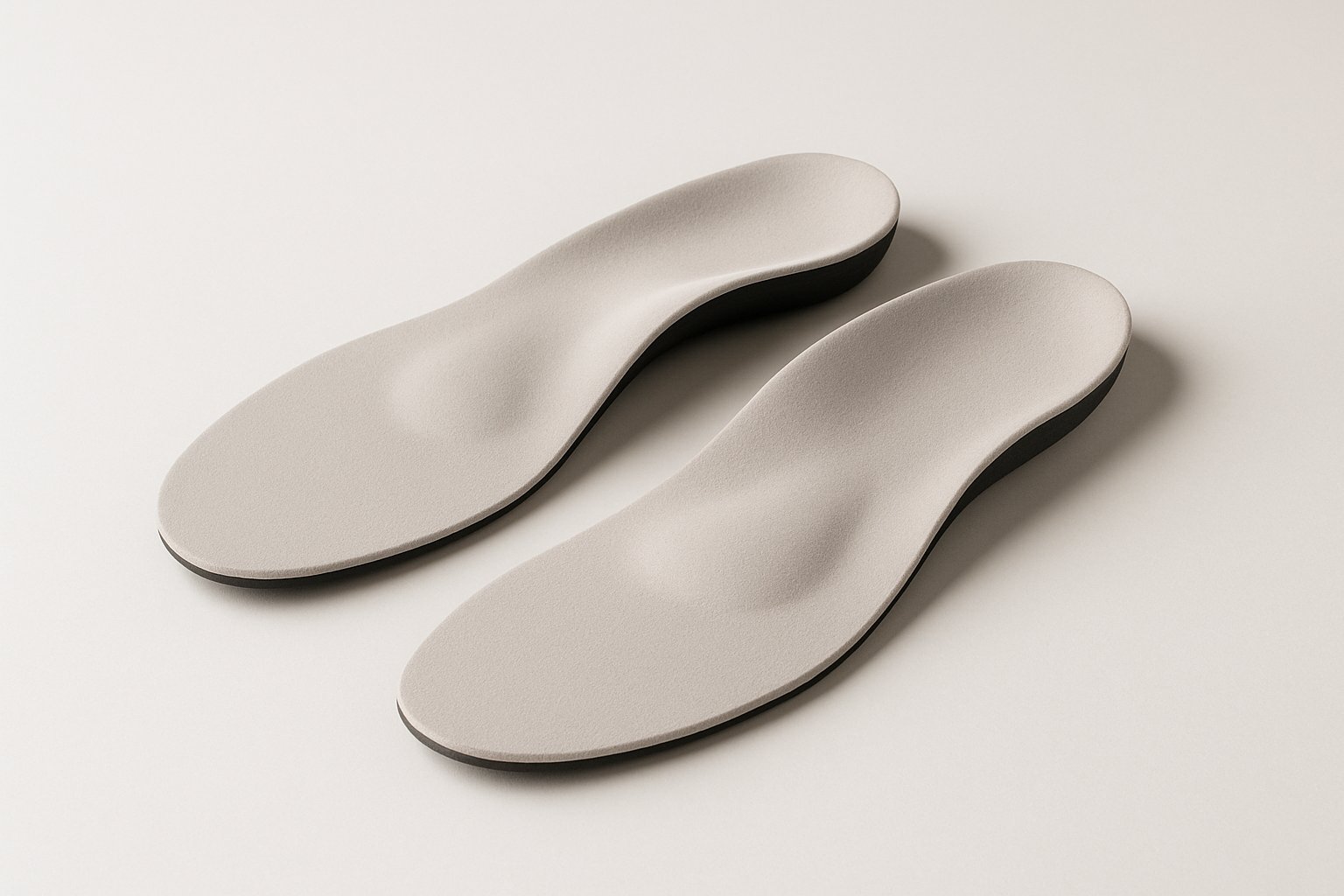
The visible arch contour is what distinguishes true custom orthotics from generic insoles. For a deeper walkthrough, see our Is It Worth Investing in Custom Made Orthotics?.
Caring for and Maintaining Your Custom Orthotics
Proper care extends the working life of any custom device considerably. Wipe the topcover with a damp cloth and mild soap rather than submerging the orthotic in water, since excess moisture can warp certain shell materials over time. Afterward, let them air dry away from direct heat, as radiators and hot car interiors can distort rigid shells permanently.
It also helps to rotate your orthotics between multiple pairs of shoes rather than transferring the same pair back and forth constantly, since repeated removal can loosen the topcover bonding. Finally, inspect the shell and posting every few months for cracking or flattening, particularly if you're highly active.
How to Choose the Right Provider for Custom Foot Orthotics
Not all "custom orthotics" providers offer the same level of clinical care. Look for a practice that performs an in-person or supervised gait assessment rather than relying solely on a self-administered kit. In particular, confirm whether a licensed podiatrist reviews your prescription, whether the lab fabricates devices by hand, and whether a follow-up fitting and adjustment appointment is included in the price.
Above all, transparency matters. A provider willing to explain material choices, correction angles, and expected timelines is generally more trustworthy than one offering a vague, one-size description of the process.
Frequently Asked Questions About Custom Foot Orthotics for Arch Support
What are custom foot orthotics for arch support?
Custom foot orthotics for arch support are podiatrist-prescribed devices molded from an impression of your own foot to correct alignment and cushion pressure points. Unlike generic insoles, they're built to match your specific arch height and gait pattern.
How do custom orthotics differ from store-bought insoles?
Store-bought insoles come in generic sizes meant to fit average feet. Custom orthotics are fabricated from a direct mold of your foot, targeting your unique pressure points rather than offering general cushioning.
How long do custom orthotics typically last?
Most custom orthotics last three to five years with regular use, depending on materials and daily activity levels. Rigid orthotics tend to outlast softer, more cushioned versions.
Are custom foot orthotics covered by insurance?
Many insurance plans partially cover custom orthotics when a podiatrist documents medical necessity, though coverage varies by provider. It's worth confirming with your specific plan or requesting pre-authorization.
How much do custom orthotics cost?
Custom orthotics generally range from a few hundred to several hundred dollars per pair, depending on materials and design. This is higher than mass-produced insoles but reflects the personalized fabrication process. For a deeper walkthrough, see our Custom Orthopedic Insoles: Complete Buyer's Guide 2025.
Can custom orthotics help correct flat feet?
Yes, custom orthotics support flat feet by rebuilding arch contour and redistributing weight more evenly. They don't reshape bone structure, but they can meaningfully reduce pain and improve function.
How long does it take to adjust to wearing custom orthotics?
Most people need one to two weeks of gradual wear to fully adjust. Starting with short periods and slowly increasing daily wear time helps muscles adapt comfortably.
What's the difference between rigid and soft orthotics?
Rigid orthotics use firmer materials to control motion and correct alignment, suited to structural issues. Soft orthotics use cushioned materials for shock absorption, often better for sensitive feet.
Do I need a doctor's prescription for custom orthotics?
Yes, custom orthotics are typically prescribed after a podiatrist evaluates your gait, arch type, and any underlying conditions. This ensures the device addresses your specific biomechanical needs.
How are custom orthotics actually fabricated?
Fabrication starts with a physical mold or digital scan of the foot, which technicians use to build a device matching the prescribed corrections. The finished orthotic is then fitted and adjusted at a follow-up visit.
Can custom orthotics relieve plantar fasciitis pain?
Custom orthotics are commonly recommended for plantar fasciitis because they support the arch and reduce strain on the plantar fascia ligament. Many patients notice pain reduction within a few weeks of consistent use.
What type of orthotic works best for high arches?
High arches usually benefit from semi-rigid orthotics with extra cushioning to absorb shock, since impact isn't distributed as evenly. A podiatrist can fine-tune the arch contour to reduce pressure on the heel and ball of the foot.
How often should custom orthotics be replaced?
Replace custom orthotics every three to five years, or sooner if you notice visible wear or changes in foot pain. Growing children may need replacements more frequently.
What's the difference between custom orthotics and custom-fit insoles ordered online? For a deeper walkthrough, see our Custom Foot Orthotics for Seniors: A Complete Guide.
True custom orthotics are built after a podiatrist physically examines your gait and takes a mold or scan in person. Online "custom-fit" insoles usually rely on a self-administered kit or quiz with no clinical diagnosis behind it, which means the underlying cause of your pain may never actually be addressed.
Can custom orthotics be transferred between different pairs of shoes?
Full-length orthotics can usually move between shoes with removable insoles and similar depth, though frequent transferring can loosen the topcover over time. For that reason, many patients prefer to purchase a second pair dedicated to a specific shoe type, such as athletic shoes or work boots.
Final Thoughts
Ultimately, custom foot orthotics for arch support offer a level of precision that generic insoles, quiz-based recommendations, and mail-in scan kits simply can't replicate. Because they're molded directly from your own feet after a genuine clinical assessment, they address the root cause of pain rather than masking symptoms temporarily. Whether you're dealing with flat feet, high arches, plantar fasciitis, or metatarsal pain, a proper professional assessment is the logical first step.
If you're ready to explore whether custom orthotics are right for you, consider scheduling a complimentary consultation through customorthotics.com, where a podiatrist-owned team with more than two decades of fabrication experience can walk you through the entire process from mold to finished device.