

Foot support for flat feet is one of the most effective ways to relieve chronic pain, correct poor alignment, and prevent long-term joint damage — yet millions of people continue to walk through discomfort without knowing their options. Flat feet, clinically known as pes planus, occur when the arch of the foot collapses partially or fully, causing the entire sole to make contact with the ground. This seemingly small structural difference can trigger a chain reaction of problems throughout the body.
According to the American Podiatric Medical Association, an estimated 25 to 30 percent of the general population has some degree of flat feet. However, not all flat feet cause symptoms. For those who do experience pain, the right support can make a transformative difference.
What Is Flat Foot and Why Does It Cause Pain?
Flat feet is a condition in which the medial longitudinal arch — the curved structure running along the inner edge of the foot — is reduced or absent. As a result, the foot rolls inward excessively when walking or standing, a motion called overpronation (excessive inward rolling of the ankle and foot during movement).
This inward collapse places abnormal stress on the plantar fascia, Achilles tendon, and ankle joint. Furthermore, it disrupts the alignment of the knees, hips, and lower back. Many people with flat feet develop plantar fasciitis — inflammation of the thick band of tissue connecting the heel bone to the toes — as a direct consequence of unsupported arches.
In short, the pain associated with flat feet rarely stays confined to the foot. It travels upward through the kinetic chain, affecting every joint above.
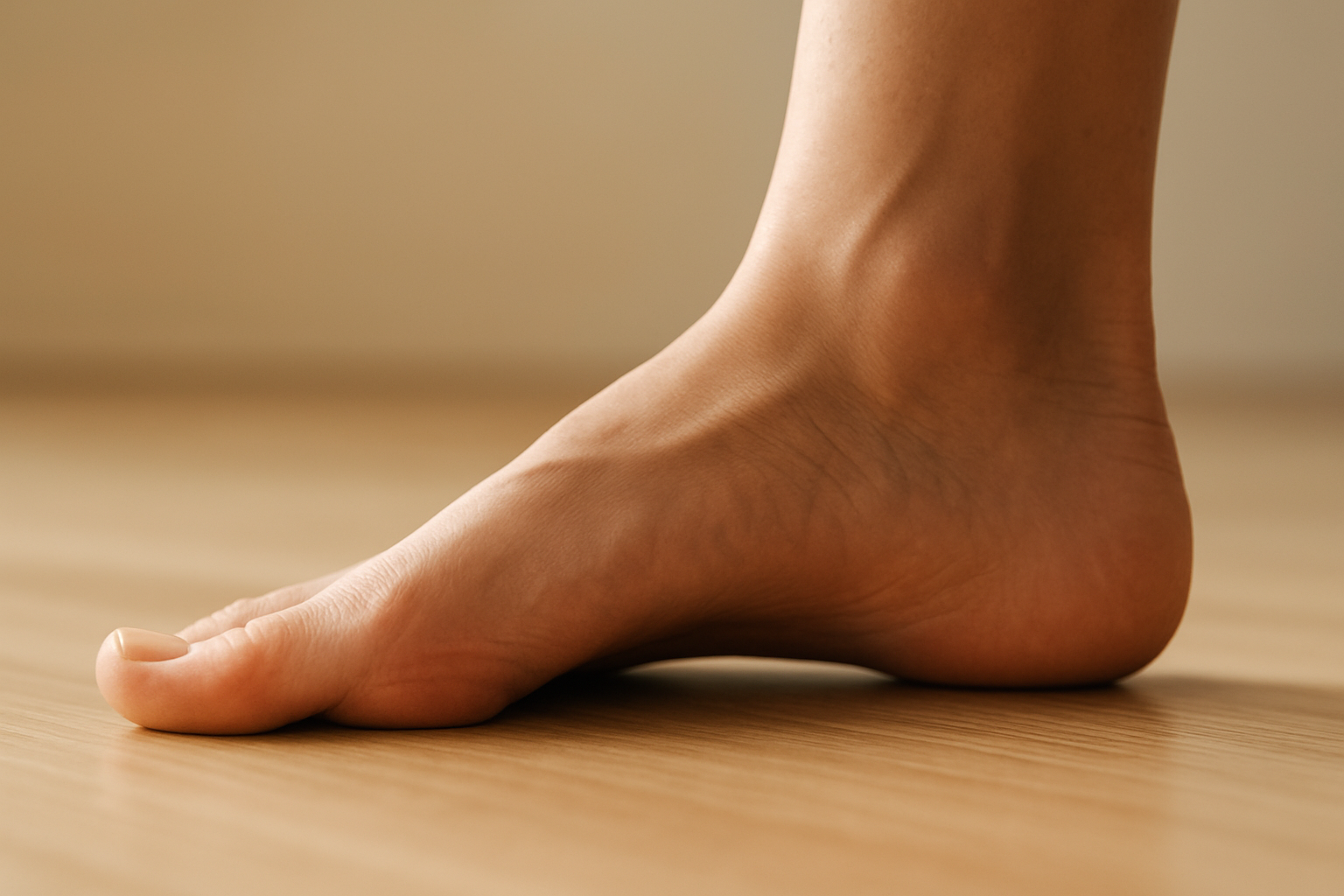
A collapsed medial arch is the hallmark of flat feet, making proper foot support for flat feet essential for pain-free movement.
How to Choose the Right Foot Support for Flat Feet
Selecting the right arch support involves more than grabbing the first insole off a pharmacy shelf. Specifically, it requires understanding your foot type, activity level, and the severity of your symptoms. Follow these steps to find the most effective solution:
- Assess your arch type. Perform a wet-foot test on a flat surface. A flat imprint with no visible curve indicates low or absent arches. A podiatrist can confirm the diagnosis and assess how it affects your gait mechanics.
- Identify your symptoms and activity level. Note where you feel pain — heel, arch, knee, or lower back — and consider how much time you spend on your feet each day. High-activity individuals typically need more rigid, supportive devices.
- Consult a podiatrist for a proper evaluation. A professional gait analysis reveals how your foot moves under load, which determines the type of correction needed. This step is particularly important for severe overpronation.
- Order custom orthotics from individual foot molds. Custom devices crafted from precise molds of your feet deliver targeted correction that generic insoles simply cannot replicate. They address root biomechanical causes rather than masking symptoms.
- Break in your orthotics gradually. Begin wearing them for two to three hours daily, then increase usage over one to two weeks. This allows your muscles and connective tissue to adapt without causing new discomfort.
Types of Arch Support Options for Flat Arches
Not all arch supports are created equal. Therefore, understanding the differences between available options helps you make a more informed decision for your specific needs.
Over-the-Counter Insoles
Store-bought insoles are widely available and affordable. However, they are manufactured to fit a general foot shape rather than yours specifically. As a result, they often provide cushioning without delivering meaningful biomechanical correction. For mild discomfort or temporary relief, they can be a reasonable starting point.
Custom Orthotics: The Gold Standard
Custom orthotics are medical-grade devices fabricated directly from individual molds of each patient's feet. Consequently, they provide a level of precision and personalization that off-the-shelf products cannot match. They are designed to redistribute pressure, control overpronation, and support the arch at exactly the right angle for your unique anatomy.
For example, full-length custom orthotics provide support across the entire plantar surface, making them ideal for flat feet that cause heel-to-toe pain. Similarly, sulcus orthotics with heel posting are designed to control rear-foot motion and correct the inward collapse associated with severe overpronation.
Additionally, individuals experiencing forefoot pain alongside flat arches may benefit from metatarsal support orthotics, which relieve pressure on the ball of the foot while simultaneously supporting the arch.
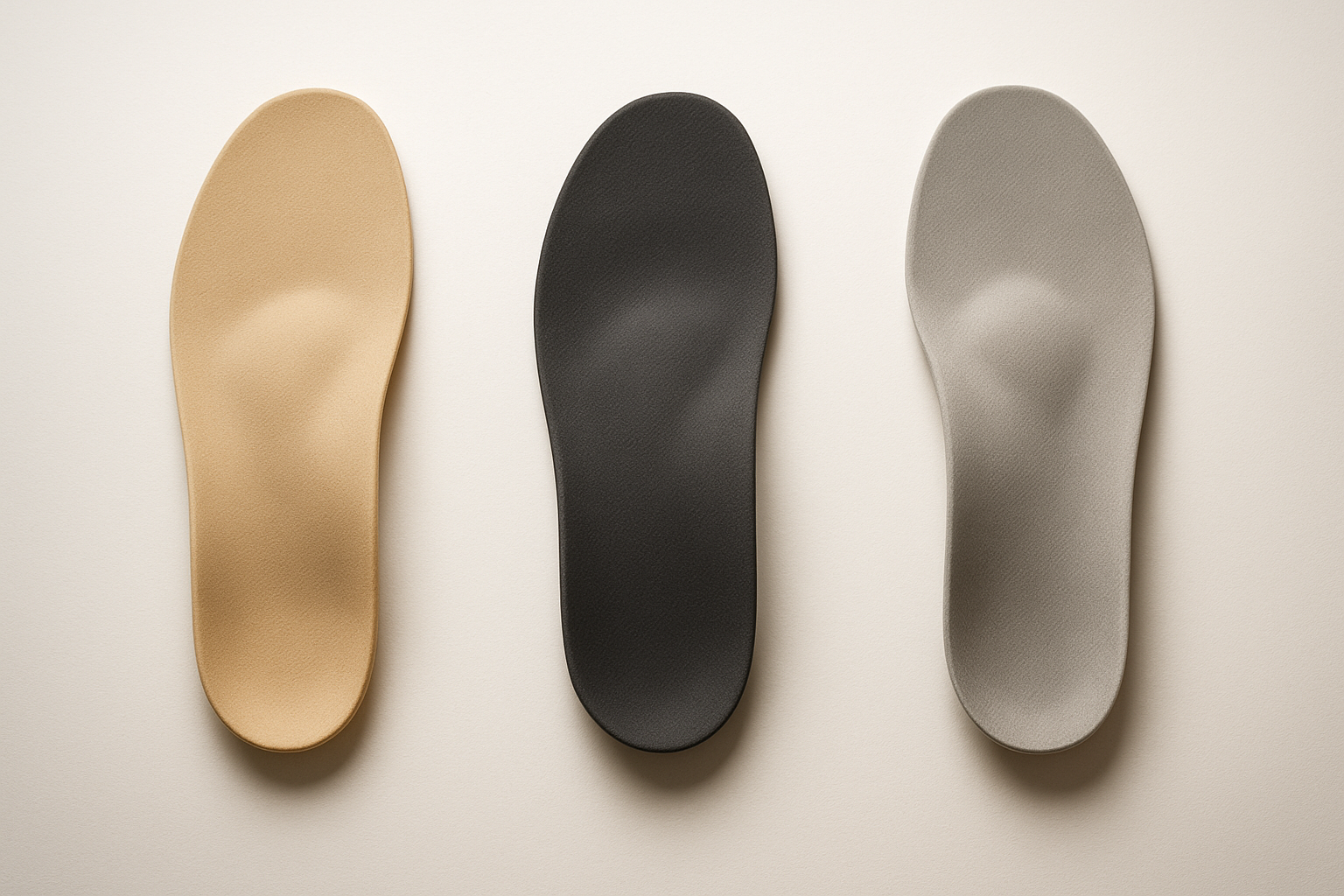
Custom orthotics come in several designs — each engineered to address specific alignment and pain patterns associated with flat arches.
Supportive Footwear for Low Arches
Beyond insoles, footwear choices matter enormously. Motion-control and stability shoes feature firmer midsoles and reinforced medial posts that limit excessive pronation. Pairing these shoes with custom orthotics creates a comprehensive support system. In contrast, minimalist or flat-soled shoes can worsen symptoms by removing what little natural support already exists.
Conditions Linked to Unsupported Flat Feet
When flat feet go unsupported, the consequences extend well beyond foot pain. Specifically, the following conditions are commonly associated with inadequate arch support:
- Plantar fasciitis — heel and arch pain caused by inflammation of the plantar fascia
- Shin splints — pain along the inner edge of the shinbone due to muscle overload
- Patellofemoral pain syndrome — knee pain resulting from poor lower-limb alignment
- Bunions — bony bumps at the base of the big toe worsened by inward foot rolling
- Posterior tibial tendon dysfunction — a progressive condition where the tendon supporting the arch weakens
- Chronic lower back pain — caused by pelvic tilt and spinal misalignment originating from the feet
To learn more about the full range of conditions that orthotics can address, the team at customorthotics.com has published a detailed resource on what foot problems custom orthotics can help with.
Exercises That Complement Flat Foot Support
Orthotics work best when combined with targeted strengthening exercises. These movements build the intrinsic foot muscles that help support the arch from within. Furthermore, stronger feet reduce long-term dependency on external support devices.
Effective exercises include:
- Heel raises — strengthen the calf and Achilles tendon, reducing plantar fascia strain
- Arch lifts (short-foot exercise) — activate intrinsic arch muscles without curling the toes
- Toe spreads — improve forefoot stability and balance
- Towel scrunches — build toe flexor strength for improved arch control
- Single-leg balance — trains proprioception and ankle stability simultaneously
According to a study published in the Journal of Physical Therapy Science, short-foot exercises performed consistently over four weeks significantly increased navicular height — a measurable indicator of arch improvement — in participants with flexible flat feet.
Why Custom Orthotics Outperform Generic Solutions
The fundamental limitation of over-the-counter insoles is that they are designed around an average foot — not your foot. In contrast, custom orthotics are fabricated from precise molds that capture every contour, pressure point, and structural irregularity unique to your anatomy.
The podiatrist-owned practice at customorthotics.com brings over 20 years of experience and an A+ Better Business Bureau rating to every device it fabricates. Each orthotic is crafted directly from individual foot molds, ensuring a fit that addresses root biomechanical causes rather than simply cushioning symptoms. Patients can consult with the podiatrist directly by phone at no cost, or conveniently place orders through the online platform — making professional-grade flat foot support accessible regardless of location.
For active individuals such as golfers, specialty devices like the golfer orthotic are engineered to support the unique rotational demands of the sport while still providing the arch correction that flat feet require.
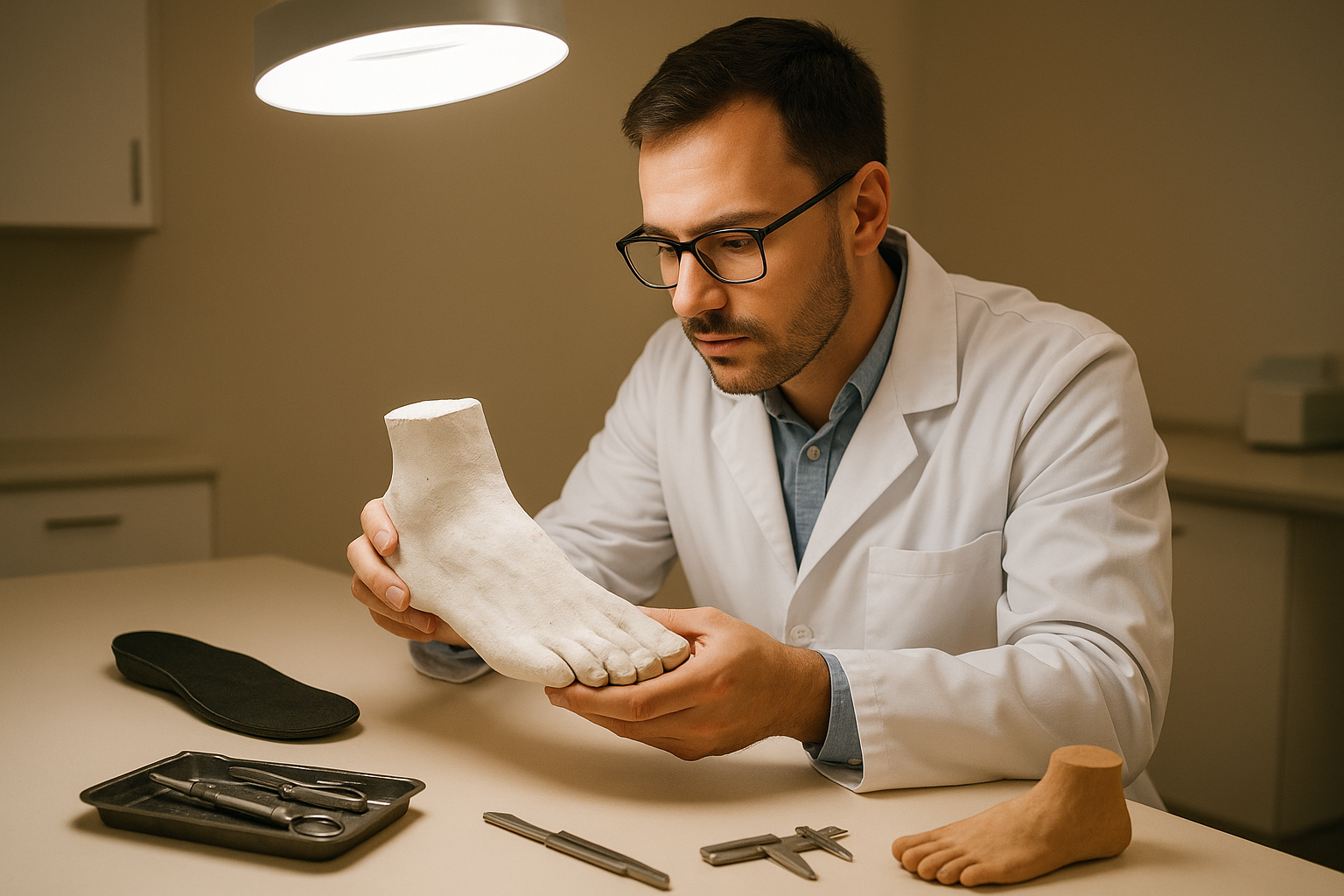
Custom orthotics begin with an individual mold of each patient's foot, ensuring precision that generic insoles cannot achieve.
Frequently Asked Questions About Foot Support for Flat Feet
What is the best foot support for flat feet?
The best foot support for flat feet is a custom orthotic molded directly from your foot, as it addresses your unique arch structure and alignment needs. Over-the-counter insoles can provide temporary relief but rarely correct the underlying biomechanical issues.
Can flat feet be corrected with orthotics?
Orthotics cannot permanently restructure the bones of a flat foot in adults, but they effectively control overpronation, reduce pain, and improve alignment during daily activities. Consistent use combined with strengthening exercises yields the best long-term outcomes.
What conditions are caused by flat feet?
Flat feet can contribute to plantar fasciitis, shin splints, knee pain, hip misalignment, and lower back pain. Because the foot is the foundation of the entire kinetic chain, poor arch support often creates problems well above the ankle.
How do I know if I have flat feet?
A simple wet-foot test on a flat surface can reveal your arch shape — a flat imprint with no visible curve indicates low or absent arches. A podiatrist can confirm the diagnosis and assess how it affects your gait.
Are custom orthotics better than store-bought insoles for flat feet?
Yes, custom orthotics are fabricated from individual molds of your feet, providing precise support that generic insoles cannot replicate. They are designed to address the root cause of your specific alignment issues rather than offering one-size-fits-all cushioning.
How long do custom orthotics last?
High-quality custom orthotics typically last two to five years with normal daily use, though this varies based on activity level and materials. Regular inspections ensure they maintain their corrective shape and effectiveness.
Can flat feet cause knee and back pain?
Yes, flat feet alter the alignment of the entire lower body, which can lead to knee pain, hip discomfort, and chronic lower back pain. Proper arch support helps realign the kinetic chain and reduce stress on these joints.
What exercises help strengthen flat feet?
Heel raises, arch lifts, toe curls, and short-foot exercises are all effective for building the intrinsic muscles that support the arch. Consistent practice, combined with proper footwear, can meaningfully reduce flat-foot discomfort over time.
What type of shoes should people with flat feet wear?
People with flat feet should choose motion-control or stability shoes that provide firm medial support and limit excessive inward rolling of the ankle. Pairing supportive footwear with custom orthotics offers the most comprehensive protection.
Is it painful to start wearing orthotics for flat feet?
A short break-in period of one to two weeks is normal when first wearing orthotics, as your muscles and tendons adapt to the new alignment. Starting with a few hours per day and gradually increasing wear time minimizes discomfort.
How much do custom orthotics for flat feet cost?
Custom orthotics generally range from $200 to $800 depending on materials, complexity, and the provider. While the upfront cost is higher than store-bought insoles, the precision fit and durability often make them more cost-effective over time.
Can children with flat feet benefit from orthotics?
Yes, children with symptomatic flat feet — those experiencing pain, fatigue, or gait abnormalities — can benefit from orthotics. However, many children naturally develop arches by age six, so a podiatrist evaluation is important before intervening.
Conclusion: Taking the Right Step Toward Flat Foot Relief
Choosing the right foot support for flat feet is not a one-size-fits-all decision — it requires understanding your unique anatomy, symptoms, and daily demands. Fortunately, the combination of custom orthotics, supportive footwear, and targeted exercises provides a comprehensive framework that addresses both immediate pain and long-term structural health. Generic insoles can offer temporary comfort, but custom-fabricated devices remain the most effective and durable solution for genuine biomechanical correction. If you are ready to move beyond temporary fixes, consulting with a podiatrist and investing in precision foot support for flat feet is the most reliable path to lasting relief and improved quality of life.