

Custom orthotics for pregnancy are precision-crafted shoe inserts designed to address the profound biomechanical changes that happen to a woman's feet during every trimester. As your body redistributes weight, shifts its center of gravity, and releases the hormone relaxin to loosen ligaments, your feet absorb the consequences in ways that cause real, daily pain. This comprehensive guide explains exactly how custom orthotics work, why they outperform over-the-counter alternatives, how to get properly fitted, and what the science says about protecting your whole body — from the ground up — during one of the most physically demanding periods of your life.
A study published in the Journal of the American Podiatric Medical Association found that up to 60% of pregnant women experience significant foot pain, particularly in the arch and heel. Yet foot health remains one of the most overlooked aspects of prenatal care. Custom orthotics offer a clinically supported, non-invasive path to relief — one that also protects your knees, hips, and spine throughout all three trimesters and beyond.
Why Pregnancy Fundamentally Changes Your Feet
Understanding why you need custom orthotics for pregnancy starts with understanding what pregnancy actually does to your feet. Two interconnected forces drive the changes: hormonal shifts and mechanical loading.
The Relaxin Effect on Foot Ligaments
Relaxin is a hormone released during pregnancy to loosen the ligaments of the pelvis for childbirth. The problem is that it doesn't selectively target pelvic ligaments — it affects connective tissue throughout the entire body, including the 26 bones, 33 joints, and over 100 ligaments and tendons inside each foot. As these structures soften, arches flatten, joints destabilize, and the foot may permanently lengthen or widen by as much as a full shoe size — a change documented in peer-reviewed research published in the American Journal of Physical Medicine & Rehabilitation.
This loosening is permanent for many women, which is why foot care during pregnancy matters not just for immediate comfort but for long-term structural health.
Weight Gain and Pressure on the Plantar Fascia
The American College of Obstetricians and Gynecologists recommends a weight gain of 25 to 35 pounds for a healthy pregnancy. Every additional pound increases the load on the plantar fascia — the thick fibrous band running from the heel to the toes — by approximately 1.25 times body weight during walking. By the third trimester, a woman's plantar fascia may be absorbing 30–40% more force than it did before pregnancy, making plantar fasciitis one of the most common pregnancy foot complaints.
Shift in Center of Gravity and Gait Patterns
As the abdomen grows, the body's center of gravity shifts forward and downward, forcing compensatory changes in posture and gait. Many pregnant women instinctively widen their stance and increase the outward rotation of their feet, which places abnormal stress on the inner (medial) arch and accelerates overpronation. Without corrective support, this compensation chain travels upward: altered foot mechanics cause internal tibial rotation, increased knee valgus stress, anterior pelvic tilt, and lumbar lordosis — all of which compound existing pregnancy discomfort.
Common Foot Conditions During Pregnancy
These physiological changes give rise to a predictable cluster of foot and lower-limb conditions that custom orthotics are specifically designed to address: For a deeper walkthrough, see our Top Options for Custom Orthotics for Foot Pain.
- Plantar fasciitis — sharp stabbing heel pain, especially with the first steps in the morning, caused by micro-tears in the plantar fascia from excess loading
- Overpronation (hyperpronation) — excessive inward rolling of the ankle and collapse of the medial arch, worsened by relaxin-softened ligaments
- Progressive flat feet — temporary or permanent arch collapse driven by ligament laxity and increased body weight For a deeper walkthrough, see our Comfortable Insoles for Flat Feet: Complete Relief Guide.
- Metatarsalgia — pain and inflammation in the ball of the foot from increased forefoot pressure during gait For a deeper walkthrough, see our Best Custom Orthotics for Foot Pain: A Complete Guide.
- Edema-related discomfort — fluid retention increases foot volume by up to 10%, amplifying pressure and friction on already stressed tissues
- Posterior tibial tendon dysfunction — inflammation of the tendon that supports the arch, aggravated by increased load and ligament instability
- Heel spurs — bony calcium deposits that can develop from chronic plantar fascia tension during pregnancy
Critically, these conditions do not exist in isolation. Left unaddressed, foot dysfunction during pregnancy creates a biomechanical cascade that worsens knee pain, hip misalignment, sacroiliac joint pain, and lumbar discomfort — all of which are already heightened by hormonal changes.
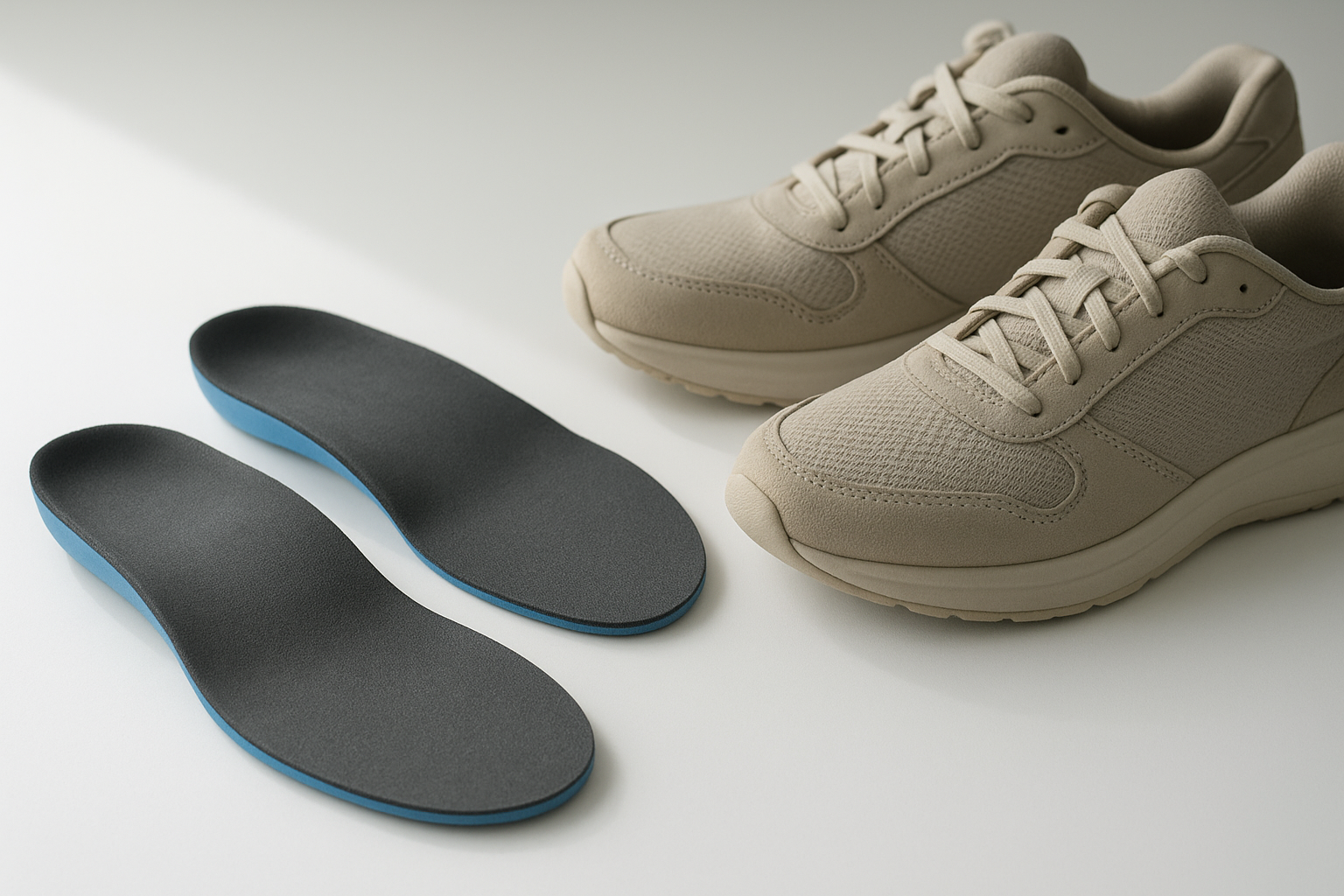
Custom orthotics for pregnancy are precision-engineered to counteract the structural foot changes that occur across all three trimesters. For a deeper walkthrough, see our What Are the Benefits of Custom Orthotics for Foot Pain?.
What Custom Orthotics for Pregnancy Actually Do
Custom orthotics for pregnancy are orthopedic devices fabricated from a precise three-dimensional mold of your individual foot. They are not simply padded insoles — they are engineered tools that correct the specific mechanical deficiencies your feet are experiencing. Here is what they do at a functional level:
- Redistribute plantar pressure — custom shells redirect excessive heel and forefoot loading toward the midfoot, reducing peak pressure by up to 30% in clinical studies For a deeper walkthrough, see our Best Custom Orthotics for Plantar Fasciitis (2025 Guide).
- Control overpronation — a medial arch post or rearfoot wedge mechanically prevents the inward collapse of the subtalar joint that relaxin facilitates
- Stabilize the ankle and subtalar joint — improved rearfoot control reduces the wobble and fatigue that pregnant women feel after extended periods of standing
- Support the medial longitudinal arch — custom contouring maintains arch height to prevent the permanent flattening that relaxin enables
- Cushion and absorb shock — soft top covers and specialized materials (EVA, Plastazote, poron) attenuate impact forces before they reach the heel and forefoot
- Accommodate swelling — unlike rigid OTC insoles, prescription pregnancy orthotics use accommodative materials that tolerate the volume fluctuations of edema throughout the day
Custom Orthotics vs. Over-the-Counter Insoles: A Detailed Comparison
This distinction matters enormously, especially during pregnancy when foot changes are dynamic and biomechanically specific:
| Feature | Custom Orthotics | OTC Insoles |
|---|---|---|
| Fit | Molded to your exact foot geometry | Generic sizing, no individual fit |
| Biomechanical correction | Addresses your specific gait faults | Generalized cushioning only |
| Durability | 2–5 years with proper care | 3–6 months before compression |
| Pregnancy suitability | Accommodates edema and foot changes | Does not adapt to volume changes |
| Clinical evidence | Supported by peer-reviewed research | Limited evidence for specific conditions |
| Cost | $300–$600 (often insurable) | $20–$60 (not prescribed) |
For mild, intermittent discomfort, OTC insoles may provide temporary relief. For the moderate-to-severe foot pain that affects the majority of pregnant women — particularly those with overpronation, flat arches, or plantar fasciitis — custom orthotics produce meaningfully superior outcomes that justify the investment. For a deeper walkthrough, see our Do Custom Orthotics Really Help With Plantar Fasciitis?.
How Custom Orthotics Support Your Entire Body During Pregnancy
The therapeutic value of custom orthotics for pregnancy extends far beyond foot relief. Because the feet are the foundation of your entire musculoskeletal system, correcting alignment at ground level triggers a positive chain reaction throughout the kinetic chain. For a deeper walkthrough, see our Custom Orthotics for Flat Feet: A Complete Relief Guide.
Knee Pain Reduction
Overpronation causes internal rotation of the tibia, which increases the valgus stress placed on the medial compartment of the knee. Custom orthotics that control rearfoot pronation have been shown in multiple clinical trials to reduce patellofemoral pain and medial knee stress. During pregnancy, when the knees are already under increased load, this reduction is clinically significant.
Hip Alignment and Pelvic Balance
Flat feet and overpronation contribute to leg length discrepancy and asymmetrical pelvic loading — problems that become acute during pregnancy when the pelvis is already under ligamentous strain. Custom orthotics can incorporate heel lifts and posting corrections that level the pelvis and reduce sacroiliac joint pain, one of the most debilitating complaints in the second and third trimesters.
Lower Back Pain Prevention
Research published in the Journal of Back and Musculoskeletal Rehabilitation found that foot orthotic therapy significantly reduced lumbar pain in pregnant subjects compared to a control group. When the medial arch collapses and the pelvis tilts anteriorly, the lumbar spine compensates by increasing its natural curve (hyperlordosis), which strains the paraspinal muscles and compresses lumbar discs. Correcting arch mechanics reduces this compensatory curve and measurably decreases low back pain.
Fatigue and Energy Conservation
Walking with compromised foot mechanics requires greater muscular effort to maintain balance and forward propulsion. This inefficiency translates into disproportionate fatigue — a serious quality-of-life issue during pregnancy. Proper orthotic support restores efficient biomechanics, reduces unnecessary muscle activation, and helps pregnant women maintain their activity levels comfortably throughout all three trimesters. Many women report feeling noticeably less exhausted at the end of the day after being fitted with custom orthotics.
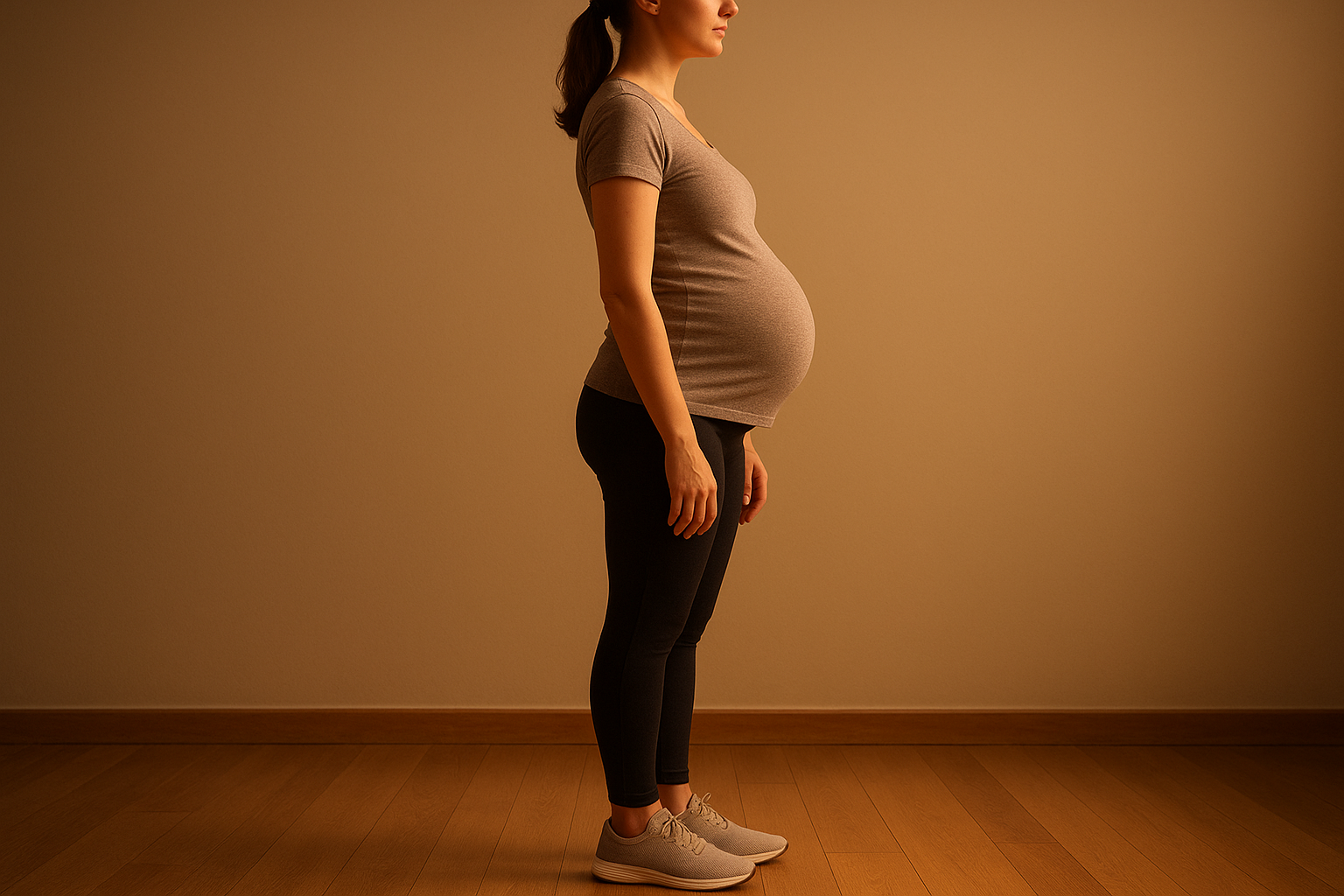
Proper foot alignment during pregnancy supports posture from the ground up, reducing the chain reaction of stress on the knees, hips, and lumbar spine.
Types of Orthotics Recommended During Pregnancy
Not all custom orthotics are appropriate for pregnancy. Podiatrists specializing in prenatal foot care typically prescribe specific device types based on the trimester, foot type, and primary complaint: For a deeper walkthrough, see our Custom Foot Molds: Complete Guide to Getting Fitted.
Semi-Rigid (Functional) Orthotics
The most commonly prescribed type for pregnancy, semi-rigid devices combine a firm shell — typically polypropylene or carbon fiber — with soft top cover materials. They provide enough rigidity to control overpronation while being flexible enough to accommodate the foot's natural movement during gait. This balance is ideal during pregnancy when both correction and comfort are essential.
Accommodative (Soft) Orthotics
Made from softer materials such as EVA foam, Plastazote, or Poron, accommodative orthotics prioritize cushioning and pressure relief over biomechanical correction. They are best suited for women with significant edema, diabetic complications, or conditions like metatarsalgia and heel fat pad atrophy. Their compressible nature tolerates the daily swelling fluctuations of pregnancy better than rigid devices.
Combination Orthotics
Many podiatrists fabricate combination devices — a semi-rigid shell with built-in accommodative additions such as metatarsal pads, heel cups, and deep heel seats. This approach is particularly effective for pregnant women who need both arch correction and forefoot cushioning simultaneously, which is a common clinical presentation.
Trimester-Specific Considerations
The optimal orthotic prescription changes as pregnancy progresses:
- First trimester: Arch support and mild pronation control to prevent habitual gait compensation before significant weight gain begins
- Second trimester: The ideal window for initial fitting — accommodating early weight gain while foot shape is still relatively stable enough for accurate casting
- Third trimester: Increased cushioning and edema accommodation, possible width adjustments as swelling peaks; follow-up assessment and modifications recommended
How to Get Custom Orthotics During Pregnancy: Step-by-Step
The process of obtaining custom orthotics for pregnancy is straightforward and can typically be completed within two to three weeks from initial consultation to final fitting. For a deeper walkthrough, see our What Foot Problems Can Custom Orthotics Help With?.
- Step 1: Schedule a Specialized Podiatry Assessment Book an appointment with a licensed podiatrist who has specific experience treating pregnant patients. Inform them of your gestational age, current foot complaints, and any existing conditions such as flat feet or a prior history of plantar fasciitis. They will conduct a comprehensive lower-limb biomechanical examination, assessing your gait, foot posture index, arch height, and joint range of motion both in weight-bearing and non-weight-bearing positions.
- Step 2: Undergo Computerized Gait and Pressure Analysis Modern podiatry clinics use computerized gait scan technology and force plate systems to generate a dynamic map of how pressure is distributed across your foot during walking. This analysis quantifies the degree of overpronation, identifies high-pressure zones at the heel and forefoot, and captures any asymmetry between feet — data that is essential for precise orthotic prescription during pregnancy.
- Step 3: Foot Casting or 3D Digital Scanning Your podiatrist captures the precise three-dimensional geometry of your foot using one of three methods: a plaster cast taken in a subtalar neutral position, a foam impression box that records foot shape under load, or a 3D digital scan using structured-light or laser scanning technology. Each method has clinical merit; your podiatrist will choose based on your foot type, gestational stage, and the level of detail required for your prescription.
- Step 4: Orthotic Fabrication and Delivery Your cast or scan is sent to an orthotic laboratory, where technicians fabricate your devices to your podiatrist's precise prescription — specifying shell thickness, material, posting angles, top cover type, and any specialty additions such as metatarsal pads or heel lifts. Turnaround time is typically one to two weeks. At the delivery appointment, your podiatrist will verify fit, comfort, and alignment before you leave.
- Step 5: Break-In Protocol and Monitoring Begin wearing your orthotics for two to three hours daily during the first week. Increase by one to two hours each subsequent day, targeting full-time wear by week two. Mild muscle soreness in the arch and calf is normal as your body adapts. Discomfort that persists beyond two weeks or causes blisters or pressure sores warrants immediate follow-up for adjustments.
- Step 6: Trimester Follow-Up and Post-Partum Review Schedule a review appointment at the start of each trimester, as foot dimensions, weight distribution, and edema levels change significantly across the 40-week arc of pregnancy. After delivery, a post-partum foot assessment at six to eight weeks will determine whether your current devices remain appropriate or whether new measurements and fabrication are needed for your changed foot structure.
When Is the Best Time to Get Fitted?
The second trimester (weeks 14–27) is the optimal window for initial fitting. Weight gain has begun accelerating, foot changes are underway, but the feet have not yet reached their maximum size and swelling. Fitting during the first trimester is also productive for women with pre-existing foot conditions. Third-trimester fitting is absolutely worthwhile — it is never too late to seek relief, and many women report the most noticeable benefits precisely because their feet are under peak stress at that stage.
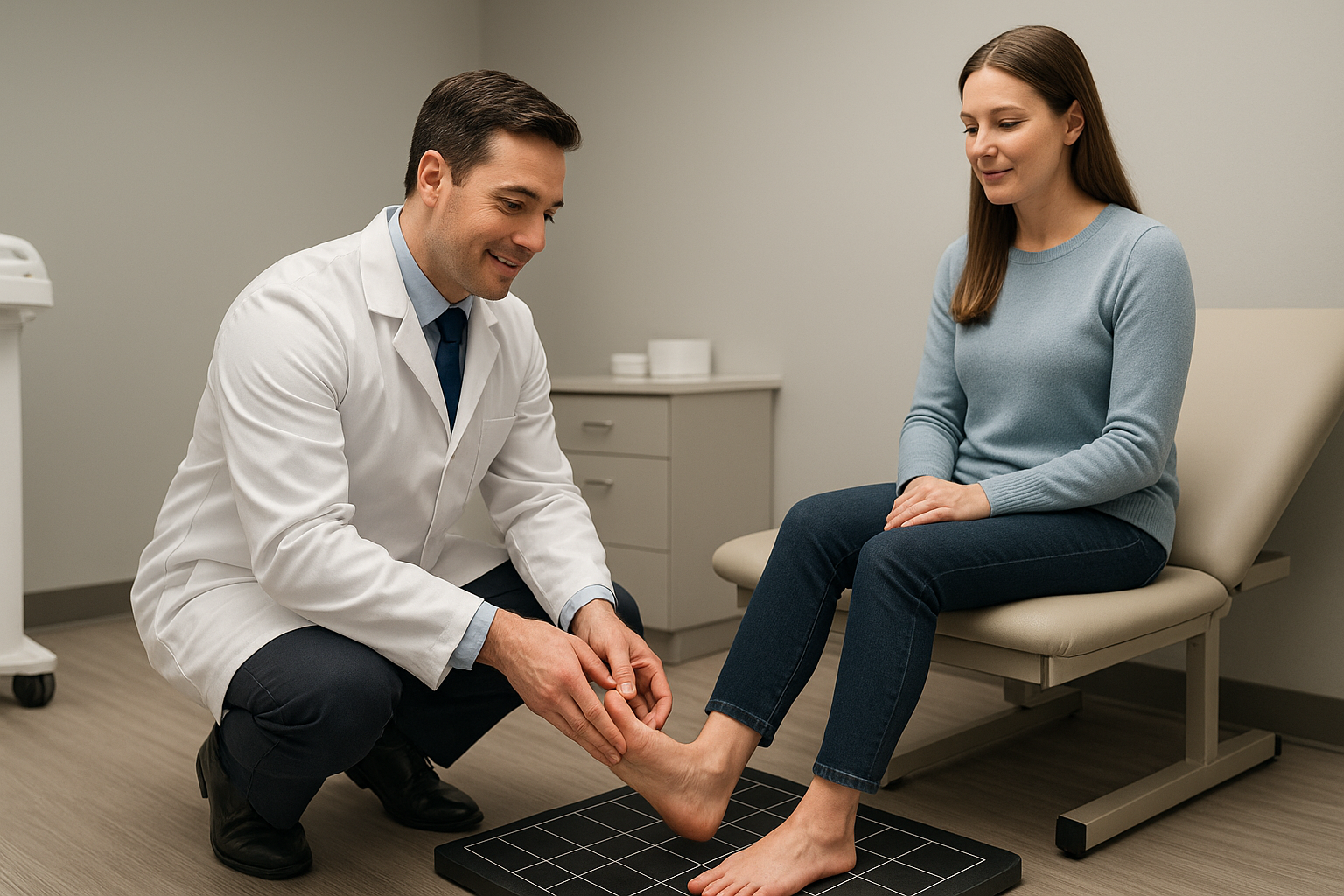
A computerized gait analysis allows podiatrists to create orthotics that are precisely matched to your individual foot mechanics and pregnancy stage.
Choosing the Right Footwear to Pair With Your Pregnancy Orthotics
Custom orthotics for pregnancy perform optimally only when paired with appropriate footwear. The shoe is not a passive container — it is an active partner in the therapeutic system. Here is what to look for and what to avoid:
Ideal Footwear Characteristics
- Removable factory insole — essential to make room for the custom orthotic without doubling up layers and raising the heel counter
- Wide, deep toe box — accommodates natural foot spreading and pregnancy-related width increase without compressing the forefoot
- Firm heel counter — a rigid heel cup in the shoe works in concert with the orthotic to stabilize rearfoot motion
- Low, stable heel (under 2cm) — eliminates the forward pitch that increases forefoot pressure and destabilizes the ankle
- Adequate overall volume — especially important in the third trimester when edema can increase foot circumference significantly by the end of the day
Footwear to Avoid During Pregnancy
- High heels — shift weight forward, increase forefoot pressure dramatically, and destabilize balance that is already compromised in late pregnancy
- Flat, unsupportive flip-flops or slides — provide no motion control, no shock absorption, and cannot accommodate orthotic devices
- Narrow pointed shoes — compress forefoot, worsen metatarsalgia, and cannot accommodate pregnancy-related width gain
- Non-adjustable footwear — lace-up or hook-and-loop closure systems are preferable to slip-ons as they allow adjustment for daily swelling fluctuations
Wide, cushioned walking shoes and supportive athletic trainers from brands known for orthopedic compatibility are consistently the top recommendation from podiatrists treating pregnant patients. Buying footwear in the afternoon — when feet are at their daily maximum volume — ensures a more accurate fit during pregnancy.
Cost, Insurance Coverage, and Financial Options
Understanding the financial landscape of custom orthotics for pregnancy helps you plan effectively and potentially recover a significant portion of the cost through existing benefits. For a deeper walkthrough, see our Children's Custom Orthotics: A Parent's Complete Guide.
Typical Price Range
Custom orthotics typically cost between $300 and $600 per pair, with some specialist clinics charging up to $800 for advanced materials or complex prescriptions. The initial consultation and gait analysis may be billed separately, typically ranging from $80 to $200 depending on the practitioner and technology used. Factoring in a five-year lifespan, the daily cost of custom orthotics is comparable to that of a premium OTC insole replaced annually.
Insurance Coverage
Many private health insurance plans in the United States partially or fully cover custom orthotics when prescribed for a documented diagnosis. Conditions with the strongest coverage history include:
- Plantar fasciitis (the most commonly covered diagnosis)
- Pes planus (flat feet) — especially when acquired or worsened during pregnancy
- Posterior tibial tendon dysfunction
- Metatarsalgia with documented biomechanical etiology
Always request a written diagnosis and prescription from your podiatrist before ordering. Contact your insurance provider beforehand to confirm your specific benefit, annual limits, and whether pre-authorization is required.
FSA and HSA Eligibility
Custom orthotics prescribed by a licensed healthcare provider are eligible expenses under both Flexible Spending Accounts (FSAs) and Health Savings Accounts (HSAs) in the United States. Using pre-tax FSA or HSA dollars effectively reduces the out-of-pocket cost by 20–35% depending on your tax bracket. Confirm eligibility with your plan administrator and retain your podiatrist's prescription and receipt for documentation.
Long-Term Value Beyond Pregnancy
Custom orthotics fabricated during pregnancy often remain useful for years after delivery. If your foot dimensions have stabilized post-partum, the same devices will continue correcting the biomechanical changes that relaxin made permanent. Many women report that their orthotics continue delivering value for knee, hip, and back pain relief well into the years following pregnancy — making the investment substantially more economical than its upfront cost suggests. A post-partum follow-up will confirm whether adjustments or new devices are needed.
Post-Partum Foot Health: What Happens After Delivery
Pregnancy-related foot changes do not automatically reverse after delivery. Research published in the Journal of Women's Health found that approximately 40% of first-time mothers experienced a permanent increase in foot length following their first pregnancy — and the effect was cumulative with subsequent pregnancies.
The post-partum period introduces its own biomechanical demands: carrying a newborn, bending and lifting frequently, and often standing for extended periods during feeding and caregiving. The supportive needs of the feet do not diminish after birth — they shift.
A post-partum podiatry review at six to eight weeks after delivery is recommended to assess:
- Whether your current orthotics still fit your post-partum foot dimensions accurately
- Whether permanent arch changes require new orthotic prescription
- Whether any persistent lower back, knee, or hip pain has a foot biomechanics component worth addressing
- Footwear guidance appropriate for postpartum activities including feeding positions and infant care ergonomics
Frequently Asked Questions About Custom Orthotics for Pregnancy
Are custom orthotics for pregnancy safe to use?
Yes. Custom orthotics for pregnancy are non-invasive devices that pose no risk to the developing baby. They are consistently recommended by both podiatrists and obstetricians as part of a comprehensive prenatal musculoskeletal care plan. They contain no medications and create no systemic effects — they simply provide mechanical support to the feet.
When is the best time to get fitted for orthotics during pregnancy?
The second trimester (weeks 14–27) is generally the optimal window. Weight gain is accelerating and foot changes are underway, but the foot has not yet reached its maximum swelling or size. That said, orthotics can be prescribed and beneficial at any point during pregnancy — including the first and third trimesters.
How do custom orthotics for pregnancy differ from regular over-the-counter insoles?
Custom orthotics are precision-fabricated from a three-dimensional mold of your individual foot, addressing your specific arch shape, gait faults, and pressure distribution. Over-the-counter insoles are mass-produced in generic sizes and provide only generalized cushioning — they cannot correct the specific biomechanical problems, such as overpronation and arch collapse, that pregnancy produces.
Can custom orthotics help reduce swelling in the feet during pregnancy?
Orthotics do not directly reduce fluid retention (edema), but they meaningfully reduce the discomfort associated with swollen feet by redistributing pressure, improving circulation through better alignment, and reducing the muscular fatigue that worsens with edema. Accommodative orthotic materials are also designed to tolerate the volume changes that swelling creates throughout the day.
Will I need new orthotics after giving birth?
Approximately 40% of first-time mothers experience permanent changes in foot length or width after pregnancy, meaning their pre-pregnancy orthotics — or orthotics fitted early in pregnancy — may no longer be accurately calibrated post-partum. A follow-up podiatry assessment at six to eight weeks after delivery will determine whether adjustments or new fabrication is warranted.
How much do custom orthotics for pregnancy cost?
Custom orthotics typically cost between $300 and $600 per pair, with specialist devices up to $800. Initial consultation and gait analysis add $80–$200. Many private insurance plans cover a portion of the cost when prescribed for diagnosed conditions such as plantar fasciitis or flat feet. FSAs and HSAs can also be used, effectively reducing out-of-pocket cost by 20–35%.
What specific foot conditions do custom orthotics treat during pregnancy?
Custom orthotics address plantar fasciitis, overpronation, progressive flat feet, metatarsalgia, heel spurs, posterior tibial tendon dysfunction, and edema-related discomfort. Pregnancy amplifies all of these conditions through the combined effects of relaxin-induced ligament laxity and significant weight gain, making targeted orthotic therapy particularly valuable.
What type of shoes work best with pregnancy orthotics?
Supportive athletic shoes or walking shoes with removable factory insoles, wide toe boxes, firm heel counters, and low, stable heels are the ideal pairing. Avoid high heels, flat flip-flops, narrow pointed shoes, and any footwear without adjustable closures. Buying shoes in the afternoon when feet are at maximum volume helps ensure an accurate fit throughout the day.
How does the relaxin hormone affect the need for orthotics in pregnancy?
Relaxin loosens ligaments throughout the body, including the 100-plus ligaments and tendons in each foot. This causes arches to flatten, joints to become hypermobile, and the foot to spread in length and width. Custom orthotics compensate for this ligamentous instability by providing the structural support and motion control that relaxin-compromised ligaments can no longer supply — in some cases preventing permanent arch collapse.
How long does it take to adjust to wearing pregnancy orthotics?
Most women fully adapt within one to two weeks. Begin with two to three hours of daily wear and increase by one to two hours each day. Mild arch and calf muscle soreness is expected as supporting muscles are reconditioned. Any persistent blisters, pressure sores, or sharp pain should prompt an immediate return visit to your podiatrist for adjustments.
Can custom orthotics help prevent or reduce back pain during pregnancy?
Yes. Research in the Journal of Back and Musculoskeletal Rehabilitation found that foot orthotic therapy significantly reduced lumbar pain in pregnant subjects. By correcting overpronation and leveling the pelvis, custom orthotics interrupt the biomechanical cascade that produces hyperlordosis and lumbar muscle strain — one of the most common sources of discomfort in the second and third trimesters.
Can custom orthotics prevent permanent foot changes from pregnancy?
Early orthotic intervention may help mitigate, though not entirely prevent, the permanent arch changes associated with pregnancy. By supporting the medial longitudinal arch throughout the period of maximum relaxin activity, custom orthotics reduce the degree of arch collapse that becomes structural. Starting orthotic use early in pregnancy — ideally in the first or second trimester — maximizes this protective benefit.
Conclusion: Custom Orthotics for Pregnancy Are an Investment in Your Whole Body
Custom orthotics for pregnancy are among the most evidence-based, practically accessible interventions available for managing the foot pain, postural changes, and biomechanical dysfunction that affect the majority of pregnant women. By addressing the root mechanical causes of discomfort — rather than simply masking symptoms with generic cushioning — they support your body from the feet upward through all three trimesters and into the demanding post-partum period.
Whether you are dealing with plantar fasciitis, progressive flat feet, overpronation, sacroiliac pain, or simple arch fatigue, a properly fitted pair of custom orthotics — prescribed by a podiatrist experienced in prenatal care, paired with appropriate footwear, and monitored through follow-up appointments — can deliver measurable relief and long-term protective benefit. The investment is modest relative to the years of use they provide and the compounded physical benefits they deliver.
Do not wait until the pain is severe. The second trimester is the ideal starting point, but every week of better alignment is a week of less strain on your knees, hips, and back. Talk to your podiatrist, get properly assessed, and take the step that makes every other step of your pregnancy more comfortable.
For comprehensive resources, professional guidance, and detailed information about the orthotic options available for your specific needs, visit customorthotics.com — a dedicated resource for custom orthotic solutions across all life stages and conditions.