

Children's custom orthotics are precision-molded shoe inserts, shaped from an exact impression of a child's foot, that correct flat feet, gait imbalances, and growing-pain discomfort in ways off-the-shelf insoles simply cannot match. Unlike drugstore cushions or "adjustable" inserts sold in one-size-fits-most kits, true custom orthotics start with a physical mold or digital scan of your child's actual foot, so the device fits like a second skin from day one. Below, you'll find everything a parent needs to know — how they're made, which conditions they treat, when to start, what they cost, and how to tell a genuinely custom device from a semi-custom imitation.
Quick answer: Children's custom orthotics are podiatrist-designed inserts molded directly from a child's foot to correct flat feet, gait imbalances, and related pain. They're recommended after a professional foot evaluation and are typically replaced every 12 to 18 months as feet grow — far more often than adult orthotics.
What Are Children's Custom Orthotics, Exactly?
In short, children's custom orthotics are supportive foot devices fabricated from a mold of a child's foot, rather than mass-produced in standard shoe sizes. Because every child's arch height, heel strike, and weight distribution differ, a generic insert often fails to correct the underlying problem it's supposed to fix — it simply cushions the symptom.
Consequently, a podiatrist takes a precise impression of the foot in a neutral, corrected position, then uses that mold as the blueprint for the finished device. As a result, the orthotic delivers targeted support exactly where it's needed — whether that's the medial arch, the heel cup, or the forefoot — instead of generic, uniform cushioning.
It's worth noting that "custom" is sometimes used loosely in marketing. True custom orthotics are built from an individual mold of your child's foot. Semi-custom devices, by contrast, start from a pre-made shell in a handful of sizes that's then heat-molded or trimmed to approximate a fit. Both have a place, but they are not interchangeable — a point we'll return to below.
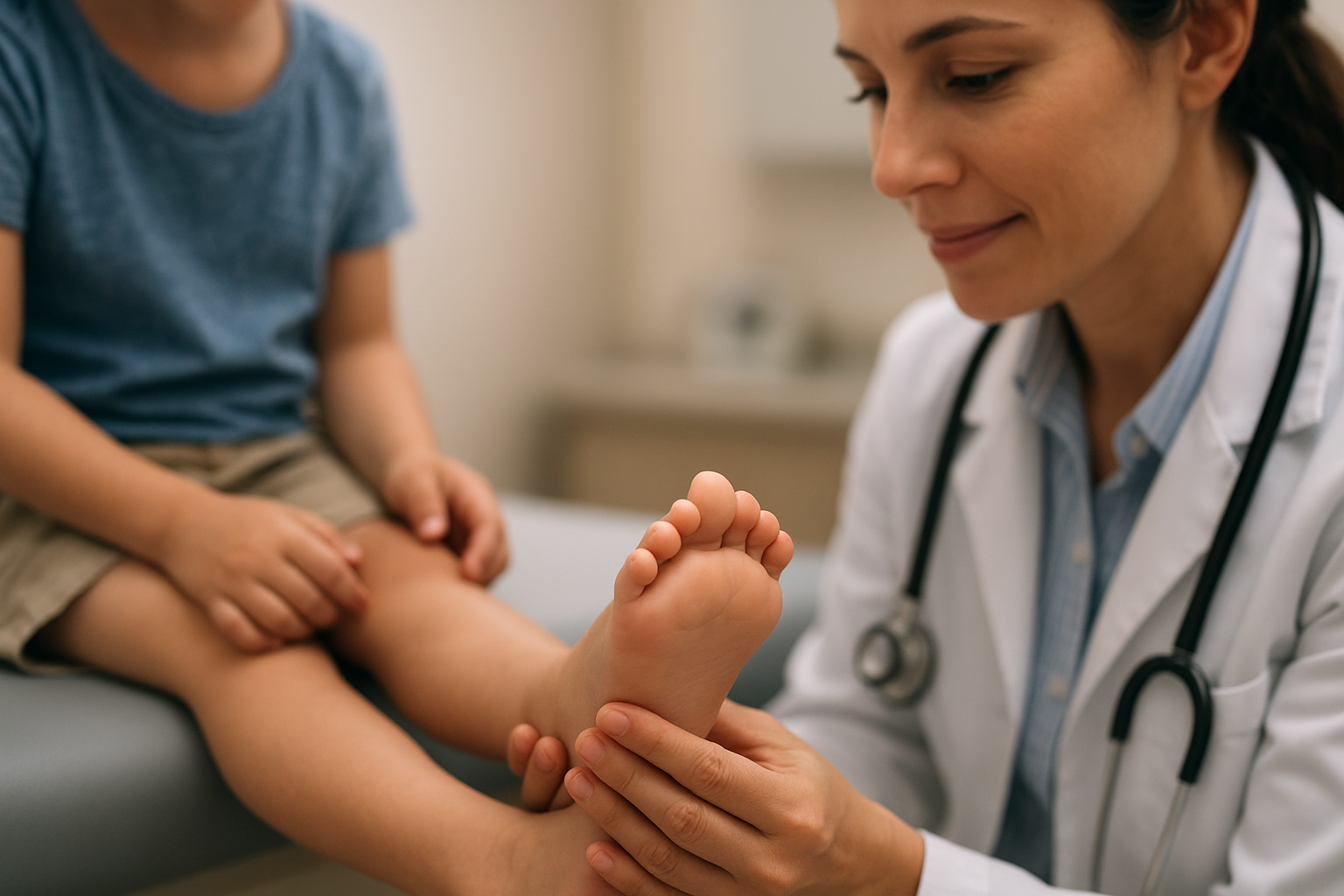
A thorough foot evaluation is the first step toward properly fitted children's custom orthotics.
Common Foot and Gait Conditions Custom Orthotics for Kids Treat
Custom orthotics for kids address a wide range of structural and functional issues. For instance, flexible flat feet are one of the most frequent reasons parents seek an evaluation, since a collapsed arch can cause fatigue, pain, and uneven shoe wear. According to the American Podiatric Medical Association, early intervention for pediatric foot conditions often produces better long-term outcomes than waiting until adulthood.
Flexible Flat Feet (Pes Planus)
Flat feet, medically known as pes planus (a simple term meaning the foot's arch has flattened against the ground), are common in toddlers and often improve naturally. However, when the condition persists past age six or causes visible discomfort, a custom arch support can restore proper alignment during walking and running.
In-Toeing and Out-Toeing
In-toeing (walking with feet pointed inward) and out-toeing (feet pointed outward) are gait patterns that sometimes correct themselves with growth. In contrast, when a child's gait doesn't self-correct, a custom orthotic can gently guide foot positioning during each step.
Sever's Disease and Heel Pain
Sever's disease — inflammation of the growth plate at the back of the heel — is especially common in active kids between ages 8 and 14. Similarly, leg-length imbalances, where one leg is slightly longer than the other, can be offset with a heel lift built directly into the orthotic.
Above all, active kids involved in running or team sports sometimes develop pain from repetitive impact, which orthotics help absorb and redistribute. If your family is exploring options for young athletes, this guide on custom orthotics for sports covers how similar principles apply to performance and injury prevention.
Warning Signs: Does Your Child Need Custom Orthotic Inserts?
Parents often notice subtle clues before any formal diagnosis is made. Frequent tripping, complaints of foot or leg pain after playtime, and uneven wear on the soles of shoes are all common indicators worth tracking over a few weeks.
Furthermore, toe-walking, an awkward running style, or reluctance to participate in physical activities can also point to an underlying foot issue. Motor development milestones — including walking, running, and jumping patterns — are well documented by the Centers for Disease Control and Prevention, and noticeable delays or asymmetries are a reasonable trigger for an evaluation.
Therefore, if you notice any of these patterns, scheduling an evaluation sooner rather than later is generally the better approach. Waiting rarely resolves a structural issue on its own, and early correction tends to require less intervention than a problem left unaddressed for years.
How Children's Custom Orthotics Are Made, Step by Step
The fabrication process is straightforward, though it does involve several distinct steps. Below is the typical process a family can expect from first phone call to finished device.
- Schedule a consultation. Most practices, including this one, offer a complimentary phone consultation to discuss symptoms before any commitment is made.
- Complete a foot evaluation. The podiatrist reviews gait, arch structure, and shoe wear to confirm whether orthotics are the right solution for the specific condition. For a deeper walkthrough, see our Consult a Podiatrist for Foot Pain: The Complete Guide to When, Why & What to Ex.
- Take an exact foot mold. A physical mold or digital scan captures the precise shape of each foot as the blueprint for fabrication, taken with the foot held in a corrected, neutral position.
- Fabricate the custom orthotic. Technicians build the device using materials suited to the child's activity level, weight, and specific condition, from the mold created in the previous step.
- Fit and adjust the device. The finished orthotics are placed into everyday shoes, checked for comfort, and adjusted at a follow-up visit to confirm proper support.
Overall, this process typically takes two to four weeks from mold to finished product. In contrast, off-the-shelf insoles are ready instantly but rarely address the specific structural issue causing the discomfort in the first place.
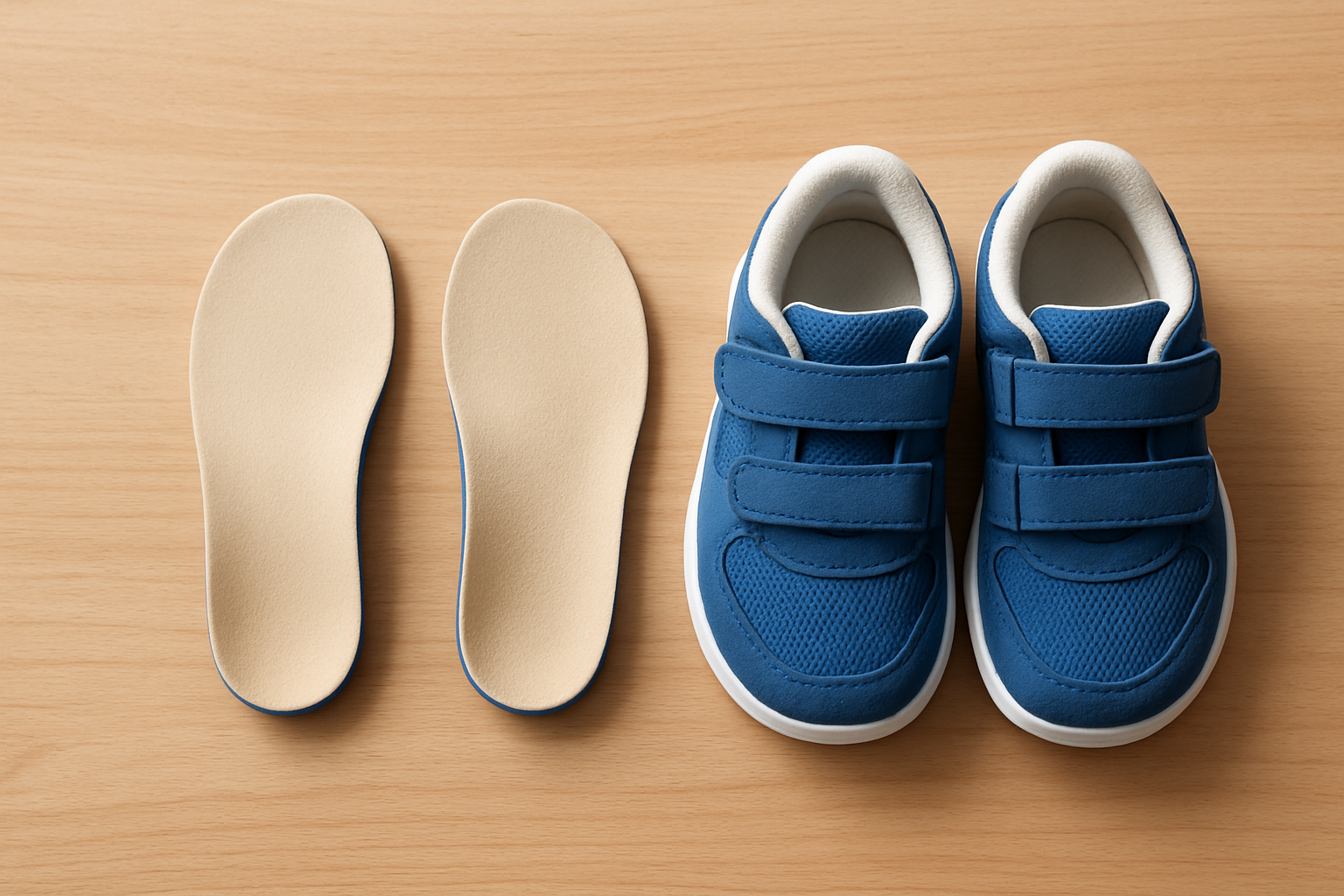
Finished children's custom orthotics are shaped to fit directly into everyday shoes.
What Age Should a Child Start Wearing Custom Orthotics?
There's no single cutoff age. Instead, timing depends on when a child starts walking consistently and whether a specific condition has been identified. Most podiatrists can fit custom orthotics for children as young as three or four, once a steady gait pattern is established.
For toddlers, many pediatric foot specialists prefer a "watch and monitor" period first, since flexible flat feet and mild in-toeing frequently resolve as bones and ligaments mature. The HealthyChildren.org resource from the American Academy of Pediatrics notes that most children's arches develop naturally by age six, which is why many providers reserve orthotics for cases that persist beyond that window or cause clear pain.
School-age kids and teens involved in sports, on the other hand, are frequently fitted for orthotics specifically to manage overuse injuries like Sever's disease or shin pain, regardless of whether a structural flat foot is present. In short, the right age is the age at which symptoms or risk factors actually appear — not a fixed number on a chart.
Benefits of Custom Orthotics for Growing Feet
Because a child's skeletal system is still developing, correcting alignment issues early can have lasting benefits. Custom orthotics distribute pressure evenly across the foot, which in turn reduces strain that would otherwise travel up to the knees, hips, and lower back over time.
Moreover, kids who receive proper support often report less foot fatigue during play and sports, which can encourage more consistent physical activity. As a result, many families see improvements not just in comfort, but in overall confidence and willingness to stay active — something a generic insole rarely delivers because it isn't solving the root cause.
Children's Custom Orthotics vs. Off-the-Shelf and Semi-Custom Insoles
Off-the-shelf inserts are widely available and inexpensive, but they're built to fit an average foot shape rather than any single child. Consequently, they may provide temporary cushioning without correcting the actual structural problem causing pain or fatigue.
Semi-custom orthotics sit in the middle of the spectrum. These start from a pre-manufactured shell available in a handful of general sizes, which is then heated or trimmed to approximate a better fit. That's an improvement over a flat drugstore insole, but it is still not the same as a device built from your child's actual foot mold — the shell shape itself was never designed around their specific arch height, heel angle, or pressure points.
- Off-the-shelf insoles: Generic sizing, instant purchase, cushioning only, no professional evaluation.
- Semi-custom orthotics: Pre-made shells adjusted to a general size range; better fit than generic, but not built from an individual mold.
- Fully custom orthotics: Molded from the child's exact foot, reviewed by a podiatrist, and built to address the diagnosed condition specifically.
For a broader look at cost-effective options that don't sacrifice true customization, this comparison of affordable orthotics online explains how quality and price can both be achieved without settling for a semi-custom shell.
How Long Do Kids' Custom Orthotics Last?
Unlike adult orthotics, which can last several years, children's devices need to keep pace with rapid growth. Most kids need a new pair every 12 to 18 months, though faster-growing or highly active children may outgrow a pair sooner.
A simple way to check fit at home is to trace your child's foot on paper every few months and compare it to the orthotic's outline. If the heel or arch no longer lines up, or if your child complains the device suddenly feels tight or slips, it's time for a re-evaluation rather than waiting for the next scheduled visit.
Cost, Insurance, and Financing for Children's Custom Orthotics
Average Price Ranges
Pricing for children's custom orthotics generally ranges from $200 to $500 per pair, depending on materials and the complexity of the mold. Notably, ordering through an online platform can sometimes reduce costs compared to a traditional in-office visit, as explained in this resource on affordable sports orthotics. For families comparing multiple providers, this guide to affordable custom orthotics that don't compromise on fit is a useful next read.
Using Insurance, FSA, and HSA Funds
In addition, many insurance plans partially reimburse custom orthotics when a podiatrist documents medical necessity. Therefore, it's worth calling your insurance provider before placing an order to understand what portion of the cost may be covered.
Similarly, Flexible Spending Account (FSA) and Health Savings Account (HSA) funds can usually be applied toward custom orthotics when accompanied by a prescription or letter of medical necessity from a podiatrist. Keep the itemized receipt and diagnosis code on file in case your plan requests documentation later.
Choosing the Right Provider for Pediatric Custom Orthotics
Above all, look for a provider with hands-on podiatric experience and a transparent fabrication process. A podiatrist-owned practice with more than two decades of experience and an A+ Better Business Bureau rating, such as customorthotics.com, brings both credibility and craftsmanship to every device produced.
Whether your family is local or ordering remotely, a straightforward consultation process makes it easier to get started. If you're still comparing categories of support, this overview of where to get personalized shoe inserts for better foot support is a helpful starting point.
For a deeper dive into the fundamentals, this complete overview of custom orthotics answers many of the broader questions parents have before committing to a mold appointment.
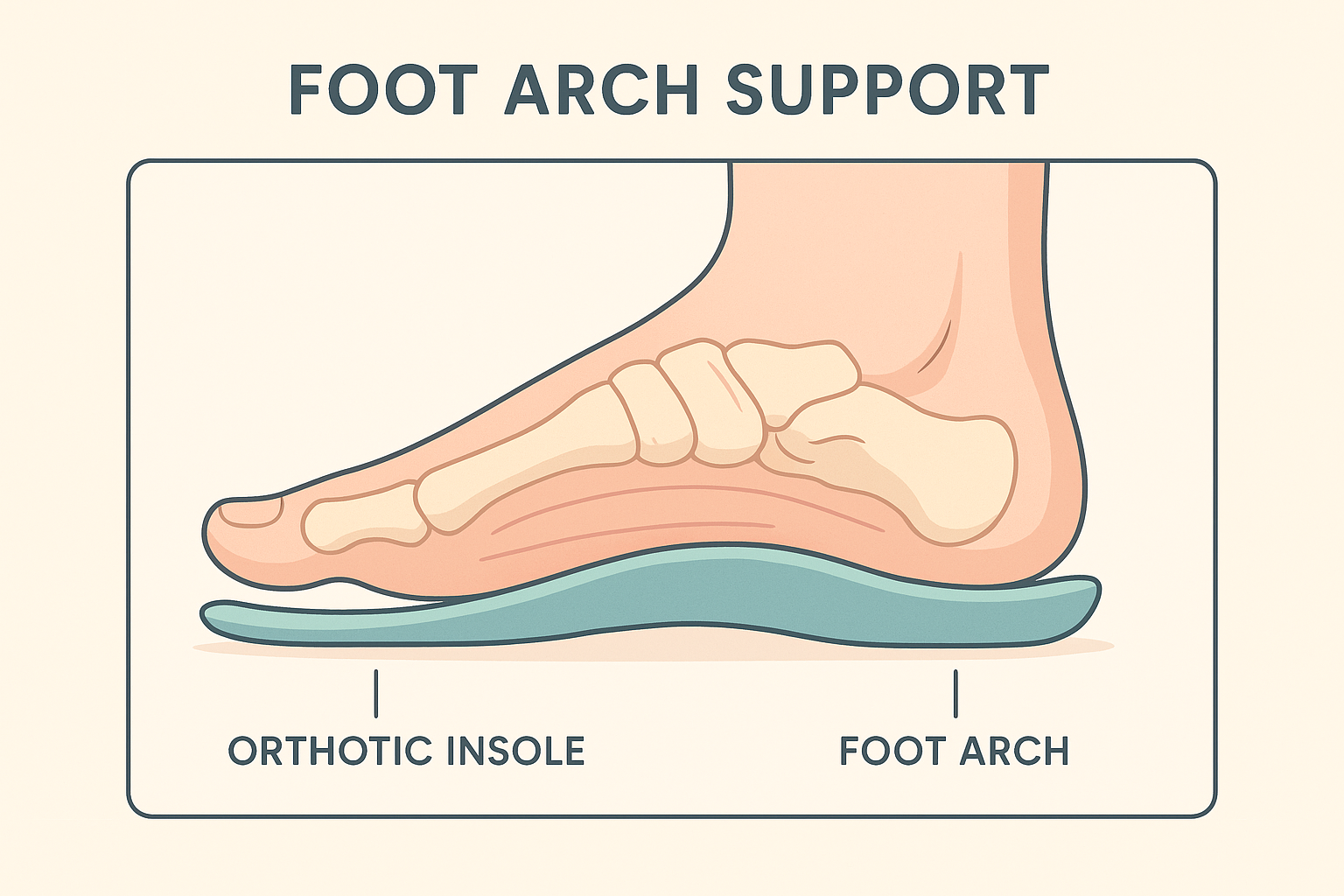
Custom orthotics work by redistributing pressure and supporting the natural arch of a child's foot.
Caring for New Orthotics and Breaking Them In
Some mild adjustment discomfort is normal during the first one to two weeks as the foot adapts to a new supported position. Gradually increasing wear time — an hour or two on day one, then adding an hour each day — helps minimize this transition period considerably.
Additionally, make sure the orthotic is paired with shoes that have a removable factory insole and enough depth to accommodate the device without crowding the toe box. Wipe the orthotic with a damp cloth rather than soaking it, and let it air dry fully between wears to preserve the shell material.
Frequently Asked Questions About Children's Custom Orthotics
What are children's custom orthotics?
Children's custom orthotics are shoe inserts molded from an exact impression of a child's foot to correct alignment, support arches, and relieve pain. They differ from store-bought insoles because they're built to that child's unique foot shape rather than a generic size.
How do children's custom orthotics differ from regular shoe inserts?
Regular shoe inserts are mass-produced and offer generic cushioning, while custom orthotics are fabricated from a mold of the child's own foot. This means custom devices target specific structural issues that off-the-shelf products cannot address.
What's the difference between semi-custom and fully custom orthotics for kids?
Semi-custom devices start from a pre-made shell in a handful of sizes that gets heated or trimmed to fit. Fully custom orthotics, in contrast, are built entirely from an individual mold of your child's foot, which generally provides more precise correction for a diagnosed condition.
At what age can a child start wearing custom orthotics?
Most podiatrists can fit custom orthotics for children as young as three or four once they're walking consistently. However, the ideal timing depends on the specific condition and should be confirmed during a consultation.
How much do children's custom orthotics cost?
Children's custom orthotics typically cost between $200 and $500 per pair, depending on materials and mold complexity. Some practices offer online ordering options that reduce costs compared to traditional in-office fabrication.
How long does it take to get custom orthotics for a child?
After the initial mold is taken, most custom orthotics are fabricated and ready within two to four weeks. Rush options are sometimes available for families who need a faster turnaround.
What conditions do pediatric orthotics treat?
Pediatric orthotics commonly address flat feet, in-toeing, out-toeing, heel pain from Sever's disease, and uneven wear patterns caused by structural imbalances. They're also used to support kids recovering from sports-related foot injuries.
How often do kids need new orthotics as they grow?
Because children's feet grow quickly, most kids need a new pair every 12 to 18 months. Faster-growing children or very active kids may need replacements sooner.
Are children's custom orthotics covered by insurance?
Coverage varies by plan, but many insurance policies partially reimburse custom orthotics when a podiatrist documents medical necessity. It's worth checking with your provider, and FSA or HSA funds may also apply, before ordering.
What are signs my child needs orthotic support?
Watch for uneven shoe wear, frequent tripping, complaints of foot or leg pain, and an unusual walking pattern such as toe-walking. Any of these signs is a good reason to schedule an evaluation.
Can custom orthotics fix flat feet in children permanently?
Custom orthotics support the arch and improve function while worn, but they don't permanently reshape bone structure. For many kids, flexible flat feet improve naturally with growth, and orthotics simply ease discomfort along the way.
What is the biggest mistake parents make with kids' orthotics?
The most common mistake is waiting too long to replace orthotics after a growth spurt, which reduces their effectiveness. Another frequent error is skipping the follow-up fitting appointment that confirms proper shoe compatibility.
Do custom orthotics hurt or feel uncomfortable at first?
Some mild adjustment discomfort is normal during the first one to two weeks as the foot adapts. Gradually increasing wear time each day helps minimize this transition period.
Final Thoughts
In summary, children's custom orthotics offer a targeted, precise way to address foot pain, flat feet, and gait issues that generic insoles — and even semi-custom shells — simply can't correct with the same accuracy. Because kids' feet grow and change quickly, working with an experienced podiatrist ensures the device fits properly and gets replaced on schedule as your child grows.
Ultimately, if your child shows signs of foot discomfort or an unusual walking pattern, a consultation is a reasonable first step. Learn more about the process and get started at customorthotics.com, where a complimentary consultation can help determine whether children's custom orthotics are the right fit for your family.
Sources: American Podiatric Medical Association, HealthyChildren.org (American Academy of Pediatrics), Centers for Disease Control and Prevention.