

Affordable custom orthotics are professionally fabricated shoe inserts made from individual molds of your feet — and they are far more accessible than most people realize. For anyone dealing with chronic foot pain, structural imbalances, or daily discomfort, getting a truly custom solution without breaking the bank is no longer out of reach. Online ordering platforms run by licensed podiatrists have transformed the landscape entirely, delivering clinical-grade results at a fraction of traditional clinic pricing.
According to the American Podiatric Medical Association, foot problems affect roughly 75% of Americans at some point in their lives. Yet many people delay treatment because they assume professional orthotics are prohibitively expensive. That assumption is increasingly outdated — and this guide will show you exactly why.
What Are Affordable Custom Orthotics?
Affordable custom orthotics are personalized orthopedic insoles crafted from a precise mold of each patient's individual foot. Unlike generic over-the-counter insoles, these devices are designed to match the exact contours of your arch, heel, and forefoot. As a result, they address the root causes of biomechanical issues rather than simply adding generic cushioning.
The word custom carries significant clinical weight here. Some products are marketed as "custom" when they are simply pre-shaped to broad foot categories. True custom orthotics, however, begin with an individual mold — typically a foam impression kit or a 3D scan — that captures your unique foot structure with clinical accuracy. This distinction is not semantic; it determines whether the device actually corrects your specific biomechanical pattern.
Affordable does not mean lower quality. It simply means that the cost has been reduced by eliminating unnecessary overhead — such as expensive clinic visits, waiting rooms, and administrative layers — without compromising the craftsmanship or the materials used in fabrication. The orthotic you receive is identical in clinical value to what a podiatrist's in-office patient would receive.
Custom orthotics come in three broad functional categories, and understanding the difference helps you choose the right one from the start:
- Functional (rigid) orthotics — made from firm materials like polypropylene to control abnormal motion and correct structural problems such as overpronation.
- Accommodative (soft) orthotics — made from cushioning materials to redistribute pressure and relieve pain in conditions like diabetic foot ulcers or severe arthritis.
- Semi-rigid orthotics — a hybrid design combining layers of soft and firm material, used widely for sport performance and dynamic activity correction.
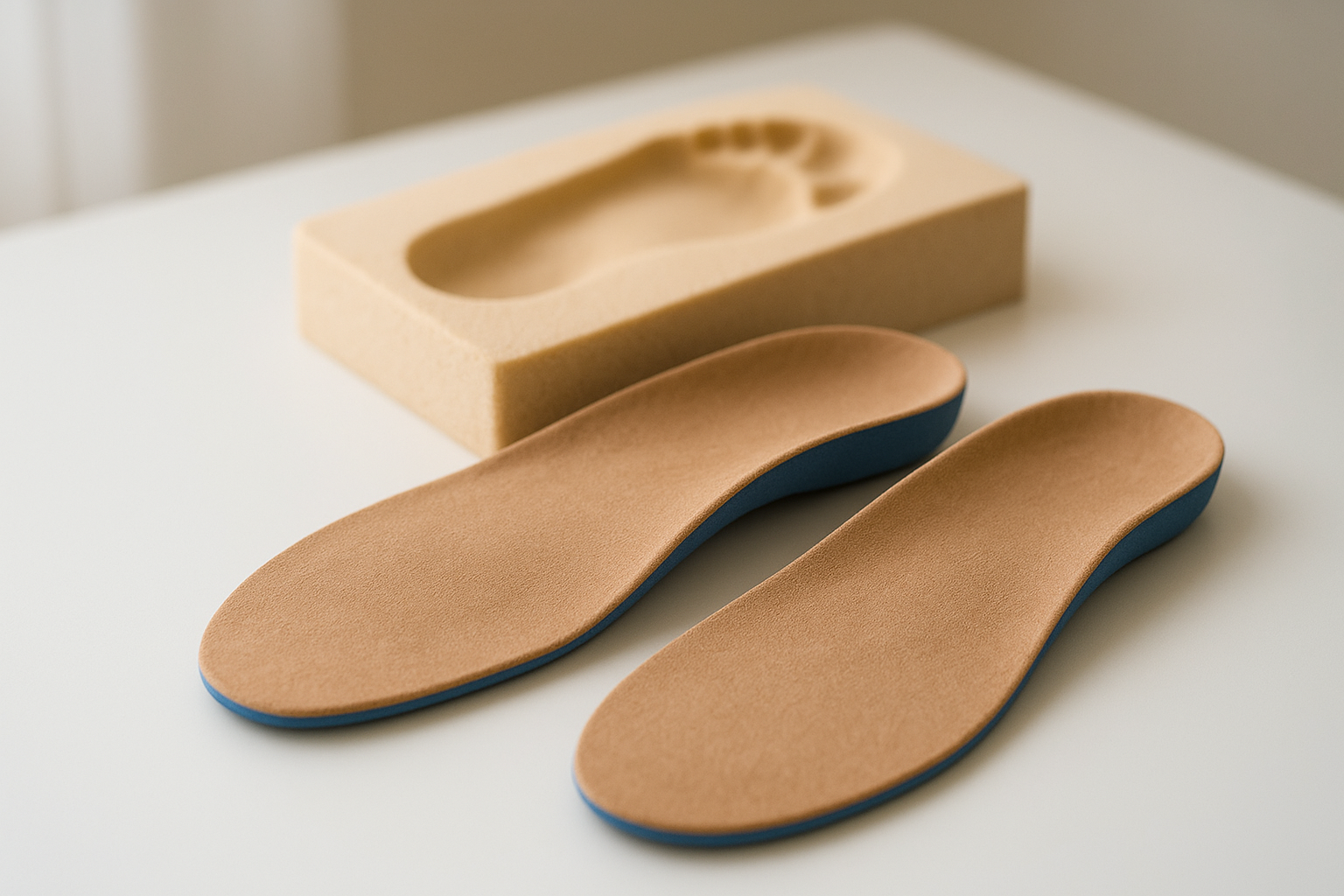
Affordable custom orthotics begin with an individual foam mold that captures the precise shape of each patient's foot — no clinic visit required.
Custom Orthotics vs. Prefabricated Insoles: Why the Difference Matters
Most people start with drugstore insoles and find temporary or partial relief. However, prefabricated insoles are mass-produced to statistical averages — they cannot account for the specific biomechanical patterns that generate your pain. A custom orthotic is built around your foot, not a generic population model.
Side-by-Side Comparison
| Feature | Custom Orthotics | Prefabricated Insoles |
|---|---|---|
| Fit | Molded to your individual foot | Generic size-based |
| Correction | Addresses root biomechanical cause | Temporary symptom relief only |
| Lifespan | 2–5 years | 3–6 months |
| Clinical oversight | Podiatrist-supervised | None |
| Cost over 3 years | ~$100–$400 (one purchase) | $120–$300+ (repeated purchases) |
A 2018 study published in the Journal of Foot and Ankle Research found that custom foot orthoses produced greater improvements in pain and function compared to sham orthotics over a 12-week period. Conditions such as plantar fasciitis, flat feet, high arches, and heel spurs all respond significantly better to orthotics tailored to the individual.
The long-term value is also compelling. A well-made pair of custom orthotics typically lasts two to five years. The cost per day of use is often dramatically lower than people expect — especially when compared to repeated purchases of inferior insoles that wear out in months.
For a thorough breakdown of this comparison, the team at customorthotics.com has published an in-depth guide on custom orthotics vs. prefabs — essential reading before making any decision.
How Much Do Affordable Custom Orthotics Cost?
Traditional in-clinic custom orthotics can cost anywhere from $400 to over $800, depending on the provider, materials, and geographic location. However, online podiatrist-run services have reduced that price significantly — often delivering the same professional quality for $100 to $400.
The savings come primarily from reduced overhead. When a patient orders online, there is no need for a physical clinic appointment, waiting room, or large administrative staff. Those savings pass directly to the patient without any compromise to the fabrication process itself.
What Factors Affect the Price of Custom Orthotics?
Several variables influence the final cost of affordable custom orthotics, including:
- Material type — rigid polypropylene, semi-rigid composites, or soft accommodative materials each carry different price points and serve different clinical purposes.
- Intended use — sport-specific orthotics, dress-shoe orthotics, and diabetic orthotics may require different construction methods and materials.
- Provider credentials — podiatrist-fabricated orthotics carry higher clinical value and greater accuracy than those made without licensed medical oversight.
- Mold accuracy — foam impression kits and 3D scans both produce precise results; the method may affect both pricing and turnaround time.
- Shell thickness and top cover — the finishing materials added to the orthotic shell for comfort and durability affect the total cost.
- Modifications and additions — metatarsal pads, heel lifts, or other clinical additions increase fabrication complexity and price.
Does Insurance Cover Affordable Custom Orthotics?
Some insurance plans provide partial or full coverage for custom orthotics when deemed medically necessary. To qualify, the orthotics typically need to be prescribed by a licensed healthcare provider such as a podiatrist. Key steps to explore insurance coverage include:
- Contact your insurer and ask specifically about HCPCS codes L3000–L3649, which cover various orthotic devices.
- Confirm whether a podiatrist's prescription or Letter of Medical Necessity is required for reimbursement.
- Ask whether your plan covers orthotics ordered through online providers or only through in-network clinics.
- Check if your HSA or FSA account can be used to pay for custom orthotics — this is commonly allowed and reduces your effective cost.
Who Can Benefit from Budget-Friendly Custom Orthotics?
Custom orthotics are not reserved for elite athletes or patients with severe medical conditions. A wide range of everyday individuals benefit from personalized foot support, including:
- People who stand for long hours at work — nurses, teachers, retail workers, and warehouse employees experience disproportionate foot fatigue that custom support directly addresses.
- Runners and cyclists — sport-specific orthotics improve efficiency, reduce repetitive stress injuries, and correct gait patterns that cause overuse damage over time.
- Older adults — age-related changes in foot structure, fat pad atrophy, and reduced ligament elasticity all benefit significantly from personalized support.
- Individuals with diabetes — diabetic orthotics redistribute plantar pressure to prevent ulcers, neuropathic pain, and complications that can lead to serious medical consequences.
- Children with developing feet — early orthotic intervention can correct structural tendencies before they become permanent, preventing a lifetime of compensatory pain.
- Post-surgical or post-injury patients — custom devices support controlled rehabilitation by offloading stress from healing tissues during recovery.
- Anyone who has failed with OTC insoles — if multiple pairs of drugstore insoles have not provided lasting relief, a truly custom device is the logical next step.
Conditions Commonly Addressed by Affordable Custom Orthotics
Affordable custom orthotics are clinically recommended for a broad set of musculoskeletal conditions, including:
- Plantar fasciitis and heel pain — the most common indication; custom orthotics offload the fascia and support the arch to reduce inflammation.
- Flat feet (pes planus) and fallen arches — rigid or semi-rigid orthotics restore medial arch support that collapsed foot structures can no longer provide.
- High arches (pes cavus) — accommodative orthotics distribute weight more evenly across a rigid, supinated foot structure.
- Bunions and metatarsalgia — orthotics with metatarsal pads and offloading zones reduce forefoot pressure.
- Knee, hip, and lower back pain linked to foot biomechanics — correcting foot alignment changes force vectors traveling up the kinetic chain.
- Diabetic foot complications — pressure-redistributing orthotics protect vulnerable areas from ulceration.
- Overpronation and supination — functional orthotics correct abnormal foot motion throughout the gait cycle.
- Achilles tendinopathy — heel lifts and rearfoot control built into custom devices reduce tendon strain during weight-bearing activity.
- Shin splints (medial tibial stress syndrome) — correcting pronation and tibial rotation reduces repetitive stress on the periosteum.
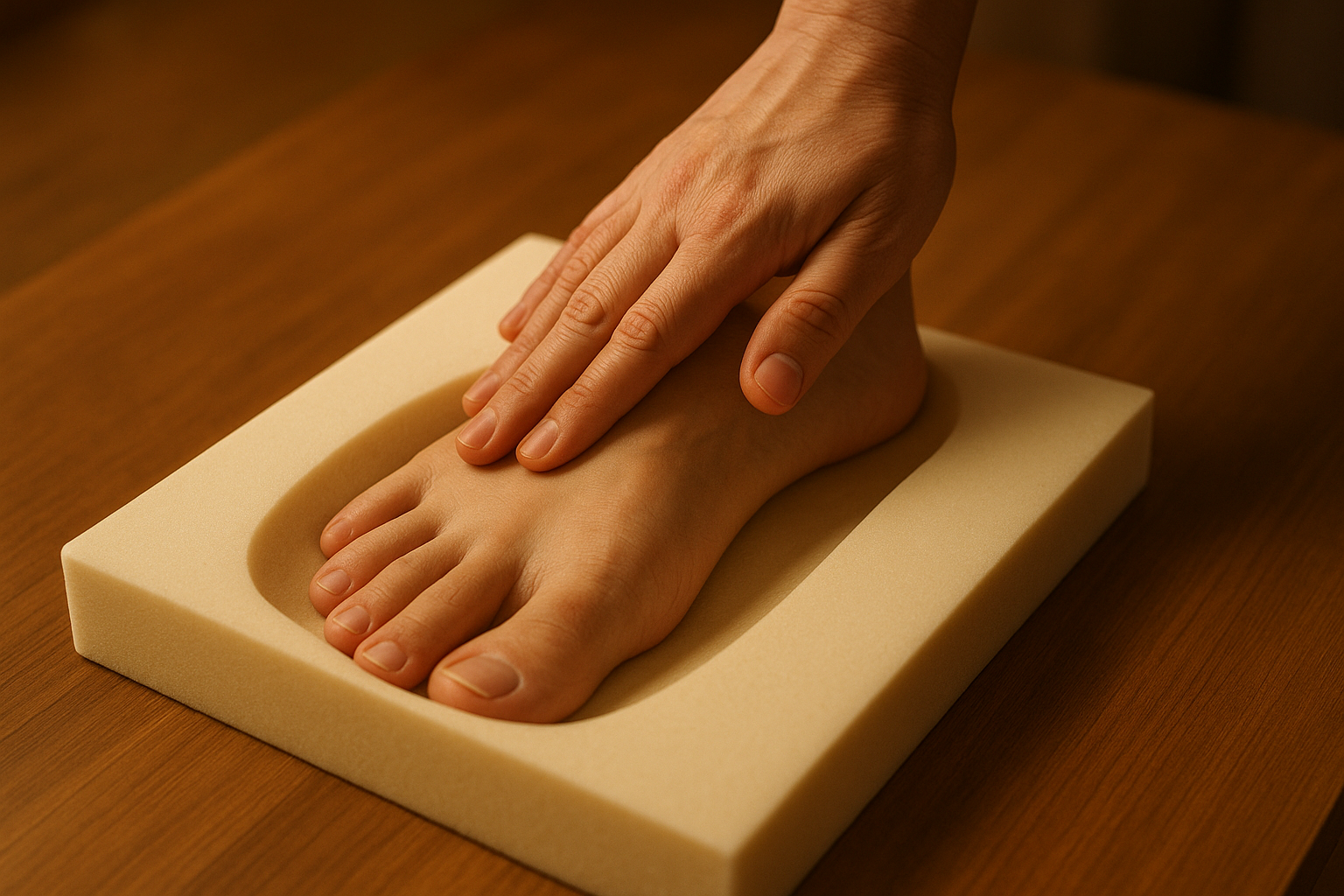
Creating a foam impression at home is a straightforward process that takes just a few minutes per foot and requires no special equipment.
How to Order Affordable Custom Orthotics Online: Step by Step
Ordering professional-grade, affordable custom orthotics online is simpler than most people expect. Below is the complete, standard process used by reputable podiatrist-run services — from first contact to wearing your finished orthotics.
- Schedule a free consultation with a licensed podiatrist. Speak directly with a podiatrist to describe your symptoms, activity level, footwear habits, and any previous treatments you have tried. This step ensures the correct orthotic type, material, and design are recommended for your specific condition — not a one-size-fits-all template.
- Place your order and receive a foam impression kit by mail. After confirming your orthotic type and design with the podiatrist, complete your secure order online. A foam impression kit with step-by-step illustrated instructions is mailed directly to your home — typically arriving within two to three business days.
- Create your foot impressions at home. Press each foot carefully and evenly into the foam block, following the provided instructions. This process takes only a few minutes per foot and captures the full contour of your arch, heel, and forefoot with the same clinical accuracy as an in-office plaster cast.
- Mail the completed molds back to the podiatrist's fabrication lab. Package your finished foam impressions securely using the provided packaging and return shipping label. Most services include prepaid return shipping so there is no additional cost at this stage.
- Receive your professionally fabricated custom orthotics at your door. The podiatrist personally reviews your molds and fabricates your orthotics to precise clinical specifications. The finished devices are then quality-checked and shipped directly to your home — ready to insert and begin use immediately.
⏱ Typical Timeline
From placing your order to receiving your finished orthotics, the entire process typically takes two to three weeks. This includes kit shipping, impression creation, return shipping, and fabrication time. Some providers offer expedited fabrication for an additional fee.
For a complete walkthrough of this process, the guide to building custom orthotics online covers every stage from your first consultation through delivery and break-in.
Materials Used in Affordable Custom Orthotics
The material used to fabricate your orthotic directly determines how it functions, how long it lasts, and how it feels underfoot. Understanding your options helps you make an informed choice during your consultation.
Shell Materials
- Polypropylene — the most common rigid shell material. Durable, thin, and suitable for most dress and athletic shoes. Excellent for functional correction of pronation and supination.
- Carbon fiber — ultra-light and extremely rigid. Preferred for high-performance athletic orthotics where minimal weight and maximum energy return are priorities.
- EVA (ethylene-vinyl acetate) — semi-rigid to soft foam used for accommodative orthotics. Comfortable and shock-absorbing; ideal for diabetic, arthritic, and elderly patients.
- Graphite composite — combines rigidity with reduced thickness, making it ideal for orthotics that need to fit in slim footwear profiles.
Top Cover Materials
- Leather — breathable, durable, and naturally moisture-wicking. A premium top cover choice for everyday use.
- Poron foam — high-resilience medical foam that provides superior shock absorption and retains its thickness through extended use.
- Microfiber — a synthetic option that resists moisture and odor, often used in athletic orthotics for hygienic performance.
How to Break In Your New Custom Orthotics
Even the best-made affordable custom orthotics require a short break-in period. Your feet and lower body need time to adapt to the corrected alignment and pressure distribution. Rushing this process is a common reason people incorrectly conclude that their orthotics are not working.
A Practical Break-In Schedule
- Days 1–3: Wear your orthotics for one to two hours per day in comfortable footwear. Allow your feet to rest and adapt between sessions.
- Days 4–7: Gradually increase wear time to three to four hours per day. Begin wearing them during low-intensity activities.
- Week 2: Progress to half-day wear. You can begin introducing them into your regular footwear rotation.
- Weeks 3–4: Full-day wear should feel natural and comfortable. Most patients achieve full adaptation within three to four weeks.
Mild muscle soreness in the arches or calves during the first week is normal as your body adjusts to corrected biomechanics. Sharp pain, skin irritation, or significant discomfort that persists beyond the second week should prompt a follow-up with your podiatrist, as a minor adjustment may be needed.
Choosing the Right Provider for Cost-Effective Custom Orthotics
Not all online orthotic providers are equal. It is essential to verify that a licensed podiatrist is directly involved in both the design and fabrication process. Providers who use generic templates, computer-generated profiles, or app-based pressure mapping — without a true individual mold — are not offering genuine custom orthotics, regardless of how they are marketed.
What to Look for in a Legitimate Provider
- Direct access to a licensed podiatrist — you should be able to speak with a real clinician before and after ordering, not just a customer service representative.
- Individual foot molds required — foam impression kits or 3D scanning, not app-based measurements or generic size inputs.
- Transparent pricing with no hidden fees — the quoted price should include the mold kit, fabrication, and shipping in both directions.
- Proven track record and verifiable reviews — look for consistent positive outcomes, not just marketing claims.
- An A+ rating from the Better Business Bureau — this reflects consistent quality, ethical business practices, and customer trust over time.
- A satisfaction or adjustment guarantee — a credible provider stands behind their work with a clear policy for modifications or remakes if needed.
customorthotics.com is a podiatrist-owned and operated practice with over 20 years of experience fabricating fully custom orthotics directly from individual foot molds. Patients can connect with the podiatrist for a complimentary phone consultation before ordering — ensuring the right solution is matched to their specific condition, whether they are local or ordering remotely from anywhere in the country.
For a deeper, objective comparison of what separates true custom devices from prefabricated alternatives, the article on custom orthotics vs. prefabs is a thorough and highly recommended read.
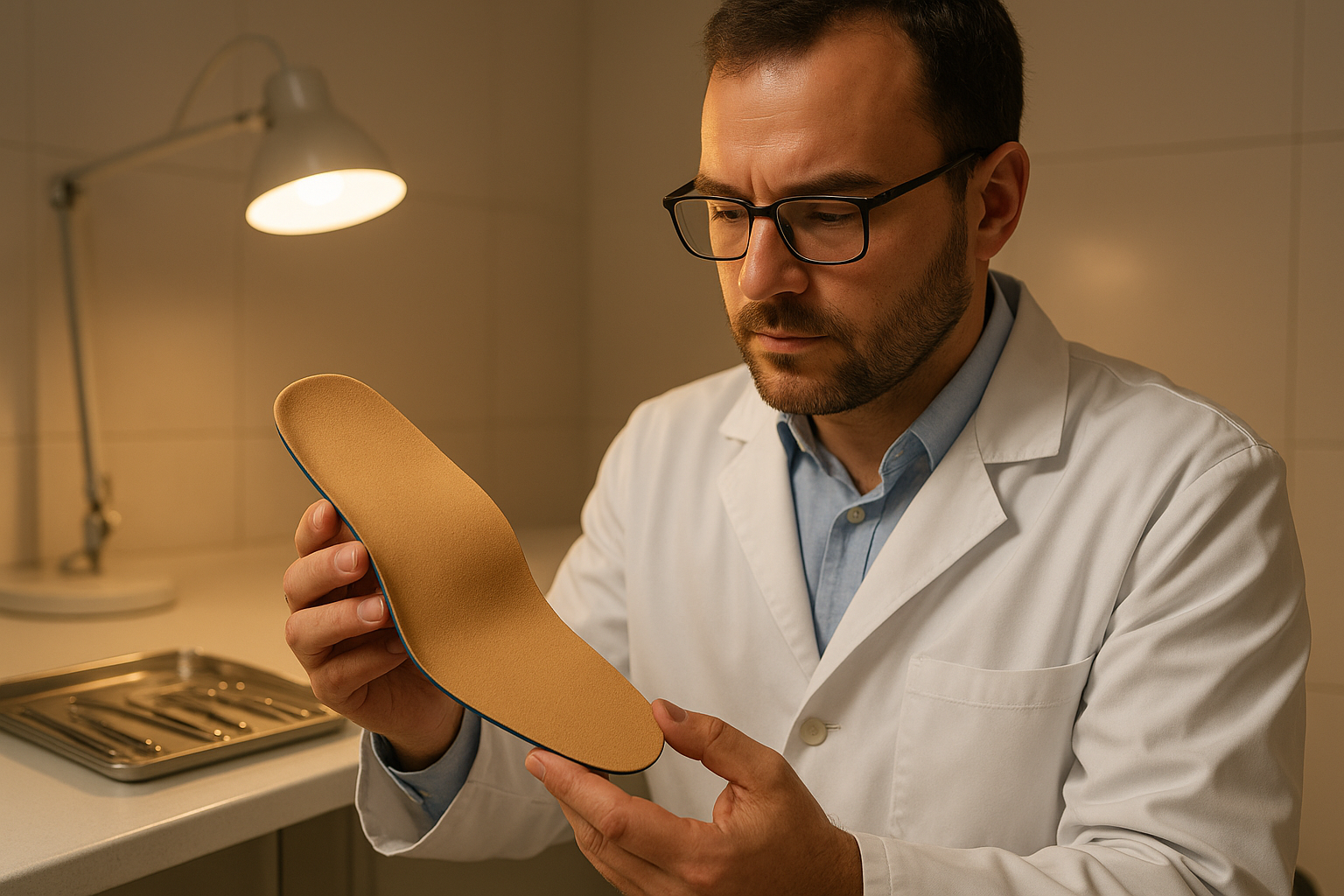
A qualified podiatrist personally reviews each finished orthotic to ensure it meets precise fabrication standards before it is shipped to the patient.
Common Mistakes to Avoid When Buying Affordable Custom Orthotics
Several pitfalls lead buyers toward products that underdeliver. Recognizing these mistakes before you purchase will save you time, money, and frustration.
- Buying "custom" orthotics without a physical foot mold. Any provider claiming to offer custom orthotics based solely on a shoe size input, phone app scan, or generic questionnaire is not offering a true custom device. Without a physical impression of your individual foot, the product is a semi-custom or prefabricated insole sold under a misleading label.
- Purchasing based on price alone. While affordability matters, a price under $50 is rarely consistent with genuine custom fabrication. The materials, labor, and podiatric expertise involved in producing a true custom orthotic have irreducible costs. Extremely cheap products cut corners in ways that become apparent when the device fails to deliver results.
- Skipping the consultation step. Even a brief phone call with a podiatrist clarifies which orthotic type, material, and design is appropriate for your specific condition. This prevents costly returns, the need for post-fabrication modifications, or the discovery that you ordered the wrong product entirely.
- Not checking insurance or HSA/FSA eligibility first. Many patients pay full price unnecessarily. A quick call to your insurer before ordering can result in significant savings — especially for those with conditions like diabetes or documented plantar fasciitis.
- Abandoning orthotics during the break-in period. New orthotics feel different from what your feet are used to. Discomfort in the first week or two is normal. Many patients incorrectly conclude the orthotics are not working when they simply need more time to adapt.
- Using orthotics in the wrong footwear. A functional orthotic placed in a flexible, unsupportive shoe cannot perform as intended. Your podiatrist can advise on which footwear types are compatible with your specific device design.
As Wikipedia's overview of orthotics notes, the effectiveness of any orthotic device depends heavily on the accuracy of the clinical assessment and the appropriateness of the device for the individual's specific condition. No amount of marketing can substitute for proper clinical process.
Caring for Your Custom Orthotics to Maximize Their Lifespan
Proper care of your affordable custom orthotics significantly extends their functional life and protects your investment. With routine maintenance, a quality pair can remain effective for two to five years.
- Clean regularly with a damp cloth and mild soap. Avoid submerging orthotics in water or placing them in a washing machine, as this can warp the shell or degrade adhesive bonds.
- Allow to air-dry completely between uses. Moisture trapped in the top cover material accelerates breakdown and bacterial growth. Alternating between two pairs of shoes helps.
- Inspect periodically for visible wear. Check the shell for cracks, the top cover for compression or thinning, and the edges for delamination. These are signs it may be time to reorder.
- Store away from direct heat. Leaving orthotics in a hot car or near a radiator can warp thermoplastic shells. Store them at room temperature when not in use.
- Schedule a reassessment every two years. Your feet change over time — particularly after weight changes, pregnancy, surgery, or injury. An updated mold ensures your orthotics continue to match your current foot structure.
Frequently Asked Questions About Affordable Custom Orthotics
What are affordable custom orthotics?
Affordable custom orthotics are professionally made shoe inserts fabricated from individual molds of a patient's feet at a significantly lower price than traditional clinic-based options. They provide the same precise fit and biomechanical support as expensive alternatives but are accessible through online ordering platforms run by licensed podiatrists, eliminating clinic overhead without reducing clinical quality.
How much do affordable custom orthotics typically cost?
Affordable custom orthotics typically range from $100 to $400 depending on the provider, materials, and design complexity. Online podiatrist-made options cost significantly less than in-clinic alternatives, which can exceed $800. The savings come from reduced overhead — not reduced quality. HSA and FSA funds can often be applied, lowering your effective out-of-pocket cost further.
Are affordable custom orthotics as effective as expensive clinic-made ones?
Yes. When made from individual foot molds by a qualified podiatrist, affordable custom orthotics are clinically equivalent to high-cost alternatives. The key determinant of effectiveness is the precision of the mold and the expertise of the fabricating podiatrist — not the price point. Online providers who use the same clinical mold process and materials as in-office practices deliver identical outcomes.
How do custom orthotics differ from prefabricated insoles?
Custom orthotics are fabricated from a mold of your specific foot, addressing your unique biomechanical needs with precision. Prefabricated insoles are mass-produced to statistical averages. They may provide temporary cushioning but cannot correct the root cause of structural imbalances, gait abnormalities, or chronic pain conditions the way a true custom device can.
Can I order affordable custom orthotics online?
Yes. Reputable podiatrist-run practices now offer a complete online ordering process for custom orthotics. You receive a foam impression kit, create molds of your feet at home in minutes, mail them back to the fabrication lab, and receive your professionally made orthotics by mail — typically within two to three weeks of placing your order.
What conditions do affordable custom orthotics help treat?
Affordable custom orthotics are clinically used to treat plantar fasciitis, flat feet, high arches, heel pain, bunions, metatarsalgia, knee pain, hip pain, lower back pain, overpronation, Achilles tendinopathy, shin splints, and diabetic foot complications. They address root biomechanical causes rather than simply masking symptoms.
How long do custom orthotics last?
High-quality custom orthotics typically last two to five years with proper care. Rigid polypropylene and carbon fiber shells last toward the longer end of that range, while soft EVA accommodative devices wear more quickly with heavy daily use. Top covers may need replacing before the shell itself wears out, which most providers can accommodate as a lower-cost service.
Does insurance cover affordable custom orthotics?
Some insurance plans cover custom orthotics when medically necessary and prescribed by a qualified healthcare provider. Check with your insurer about HCPCS codes L3000–L3649 and whether online providers qualify. HSA and FSA accounts can generally be used for custom orthotics regardless of insurance coverage, reducing your effective out-of-pocket cost substantially.
What is the process for getting affordable custom orthotics online?
The process involves a free consultation with a podiatrist, placing a secure order online, receiving a foam impression kit, creating molds of your feet at home, mailing the molds back using prepaid packaging, and receiving your professionally fabricated orthotics by mail. The entire process from order to delivery takes approximately two to three weeks.
What mistakes should I avoid when buying custom orthotics?
Avoid providers that claim "custom" orthotics without requiring a physical foot mold. Avoid purchasing solely on price — anything under $50 is not a true custom device. Always consult with a podiatrist before ordering to confirm the correct device type for your condition. Also check insurance and HSA/FSA eligibility before paying out of pocket, and do not abandon orthotics during the normal break-in period of two to four weeks.
How do I know if I need custom orthotics?
You may need affordable custom orthotics if you experience chronic foot, knee, hip, or lower back pain, have structural issues such as flat feet or high arches, have tried multiple OTC insoles without lasting relief, or have a condition like diabetes that requires specialized pressure redistribution. A free podiatrist consultation can confirm the right solution for your situation.
Are affordable custom orthotics suitable for athletes?
Yes. Custom orthotics are widely used by runners, cyclists, and competitive athletes to improve biomechanical efficiency, reduce repetitive stress injury risk, and address sport-specific demands. Affordable semi-rigid and carbon fiber orthotics provide the same high-level performance support as premium athletic options at a fraction of the cost.
How do I care for my custom orthotics to make them last longer?
Clean custom orthotics with a damp cloth and mild soap. Allow them to air-dry fully between uses and avoid exposure to direct heat, which can warp the shell. Inspect them periodically for wear or cracking. Scheduling a reassessment every two years ensures your orthotics continue to match any changes in your foot structure over time.
Take the First Step Toward Pain-Free Feet
Affordable custom orthotics represent one of the most practical and cost-effective investments you can make in your long-term foot health. They deliver the precision of a truly personalized device — fabricated from your individual foot mold by a qualified podiatrist — at a price that online platforms have made genuinely accessible to everyone. Whether you are managing chronic pain, recovering from an injury, supporting athletic performance, or simply looking to improve daily comfort, a professionally made custom orthotic addresses your needs at the root level. To explore your options, review available product types, or speak directly with a podiatrist at no cost, visit customorthotics.com and take the first step toward healthier, pain-free feet today.