

To build custom orthotics online is to take a clinically precise, professionally supervised approach to foot support — all without leaving your home. Thanks to advances in foam impression technology, smartphone 3D scanning, and remote orthotist review, millions of people now access the same quality of orthotic support once reserved for specialist clinics. Whether you are managing plantar fasciitis, flat feet, or chronic heel pain, the online process is faster, more affordable, and more accessible than ever before.
Direct answer: Building custom orthotics online involves capturing a precise impression or 3D scan of your foot at home, submitting it to a certified orthotist for review, and receiving a pair of orthotics fabricated to your exact measurements. The entire process typically takes 2 to 4 weeks from order to delivery.
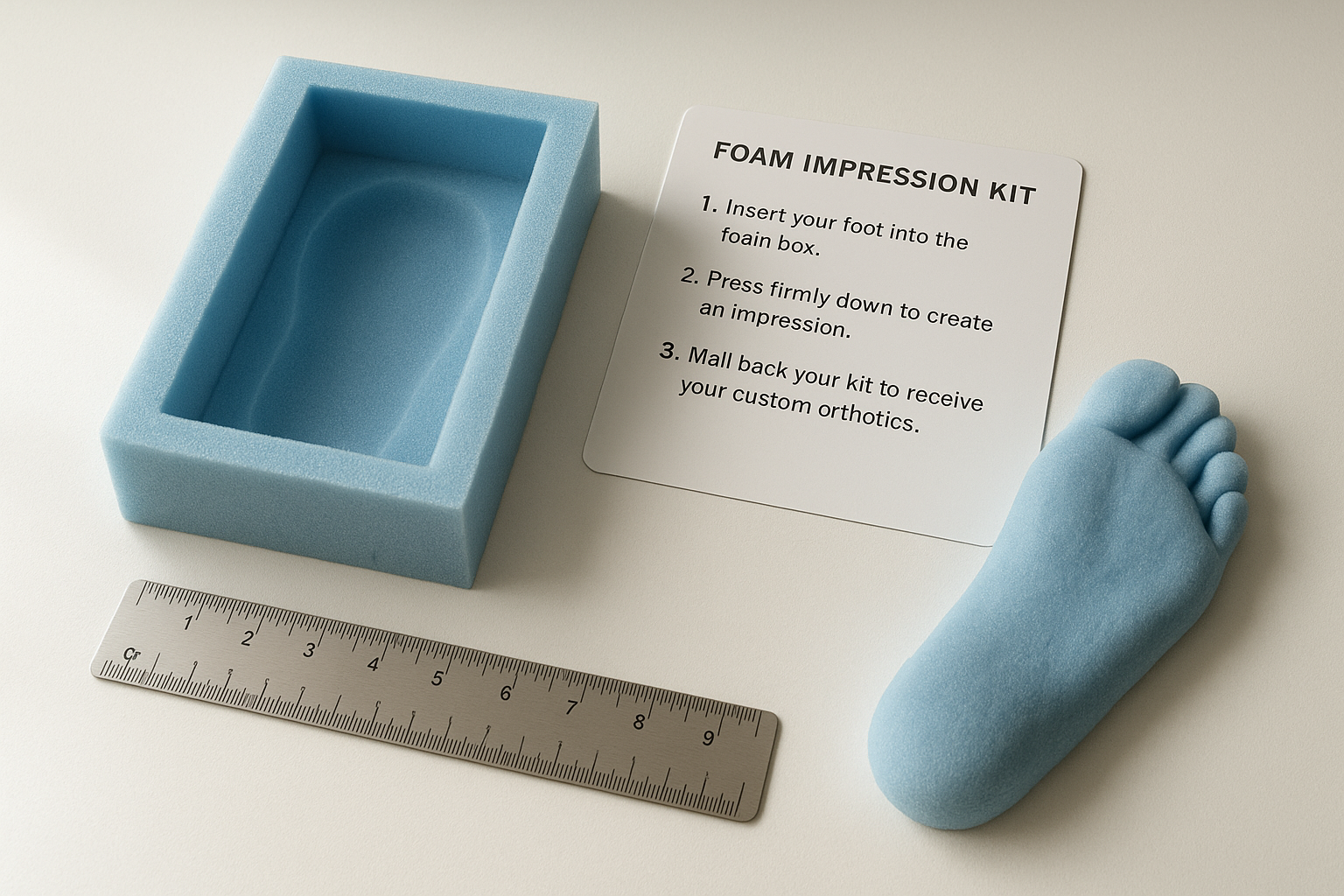
A foam impression kit is one of the most common methods used to build custom orthotics online from the comfort of home.
Why More People Are Choosing to Build Custom Orthotics Online
Traditional orthotic fitting requires multiple clinic visits, long waiting lists, and fees that can exceed $800. In contrast, the online model eliminates most of that overhead. As a result, providers can pass significant savings on to the consumer while still maintaining clinical accuracy through certified orthotist review.
Additionally, the convenience factor is undeniable. People with mobility issues, busy schedules, or limited access to specialist clinics benefit enormously from a process that fits around their lives. For example, a parent managing plantar fasciitis can complete the entire intake process after the children are in bed.
Meanwhile, quality has not been sacrificed. Research consistently shows that foam impression kits and validated scanning apps produce foot models that are clinically comparable to in-person casting for the majority of common conditions. Therefore, online orthotics are no longer a compromise — they are a genuine alternative.
How the Online Orthotic Process Works Step by Step
Step 1 — Choose a Reputable Provider
First, research providers that employ registered or certified orthotists and are transparent about their fabrication process. Look for services that offer a satisfaction guarantee or adjustment policy. A trustworthy starting point is CustomOrthotics.com, which pairs each order with a licensed orthotist review.
Step 2 — Complete the Health and Activity Questionnaire
Next, you will fill out a detailed questionnaire covering your foot condition, pain location, activity level, and the types of shoes you wear most often. This information is just as important as the physical impression because it guides the orthotist in selecting the right shell stiffness and top-cover material.
Step 3 — Capture Your Foot Impression or 3D Scan
The most common method is a foam impression kit mailed to your home. You simply press each foot firmly into the foam box to create a precise negative mold. Alternatively, some providers use a smartphone app that generates a 3D digital model using your phone's camera. Both approaches capture the arch height, heel cup depth, and forefoot width needed for accurate fabrication.
Step 4 — Orthotist Review and Fabrication
Once your mold or scan is received, a certified orthotist reviews your foot data alongside your questionnaire answers. They then select the appropriate materials — rigid polypropylene, semi-rigid carbon fiber, or cushioned EVA foam — and the orthotics are fabricated, usually using CNC milling or 3D printing technology.
Step 5 — Delivery and Breaking In
Finally, your orthotics arrive by mail, typically within 2 to 4 weeks. It is important to break them in gradually — start by wearing them for 1 to 2 hours per day and increase wear time over 1 to 2 weeks. This allows your feet and lower limbs to adapt to the corrected alignment without discomfort.
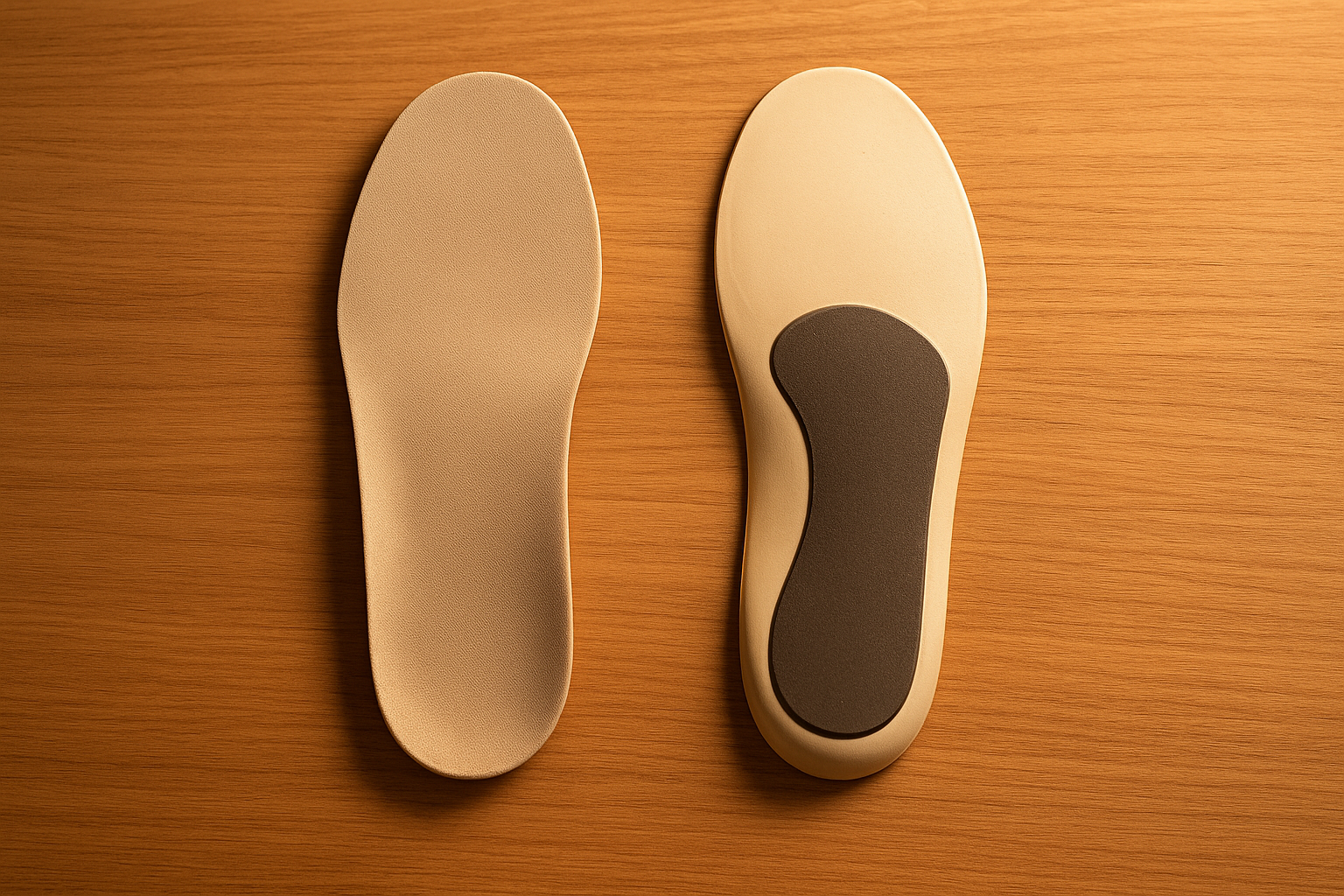
Custom orthotic insoles are fabricated in different materials and stiffness levels depending on the wearer's condition and activity needs.
Who Benefits Most from Online Custom Orthotics
Custom orthotics address a wide range of conditions. According to Wikipedia's overview of plantar fasciitis, it is one of the most common causes of heel pain, affecting roughly 10% of the population at some point. Custom orthotics are among the most effective conservative treatments for this condition.
Beyond plantar fasciitis, online custom orthotics are especially beneficial for:
- Flat feet and overpronation — correcting inward rolling of the ankle during walking or running
- High arches — distributing pressure more evenly across the foot
- Heel spurs — offloading painful bony prominences
- Knee and lower back pain — improving alignment from the ground up
- Sports injuries — supporting recovery and preventing recurrence
Cost Comparison: Online vs. Clinic-Based Orthotics
Cost is one of the most compelling reasons people choose to build custom orthotics online. In-clinic custom orthotics often cost between $400 and $800, and that figure may not include the consultation fee. Online providers, however, typically charge between $100 and $400 for a fully customized pair.
Cost at a Glance
In-clinic custom orthotics: $400 – $800+
Online custom orthotics: $100 – $400
Over-the-counter insoles: $20 – $60 (not customized)
Furthermore, some insurance plans do cover online custom orthotics. You should request a letter of medical necessity and an itemized receipt from your provider to submit a reimbursement claim. Services like CustomOrthotics.com often assist with this documentation.
Choosing the Right Material for Your Needs
The material of your orthotic shell significantly affects how it performs. Rigid polypropylene shells control motion effectively and are ideal for everyday walking shoes. Semi-rigid carbon fiber offers a balance of control and flexibility, making it popular among runners and athletes. Soft EVA foam orthotics, in contrast, prioritize cushioning and are well-suited for arthritic or diabetic feet.
Top covers also vary. Leather top covers are breathable and durable, while fabric and gel covers add extra cushioning. Your orthotist will recommend the best combination based on your questionnaire responses and foot scan data.
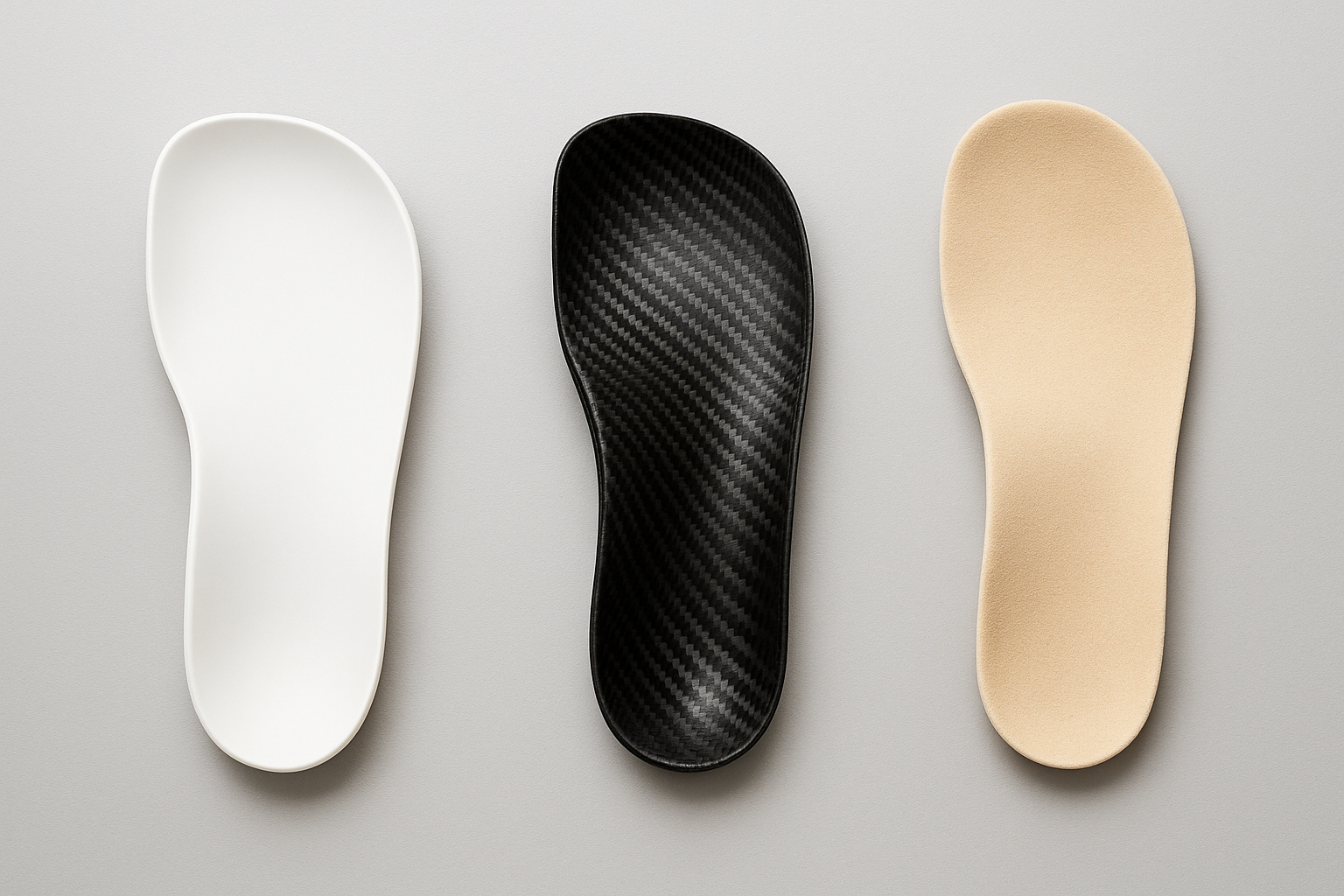
Choosing the right orthotic material is a key decision when you build custom orthotics online — rigid, semi-rigid, and soft options each serve different needs.
Common Mistakes to Avoid When Ordering Online
Even though the process is straightforward, a few avoidable mistakes can reduce the effectiveness of your orthotics. First, providing an inaccurate foot impression is the most common error. Always follow the provider's instructions precisely — press your foot firmly and evenly into the foam, and do not shift your weight during the impression.
Second, failing to specify your primary shoe type leads to orthotics that may not fit your footwear. For example, a dress shoe orthotic is much thinner than a running shoe orthotic. Therefore, always indicate the specific shoes you plan to wear them in.
Finally, skipping the break-in period is a frequent mistake. Although your orthotics are custom-made, your body still needs time to adapt. Rushing the process can cause temporary soreness in the arch or calf muscles.
Frequently Asked Questions About Custom Orthotics Online
Can you really build custom orthotics online without visiting a clinic?
Yes. Modern at-home foam impression kits and smartphone scanning apps allow you to build custom orthotics online with clinically meaningful accuracy. A certified orthotist reviews your data before fabrication begins, so professional oversight is maintained throughout.
How accurate are online foot scanning methods?
Foam impression kits and validated 3D scanning apps achieve accuracy comparable to in-person casting for most common conditions. However, complex biomechanical issues may still benefit from an in-person gait analysis.
How long does it take to receive custom orthotics ordered online?
Most services deliver within 2 to 4 weeks after receiving your foot impression or scan. Rush processing is sometimes available for an additional fee.
What conditions can custom orthotics help with?
Custom orthotics commonly address plantar fasciitis, flat feet, high arches, overpronation, heel spurs, and knee or lower back pain caused by poor foot alignment. They also support recovery from sports-related injuries.
How much does it cost to build custom orthotics online?
Online custom orthotics typically range from $100 to $400, compared to $400 to $800 or more at a clinic. The price varies based on shell material, top cover, and any added cushioning options.
Are online custom orthotics covered by insurance?
Coverage varies by plan, but many insurance providers do cover online custom orthotics. Request a letter of medical necessity and an itemized receipt from your provider to submit for reimbursement.
What is the difference between custom orthotics and over-the-counter insoles?
Over-the-counter insoles are mass-produced in generic sizes and provide general cushioning. Custom orthotics, in contrast, are fabricated from a precise mold of your individual foot and address specific biomechanical problems.
What materials are used to make custom orthotics?
Common materials include rigid polypropylene, semi-rigid carbon fiber, EVA foam, and cork. The choice depends on the intended activity level and the specific condition being treated.
How do I know if I need rigid or soft custom orthotics?
Rigid orthotics control motion and correct alignment, making them ideal for everyday footwear. Soft orthotics prioritize cushioning and are better suited for arthritic or diabetic feet. Your orthotist will recommend the right type based on your scan and health information.
How long do custom orthotics last?
High-quality custom orthotics last 2 to 5 years with regular use. Top covers and cushioning layers may need replacing sooner, typically every 12 to 18 months depending on activity level.
Can children use custom orthotics ordered online?
Yes, many services offer pediatric custom orthotics. Because children's feet grow quickly, replacements are typically needed every 12 to 18 months to maintain proper fit and support.
What common mistakes should I avoid when ordering custom orthotics online?
The most frequent mistakes are providing an inaccurate foot impression, not specifying your primary shoe type, and skipping the break-in period. Always follow the provider's instructions carefully and allow at least 1 to 2 weeks to adapt to your new orthotics.
Is It the Right Choice for You?
The decision to build custom orthotics online is the right one for most people dealing with common foot, knee, or lower back pain. The process is clinically supervised, significantly more affordable than clinic-based alternatives, and designed to fit seamlessly into a busy lifestyle. However, if you have a complex neurological condition, severe deformity, or a post-surgical foot, an in-person consultation remains the safer first step.
For the vast majority of users, though, the combination of certified orthotist oversight, accurate at-home scanning, and high-quality fabrication materials makes the online route a genuinely excellent option. Additionally, the ability to order replacements or adjustments without another clinic visit adds long-term convenience that traditional services simply cannot match.
In summary, choosing to build custom orthotics online gives you professional-grade foot support at a fraction of the traditional cost, delivered directly to your door. Start by selecting a certified provider, complete your health questionnaire honestly, and follow the impression or scanning instructions precisely — and you will be well on your way to lasting foot pain relief.