

Orthotics for knee pain are custom-molded shoe inserts built from an exact impression of your foot, engineered to correct the alignment problems that place extra stress on your knee joints with every stride. Unlike generic drugstore insoles, these devices are fabricated to match the precise shape and movement pattern of your individual foot. As a result, they can reduce the abnormal rotational forces that travel up through the ankle and into the knee each time your heel strikes the ground. In fact, research has repeatedly linked foot mechanics to knee joint loading patterns, which is exactly why podiatrists often recommend this approach before more invasive options. For many people struggling with chronic knee discomfort, custom orthotics offer a non-surgical way to address the root cause rather than simply masking the symptoms.
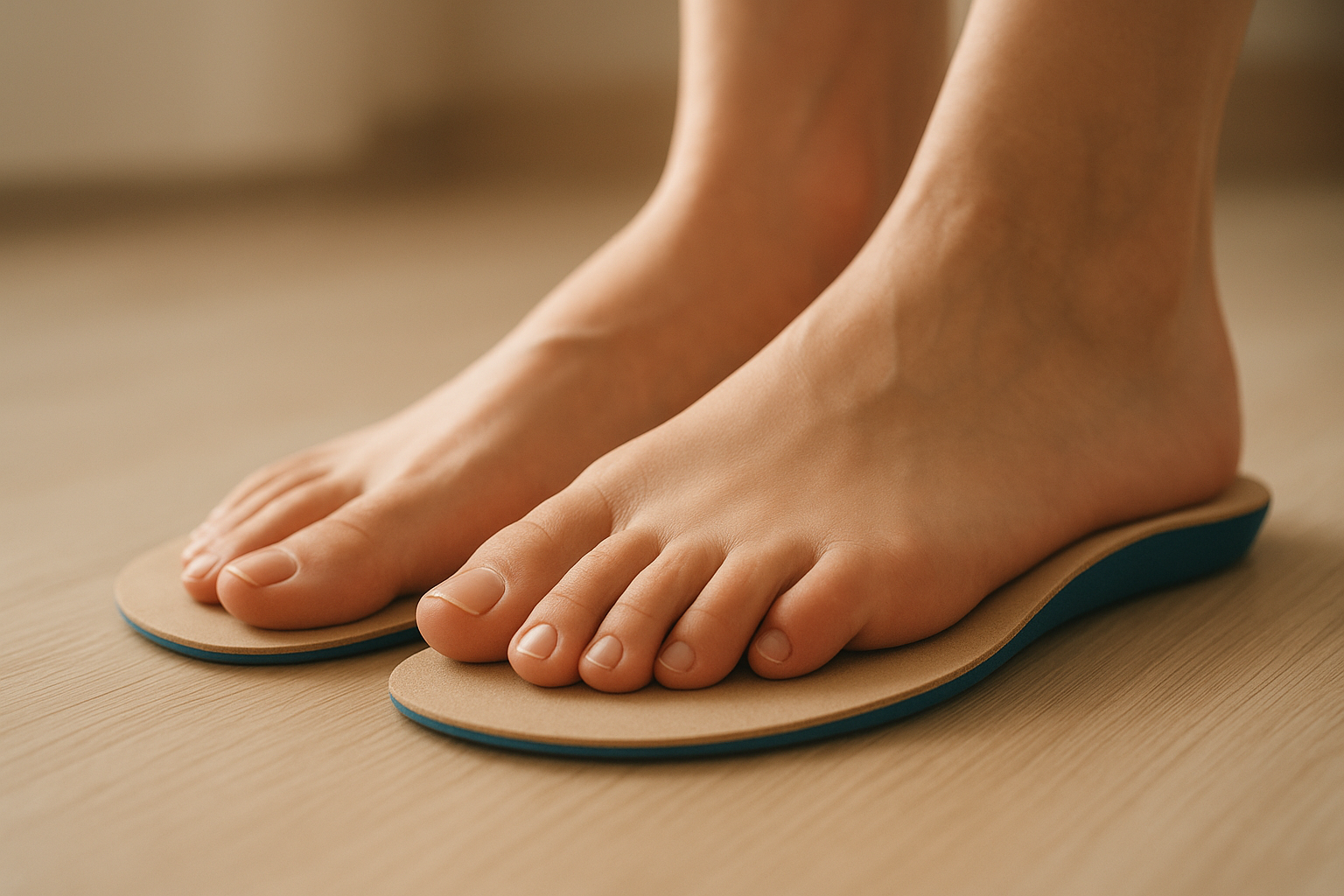
Custom-molded orthotics are shaped to correct the foot alignment issues that often trigger knee discomfort.
What Is the Connection Between Orthotics and Knee Pain?
Foot misalignment changes how your shin and thigh rotate with every single step, and that rotation travels directly into the knee joint. Orthotics for knee pain correct this misalignment at its source, easing the twisting force that irritates cartilage (the smooth tissue cushioning the knee joint) and the surrounding ligaments. Consequently, many patients report noticeably less pressure within just a few weeks of consistent daily wear. If you want a deeper look at the science behind this, this guide on how orthotics can help relieve knee pain effectively breaks the mechanism down step by step.
This relationship is often called the kinetic chain, meaning the foot, ankle, knee, and hip all move together as a single connected system. When one link in that chain is out of alignment, the others compensate, and the knee frequently absorbs the brunt of that compensation. Therefore, correcting the foot first often produces relief further up the chain without surgery or medication. For readers dealing with related postural issues, this resource on postural support orthotics for better alignment explains how the same principle applies from the ground all the way up to the spine.
How Orthotics for Knee Pain Relieve Pressure on Joints
Custom orthotics work by repositioning the foot into a more neutral stance before it ever strikes the ground. This is called biomechanical control, a term that simply describes how the device guides the foot's movement throughout each phase of the gait cycle (the sequence of motions your leg makes while walking). As a result, less rotational stress reaches the knee, and the surrounding muscles no longer need to overcompensate for a poorly aligned foot.
Understanding Overpronation and Its Role in Knee Stress
In particular, orthotics can reduce excess pronation, which happens when the arch collapses inward during walking or running. According to information published through the National Institutes of Health, abnormal foot mechanics are strongly associated with increased knee joint loading over time (NIH). For this reason, correcting pronation with a properly fitted device is one of the most studied conservative approaches to knee pain management available today.
Above all, this correction happens passively. In other words, you do not need to consciously think about your gait once the orthotic is in place, because the device automatically guides your alignment with every single step you take, whether you are walking to your car or standing at a work station all day.
Common Foot Mechanics That Cause Knee Discomfort
Several foot structures are commonly linked to knee strain, so identifying yours is an important first step toward relief. Because each foot type distributes force differently, the correction each one needs is different too.
Flat Feet and Overpronation
Flat feet often cause excessive inward rolling, which twists the lower leg and stresses the inner knee compartment. Over time, this repeated twisting motion can irritate the ligaments that stabilize the joint.
High Arches and Poor Shock Absorption
In contrast, high arches tend to reduce natural shock absorption, sending more impact force directly upward into the joint with every heel strike. Readers dealing with rigid, high-arched feet may find it helpful to review this detailed guide to orthotics for high arches for additional context on this specific foot type.
Leg Length Discrepancy and Hip Rotation
Similarly, uneven leg length or a rotated hip can create compensating foot patterns that eventually show up as knee pain on one side of the body. Because these mechanical issues are highly individual, a generic, one-size-fits-all insole rarely provides lasting correction for any of them.
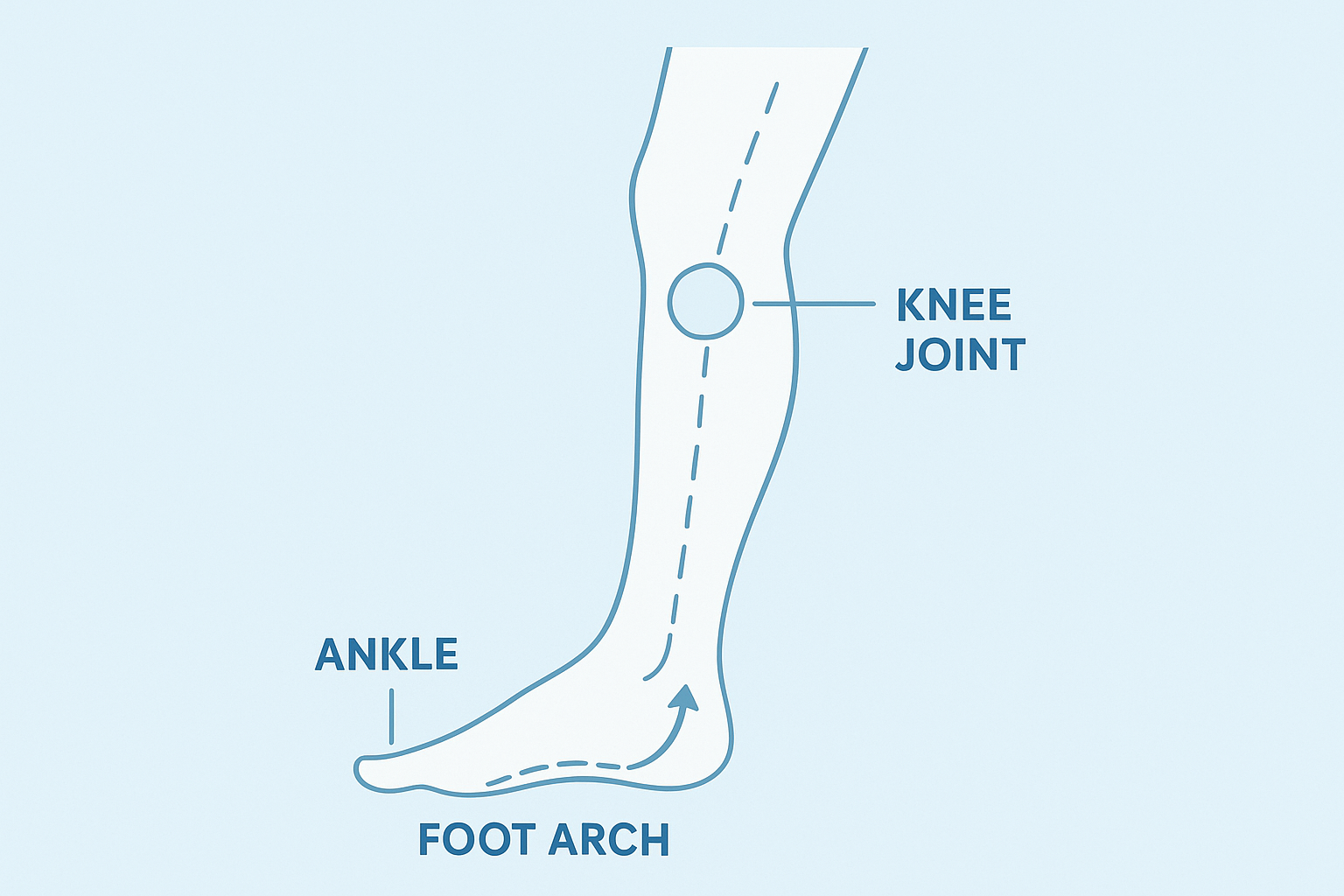
Foot alignment directly influences how force travels upward into the knee joint.
Specific Knee Conditions Linked to Foot Mechanics
Beyond general soreness, several diagnosed knee conditions are directly influenced by how your foot strikes the ground. Understanding which one applies to you can help you and your podiatrist choose the right level of correction.
Patellofemoral Pain Syndrome (Runner's Knee)
Patellofemoral pain syndrome, commonly called runner's knee, occurs when the kneecap tracks unevenly against the thighbone during movement (Wikipedia). Because overpronation rotates the lower leg inward, it frequently worsens this uneven tracking. Orthotics that control excess pronation can therefore reduce the lateral pull on the kneecap significantly.
IT Band Syndrome
The iliotibial band runs along the outside of the thigh and can become irritated when foot rotation pulls the leg out of its natural path (Wikipedia). As a result, runners and hikers with this condition often see meaningful relief once their underlying foot mechanics are corrected with a properly molded device.
Knee Osteoarthritis
Osteoarthritis wears down the cartilage that cushions the knee joint, a process the CDC notes affects millions of adults over time (CDC). Orthotics cannot reverse this wear, but they can redistribute pressure away from the most damaged part of the joint, which often reduces day-to-day discomfort noticeably.
Signs You May Need Custom Knee-Support Orthotics
Not everyone with knee pain needs orthotics, so recognizing the right signs matters before you invest in a device. Specifically, watch for pain that worsens after standing or walking for long periods, uneven shoe wear along the sole, or a visible inward rolling of the ankle.
- Knee pain that appears mainly during or after walking, running, or standing
- Visible flat feet, high arches, or a noticeable difference between your two feet
- Uneven wear patterns on the inside or outside edge of your shoes
- A history of shin splints, plantar fasciitis, or ankle instability
If several of these apply to you, custom orthotics for knee pain are worth discussing with a podiatrist. This is particularly true for people on their feet all day, such as those covered in this guide for nursing professionals seeking foot relief.
Types of Orthotics for Knee Pain: Rigid, Semi-Rigid, and Soft
Not all orthotics are built the same way, and the level of firmness matters just as much as the fit. Choosing the wrong type can leave you with an insole that feels comfortable but does very little to correct alignment.
- Rigid orthotics: Built from firm materials, these control motion aggressively and are typically used for significant overpronation or supination.
- Semi-rigid orthotics: A blend of supportive shell and cushioned topcover, this is the most common choice for knee-related foot mechanics because it balances correction with comfort.
- Soft (accommodative) orthotics: These prioritize cushioning over correction and are generally reserved for arthritis or diabetic foot care rather than active knee pain correction.
Consequently, a podiatrist will usually recommend semi-rigid orthotics for most knee pain cases, reserving rigid designs for more severe alignment issues. This is one of the key reasons a professional gait assessment matters more than guessing at a firmness level online.
Custom Orthotics vs. Store-Bought Insoles for Knee Pain Relief
Store-bought insoles are built using a single generic mold meant to fit as many foot shapes as possible. Because of this, they can only provide mild cushioning rather than true structural correction. Custom orthotics, on the other hand, are fabricated from an individual foot impression, which allows precise targeting of the exact area causing knee stress.
A 2019 review of conservative knee osteoarthritis treatments found that foot orthoses provided measurable improvements in pain scores for a notable portion of participants, particularly those with malalignment issues (NCBI). Consequently, while cost is often lower for generic insoles, the long-term value of a properly fitted custom device tends to be higher for people dealing with persistent joint pain. To understand the broader picture, this overview of the advantages of custom-made orthotics covers the topic in more depth, and this resource on the benefits of custom orthotics for foot pain extends the comparison beyond the knee alone.
Choosing the Right Shoes to Pair With Orthotics for Knee Pain
Even the best orthotic cannot fully correct alignment if it is placed inside the wrong shoe. Therefore, shoe selection deserves nearly as much attention as the orthotic itself.
- Choose shoes with a removable stock insole so the custom orthotic can sit flush against the shoe's footbed.
- Look for a firm heel counter, the structured back portion of the shoe, since it helps the orthotic maintain proper heel positioning.
- Avoid overly flexible, minimalist shoes, as they can undo much of the correction the orthotic is designed to provide.
In short, pairing a custom orthotic with supportive, properly fitted footwear gives the device the stable foundation it needs to actually change how force travels up into your knee.
How to Get Fitted for Custom Orthotics: A Step-by-Step Process
Getting properly fitted is a straightforward process when working with an experienced provider. Below is the typical sequence patients follow from first contact to final fitting, and readers wondering where to find personalized orthotics for their foot pain can use this sequence as a checklist when vetting a provider.
- Schedule a consultation: Contact a podiatrist for a complimentary consultation to discuss your knee pain symptoms, activity level, and any prior injuries that may be contributing factors.
- Complete a gait assessment: The podiatrist examines your walking pattern, arch type, and leg alignment to identify the specific biomechanical issues placing stress on your knees.
- Have your feet molded: A precise mold or scan is taken of each foot in a neutral position, capturing the exact contours needed to fabricate a truly custom device.
- Orthotics are fabricated: Skilled technicians use the mold to build the orthotic shell and padding, tailoring correction levels to address the alignment issues identified earlier.
- Attend a fitting session: The orthotics are fitted into your everyday shoes, and any necessary adjustments are made to ensure comfort and proper correction from the very first wear.
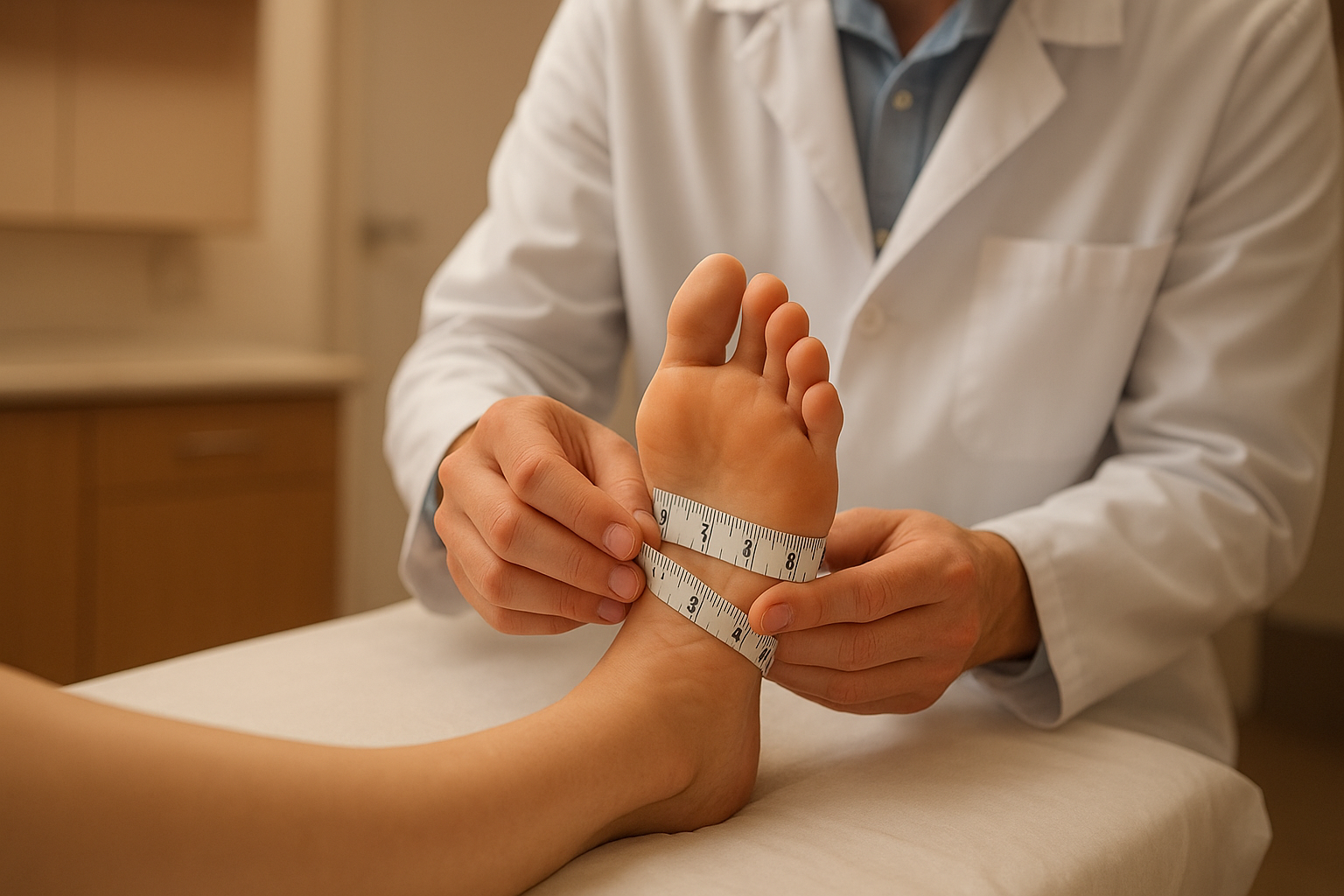
Every custom orthotic begins with a precise mold of the patient's own foot.
What to Expect During the Adjustment Period
During the first week or two, it is common to feel mild pressure in new spots as your foot adapts to its corrected position. This is not cause for concern; rather, it is a normal sign that the device is actively repositioning your alignment.
To ease the transition, most podiatrists recommend wearing the orthotics for just a few hours on day one, then gradually increasing wear time each day. In addition, keeping a backup pair of stock insoles on hand for long outings during week one can help prevent overuse soreness. By the third or fourth week, most patients wear their orthotics comfortably for a full day without a second thought.
Choosing a Provider You Can Trust
Because orthotics are a medical device, the provider's expertise matters just as much as the fabrication quality. A podiatrist-owned practice with more than two decades of hands-on experience, for instance, brings a level of clinical judgment that generic insole retailers simply cannot offer.
The team at customorthotics.com fabricates orthotics directly from individual foot molds and holds an A+ rating from the Better Business Bureau. Patients can speak with the podiatrist directly for a complimentary consultation by phone, or they can place an order conveniently through the online platform. This combination of medical expertise and accessible service makes it easier for both local and remote patients to start addressing knee pain at its source.
People with active routines, in particular, benefit from getting this right the first time. For more guidance on staying mobile without aggravating joint pain, see this resource on orthotics for active lifestyles.
Properly fitted orthotics can help people return to daily activity with less knee strain.
Frequently Asked Questions About Orthotics for Knee Pain
What are orthotics for knee pain?
Orthotics for knee pain are custom-molded shoe inserts that correct foot alignment to reduce the abnormal rotational forces that travel up into the knee joint. They are built from an impression of each patient's foot rather than mass-produced.
How do orthotics help with knee pain?
Orthotics help by controlling excess pronation or supination, which changes how the shin and thigh rotate during walking. This reduces uneven pressure across the knee cartilage and ligaments over time.
Can orthotics really fix knee pain?
Orthotics cannot repair structural knee damage, but they can significantly reduce the biomechanical stress that causes or worsens pain. Many patients use them alongside physical therapy for the best results.
How long does it take to feel relief from custom orthotics?
Most patients notice a reduction in discomfort within two to six weeks of consistent daily wear. However, full adaptation to the new alignment can take up to three months.
How much do custom orthotics cost compared to store-bought insoles?
Custom orthotics typically cost more upfront than drugstore insoles because they are individually fabricated from a foot mold. Even so, many patients find the investment worthwhile since custom devices last longer and address the actual cause of pain.
Are custom orthotics better than over-the-counter insoles for knee support?
Custom orthotics are generally more effective for knee pain because they are shaped to an individual's exact foot structure. Over-the-counter insoles offer generic cushioning but cannot correct specific alignment problems.
What foot conditions commonly cause knee pain?
Overpronation, flat feet, and high arches are among the most common foot mechanics linked to knee discomfort. Each condition changes leg rotation in a way that stresses the knee joint differently.
Do orthotics work for arthritis-related knee pain?
Orthotics can help reduce joint loading in patients with osteoarthritis by redistributing pressure away from the most affected area of the knee. They are often recommended as part of a broader conservative treatment plan.
How long do custom orthotics for knee pain typically last?
Well-made custom orthotics generally last between three and five years with regular use. Lifespan depends on activity level, body weight, and how consistently they are worn.
What is the biggest mistake people make when buying orthotics?
The most common mistake is choosing generic, one-size-fits-all insoles instead of a device molded to the individual foot. This often leads to disappointing results and continued knee discomfort.
Can orthotics be used alongside physical therapy?
Yes, orthotics and physical therapy work well together because one corrects alignment while the other strengthens supporting muscles. Combining both approaches often produces faster, longer-lasting relief.
Do I need a doctor's prescription for custom orthotics?
Some providers require a prescription, but podiatrist-led practices can often evaluate and fit patients directly through a consultation. It is best to confirm the specific requirements with your chosen provider.
How are custom orthotics for knee pain actually made?
Custom orthotics are made by taking a precise mold or scan of each foot, which is then used to fabricate a device tailored to that individual's arch shape and gait pattern. This process ensures a far more accurate fit than mass production allows.
Can children with knee pain use custom orthotics?
Children with alignment-related knee pain can often benefit from custom orthotics, especially during growth years when foot structure is still developing. A podiatrist should evaluate the child before fitting any device.
What's the difference between rigid and soft orthotics for knee pain?
Rigid orthotics control motion aggressively and suit significant overpronation, while soft orthotics prioritize cushioning over correction. Most knee pain cases respond best to a semi-rigid design that balances both qualities.
Can orthotics help with patellofemoral pain syndrome (runner's knee)?
Yes, orthotics for knee pain that correct overpronation can reduce the uneven kneecap tracking associated with patellofemoral pain syndrome. Many runners use them alongside targeted strengthening exercises for faster recovery.
Final Thoughts on Orthotics for Knee Pain
In summary, orthotics for knee pain address the biomechanical root of joint discomfort rather than simply covering up symptoms. By correcting how the foot strikes the ground, custom devices can reduce the rotational stress that irritates the knee with every step. Above all, choosing a properly molded, individually fitted device tends to outperform generic insoles for lasting relief.
If you have noticed uneven shoe wear, persistent knee soreness after walking, or a history of foot-related injuries, it may be time to explore custom orthotics for knee pain with an experienced podiatrist. A brief consultation, according to the process outlined above, can help determine whether this conservative approach is right for you. For more information or to speak with a specialist directly, visit customorthotics.com to get started.