

Shoe inserts for flat feet are specially engineered supportive devices placed inside footwear to compensate for a collapsed or absent arch — redistributing pressure, correcting alignment, and reducing pain throughout the lower body. Research published in the Journal of Foot and Ankle Research estimates that approximately 26% of adults have flat feet, yet the majority never receive the targeted arch support that could transform their daily comfort and mobility. If you deal with heel soreness, arch fatigue, or radiating knee or hip pain, the right insole can make a measurable difference.
Furthermore, not all insoles are equally effective. Understanding the full spectrum of options — from basic drugstore foam to fully custom-molded orthotics — allows you to choose the solution that genuinely matches your anatomy and lifestyle. This guide covers everything: how flat feet develop, how insoles work, which type suits your situation, and how to get the best long-term results.
What Are Flat Feet and Why Do They Cause Pain?
Flat feet (medically known as pes planus or fallen arches) occur when the arch of the foot collapses so that the entire sole makes contact with the ground. This structural condition can be present from birth or develop gradually due to aging, obesity, injury, or prolonged mechanical stress.
As a result, the foot tends to overpronate — rolling excessively inward with each step. Overpronation (excessive inward rolling of the foot during walking or running) places abnormal stress on the ankles, knees, hips, and lower back. Consequently, pain is not always limited to the foot itself; it can radiate upward through the entire kinetic chain — the interconnected system of joints and muscles from foot to spine.
Common symptoms include arch fatigue, heel pain, swollen ankles, shin discomfort, and generalised soreness after prolonged standing or walking. In many cases, conditions like plantar fasciitis — inflammation of the thick band of tissue running along the bottom of the foot — develop as a direct consequence of untreated flat feet.
Flexible vs. Rigid Flat Feet: Why the Distinction Matters
Flat feet fall into two structural categories. Flexible flat feet — by far the more common type — show an arch when the foot is off the ground but collapse under weight. Rigid flat feet have no visible arch in any position. This distinction matters because flexible flat feet generally respond very well to shoe inserts and orthotics, while rigid flat feet may require additional medical evaluation.
According to the NHS, the vast majority of flat feet cases do not require surgery and respond well to conservative treatments including appropriate footwear, physical therapy, and orthotics. Furthermore, addressing flat feet early can prevent secondary conditions from developing in the knees, hips, and spine.
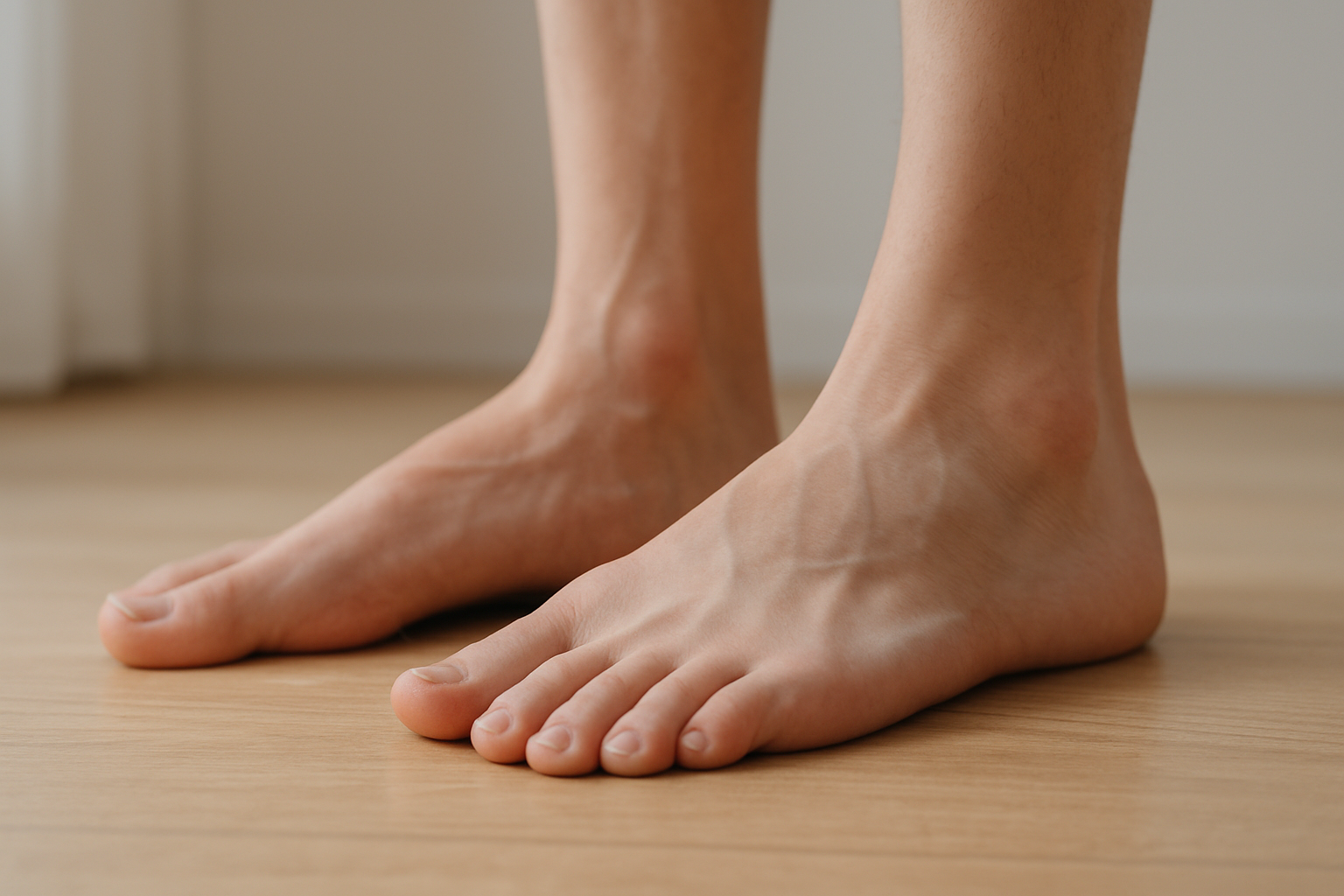
Flat feet cause the entire sole to contact the ground, producing overpronation and widespread joint stress — exactly what shoe inserts for flat feet are designed to correct.
How Shoe Inserts for Flat Feet Work
Shoe inserts for flat feet provide an artificial arch that the foot lacks naturally. They cradle the heel, support the midfoot, and guide the foot into a more neutral position during movement. Therefore, every step becomes more biomechanically efficient and significantly less damaging to surrounding joints.
A well-designed insert for flat feet typically features three critical structural elements: For a deeper walkthrough, see our Comfortable Insoles for Flat Feet: Complete Relief Guide.
- A firm arch support — fills the gap between the collapsed arch and the shoe sole, providing a functional arch the foot can rest against
- A deep heel cup — stabilises the calcaneus (heel bone) and prevents excessive inward rolling at the ankle
- A metatarsal pad or forefoot cushion — reduces pressure on the ball of the foot and eases forefoot pain common in flat-footed individuals
In addition, quality insoles incorporate moisture-wicking top covers and antimicrobial materials for all-day comfort. However, the structural support component — not the cushioning — is what truly corrects the biomechanical issues caused by flat feet. Soft, heavily cushioned insoles feel pleasant underfoot but do little to address overpronation or arch collapse.
The Kinetic Chain Effect: Why Foot Support Matters Beyond the Foot
Your feet are the foundation of your body's kinetic chain. When the arch collapses, the resulting misalignment does not stay confined to the foot. Specifically, it causes inward rotation of the tibia (shin bone), which stresses the knee. The hip then compensates, altering pelvic tilt, and the lower back absorbs the resulting imbalance. By restoring proper foot positioning, shoe inserts for flat feet interrupt this cascade of compensation, delivering relief well beyond the sole.
Types of Shoe Inserts and Arch Supports for Flat Feet
Not all insoles are created equal. Specifically, there are three broad categories of shoe inserts for flat feet — each suited to different severity levels, budgets, and lifestyles.
1. Over-the-Counter (OTC) Insoles
Mass-produced insoles are available at pharmacies, sporting goods stores, and online retailers. They come in standard sizes and offer a general level of arch support. For mild flat feet or occasional foot fatigue, OTC insoles can provide meaningful short-term relief. However, they are built around an average foot shape and therefore may not address your specific structural needs.
Best for: Mild flat feet, occasional discomfort, budget-conscious first-time users.
Typical lifespan: Three to six months.
Price range: $20–$60.
2. Semi-Custom Insoles
Semi-custom options use heat-moldable materials that partially conform to the shape of your foot. They bridge the gap between fully generic and fully custom devices. Nevertheless, they still lack the precision of a device built from an individual mold. Furthermore, the heat-molding process captures general contours but often misses subtle pressure points unique to your anatomy.
Best for: Moderate flat feet, users who want more personalisation than OTC but aren't yet ready for full custom.
Typical lifespan: Six to twelve months.
Price range: $60–$150.
3. Fully Custom Orthotics
Custom orthotics are fabricated from individual molds of each patient's feet, capturing every contour and pressure point unique to that person. As a result, they deliver a level of correction and comfort that generic products simply cannot replicate. The American Podiatric Medical Association (APMA) recognises custom orthotics as an effective treatment for a wide range of foot conditions, including those stemming from flat feet.
Best for: Moderate to severe flat feet, chronic pain, structural deformities, athletes, people on their feet all day.
Typical lifespan: Two to five years.
Price range: $200–$600+ (though online providers like customorthotics.com offer more accessible pricing).
💡 Expert Tip: For a detailed breakdown of top-rated options across all three categories, see this comprehensive buying guide to the best shoe inserts for flat feet, which covers expert picks, price comparisons, and guidance on matching insert type to foot type.
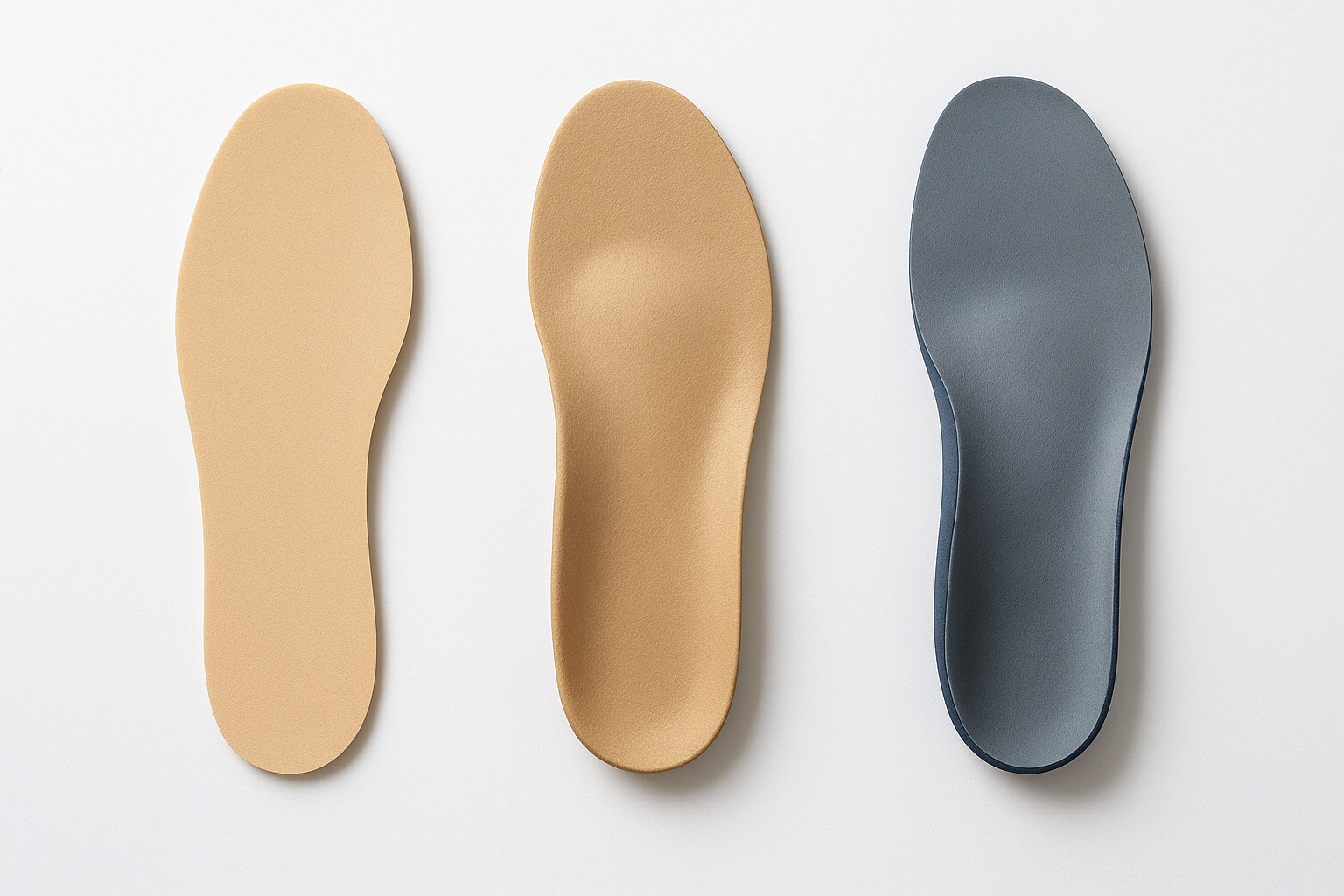
Three categories of shoe inserts for flat feet: generic foam OTC, semi-custom heat-moldable, and fully custom orthotic with a precision-molded arch and deep heel cup.
Conditions That Shoe Inserts for Flat Feet Can Help Treat
One of the most underappreciated aspects of flat feet insoles is the breadth of conditions they can address. Because overpronation stresses the entire kinetic chain, correcting foot alignment has wide-reaching therapeutic effects. Specifically, arch supports are commonly used to manage:
- Plantar fasciitis — reduces tension on the plantar fascia by providing arch lift and heel stabilisation
- Achilles tendinitis — corrects the inward pull that strains the Achilles tendon
- Shin splints — redistributes impact forces away from the tibia during activity
- Patellofemoral knee pain — reduces the inward rotation of the tibia that causes kneecap tracking problems
- Hip and lower back pain — restores pelvic alignment by normalising foot and ankle mechanics
- Metatarsalgia — relieves ball-of-foot pressure through forefoot padding
- Bunions and hammer toes — reduces forefoot stress that accelerates these deformities
In contrast, simply wearing cushioned footwear without arch support addresses comfort but leaves the underlying biomechanical problem intact. Therefore, choosing a structurally supportive insole — rather than a purely padded one — is essential for lasting results.
Flat Feet Insoles for Specific Activities and Lifestyles
The right shoe insert for flat feet also depends on how you use your feet. Different activities place different demands on arch support systems, so matching your insole to your lifestyle is just as important as matching it to your arch type.
Running and Athletic Activity
Runners with flat feet experience impact forces three to four times their body weight with every stride. Consequently, they need insoles with a firm medial (inner) arch post, a deep heel cup for rearfoot control, and sufficient forefoot cushioning. Semi-rigid designs — combining a supportive shell with a cushioned top layer — work best for most athletic applications.
Work and Prolonged Standing
Healthcare workers, teachers, retail staff, and warehouse employees spend eight or more hours daily on their feet. For this group, durability and full-foot support are paramount. A full-length custom orthotic with a firm arch and generous heel cushioning prevents cumulative fatigue and reduces the risk of developing plantar fasciitis over time.
Dress Shoes and Everyday Casual Wear
Slim-profile orthotics are specifically engineered for dress shoes, loafers, and low-volume footwear. These devices are thinner but still incorporate a meaningful arch component. Similarly, ¾-length designs that extend only to the ball of the foot work well in pointed-toe shoes where a full-length insert would not fit.
Children with Flat Feet
Many children naturally have flat feet until around age six, when the arch typically develops. However, children with persistent flat feet that cause pain, gait abnormalities, or rapid shoe wear should be evaluated by a podiatrist. In these cases, paediatric orthotics can support healthy arch development and prevent compensatory problems in the knees and hips from forming during growth.
How to Choose the Right Shoe Insert for Your Flat Feet
Choosing the correct support starts with understanding your own feet, your symptoms, and your activity demands. Follow these five steps to find the most effective solution:
- Assess your arch type and symptoms. Stand on a wet piece of paper and examine your footprint. A flat or nearly complete imprint indicates low or absent arches. Note any heel, arch, or ankle pain and whether it worsens with activity or prolonged standing — this information is essential for selecting the right insert type.
- Decide between OTC insoles and custom orthotics. Start with a quality over-the-counter insole if your symptoms are mild. If pain persists after four to six weeks, or if your condition involves a structural deformity, consult a podiatrist about custom orthotics. Spending money on multiple failed OTC products often costs more than investing in custom from the outset.
- Get properly fitted or professionally molded. For custom orthotics, a podiatrist takes a precise mold of your foot — either via plaster cast, foam impression, or 3D scanning — to capture your unique arch shape and pressure distribution. This ensures the device corrects your specific biomechanical issues rather than applying a generic template.
- Insert and adjust in the right footwear. Remove the existing factory insole before inserting your orthotic. Choose footwear with adequate depth and a wide toe box to avoid pressure points. Athletic shoes, walking shoes, and lace-up boots generally accommodate most insoles well.
- Break in gradually and monitor your progress. Wear the inserts for two to three hours per day during the first week, then increase wear time incrementally. Track changes in pain, posture, and energy levels. Follow up with your podiatrist after six to eight weeks for a progress assessment.
When Custom Orthotics Are the Smarter Long-Term Choice
For many people, OTC insoles are a useful starting point. However, there are clear clinical situations where custom orthotics are not only more appropriate but also more cost-effective over the long term.
Specifically, you should consider custom orthotics if:
- You have tried multiple OTC insoles without achieving lasting relief
- You have been diagnosed with a structural deformity or severe overpronation
- You experience chronic heel pain, plantar fasciitis, Achilles tendinitis, or shin splints
- You are on your feet for eight or more hours daily at work or in athletic training
- You have asymmetrical feet or a leg length discrepancy
- You have diabetes, arthritis, or another systemic condition affecting foot biomechanics
- You are recovering from a foot or lower-limb injury and need precision rehabilitative support
The Cost-Effectiveness Argument for Custom
Custom orthotics typically last two to five years. In contrast, OTC insoles need replacing every three to six months. Over three years, a flat feet sufferer might spend $120–$240 on repeated OTC purchases — approaching or exceeding the cost of a quality custom pair that provides superior results. Moreover, their precision fit means fewer adjustments and fewer wasted purchases along the way.
At customorthotics.com, the podiatrist-owned practice fabricates fully custom orthotics directly from individual molds of each patient's feet. With more than 20 years of clinical experience and an A+ BBB rating, the team designs devices to address root causes — not just symptoms. Patients can access a complimentary phone consultation or conveniently place orders online.
For further reading, explore this expert guide on customised support for flat feet and learn about which orthotics podiatrists recommend for flat feet.
What to Expect When You Start Using Flat Feet Insoles
Most people notice a meaningful reduction in pain and improved comfort within two to four weeks of consistent use. However, full adaptation — where the feet, ankles, and lower limbs fully adjust to the corrected alignment — typically takes six to eight weeks.
It is normal to experience mild discomfort during the break-in period. This occurs because the muscles and tendons are adapting to a new, more neutral position. In particular, the calf muscles and Achilles tendon may feel stretched initially. Therefore, gradual wear is strongly recommended rather than wearing the inserts all day from the start.
Signs That Your Insoles Are Working Correctly
As you adapt to your insoles, look for these positive indicators:
- Heel and arch pain diminishing during and after activity
- Less fatigue after extended periods of standing or walking
- Improved posture, with less forward lean or inward knee positioning
- Reduced soreness in the knees, hips, or lower back
- Greater confidence and stability during movement
Conversely, if pain significantly worsens or new discomfort appears in unexpected areas after the first two weeks, consult your podiatrist. This may indicate the insert is providing the wrong type of correction for your specific foot structure.
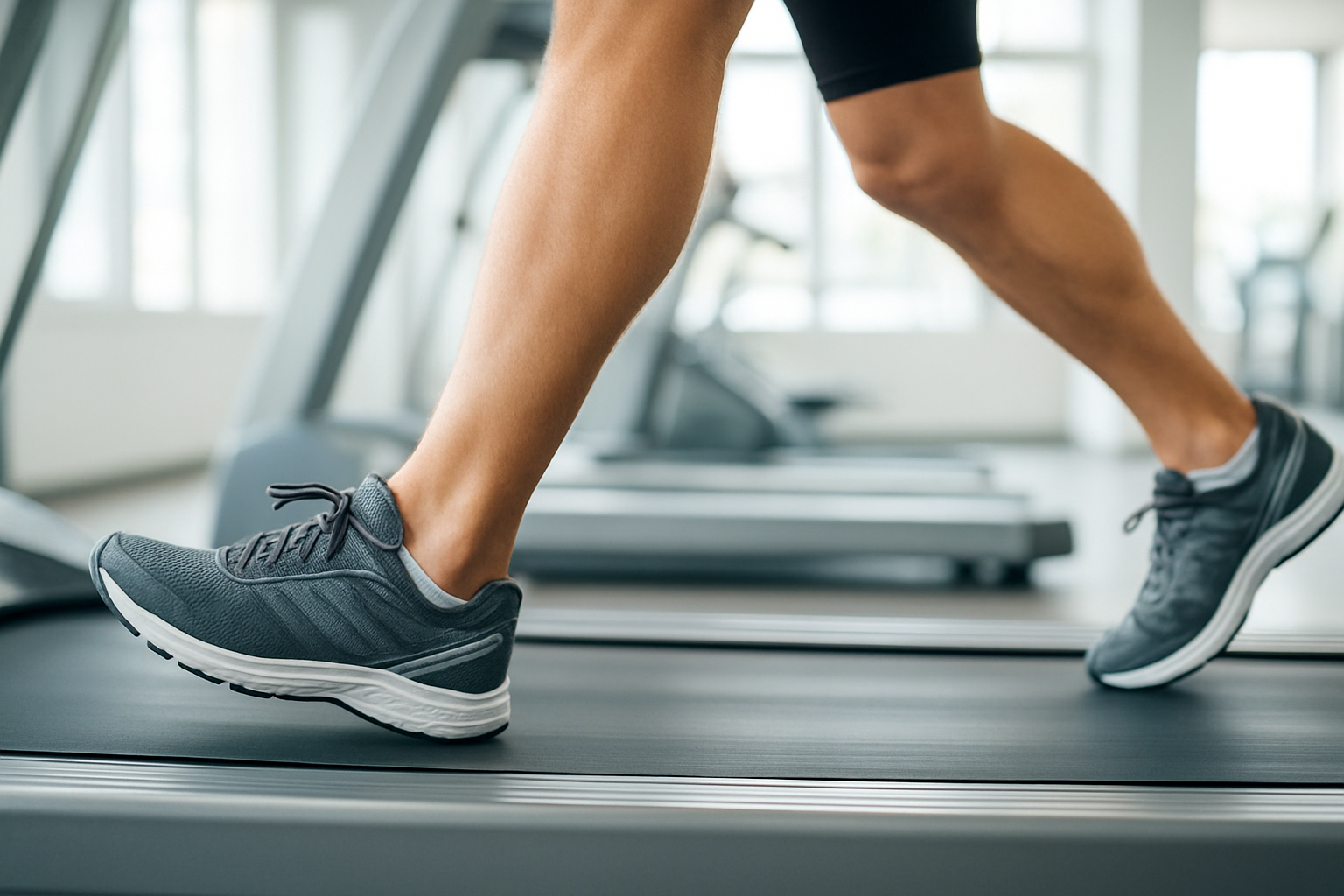
Correcting overpronation with the right arch support restores a healthier gait pattern and reduces stress on the knees and hips — benefits that extend well beyond the foot.
Common Mistakes to Avoid When Buying Insoles for Flat Feet
Even well-intentioned buyers frequently make errors that result in wasted money and continued pain. Avoiding these pitfalls will save you time and frustration:
- Choosing insoles based on cushioning alone. Soft, heavily padded insoles feel comfortable but provide no real arch correction. Always look for a firm arch component.
- Ignoring heel cup depth. A shallow heel cup does not stabilise the foot, allowing continued overpronation even with an arch present. Deep heel cups are essential for flat feet.
- Buying the wrong size. An insole that is even slightly too long or too short shifts pressure to the wrong areas. Always check the manufacturer's sizing guidelines and trim if needed.
- Using insoles in unsupportive footwear. Even the best insert cannot fully compensate for a shoe with no structure. Pair your insole with shoes that have a firm midsole and adequate heel counter.
- Not removing the factory insole first. Adding an orthotic on top of the existing shoe liner raises the foot uncomfortably and reduces the insert's effectiveness.
- Expecting immediate results. Most insoles require a two-to-four week adaptation period. Abandoning them within the first few days means never experiencing their full benefit.
Caring for Your Flat Feet Insoles to Maximise Their Lifespan
Proper maintenance extends the life of your inserts and keeps them performing at their best. These simple habits make a significant difference:
- Air them out daily — remove insoles from shoes each night to allow moisture to evaporate
- Clean regularly — wipe with a damp cloth and mild soap; avoid submerging in water
- Rotate between pairs — if you own multiple shoes, having a second set of insoles prevents continuous compression
- Inspect for wear — check the heel cup and arch section every few months for compression or cracking; replace OTC insoles when they feel flat
- Store away from heat — avoid leaving insoles in hot cars, as heat degrades both foam and thermoplastic materials
Complementary Treatments That Work Alongside Shoe Inserts
Shoe inserts for flat feet work best as part of a broader approach to foot health. In addition to wearing the right insole, these complementary strategies can accelerate recovery and strengthen long-term outcomes:
Stretching and Strengthening Exercises
Tight calf muscles and weak intrinsic foot muscles contribute to arch collapse. Consequently, a regular programme of calf stretches, towel toe scrunches, and single-leg balance exercises helps strengthen the musculature that supports the arch. According to research published via the National Institutes of Health (NIH), targeted foot strengthening exercises combined with orthotics produce better outcomes than orthotics alone.
Appropriate Footwear Selection
Insoles work best inside shoes that already provide structural integrity. Look for footwear with a firm heel counter (the rigid back portion of the shoe), a supportive midsole, and adequate toe box width. Conversely, worn-out trainers, unsupported sandals, or high heels undermine even the best insert.
Physical Therapy
For moderate to severe flat feet, a physical therapist can design a programme targeting gait retraining, muscle strengthening, and joint mobilisation. These interventions complement the mechanical support provided by orthotics and can significantly reduce recovery time for associated conditions like plantar fasciitis and shin splints.
For a deeper understanding of causes, symptoms, and the full range of available solutions, the team at customorthotics.com has published a detailed resource on relief from flat feet: causes, symptoms, and solutions. For a deeper walkthrough, see our Custom Orthotics for Flat Feet: A Complete Relief Guide.
Frequently Asked Questions About Shoe Inserts for Flat Feet
What are shoe inserts for flat feet?
Shoe inserts for flat feet are supportive devices placed inside footwear to compensate for a collapsed or absent arch. They redistribute pressure, correct alignment, and reduce pain caused by overpronation and structural imbalances throughout the foot and lower limb.
Do shoe inserts actually help flat feet?
Yes. Arch-supportive insoles significantly reduce pain and improve biomechanical alignment. Studies show that insoles reduce overpronation and lower-limb stress, particularly during walking and standing. Custom orthotics provide the highest level of correction and are clinically supported by organisations including the APMA.
What is the difference between custom orthotics and over-the-counter insoles?
Over-the-counter insoles use generic sizing and provide basic cushioning. Custom orthotics are fabricated from individual foot molds to deliver a precise, personalised fit. Custom devices address the root biomechanical causes of flat foot pain rather than simply masking symptoms. For a deeper walkthrough, see our Custom Foot Molds: Complete Guide to Getting Fitted.
How long does it take for flat feet inserts to work?
Most people notice meaningful improvement within two to four weeks of consistent use. Full adaptation — where the feet and lower limbs fully adjust to the corrected alignment — typically takes six to eight weeks. Gradual break-in is recommended to avoid initial discomfort.
Can children use shoe inserts for flat feet?
Yes, children with persistent flat feet that cause pain, gait abnormalities, or rapid shoe wear can benefit from paediatric orthotics. However, a podiatrist should evaluate the child first, since many children naturally develop arches by age six and may not require intervention.
What conditions can flat feet insoles help treat?
Flat feet insoles can help manage plantar fasciitis, Achilles tendinitis, shin splints, patellofemoral knee pain, hip discomfort, lower back pain, metatarsalgia, and bunions. By correcting alignment, they reduce stress on the entire kinetic chain from foot to spine.
How do I know if I need custom orthotics instead of store-bought insoles?
If OTC insoles have not relieved your pain after four to six weeks, or if you have a structural deformity, chronic pain, diabetes, or a condition like plantar fasciitis, custom orthotics are likely the better option. A podiatrist consultation can confirm the right approach for your specific situation.
Are rigid or soft insoles better for flat feet?
It depends on your activity level and the severity of your flat feet. Rigid orthotics provide stronger biomechanical correction for severe cases. Semi-rigid designs — a firm supportive shell with a cushioned top layer — balance correction and comfort for most everyday and athletic uses and are the most widely recommended type.
How long do shoe inserts for flat feet last?
Over-the-counter insoles typically last three to six months with regular use. Custom orthotics are far more durable and generally last two to five years, making them a significantly more cost-effective long-term investment for people with ongoing flat foot issues.
Can flat feet insoles be used in any type of shoe?
Most full-length insoles fit into athletic shoes, casual shoes, and work boots. Slim-profile and ¾-length orthotics are available for dress shoes and loafers. Always remove the existing factory shoe liner before inserting an orthotic to ensure the best fit and effectiveness.
What common mistakes should I avoid when buying insoles for flat feet?
Avoid choosing insoles based solely on price or cushioning thickness. Many people select insoles that are too soft, which feel comfortable but provide no real arch correction. Always prioritise a firm arch component, a deep heel cup, and the correct length and width for your foot.
Is it safe to wear shoe inserts every day?
Yes, daily use of properly fitted shoe inserts is safe and strongly encouraged for people with flat feet. Consistent wear maintains alignment and prevents pain from returning after periods of activity. Begin with two to three hours daily and increase gradually over the first week.
Can flat feet insoles help with overpronation and fallen arches specifically?
Yes. Insoles designed for flat feet and fallen arches directly address overpronation by providing medial arch support that holds the foot in a more neutral position. This reduces the inward rolling motion that causes cumulative stress on the ankle, knee, hip, and lower back.
Conclusion: Your Path to Pain-Free Feet Starts Here
Shoe inserts for flat feet are one of the most accessible, evidence-backed tools available for managing the pain, fatigue, and alignment problems that come with collapsed arches. Whether you begin with a quality OTC insole or invest in a fully custom-molded device, the key is always to prioritise genuine structural support over simple cushioning. For most people experiencing moderate to severe symptoms, custom orthotics represent the most precise and lasting solution — particularly when flat feet are driving chronic or worsening conditions throughout the lower body.
Furthermore, combining the right insert with appropriate footwear, targeted exercises, and professional guidance produces far better outcomes than any single intervention alone. Taking a comprehensive approach ensures that you address not just the symptom but the underlying biomechanical cause.
If you are ready to explore your options, the podiatrist-led team at customorthotics.com offers complimentary phone consultations and a straightforward online ordering process. With over 20 years of experience crafting orthotics from individual foot molds, they are well-positioned to help you find the right support and take a confident first step toward healthier, pain-free feet.