

Foot Health & Orthotics
Custom Shoe Inserts for Plantar Fasciitis: The Complete Relief Guide
Evidence-based guidance on how custom orthotics work, how to get fitted, what they cost, and how to maximise your recovery from plantar fasciitis heel pain.
Custom shoe inserts for plantar fasciitis are individually engineered orthotic devices built from a precise model of your own foot. Unlike mass-produced drugstore insoles, they are designed to support your specific arch shape, redistribute ground-reaction forces across your entire foot, and substantially reduce the mechanical strain placed on the plantar fascia — the thick, rope-like ligament running from your heel bone to the base of your toes. According to the National Institutes of Health, plantar fasciitis affects roughly 2 million Americans every year, making it the single most common cause of adult heel pain. If you are among them, this guide explains exactly what custom shoe inserts do, how to obtain them, what they cost, how long they last, and how to use them correctly so you can return to pain-free movement as quickly as possible.
What Is Plantar Fasciitis — and Why Does It Hurt So Much?
Plantar fasciitis is the inflammation of the plantar fascia ligament — the dense band of connective tissue anchored at the base of your heel and fanning forward to the ball of your foot. Every step you take stretches this structure. When that stretch is excessive or repetitive — due to poor foot mechanics, inadequate footwear, or prolonged standing — the fascia develops tiny micro-tears. The surrounding tissue responds with inflammation, producing the characteristic stabbing heel pain that is worst with the first few steps out of bed in the morning or after sitting for an extended period.
Who Is at Greatest Risk?
- Flat feet or collapsed arches — places excess load on the fascia with every step
- High arches — reduces the foot's natural shock-absorption capacity
- Overpronation — inward rolling of the foot that over-stretches the fascia
- Tight calf muscles or Achilles tendons — limits ankle dorsiflexion and amplifies plantar tension
- Obesity or recent weight gain — substantially increases impact forces through the heel
- Occupations requiring prolonged standing — teachers, nurses, warehouse workers, and retail employees are disproportionately affected
- Runners and athletes — high mileage without adequate rest or proper footwear
- Age 40–60 — peak incidence due to cumulative tissue wear
Left untreated, plantar fasciitis can become a chronic condition lasting months or years. A heel spur — a calcium deposit that forms where the fascia attaches to the heel bone — may develop alongside it, compounding the discomfort. Early, structured intervention with custom shoe inserts for plantar fasciitis is one of the most effective ways to interrupt the injury cycle before it becomes entrenched.
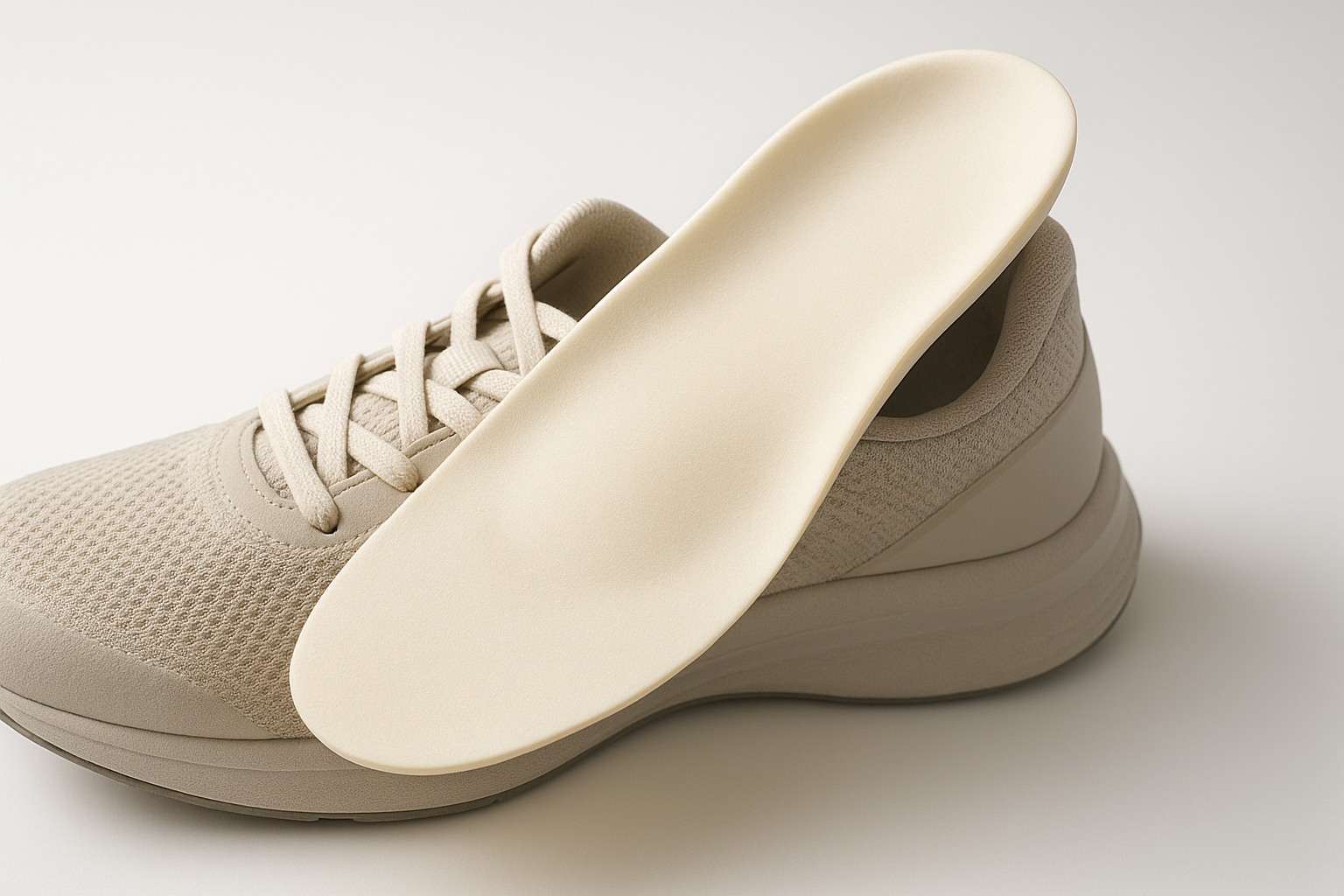
A well-crafted custom shoe insert for plantar fasciitis features a contoured medial arch and a deep heel cup to redistribute impact pressure effectively.
How Custom Shoe Inserts for Plantar Fasciitis Actually Work
Custom orthotics do not simply add padding under your foot. They re-engineer the way forces travel through your entire lower limb with every step. Three biomechanical mechanisms explain their effectiveness:
1. Medial Arch Support
The insert is shaped to fill the space between your arch and the ground, preventing the arch from collapsing under load. This directly reduces the tensile stress transmitted through the plantar fascia ligament — the primary driver of pain.
2. Deep Heel Cupping
A contoured heel cup centralises the fat pad directly beneath the calcaneus (heel bone), maximising its natural shock-absorbing properties. This reduces peak impact forces by as much as 30–40% compared to a flat insole surface.
3. Gait Correction and Pressure Redistribution
By correcting overpronation, supination, and leg-length discrepancies, custom inserts change your gait mechanics so force is spread evenly across the metatarsal heads rather than concentrating at the heel and fascia attachment point. Over time, this allows the chronically inflamed tissue to repair itself.
Custom Orthotics vs. Over-the-Counter Insoles: A Clear Comparison
A 2018 study published in the Journal of Orthopaedic Research confirmed that custom foot orthotics produced significantly greater reductions in plantar fascia thickness — a validated ultrasound marker of inflammation — compared to prefabricated insoles. When the goal is genuine structural correction and long-term relief, the clinical evidence decisively favours the custom-made approach.
Types of Custom Shoe Inserts for Plantar Fasciitis
Not every custom orthotic is built the same way. Your podiatrist will recommend a specific type based on your foot structure, diagnosis, activity level, and the shoes you wear most. Here are the three main categories:
Rigid (Functional) Orthotics
Constructed from hard polypropylene plastic or carbon fibre, rigid orthotics are designed to control abnormal foot and ankle motion. They are the go-to choice for patients with significant flat feet, severe overpronation, or structural alignment issues. Because they are firm, they fit best in closed, lace-up shoes with adequate depth.
Soft (Accommodative) Orthotics
Made from cushioning medical-grade foam, EVA, or silicone, soft orthotics prioritise shock absorption and pressure relief rather than motion control. They are particularly beneficial for older adults, patients with diabetic neuropathy, those with arthritic joints, or anyone who cannot tolerate a firm orthotic due to sensitivity.
Semi-Rigid Orthotics
The most widely prescribed type for plantar fasciitis, semi-rigid orthotics combine a supportive shell with a cushioned top layer. They balance motion control with impact absorption, making them ideal for athletes, active individuals, and anyone who spends long hours on their feet. Many sports-specific orthotic designs fall into this category.
Sport-Specific and Activity-Specific Designs
Custom orthotics can also be engineered for a specific activity. Running orthotics, for example, account for the repetitive heel-strike pattern of distance runners. Cycling orthotics address the very different pressures of a cleat-mounted shoe. Work-boot orthotics are shaped to fit the narrower confines of steel-toed footwear. Discussing your lifestyle in detail with your podiatrist ensures you receive a design that supports you across all your daily activities — not just one pair of shoes.
Materials Used in Custom Orthotic Insoles
The material composition of your orthotic directly affects its performance, durability, and comfort. Your podiatrist will specify materials based on your clinical needs, but understanding the options empowers you to ask the right questions.
- Polypropylene — the most common rigid shell material. Lightweight, strong, and easy to adjust. Suitable for most structural corrections.
- Carbon fibre — ultra-thin and extremely stiff. Preferred for athletes needing maximum control in performance shoes with minimal space for an insert.
- EVA (ethylene vinyl acetate) foam — the standard material for soft and semi-rigid top covers. Compresses under load and returns to shape, providing durable cushioning.
- Poron medical foam — a premium, open-cell foam offering superior shock absorption at heel-strike. Often used in the heel cup area of plantar fasciitis-specific orthotics.
- Silicone gel pads — added to the heel or metatarsal area for targeted pressure relief. Particularly useful where specific hot-spots are identified during gait analysis.
- Leather top covers — a breathable, moisture-wicking surface layer that extends the comfort life of the insert, especially in dress shoes.
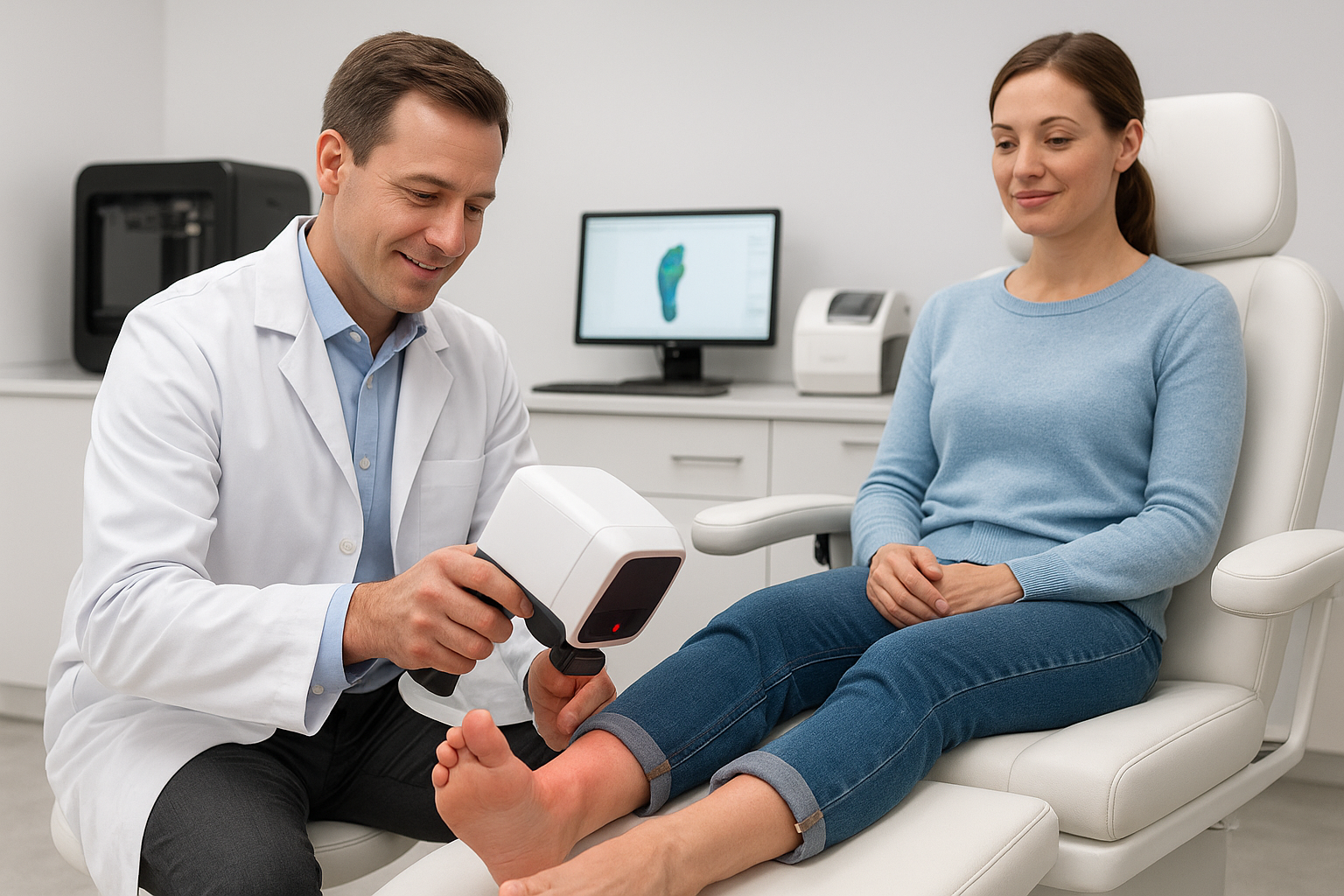
A 3D digital foot scan captures sub-millimetre detail of your arch, heel, and forefoot geometry — ensuring your custom shoe inserts for plantar fasciitis are fabricated to exacting tolerances.
Step-by-Step: How to Get Custom Orthotics for Plantar Fasciitis
The process of obtaining custom shoe inserts for plantar fasciitis is more straightforward than most people expect. Here is every stage explained in full:
- Consult a Podiatrist or Orthopedic Specialist. Book an appointment with a licensed podiatrist, orthopedic surgeon, or sports medicine physician. They will conduct a physical examination of your foot, assess your standing and walking posture, measure your arch height, and review your symptom history to confirm a plantar fasciitis diagnosis. If there is any uncertainty, imaging (X-ray or ultrasound) may be ordered to rule out heel spurs or stress fractures.
- Undergo Gait Analysis and Foot Casting. After diagnosis, your specialist will capture a precise model of your foot using one of three methods: a plaster-of-Paris cast (the traditional gold standard), a foam impression box (quick and accurate), or a 3D digital scan (the most modern approach, generating a digital file sent directly to the orthotics lab). Many clinics now use pressure-plate gait analysis simultaneously to map exactly where your foot bears the most weight during walking.
- Prescription Is Sent to a Certified Orthotics Laboratory. Your clinician writes a detailed prescription specifying material type, arch height, heel cup depth, posting angles, and any additions such as metatarsal pads. A certified orthotics technician at a specialist lab then fabricates the device to those exact specifications. This stage typically takes one to three weeks.
- Attend Your Fitting Appointment. When your orthotics arrive, you return to the clinic for a fitting. The specialist checks that the device sits correctly in your shoe, that the arch support makes contact with your foot at the right height, and that the heel cup centralises your fat pad. Minor modifications — grinding down an edge, adding a pad — are done on the spot.
- Follow a Structured Break-In Schedule. Do not wear your new orthotics all day on day one. Begin with two to three hours per day for the first week, then increase by an hour or two each subsequent day. This allows your foot muscles, tendons, and fascia to adapt to the new loading pattern without triggering soreness or blistering.
- Schedule a Follow-Up at Four to Six Weeks. Return to your provider approximately one month after you begin full-time wear. At this point they can objectively assess your progress, determine whether the device is performing as intended, and make any refinements. A second follow-up at three months is recommended for complex cases.
For additional guidance on finding a qualified provider, customorthotics.com offers a comprehensive overview of what to look for in a custom orthotic specialist.
How Long Until Custom Shoe Inserts Relieve Plantar Fasciitis Pain?
This is the question every patient asks first. The honest answer is: it depends on severity, consistency of wear, and whether complementary treatments are used alongside the orthotics.
- Weeks 1–2: Most patients experience a noticeable reduction in morning stiffness as the break-in period progresses. The foot is adapting — some mild muscle soreness is normal.
- Weeks 2–4: Meaningful reduction in heel pain intensity during walking and standing. End-of-day pain often decreases before morning pain does.
- Weeks 4–8: Significant functional improvement for most patients. The ability to walk longer distances without triggering pain typically returns during this window.
- Months 3–6: Full resolution of symptoms in the majority of plantar fasciitis cases managed conservatively with custom orthotics, stretching, and appropriate footwear.
Crucially, wearing your orthotics every day — not just when pain flares — is non-negotiable. Inconsistent use prevents the plantar fascia from achieving the sustained unloading it needs to heal. Pay particular attention to the first steps of the morning: place your orthotics in a pair of supportive slippers beside your bed so you never start the day barefoot on hard floors.
Cost of Custom Shoe Inserts for Plantar Fasciitis — and How to Reduce It
The cost of custom orthotics can feel like a barrier, but understanding the full financial picture usually changes that perception considerably.
Typical Price Ranges
- Soft/accommodative custom orthotics: $200–$400
- Semi-rigid and rigid custom orthotics: $350–$600
- Carbon fibre sport orthotics: $450–$800+
- Podiatrist consultation (if separate): $100–$250
Insurance Coverage
Many health insurance plans — including Medicare Advantage plans and private insurers — cover custom orthotics when a licensed physician prescribes them for a diagnosed condition like plantar fasciitis. The key conditions are: (1) the prescription must come from an MD, DPM, or DO; (2) the diagnosis must be documented with clinical notes; and (3) the orthotics must be fabricated in an accredited laboratory rather than dispensed off the shelf. Always call your insurer before your appointment to verify your specific policy's coverage and any pre-authorisation requirements.
FSA and HSA Eligibility
Custom orthotics prescribed by a licensed medical professional are an eligible expense under both FSAs (Flexible Spending Accounts) and HSAs (Health Savings Accounts). This means you can pay for them with pre-tax dollars, effectively reducing the after-tax cost by your marginal income tax rate. For many patients, this represents a 22–32% effective discount.
Long-Term Value Calculation
A quality pair of custom orthotics lasts two to five years. Over a five-year lifespan, the daily cost of a $500 orthotic is less than $0.28 per day — compared to the compounding costs of repeated corticosteroid injections ($150–$400 each), physical therapy sessions ($75–$150 each), or, at the extreme end, surgical plantar fascia release (which can exceed $5,000 after all associated costs).
For a deeper comparison of orthotic options and pricing guidance, customorthotics.com provides a helpful overview of what different types of custom devices involve and how to compare providers.
How Long Do Custom Shoe Inserts Last — and When to Replace Them
Durability varies by material and how aggressively they are used:
- Rigid polypropylene or carbon fibre shells: 3–5 years (the shell rarely wears out, but top covers need replacement every 12–18 months)
- Semi-rigid EVA-based orthotics: 18 months to 3 years depending on activity level
- Soft foam orthotics: 12–18 months before compression causes them to lose their corrective effect
Signs Your Orthotics Need Replacing
- Your heel pain has returned after a period of relief
- Visible compression or flattening of the arch support area
- The orthotic rocks or feels unstable in the shoe
- Your body weight has changed significantly (10+ lbs / 4.5+ kg)
- You have had foot surgery or a new injury that changes your gait
- Cracks or delamination in the shell material
Annual check-ups with your podiatrist allow your orthotics to be assessed objectively, even before visible wear becomes obvious. Many practices offer refurbishment services — replacing worn top covers and adding new cushioning — that can extend the functional life of a high-quality shell considerably.
What Shoes Work Best With Custom Shoe Inserts for Plantar Fasciitis?
Even the best custom orthotic is compromised by the wrong shoe. Selecting appropriate footwear is not a minor detail — it is a clinical requirement for successful outcomes.
Ideal Shoe Characteristics
- Removable factory insole — allows space for the orthotic without creating a cramped fit
- Adequate depth through the toe box — prevents the toes from being compressed when the orthotic lifts the foot slightly
- Firm heel counter — the rigid back of the shoe reinforces the orthotic's heel-cupping effect
- Slight positive heel rise (8–12 mm) — reduces tension on the Achilles tendon and plantar fascia simultaneously
- Non-flexible sole — a sole that twists easily along its length provides insufficient ground for the orthotic to function correctly
Shoes to Avoid When Using Orthotics
- Flat sandals and flip-flops — no heel counter, no structure, no benefit from your orthotic
- Worn-out sneakers — a compressed midsole negates the orthotic's shock-absorption properties
- Pointed-toe dress shoes — insufficient width and depth for proper orthotic seating
- High heels above 2 inches — dramatically alters the foot's loading mechanics in ways that counteract orthotic corrections
If you need to wear dress shoes or specific work footwear, discuss a secondary slimmer orthotic design with your podiatrist — one built specifically for those shoes rather than trying to force a standard insert into an incompatible shoe.
Common Mistakes to Avoid With Custom Orthotics for Plantar Fasciitis
Even the most precisely fabricated orthotic will underperform if used incorrectly. These are the mistakes podiatrists see most often:
- Skipping the break-in period. Full-day wear from day one causes muscle fatigue and can trigger new soreness in areas of your foot not previously loaded that way. Always start with two to three hours and increase gradually.
- Wearing them in unsupportive footwear. Placing a precision orthotic in a collapsed, worn-out shoe is like installing high-performance tyres on a car with a broken suspension — the intervention cannot work without the right platform beneath it.
- Going barefoot at home. Walking barefoot on hard tile or hardwood is one of the most common reasons plantar fasciitis progresses slowly despite orthotic use. Keep orthotics in supportive house shoes or slippers at all times.
- Expecting instant results. Orthotics correct mechanical problems accumulated over years or decades. Tissue healing takes time. Expecting pain-free results within days leads to premature abandonment of a treatment that would have worked.
- Neglecting complementary stretching. Orthotics address the mechanical load on the fascia; stretching addresses the tissue's capacity to handle load. Both are needed.
- Missing follow-up appointments. Foot shape changes with age, weight fluctuation, and activity patterns. An orthotic that fitted perfectly two years ago may now be producing subtle pressure points that undermine your outcomes.
Complementary Treatments That Maximise Orthotic Results
Custom shoe inserts for plantar fasciitis are most effective when integrated into a multi-modal treatment plan. The following evidence-based approaches compound the benefits of orthotic use:
Plantar Fascia and Calf Stretching
Perform the seated towel stretch (looping a towel around the ball of your foot and pulling toward your shin) and the standing calf stretch every morning before taking your first step, and again before any physical activity. Research published in Foot & Ankle International found that a specific plantar fascia-stretching protocol reduced pain by up to 52% in a 10-week period.
Night Splints
Night splints hold the ankle at 90 degrees and gently stretch the plantar fascia and Achilles tendon while you sleep. This counters the overnight shortening of the fascia that causes the characteristic morning pain spike — directly complementing the daytime unloading provided by your orthotics. Studies show that night splints combined with custom orthotics produce faster symptom resolution than either intervention alone.
Physical Therapy and Intrinsic Foot Strengthening
A physical therapist can design a progressive exercise programme targeting the intrinsic foot muscles (the small muscles inside the foot that support the arch from within), calf complex, and hip stabilisers. Stronger intrinsic muscles reduce the load the plantar fascia must bear, addressing the root cause rather than simply managing symptoms.
Anti-Inflammatory Measures
In the acute phase, ice therapy (15–20 minutes applied to the heel after activity) and short-term NSAID use (ibuprofen, naproxen) can reduce inflammation enough to make orthotic use more comfortable. Rolling a frozen water bottle under your foot is a particularly effective technique — it combines cold therapy with gentle fascial stretching simultaneously.
Corticosteroid Injections (When Appropriate)
For severe acute cases where pain prevents adequate orthotic wear compliance, a corticosteroid injection may provide enough immediate relief to allow the patient to begin the rehabilitation process. They are not a cure — and repeated injections carry a risk of fascia rupture — but used strategically alongside orthotics and stretching, they can be an effective bridge intervention.
Extracorporeal Shockwave Therapy (ESWT)
For chronic plantar fasciitis that has not resolved after 6 months of conservative care, ESWT — which uses sound waves to stimulate tissue repair — has strong clinical support. A 2022 systematic review in the Journal of Orthopaedic Surgery and Research reported success rates exceeding 70% for chronic cases. ESWT works best when combined with ongoing orthotic support during recovery.
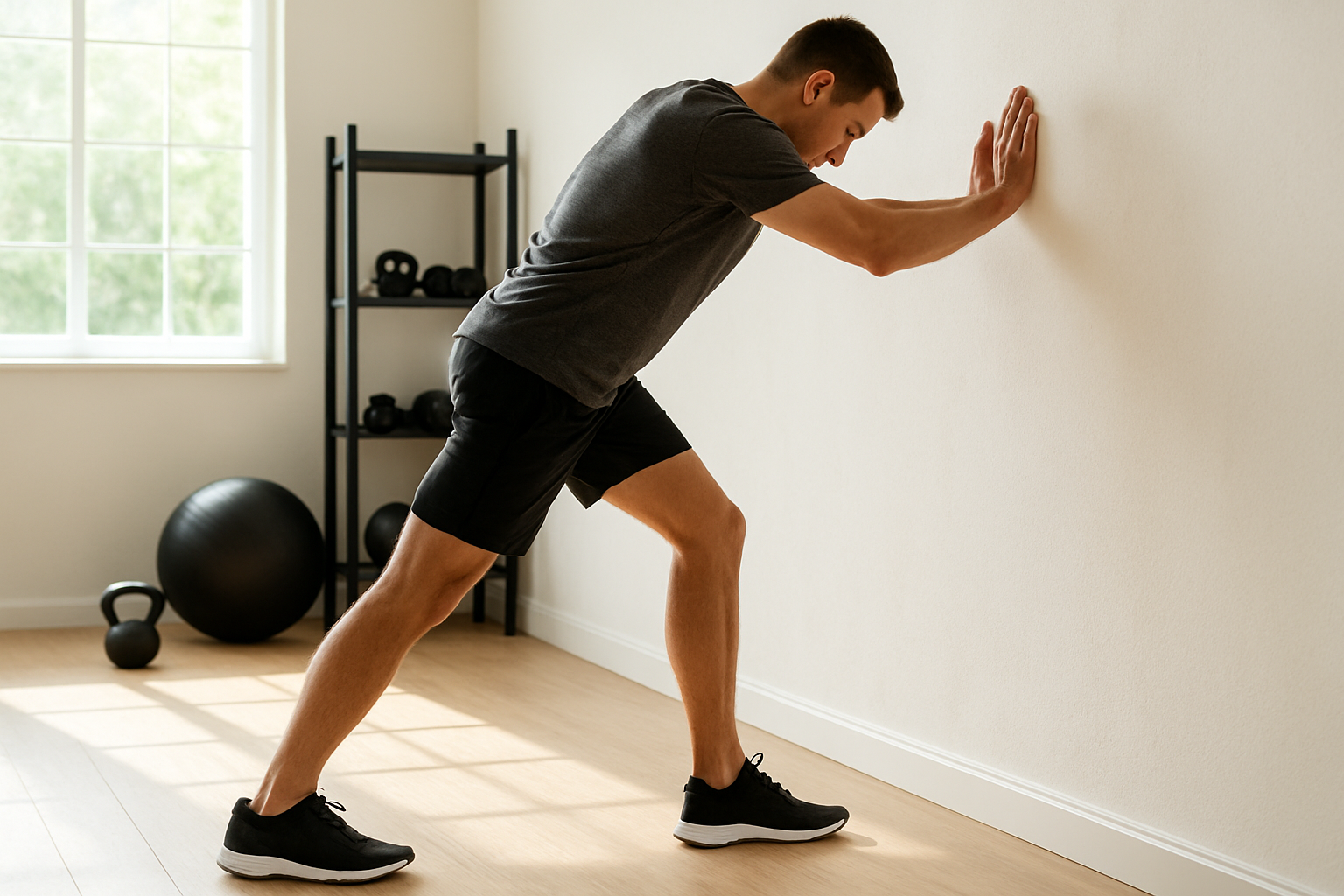
Daily calf and plantar fascia stretching combined with custom shoe inserts for plantar fasciitis accelerates tissue healing and significantly reduces the risk of recurrence. For a deeper walkthrough, see our Custom Orthopedic Inserts: Complete 2026 Buyer's Guide.
Custom Shoe Inserts for Plantar Fasciitis in Special Populations
Runners and Athletes
Plantar fasciitis is the most common overuse injury in distance runners, accounting for approximately 8% of all running injuries. Runners require orthotics that are thin enough to fit in performance shoes, stiff enough to control pronation under high repetitive load, and durable enough to withstand hundreds of miles of use. A gait analysis conducted on a treadmill — rather than just walking — provides more relevant data for runners' orthotic prescriptions. Return-to-running programmes are typically structured in parallel with orthotic break-in to prevent re-injury.
Healthcare Workers and Teachers
Professionals who spend 8–12 hours per day on hard floors are among the highest-risk groups for plantar fasciitis. Custom orthotics paired with anti-fatigue mat use, regular micro-breaks for seated rest, and appropriate work shoes can dramatically reduce occupational heel pain burden. Many workplace wellness programmes and occupational health insurers will fund custom orthotics for employees in these roles.
Older Adults
As we age, the fat pad beneath the heel naturally thins. This reduces the foot's intrinsic shock-absorption capacity and makes heel pain more intense. Soft or semi-rigid accommodative orthotics with additional Poron heel cushioning are typically prescribed for older patients. They also help improve balance and reduce fall risk by providing a more stable, proprioceptively rich surface under the foot.
People With Diabetes
Diabetic patients require extreme care with any foot intervention. Custom orthotics for this population focus on pressure redistribution to prevent ulceration rather than motion control. Softer materials, seamless top covers, and regular follow-up to check for developing pressure points are standard practice. A diabetologist and podiatrist should collaborate on the prescription.
Children and Adolescents
Plantar fasciitis is significantly less common in children because their tissues are more elastic and their arches are still developing. When it does occur — typically in active adolescents — a paediatric podiatrist should assess foot development before prescribing orthotics, as the intervention may need to account for ongoing skeletal growth. Children's orthotics generally require replacement more frequently as foot size changes.
Frequently Asked Questions About Custom Shoe Inserts for Plantar Fasciitis
What are custom shoe inserts for plantar fasciitis?
Custom shoe inserts for plantar fasciitis are individually fabricated orthotic devices built from a precise mold or 3D scan of your foot. They redistribute ground-reaction pressure, provide medial arch support, cradle the heel, and reduce tensile strain on the plantar fascia ligament — directly addressing the biomechanical cause of heel pain rather than masking symptoms.
How do custom orthotics differ from over-the-counter insoles for plantar fasciitis?
Over-the-counter insoles are manufactured in standard sizes and provide generalised cushioning. They cannot correct your individual gait pattern or match your unique arch geometry. Custom orthotics are prescribed by a podiatrist and fabricated in a certified laboratory from an exact model of your foot, addressing your specific biomechanical deficiencies. Clinical research confirms they produce significantly greater reductions in plantar fascia inflammation than prefabricated alternatives.
How long does it take for custom orthotics to relieve plantar fasciitis pain?
Most patients notice a measurable reduction in morning heel stiffness within two to three weeks and a significant decrease in walking pain within four to eight weeks of consistent daily wear. Full resolution of plantar fasciitis symptoms typically takes two to six months depending on how long the condition has been present and whether complementary stretching and supportive footwear are used alongside the orthotics.
Are custom shoe inserts for plantar fasciitis covered by insurance?
Many health insurance plans cover custom orthotics when prescribed by a licensed physician or podiatrist (DPM) for a documented diagnosis such as plantar fasciitis. Key requirements typically include a written prescription, clinical documentation of the diagnosis, and fabrication by a certified orthotics laboratory. Always verify your specific plan's coverage, pre-authorisation requirements, and any applicable deductibles before proceeding.
How much do custom shoe inserts for plantar fasciitis cost?
Custom orthotics for plantar fasciitis typically cost between $200 and $800 depending on the material type, fabrication method, and whether the podiatrist consultation is billed separately. When paid for using FSA or HSA pre-tax dollars, the effective after-tax cost is typically 22–32% lower. Compared to repeated injections, extended physical therapy, or eventual surgery, they represent exceptional long-term value.
What is the process for getting custom shoe inserts?
The process involves a podiatrist consultation and diagnosis, gait analysis, foot casting or 3D scanning, laboratory fabrication (one to three weeks), a fitting appointment, a structured break-in schedule, and follow-up review at four to six weeks. Your podiatrist manages the entire process and can request modifications from the lab if adjustments are needed after fitting.
Can I wear custom orthotics in any type of shoe?
Custom orthotics function best in shoes with a removable factory insole, adequate depth through the toe box, and a firm heel counter. Running shoes, walking shoes, cross-trainers, and many casual shoes accommodate standard orthotics well. For dress shoes, work boots, or cycling shoes, your podiatrist can prescribe a purpose-built slimmer orthotic design appropriate for those specific footwear styles.
How long do custom shoe inserts last?
Hard-shell rigid orthotics last three to five years, semi-rigid designs last 18 months to three years, and soft foam orthotics last 12 to 18 months. Top covers generally need replacing every 12–18 months regardless of shell type. Annual podiatrist check-ups allow wear to be assessed before it affects your outcomes.
Do custom orthotics work better than stretching alone for plantar fasciitis?
Neither orthotics nor stretching alone is as effective as the two used in combination. Custom orthotics mechanically unload the plantar fascia during activity, while targeted stretching increases the tissue's capacity to tolerate load and reduces the overnight shortening that causes morning pain. Multiple clinical trials confirm that the combination produces superior and faster outcomes than either intervention in isolation.
What are the most common mistakes people make with custom orthotics?
The most frequent errors are: not following a proper break-in schedule, wearing orthotics in unsupportive or worn-out shoes, going barefoot at home on hard floors, using orthotics inconsistently, expecting overnight pain resolution, and missing scheduled follow-up appointments. Avoiding these mistakes has a significant impact on how quickly and completely your plantar fasciitis resolves.
Who should prescribe custom shoe inserts for plantar fasciitis?
A licensed podiatrist (DPM) is typically the most appropriate professional to assess your foot and prescribe custom orthotics for plantar fasciitis, as this falls squarely within their specialty. Orthopedic surgeons and sports medicine physicians are also qualified to prescribe and oversee custom orthotic treatment. Avoid purchasing custom-labelled insoles from non-clinical sources that do not involve a gait analysis or professional foot assessment.
Can custom orthotics prevent plantar fasciitis from recurring?
Yes — this is one of the most valuable but underappreciated benefits of custom shoe inserts for plantar fasciitis. By correcting the underlying biomechanical factors that caused the condition in the first place, properly fitted orthotics significantly reduce the risk of recurrence. Many patients who experienced repeated episodes of plantar fasciitis before obtaining custom orthotics report remaining pain-free for years afterward with continued use.
Can children use custom orthotics for plantar fasciitis?
Yes, children can use custom orthotics, though true plantar fasciitis is less common in paediatric patients than heel pain from other causes such as Sever's disease. A paediatric podiatrist should assess the child's foot development and confirm the diagnosis before prescribing. Children's orthotics may need replacement more frequently than adult versions as foot size changes with growth.
Conclusion: Take the First Step Toward Lasting Plantar Fasciitis Relief
Custom shoe inserts for plantar fasciitis represent one of the most clinically validated, cost-effective, and durably beneficial interventions available for this widespread and often debilitating condition. Unlike generic insoles, they are engineered specifically for your foot — correcting the biomechanical patterns that allowed plantar fasciitis to develop in the first place, rather than simply cushioning symptoms. When integrated with a daily stretching programme, appropriate footwear selection, and consistent follow-up care, custom orthotics give the plantar fascia the mechanical environment it needs to heal completely and stay healed.
If you are waking up every morning with stabbing heel pain, struggling through your workday on tender feet, or watching activities you love become progressively more painful — the path forward starts with a single appointment with a qualified podiatrist. The investment in a properly prescribed pair of custom shoe inserts is an investment in years of pain-free movement.
To explore custom orthotic options and find a qualified provider, visit customorthotics.com for expert guidance and resources tailored to your needs.