

Insole solutions for foot pain range from soft drugstore cushions to fully custom orthotics molded to the exact shape of your feet, and choosing correctly can mean the difference between limping through your day and walking pain-free. Specifically, if you spend hours standing at work, running errands, or managing a diagnosed condition like plantar fasciitis, the right insole is often the fastest, most practical step toward relief. This guide goes further than a typical product list — it explains every category of insole, breaks down materials and pricing, matches solutions to specific activities and shoe types, and tells you exactly when a podiatrist visit becomes necessary.
Quick Answer: The most effective insole solutions for foot pain support the arch, cushion high-pressure areas, and correct alignment problems rather than just padding the shoe. Custom orthotics, built from an individual mold, generally outperform mass-market insoles for chronic or structural pain because they treat the root cause. However, cushioned inserts still have a place for mild, temporary discomfort — the key is matching the solution to your specific foot type and diagnosis.
What Are Insole Solutions for Foot Pain?
Insole solutions for foot pain are inserts placed inside footwear to support, cushion, or realign the foot so it experiences less strain during standing, walking, or exercise. They range from soft foam pads sold at any pharmacy to rigid, prescription-grade orthotics fabricated from an actual mold of an individual's foot.
In particular, custom orthotics are designed by podiatrists — foot specialists — to correct biomechanical issues such as overpronation (when the foot rolls inward too much while walking), high arches, or uneven weight distribution. Consequently, they tend to deliver more consistent, longer-lasting results than generic insoles, especially for people managing diagnosed conditions like plantar fasciitis or diabetic neuropathy (nerve damage that reduces sensation in the feet).
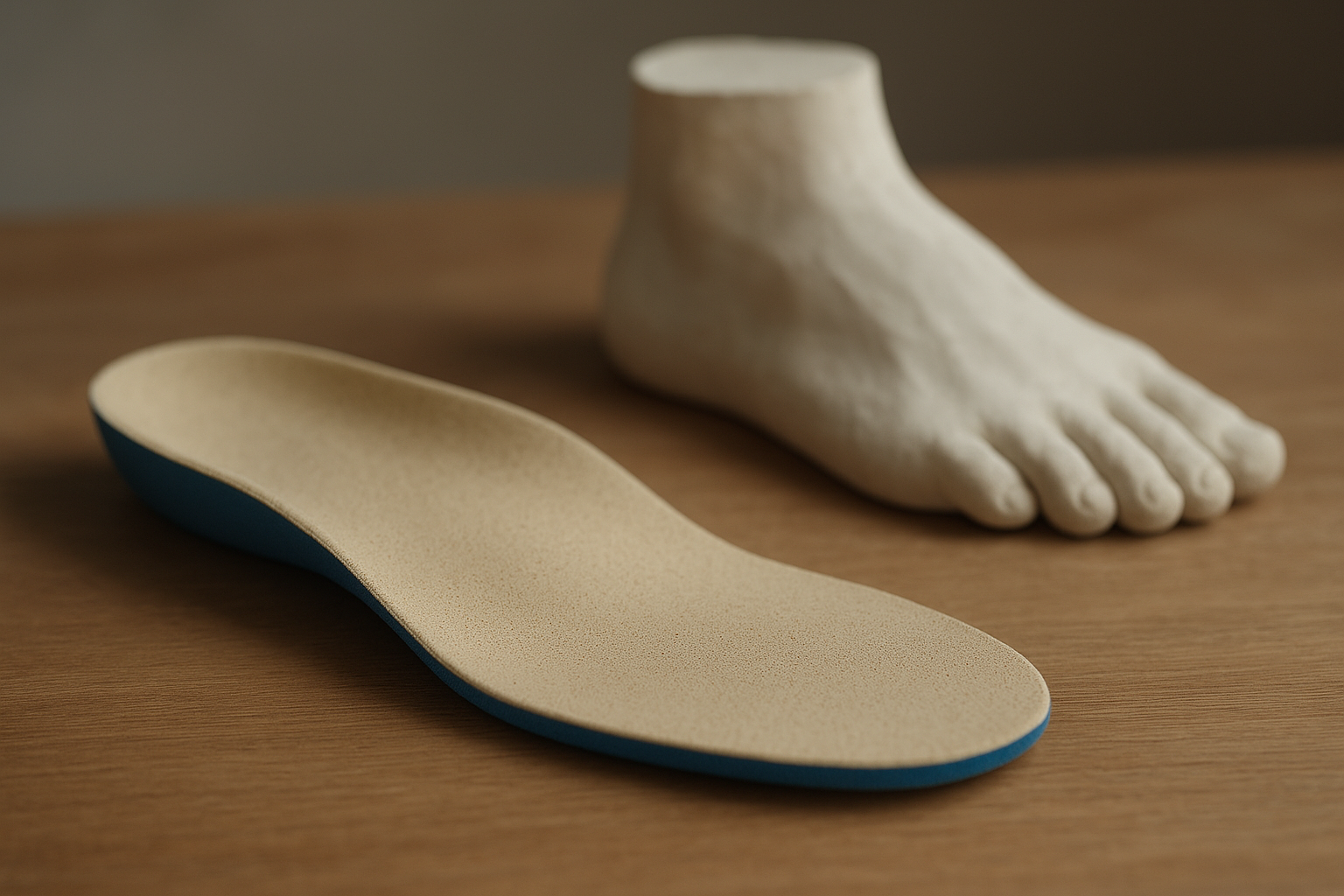
Custom orthotics are molded to match the exact contours of each patient's feet for targeted foot pain relief.
Common Causes of Foot Pain That Insole Solutions Can Address
Foot pain rarely appears without a reason. For example, plantar fasciitis, flat feet, bunions, heel spurs, metatarsalgia (pain in the ball of the foot), Morton's neuroma, and diabetic foot complications each create distinct pressure patterns that the right insole can help correct. According to the Mayo Clinic, plantar fasciitis alone affects roughly one in ten people at some point in their lives, making it one of the leading reasons patients seek supportive insoles in the first place.
Similarly, structural imbalances like overpronation or unusually high arches place uneven stress on joints and soft tissue. As a result, an untreated imbalance in the foot often leads to secondary problems in the knees, hips, or lower back — a chain reaction that many shoppers never connect back to their footwear. For a deeper look at how targeted inserts address these root causes rather than masking them, this guide on foot pain relief insoles that actually work outlines specific conditions in more detail.
Diabetic patients face an additional layer of risk. Specifically, reduced circulation and nerve sensation can allow small pressure sores to develop unnoticed, which is why diabetic-specific insole design matters far more than it does for the average shopper.
Types of Insole Solutions for Foot Pain
Not every insole is built the same way, so understanding the categories helps narrow down the right choice quickly. Broadly, insole solutions for foot pain fall into three groups: cushioning insoles, semi-rigid support insoles, and fully custom orthotics.
Cushioning and Comfort Insoles
These budget-friendly inserts add soft foam or gel padding to absorb impact during walking. However, they typically do not correct alignment problems, so they work best for mild, temporary discomfort rather than chronic or structural pain. Readers looking for cost-conscious options can compare choices in this guide to affordable insoles for foot pain.
Semi-Rigid Support Insoles
Semi-rigid insoles sit between soft cushioning and full custom orthotics. In particular, they use a firmer plastic or composite base with a cushioned top layer, offering moderate arch support and pressure redistribution without a full podiatrist mold. Consequently, these are a reasonable middle-ground option for mild to moderate overpronation, early-stage plantar fasciitis, or general arch fatigue — though they still fall short of correcting significant structural issues.
Custom Orthotics for Foot Pain Relief
In contrast, custom orthotics are fabricated from a direct mold of the patient's foot, allowing for precise correction of structural issues. Podiatrist-owned practices, such as the team at Custom Orthotics, combine over two decades of fabrication experience with hands-on evaluation to design inserts that target the exact source of pain rather than simply cushioning it.
Insole Solutions for Every Shoe Type and Activity
Above all, the best insole depends heavily on what you're doing and what you're wearing while doing it. A generic pad that feels great in sneakers can feel completely wrong in a work boot or a dress shoe. Therefore, it helps to think in terms of activity and footwear category rather than a single one-size-fits-all product.
Work and Standing-All-Day Insoles
If you're on your feet for eight-plus hours on concrete or tile, look for deeper heel cups and firmer arch support that resists compressing by hour six. Semi-rigid or custom builds tend to outlast soft foam pads, which flatten out quickly under sustained pressure.
Running and Athletic Insoles
Runners generate several times their body weight in impact force with every stride. As a result, athletic insoles typically prioritize shock absorption at the heel and forefoot while still maintaining arch support so the foot doesn't collapse inward mid-stride. People who walk long distances for work or exercise may also benefit from reviewing this comfortable walking insoles guide for activity-specific recommendations.
Dress Shoes, Heels, and Tight Footwear
Narrow or low-volume shoes need thinner, low-profile insoles that still cushion the ball of the foot without crowding the toes. In particular, metatarsal pads built into a slim insole can noticeably reduce forefoot pain caused by heels or narrow dress shoes without requiring a bulkier insert.
What Materials Are Used in Foot Pain Insoles?
The material inside an insole determines how it feels, how long it lasts, and how much correction it can actually provide. Specifically, four materials dominate the market:
- EVA foam — lightweight and affordable, but compresses fairly quickly under daily use.
- Gel — excellent shock absorption for high-impact activity, though it offers minimal structural correction on its own.
- Cork or cork composite — molds slightly to body heat over time and holds its shape longer than standard foam.
- Carbon fiber or rigid polypropylene — used in semi-rigid and custom orthotics to control motion and correct alignment, typically topped with a softer cushioning layer for comfort.
Consequently, a shopper comparing two insoles side by side should look past the marketing language and check what's actually inside — cushioning alone rarely solves a structural problem.
How to Choose the Right Orthotic Inserts for Your Feet
Selecting the correct insole does not have to be complicated. The following steps outline a practical, proven process for narrowing down your options.
- Assess your symptoms and triggers. Identify exactly where the pain occurs and which activities make it worse, since this narrows down the likely cause quickly.
- Determine your foot type. Flat feet, high arches, and neutral arches each need different levels and placement of support.
- Consult a podiatrist for evaluation. A professional can take a precise mold and recommend a tailored solution rather than a guess.
- Compare custom versus off-the-shelf options. Weigh cost, durability, and fit accuracy against how severe and persistent your pain actually is.
- Break in new insoles gradually. Wear them for short periods daily, increasing use over one to two weeks so your feet adapt comfortably.
For readers dealing with flat feet specifically, this complete relief guide for flat feet offers additional fitting tips tailored to that condition. Meanwhile, if you'd rather start from what specialists recommend first, this breakdown of what insoles podiatrists suggest for foot pain relief is a useful next read.

A professional evaluation helps determine which insole solutions for foot pain will work best for your foot type.
Custom Orthotics vs Off-the-Shelf Insoles: What's the Difference?
Off-the-shelf insoles are manufactured in standard sizes, so they rarely match the unique contours of an individual foot. Custom orthotics, on the other hand, start with a physical mold, which allows the fabrication team to build support exactly where it's needed most.
| Feature | Off-the-Shelf Insoles | Custom Orthotics |
|---|---|---|
| Fit | Generic, standard sizing | Molded to your exact foot |
| Correction level | Cushioning only, minimal correction | Targets root biomechanical cause |
| Typical lifespan | 3–9 months | 1–3 years or longer |
| Best for | Mild, temporary discomfort | Chronic or diagnosed conditions |
Research published through the National Library of Medicine has repeatedly shown that properly fitted foot orthoses can meaningfully reduce pain scores in patients with conditions like plantar fasciitis and flat feet. Therefore, while generic insoles can help with minor discomfort, custom solutions are typically recommended for persistent or diagnosed conditions.
How Much Do Insole Solutions for Foot Pain Cost?
Pricing varies enormously depending on which category you choose. In general, drugstore cushioning insoles run somewhere between $10 and $50 per pair and need replacing every few months. Semi-rigid inserts sit in a middle range, often $40 to $120, and last somewhat longer. Custom orthotics represent the higher end of the spectrum, typically several hundred dollars, but that price reflects a physical mold, individualized fabrication, and a lifespan measured in years rather than months.
Importantly, cost per year of wear often favors custom orthotics once you account for how frequently cheaper insoles need replacing. In addition, many providers offer complimentary consultations up front, and some insurance plans or Health Savings Accounts (HSA) partially reimburse the cost when a podiatrist prescribes them for a diagnosed condition.
When to See a Podiatrist for Foot Pain Relief
If foot pain lasts longer than a few weeks, worsens with activity, or interferes with daily walking, it's generally time to consult a podiatrist. Additionally, individuals with diabetes should seek professional guidance early, since reduced sensation can mask developing pressure sores before they become serious. The American Podiatric Medical Association recommends professional evaluation whenever pain persists despite rest, ice, or over-the-counter inserts.
Diabetic patients in particular often need specialized designs. This resource on insoles for diabetic foot pain relief explains how these custom builds accommodate circulation and sensation concerns. For general background on foot conditions, MedlinePlus also offers a helpful overview of common foot injuries and disorders.
Caring for and Extending the Life of Your Insoles
Even the best insole solution for foot pain loses effectiveness if it isn't maintained properly. For example, removing insoles daily to air-dry them prevents odor and material breakdown caused by trapped moisture. Similarly, wiping down gel or foam insoles with a mild soap solution — rather than machine washing — helps preserve their shape and support.
In contrast, rigid custom orthotics generally just need periodic wiping and a yearly check-up with your podiatrist to confirm the shell hasn't cracked or worn unevenly. As a rule of thumb, visible compression, flattened arches, or a return of your original symptoms are all signs it's time to replace your insoles, regardless of type.
Frequently Asked Questions About Insole Solutions for Foot Pain
What is the best insole solution for foot pain?
The best insole solution for foot pain depends on the underlying cause, but custom orthotics molded to your exact foot shape typically outperform generic inserts. They target specific pressure points and correct structural imbalances that off-the-shelf insoles cannot address.
How do insole solutions for foot pain work?
Insole solutions for foot pain work by redistributing pressure across the foot, supporting the arch, and correcting alignment issues that strain muscles and joints. This reduces stress on painful areas like the heel, ball of the foot, and arch during walking or standing.
Why do off-the-shelf insoles fail to relieve chronic foot pain?
Off-the-shelf insoles use generic shapes that rarely match an individual's unique foot structure, so they often fail to relieve chronic pain. Without a precise fit, pressure points remain unaddressed and symptoms can persist or worsen over time.
What is the difference between custom orthotics and drugstore insoles?
Custom orthotics are built from a mold of your actual foot and prescribed to address specific conditions, while drugstore insoles are mass-produced in standard sizes. As a result, custom orthotics generally provide more targeted and lasting relief.
How much do custom orthotic insoles cost?
Custom orthotic insoles typically cost more than drugstore inserts because of the personalized mold and fabrication process, though prices vary by provider and materials used. Many practices offer complimentary consultations to discuss pricing upfront.
How long does it take to get used to new orthotic insoles?
Most people need one to two weeks to fully adjust to new orthotic insoles, gradually increasing wear time each day. Breaking them in slowly helps the feet and muscles adapt without soreness.
Can insoles help with plantar fasciitis pain?
Yes, supportive insoles can significantly reduce plantar fasciitis pain by cushioning the heel and supporting the arch to limit strain on the plantar fascia. Custom orthotics are often recommended when standard insoles do not provide enough relief.
What foot conditions benefit most from custom insoles?
Conditions such as plantar fasciitis, flat feet, high arches, bunions, and diabetic foot complications tend to benefit most from custom insoles. These conditions involve structural or pressure-related issues that generic insoles rarely correct.
How often should orthotic insoles be replaced?
Orthotic insoles generally last one to three years depending on material, activity level, and body weight. It is a good idea to have them evaluated periodically, since worn support can reduce their effectiveness.
What common mistakes do people make when choosing insoles for foot pain?
A common mistake is choosing insoles based on price alone rather than foot type or underlying condition. Skipping a professional evaluation often leads to poor fit and continued discomfort.
Are custom insoles covered by insurance?
Some insurance plans partially cover custom orthotic insoles when prescribed by a podiatrist for a diagnosed medical condition. It is best to confirm coverage details directly with your insurance provider before ordering.
How do I know if I need a podiatrist consultation for foot pain?
If foot pain persists for more than a few weeks, worsens with activity, or affects your daily walking, a podiatrist consultation is recommended. Early evaluation can prevent minor issues from becoming chronic conditions.
Can diabetic patients use custom insole solutions?
Yes, custom insole solutions are frequently recommended for diabetic patients to reduce pressure points and prevent ulcers caused by neuropathy. A podiatrist can design diabetic-specific orthotics that accommodate reduced sensation and circulation concerns.
Can insole solutions for foot pain help with lower back pain too?
Yes, because foot misalignment often travels up the kinetic chain, correcting it with the right insole can reduce strain on the knees, hips, and lower back. This is one reason podiatrists sometimes recommend orthotics for pain that seems unrelated to the feet at first glance.
Should I choose different insoles for different types of shoes?
In most cases, yes — a bulky athletic insole won't fit a dress shoe, and a thin dress insole won't provide enough cushioning for running. Many people keep a low-profile pair for work shoes and a more cushioned pair for athletic footwear.
Ready for a personalized fit? You can request a complimentary consultation directly with a podiatrist or place an order online through Custom Orthotics, a podiatrist-owned practice with an A+ Better Business Bureau rating and more than 20 years of fabrication experience.
Final Thoughts on Choosing Insole Solutions for Foot Pain
Ultimately, effective insole solutions for foot pain start with understanding your specific foot type, symptoms, and daily demands. While cushioned inserts can ease mild discomfort, custom orthotics generally offer more lasting results for chronic conditions like plantar fasciitis, flat feet, or diabetic foot complications. As a next step, consider a professional evaluation to ensure your insoles address the actual cause of your pain rather than just its symptoms, so you can move toward more comfortable, pain-free days.