

Affordable insoles for foot pain are over-the-counter shoe inserts designed to cushion, support, and realign the foot — all without the steep cost of a podiatrist visit or custom devices. With millions of Americans suffering from daily foot discomfort, the good news is that effective relief doesn't have to cost a fortune. A well-chosen budget insole, priced anywhere from $10 to $50, can transform how your feet feel from the first hour you lace up your shoes.
According to the American Podiatric Medical Association, approximately 77% of Americans experience foot pain at some point in their lives — yet many never seek treatment because they assume it will be expensive. Today's over-the-counter insole market has matured dramatically, offering clinically informed designs that address the most common causes of foot pain at a fraction of the cost of prescription orthotics. This guide covers everything you need to know: the science behind foot pain, how to decode insole features, a condition-by-condition breakdown, a proven selection process, and when it's time to go beyond the pharmacy shelf.
What Are Affordable Insoles for Foot Pain?
Affordable insoles for foot pain are pre-made orthotic inserts that slide into your existing footwear to provide immediate structural support and cushioning. Unlike custom orthotics — individually molded devices that can cost $200 to $800 or more and require a podiatrist prescription — over-the-counter insoles are mass-produced to fit a wide range of foot shapes. Despite this, many budget options deliver genuine, measurable relief for conditions like plantar fasciitis, heel spurs, flat feet, metatarsalgia, and general arch fatigue.
There are three broad categories of over-the-counter insoles:
- Cushioning insoles — Primarily focused on shock absorption, typically made of gel or foam. Best for general soreness and standing on hard surfaces all day.
- Arch support insoles — Designed to correct biomechanical issues like overpronation or supination. These often feature a semi-rigid shell and a structured heel cup.
- Specialty insoles — Targeted inserts for specific conditions such as plantar fasciitis, metatarsalgia, or diabetic foot care. Often combine cushioning with structural features.
The key is knowing which category applies to your needs. Not every cheap insole is effective, and not every expensive one is worth the price. Understanding the features that matter most will help you make a smart, evidence-based purchase.
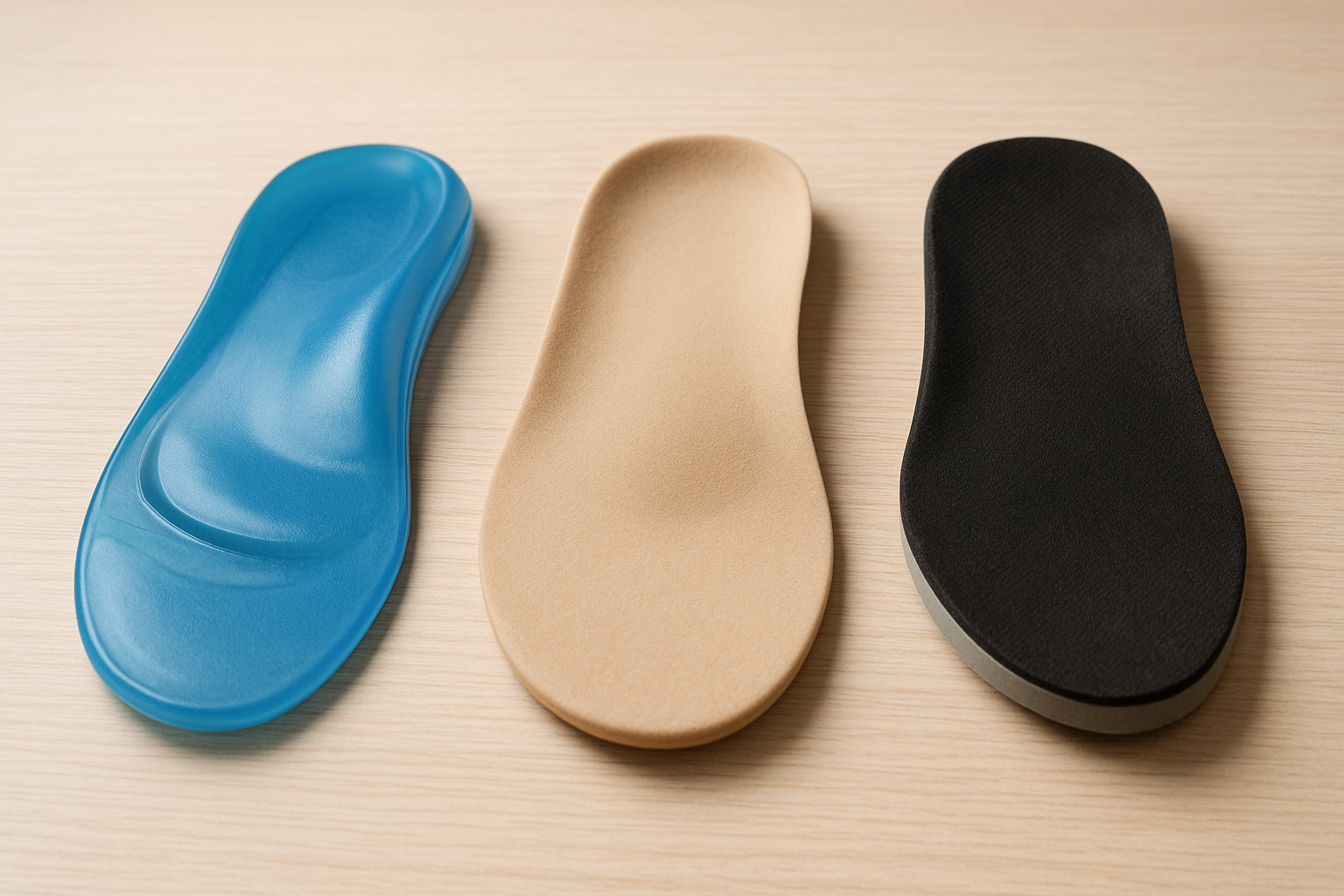
Comparing insole materials — gel, foam, and rigid support — helps you match the right type to your specific foot pain condition.
The Science Behind Foot Pain: Why Your Feet Hurt
Before diving into insole features, it's worth understanding why foot pain develops in the first place. Your foot contains 26 bones, 33 joints, and over 100 tendons, muscles, and ligaments. Every step you take places a force equal to roughly 1.5 times your body weight through these structures. Over the course of a day spent walking or standing, that adds up to hundreds of tons of cumulative force.
When the foot's natural biomechanics are disrupted — by flat arches, high arches, worn footwear, or prolonged standing — stress concentrates unevenly. Certain structures, particularly the plantar fascia, the heel fat pad, and the metatarsal heads, absorb far more than their share. Affordable insoles for foot pain work by redistributing this load more evenly, correcting alignment, and absorbing the energy that would otherwise jar vulnerable tissues.
Common Causes of Foot Pain — And Which Insole Features Help
Different conditions respond to different insole features. Matching your diagnosis to the right design is the single most impactful decision you can make. Here is a condition-by-condition breakdown:
Identifying your specific condition first means you can choose an insole engineered precisely for that problem. As a result, you get better relief without spending more money or wasting time on the wrong product.
Key Features to Look for in Affordable Insoles for Foot Pain
Not all insoles are created equal, even within the same price range. These are the features that separate a genuinely effective budget insole from one that simply adds a forgettable layer of foam.
1. Arch Support Type and Height
Arch support is arguably the single most critical feature in any insole. Low-arch (flat foot) insoles feature a built-up medial post to prevent inward rolling (overpronation). High-arch insoles prioritize cushioning beneath the arch to absorb shock for supinated feet. Neutral insoles suit people with a standard arch who need general comfort without corrective structure. Choosing the wrong arch height can make pain worse rather than better, so this decision matters.
2. Heel Cup Depth and Design
A deep heel cup cradles the fat pad of the heel and centers it directly under the heel bone where it belongs. This is essential for plantar fasciitis and heel spur relief. A shallow heel cup allows the fat pad to splay outward, reducing natural cushioning. Look for heel cups with walls at least 12 to 15 mm deep for meaningful stabilization. Some insoles also feature a heel cradle — a separate, denser foam section recessed within the heel area — for additional targeted relief.
3. Material and Cushioning Layer
The material determines how the insole feels and how long it lasts:
- EVA foam (ethylene-vinyl acetate) — Lightweight and durable. Excellent for everyday use. Tends to compress over time but offers a good balance of cushioning and support. For a deeper walkthrough, see our Best Orthotics for Everyday Use: A Complete Guide.
- Gel inserts — Provide targeted, localized pressure relief under the heel and ball of the foot. Heavier than foam but excellent for hard surface workers.
- Memory foam — Conforms to your unique foot shape over time. Very comfortable, but may lack the structural stiffness needed for biomechanical correction.
- Semi-rigid or rigid plastic shell — Delivers structural correction for overpronation and flat feet. Often paired with a soft foam or gel top layer for comfort.
- Cork — A natural, slightly firm material that molds gradually to the foot. Found in higher-end budget insoles; excellent longevity.
4. Full-Length vs. Three-Quarter vs. Heel-Only Insoles
Full-length insoles replace the factory insole entirely and provide support across the entire foot — best for running shoes, work boots, and casual footwear with removable insoles. Three-quarter length insoles stop at the ball of the foot and are ideal for dress shoes, loafers, or shoes with limited internal space. Heel cups or heel-only insoles target purely the heel and are the most discreet option, perfect for thin-soled shoes.
5. Top Cover and Moisture Management
A breathable, antimicrobial top cover prevents odor-causing bacteria from building up during extended wear. Look for covers made from fabric-covered foam, terry cloth, or moisture-wicking synthetic materials. If you work in hot environments or suffer from sweaty feet, this feature can significantly improve daily comfort.
6. Metatarsal Pad or Dome
Not all insoles include a metatarsal pad, but for anyone with ball-of-foot pain, this small raised bump just behind the metatarsal heads is transformative. It lifts and spreads the metatarsal bones, relieving pressure and reducing inflammation. If your primary pain is in the forefoot, prioritize this feature specifically.
7. Weight and Thickness
Thicker insoles provide more cushioning but may make the fit of your shoe feel tighter. If you plan to use insoles in multiple shoe types, look for slim-profile designs under 6 mm total thickness. For dedicated use in athletic or work footwear, a thicker insole with a firm base is generally preferable.
Insoles by Activity Type: Matching the Right Insole to Your Lifestyle
One of the most overlooked aspects of choosing affordable insoles for foot pain is matching the insole to your primary activity. The wrong insole for your lifestyle can underperform dramatically, even if all the features look right on paper.
Running and High-Impact Sports
Runners need insoles that can handle repetitive heel-strike impact — typically 500 to 1,000 steps per mile. Look for insoles with a firm EVA or thermoplastic base for motion control, combined with a gel or foam top layer for impact absorption. Insoles specifically labeled "sport" or "running" are engineered for higher dynamic loads than their everyday counterparts.
Standing Jobs (Nurses, Teachers, Retail Workers)
People who stand on hard floors for 6 to 10 hours daily need maximum cushioning without sacrificing structural support. Full-length memory foam or gel insoles with a moderate arch post are ideal. Consider insoles that are anti-fatigue rated — specifically designed to reduce the compressive stress of prolonged static standing.
Casual and Everyday Wear
For daily walking and light activity, a mid-density EVA insole with low-to-moderate arch support typically provides the best all-around comfort. If your shoes have limited internal space, a three-quarter length option prevents bunching at the toe box.
Work Boots and Safety Footwear
Work boot insoles need to be durable enough to handle rough terrain and heavy-duty use. Look for options with reinforced EVA bases, steel shank compatibility, and anti-slip bottom surfaces. Many standard insoles shift inside work boots, so a gripped or adhesive bottom prevents displacement.
Dress Shoes and Formal Footwear
The tight toe boxes and thin soles of dress shoes leave minimal room for insoles. Slim three-quarter length gel insoles or low-profile heel cups are the practical solution. These add meaningful cushioning without stretching the shoe upper or crowding the toe box.
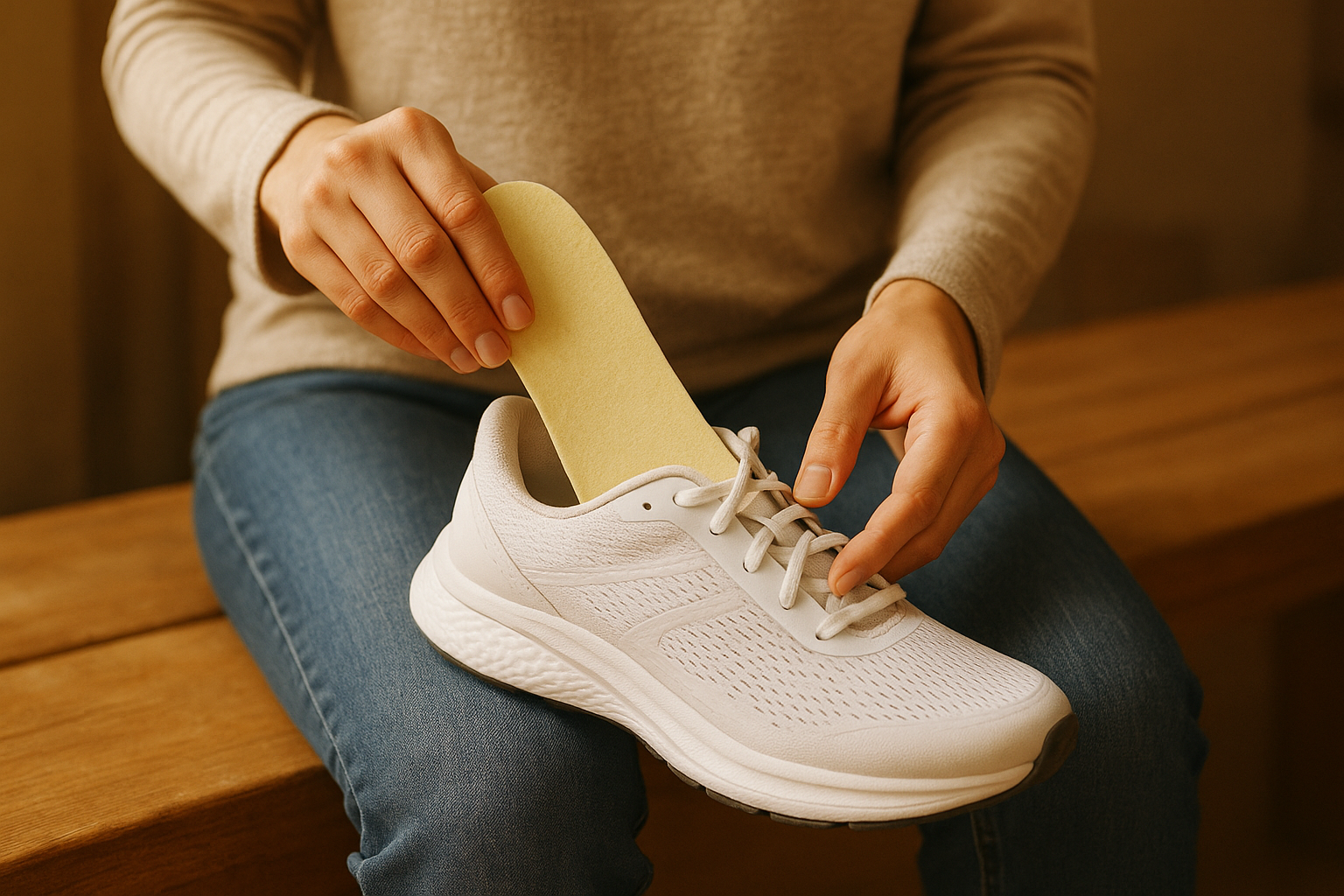
Fitting an insole correctly into your shoe is just as important as choosing the right type for your foot condition.
How to Choose the Right Affordable Insoles for Foot Pain: A Step-by-Step Guide
Following a structured process takes the guesswork out of insole selection. This method takes about 15 minutes and gives you a clear picture of exactly what you need before you spend a dollar.
-
1
Identify your arch type using the wet test. Wet the bottom of your foot and step firmly onto a piece of cardboard or dark paper. A full footprint with no visible arch indicates flat feet. A print with a very thin band at the outside indicates high arches. A moderate band in between suggests a neutral arch. This single step determines the correct arch support category for your needs.
-
2
Pinpoint your exact pain location. Carefully note whether the pain is located at the heel (plantar fasciitis, heel spur), the arch (flat foot strain), the ball of the foot (metatarsalgia), or the toes (neuroma, bunion). Map your pain to the appropriate insole zone feature — heel cup, arch post, or metatarsal pad.
-
3
Assess your shoe type and available space. Remove the factory insole from your target shoe. Measure its length and note whether there is a removable liner. If the factory insole is glued in, you will need a slim or three-quarter insole. If it removes cleanly, a full-length replacement insole is the better choice.
-
4
Select the right material for your activity level. Choose EVA foam for lightweight everyday use, gel for targeted cushioning on hard surfaces, memory foam for all-day comfort jobs, or a semi-rigid shell for structural overpronation correction. Match the insole's intended use (running, work, casual) to your primary activity.
-
5
Trim to fit (if required) and test the placement. Many budget insoles include trim lines on the underside. Cut along the line that matches your shoe size, leaving a small margin. Place the insole in the shoe flat, without folding, and confirm no bunching occurs at the heel or toe. Replace the factory insole first if it is removable.
-
6
Break in gradually over 7 to 10 days. Wear new insoles for one to two hours on day one, then increase by approximately one hour per day. This prevents new pressure points and allows your foot's muscles and tendons to adapt progressively to the changed load distribution. Rushing this process is the most common reason people report insoles as "uncomfortable."
What to Expect When You First Use Insoles
Many first-time insole users feel uncertain when the insole feels slightly different or even slightly uncomfortable during the first few days. This is normal. Here's what to expect:
- Day 1–2: You may notice increased arch pressure or mild calf tightness — both signs the insole is changing your gait mechanics. This should be mild, not painful.
- Day 3–5: Discomfort typically reduces as your foot adapts. You may begin to notice less heel or arch fatigue than usual.
- Week 2: Most users report noticeable improvement in their primary pain area by the end of the second week of consistent use.
- If pain worsens or spreads: Remove the insole and try a different arch height or material. Persistent new pain after a week of use indicates a mismatch between the insole type and your foot's needs.
Over-the-Counter vs. Custom Orthotics: An Honest Comparison
The debate between over-the-counter insoles and custom orthotics is one of the most frequent questions people ask when dealing with persistent foot discomfort. Here is an honest breakdown of both options:
For most people with mild to moderate foot pain, budget insoles are the logical and cost-effective starting point. Research consistently shows that well-designed OTC insoles are nearly as effective as custom orthotics for plantar fasciitis and general arch pain in the majority of patients. However, if you have a complex biomechanical condition, structural deformity, or if over-the-counter options have not helped after 6 to 8 weeks, custom orthotics from a podiatrist are worth the investment.
Some people also use a hybrid approach — affordable insoles for daily wear and custom devices for sports or high-impact activities. Resources like customorthotics.com can help you understand when a custom solution makes more clinical sense than an off-the-shelf alternative.
How to Make Affordable Insoles Last Longer
Even the best budget insole will underperform if used incorrectly or maintained poorly. These practical tips help you get maximum lifespan and effectiveness from every pair.
- Always remove the factory insole first. Stacking a new insole on top of the original creates an uneven fit and eliminates the benefit of the new insole's arch geometry.
- Rotate between two pairs. Alternating between insoles allows each pair to fully decompress and dry between uses, significantly extending their functional life.
- Air dry — never heat dry. After use, remove insoles and allow them to air dry at room temperature. Heat (from radiators, dryers, or direct sunlight) degrades EVA foam and gel materials rapidly.
- Clean with mild soap monthly. Hand wash with a soft cloth and mild soap, then air dry. This prevents bacteria buildup and extends the life of the top cover.
- Inspect cushioning every 3 months. Press firmly on the heel and arch. If it springs back slowly or feels permanently flattened, the insole has lost structural integrity and needs replacing.
- Replace every 6 to 12 months regardless. Even insoles that look fine may have lost their structural properties. A degraded insole can worsen your alignment subtly without obvious visible wear.
- Pair insoles with supportive footwear. The best insole cannot compensate for a structurally dead shoe. If the midsole of your shoe is compressed flat, replace the shoe before troubleshooting the insole.
Complementary Strategies That Amplify Insole Results
Insoles work best as part of a broader foot health strategy. These evidence-based techniques, used alongside affordable insoles for foot pain, can dramatically accelerate recovery and reduce recurrence.
Daily Stretching Routines
Stretching the plantar fascia and calf muscles each morning — before your feet hit the floor — reduces the sharp first-step pain of plantar fasciitis by loosening the tissue before it bears load. Hold each stretch for 30 seconds and repeat 3 times.
- Plantar fascia stretch: Sit down, cross one leg over the other, and pull the toes back toward the shin. You should feel a stretch along the arch.
- Calf stretch (gastrocnemius): Stand facing a wall, place one foot back, and press the heel flat while leaning forward. Tight calves directly increase plantar fascia strain.
- Towel roll massage: Roll a frozen water bottle or tennis ball under the arch for 5 minutes. This reduces inflammation and improves tissue mobility.
Strengthening Exercises
Weak intrinsic foot muscles allow the arch to collapse under load even with good insole support. Simple exercises like toe curls with a towel, marble pickups, and single-leg calf raises build the muscular foundation that insoles rely on. Adding 5 minutes of foot-strengthening exercises daily can reduce insole dependency over time for certain conditions.
Footwear Evaluation
Check your shoes for adequate toe box width, heel counter stiffness, and midsole integrity. A shoe with a broken-down midsole — one that compresses easily under thumb pressure — cannot support insole function regardless of how good the insert is. Replacing worn shoes is often more impactful than any insole upgrade.
Night Splints for Plantar Fasciitis
For persistent plantar fasciitis, a night splint holds the foot in dorsiflexion during sleep, keeping the plantar fascia gently stretched overnight. Used in combination with affordable insoles during the day, this approach resolves plantar fasciitis significantly faster than insoles alone.
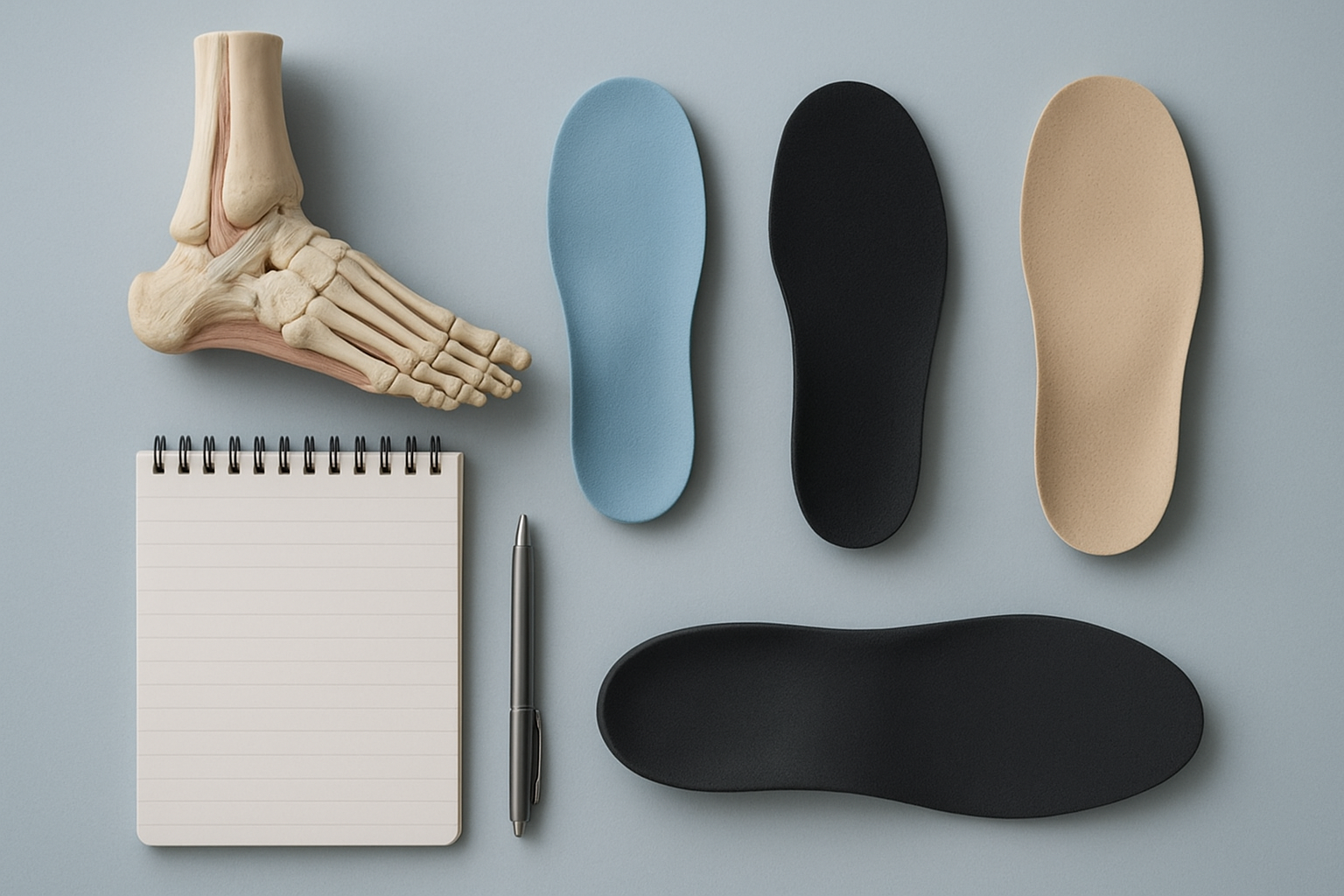
A podiatrist can help determine whether affordable over-the-counter insoles or custom orthotics are the right solution for your specific condition.
When Affordable Insoles Are Not Enough: Signs You Need a Podiatrist
Budget insoles are excellent for mild to moderate, common foot pain. However, certain situations require professional evaluation that no over-the-counter insole can replace. See a podiatrist promptly if you experience any of the following:
- Pain that has persisted beyond 4 to 6 weeks despite consistent insole use — this suggests a structural issue beyond insole correction.
- Swelling, warmth, or redness around a joint — could indicate an inflammatory condition requiring medical treatment.
- Numbness, tingling, or burning sensations — may indicate diabetic neuropathy, tarsal tunnel syndrome, or Morton's neuroma.
- Severe or sudden onset pain — especially following an activity change or injury; could be a stress fracture.
- Visible structural deformities like severe bunions, hammertoes, or significant toe misalignment — these require professional orthotic or surgical management.
- Diagnosed diabetes or circulatory problems — foot care in diabetic patients requires specialized management to prevent ulceration and serious complications.
💡 Quick Reference: If you are unsure whether your foot pain requires professional care, customorthotics.com provides a side-by-side comparison of over-the-counter and custom solutions to help you decide before booking an appointment or making a purchase.
Frequently Asked Questions About Affordable Insoles for Foot Pain
What are affordable insoles for foot pain?
Affordable insoles for foot pain are over-the-counter shoe inserts priced between $10 and $50 that provide arch support, heel stabilization, and cushioning to reduce discomfort. They are available at pharmacies and online without a prescription and are effective for mild to moderate common conditions including plantar fasciitis, flat feet, and heel pain.
Do cheap insoles actually work for foot pain?
Yes — multiple clinical studies confirm that well-designed over-the-counter insoles provide meaningful relief for common conditions like plantar fasciitis, flat feet, and heel pain. They may not match the precision of custom orthotics for complex biomechanical issues, but for the majority of users they are highly effective as a first-line solution.
How much should I spend on insoles for foot pain?
Quality over-the-counter insoles typically cost between $15 and $50. Price is not a reliable indicator of effectiveness — focus instead on features like arch support type, heel cup depth, and material quality relevant to your specific condition. Spending more than $50 rarely provides additional benefit for most users.
What is the difference between OTC insoles and custom orthotics?
Over-the-counter insoles are pre-made for a range of foot types and are available without a prescription for $10 to $50. Custom orthotics are individually cast and molded to your exact foot by a podiatrist, cost $200 to $800 or more, and are best for complex structural conditions. Most people with common foot pain respond well to OTC insoles before needing to consider custom devices.
Which insoles are best for plantar fasciitis?
For plantar fasciitis, look for insoles with firm arch support (to reduce fascia strain), a deep heel cup (to center the fat pad under the heel bone), and moderate cushioning. Avoid purely soft foam insoles — they lack the structural support needed to reduce tension on the plantar fascia ligament.
Can insoles help with flat feet and overpronation?
Yes. Insoles with a raised medial arch post and a motion-control structure can significantly reduce the inward rolling (overpronation) associated with flat feet. This in turn reduces strain on the ankle, knee, and lower back, which are all secondary pain sites caused by flat foot mechanics.
How long do affordable insoles last?
Most over-the-counter insoles last between 6 and 12 months with daily use. However, if you notice visible flattening, loss of springback, or recurring pain before that point, replace them immediately. Heavy daily users (runners, retail workers) may need to replace insoles every 3 to 6 months.
Can I use insoles in any type of shoe?
Most insoles are designed for athletic or casual footwear with removable factory insoles. Slim or three-quarter length insoles work in dress shoes and tight-fitting footwear. Always check that the insole does not bunch at the toe or raise your heel excessively against the shoe collar.
What materials are best for insoles for foot pain?
EVA foam is the best all-round base for everyday use. Gel provides superior targeted pressure relief under the heel or ball of the foot. Memory foam offers personalized comfort for sedentary or low-activity use. Semi-rigid plastic shells are best for structural biomechanical correction. Cork is excellent for durability and gradual custom fit.
Are insoles a substitute for seeing a podiatrist?
Insoles are an effective first-line treatment for mild to moderate foot pain, but they are not a substitute for professional medical evaluation. If pain persists beyond 4 to 6 weeks, spreads to other areas, or is accompanied by swelling, numbness, or structural changes, consult a podiatrist promptly.
How do I identify my arch type at home?
Wet the bottom of your foot and step firmly onto a dark piece of paper or cardboard. A full footprint with little or no visible arch gap indicates flat feet (low arch). A very thin strip connecting the heel and ball indicates a high arch. A moderate band indicates a neutral arch. This simple test takes less than one minute and guides your entire insole selection.
Can insoles prevent foot pain from getting worse?
Yes. Wearing supportive insoles regularly reduces repetitive mechanical stress on vulnerable structures with every step, slowing the progression of conditions like plantar fasciitis, heel spurs, and flat foot deformity. Think of them as preventive maintenance for your feet, not just a reactive treatment.
How quickly will I feel relief with new insoles?
Many users report noticeable improvement within the first 1 to 3 days. However, full therapeutic benefit typically develops after 1 to 2 weeks of consistent wear as your foot adapts to the improved mechanics. Conditions like plantar fasciitis may take 4 to 8 weeks of combined insole use, stretching, and footwear changes for significant resolution.
Do insoles help with knee and lower back pain caused by foot problems?
Yes. Because the foot is the foundation of your entire kinetic chain, poor foot alignment caused by flat feet or overpronation creates compensatory stress in the knees, hips, and lower back. Corrective insoles that address overpronation often reduce referred knee and back pain as a secondary benefit. This chain effect is one of the most underappreciated benefits of affordable insoles for foot pain.
Conclusion: The Smart Path to Foot Pain Relief Without Breaking the Budget
Finding the right affordable insoles for foot pain does not require a large budget, a specialist appointment, or weeks of waiting. The most important steps are identifying your arch type with the wet test, matching the insole design to your specific pain location and condition, selecting the right material for your primary activity, and breaking in the insoles gradually over 7 to 10 days.
By following a structured selection process, understanding the science behind foot pain, and pairing insoles with complementary strategies like daily stretching and supportive footwear, most people with mild to moderate foot discomfort can experience meaningful relief within days — and prevent worsening over the long term. The full treatment toolkit covered in this guide — from condition-specific insole features to activity-matched designs to maintenance habits — gives you everything you need to make a fully informed decision at any budget.
If over-the-counter solutions do not resolve your symptoms after 6 to 8 weeks of consistent, correct use, consulting a podiatrist or exploring custom orthotics through a resource like customorthotics.com is a sensible next step. Your feet carry you through every moment of your life — they deserve more than guesswork.
For a deeper look at how insoles interact with your overall foot health, explore our guide on choosing the right arch support for your foot type, which covers the biomechanics behind proper alignment in greater detail.