

Custom orthotic insoles for sports are precision-made inserts molded directly from an athlete's own feet to correct alignment issues, absorb impact, and support natural movement during training and competition. Unlike generic insoles bought off a shelf, they are built for one specific foot shape, which means they can address problems that mass-produced products simply cannot fix. For athletes dealing with recurring pain or performance plateaus, this level of customization often makes the difference between pushing through discomfort and training pain-free.
Quick Answer: Custom orthotic insoles for sports are individually molded foot supports that correct biomechanical imbalances, reduce impact stress, and improve stability for athletes. They are prescribed and fabricated by a podiatrist based on a direct cast of each foot, rather than a standard shoe size.
What Are Custom Orthotic Insoles for Sports?
Custom orthotic insoles for sports are medical-grade devices designed to sit inside athletic footwear and correct the way weight moves across the foot during activity. Each pair starts with a mold or digital scan of the patient's foot, so the finished product reflects their unique arch height, pronation pattern, and pressure points. Consequently, the insole works with the body's natural mechanics instead of forcing a generic shape onto a foot that does not match it.
Podiatrists typically recommend them for athletes who experience chronic pain, structural imbalances, or reduced mobility that interferes with training. Because the devices are fabricated rather than mass-manufactured, they can be adjusted for the specific demands of running, court sports, cycling, or field sports. For a closer look at how this applies to endurance and recreational athletes alike, the personalized foot solutions guide for athletes breaks down the fitting process in more detail.
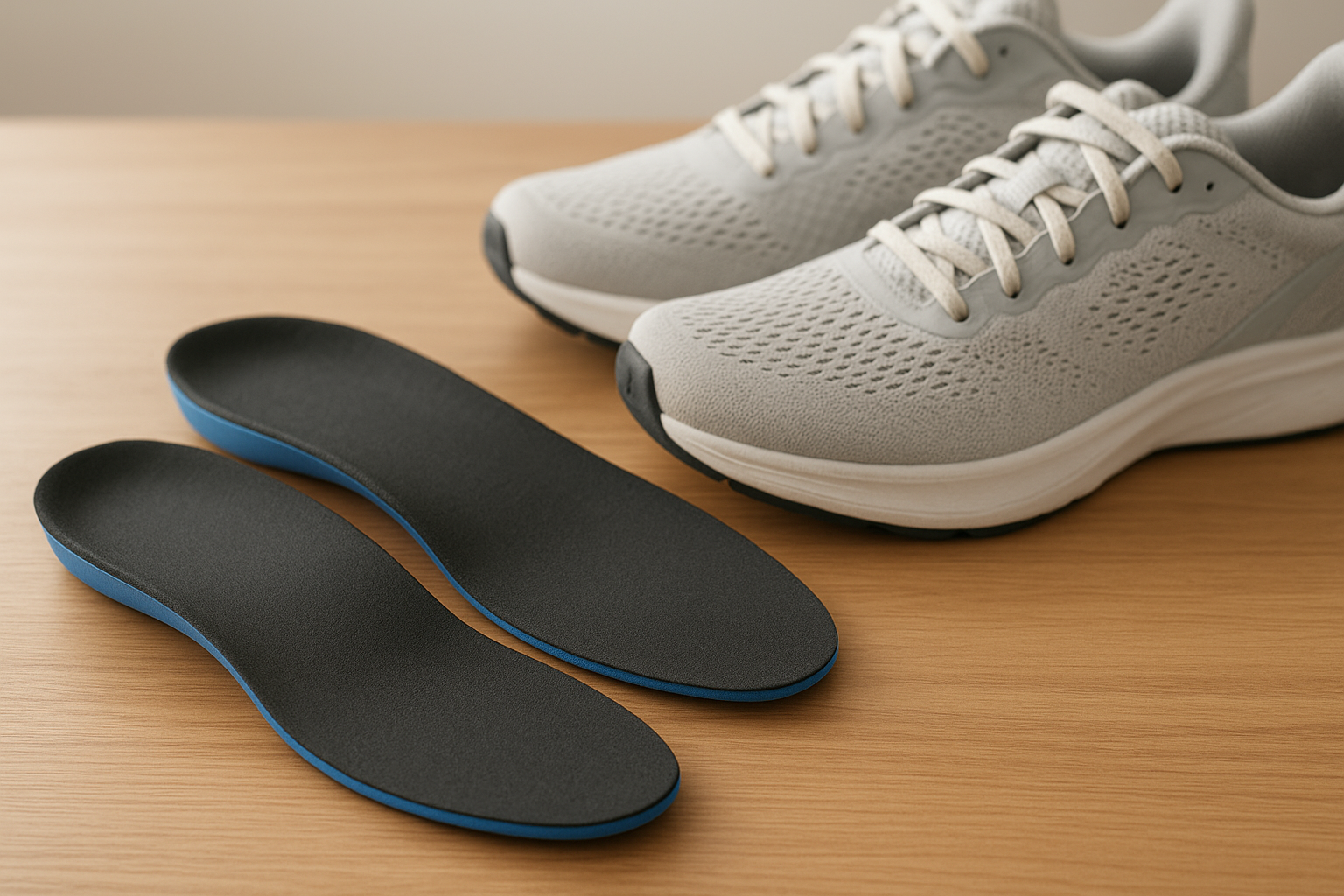
Custom orthotic insoles for sports are molded to match each athlete's unique foot shape.
Why Athletes Need Sports Orthotics
Sports place repetitive, high-impact stress on the feet, and even small biomechanical imbalances get magnified during running, jumping, or quick lateral movement. In particular, overpronation or a rigid high arch can lead to uneven pressure distribution, which often shows up as knee, hip, or lower back pain over time. Therefore, correcting the foot's foundation frequently resolves issues that seem unrelated to the feet at all.
According to research summarized by the Wikipedia entry on orthotics, custom devices are widely used in clinical and athletic settings to manage gait abnormalities. Similarly, the American Podiatric Medical Association notes that properly fitted orthotics can play a meaningful role in both injury prevention and rehabilitation. For athletes specifically, this guide on boosting performance and preventing injury outlines several sport-specific benefits in greater depth.
How Custom Orthotic Insoles for Sports Improve Performance
Custom orthotic insoles for sports do more than relieve pain; they can also improve efficiency. When the foot strikes the ground in proper alignment, less energy is wasted correcting wobble or excess motion with every stride. As a result, athletes often report feeling less fatigued during long training sessions once their orthotics are properly dialed in.
In addition, better alignment reduces compensatory movement patterns elsewhere in the body. For example, a runner who overpronates might unconsciously tighten their calf or hip muscles to stay balanced, which wastes effort and increases injury risk. Correcting the root issue at the foot, however, allows those muscles to work as intended.
Common Sports Injuries Prevented by Orthotic Support
Plantar fasciitis, shin splints, and stress fractures are among the most common overuse injuries athletes experience, and each is closely linked to poor foot mechanics. A 2019 review of biomechanical research cited by the National Institutes of Health found that foot orthoses reduced injury recurrence in a meaningful percentage of athletes studied. Because custom devices target the specific imbalance causing the strain, they tend to be more effective than generic cushioning alone.

Proper foot support helps athletes maintain efficient stride mechanics under load.
How to Get Fitted for Custom Orthotic Insoles
Getting fitted for custom orthotic insoles for sports follows a fairly predictable process, whether it happens in person or through an online consultation. Below is the typical sequence patients can expect.
- Schedule a consultation. Speak with a podiatrist by phone or online to discuss your sport, training volume, and any pain patterns so the fitting can be tailored accordingly.
- Complete a foot mold or scan. An impression is taken of each foot, either in a clinic or through an at-home kit, capturing the exact contours needed for accuracy.
- Select sport-specific materials. Your provider recommends materials and thickness suited to your activity, balancing rigidity for stability against cushioning for shock absorption.
- Break in and monitor performance. Wear the finished orthotics gradually over one to two weeks while tracking comfort and any changes in pain during training.
Patients who prefer a fully remote process can place an order directly through customorthotics.com, where a podiatrist reviews each case before fabrication begins.
Custom vs Off-the-Shelf Athletic Insoles
Off-the-shelf athletic insoles are manufactured in a limited range of sizes and arch shapes, so they only approximate a good fit for most feet. Custom orthotic insoles for sports, by contrast, are fabricated from an individual mold, which allows the finished product to match the wearer's exact arch height, heel angle, and pressure distribution. As a result, custom devices generally perform better for athletes managing chronic pain or a diagnosed structural imbalance.
That said, off-the-shelf options can still be useful for casual exercisers without significant foot issues. However, athletes training at higher intensity or frequency tend to benefit more from a device built specifically around their biomechanics. Those weighing the cost difference may find it helpful to review this comparison of affordable custom-fit sports orthotics.
Choosing the Right Sports Orthotics for Your Activity
Different sports place different demands on the feet, so the ideal design for custom orthotic insoles for sports varies by activity. Runners often need more shock absorption and heel stabilization, while court-sport athletes may prioritize lateral support for quick direction changes. Cyclists, meanwhile, typically need a firmer platform to improve power transfer through the pedal stroke.
For recreational athletes who move between multiple activities, a more versatile design is often recommended. This guide to custom orthotics for recreational activities covers how fitting priorities shift depending on the sport involved, and the companion resource on foot orthotics for athletes offers additional detail on performance-focused designs.
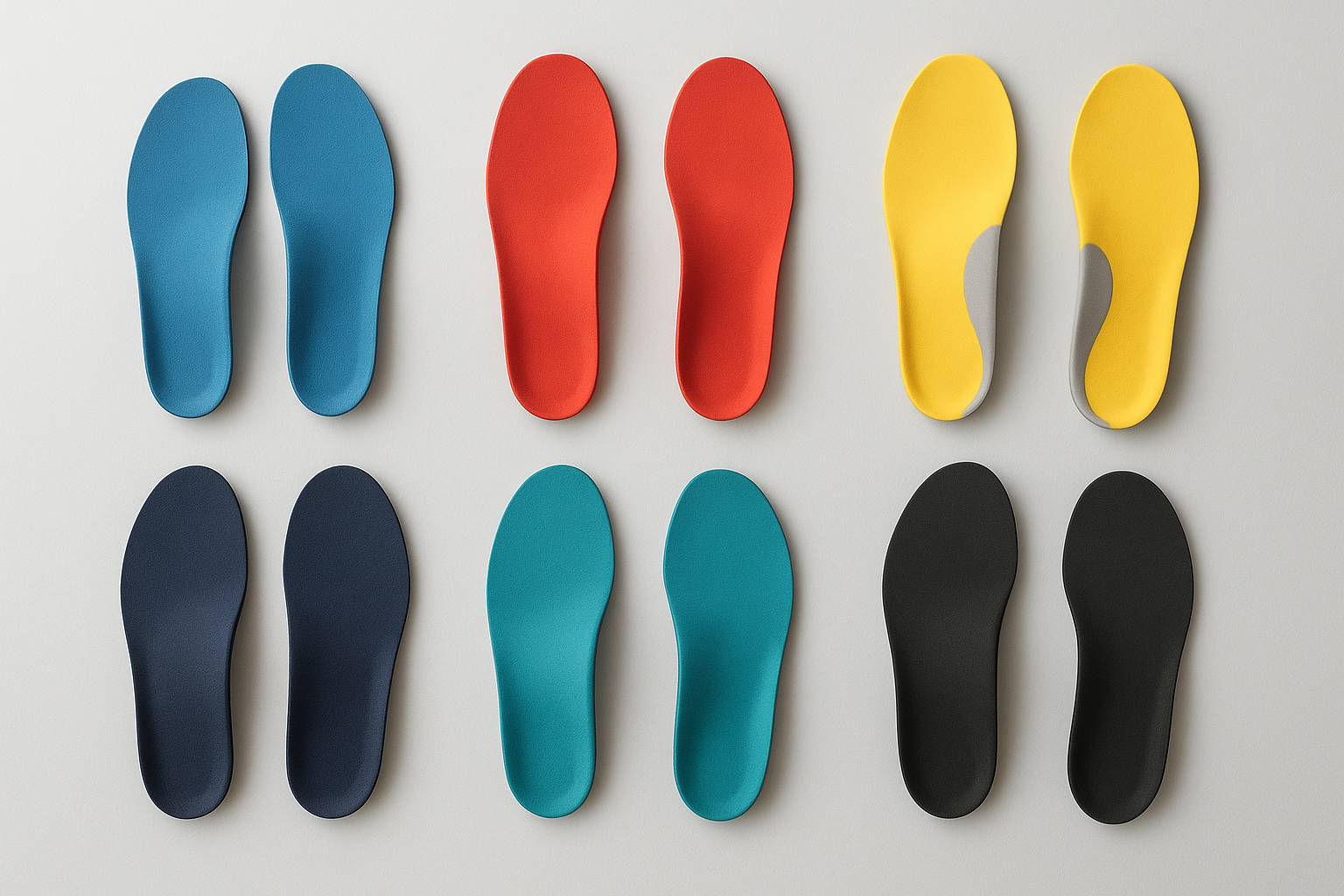
Custom orthotic designs vary by sport, from running to court and field activities.
Frequently Asked Questions About Custom Orthotic Insoles for Sports
What are custom orthotic insoles for sports?
Custom orthotic insoles for sports are podiatrist-designed inserts molded from an athlete's actual foot shape to correct alignment, absorb shock, and support movement during physical activity. They differ from store-bought insoles because they are built for one specific foot, not a generic size range.
How do custom orthotic insoles for sports differ from regular insoles?
Custom orthotic insoles for sports are fabricated from an exact mold of the wearer's foot, while regular insoles are mass-produced in a handful of sizes. As a result, custom devices address specific biomechanical issues like overpronation or high arches far more precisely.
How long does it take to get custom orthotic insoles for sports?
Most patients receive their finished custom orthotic insoles for sports within two to four weeks after the initial mold is taken. Turnaround time can vary slightly depending on the materials chosen and the complexity of the design.
How much do custom orthotic insoles for sports cost?
Custom orthotic insoles for sports typically cost more than off-the-shelf inserts because each pair is individually fabricated, though prices vary by provider and materials. Many practices, including online ordering options, offer payment plans or insurance billing to make the cost more manageable.
Can custom orthotic insoles for sports improve running performance?
Yes, custom orthotic insoles for sports can improve running economy by correcting gait inefficiencies and reducing energy lost to excess foot motion. Better alignment also means less fatigue over long distances.
What sports benefit most from custom orthotic insoles?
High-impact sports such as running, basketball, soccer, and tennis benefit most from custom orthotic insoles because they involve repetitive pounding and quick directional changes. However, cyclists and golfers also use them to improve stability and power transfer.
How often should athletes replace custom orthotic insoles for sports?
Most athletes should replace custom orthotic insoles for sports every one to three years, depending on training volume and material wear. Heavy training schedules may compress cushioning faster and shorten that timeline.
What common mistakes do athletes make when choosing sports orthotics?
A common mistake is buying generic insoles instead of getting a proper foot assessment, which can mask rather than fix the underlying problem. Another frequent error is skipping the break-in period, leading athletes to abandon otherwise effective orthotics too soon.
Are custom orthotic insoles for sports covered by insurance?
Some insurance plans partially cover custom orthotic insoles for sports when a podiatrist documents medical necessity, though coverage varies widely by provider. It is best to confirm benefits directly with your insurer before ordering.
Do custom orthotic insoles for sports help prevent injuries?
Custom orthotic insoles for sports help prevent injuries by correcting the biomechanical imbalances that often lead to overuse conditions like plantar fasciitis and shin splints. By distributing pressure evenly, they reduce strain on joints, tendons, and ligaments.
Can I order custom orthotic insoles for sports online?
Yes, many patients now order custom orthotic insoles for sports online after completing an initial consultation, using an at-home mold kit or a local scanning partner. This makes professional-grade foot care accessible even without an in-person visit.
What materials are used in custom orthotic insoles for sports?
Custom orthotic insoles for sports are typically built from lightweight, durable materials such as carbon fiber, EVA foam, or polypropylene, chosen based on the athlete's sport and foot type. Rigid materials suit stability needs, while softer foams add shock absorption.
How do I know if I need custom orthotic insoles for sports?
Signs you may need custom orthotic insoles for sports include recurring foot or knee pain, uneven shoe wear, or a history of sprains during activity. A podiatrist can confirm the need through a gait analysis and physical foot examination.
Final Thoughts
Custom orthotic insoles for sports offer a level of precision that generic inserts cannot match, correcting the specific imbalances that lead to pain, fatigue, and preventable injury. Because each pair is molded from the athlete's own feet, the support they provide fits how that person actually moves, not an average shoe size. For anyone dealing with recurring foot pain during training or simply looking to move more efficiently, working directly with a podiatrist to get properly fitted is a practical next step. Whether that consultation happens in person or through an online order, the result is a device built to help athletes train longer, recover faster, and stay on their feet.