

Custom orthotics for recreational activities are precision-engineered shoe inserts fabricated from an exact mold or 3D scan of your individual foot — and they are one of the most evidence-backed investments available for anyone who values staying active, pain-free, and performing at their best. According to the American Podiatric Medical Association, approximately 77% of Americans experience significant foot pain at some point in their lives, with a large proportion of cases directly linked to inadequate foot support during physical activity. Unlike generic pharmacy insoles, custom orthotics address your unique biomechanical profile — correcting alignment, redistributing pressure, and reducing cumulative stress across the feet, ankles, knees, and hips.
What Are Custom Orthotics for Recreational Activities?
Custom orthotics for recreational activities are prescription-grade foot orthoses fabricated specifically from a mold, plaster cast, or digital 3D scan of your individual foot. They are classified as medical devices and are prescribed by qualified clinicians — typically podiatrists, orthotists, or sports medicine physicians — after a thorough biomechanical evaluation.
The core function of a custom orthotic is to control, guide, or correct the way your foot functions during movement. This includes managing:
- Overpronation — the foot rolling excessively inward during the stance phase of walking or running, which stresses the arch, ankle, shin, and knee
- Supination (underpronation) — the foot rolling outward, reducing natural shock absorption and increasing lateral ankle sprain risk
- Uneven pressure distribution — areas of the foot bearing disproportionate load, which leads to calluses, bursitis, and stress fractures
- Leg length discrepancy — a measurable difference in limb length that creates compensatory gait patterns affecting the entire kinetic chain
- Structural deformities — including flat feet (pes planus) and high-arched feet (pes cavus), both of which alter force transmission through the lower body
During recreational activities, these issues are amplified by repetitive movement patterns. A misalignment that is barely noticeable on a short walk becomes a significant source of tissue stress across thousands of foot strikes during a hike, run, or court session.
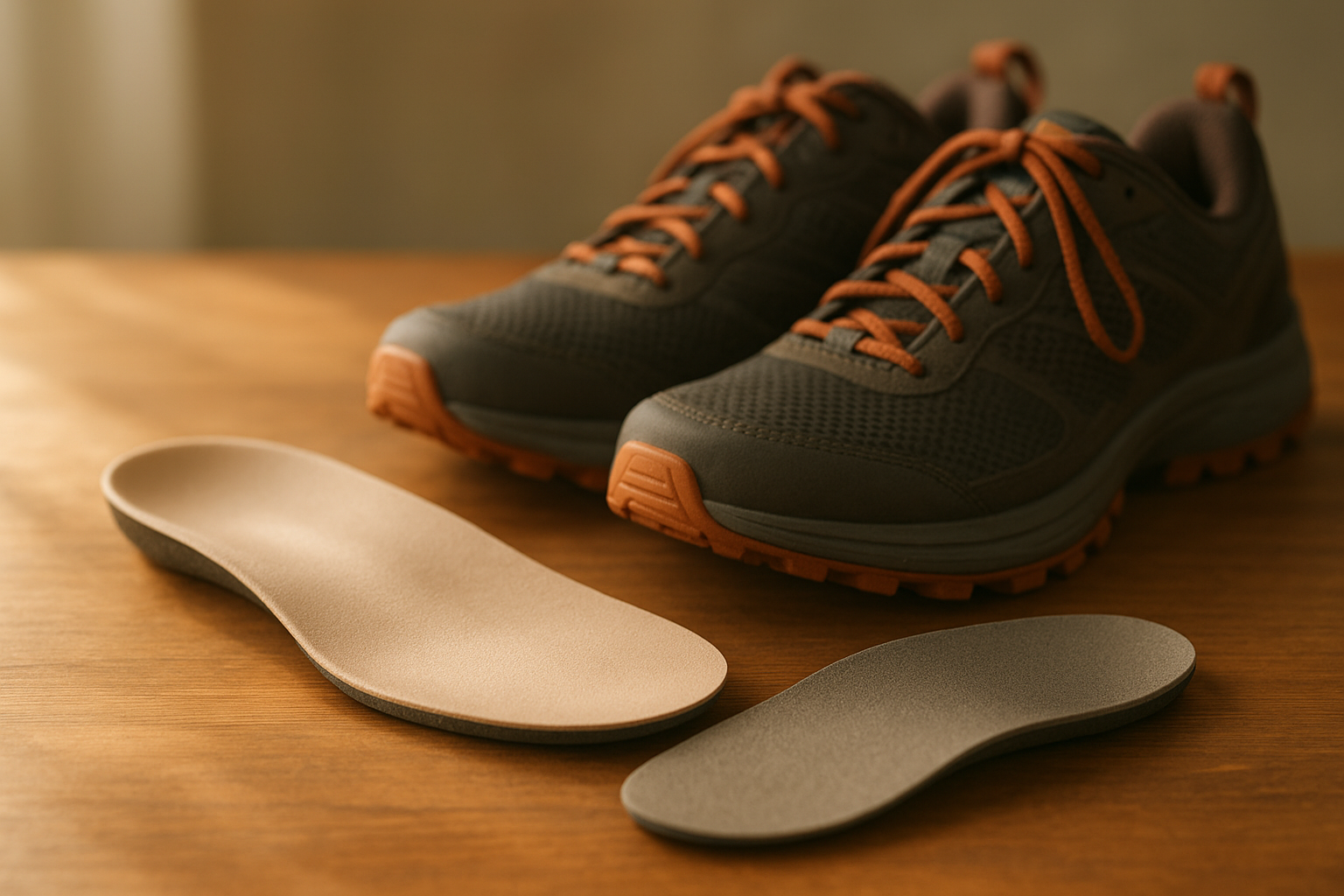
Custom orthotic insoles crafted for high-impact recreational activities like trail running and hiking.
Types of Custom Orthotics: Which One Is Right for You?
Not all custom orthotics are the same. They are categorized by their primary function and the materials used in fabrication. Understanding these distinctions helps you have an informed conversation with your clinician and ensures you receive a device matched to your recreational demands.
Functional (Rigid) Orthotics
Made from firm materials such as carbon fiber, polypropylene, or hard plastic, functional orthotics are designed to control abnormal motion and correct biomechanical misalignments. They are typically prescribed for conditions such as overpronation, supination, and tendinopathy. They work well in firm-soled footwear and are a popular choice for cyclists, hikers, and golfers.
Accommodative (Soft) Orthotics
Accommodative orthotics are fabricated from cushioning materials such as EVA foam, gel, or silicone. Their primary role is shock absorption and pressure relief rather than structural correction. They are well-suited to recreational users with diabetes, arthritis, or sensitive skin who need cushioning and offloading rather than rigid support.
Semi-Rigid Orthotics
Semi-rigid orthotics combine a firm supportive layer with a cushioned top cover, offering both motion control and shock absorption. They represent the most versatile option for recreational athletes and are commonly prescribed for tennis, running, hiking, and basketball — activities that demand both structural support and impact management.
Profile Lengths: Full, Three-Quarter, and Slim Sport
Beyond material type, orthotics come in different profile lengths. Full-length orthotics extend from heel to toe and are ideal for running shoes and hiking boots with adequate depth. Three-quarter length orthotics end just behind the metatarsal heads and are suitable for footwear with less internal volume. Slim sport orthotics are the thinnest profile, designed specifically for cycling shoes, golf shoes, and dress shoes where space is at a premium.
Why Foot Support Matters During Leisure Sports
Recreational activities place surprisingly high mechanical demands on the foot and lower limb. Consider these force measurements:
- Walking: generates ground reaction forces of approximately 1.0–1.2 times body weight with each step
- Hiking on uneven terrain: 1.5–3.0 times body weight, with lateral instability forces additional to vertical loading
- Running: 2.0–3.5 times body weight per foot strike, accumulated over thousands of repetitions per session
- Tennis and court sports: rapid direction changes generate lateral shear forces that stress the ankle, subtalar joint, and plantar fascia simultaneously
- Cycling: repetitive circular pedal motion transmits concentrated force through the metatarsal heads, particularly during high-cadence or high-resistance efforts
Without adequate biomechanical support, these forces accumulate over time and manifest as overuse injuries. The foot's 26 bones, 33 joints, and more than 100 muscles, tendons, and ligaments form an intricate system that is highly sensitive to misalignment. When one component is stressed, compensatory patterns develop throughout the entire kinetic chain — from the arch to the knee to the lower back.
The Kinetic Chain: How Foot Misalignment Travels Upward
The concept of the kinetic chain is fundamental to understanding why custom orthotics for recreational activities protect more than just the foot. When the foot overpronates, for example, the tibia rotates inward, the knee tracks medially, and the hip adducts — creating a cascade of stress that contributes to runner's knee (patellofemoral pain syndrome), IT band syndrome, and even lower back pain. Custom orthotics interrupt this cascade at the source by restoring neutral foot alignment.
Foot Conditions Custom Orthotics Can Address in Recreational Athletes
Custom orthotics are clinically indicated for a wide range of conditions that commonly affect recreational users. Below is a comprehensive breakdown of the conditions most frequently treated:
Plantar Fasciitis
Inflammation of the plantar fascia, causing sharp heel pain — the most common overuse injury in recreational runners and hikers. Custom orthotics offload the fascia and support the medial arch.
Achilles Tendinopathy
Degenerative changes or inflammation in the Achilles tendon, often linked to overpronation. A heel raise component in the orthotic reduces tensile load on the tendon during push-off.
Shin Splints (MTSS)
Medial tibial stress syndrome caused by excessive tibial rotation from overpronation. Orthotics reduce torsional forces on the tibia, alleviating pain along the shin bone.
Metatarsalgia
Forefoot pain and inflammation caused by excessive pressure under the metatarsal heads — common in cyclists and court sport players. A metatarsal pad in the orthotic redistributes pressure proximally.
Patellofemoral Pain Syndrome
Knee pain caused by abnormal patellar tracking, frequently linked to excessive tibial internal rotation from overpronation. Correcting pronation via orthotics can significantly reduce knee pain.
Heel Spurs
Bony calcium deposits that form on the calcaneus as a result of chronic plantar fascia tension. Cushioned heel cups in orthotics offload the spur and reduce symptom severity during activity.
Stress Fractures
Micro-fractures in metatarsals or the tibia caused by cumulative overloading. Orthotics reduce peak plantar pressures and redistribute load across the foot to lower fracture risk.
Flat Feet (Pes Planus)
Collapsed medial arch resulting in excessive pronation and fatigue during prolonged activity. Custom arch support orthotics restore the arch's natural shock-absorbing function.
Activity-Specific Orthotics: Sport-by-Sport Breakdown
One of the most important distinctions between custom orthotics for recreational activities and generic insoles is that custom devices can be designed and calibrated for specific sports. Your clinician considers the biomechanical demands, footwear constraints, and loading patterns unique to each activity when prescribing your device.
Orthotics for Hiking and Trail Running
Hiking and trail running expose the foot to constantly changing terrain, requiring orthotics that offer lateral stability, deep heel cup containment, and firm arch support. The deep heel cup prevents calcaneal eversion on unstable ground, while a semi-rigid shell allows some forefoot flexibility for natural toe-off on ascents and descents. Moisture-wicking top covers made from antimicrobial fabric are essential for managing perspiration inside closed hiking boots during multi-hour outings.
Key features to look for in hiking orthotics: medial posting for pronation control, high-density foam heel cushioning, full-length profile to fill the boot's volume, and a durable shell rated for high-mileage use.
Cycling Orthotics and Cleat Alignment
Cycling orthotics are among the most technically specialized in the recreational space. Because pedaling involves a repetitive circular motion — with the foot locked in a fixed position by cleats — any biomechanical issue is amplified across thousands of pedal strokes per hour. A slim, rigid carbon fiber or polypropylene shell maximizes power transfer efficiency by creating a stiff platform between the foot and pedal.
A metatarsal dome or metatarsal bar is frequently incorporated to relieve the hot spots and forefoot numbness that cyclists commonly experience on long rides. Additionally, cleat position adjustments may be made in conjunction with the orthotic to optimize knee tracking. Cycling orthotics must fit within the narrow last of a cycling shoe — making the slim sport profile the only viable option for most riders.
Tennis, Pickleball, and Court Sport Orthotics
Court sports demand orthotics that handle both high-impact loading and rapid lateral movement simultaneously. Enhanced lateral flange support prevents the foot from collapsing inward during cutting and direction-change movements, while a reinforced heel cushion absorbs the impact of repeated jump-landings and pivots. The device must remain stable within a court shoe during explosive side-to-side play, so a firm shell with minimal flexibility at the midfoot is preferred. Forefoot flexibility is maintained to allow natural push-off during sprints to the net.
Golf Orthotics and Rotational Load Management
Golf places highly asymmetrical rotational forces on each foot. During the downswing, the lead foot experiences significant pronation stress while the trail foot supinates — creating different orthotic requirements for the left and right shoe. Golf-specific orthotics are typically slim to fit within the structured profile of a golf shoe and are designed with differential posting — firmer medial support on the lead foot and lateral support on the trail foot — to manage these opposing rotational demands. This level of customization is impossible to achieve with any generic insole.
Swimming, Water Sports, and Barefoot Activities
Recreational swimmers and paddlers who spend significant time on hard pool decks, boat decks, or beach surfaces benefit from waterproof accommodative orthotics made from closed-cell foam or silicone. These resist moisture absorption and can be worn in water shoes or sandals with straps. While these devices cannot correct gait the way rigid orthotics can, they provide critical heel and arch cushioning that reduces fatigue and plantar fascia stress during prolonged standing on hard, wet surfaces.
Basketball and Multi-Direction Court Sports
Basketball involves high-impact landings from jumps, explosive starts, and rapid multi-directional changes — all within a single possession. Orthotics for basketball prioritize rearfoot control and forefoot shock absorption. A high-volume basketball shoe accommodates a full-length semi-rigid orthotic with a cushioned top cover and reinforced heel counter. Players with previous ankle sprains particularly benefit from lateral support features that reduce the risk of recurrence during play.
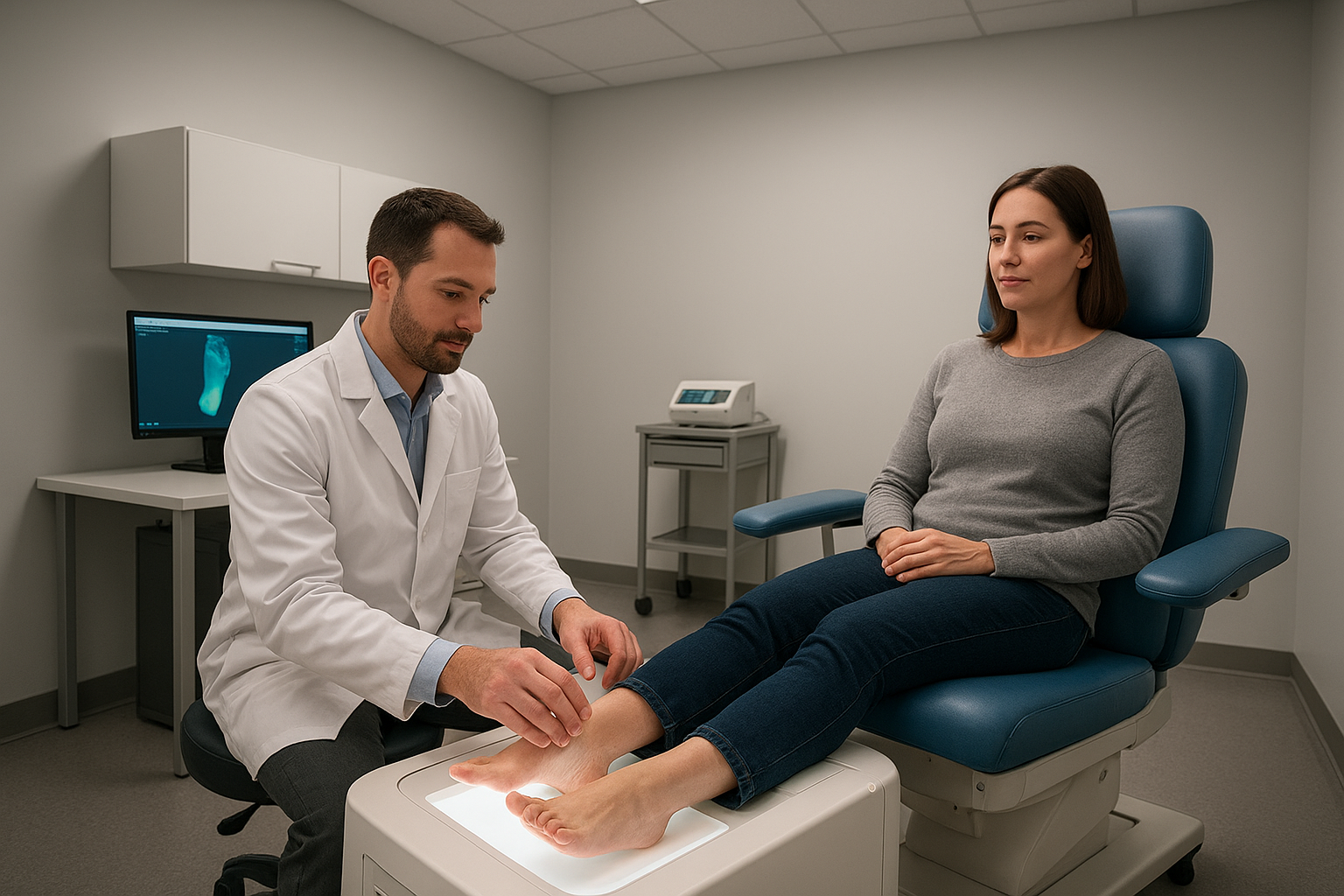
A 3D foot scan is a critical step in fabricating orthotics precisely tailored to your recreational activity profile.
How to Get Custom Orthotics for Recreational Activities: A Step-by-Step Process
Obtaining the right custom orthotic device involves several carefully sequenced stages. Following each step thoroughly ensures your orthotics are optimally calibrated to your foot, gait, and recreational lifestyle.
-
1
Schedule a Podiatry or Sports Medicine Assessment
Book an appointment with a qualified podiatrist, certified orthotist, or sports medicine physician. Bring your primary recreational footwear to the appointment. Your clinician will review your medical history, activity level, and any current symptoms before proceeding with a physical examination of your foot structure and lower limb alignment. Be prepared to describe exactly which activities you participate in, how frequently, and what symptoms — if any — you are currently experiencing.
-
2
Undergo Comprehensive Gait Analysis and Foot Scanning
Your clinician will conduct a detailed gait analysis using pressure plate technology, video analysis (from multiple angles), or a digital 3D scanner to capture dynamic loading data. This step is essential because it reveals biomechanical patterns that are invisible during a static standing examination. Static posture can be misleading — some feet appear aligned at rest but pronate severely under the dynamic load of activity. The data from gait analysis forms the foundation of your orthotic prescription.
-
3
Foot Casting or 3D Scanning for Fabrication
Your foot is captured in its neutral or corrected position using plaster casting, foam box impressions, or a digital 3D scanner. The 3D scanning method is increasingly preferred because it is faster, cleaner, and produces a highly accurate digital model that can be transmitted directly to the orthotic laboratory's CAD/CAM fabrication system. The neutral suspension casting technique — in which the foot is held in subtalar neutral while the cast is taken — produces the most biomechanically accurate mold for functional orthotic fabrication.
-
4
Select Material Type, Profile, and Modifications
Work with your clinician to specify the orthotic prescription: shell material (rigid, semi-rigid, or soft), profile length (full, three-quarter, or slim sport), top cover material (standard, moisture-wicking, antimicrobial, or padded), and any modifications — such as metatarsal pads, heel raises, neuroma wedges, or lateral flanges — indicated by your assessment results. The orthotic laboratory then fabricates the device to these exact specifications, a process that typically takes five to fourteen business days.
-
5
Attend Your Fitting Appointment and Begin the Break-In Period
At your fitting, your clinician will place the orthotics in your footwear and assess fit, comfort, and alignment. Minor on-site adjustments — grinding, padding, or posting modifications — are common at this stage. You will then begin a structured break-in protocol: wear the orthotics for one to two hours on day one, adding thirty to sixty minutes of wear time each subsequent day over two to three weeks. This gradual introduction allows the intrinsic muscles of the foot and the calf complex to adapt without soreness or blistering.
-
6
Follow Up, Maintain, and Replace as Needed
Return for a follow-up review four to six weeks after fitting. Report any pressure points, areas of discomfort, or performance concerns. Most orthotics benefit from at least one post-fitting adjustment. Schedule annual reviews thereafter to assess wear, ensure ongoing fit, and confirm that your biomechanical needs have not changed. Significant weight changes, new injuries, pregnancy, or the natural changes of aging can all alter foot morphology and require prescription updates.
For additional guidance on finding a qualified provider and understanding what to expect from the full process, visit customorthotics.com, which offers detailed resources on orthotic prescriptions and activity-specific solutions.
Key Benefits of Custom Orthotics for Active and Recreational Users
The advantages of custom orthotics for recreational activities extend well beyond simple comfort. Research spanning multiple disciplines — including sports medicine, biomechanics, and rehabilitation science — supports a broad range of clinical benefits for active individuals.
Injury Prevention: The Evidence Base
A landmark 2019 systematic review published in the British Journal of Sports Medicine confirmed that custom foot orthoses significantly reduced pain and improved function in patients with plantar heel pain compared to sham insoles. A separate body of research involving military recruits — a high-activity population with loading demands comparable to serious recreational athletes — demonstrated a 28% reduction in stress fracture incidence when custom orthotics were used as part of a foot health program. Additional prospective studies have shown reductions in medial tibial stress syndrome, Achilles tendinopathy recurrence, and patellofemoral pain in recreational runners using custom devices.
Performance Enhancement Through Better Biomechanics
When the foot functions in optimal alignment, the entire lower limb kinetic chain operates more efficiently. Muscles are recruited in the correct sequence, energy is transferred more directly through the joints, and compensatory movements — which waste energy and create fatigue — are reduced. For recreational cyclists, a properly aligned foot-to-pedal interface measurable increases power transfer efficiency. For hikers, reduced pronation means less fatigue-related collapse of the arch over long distances, translating to greater endurance and less post-activity soreness.
Long-Term Joint Health and Osteoarthritis Prevention
Years of biomechanical misalignment during recreational activity accelerates cartilage wear in the ankle, knee, and hip joints — a primary contributing factor to osteoarthritis. Custom orthotics reduce cumulative joint stress by correcting alignment at the foot, which is the foundation of the entire lower limb. This long-term protective effect is particularly relevant for recreational users who intend to remain active into their 50s, 60s, and beyond.
Pain Relief for Existing Conditions
For recreational users already dealing with foot pain, custom orthotics provide targeted offloading of the specific tissues under stress. Unlike systemic pain management approaches such as anti-inflammatory medications — which address symptoms without changing underlying mechanics — orthotics treat the root cause of most activity-related foot pain. Conditions including plantar fasciitis, heel spurs, metatarsalgia, and neuromas can all be significantly improved through properly prescribed orthotic intervention, often enabling people to return to recreational activities that pain had forced them to curtail.
Psychological Confidence and Activity Compliance
Research in sports rehabilitation has consistently found that pain and fear of injury are the primary barriers to sustained recreational physical activity. Custom orthotics, by reducing pain and perceived injury risk, have been shown to improve activity compliance — meaning users are more likely to maintain their recreational routines consistently. This translates to better overall fitness, cardiovascular health, and mental wellbeing outcomes over time.
Custom Orthotics vs. Over-the-Counter Insoles: A Direct Comparison
The marketplace is saturated with over-the-counter (OTC) insoles — from pharmacy gel cushions to branded "arch support" products at sporting goods stores. Understanding the fundamental differences between these products and genuine custom orthotics helps recreational users make an informed decision.
| Feature | Custom Orthotics | OTC Insoles |
|---|---|---|
| Fabrication | Made from mold or 3D scan of your specific foot | Mass-produced for average foot shapes |
| Biomechanical Correction | Addresses your individual alignment issues precisely | Generic support; cannot correct individual pathology |
| Clinical Assessment | Prescribed following gait analysis and full evaluation | No clinical assessment — self-selected at point of sale |
| Condition-Specific Modifications | Metatarsal pads, heel raises, lateral flanges, etc. | Fixed design; no modifications possible |
| Sport-Specific Design | Calibrated for hiking, cycling, tennis, golf, etc. | Broad categories at best; not activity-specific |
| Durability | 2–5 years with regular recreational use | 3–12 months before significant material degradation |
| Cost | $200–$800 (partially covered by many insurance plans) | $15–$60 per pair; replacement costs add up |
| Insurance Coverage | Covered by many extended health plans when prescribed | Not covered by insurance |
| Evidence Base | Extensive clinical evidence for pain and injury outcomes | Limited evidence; benefits are primarily comfort-based |
The conclusion from this comparison is clear: for recreational users dealing with existing foot conditions, biomechanical issues, or recurring injuries, custom orthotics are the superior clinical choice. For individuals with healthy, well-aligned feet seeking basic cushioning, a high-quality OTC insole may suffice — but it cannot replicate the precision or therapeutic value of a custom device.
Common Mistakes to Avoid When Using Custom Orthotic Insoles
Even the most precisely crafted orthotic will underperform — or cause new problems — if used incorrectly. Recreational users make these errors more often than clinical users because they tend to use orthotics independently across multiple footwear types and activity contexts.
Skipping or Rushing the Break-In Period
This is the single most common mistake. Wearing new orthotics for a full workout on day one places the intrinsic foot muscles and calf complex under sudden new loading patterns, resulting in arch soreness, calf tightness, and occasionally blistering. Follow the gradual schedule described in Step 5 above — starting with one to two hours of light use and incrementally increasing wear time over two to three weeks.
Using Orthotics in Shoes With Insufficient Depth
Custom orthotics require footwear with adequate interior depth — specifically, a removable factory insole that can be replaced by the orthotic. Placing a custom device on top of the factory insole creates a crowded shoe environment that elevates the heel abnormally, increases pressure on the forefoot, and negates the corrective function of the orthotic entirely. Always confirm shoe compatibility with your clinician before using your orthotics in a new pair of shoes.
Neglecting Follow-Up Appointments and Adjustments
Most orthotics require at least one post-fitting adjustment before they perform optimally. Minor pressure points, edge discomfort, or activity-specific fit issues are common and easily resolved by a skilled clinician with grinding tools, adhesive padding, or posting modifications. Recreational users who skip follow-up appointments frequently abandon their devices prematurely — concluding that orthotics "don't work" when in fact a simple adjustment would have resolved their concern entirely.
Continuing to Use Worn-Out Devices
Custom orthotics degrade over time. The shell may crack or warp, the top cover compresses and loses its cushioning properties, and the posting material wears down — gradually reducing the corrective effect until the device no longer functions as prescribed. Using a worn orthotic can actually be worse than using no orthotic at all, as it creates asymmetric loading without providing the intended correction. Annual reviews help you identify when replacement is due.
Expecting Orthotics to Replace Other Treatments
Custom orthotics are a powerful component of a comprehensive foot health strategy — but they work best in combination with appropriate footwear selection, targeted strengthening exercises, stretching, and where indicated, physical therapy. Recreational users who rely exclusively on orthotics while neglecting strengthening of the intrinsic foot muscles and calf complex often find that their progress plateaus. Think of orthotics as one essential tool in a broader toolkit.
Cost, Insurance Coverage, and Lifespan: What Recreational Users Need to Know
Understanding the financial dimensions of custom orthotics helps recreational users plan appropriately and avoid unexpected costs.
What Do Custom Orthotics Cost?
Custom orthotics typically range from $200 to $800 per pair, with the final cost determined by:
- Materials used: Carbon fiber and advanced composite shells cost more than standard polypropylene; specialized top covers (antimicrobial, padded, sports-specific) add to the price
- Clinician and laboratory fees: Podiatrists and orthotists in major metropolitan areas typically charge more than those in smaller markets
- Complexity of the prescription: Devices with multiple modifications — heel raises, metatarsal pads, differential posting — require more fabrication time and cost more
- Number of pairs: Some recreational users need separate orthotics for different activity types (e.g., one pair for cycling shoes, one for hiking boots)
Does Insurance Cover Custom Orthotics?
Many extended health insurance plans — including those offered through employers, professional associations, and private health benefit packages — provide partial or full coverage for custom orthotics when they are prescribed by a licensed podiatrist, physician, or certified orthotist. Coverage typically ranges from $200 to $500 per year, with many plans requiring a written prescription and a formal biomechanical assessment report as documentation.
Key steps to maximize your insurance benefit:
- Confirm coverage limits and required documentation with your insurer before your appointment
- Ensure your prescribing clinician is recognized by your insurer as a covered provider
- Keep all receipts, prescriptions, and biomechanical assessment reports for submission
- Ask whether your plan covers the assessment fee separately from the orthotic fabrication cost
How Long Do Custom Orthotics Last?
With regular recreational use, most custom orthotics last two to five years. The actual lifespan depends on several variables:
- Activity intensity: Trail running and high-impact sports degrade orthotics faster than walking or cycling
- Body weight: Higher body weight accelerates compression of cushioning materials and increases shell stress
- Material quality: Carbon fiber and high-grade polypropylene outlast standard thermoplastics
- Care practices: Orthotics stored in hot vehicles or exposed to excessive moisture degrade faster than those stored properly
- Top cover replacement: Top covers often wear out before the shell does — many clinicians can replace just the top cover at a fraction of the cost of a new device
For broader foot health habits that complement the benefits of orthotic treatment, explore our foot health tips for active adults resource.
Custom Orthotics for Children and Seniors in Recreational Sports
Two recreational populations that benefit significantly from custom orthotics — yet are frequently overlooked in general orthotic guides — are children and older adults. Their biomechanical needs differ substantially from those of working-age recreational users.
Orthotics for Children in Youth Sports
Children's feet are still developing until approximately age 18, making early intervention with custom orthotics particularly impactful. Conditions such as pediatric flat feet, Sever's disease (calcaneal apophysitis — the most common cause of heel pain in active children aged 8–14), and juvenile overpronation are common in youth recreational sports including soccer, swimming, gymnastics, and basketball. Custom orthotics prescribed during childhood can guide proper foot development, reduce growing pain symptoms, and establish healthy biomechanical patterns that persist into adulthood. Because children's feet grow rapidly, orthotic prescriptions typically require revision every 12–18 months.
Orthotics for Older Adults and Senior Recreational Users
Aging brings predictable changes to the foot: the plantar fat pad thins (reducing natural shock absorption), ligament laxity increases (reducing arch integrity), and the risk of metatarsal stress fractures rises. Senior recreational users — including walkers, swimmers, golfers, and yoga practitioners — benefit from accommodative orthotics with enhanced cushioning to compensate for fat pad atrophy, combined with mild arch support to address progressive flat foot deformity. Balance and proprioception improvements from orthotic use are particularly valuable in this population, where falls and fall-related injuries represent a significant health concern. Research indicates that improved foot proprioception through orthotic use can meaningfully reduce fall risk in older adults.
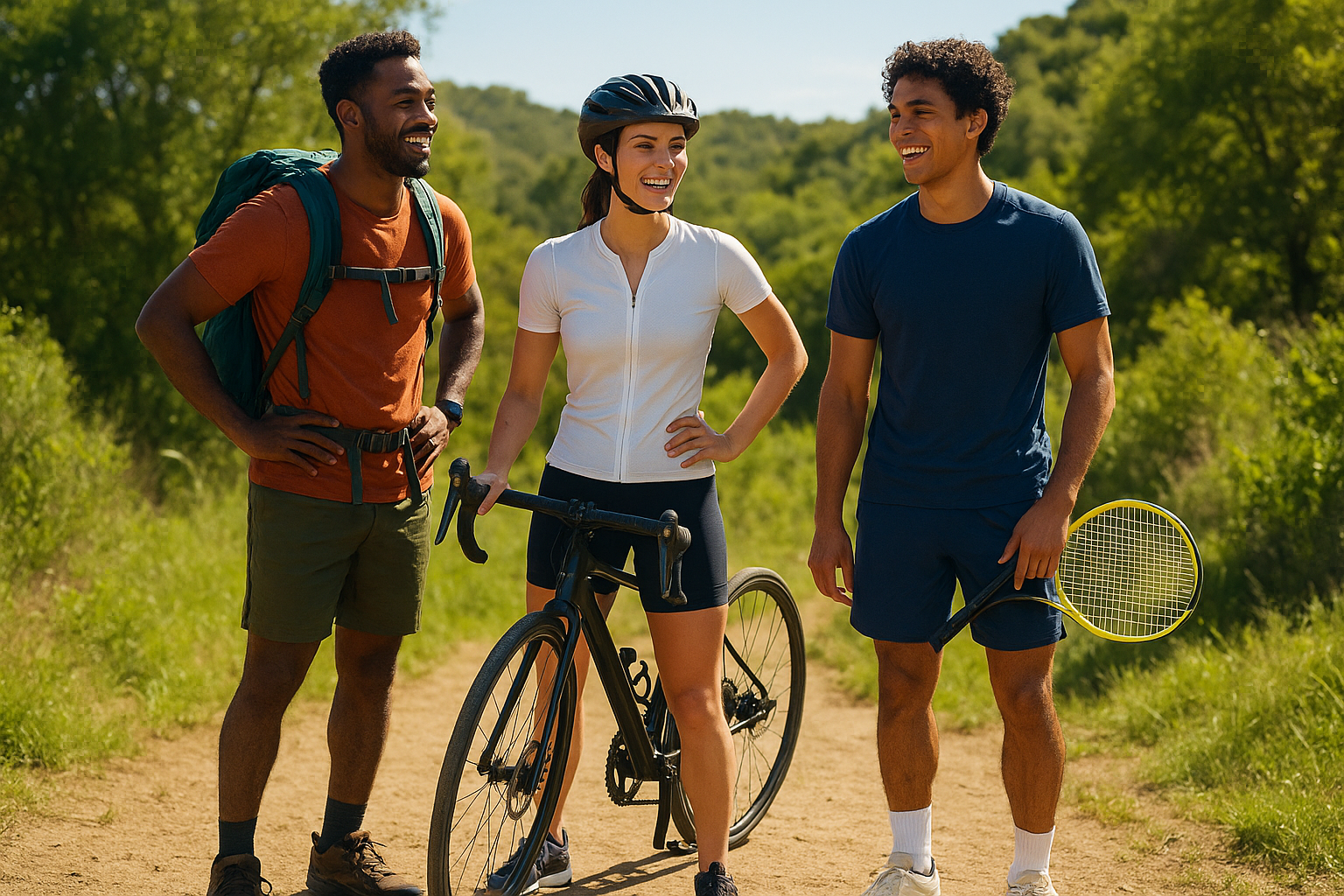
From hiking trails to tennis courts to golf courses, recreational athletes across all ages and disciplines benefit from professionally fitted orthotic support.
Frequently Asked Questions About Custom Orthotics for Recreational Activities
What are custom orthotics for recreational activities?
Custom orthotics for recreational activities are individually crafted prescription shoe inserts fabricated from a mold or 3D scan of your specific foot. They are designed to support, align, correct, and cushion the foot during sports and leisure pursuits — including hiking, cycling, tennis, golf, and basketball. Unlike generic over-the-counter insoles, custom orthotics address your unique biomechanical profile, correcting alignment issues such as overpronation, supination, and uneven pressure distribution that generic products cannot target effectively.
How are custom orthotics different from over-the-counter insoles?
Over-the-counter insoles are mass-produced for average foot shapes and provide generalized cushioning or arch support. Custom orthotics are fabricated from an exact mold of your foot following a clinical gait analysis and biomechanical assessment. This means they can correct individual alignment pathologies, incorporate condition-specific modifications (such as metatarsal pads, heel raises, or lateral flanges), and are designed for your specific recreational activity demands — a level of precision that no generic product can replicate.
Which recreational activities benefit most from custom orthotics?
Hiking, trail running, cycling, tennis, pickleball, golf, and basketball benefit most from custom orthotics for recreational activities because each places repetitive, high-load, or directionally complex demands on the foot. However, any activity involving prolonged foot loading — including walking, swimming pool deck use, yoga, and dance — can benefit from the enhanced support, shock absorption, and alignment correction that properly prescribed custom devices provide.
How long does it take to get used to custom orthotics?
Most people adapt comfortably to custom orthotics within one to three weeks when following the recommended break-in protocol. Begin with one to two hours of light wear per day during the first week, adding thirty to sixty minutes daily in the second and third weeks. Muscle soreness in the arch or calf is normal early in the break-in period — it reflects the foot musculature adapting to a corrected loading pattern. If discomfort persists beyond three weeks or a specific pressure point develops, contact your clinician for an adjustment.
Can custom orthotics prevent sports injuries in recreational users?
Clinical evidence strongly supports the role of custom orthotics in reducing the risk of common recreational sports injuries. Research published in the British Journal of Sports Medicine confirms significant reductions in plantar heel pain, while military studies demonstrate a 28% reduction in stress fracture incidence. Additional evidence supports reductions in shin splints (MTSS), Achilles tendinopathy, and patellofemoral pain. While orthotics cannot guarantee complete injury prevention, they are one of the most evidence-supported tools available for reducing overuse injury risk in recreational athletes.
How much do custom orthotics cost, and are they covered by insurance?
Custom orthotics typically range from $200 to $800 per pair, depending on materials, clinician fees, and prescription complexity. Many extended health insurance plans cover $200–$500 per year when orthotics are prescribed by a licensed podiatrist, physician, or certified orthotist. Always verify your coverage limits and documentation requirements with your insurer before your appointment to maximize your benefit.
How long do custom orthotics last for recreational use?
With regular recreational use, custom orthotics last two to five years. High-impact activities such as trail running and basketball tend to shorten lifespan toward two years, while lower-impact pursuits such as cycling and golf can extend it to five years or more. Annual clinical reviews allow your clinician to assess shell integrity, top cover wear, and whether posting modifications remain clinically appropriate — enabling timely replacement before device degradation compromises your biomechanical support.
Do I need a prescription for custom orthotics?
Yes, in most cases a formal prescription or clinical referral is required to obtain true custom orthotics. Prescribing clinicians include podiatrists, certified orthotists, sports medicine physicians, and in some jurisdictions, qualified physiotherapists. The prescription process ensures a proper biomechanical assessment, accurate foot casting or scanning, and a device precisely calibrated to your clinical and recreational needs — which is what distinguishes a custom orthotic from a semi-custom or prefabricated product.
Can custom orthotics fit in any type of shoe?
Custom orthotics are available in full-length, three-quarter length, and slim sport profiles to accommodate a wide range of footwear. Full-length orthotics fit well in running shoes, hiking boots, and casual athletic shoes. Three-quarter length orthotics work in dress shoes and tighter-fitting footwear. Slim sport orthotics are designed for cycling shoes, golf shoes, and other footwear with narrow internal profiles. Your clinician will specify the appropriate profile for your primary recreational footwear at the time of prescription.
Are custom orthotics worth it for casual recreational users who aren't elite athletes?
Absolutely. Casual recreational users often benefit more from custom orthotics than elite athletes, because they typically have lower baseline fitness levels, weaker foot musculature, and less refined movement patterns — meaning biomechanical misalignments have a proportionally greater impact on their experience of pain and injury. For recreational users experiencing foot pain, joint fatigue, or recurring injuries, custom orthotics are a highly cost-effective investment when viewed against the cumulative cost of physiotherapy, anti-inflammatory medications, and lost activity time.
What is the difference between functional and accommodative custom orthotics?
Functional (rigid) orthotics are made from firm materials like carbon fiber or polypropylene and are designed primarily to control abnormal foot motion and correct biomechanical alignment. Accommodative (soft) orthotics use cushioning materials like EVA foam, gel, or silicone and are designed primarily for pressure relief and shock absorption rather than structural correction. Semi-rigid orthotics combine both functions and are the most widely prescribed type for recreational athletes, as they provide meaningful motion control alongside adequate cushioning for impact-intensive activities.
What common mistakes should I avoid when using custom orthotics?
The most common mistakes include: skipping the break-in period and wearing orthotics for full workouts immediately; placing orthotics in shoes without removing the factory insole first; using orthotics in footwear with insufficient internal depth; skipping follow-up appointments and missing adjustment opportunities; continuing to use worn-out devices that have lost their corrective function; and relying solely on orthotics without addressing foot strength, flexibility, and footwear selection as part of a complete foot health strategy.
Conclusion: The Smartest Step You Can Take for Your Recreational Foot Health
Custom orthotics for recreational activities are among the most effective, evidence-backed, and individually targeted interventions available for active adults who want to move more, hurt less, and protect their joints for the long term. Unlike symptomatic treatments that address pain after it occurs, custom orthotics address the root biomechanical causes of foot and lower limb dysfunction — providing benefits that extend from the plantar fascia all the way to the lower back through the kinetic chain.
Whether you are an avid hiker seeking lateral stability on demanding trails, a cyclist chasing power transfer efficiency, a weekend tennis player protecting against the demands of court-side cutting movements, or a golfer managing the asymmetrical rotation of the swing — the right custom orthotic, prescribed by a qualified clinician and calibrated to your specific foot and activity profile, will help you perform better, recover faster, and stay active for years to come.
If you are experiencing foot discomfort, recurring lower limb injuries, or simply want to take a proactive approach to your joint health, speak with a qualified podiatrist or sports medicine specialist today. For additional resources on finding a provider and navigating the prescription process, visit customorthotics.com. The first step toward lasting comfort and better performance starts with a single appointment.
Quick Reference: Key Takeaways
- Custom orthotics are prescription devices made from a mold of your specific foot — not generic insoles
- They address overpronation, supination, uneven pressure, and structural deformities that OTC products cannot
- Design features vary significantly by sport — hiking, cycling, tennis, golf, and basketball each have distinct requirements
- Clinical evidence supports a 28% reduction in stress fractures and significant improvements in plantar heel pain
- Cost ranges $200–$800, with many insurance plans covering $200–$500 when prescribed by a licensed clinician
- Lifespan is two to five years with annual reviews recommended
- Benefits extend through the full kinetic chain — from the foot to the knee, hip, and lower back
- Children and seniors are often underserved populations who benefit greatly from properly prescribed orthotics