

Custom insoles for athletes are precision-built foot supports molded from an individual's own foot shape, engineered to correct biomechanical imbalances, absorb repetitive impact, and keep the body moving efficiently through intense training and competition. Unlike mass-produced inserts pulled off a shelf, these devices are shaped around the exact contours of an athlete's arch, heel, and forefoot. As a result, they address the root cause of many recurring aches instead of simply cushioning the symptom — whether the athlete is a weekend 5K runner, a varsity soccer player, or a teenager still growing into their cleats.
Quick Answer: Custom insoles for athletes are podiatrist-designed orthotic devices molded to an individual's feet that improve alignment, reduce joint stress, and support performance during training and competition. They differ from generic insoles because a foot mold or scan — not a standard shoe size — drives the fit. This matters just as much for a teenager with Sever's disease as it does for an adult marathoner with plantar fasciitis.
What Are Custom Insoles for Athletes?
Custom insoles for athletes are orthotic devices fabricated from a direct mold or 3D scan of a person's foot, then built by a lab or podiatrist to match that exact shape. Because every foot strikes the ground differently, a generic insole often leaves gaps in support where it matters most. In contrast, a custom insole fills those gaps precisely, which is why many sports medicine providers recommend them for athletes with chronic pain or structural imbalances.
Furthermore, custom insoles are not the same as the arch supports sold in pharmacies. Those products are manufactured in a handful of standard sizes and shapes. A true custom insole, however, starts with an individual assessment of gait, pressure distribution, and foot type before any fabrication begins. Specifically, the podiatrist is checking for overpronation, underpronation, leg-length differences, and areas of excess pressure that a shelf insert simply cannot detect.
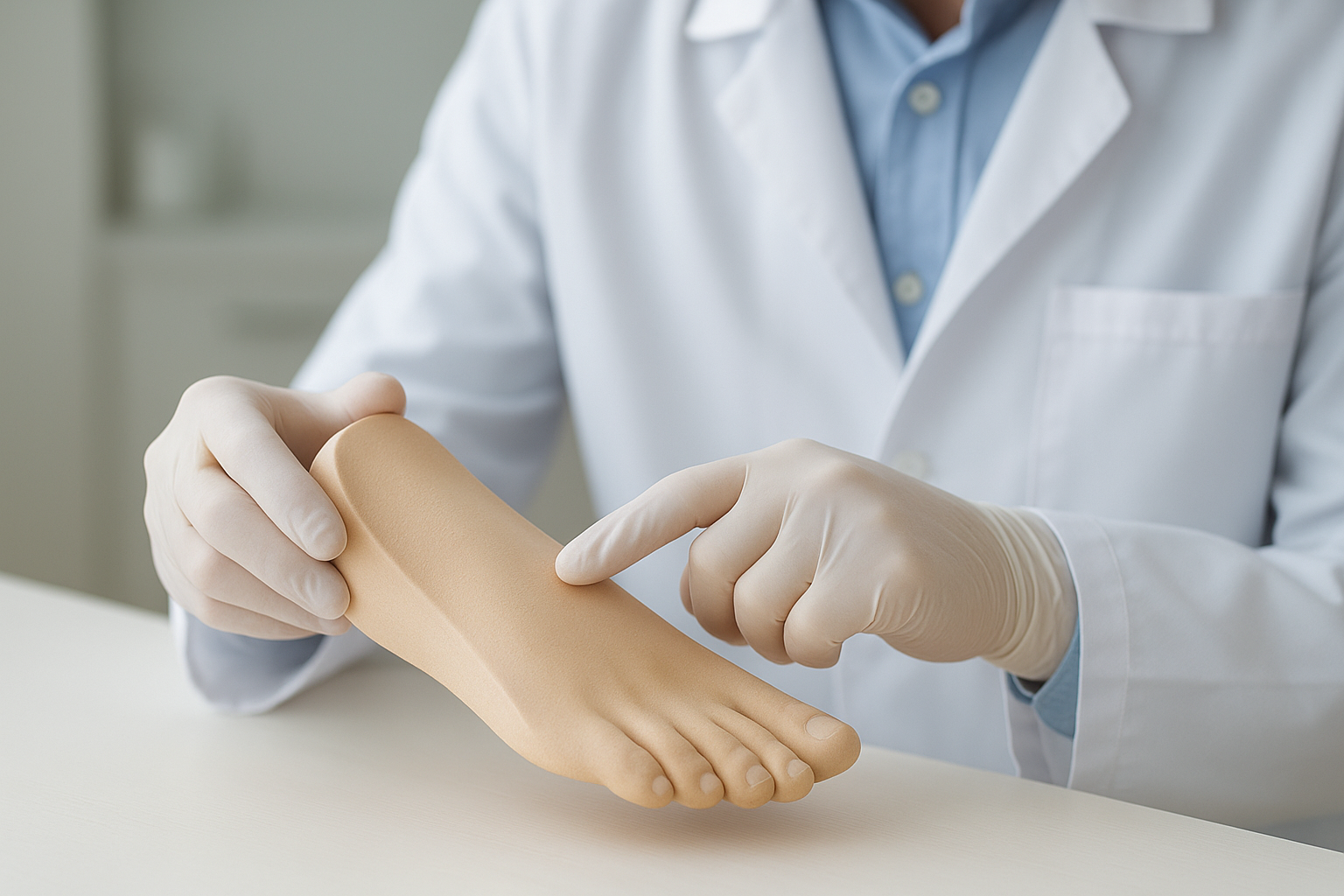
A precise foot mold is the foundation for effective custom insoles for athletes.
Why Athletes Need Sport-Specific Foot Support
Athletes place far more repetitive stress on their feet than the average person. For example, a distance runner may strike the ground thousands of times per mile, and each impact travels up through the ankle, knee, and hip. Without proper support, small misalignments can compound into larger problems over a season of training.
According to research published in the British Journal of Sports Medicine, overuse injuries account for a significant share of running-related injuries each year, many of which are linked to biomechanical factors that supportive devices can help address. Consequently, custom insoles for athletes are not just about comfort; they play a role in long-term joint health and training consistency. The American Academy of Orthopaedic Surgeons similarly notes that correcting foot mechanics early can reduce the downstream risk of knee and hip overuse problems.
In addition, athletes who compete in cleats, skates, or minimalist footwear often lack built-in arch support entirely. Therefore, a custom insole can compensate for what the shoe itself does not provide, giving the foot the stability it needs during quick pivots, jumps, and sprints.
Custom Insoles for Teen Athletes: Growing Feet, Growth Plates, and Injury Prevention
Teen athletes face a unique set of challenges that adult athletes do not. Specifically, young athletes are often still growing when they start intense training, which means bone is still developing faster than the surrounding muscles and tendons can keep pace. As a result, teens are especially prone to growth-related foot and heel pain that generic insoles rarely resolve.
Why Teen Athletes Are More Prone to Heel and Foot Pain
Sever's disease — technically called calcaneal apophysitis — is one of the most common causes of heel pain in young athletes between roughly ages 8 and 15. It occurs at the growth plate in the heel, where repeated impact from running and jumping irritates developing bone tissue. Similarly, teens going through rapid growth spurts often experience temporary changes in gait and arch height, which can throw off their natural foot mechanics mid-season. Custom insoles for athletes in this age group are built with softer heel cradles and gentler arch contours that cushion the growth plate while still correcting alignment.
How Custom Insoles Support Growing Feet
Unlike adult orthotics, pediatric and teen custom insoles typically prioritize shock absorption alongside structural correction. In particular, a podiatrist experienced with young athletes will often remold or resize insoles more frequently than for adults, since a teen's foot can change shape within a single sports season. Consequently, parents should expect a follow-up fitting check roughly every six to twelve months, rather than assuming one pair will last through an entire high school career.
Signs Parents and Coaches Should Watch For
- Limping after practice or complaining of heel pain that eases with rest but returns during activity
- Walking on tiptoes to avoid putting weight through the heel
- Uneven wear patterns on the outside or inside edge of athletic shoes
- Frequent complaints of foot fatigue well before the end of practice or a game
- A noticeable growth spurt coinciding with new or worsening foot complaints
Above all, early intervention matters. A teen whose foot pain is addressed with properly fitted custom insoles is far less likely to develop compensatory issues in the knees or hips later in their athletic career. Readers raising a young athlete may also want to review this complete performance guide to foot orthotics for athletes for condition-specific fitting advice that applies across age groups.
How Custom Insoles for Athletes Improve Performance
Custom insoles for athletes work by redistributing pressure across the foot more evenly, which reduces hot spots that lead to blisters, calluses, and fatigue. Similarly, they help maintain proper alignment through the ankle and lower leg, which can improve energy transfer with each stride or jump.
Above all, the goal is to let the athlete move efficiently rather than fight against their own foot mechanics. When the foot lands in better alignment, the muscles above it do not have to overcompensate, which can delay the onset of fatigue during long training sessions or competitions.
For a deeper look at sport-specific fitting, this complete guide to custom orthotic insoles for sports breaks down how different disciplines require different support strategies.
Common Foot Problems Custom Athletic Insoles Address
Many athletes seek custom insoles after dealing with recurring conditions rather than as a preventive step alone. Plantar fasciitis, a common cause of heel pain, is one of the most frequent reasons athletes seek a molded solution. Shin splints, IT band irritation, and stress fractures are also often tied back to how the foot strikes the ground. For teens specifically, Sever's disease is the heel-pain equivalent that custom insoles are frequently prescribed to manage.
Likewise, flat feet and high arches each create their own challenges. A flat foot tends to overpronate, rolling inward with each step, while a high arch often underpronates, placing extra stress on the outer edge of the foot. Custom insoles can be built to counteract either pattern specifically, rather than applying a one-size-fits-all cushion.
Readers dealing with these issues may also find this complete performance guide to foot orthotics for athletes helpful for understanding condition-specific fitting approaches.
Signs You — or Your Teen — Need Custom Insoles
It is not always obvious when foot pain crosses the line from normal soreness into a sign that custom support is needed. However, a few consistent patterns tend to show up across age groups and sports.
- Pain that returns every season despite rest, stretching, and new shoes
- A diagnosed condition such as plantar fasciitis, Sever's disease, or a stress fracture history
- Uneven or lopsided wear on the soles of athletic shoes
- A podiatrist-confirmed flat foot, high arch, or leg-length discrepancy
- Persistent knee, hip, or lower-back discomfort with no clear cause outside of training volume
In contrast, athletes without any of these signs may still benefit from preventive custom insoles if they train at a high volume on hard surfaces. Either way, a podiatrist consultation is the fastest way to find out.
How to Get Custom Insoles for Athletes: Step-by-Step
Getting fitted for custom insoles is a straightforward process when working with an experienced podiatrist. The following steps outline what athletes — and parents of teen athletes — can typically expect from consultation to final fit.
- Schedule a consultation with a podiatrist, either by phone or online, to discuss training habits, pain points, and athletic goals before any fabrication begins.
- Complete a foot assessment and mold, where the podiatrist examines gait, arch type, and pressure points, then captures a precise mold or scan of each foot.
- Select materials and design suited to the athlete's sport, body weight, age, and specific foot condition, balancing support with flexibility.
- Fabricate the custom insoles in a lab, shaping support structures and cushioning layers to match the exact measurements taken during the mold process.
- Fit and break in the insoles gradually, starting with shorter training sessions before relying on them for full competition use.
Athletes who prefer to start this process from home can also explore personalized foot solutions for athletes to see how remote ordering typically works.
Custom Insoles vs. Off-the-Shelf Athletic Insoles
Off-the-shelf insoles are convenient and inexpensive, which makes them appealing for casual use. However, they are built around average foot shapes, so they rarely match an individual athlete's arch height or pressure pattern precisely. As a result, the support they provide is generalized rather than targeted.
Custom orthotic insoles for athletes, on the other hand, start with the athlete's actual foot. Consequently, they tend to last longer, distribute pressure more accurately, and address specific conditions rather than offering blanket cushioning. The trade-off is a higher upfront cost and a short waiting period for fabrication, though many athletes find the long-term benefit outweighs the wait.
For readers comparing general foot pain solutions, the complete guide to custom-made insoles for foot pain relief offers a broader look at how these devices compare across everyday and athletic use. For a deeper walkthrough, see our How Do I Get a Custom Made Insole? Complete Step-by-Step Guide.
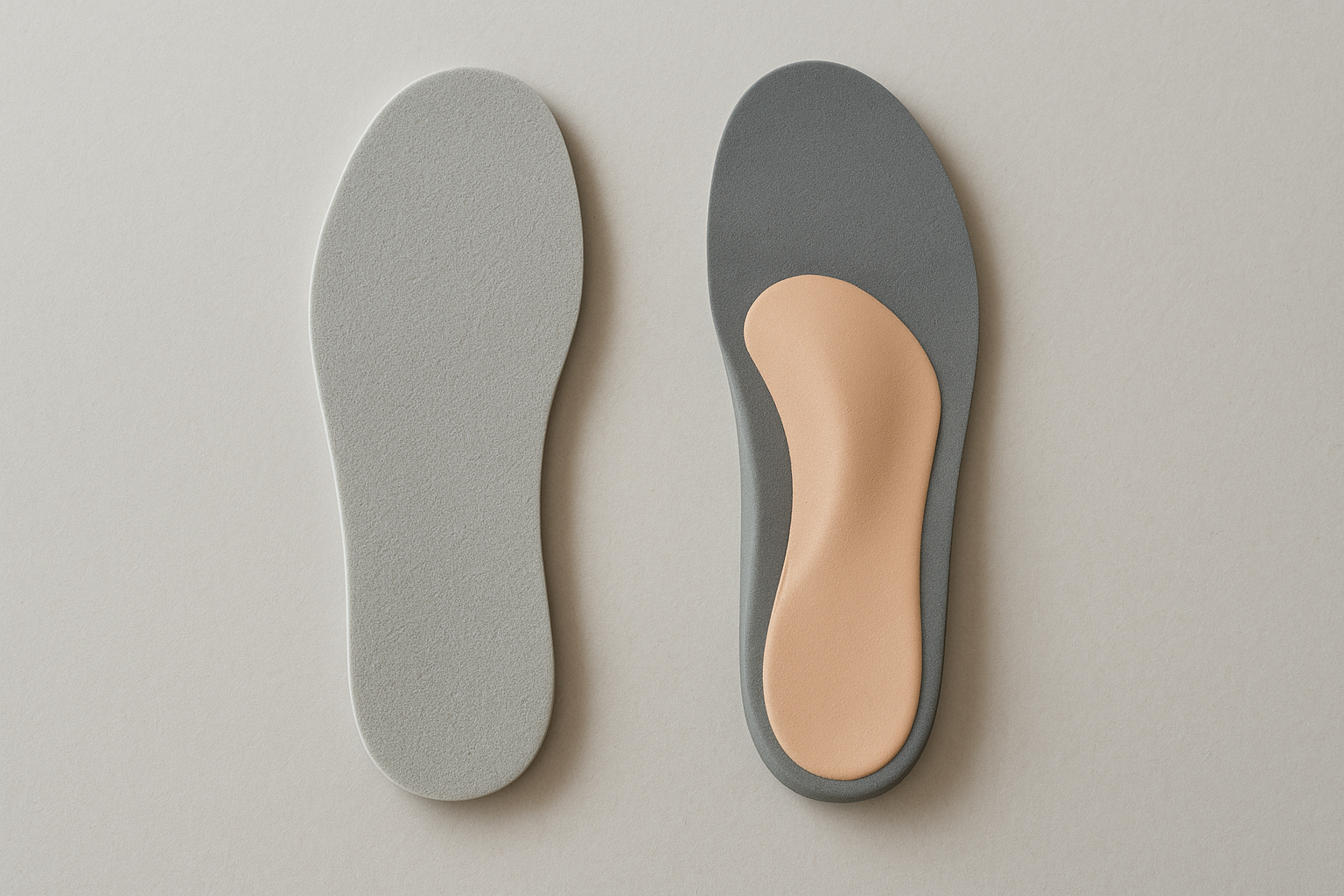
Custom insoles for athletes are shaped from an individual foot mold rather than a standard template.
Matching Custom Insoles to Your Sport
Not every sport stresses the foot in the same way, so the best custom insoles for athletes are tuned to the specific demands of the activity. Below is a quick breakdown of how design priorities shift by sport.
Distance Running
Running insoles typically emphasize shock absorption through the heel strike and a firm arch to control repetitive overpronation across thousands of strides. For a podiatrist-backed breakdown of the specific features that matter most for runners, see this podiatrist guide to the best orthotic insoles for runners.
Basketball and Soccer
These sports combine running with sudden stops, jumps, and lateral cuts. Therefore, insoles for these sports typically balance cushioning for impact landings with a firmer heel cup for stability during quick direction changes.
Tennis and Court Sports
Lateral stability matters most here. As a result, custom insoles for tennis and similar court sports often include reinforced edges that resist rolling during sharp side-to-side movement.
Cleats, Skates, and Minimalist Footwear
Because these shoes often skip arch support entirely, a custom insole has to supply structure the shoe itself lacks. In particular, athletes in these categories benefit from a semi-rigid shell that compensates for a thin, unsupportive factory footbed.
Comfort Matters: Materials, Break-In, and Long-Term Care
Support means little if an insole is uncomfortable enough that an athlete stops wearing it. Consequently, comfort and performance should be treated as equally important design goals, not competing priorities.
Common materials include semi-rigid plastics or carbon fiber for structure, combined with cushioning layers like EVA foam for shock absorption. Material choice depends on the athlete's sport, body weight, and specific foot condition — a sprinter needs a different flex pattern than a distance swimmer who only wears insoles during dryland training.
Breaking in a new pair matters just as much as the materials themselves. Most podiatrists recommend wearing new custom insoles for two to three hours on the first day, then gradually increasing wear time over one to two weeks before relying on them for a full competition. Skipping this step is a common reason athletes mistakenly assume their insoles "don't fit," when in reality the foot simply needs time to adjust to a new alignment pattern.
Long-term care is simple: rotate insoles between multiple pairs of shoes if possible, air them out after heavy training, and avoid machine washing or direct heat, which can warp the shell. Most custom insoles last between one and two years of regular training, though heavy use can shorten that lifespan. Watch for flattening cushioning or the return of familiar pain as signs it is time for a refit.
Choosing a Provider for Custom Athletic Insoles
Not every provider offers the same level of expertise or craftsmanship. Therefore, it helps to look for a practice that is podiatrist-owned, has a track record of fabricating orthotics directly from patient molds, and carries recognized credentials such as a strong Better Business Bureau rating. A practice with more than two decades of hands-on fabrication experience, for instance, brings a level of precision that newer or purely retail-focused sellers may not match.
The team at customorthotics.com fits this profile, offering a complimentary consultation directly with the podiatrist by phone, along with the option to order online for patients who cannot visit in person. This combination of medical oversight and convenient access is particularly useful for athletes training in remote areas or on tight competition schedules, as well as for parents coordinating care around a teen's packed practice calendar. According to the American Podiatric Medical Association, foot pain affects a substantial share of active adults, which underscores why professional assessment matters before committing to any insole.
Athletes who spend long hours on their feet outside of sport, such as coaches or trainers, may also benefit from reviewing this expert guide to insoles for standing all day for additional context on all-day support.
Frequently Asked Questions
What are custom insoles for athletes?
Custom insoles for athletes are orthotic devices molded directly from an individual's foot to correct alignment, absorb shock, and support performance. Unlike mass-produced inserts, they are built to match the exact shape and biomechanics of the wearer's foot.
How do custom insoles for athletes differ from regular sports insoles?
Regular sports insoles are pre-shaped and sold in generic sizes, while custom insoles are fabricated from a mold of the athlete's own foot. As a result, custom insoles provide more precise arch support and pressure distribution.
How much do custom insoles for athletes cost?
Custom insoles typically cost more than off-the-shelf inserts because they involve a mold, a podiatrist's assessment, and individual fabrication. Pricing varies by provider, materials, and whether insurance coverage applies.
How long does it take to get custom insoles for athletes made?
Most custom insoles take two to four weeks from the initial mold to delivery, depending on the fabrication lab and design complexity. Some providers offer expedited options for athletes preparing for competition.
Can custom insoles for athletes prevent injuries?
Custom insoles can reduce injury risk by correcting biomechanical imbalances that place excess stress on joints and soft tissue. However, they work best alongside proper training, footwear, and conditioning.
What sports benefit most from custom insoles?
Running, basketball, soccer, and other high-impact sports benefit significantly because they involve repetitive pounding on hard surfaces. Sports with quick lateral movements, such as tennis, also benefit from added stability.
How often should athletes replace their custom insoles?
Most custom insoles last between one and two years of regular training, though heavy use can shorten that lifespan. Athletes should watch for flattening cushioning or renewed pain as signs of wear.
What is the process for getting fitted for custom insoles?
The process starts with a consultation and foot assessment, followed by a mold or scan of the foot. A lab then fabricates the insole to those exact specifications before a final fitting.
Do custom insoles for athletes work for flat feet or high arches?
Yes, custom insoles are specifically designed to accommodate flat feet, high arches, and other structural variations. Because they are built from an individual mold, they address these conditions more precisely than generic inserts.
What common mistakes do athletes make when choosing insoles?
A common mistake is choosing a generic insole based on shoe size alone rather than foot shape or gait pattern. Another frequent error is skipping a professional assessment, which can lead to poorly matched support.
Are custom insoles for athletes covered by insurance?
Coverage depends on the insurance plan and whether the insoles are prescribed for a documented medical condition. Patients should check with their provider and ask the orthotics practice about billing codes.
Can custom insoles improve running performance?
Custom insoles can improve running efficiency by promoting proper foot alignment and reducing energy loss from excess motion. Many runners also report less fatigue and fewer overuse symptoms during long training blocks.
What is the difference between custom orthotics and custom insoles?
The terms are often used interchangeably, though orthotics can refer to a broader category of devices including braces. In most athletic contexts, custom insoles and custom orthotics both describe molded inserts placed inside footwear.
How do I know if I need custom insoles for athletes?
Signs include recurring foot, ankle, knee, or hip pain during or after activity, uneven shoe wear, or a diagnosed structural imbalance. A podiatrist consultation can confirm whether custom insoles are appropriate.
What materials are used in custom insoles for athletes?
Common materials include semi-rigid plastics or carbon fiber for structure, combined with cushioning layers like EVA foam for shock absorption. Material choice depends on the athlete's sport, body weight, and specific foot condition.
Do teen athletes need custom insoles for their growing feet?
Yes, teen athletes often benefit from custom insoles specifically designed for growing feet, since rapid growth spurts can temporarily change arch height and gait. A podiatrist experienced with young athletes will typically schedule more frequent refits than with adults.
Can custom insoles help with Sever's disease in young athletes?
Custom insoles can help manage Sever's disease by cushioning the heel's growth plate and correcting the alignment issues that worsen the irritation. Many pediatric podiatrists recommend them alongside rest and activity modification.
Final Takeaway
In summary, custom insoles for athletes offer a level of precision that generic inserts simply cannot match, since they are built from an individual foot mold rather than a standard template. Throughout training and competition, this precise fit can help correct biomechanical imbalances, ease chronic pain, and support more efficient movement — whether the wearer is an adult marathoner or a teenager navigating a growth spurt mid-season. Ultimately, athletes dealing with recurring foot, knee, or hip discomfort should consider a professional assessment before assuming a new pair of shoes alone will solve the problem.
For more background on orthotic devices generally, the Wikipedia overview of orthotics and resources from the American Podiatric Medical Association provide useful additional context. Those ready to take the next step can request a complimentary consultation through customorthotics.com to discuss whether custom insoles for athletes are the right fit for their training goals, at any age or level of competition.