

Supportive insoles for walking are one of the most practical, evidence-backed tools available for reducing foot pain, improving biomechanical alignment, and making every step feel more comfortable. Whether you log miles on city sidewalks, work long shifts on hard floors, or simply want to move through your day without aching feet, the right insole can make a measurable difference. However, with dozens of options on the market — from budget foam pads to fully custom orthotics — knowing which type genuinely fits your needs takes clear, expert guidance.
In this guide, you will learn exactly what separates a high-quality walking insole from a generic cushion, how to match insole features to your specific foot type, which conditions benefit most from walking insole support, and when it makes sense to invest in a custom-fabricated orthotic instead of an over-the-counter insert.
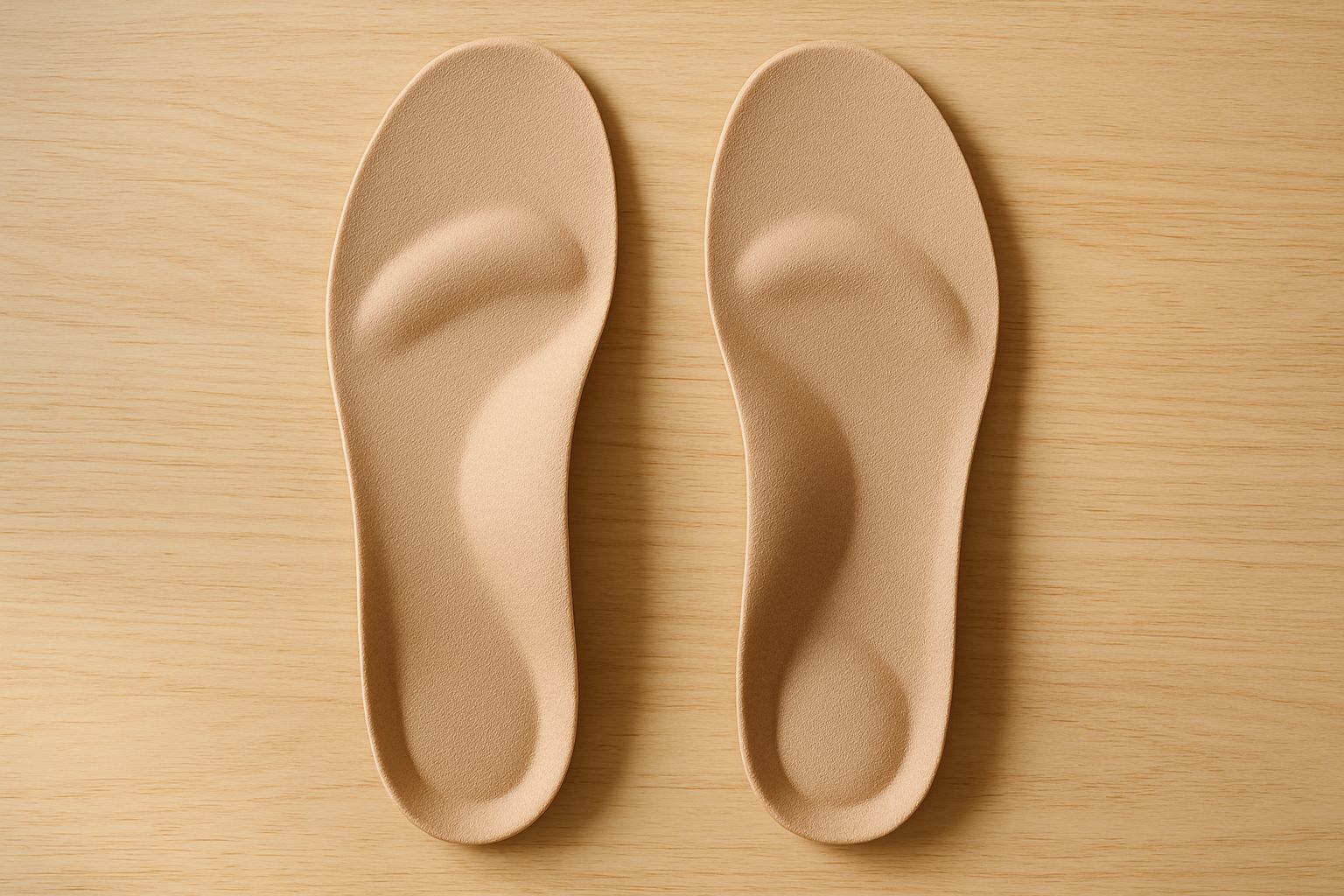
Quality supportive insoles for walking feature a contoured arch profile and a deep heel cup for maximum stability and pressure distribution.
What Are Supportive Insoles for Walking?
Supportive insoles for walking are removable inserts placed inside footwear to enhance cushioning, arch support, and biomechanical alignment during movement. They work by redistributing pressure across the entire plantar surface (the bottom of the foot), reducing concentrated stress at the heel and ball of the foot — the two areas where pain most commonly develops.
According to the American Podiatric Medical Association, foot pain affects roughly 77% of Americans at some point in their lives. Proper arch support is consistently among the most commonly recommended first-line interventions. Furthermore, research in peer-reviewed journals shows that insoles reduce lower-limb injury risk and improve gait efficiency in both recreational and occupational walkers.
In short, walking insoles are not merely comfort accessories. They are functional devices that can address the root causes of chronic foot discomfort rather than simply masking symptoms.
How Walking Insoles Differ From Standard Shoe Insoles
Standard factory insoles that come with most shoes are thin, flat, and designed primarily for volume — not biomechanical support. Supportive walking insoles, by contrast, incorporate structured arch profiles, reinforced heel cups, and purpose-built cushioning zones. Therefore, even a modest upgrade from a factory insole to a quality OTC walking insert can produce a noticeable improvement in comfort and fatigue levels over a full day of activity.
Key Features to Look For in a Walking Insole
Not all insoles are created equal. Understanding the core features that define a high-quality supportive insole helps you avoid wasting money on products that simply add a thin layer of foam under your foot without addressing biomechanical needs.
Arch Support Level
The arch is the structural center of the foot. Consequently, insoles that match your natural arch height — low, neutral, or high — provide the most benefit. An insole with too little arch support offers minimal correction. One that is too aggressive can introduce new discomfort. If you have flat feet, you will specifically need an insole designed to lift and cradle the medial arch without causing excessive pronation correction.
Heel Cup Depth
A deep heel cup stabilizes the calcaneus (heel bone) and controls the natural fat pad beneath it. This feature is especially important for walkers who experience heel pain or plantar fasciitis — inflammation of the fibrous band connecting the heel bone to the toes, and one of the most common causes of morning foot pain in adults. A deeper cup means greater rearfoot stability on each stride.
Material and Cushioning Technology
Common insole materials include EVA foam, memory foam, gel, and cork. Each has distinct advantages:
- EVA foam: Lightweight, resilient, and excellent at balancing cushioning with long-term durability. The most widely used material in quality OTC walking insoles.
- Memory foam: Conforms closely to foot shape for a personalized feel, but can compress and lose responsiveness over time — especially in warm conditions.
- Gel: Provides targeted shock absorption, particularly at the heel and forefoot impact zones. Often combined with foam for a dual-layer effect.
- Cork: Gradually molds to the unique contours of your foot over weeks of wear, making it a popular choice for long-duration walking and hiking.
- Polypropylene shell (custom orthotics): A rigid or semi-rigid base used in prescription devices, offering the strongest biomechanical correction possible.
Metatarsal Support
A metatarsal pad — a raised area positioned just behind the ball of the foot — helps spread the metatarsal bones and relieves forefoot pressure. This feature is particularly valuable for walkers who experience burning, numbness, or aching in the front of the foot during extended activity. Additionally, walkers with metatarsalgia or Morton's neuroma benefit significantly from metatarsal support.
Top Cover Fabric and Moisture Management
The material covering the top surface of an insole affects both comfort and hygiene. Breathable, moisture-wicking fabrics — such as open-cell foam covers or antimicrobial textiles — reduce heat buildup and odor during long walks. This detail matters more than most buyers realize, especially for all-day use in warm conditions.
Full-Length vs. Three-Quarter Length
Full-length insoles replace the factory insert entirely and provide support across the whole foot. Three-quarter length insoles stop short of the toes, making them easier to transfer between shoes and compatible with footwear that has limited interior space. For most walking applications, full-length designs offer superior stability and pressure distribution.
How to Choose Supportive Insoles for Walking: A Step-by-Step Guide
Selecting the best insole for your walking needs does not have to feel overwhelming. Follow these five steps to make a confident, informed decision.
- Assess your foot type and arch height. Perform a simple wet footprint test at home: wet your foot and step firmly onto a piece of dark cardboard or paper. A full imprint with no visible curve along the inner edge indicates flat feet. A very narrow or absent band along the inner foot suggests a high arch. A moderate, gradual curve reflects a neutral arch. Alternatively, consult a podiatrist for a professional gait analysis, which is the most accurate method and often required before custom orthotics are prescribed.
- Identify your primary walking concern. Clarify whether your main issue is heel pain, arch fatigue, forefoot burning, overpronation (rolling inward), or simply a need for more cushioning. Different insole designs address different biomechanical problems. Specifically, a motion-control insole that corrects overpronation is the wrong choice for someone with high arches and supination (outward rolling).
- Choose between over-the-counter and custom orthotics. Store-bought insoles suit mild discomfort and general support needs. However, if you have a diagnosed condition — such as plantar fasciitis, flat feet, diabetic neuropathy, or structural foot deformities — a fully custom orthotic fabricated from a mold of your foot delivers far superior results. You can learn more about the difference and explore your options at customorthotics.com.
- Verify shoe compatibility. Check that your walking shoes have a removable factory insole and enough interior depth to accommodate the new insert without creating tightness across the top of your foot. A shoe that feels snug with the new insole in place needs either a half-size larger version or a different insole thickness.
- Break in your insoles gradually. Begin wearing them for one to two hours on day one, then increase by one to two hours each subsequent day. This structured break-in period allows your muscles, tendons, and connective tissues to adapt comfortably to the new support structure without causing soreness or blisters.
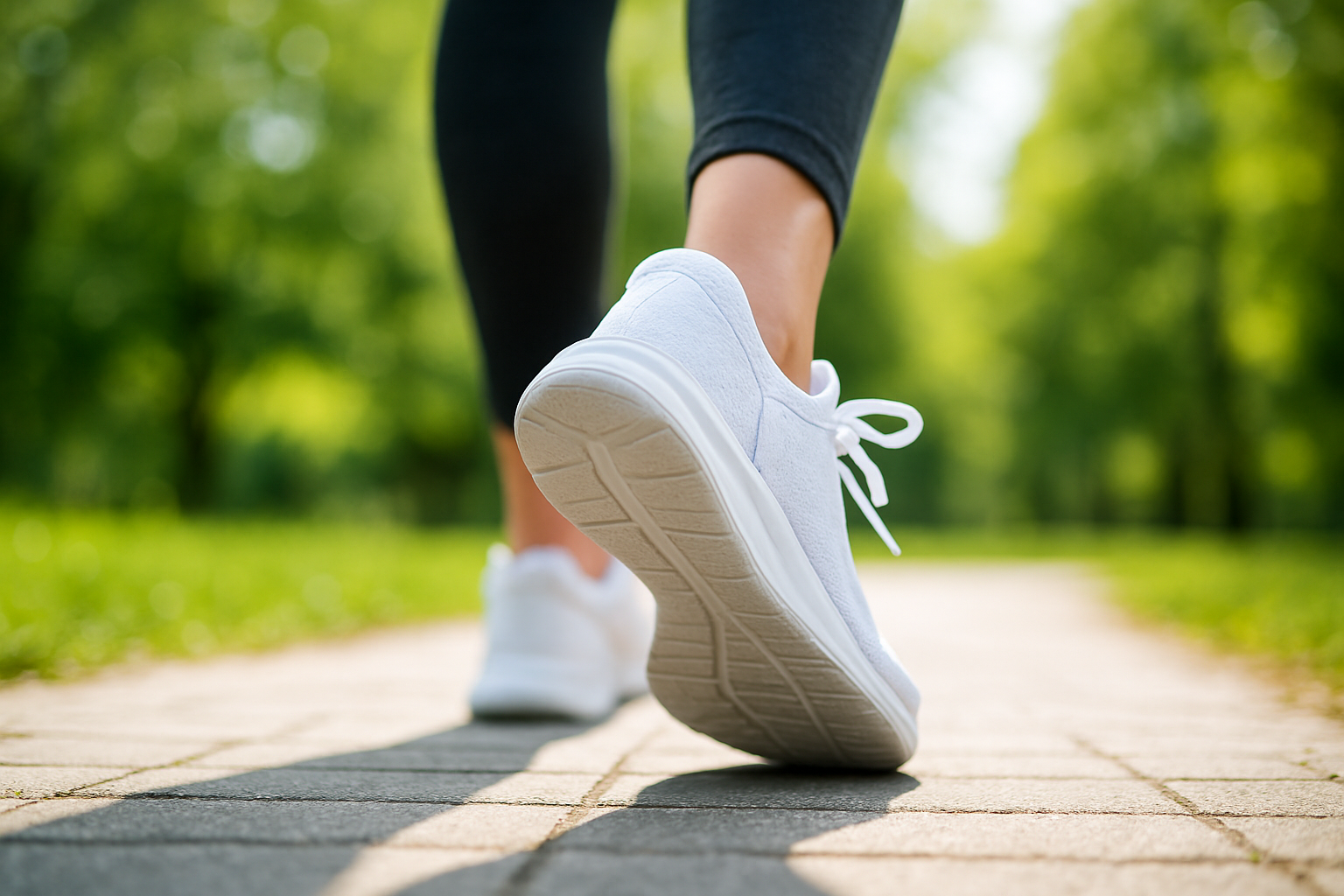
Proper arch support during walking reduces fatigue and protects joints from repetitive impact stress accumulating up the kinetic chain.
Matching Insole Type to Your Foot Type
One of the most common insole-buying mistakes is selecting a product based on price or branding rather than foot type. Furthermore, the wrong insole for your arch can actively worsen discomfort rather than improve it. The table below maps foot type to the most appropriate insole characteristics.
| Foot Type | Common Problem | Recommended Insole Features |
|---|---|---|
| Flat Feet (Low Arch) | Overpronation, knee strain, arch fatigue | Firm medial arch support, deep heel cup, motion control |
| Neutral Arch | General fatigue, heel strike pain | Moderate arch support, cushioned heel, semi-rigid shell |
| High Arch | Supination, metatarsal stress, ankle instability | Cushioned base, lateral support, flexible arch profile |
In addition to arch height, consider your typical walking surface. Hard surfaces like concrete transmit more impact force per step than grass or rubber flooring, so walkers on pavement benefit from additional shock-absorbing cushioning alongside their arch support.
Over-the-Counter Insoles vs. Custom Orthotics: Which Is Right for You?
Over-the-counter (OTC) insoles are widely available and cost between $20 and $80. They suit walkers with mild discomfort or those who simply want added cushioning over long distances. However, they rely on generic sizing and cannot account for the unique contours of your individual foot.
Custom orthotics, by contrast, are fabricated directly from individual molds of each patient's feet. As a result, they address specific structural imbalances with a level of precision that no off-the-shelf product can replicate. A systematic review published in the Journal of Foot and Ankle Research found that custom foot orthoses significantly reduced pain and improved function in patients with plantar heel pain compared to sham insoles — a meaningful clinical finding for anyone dealing with chronic foot discomfort.
Cost and Longevity Comparison
OTC insoles typically last 6 to 12 months before their structural integrity degrades. Custom orthotics, however, are considerably more durable — lasting 2 to 5 years depending on materials and activity level. Therefore, when you calculate cost-per-year, the price gap between OTC and custom narrows significantly. Furthermore, the relief a custom device provides for a chronic condition often makes the investment self-evident.
Quick Answer: Choose OTC insoles for mild, general discomfort. Choose custom orthotics when you have a diagnosed condition, chronic pain, or structural foot imbalance that over-the-counter products have failed to adequately address. When in doubt, a podiatrist consultation is the fastest path to clarity.
When Custom Orthotics Are the Clear Choice
For walkers dealing with chronic pain, structural imbalances, or conditions like diabetic foot complications, custom orthotics are typically the more effective and durable long-term investment. Additionally, they can be transferred between multiple pairs of walking shoes, making them versatile as well as precise.
Common Foot Conditions That Benefit From Supportive Walking Insoles
Supportive insoles are not just for athletes or people in active professions. In fact, they help a broad range of people manage everyday foot conditions more comfortably and prevent minor issues from progressing into chronic problems.
Plantar Fasciitis
Insoles with strong arch support and cushioned heel zones reduce tension in the plantar fascia ligament — the fibrous band that connects the heel to the toes — particularly during the push-off phase of each walking stride. This reduces the characteristic morning stabbing pain that plantar fasciitis sufferers experience.
Flat Feet (Pes Planus)
Medial arch support prevents overpronation — the inward rolling of the ankle — and its downstream effects on the knees, hips, and lower back. According to research published by the National Institutes of Health, flat foot deformity affects approximately 26% of the population. See our detailed resource on orthotics recommended for flat feet for more specific guidance.
High Arches (Pes Cavus)
High-arch feet absorb shock poorly because the rigid arch doesn't flatten and spring back effectively during the gait cycle. Cushioned insoles with lateral support help distribute pressure more evenly across an underpronating foot, reducing the risk of stress fractures and lateral ankle sprains.
Metatarsalgia and Morton's Neuroma
Metatarsal pads relieve forefoot pain caused by excess pressure on the ball of the foot. This is especially effective for metatarsalgia (generalized ball-of-foot pain) and Morton's neuroma — a thickening of nerve tissue between the toes that causes a burning or electric-shock sensation during walking.
Heel Spurs
Cushioned heel cups reduce impact at the calcaneal attachment point and alleviate localized pain from bony heel spur growths. Combined with adequate arch support, a heel-cup-focused insole can dramatically reduce the step-by-step discomfort heel spurs cause.
Diabetic Foot Complications
People with diabetes require specialized foot support because reduced circulation and nerve sensitivity (neuropathy) make pressure sores and ulcers a serious risk. Specifically, custom orthotics fabricated for diabetic patients use extra-depth designs and soft top covers to minimize friction and pressure at vulnerable points. See our complete guide on custom insoles for diabetes for clinical detail on this topic.
Occupational Walkers: Nurses, Retail Staff, and Warehouse Workers
Workers who spend 8 to 12 hours on their feet consistently report significant relief when using quality supportive insoles. The combination of fatigue, hard flooring, and repetitive motion makes this group particularly susceptible to cumulative foot injury. If that describes your situation, our guide to the best insoles for standing all day covers the top picks specifically for occupational use.
Insole Fit Tips: Getting the Most From Your Walking Insoles
Even the best insole underperforms if fitted incorrectly. Therefore, keep these practical tips in mind once you have made your selection.
- Remove the factory insole first. Always take out the original insole before inserting your new one. Stacking insoles creates an uneven surface, compresses the toe box, and can cause the shoe to fit painfully tight.
- Trim to fit when necessary. Most OTC insoles include trim lines on the underside. Match the line closest to your shoe size and cut cleanly with scissors. Improper trimming creates pressure points at the edge of the insole.
- Replace on schedule. Most OTC versions lose their structural integrity within 6 to 12 months of daily use. Replace them before visible wear — once the arch flattens or the heel cup compresses, the insole is no longer providing meaningful support.
- Pair with appropriate footwear. Even the most supportive insole cannot compensate for a shoe with a collapsed heel counter, an overly flexible midsole, or an inadequate toe box. Look for walking shoes with a firm midsole, a roomy toe box, and a secure lacing system.
- Check for even wear patterns. After 30 days of use, inspect the top cover of your insole. Uneven wear concentrated on one side or area indicates a biomechanical issue that may require a more specialized or custom solution.
For more guidance on insoles suited to long-duration standing and walking at work, visit our resource on which insoles are best for standing all day.
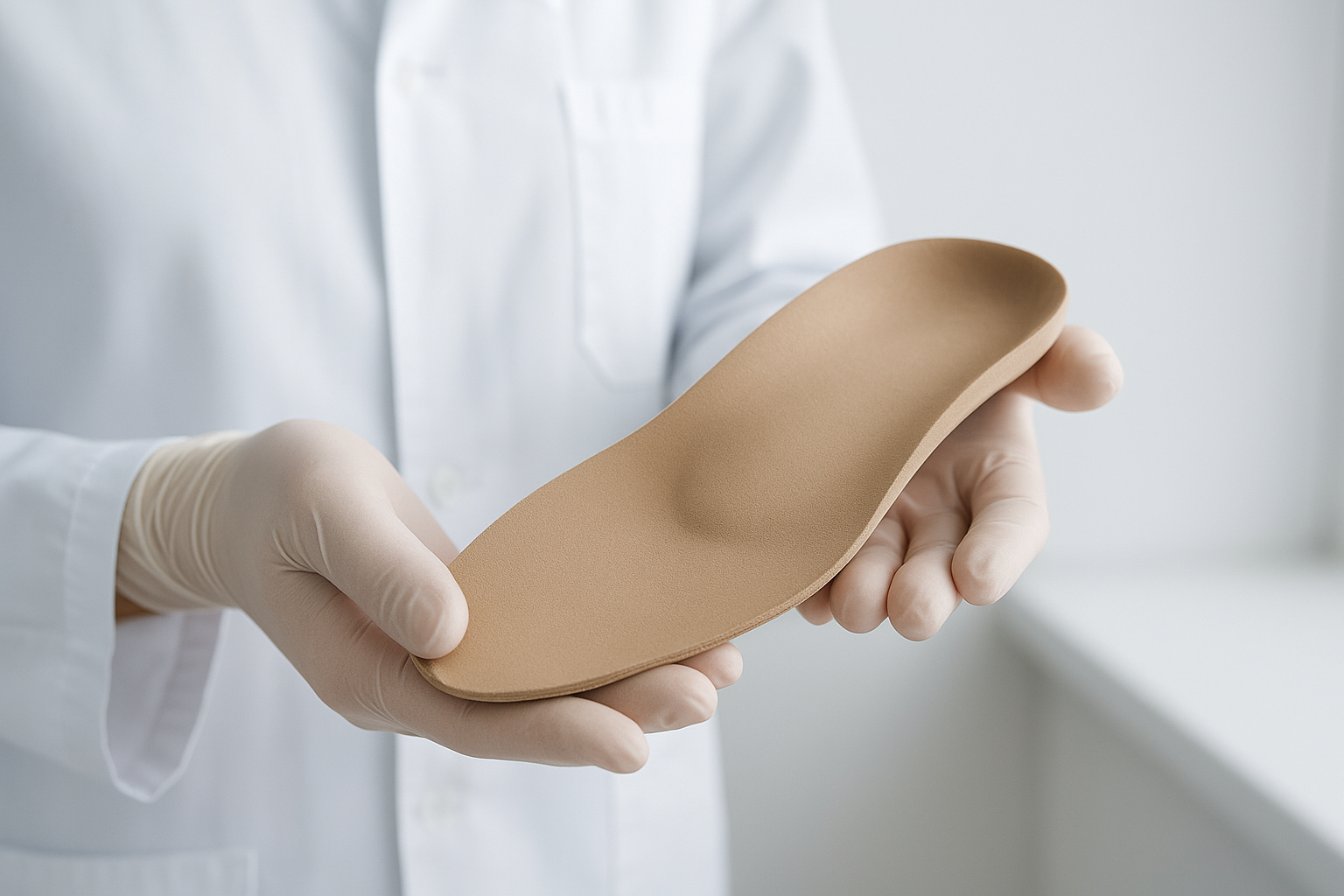
Custom orthotics are cast from precise individual foot molds, providing a level of biomechanical correction that no generic insole can replicate.
How Walking Insoles Affect Your Whole Body — Not Just Your Feet
The feet are the base of the body's kinetic chain — the linked system of bones, joints, and muscles that transmit force from the ground upward through the body with every step. When the feet are misaligned, that misalignment propagates upward. Specifically, overpronating feet cause internal tibial rotation, which increases valgus stress at the knee and can contribute to IT band syndrome, hip bursitis, and lumbar spine compression.
Consequently, correcting foot alignment with supportive insoles for walking can produce measurable improvements in knee, hip, and lower back comfort — even in patients who initially sought help only for foot pain. Many patients report whole-body comfort improvements within the first few weeks of consistent insole use.
Furthermore, improved foot posture during walking reduces the muscular effort required to maintain balance on each stride. As a result, fatigue accumulates more slowly, and walkers can sustain comfortable activity for longer periods.
When to See a Podiatrist About Your Walking Insoles
OTC insoles are a reasonable starting point for many walkers. However, there are clear situations where professional evaluation is the smarter and safer path. Specifically, if your foot pain persists after two to four weeks of consistent insole use, worsens with activity, or is accompanied by swelling, redness, or visible structural changes, a podiatrist should assess your feet promptly.
A podiatrist can perform a comprehensive gait analysis, evaluate your biomechanics on both static and dynamic surfaces, and determine whether a custom orthotic is warranted. At customorthotics.com, patients connect directly with a podiatrist for a complimentary phone consultation — making professional-grade advice accessible without requiring an in-person visit first. With more than 20 years of experience and an A+ BBB rating, the team specializes in fabricating fully custom devices from individual foot molds, addressing root causes rather than simply masking symptoms.
Special Populations Requiring Professional Guidance
Individuals with diabetes, peripheral neuropathy, or circulatory conditions should always seek professional guidance before selecting any foot support product. These conditions affect how pressure and friction impact skin and tissue, and an ill-fitting insole can cause ulcers or pressure wounds that are slow to heal and medically serious.
Similarly, children with in-toeing, flat feet, or abnormal gait patterns benefit from pediatric orthotics evaluated by a podiatrist. Children's feet are still developing, so the timing and type of intervention matters considerably. Early support during growth phases can prevent the structural problems that carry into adulthood.
Frequently Asked Questions About Supportive Insoles for Walking
What are supportive insoles for walking?
Supportive insoles for walking are cushioned or structured inserts placed inside shoes to improve arch support, alignment, and comfort during walking. They range from generic over-the-counter options to fully custom-fabricated devices made from individual foot molds by a licensed podiatrist.
How do I know if I need supportive insoles for walking?
Signs you may need supportive insoles include persistent heel or arch pain, flat feet, overpronation, burning in the forefoot, or discomfort that worsens during or after walking. A podiatrist can assess your gait and foot structure to confirm whether insoles are the right solution.
What is the difference between custom orthotics and store-bought insoles?
Custom orthotics are fabricated from a precise mold of your individual foot, addressing specific biomechanical needs with clinical accuracy. Store-bought insoles use generic sizing and provide general cushioning but cannot replicate the personalized fit, correction, or durability of a custom device.
Can supportive insoles help with plantar fasciitis?
Yes. Supportive insoles are widely recommended for plantar fasciitis because they reduce strain on the plantar fascia by improving arch support and distributing pressure more evenly. Custom orthotics offer the most targeted relief, particularly for chronic or severe cases.
How long do walking insoles typically last?
Over-the-counter insoles typically last 6 to 12 months with daily use. Custom orthotics are considerably more durable and can last 2 to 5 years, depending on materials, body weight, and daily activity level.
Are supportive insoles suitable for flat feet?
Absolutely. People with flat feet benefit greatly from arch-supporting insoles that help redistribute weight and reduce overpronation. Custom orthotics are especially effective for flat-foot correction and long-term structural support.
Can I use walking insoles in any type of shoe?
Most insoles fit into athletic shoes, walking shoes, and work boots. However, they may not fit narrow dress shoes or low-profile footwear without modification. Always remove the factory insole and check interior depth before inserting a new one to ensure a proper, comfortable fit.
How much do custom orthotics cost compared to over-the-counter insoles?
OTC insoles typically cost $20 to $80. Custom orthotics generally range from $200 to $800 or more, depending on materials and complexity. However, their 2 to 5-year lifespan and superior clinical outcomes often make them more cost-effective over time than repeatedly replacing cheaper alternatives.
Do supportive insoles help with knee or back pain?
Yes. Because the feet are the foundation of the body's kinetic chain, improving foot alignment with supportive walking insoles reduces stress transmitted upward to the knees, hips, and lower back. Many patients report significant whole-body comfort improvements after beginning consistent insole use.
How do I break in new walking insoles?
Start by wearing new insoles for one to two hours per day, then increase wear time by one to two hours each subsequent day over one to two weeks. This gradual approach allows your feet, muscles, and connective tissues to adapt without soreness or blistering.
What materials are walking insoles made from?
Common materials include EVA foam, memory foam, gel, cork, and rigid or semi-rigid polypropylene. Custom orthotics typically use a polypropylene shell with a cushioned, patient-specific top cover — a combination that delivers both structural correction and comfort over years of daily use.
Can children use supportive insoles for walking?
Yes. Children with flat feet, in-toeing, or gait abnormalities can benefit from pediatric orthotics or supportive insoles. A podiatrist should evaluate the child's foot development before recommending any device, as the wrong support during growth phases can interfere with healthy foot development.
What is the best walking insole for someone who walks on hard concrete all day?
For concrete surfaces, look for supportive insoles that combine a firm arch support structure with a shock-absorbing heel and forefoot cushioning layer — typically gel or dual-density EVA foam. Pairing the insole with a walking shoe that has a firm rubber outsole further reduces cumulative impact stress on the joints.
How do I know when my insoles need to be replaced?
Replace your insoles when the arch feels flat, the heel cup has compressed, or you notice pain returning that the insoles previously controlled. Visible top-cover wear, uneven compression, or a spongy rather than responsive feel under foot are additional signs that the insole's structural life has ended.
Conclusion: Take the First Step Toward Comfortable Walking
Choosing the right supportive insoles for walking is a straightforward process once you understand your foot type, primary concern, and the level of support you genuinely need. For mild discomfort, a quality OTC insole with proper arch support and a deep heel cup can deliver meaningful, immediate relief. For persistent or condition-specific pain, however, custom orthotics fabricated by a qualified podiatrist offer the most precise, durable, and clinically validated solution available.
Above all, do not dismiss foot pain as an unavoidable part of daily life. With the right supportive insoles for walking, every step can and should feel stable, comfortable, and pain-free. If you are ready to explore your options, the podiatrist-owned team at customorthotics.com offers complimentary phone consultations and a convenient online ordering process — making professional-grade foot support accessible from anywhere.