

Custom insoles for diabetes are specially designed orthotic devices that redistribute pressure across the foot, reduce friction, and protect vulnerable tissue from injury. For the more than 37 million Americans living with diabetes, foot health is not a minor concern — it is a daily priority that directly affects quality of life and long-term mobility.
Diabetes affects the feet in ways that most people do not fully appreciate until a problem arises. Specifically, high blood sugar damages nerves and blood vessels over time, making the feet both less sensitive and slower to heal. As a result, even a small blister or pressure sore can escalate into a serious wound.
What Is Diabetic Neuropathy and Why Does It Matter for Foot Care?
Diabetic neuropathy is nerve damage caused by prolonged high blood glucose levels. It affects roughly 50% of people with diabetes, according to the American Diabetes Association. The condition reduces sensation in the feet, meaning a person may not feel a pebble in their shoe, a seam rubbing against their skin, or an area of abnormal pressure.
Furthermore, poor circulation — another common complication — means that small wounds do not receive the blood flow needed to heal efficiently. Consequently, minor injuries can become infected ulcers, and in severe cases, amputation becomes necessary. In fact, diabetes is the leading cause of non-traumatic lower-limb amputations in the United States.
Therefore, preventing foot injuries before they start is the most effective strategy. Custom insoles play a central role in that prevention.
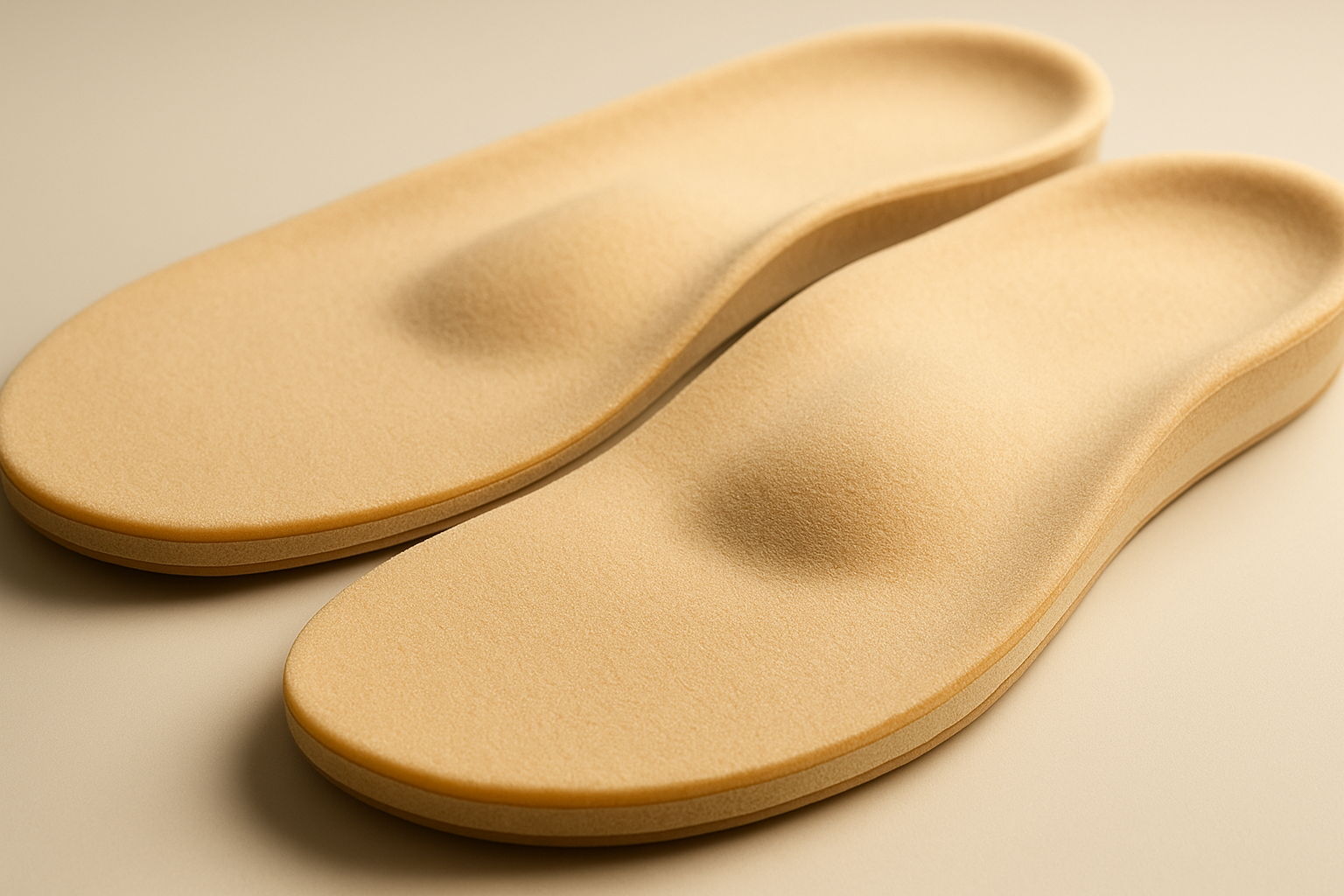
Custom insoles for diabetes are molded to the individual foot, providing precise pressure relief where it matters most.
How Custom Insoles for Diabetes Work
The core principle behind diabetic orthotics is pressure redistribution. When you walk, your body weight concentrates on specific points of the foot — the heel, the ball, and the toes. In a healthy foot, this is manageable. However, in a diabetic foot, those concentrated pressure points can break down tissue and cause ulcers.
Custom insoles spread that pressure more evenly across the entire plantar surface (the bottom of the foot). They also cushion each step, reducing the impact force that reaches sensitive tissue. In addition, they can correct biomechanical issues such as overpronation (rolling inward) or supination (rolling outward), which create uneven pressure patterns.
Research supports their effectiveness. A 2018 study published in the journal Diabetes Care found that custom therapeutic insoles reduced peak plantar pressure by up to 50% compared to standard footwear. That reduction is clinically significant because elevated plantar pressure is one of the strongest predictors of diabetic foot ulcers.
Key Materials Used in Diabetic Insoles
The materials in a diabetic insole are chosen carefully. Each layer serves a specific purpose:
- Plastazote foam — a heat-moldable, closed-cell foam that conforms to the foot's shape and reduces shear forces
- PPT (Poron) — a viscoelastic polymer that absorbs shock and recovers quickly between steps
- EVA (ethylene-vinyl acetate) — a firm base layer that provides structural support and arch correction
- Silicone gel pads — targeted cushioning placed under high-pressure zones such as the metatarsal heads
- Moisture-wicking top covers — fabrics that draw sweat away from the skin, reducing maceration (softening of skin from moisture) and infection risk
How to Get Custom Diabetic Insoles: A Step-by-Step Guide
Getting the right insoles involves more than simply ordering online. Here is the proper process to follow:
- Schedule a podiatry appointment. Book a visit with a licensed podiatrist or certified orthotist who specializes in diabetic foot care. They will review your medical history and examine your feet thoroughly.
- Undergo a foot pressure and gait analysis. Your clinician will use pressure mapping technology to identify high-risk zones. This data guides the design of your insoles.
- Take a foot mold or 3D scan. A plaster cast, foam impression box, or digital 3D scanner captures the precise contours of your foot. This ensures the insole fits your unique anatomy.
- Fabricate the custom insoles. The orthotist selects appropriate materials and builds the insoles based on your mold and pressure data. This typically takes one to two weeks.
- Fit and adjust the insoles. At a fitting appointment, you walk in the insoles so your clinician can confirm comfort and make any necessary adjustments.
- Schedule follow-up care. Return every 6 to 12 months so your podiatrist can monitor your foot health and replace or modify the insoles as needed.

A pressure mapping assessment helps clinicians identify exactly where a diabetic foot needs the most protection.
Custom Orthotics vs. Prefabricated Diabetic Insoles
Many pharmacies and online retailers sell prefabricated diabetic insoles. However, these are not the same as custom orthotics, and the distinction matters significantly for people with diabetes.
Prefabricated insoles are mass-produced in standard sizes and shapes. They offer general cushioning but cannot address your specific pressure distribution or foot deformities. For example, if you have a Charcot foot deformity (a collapse of the foot's arch structure caused by neuropathy), a generic insole will not provide the targeted offloading you need.
In contrast, custom insoles are built from a mold of your individual foot. They account for every unique contour, callus, and deformity. As a result, they provide measurably better pressure relief and are the clinical standard for high-risk diabetic patients. Resources like customorthotics.com explain the fabrication process in detail and can help you understand what to expect from a professional fitting.
When Should You Choose Custom Over Prefabricated?
You should strongly consider custom insoles if you have any of the following:
- A history of diabetic foot ulcers
- Significant peripheral neuropathy
- Foot deformities such as hammertoes, bunions, or Charcot foot
- Poor peripheral circulation
- Previous lower-limb amputation
For people with mild diabetes and no foot complications, a quality prefabricated insole may be adequate as a short-term solution. Nevertheless, a podiatrist's evaluation is always the safest starting point.
Insurance Coverage and Cost Considerations
Cost is a common concern. Without insurance, custom diabetic insoles typically range from $300 to $600 per pair. However, coverage options exist and can significantly reduce out-of-pocket expenses.
Medicare Part B covers therapeutic footwear under the Therapeutic Shoes for Persons with Diabetes benefit. This program provides one pair of custom-molded shoes and three pairs of inserts per calendar year for qualifying patients. To qualify, you must have diabetes and a related foot condition documented by your doctor.
Many private insurers follow similar guidelines. Therefore, always check with your insurance provider and ask your podiatrist to submit a prior authorization request before your fitting appointment. Proper documentation of your diagnosis and medical necessity is essential for approval.
If you are exploring your options, customorthotics.com provides helpful guidance on what to look for in a diabetic orthotic provider and how to navigate the insurance process.

Daily foot inspections are a critical complement to wearing custom diabetic insoles.
Best Practices for Wearing and Caring for Diabetic Insoles
Owning custom insoles is only part of the solution. How you use and maintain them matters equally. Follow these best practices to get the most protection:
- Wear them consistently. Insoles only protect your feet when you are actually wearing them. Avoid walking barefoot, even indoors.
- Inspect your feet daily. Check for redness, blisters, or skin breakdown every evening. Use a mirror for the sole if needed.
- Pair with appropriate footwear. Insoles work best in shoes with a wide, deep toe box and removable factory insoles. Avoid tight or narrow shoes.
- Clean insoles regularly. Wipe with a damp cloth and mild soap. Allow them to air dry completely before reinserting.
- Replace on schedule. Most diabetic insoles should be replaced every 12 to 24 months, or sooner if you notice visible wear or new pressure points.
Additionally, pairing your insoles with proper diabetic socks — seamless, moisture-wicking, and non-constricting — further reduces friction and keeps feet dry. You can explore related guidance on choosing the right diabetic footwear to complement your orthotics.
Frequently Asked Questions About Custom Insoles for Diabetes
What are custom insoles for diabetes?
Custom insoles for diabetes are individually crafted orthotic devices designed to redistribute foot pressure, reduce friction, and protect sensitive diabetic feet from ulcers and injury. They are made from a mold or 3D scan of your foot for a precise fit.
Why do people with diabetes need special insoles?
Diabetes can cause neuropathy and poor circulation, making feet vulnerable to pressure sores and ulcers that heal slowly. Special insoles cushion and redistribute pressure to prevent these complications.
How are diabetic custom insoles different from regular insoles?
Diabetic custom insoles are made from a precise mold of your foot using medical-grade materials for pressure relief and moisture management. Regular insoles are generic and provide only basic cushioning without targeted protection.
Does insurance cover custom insoles for diabetes?
Medicare and many private insurers cover therapeutic diabetic footwear, including custom insoles, under the Therapeutic Shoes for Persons with Diabetes benefit. You typically need a prescription and documentation of your diabetes diagnosis.
How long do diabetic custom insoles last?
Most diabetic custom insoles last between 12 and 24 months with regular use. Replacement timing depends on your activity level and materials; a podiatrist can advise when replacement is needed.
Can custom insoles prevent diabetic foot ulcers?
Yes. Research shows that custom orthotics significantly reduce peak plantar pressure, which is a primary cause of diabetic foot ulcers. Studies indicate pressure reductions of up to 50% compared to standard footwear.
What materials are used in diabetic insoles?
Common materials include Plastazote foam, PPT (Poron), EVA, and silicone gel. These are chosen for shock absorption, pressure distribution, and moisture-wicking properties.
How do I get custom insoles for diabetes?
Start by visiting a podiatrist or certified orthotist who will assess your feet and take a mold or digital scan. They will then fabricate insoles tailored to your specific pressure points and foot shape.
How much do custom diabetic insoles cost without insurance?
Without insurance, custom diabetic insoles typically cost between $300 and $600 per pair. The price varies based on materials, the complexity of your foot condition, and the provider.
What is the difference between custom orthotics and prefabricated diabetic insoles?
Custom orthotics are made from an individual mold of your foot and address your unique pressure distribution. Prefabricated insoles are mass-produced and offer general support but cannot match the precision of a custom device.
Can I wear custom diabetic insoles in any shoe?
Custom diabetic insoles work best in shoes with a deep, wide toe box and removable factory insoles. Your orthotist can advise on compatible shoe styles to maximize protection and comfort.
What common mistakes should I avoid with diabetic insoles?
Avoid wearing insoles in shoes that are too tight, skipping daily foot inspections, or continuing to use worn-out insoles. Never ignore new pressure points or blisters — report them to your podiatrist immediately.
Conclusion: Why Custom Insoles for Diabetes Are Worth the Investment
Custom insoles for diabetes are one of the most effective, evidence-backed tools available for protecting diabetic feet. They reduce dangerous pressure concentrations, prevent ulcers, and support better foot mechanics — all of which contribute to preserving mobility and independence. Furthermore, with Medicare and many private insurers covering therapeutic footwear, the financial barrier is often lower than people expect. Above all, the cost of a custom insole is far less than the physical, emotional, and financial toll of a diabetic foot ulcer or amputation. If you have diabetes, speak with a podiatrist about whether custom orthotics are right for you — your feet depend on it.