

The best insoles for standing all day combine firm arch support, deep heel cushioning, and multi-layer shock absorption to keep your feet pain-free through every hour of a long shift. Whether you work in healthcare, retail, warehousing, hospitality, or construction, the right insole doesn't just reduce foot pain — it protects your knees, hips, and lower back from the cumulative damage of standing on hard surfaces for 8, 10, or 12 hours straight.
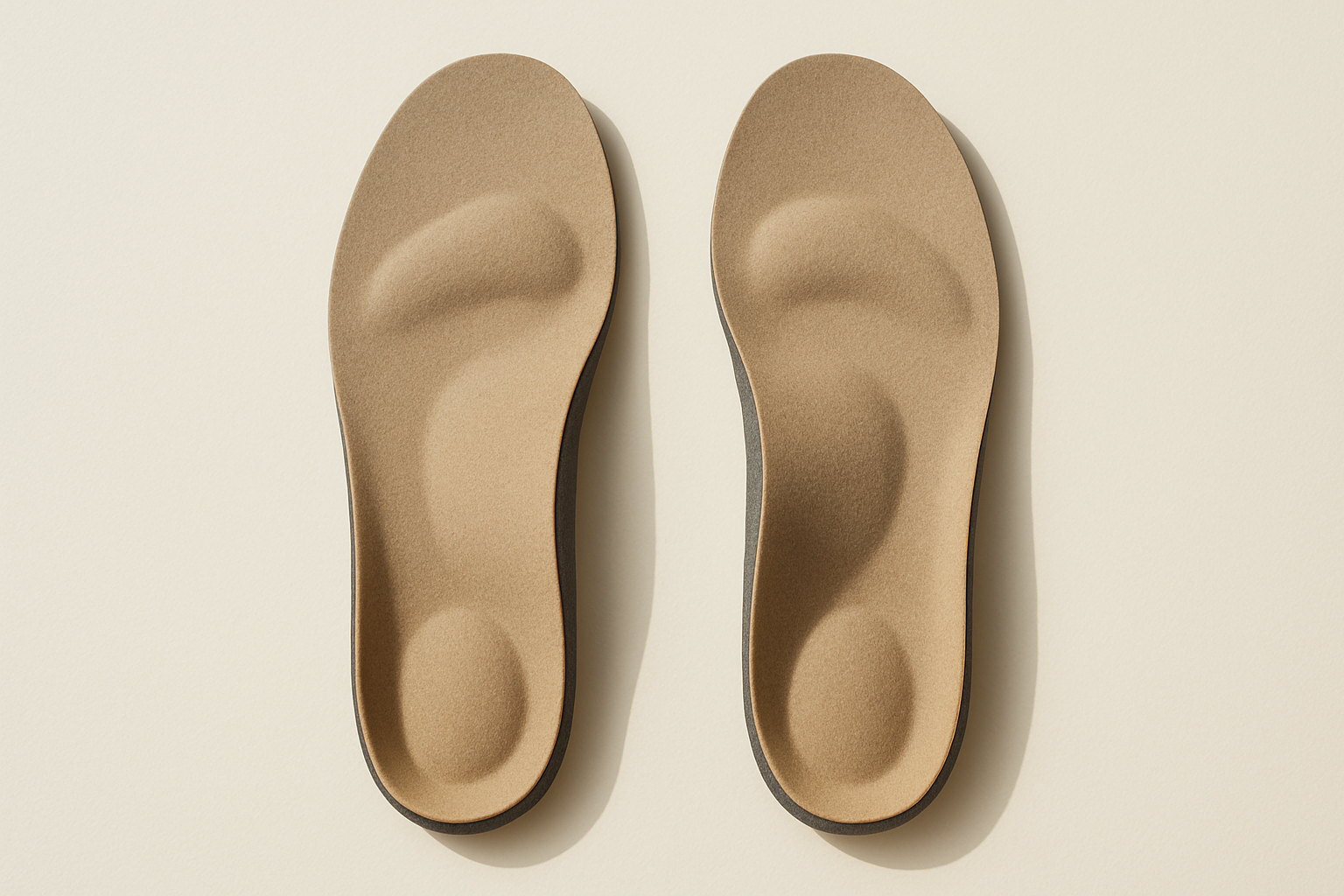
Supportive insoles designed for people who stand all day feature layered cushioning and structured arch support.
Why Standing All Day Destroys Your Feet (And What's Really Happening)
When you spend hours on hard floors, your feet take on a level of stress that the human body was simply not designed to sustain indefinitely. The natural fat pads in your heel and forefoot — your body's built-in shock absorbers — gradually compress under sustained load. Once that cushioning is depleted mid-shift, every step sends raw impact energy directly into your joints.
Research consistently shows that workers who stand for 8 or more hours per day face significantly elevated risks of plantar fasciitis, heel spurs, metatarsalgia, Morton's neuroma, and chronic lower back pain. This is not just discomfort — it is a progressive musculoskeletal problem that compounds over weeks and months without intervention.
The biomechanical reality: when your arch collapses or your heel rolls inward (overpronation), misalignment travels up the kinetic chain. Your ankles compensate, your knees rotate inward, your hips tilt, and your lumbar spine flexes to compensate. The best insoles for standing all day interrupt this chain reaction at the foundation — your feet — before dysfunction spreads upward.
Key stat: The American Podiatric Medical Association estimates that the average person takes between 8,000 and 10,000 steps per day. For workers who stand and move constantly, that number can exceed 15,000 — all while wearing shoes with inadequate factory insoles.
What to Look For: Key Features in the Best Insoles for Standing All Day
Not all insoles are created equal. Generic foam inserts that ship inside most work shoes provide little more than minimal padding. The features below are what separate genuinely effective insoles from products that feel comfortable in the store but fail within weeks.
1. Firm Arch Support: The most critical feature for standing workers. Proper arch support prevents overpronation, holds the longitudinal arch in its natural position, and distributes body weight evenly across the foot rather than concentrating it at the heel and ball. Match support firmness to your arch type — the wrong level is worse than no support at all.
2. Deep Heel Cup: A geometrically deep heel cup cradles the calcaneus bone, centralizes the heel fat pad (which spreads and thins under pressure), and dramatically reduces lateral instability. This is especially vital for workers on uneven surfaces, wet floors, or loading docks.
3. Multi-Layer Shock Absorption: Effective shock absorption requires more than a single foam layer. Look for insoles with a structured shell (polypropylene or carbon fiber), a supportive midsole layer, and a top comfort layer using gel, memory foam, or EVA foam. This tri-layer system absorbs and disperses impact before it reaches the ankle and knee.
4. Metatarsal Support Pad: Often overlooked, a metatarsal pad (or met pad) offloads pressure from the ball of the foot — a critical zone for workers who spend hours on the forefoot. Without it, metatarsalgia, Morton's neuroma, and burning pain under the toes are common outcomes.
5. Semi-Rigid vs. Soft Construction: Fully soft insoles feel comfortable initially but compress quickly and lose all functional support. Semi-rigid insoles (a firm plastic or composite shell with a cushioned top layer) maintain their structure throughout a full shift, providing support that's still effective at hour ten.
6. Breathable, Moisture-Wicking Top Layer: A shift on your feet means a full day of enclosed foot environment. Moisture-wicking fabric on the top layer keeps sweat from pooling, reduces bacterial growth, and prevents blisters — practical features that matter enormously in a 12-hour nursing or warehouse shift.
Insole Types Explained: Which Format Is Right for Your Work Shoes?
Before selecting a specific insole, it helps to understand the four primary insole construction types and how each performs in a full-day standing context.
Full-Length Insoles
Full-length insoles run from heel to toe and replace the factory insole entirely. They offer the most comprehensive support across all zones of the foot and are the best choice for workers who need all-day coverage. Most require trimming to fit your shoe size.
Three-Quarter Length Insoles
Three-quarter insoles end just behind the metatarsal heads (ball of the foot). They work well in shoes with narrow toe boxes where a full-length insole would cause crowding. However, they provide less forefoot protection than full-length options.
Heel Cups and Wedges
Targeted heel inserts address heel pain and plantar fasciitis specifically. They are useful when the original shoe has acceptable forefoot cushioning but an inadequate heel structure. These are not substitutes for a full supportive insole for all-day standing.
Custom-Molded Orthotics
Custom orthotics are fabricated from a precise digital scan or plaster cast of your individual foot. They address specific structural and biomechanical abnormalities that no generic product can match. These are the gold standard for complex cases.
Custom Orthotics vs. Over-the-Counter Insoles: A Complete Comparison
This is one of the most consequential decisions you'll make when addressing foot pain from standing. The right answer depends on your specific condition, budget, and how long you've been experiencing problems.
Custom orthotics are fabricated from a precise cast or scan of your foot by a licensed podiatrist or orthotist. Because they address your specific biomechanical profile, they provide a level of targeted correction that no generic product can match. For structural leg-length discrepancy, severe overpronation, or conditions that have not responded to OTC treatment, custom orthotics are clearly the superior choice. Resources like Custom Orthotics explain the process in detail.
OTC insoles are the right starting point for the vast majority of workers. A well-chosen over-the-counter insole with appropriate arch support and cushioning layers will significantly relieve foot pain for most people who don't have complex structural problems — and at a fraction of the cost of custom fabrication.
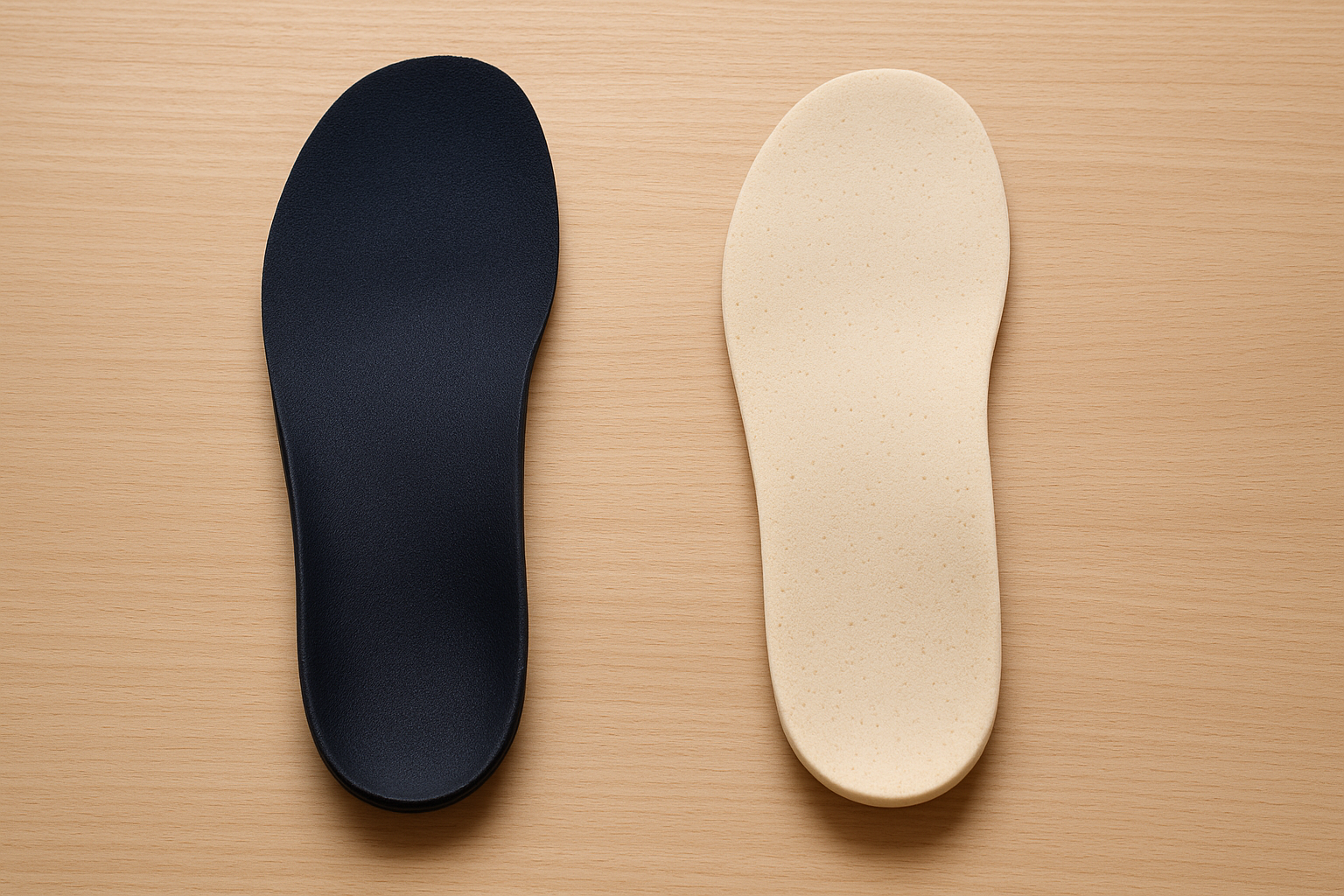
Custom orthotics (left) offer personalized biomechanical correction, while quality OTC insoles provide broad relief for most workers. For a deeper walkthrough, see our Best Orthotics for Everyday Use: A Complete Guide.
Best Insoles by Job Type: Matching Support to Your Work Environment
The demands of a concrete warehouse floor are fundamentally different from a hospital linoleum corridor or a restaurant kitchen. The best insoles for standing all day in your specific environment depend on the surface type, footwear restrictions, and movement patterns of your role.
Nurses and Healthcare Workers
Nurses and healthcare professionals face 8–12 hour shifts alternating between sustained static standing and rapid, unpredictable movement. The ideal insole for healthcare combines a semi-rigid arch support for structural stability during standing, a responsive foam or gel top layer for comfort during movement, and a deep heel cup that stays stable during quick directional changes. Avoid fully rigid orthotics that restrict the natural flex needed for fast-paced hospital movement.
Retail and Cashier Workers
Retail environments involve sustained standing on hard tile or concrete with periodic walking. Workers in these roles often wear non-specialist footwear with thin soles. Look for insoles with maximum shock-absorbing capability — dual-density EVA or a gel heel pad combined with firm arch support. Breathability is particularly important in enclosed retail footwear worn for a full shift.
Warehouse and Factory Workers
Concrete floors transmit impact with zero attenuation. Workers in warehouses and manufacturing plants need insoles with the highest available shock absorption — typically a combination of a gel heel pod and a dense EVA midsole. Safety boot compatibility is also critical: the insole must be low-profile enough to fit without raising the heel into the boot collar, which causes blisters and ankle instability.
Restaurant and Hospitality Workers
Kitchen and service staff deal with wet floors, constant movement, and shifts that frequently exceed 10 hours. Insoles for this environment need slip-resistant base materials, moisture resistance (kitchen floors are wet), and enough flexibility to handle the constant weight shifting and walking inherent in service roles. A cushioned arch with anti-fatigue properties is the priority here.
Construction and Outdoor Workers
Uneven terrain, heavy boots, and prolonged outdoor standing create a unique set of demands. Construction workers need insoles with reinforced heel cups for lateral stability on uneven ground, metatarsal pads to protect the forefoot in rigid safety boots, and a moisture-resistant base that holds up to outdoor conditions. Polypropylene or composite shells are more durable than standard EVA in this setting.
How to Determine Your Arch Type Before Buying
Choosing the correct arch height is arguably the single most impactful variable in insole selection. Using the wrong arch level — even on an otherwise excellent insole — can cause more pain than no insole at all. Follow these steps to determine your arch type accurately.
- Wet Footprint Test: Wet the bottom of your bare foot thoroughly. Step firmly onto a piece of plain cardboard or dark paper, then step off and examine the impression left behind.
- Interpret Your Flat Arch (Low Arch): If the impression shows almost your entire foot with little or no inward curve, you have a flat or low arch. You are likely an overpronator. You need motion-control insoles with firm, structured support — specifically a rigid shell that resists arch collapse under load.
- Interpret Your Neutral Arch: If the impression shows a moderate inward curve with roughly half the arch area visible, you have a neutral arch. You do well with moderate arch support — semi-rigid insoles with a cushioned top layer. This is the most common arch type and the one most OTC insoles are designed for.
- Interpret Your High Arch: If the impression shows only a thin strip or no connection between heel and forefoot, you have a high arch. High arches are rigid and under-flexible, creating excessive pressure at the heel and ball. You need flexible insoles with contoured arch fill and substantial forefoot cushioning to prevent metatarsalgia.
- Confirm With a Gait Analysis: If you've tried multiple insoles without relief, a podiatrist can perform a formal gait analysis — watching how your foot strikes, loads, and pushes off during walking. This reveals dynamic biomechanical issues that static arch testing misses.
Pro tip: Your arch type can change over time — pregnancy, weight gain, aging, and repetitive standing all affect arch height. If it's been more than two years since you last assessed your arch type, redo the test before purchasing new insoles.
The Best Insole Materials: What Science Says About Each
Understanding the material science behind insoles helps you interpret product claims and make smarter purchasing decisions. Here is how each major material performs in a full-day standing context.
EVA Foam (Ethylene-Vinyl Acetate)
The most common insole material. EVA offers a good balance of cushioning and support, is lightweight, and comes in varying densities — soft EVA for comfort, firm EVA for structural support. The drawback is compression fatigue: EVA gradually packs down over months of daily use, losing both its cushioning and its arch height. High-density EVA lasts longer but feels firmer initially.
Gel (Polyurethane Gel)
Gel excels at absorbing and distributing shock — particularly at the heel, where impact forces are highest. It maintains its properties longer than EVA under compression and is excellent for workers on concrete and hard tile. However, gel adds weight and can feel slightly unstable under dynamic movement. Most premium insoles use gel strategically (heel pod, forefoot zone) rather than as the entire construction.
Memory Foam (Viscoelastic Foam)
Memory foam conforms precisely to your foot shape, creating a custom-feeling fit over time. It excels at pressure distribution and is extremely comfortable for workers with sensitive feet or bony prominences. The downside: memory foam compresses slowly under load, which means it temporarily loses its shape throughout a shift and provides little structural arch support. Best used as a top comfort layer over a firmer support base.
Polypropylene and Composite Shells
Rigid and semi-rigid shells provide the structural backbone of high-performance insoles and custom orthotics. Polypropylene maintains arch height and mediolateral control throughout the entire shift — it does not compress or deform. This is the material used in most custom orthotics and premium OTC insoles. It requires a break-in period but delivers the most consistent support long-term.
Cork
Cork is a natural material that slowly molds to the contours of your specific foot over weeks of wear. It is antimicrobial, lightweight, and provides a pleasantly firm support that does not compress dramatically. Cork insoles are particularly popular in European work footwear and with workers who prefer natural materials. They perform best in shoes with adequate volume to accommodate their thickness.
Conditions That Insoles Can Help Treat and Prevent
Supportive insoles are not just about general comfort. They are recognized adjunct treatments for several specific conditions that disproportionately affect workers who stand all day.
- Plantar fasciitis: The most common cause of heel pain. Insoles with deep heel cups and firm arch support reduce tension on the plantar fascia ligament during weight-bearing. Studies show consistent improvement in plantar fasciitis symptoms with appropriate arch support insoles.
- Heel spurs: Bony calcium deposits on the underside of the heel bone. Gel heel pads and deep heel cups offload pressure directly over the spur, reducing pain during standing and walking.
- Metatarsalgia: Pain and inflammation in the ball of the foot, common in workers who stand on their forefoot. A metatarsal pad behind the ball of the foot offloads pressure from the metatarsal heads.
- Morton's neuroma: A thickening of the tissue around a nerve between the toes, causing burning and numbness. A combination of a wider toe box and a metatarsal support pad relieves compression on the affected nerve.
- Overpronation and flat feet: Excessive inward rolling of the foot creates ankle, knee, and hip strain. Motion-control insoles with firm medial arch support correct the alignment and reduce strain up the kinetic chain.
- Achilles tendinopathy: Inflammation of the Achilles tendon, often exacerbated by flat feet that increase stress on the tendon insertion. Arch support insoles reduce the tensile load on the tendon during standing.
- Lower back pain: Frequently traced to poor foot biomechanics. Studies have shown that appropriate orthotic insoles reduce lumbar pain in workers who stand on hard surfaces for extended periods.
- Knee pain (patellofemoral syndrome): Overpronation causes internal tibial rotation that pulls the kneecap out of alignment. Motion-control insoles reduce this rotation and the associated knee pain.

Workers in healthcare and similar demanding environments benefit most from insoles combining semi-rigid arch support with responsive cushioning.
How to Get the Most From Your Insoles: Common Mistakes to Avoid
Even the best insoles for standing all day will fail to deliver results if they're used incorrectly. These are the most damaging mistakes workers make — and how to avoid each one.
Mistake 1: Not Removing the Factory Insole First
Stacking an aftermarket insole on top of the original creates an elevated heel position, reduces interior shoe volume, and causes the back of the shoe to press painfully against your Achilles tendon. Always remove the stock insole before inserting any aftermarket product.
Mistake 2: Buying Insoles That Don't Match Your Shoe Type
A high-volume insole designed for athletic trainers will buckle and shift inside a narrow dress shoe or safety boot. Measure your shoe's interior depth and width before purchasing and check the insole's stated shoe compatibility. A misfitting insole causes new pain rather than resolving existing pain.
Mistake 3: Ignoring the Break-In Period
Semi-rigid and rigid insoles require gradual adaptation. Wearing a new supportive insole for a full 12-hour shift on day one is a reliable way to develop new soreness in your arches and lower legs as your biomechanics adjust. Start with 2–3 hours per day and increase by 1–2 hours daily over 7–10 days. Rushing the break-in period is one of the most common reasons people abandon effective insoles.
Mistake 4: Waiting Too Long to Replace Worn Insoles
Most quality OTC insoles degrade within 6–12 months of daily use. Once the cushioning compresses to the point where you can feel the sole through the insole, or when the arch no longer has perceptible firmness, the insole has lost its functional purpose. Continuing to wear a depleted insole provides false confidence while delivering no actual support — and returning foot pain is often the only signal workers notice.
Mistake 5: Choosing the Wrong Arch Height
An arch support that is too high for your foot type forces your arch into an unnatural position, creating new pain. An arch support that is too low provides no functional benefit. This is the most commonly overlooked variable in insole selection. When in doubt, have your arch type confirmed by a podiatrist before spending money on a new product.
Mistake 6: Expecting Insoles Alone to Solve Everything
Insoles are one component of a broader foot health strategy. Workers who pair good insoles with appropriate footwear, regular stretching, and movement breaks consistently report better outcomes than those who rely on insoles alone to manage the cumulative effects of long-shift standing.
How to Choose the Best Shoes to Pair With Your Insoles
The shoe is the container — and no insole, regardless of quality, can compensate for a structurally deficient shoe. The best insoles for standing all day perform best when paired with footwear that meets these criteria.
- Adequate interior volume: There must be enough depth in the shoe to accommodate the insole without compressing your toes against the upper. A shoe that fits well barefoot may be too tight with an insole in place — consider going half a size up.
- Removable factory insole: Not all shoes have removable factory insoles. Before purchasing work shoes intended for insole use, verify that the original insert can be removed.
- Firm heel counter: The heel counter (the rigid cup at the back of the shoe) should not flex when you squeeze it. A soft heel counter defeats the purpose of a deep-heel-cup insole by allowing the heel to still move laterally.
- Torsional rigidity: Hold the shoe at the toe and heel and try to twist it. A good work shoe should resist twisting. Shoes that fold easily underfoot provide insufficient base for insole performance.
- Low, stable heel: High heels — even modest ones — force the foot forward, increase forefoot loading, and shift the body's center of gravity in ways that no insole can fully correct. For all-day standing, a heel height of 0–25mm is ideal.
Beyond Insoles: A Complete Strategy for All-Day Standing Comfort
The best insoles for standing all day are most effective as part of a holistic foot care and workplace wellness strategy. These complementary interventions work synergistically with quality insoles to reduce fatigue and prevent long-term injury.
- Anti-fatigue mats: Where your workplace environment permits, standing on a high-density anti-fatigue mat reduces the compressive load on your insoles and joints by 30–50% compared to bare concrete or tile. These mats are standard in many assembly lines, commercial kitchens, and checkout stations — advocate for one if yours are missing.
- Compression socks: Graduated compression socks improve venous blood return from the lower legs, reducing swelling, fatigue, and the sensation of heavy legs at the end of a long shift. Nurses and flight crew are experienced users — the science is well-established.
- Rotate your footwear: Wearing the same pair of shoes daily accelerates compression of the midsole foam. Alternating between two pairs on alternate days allows the cushioning to fully recover overnight and extends the functional life of both pairs by months.
- Targeted stretching during breaks: Three stretches that significantly reduce standing-related foot pain: (1) calf raises against a wall for plantar fascia and Achilles relief; (2) toe curls with a towel to strengthen intrinsic foot muscles; (3) seated ankle circles to maintain joint mobility. Do each for 60 seconds during every break.
- Strengthening exercises: Single-leg calf raises, towel scrunches, and short-foot exercises build the intrinsic muscles that support the arch from within, reducing the load placed on external insoles over time.
- Hydration: Proper hydration supports synovial fluid production in the joints and connective tissue elasticity. Even mild dehydration contributes to increased joint stiffness and cramping in the feet and calves during long standing shifts.
- Microbreaks: Even a 90-second microbreak every 30–45 minutes — during which you sit briefly, shift weight, or walk a short loop — measurably reduces cumulative plantar pressure compared to static standing.
How to Use and Care for Your Insoles to Maximize Their Lifespan
Proper maintenance significantly extends insole life and preserves performance. Follow these practical guidelines to get the most from your investment.
- Air them out daily: Remove insoles from your shoes at the end of each shift and allow them to dry completely before the next use. Moisture accelerates foam breakdown and bacterial growth.
- Hand wash only: Most insoles should be cleaned with mild soap and lukewarm water, then air-dried. Machine washing destroys adhesive layers, warps shells, and accelerates foam degradation.
- Inspect regularly: Every month, press your thumb firmly into the heel and arch area. If the foam compresses with minimal resistance and doesn't spring back, the insole has lost its functional properties and needs replacement.
- Match insoles to specific shoes: Avoid swapping insoles between significantly different shoe types. A running shoe insole placed in a safety boot will compress unevenly and shift positions, negating its support structure.
- Replace proactively: Don't wait for pain to return as the signal to replace insoles. Schedule replacement at the 6-month mark for daily-use OTC insoles regardless of whether they appear worn, since internal foam compression is often invisible to the eye.
Final Verdict: How to Choose the Best Insoles for Standing All Day
The best insoles for standing all day are those that precisely match your arch type, your specific work environment, and the shoe type you are required to wear — while consistently delivering structural arch support, multi-layer shock absorption, and deep heel stability through every hour of your shift.
For the vast majority of workers — those without complex biomechanical conditions — a quality semi-rigid OTC insole with a polypropylene or composite arch shell, gel heel cushioning, and a moisture-wicking top layer will deliver profound relief. For those with persistent pain, structural foot problems, or conditions that have not responded to OTC treatment, custom orthotics from a licensed podiatrist represent the most targeted and durable solution available.
Either way, the investment pays dividends rapidly. Reduced foot pain translates directly to better concentration, improved posture, less whole-body fatigue, and significantly lower long-term risk of musculoskeletal injury. Your feet are the literal foundation of every hour you spend at work — invest in their support accordingly.
Frequently Asked Questions About the Best Insoles for Standing All Day
What are the best insoles for standing all day on concrete floors?
The best insoles for standing all day on concrete combine maximum shock absorption with firm arch support. Look for a dual-density construction — a gel or dense EVA heel pod to absorb impact from the rigid surface, and a semi-rigid arch support shell to maintain foot alignment. Concrete transmits shock with no natural attenuation, so cushioning quality is especially critical in this environment.
How do insoles reduce foot pain during long shifts?
Insoles reduce foot pain by redistributing plantar pressure evenly across the entire foot, preventing concentrated loading at the heel and ball. The arch support component reduces strain on the plantar fascia ligament, while heel cushioning absorbs impact energy before it reaches the ankle and knee. Together, these mechanisms reduce inflammation, fatigue, and the cumulative damage that causes chronic conditions.
Are custom orthotics worth it compared to over-the-counter insoles?
Custom orthotics are worth the investment when you have a specific biomechanical condition — severe overpronation, structural leg-length discrepancy, chronic plantar fasciitis that has not responded to OTC treatment, or a diagnosis from a podiatrist recommending them. For general foot fatigue and pain prevention in otherwise healthy feet, a quality OTC insole provides excellent value. Start with OTC and escalate to custom only if needed.
What is the difference between gel insoles and foam insoles for standing?
Gel insoles excel at shock absorption and maintain their properties under sustained load, making them ideal for hard floors. Foam insoles — especially memory foam — conform closely to the foot and distribute pressure more evenly but compress over the course of a shift. The best insoles for standing all day typically combine both: gel pods at high-impact zones (heel and forefoot) over an EVA foam base for overall cushioning and support.
How long do insoles last with daily use at work?
Quality OTC insoles typically last 6–12 months with daily use, though this varies significantly based on body weight, surface hardness, and insole material. Custom orthotics made from polypropylene or composite materials last 1–5 years. Replace OTC insoles when the heel cushioning feels flat, when you can feel the shoe sole through the insole, or when foot pain returns after a period of relief.
Can insoles help with plantar fasciitis caused by standing all day?
Yes — insoles with firm arch support and deep heel cups are a clinically recognized first-line treatment for plantar fasciitis. They work by reducing the tensile stress on the plantar fascia ligament during weight-bearing activity. Deep heel cups centralize the heel fat pad and reduce direct impact at the plantar fascia insertion point. Most plantar fasciitis management protocols include supportive insoles as a core component alongside stretching.
What arch type do I need for insoles if I stand all day?
Your insole arch type should match your natural arch height. Low/flat arches need firm motion-control insoles with structured medial support to prevent overpronation. Neutral arches perform best with moderate semi-rigid support. High arches need flexible insoles with contoured arch fill and generous forefoot cushioning to compensate for their natural rigidity. Use the wet footprint test to determine your arch type, or consult a podiatrist for a gait analysis.
Do insoles for standing work for nurses on 12-hour shifts?
Yes, and nurses are among the most consistent beneficiaries of quality insoles. The ideal insole for 12-hour nursing shifts combines a semi-rigid arch support (for structural support during static standing) with a responsive cushioned top layer (for comfort during rapid movement). Full-length insoles in slip-resistant nursing shoes with firm heel counters provide the best overall combination for this demanding environment.
How do I know when my insoles need replacing?
Test your insoles monthly by pressing your thumb firmly into the heel and arch areas. If the foam collapses with little resistance and does not spring back, the cushioning has failed. Additional signs: you can feel the shoe sole through the insole, the arch feels flat, the surface fabric is worn through, or foot and lower back pain has returned after a previous period of relief. Replace proactively at 6 months for daily-use OTC insoles.
Can insoles help prevent knee and lower back pain from standing?
Yes. Because the foot is the base of the kinetic chain, misalignment at the foot — specifically overpronation — causes internal tibial rotation that loads the knee joint abnormally and creates compensatory lumbar flexion. Motion-control insoles that correct overpronation reduce this upstream effect. Studies on occupational workers have shown measurable reductions in both knee pain and lower back pain with appropriate orthotic insole use.
Should I remove the original shoe insole before inserting a new one?
Always remove the factory insole first. Placing an aftermarket insole on top of the original raises the heel height, reduces interior shoe volume, and often causes the heel collar to press uncomfortably against the Achilles tendon. It also increases the total shoe stack height, which destabilizes your gait. The sole exception is ultra-thin, non-structural gel pads — these can sometimes be layered if the shoe has adequate volume.
What mistakes should I avoid when buying insoles for work?
The most common mistakes are: choosing based on price alone rather than features; ignoring your arch type and buying a one-size-fits-all product; failing to check compatibility with your specific shoe type; not removing the factory insole first; skipping the break-in period for semi-rigid or rigid products; and waiting until insoles are visibly worn before replacing them. Avoiding these six errors will save money, prevent new pain, and maximize the effectiveness of your insoles.