

Personalized insoles for foot comfort are custom-molded orthotic devices built from an exact impression or scan of your own feet, delivering support that no mass-produced insert and no in-store foot-mapping kiosk can fully replicate. Unlike generic cushions sold at any pharmacy, personalized insoles for foot comfort start with the real shape of your arch, heel, and forefoot, so every pressure point gets addressed at the source rather than guessed at. Because so many shoppers now compare podiatrist-molded orthotics against store kiosks and drugstore inserts, this guide covers every angle: how personalized insoles for foot comfort are made, who actually benefits, how the technology compares, what they cost, and how to choose a provider you can trust.
Quick Answer: Personalized insoles for foot comfort are custom orthotic devices fabricated from a direct mold or digital scan of your feet by a podiatrist or trained technician. They correct alignment issues, cushion high-pressure areas, and relieve chronic pain more consistently than off-the-shelf inserts or in-store pressure-mapping kiosks, according to podiatric research on foot orthoses.
What Are Personalized Insoles for Foot Comfort?
Personalized insoles for foot comfort are orthotic inserts made from a mold or scan of an individual's foot rather than a standardized template. As a result, they follow the precise curvature of your arch, heel, and forefoot instead of forcing your foot to adapt to a generic shape.
Podiatrists typically prescribe these devices to treat structural imbalances, chronic pain, or gait abnormalities — the way your foot rolls and strikes the ground while walking. In particular, they are used for conditions such as plantar fasciitis (inflammation of the thick band of tissue along the bottom of the foot), flat feet, and diabetic foot complications, where pressure distribution plays a major role in comfort and long-term joint health. For a deeper technical overview, the Wikipedia entry on orthotics outlines how these devices are classified within podiatric medicine.
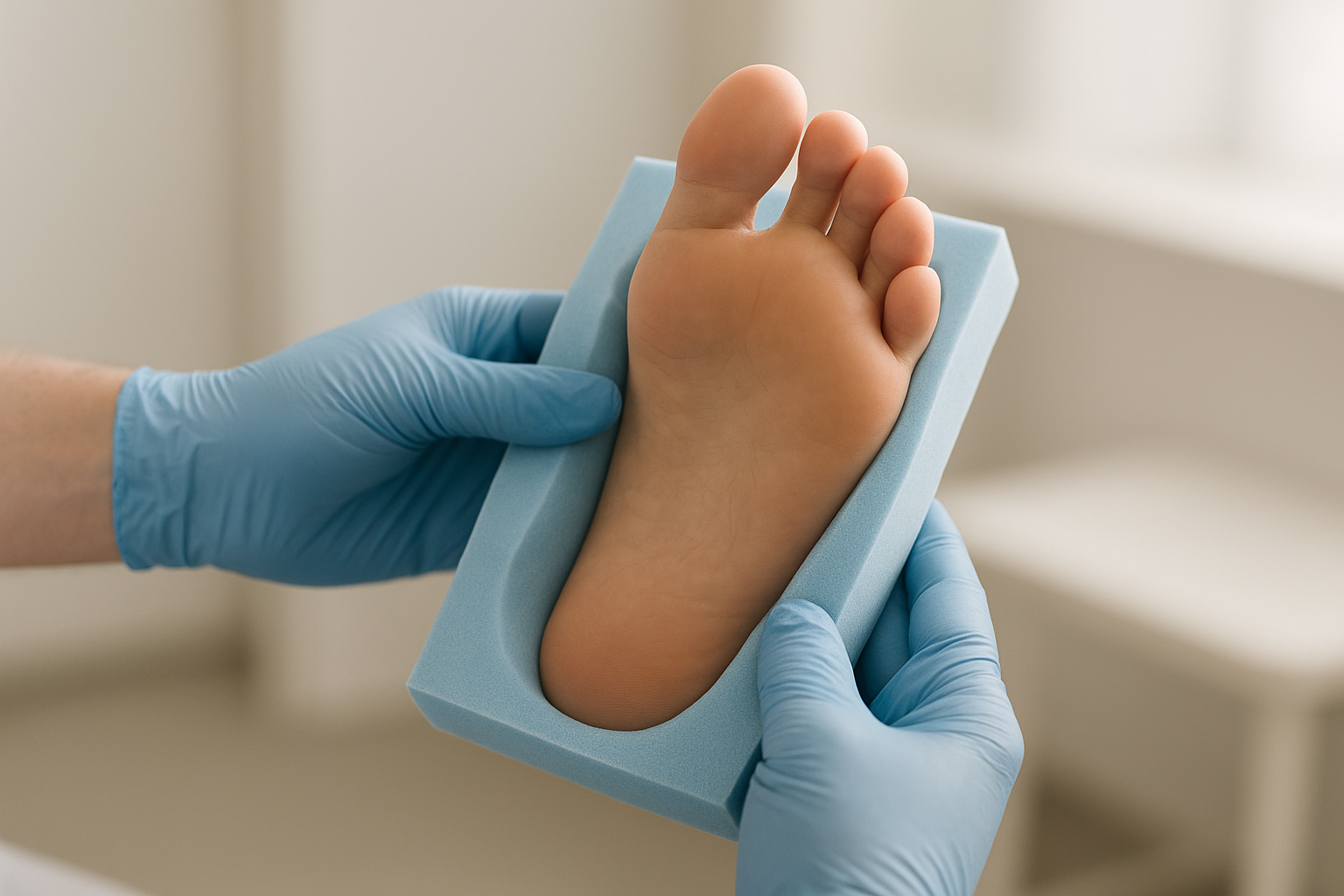
A podiatrist captures a precise foot mold, the first step in producing personalized insoles for foot comfort.
Custom-Molded Insoles vs. Kiosk Scans vs. Drugstore Inserts
Shoppers researching foot support today usually land on one of three paths: a podiatrist-molded custom device, an in-store foot-mapping kiosk that recommends a pre-made insole based on pressure readings, or a one-size-fits-most drugstore pad. Understanding the difference matters, because these options are not interchangeable.
In-store kiosks measure pressure points while you stand on a sensor pad, then match you to one of several pre-manufactured insole models — typically sorted by arch height and shoe size. This is a useful semi-custom step up from generic foam, but it is not a true custom-molded device. The insole shell itself is still mass-produced; only the recommendation is personalized. In contrast, personalized insoles for foot comfort fabricated from an actual foot mold or 3D scan are built as a one-of-one device shaped entirely around your foot's geometry, not selected from a limited catalog of pre-existing shapes.
Drugstore inserts, meanwhile, sit at the most generic end of the spectrum. They offer temporary cushioning but rarely correct the underlying biomechanical issue causing pain. Therefore, if you have tried a kiosk-matched insole or a basic foam pad without lasting relief, a fully custom-molded orthotic is usually the logical next step.
Why Custom-Molded Support Beats Generic and Kiosk-Matched Inserts
Generic insoles are built for an average foot shape that, frankly, does not exist for most people. Consequently, they often slip, compress unevenly, or fail to relieve the specific pressure point causing pain.
Custom-molded support, on the other hand, is engineered around your actual foot geometry. A survey referenced by the American Podiatric Medical Association found that a large majority of adults experience foot pain at some point in their lives, and structural misalignment is frequently a root cause. Therefore, addressing the shape mismatch directly, rather than masking symptoms with cushioning alone, tends to produce longer-lasting relief. For more detail on how fit affects comfort, see this complete guide to premium foot insoles.
In addition, custom devices use firmer, medical-grade materials that hold their shape longer than foam inserts sold in retail stores or distributed through kiosk programs. Above all, they are designed with input from a trained clinician who evaluates your gait, not just a pressure sensor reading paired with your shoe size.
How Personalized Foot Support Is Made: The Fabrication Process
Understanding the fabrication process helps explain why personalized insoles for foot comfort cost more than a store-bought pair, yet deliver noticeably better results. Below is the typical sequence a podiatric provider follows.
- Initial consultation and foot assessment: A podiatrist reviews your medical history, symptoms, and gait pattern to identify the biomechanical issues causing discomfort before recommending treatment.
- Mold or digital scan: The provider captures the exact shape of your foot using a foam impression box, plaster wrap, or digital scanner, ensuring the lab can build a device that matches your anatomy precisely — not a pre-set shape from a kiosk library.
- Biomechanical analysis and prescription: The podiatrist analyzes pressure points and alignment data to write a prescription specifying materials, wedges, and posting needed for correction.
- Lab fabrication: Skilled technicians shape and heat-mold the orthotic shell according to the prescription, usually completing it within two to four weeks.
- Fitting and adjustments: You try the finished orthotics inside your own shoes while the podiatrist checks fit and comfort, making small adjustments as needed.

Skilled technicians shape each shell by hand to match the original foot mold exactly — a step kiosk-based systems skip entirely.
Who Benefits From Personalized Insoles for Foot Comfort?
Not everyone needs a custom device, but certain groups tend to see the biggest improvement. Runners and athletes, for example, often rely on personalized insoles for foot comfort to reduce repetitive strain injuries during training.
People with diabetes also benefit, since custom orthotics can redistribute pressure away from vulnerable areas and help prevent ulcers. Similarly, individuals with flat feet, high arches, or bunions frequently find that a molded device corrects alignment issues that generic pads cannot touch. Office workers who stand for long shifts, older adults managing arthritis, and children with developmental foot conditions round out the list of common candidates. If chronic discomfort persists despite trying several store-bought options, it is likely time to explore foot pain relief insoles that actually work. Readers managing a specific diagnosis can also review this guide on tailored insoles for flat feet.
Common Foot Conditions Treated by Custom-Molded Insoles
- Plantar fasciitis: inflammation of the band of tissue along the arch, often causing sharp heel pain in the morning.
- Flat feet and fallen arches: a lack of arch support that can cause overpronation and knee strain.
- High arches: reduced shock absorption that concentrates pressure on the heel and ball of the foot.
- Diabetic foot complications: loss of sensation that increases ulcer risk without proper pressure redistribution.
- Bunions and hammertoes: structural toe deformities aggravated by poor forefoot support.
- Heel spurs and Achilles strain: bony growths or tendon irritation that benefit from targeted cushioning and heel posting.
Custom Foot Orthotics vs. Off-the-Shelf Inserts: Key Differences
Choosing between a custom device and a mass-produced insert comes down to fit, durability, and clinical involvement. In contrast to generic pairs found at any pharmacy, custom orthotics are built around a direct impression of your foot and typically last several years rather than a few months.
Off-the-shelf inserts are inexpensive and available immediately, which makes them appealing for mild, temporary discomfort. However, they rarely correct an underlying structural problem. Custom-fitted devices, meanwhile, involve a clinician's evaluation, ensuring the support targets your specific gait and pressure distribution. For readers weighing this decision, the guide on customized shoe insoles for comfort breaks down the trade-offs in more detail.
Comparing Costs: Podiatrist-Molded Orthotics, Kiosk Insoles, and Drugstore Pads
Price is often the first question people ask, so here is a straightforward breakdown. Specifically, cost tends to track directly with how much customization and clinical oversight is involved.
| Option | Typical Price | Customization Level | Typical Lifespan |
|---|---|---|---|
| Drugstore foam inserts | Under $50 | None — one-size-fits-most | A few months |
| In-store kiosk insoles | $50–$80 | Semi-custom — matched from pre-made models | 6–12 months |
| Podiatrist-molded personalized insoles | $200–$600 | Fully custom — built from your own mold or scan | 3–5 years |
As the table shows, personalized insoles for foot comfort cost more up front. However, because they last several years and address the actual cause of discomfort, the cost per year of wear is often lower than repeatedly replacing drugstore pads or kiosk-matched insoles that wear out quickly.
Choosing a Trusted Provider for Custom Orthotic Insoles
Selecting the right provider matters as much as the orthotic design itself. Above all, look for a podiatrist-owned practice with hands-on fabrication experience rather than a company that outsources the entire process or relies solely on an automated kiosk.
Customorthotics.com, for instance, is podiatrist-owned and operated with more than 20 years of industry experience and an A+ rating from the Better Business Bureau. Patients can speak directly with the podiatrist for a complimentary consultation, whether they are local or ordering remotely through the online platform. This kind of direct clinical involvement is a strong signal of quality, since the person designing your device also understands the medical reasoning behind it. For guidance on what podiatrists themselves recommend, see what insoles podiatrists suggest for foot pain relief.
Furthermore, ask any provider about turnaround time, adjustment policies, and whether insurance documentation is available. If you are still researching where to start, this resource on where to get personalized insoles made for your shoes walks through what to expect from a first consultation. You can also review clinical background on custom foot orthoses through the American Podiatric Medical Association and general foot health information from the CDC.

With properly fitted personalized insoles for foot comfort, everyday walking becomes noticeably easier.
Shoe Compatibility: Will Custom Insoles Fit Your Shoes?
A common concern is whether a custom device will even fit inside existing footwear. Generally, podiatrists design personalized insoles for foot comfort to slot into dress shoes, sneakers, work boots, or athletic shoes, depending on what you bring to your fitting appointment.
In most cases, the lab builds a thinner shell for narrow dress shoes and a fuller shell with more cushioning for athletic or walking shoes. Therefore, it helps to bring the actual pairs you wear most often to your consultation so the podiatrist can account for available depth and width. Unlike pre-made kiosk insoles, which may require trimming with scissors to approximate a fit, a truly custom shell is built to your shoe's internal dimensions from the start.
Caring for and Breaking In Your Personalized Insoles
New orthotics often feel firm for the first one to two weeks as your feet adjust to the corrected alignment. Consequently, most podiatrists recommend a gradual break-in schedule rather than wearing them all day immediately.
- Wear the new orthotics for two to three hours on day one, then increase gradually over the following two weeks.
- Wipe the shell with a damp cloth and let it air dry away from direct heat, which can warp the material.
- Rotate the orthotics between shoe pairs and inspect the shell for cracking or flattening every six months.
- Contact your podiatrist promptly if you notice new pain rather than the expected mild adjustment discomfort.
Frequently Asked Questions About Personalized Insoles for Foot Comfort
What are personalized insoles for foot comfort?
Personalized insoles for foot comfort are orthotic devices molded to the exact contours of an individual's feet, providing targeted support that generic inserts cannot offer. They are typically prescribed and fabricated by a podiatrist after a physical assessment.
How do custom orthotics differ from over-the-counter insoles?
Custom orthotics are built from a mold of your specific foot shape, while over-the-counter insoles use a generic, one-size-fits-most design. As a result, custom devices address individual pressure points and alignment issues more precisely.
How are podiatrist-molded orthotics different from kiosk-based store insoles?
Kiosks measure your pressure points and match you to a pre-made insole model from a limited set of shapes. Podiatrist-molded orthotics, in contrast, are built entirely around your own foot mold or scan, making them a true one-of-one device rather than a best-fit match.
How long does it take to get personalized insoles for foot comfort made?
Most custom orthotics take between two and four weeks from the initial mold to the finished product. Turnaround time can vary depending on the lab and the complexity of the prescription.
How much do custom orthotic insoles cost?
Custom orthotic insoles generally range from $200 to $600 per pair, depending on materials and the provider. In contrast, mass-produced insoles typically cost under $50 but rarely last as long or perform as well.
Are personalized insoles covered by insurance?
Many insurance plans partially cover custom orthotics when a podiatrist documents medical necessity. However, coverage varies widely, so it is wise to confirm benefits before ordering.
What conditions can custom insoles help treat?
Custom insoles commonly help with plantar fasciitis, flat feet, high arches, bunions, and diabetic foot complications. They can also ease knee and lower-back strain caused by poor foot alignment.
How long do custom orthotics last?
Well-made custom orthotics typically last three to five years with proper care. Heavy use, weight changes, or wear on the shell material may shorten that lifespan.
Can I order personalized insoles online without visiting in person?
Yes, many providers offer at-home mold kits combined with a phone consultation, allowing patients to order remotely. This makes professional-grade custom orthotics accessible even without a local clinic visit.
What's the process for getting fitted for custom orthotics?
The process starts with a foot assessment, followed by taking a mold or scan, then lab fabrication, and finally a fitting appointment. Adjustments are often made after the first few weeks of wear.
What common mistakes do people make when choosing insoles?
A common mistake is buying generic insoles without addressing the underlying biomechanical cause of pain. Another is skipping a professional assessment, which can lead to an ill-fitting or ineffective device.
Do personalized insoles work for athletic shoes?
Yes, custom orthotics can be fabricated specifically for athletic shoes to support running, hiking, or sports-related activity. Providers often ask about shoe type during the consultation to tailor the fit accordingly.
How do I know if I need custom orthotics versus store-bought inserts?
If over-the-counter inserts have not resolved persistent pain after a few weeks, a custom option is usually the next step. Structural issues like flat feet or uneven leg length often respond better to a molded device.
What should I look for in a custom orthotics provider?
Look for a podiatrist-owned practice with verifiable experience, transparent pricing, and a straightforward mold or scanning process. Reviews, accreditation such as a Better Business Bureau rating, and a free consultation option are strong indicators of trustworthiness.
Can children use personalized insoles for foot comfort?
Yes, children with flat feet, toe walking, or growth-related foot pain can benefit from custom orthotics. A pediatric podiatrist can determine the right design as the child's foot continues to develop.
Can personalized insoles be trimmed to fit different pairs of shoes?
Minor trimming at the forefoot edge is sometimes possible, but the overall shell is built for the specific shoe type discussed at your fitting. Unlike pre-made kiosk inserts designed for trimming, a custom shell works best in the footwear it was fabricated for.
Is there a warranty or return policy for custom orthotic insoles?
Policies vary by provider, so it is important to ask before ordering. Reputable podiatrist-owned practices typically offer an adjustment period and will refine the fit if the device causes discomfort rather than relief.
How do I care for and maintain custom orthotic insoles?
Wipe orthotics with a damp cloth and let them air dry away from direct heat, which can warp the shell. Rotating them between shoes and checking for wear every six months helps extend their usable life.
Final Thoughts
Ultimately, personalized insoles for foot comfort offer a level of precision that generic inserts and even in-store kiosk scans simply cannot match, since they are built from your own foot mold rather than an average template or a best-fit shelf model. Whether you are managing chronic pain, recovering from an injury, or simply want better support during daily activity, a custom-fitted device addresses the root cause instead of masking symptoms.
Therefore, if store-bought inserts or kiosk-matched insoles have not solved your discomfort, consider speaking with a podiatrist about a true custom mold. You can start with a complimentary consultation through customorthotics.com to learn whether personalized insoles for foot comfort are the right next step for your feet.