

Tailored insoles for flat feet are custom, podiatrist-designed devices molded precisely to your foot to rebuild arch support and correct how pressure moves across your sole as you walk. Unlike one-size-fits-all drugstore inserts, these devices start with an exact impression of your foot, so they target the specific structural imbalance causing your pain. Therefore, instead of just cushioning sore spots, they correct the mechanical fault underneath them. This guide covers everything a competing article skims over — the actual evidence behind custom insoles, the full step-by-step fabrication process, real cost ranges, maintenance, and how the approach differs for kids versus adults.
What Are Tailored Insoles for Flat Feet?
Tailored insoles for flat feet are custom orthotic inserts molded directly from an individual's foot shape to rebuild arch support, correct alignment, and ease strain on the ankles, knees, and lower back. Because each device starts from a direct mold rather than a generic template, it fits more precisely than an off-the-shelf insole and typically holds its shape far longer under daily wear.
Flat feet, medically known as pes planus, occur when the arch collapses and the entire sole touches the ground while standing. As a result, the foot rolls inward — a pattern called overpronation — which can pull the ankles, knees, and hips out of alignment over time. According to the Wikipedia entry on flat feet, the condition can be flexible or rigid, and it may be present from birth or develop later due to injury, aging, or weight gain. Specifically, tailored insoles work by lifting and supporting the arch exactly where it has dropped, which redistributes pressure evenly across the foot instead of concentrating it on the heel and ball.
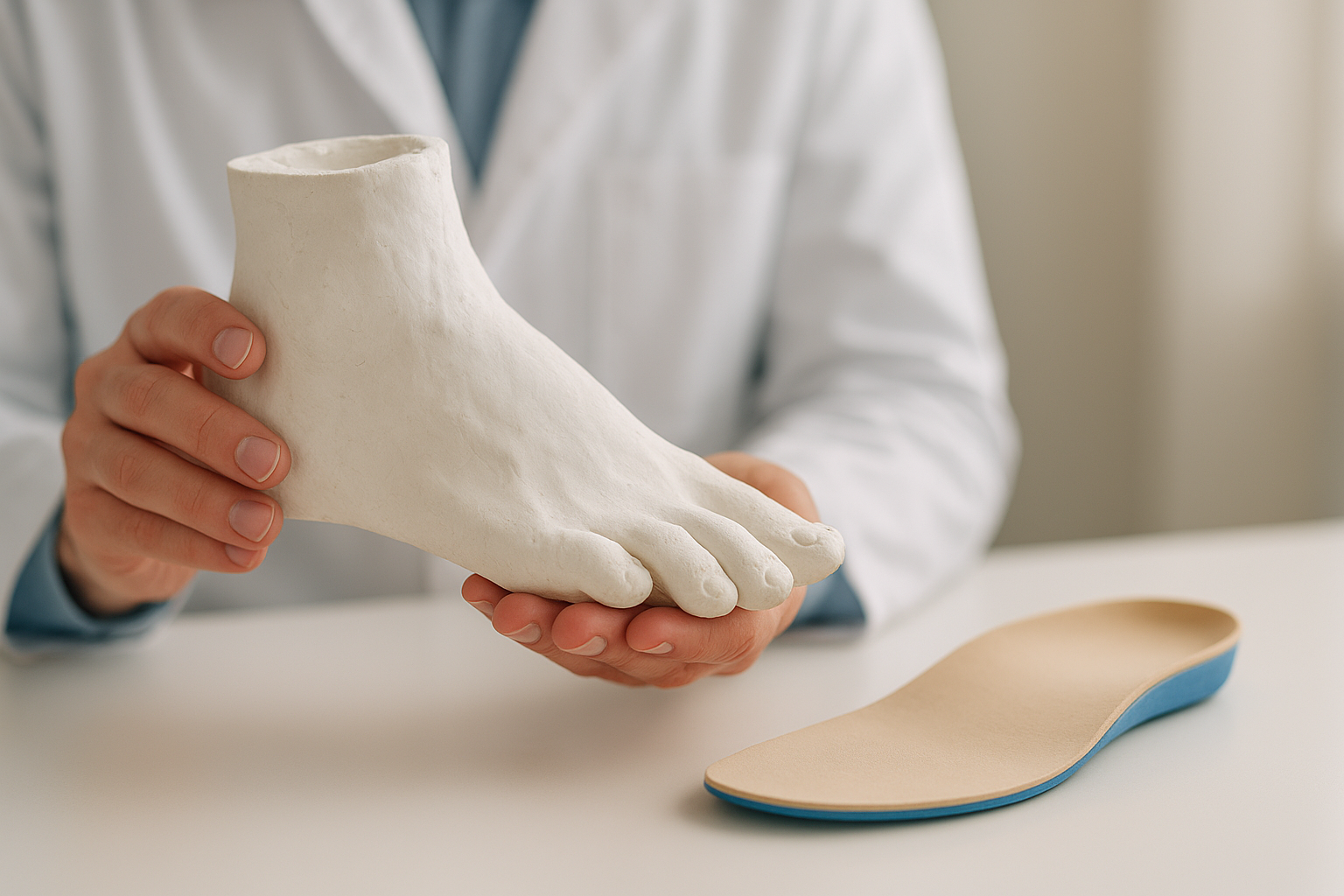
A precise foot mold is the foundation of every pair of tailored insoles for flat feet.
Do Custom Insoles for Flat Feet Really Work? Here's What the Evidence Shows
This is the question most people actually want answered before spending money, so let's address it directly. In short: yes, custom insoles for flat feet work for the majority of patients, but how well depends on the severity of the arch collapse and how consistently the device is worn. Clinically, podiatrists measure success by three markers — reduced pain scores, improved gait symmetry, and lower rates of secondary injury in the knees and lower back.
What Podiatric Research Reveals
Clinical literature on foot orthoses consistently links custom-molded devices to measurable reductions in plantar pressure and improved comfort scores compared with no treatment or generic inserts, particularly in patients with moderate-to-severe arch collapse. For a patient-friendly overview of the condition itself, MedlinePlus's entry on flatfeet confirms that supportive devices are a standard first-line, non-surgical treatment recommended before more invasive options are considered. Meanwhile, data referenced by the American Podiatric Medical Association suggests that a significant share of adults experience some degree of arch collapse over their lifetime, and many never seek treatment until pain becomes chronic. Consequently, catching the condition early with a professional assessment can prevent secondary issues in the knees and hips before they develop.
Why Generic Inserts Fall Short of the Same Result
Generic cushioned inserts can temporarily mask discomfort, but they are built on an averaged foot shape, so they rarely match the exact curve of a collapsed arch. In contrast, a mold-based device follows the true contour of your foot, which is why podiatrists report custom orthotics outperform mass-produced inserts specifically for moderate-to-severe flatfoot cases rather than mild, occasional discomfort. In other words, the "does it work" answer isn't universal — it depends on matching the right level of correction to the right severity of the problem, which is exactly why a professional assessment matters more than guessing at a shoe store.
Recognizing Flat Feet: Causes, Types & Warning Signs
Many people live with flat feet for years before realizing custom support could help. However, certain signs suggest it's time to look into a fitted solution rather than another trip to the shoe aisle. For a deeper look at how structural imbalances develop in the first place, this guide on the causes and symptoms of flat feet breaks down the underlying mechanics in more detail.
Flexible vs. Rigid Flat Feet
Flexible flat feet show an arch when the foot is lifted off the ground but flatten completely under body weight. Rigid flat feet, by contrast, stay flat in both positions — whether weight-bearing or not. This distinction matters enormously because it determines how firm your tailored insoles need to be: flexible cases often respond well to semi-rigid support, while rigid cases usually require a firmer shell and closer podiatric supervision.
Symptoms That Signal You Need Custom Support
Persistent arch or heel pain after standing for long periods is one of the most common complaints. Similarly, uneven wear on the inside of your shoes often points to overpronation. In addition, shin splints, knee discomfort, or lower back tension that flares up during walking or exercise can trace back to poor foot alignment. Above all, if over-the-counter inserts have failed to bring lasting relief, a custom-molded option is worth exploring seriously. Readers dealing with several of these symptoms at once may benefit from this complete relief guide for flat feet insoles.
- Arch or heel pain that worsens after standing or walking for long stretches.
- Uneven shoe wear, especially along the inner edge of the sole.
- Radiating discomfort in the shins, knees, hips, or lower back.
- No lasting relief from over-the-counter cushioned inserts.
How Tailored Insoles for Flat Feet Are Made: Step-by-Step
Creating tailored insoles for flat feet is a hands-on process that blends podiatric evaluation with precise fabrication. Specifically, most practices follow five core steps to move from an initial assessment to a finished, wearable device.
- Consultation and foot assessment: A podiatrist reviews your medical history, examines your gait, and identifies exactly where the arch has collapsed and how it affects your posture.
- Molding or scanning the foot: The practitioner takes a physical cast or digital scan of your foot in a neutral position to capture its exact shape and pressure points.
- Lab fabrication: Skilled technicians use the mold to build a rigid or semi-rigid orthotic shell, then add cushioning layers matched to your activity level and shoe type.
- Fitting and adjustment: You return for a fitting appointment where the podiatrist checks alignment, comfort, and shoe compatibility, making small adjustments as needed.
- Follow-up care: A short-term check-in confirms the device is working correctly and allows for further tweaks as your feet adapt to the new support.
Therefore, this process typically takes two to four weeks from consultation to final delivery, depending on the lab and the complexity of the case. Notably, patients with more severe rigid flat feet may need an additional fitting visit to fine-tune the shell before it's considered finished.
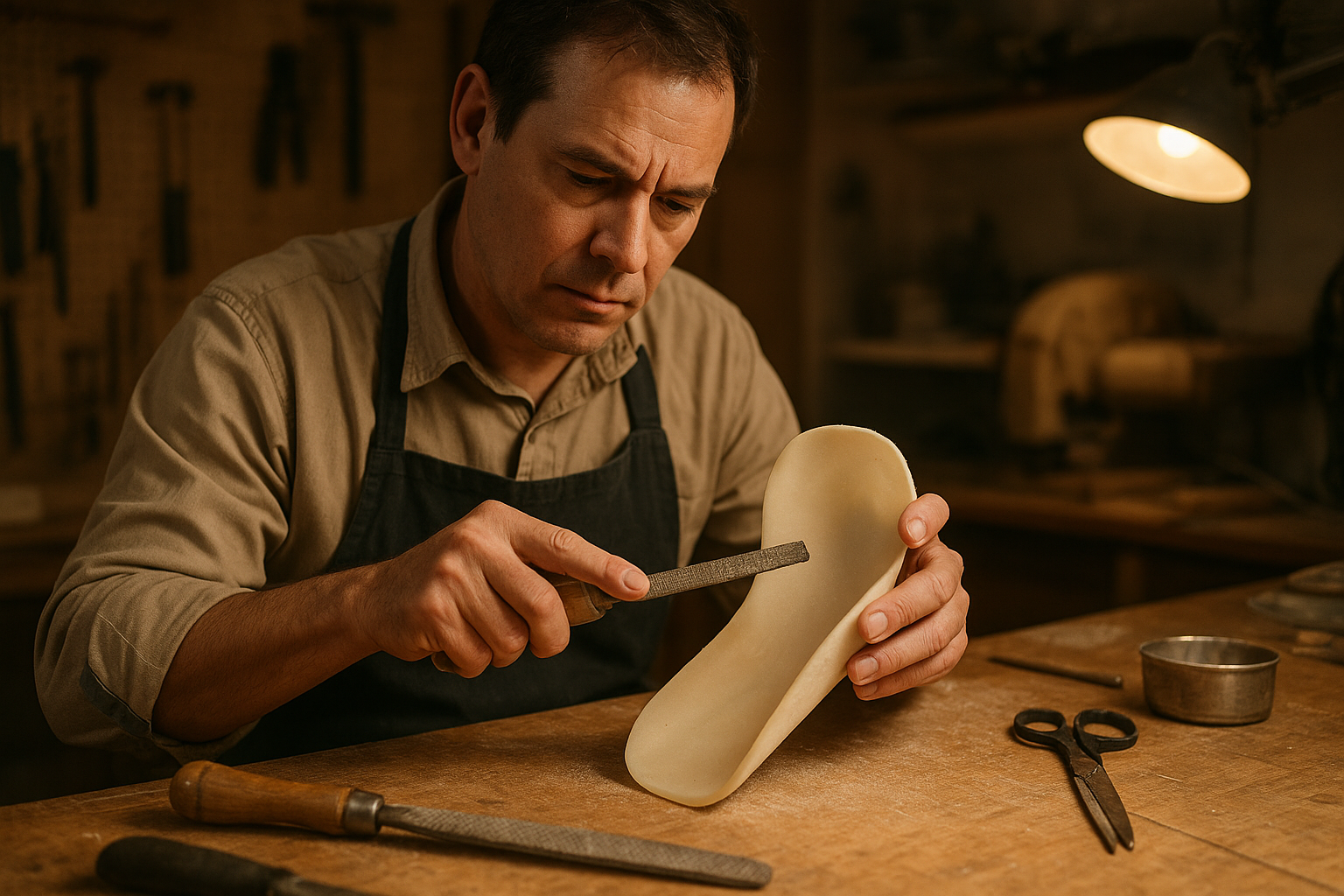
Each device is hand-fabricated in a lab from the original foot mold.
Custom Orthotics vs. Store-Bought Insoles: Which Wins?
Store-bought inserts offer general cushioning, but they rarely correct the structural cause of flat feet. In contrast, custom orthotics are engineered around your specific foot shape, which means they distribute pressure more evenly and last considerably longer. For instance, a well-made pair of custom orthotics can hold their support for three to five years, while mass-produced inserts often break down within months of regular wear. Furthermore, custom devices can be adjusted as your condition changes, something a generic insole simply cannot offer. This podiatrist's complete guide to custom orthotics for flat feet outlines additional comparisons in more detail.
Fit: Custom-molded to your exact foot vs. a generic averaged shape.
Lifespan: Three to five years vs. a few months before compression sets in.
Correction level: Targets the specific collapse point vs. broad, non-specific cushioning.
Long-term cost: Higher upfront, but fewer replacements over time vs. repeated low-cost purchases that add up.
Choosing the Right Shoe Inserts for Flat Feet
Selecting the correct support depends on your activity level, foot flexibility, and the shoes you wear most often. Above all, a proper diagnosis from a podiatrist should guide the decision, since flexible and rigid flat feet often need different levels of correction.
By Activity Level
Athletes may need a firmer shell for stability during high-impact movement, while someone who stands for long shifts might prioritize cushioning instead. In particular, runners benefit from devices built around their specific gait cycle rather than a one-size-fits-most arch bump.
By Footwear Type
Similarly, the type of footwear matters, since a device built for sneakers may not fit properly in dress shoes. For a closer look at the various materials and designs available, this expert guide to customized support for flat feet compares common options in detail. In addition, this overview of shoe insert types for flat feet relief explains how each style performs under different conditions. Patients who want a complimentary consultation with a podiatrist can connect directly through customorthotics.com to discuss their specific needs, whether they plan to visit in person or order remotely.

A proper fitting appointment ensures the finished insoles perform correctly inside everyday shoes.
Cost, Insurance & What You'll Actually Pay
Prices vary based on materials, design complexity, and insurance coverage, but custom orthotics generally range from a few hundred dollars per pair. Many practices offer a free consultation to discuss pricing before you commit to anything. Some insurance plans cover part of the cost when a podiatrist documents medical necessity, so it's worth checking with your provider and your podiatrist's billing team before ordering. As a result, the real out-of-pocket cost is often lower than the sticker price suggests, especially once you factor in how long a pair lasts compared to replacing cheap inserts every few months.
Caring for Your Tailored Insoles: Maintenance Tips That Extend Lifespan
Even the best-made device needs basic care to hit that three-to-five-year lifespan. Specifically, wipe the shell down with a damp cloth rather than soaking it, since excess moisture can warp the material over time. In addition, let your insoles air out overnight instead of leaving them inside closed shoes, which helps prevent odor and material breakdown. Furthermore, rotate between two pairs of shoes when possible, since constant compression in the same pair accelerates wear. Finally, schedule a check-up with your podiatrist roughly once a year — your foot shape can shift subtly over time, and a quick adjustment keeps the fit accurate.
Tailored Insoles for Flat Feet in Children vs. Adults
Children with flexible or rigid flat feet can benefit from custom orthotics, especially if they experience pain or fatigue during activity. A podiatrist can determine the right time to start treatment based on growth patterns, since a child's foot structure is still developing and may respond differently to support than an adult's. In contrast, adult treatment typically focuses on pain relief and preventing further joint strain rather than guiding bone development. Either way, the core process — assessment, molding, fabrication, fitting, and follow-up — stays the same regardless of age.
Frequently Asked Questions About Tailored Insoles for Flat Feet
What are tailored insoles for flat feet?
Tailored insoles for flat feet are custom orthotic devices molded from an individual's foot shape to restore arch support and correct alignment. They are designed by a podiatrist to address the specific structural cause of foot pain.
Do tailored insoles for flat feet really work?
Yes, for most patients with moderate-to-severe arch collapse, custom-molded insoles reduce pain and improve gait by correcting pressure distribution. Results depend on consistent wear and matching the device's firmness to your specific foot type.
How are custom orthotics different from regular insoles?
Custom orthotics are built from a direct mold of your foot, while regular insoles are mass-produced in standard sizes. As a result, custom devices fit more precisely and typically last longer.
How long does it take to receive custom orthotic insoles?
Most patients receive their finished insoles within two to four weeks after the initial fitting. This timeline can vary depending on the lab and the complexity of the design.
How much do tailored insoles for flat feet cost?
Prices vary based on materials, design complexity, and insurance coverage, but custom orthotics generally range from a few hundred dollars per pair. Many practices offer a free consultation to discuss pricing before you commit.
Can flat feet be corrected permanently with orthotics?
Orthotics do not change the bone structure of the foot, but they can significantly reduce pain and prevent the condition from worsening. Consistent use often improves gait and reduces strain on the knees and back.
Are custom orthotics covered by insurance?
Some insurance plans cover part of the cost when a podiatrist documents medical necessity. It is best to check with your provider and your podiatrist's billing team before ordering.
What conditions can custom orthotics help with besides flat feet?
Custom orthotics can also help with plantar fasciitis, bunions, shin splints, and general joint pain caused by poor foot alignment. They work by correcting how weight moves through the foot during standing and walking.
Can children wear custom orthotic insoles for flat feet?
Yes, children with flexible or rigid flat feet can benefit from custom orthotics, especially if they experience pain or fatigue during activity. A podiatrist can determine the right time to start treatment based on growth patterns.
What is the difference between flexible and rigid flat feet?
Flexible flat feet show an arch when the foot is lifted off the ground but flatten under weight, while rigid flat feet stay flat in both positions. This distinction affects how firm the custom orthotic needs to be.
What's the difference between orthotics and insoles for flat feet?
"Insoles" is a broad term covering any insert placed inside a shoe, including generic cushioned pads. "Orthotics" specifically refers to custom-molded, medically prescribed devices built to correct a structural issue like flat feet, making every orthotic a type of insole but not every insole an orthotic.
What common mistakes do people make when choosing insoles for flat feet?
A frequent mistake is choosing a generic insole based on shoe size alone rather than foot shape and gait pattern. Skipping a professional assessment often leads to a poor fit and continued pain.
How long do custom orthotics typically last?
With regular use, custom orthotics usually last between three and five years before needing replacement. Lifespan depends on activity level, weight, and the materials used in fabrication.
What should I expect during a custom orthotic fitting appointment?
During the fitting, a podiatrist checks the alignment, comfort, and shoe compatibility of your new orthotics and makes small adjustments if needed. You may be asked to walk or stand so the practitioner can observe how the device performs.
Can I order tailored insoles for flat feet online?
Yes, many practices, including customorthotics.com, allow patients to start the process online and follow up with a podiatrist by phone for a complimentary consultation. This makes professional-grade foot care accessible even for patients who cannot visit in person.
Final Verdict: Are Tailored Insoles for Flat Feet Worth It?
Tailored insoles for flat feet offer a level of precision and durability that generic inserts simply cannot match. Because each device is built from an exact mold of your foot, it targets the specific imbalance causing pain rather than just masking it. Therefore, anyone dealing with persistent arch discomfort, uneven shoe wear, or recurring joint pain should consider a professional evaluation before choosing a solution. With guidance from an experienced podiatrist, a well-fitted custom orthotic can restore comfortable movement and support long-term foot health. To learn more about the fitting process or to schedule a consultation, visit customorthotics.com directly.