

Foot care solutions for seniors cover everything from daily hygiene habits to medical-grade support like custom orthotics, and getting them right can mean the difference between comfortable mobility and constant pain. As people age, their feet undergo real physical changes that make routine care more important, not less. This guide walks through why senior feet need special attention, what problems to watch for, and how a podiatrist-guided approach can help.
Quick Answer: Effective foot care solutions for seniors combine daily self-checks, proper footwear, professional podiatric care, and often custom orthotics molded to an individual's foot shape. Together, these steps reduce pain, lower fall risk, and catch problems before they become serious.
What Are Foot Care Solutions for Seniors?
Foot care solutions for seniors is a term describing the range of preventive habits, footwear choices, and clinical treatments designed to keep older adults' feet healthy. This includes daily inspection routines, moisturizing, nail trimming, supportive shoes, and orthotic devices fitted by a podiatrist. Above all, these solutions aim to prevent minor issues from turning into serious complications like infections or falls.
Because feet carry the body's full weight every day, even small imbalances can cause outsized problems over time. In particular, older adults with diabetes, arthritis, or circulation issues benefit from a more structured approach than a simple over-the-counter insole can provide.

Daily self-checks are one of the simplest foot care solutions for seniors to catch problems early.
Why Senior Foot Health Deserves Extra Attention
As people age, the fatty padding that cushions the soles of the feet gradually thins, which means less natural shock absorption with every step. In addition, skin becomes drier and more prone to cracking, while circulation to the lower extremities often slows down.
According to the Centers for Disease Control and Prevention, more than one in four adults aged 65 and older experiences a fall each year, and foot pain or instability frequently plays a role in those incidents. Consequently, addressing senior foot health isn't just about comfort; it's directly tied to preventing serious injuries. For a deeper look at age-related changes, the complete guide to custom foot orthotics for seniors covers the topic in detail.
Common Foot Problems in Older Adults
Several conditions show up more frequently in aging feet, and recognizing them early makes treatment far easier. Plantar fasciitis, bunions, hammertoes, and fungal nail infections are among the most common complaints seen by podiatrists. Similarly, diabetic neuropathy can reduce sensation in the feet, which makes injuries harder to notice without a daily inspection routine.
Structural issues such as fallen arches or uneven weight distribution also tend to worsen with age, often leading to knee, hip, or lower back pain. In contrast to younger adults, seniors typically heal more slowly, so preventing these problems in the first place is far more effective than treating them after the fact.
Custom Orthotics: A Foot Care Solution for Seniors Worth Considering
Among the many foot care solutions for seniors, custom orthotics stand out because they're molded directly from an individual's own foot rather than mass-produced. This precision allows the device to correct specific imbalances, cushion pressure points, and support the arch exactly where it's needed most.
Unlike generic insoles bought off a shelf, a podiatrist-fabricated orthotic is built around a physical impression of the patient's foot. As a result, patients often report noticeably better pain relief and stability, particularly those managing arthritis or diabetic foot changes. Readers who want a closer comparison of options can review orthotic solutions for seniors focused on comfort and pain relief.
A podiatrist-owned practice with more than 20 years of experience, such as customorthotics.com, fabricates orthotics directly from individual foot molds and offers a free phone consultation, making it easier for seniors to start with expert guidance rather than guesswork.
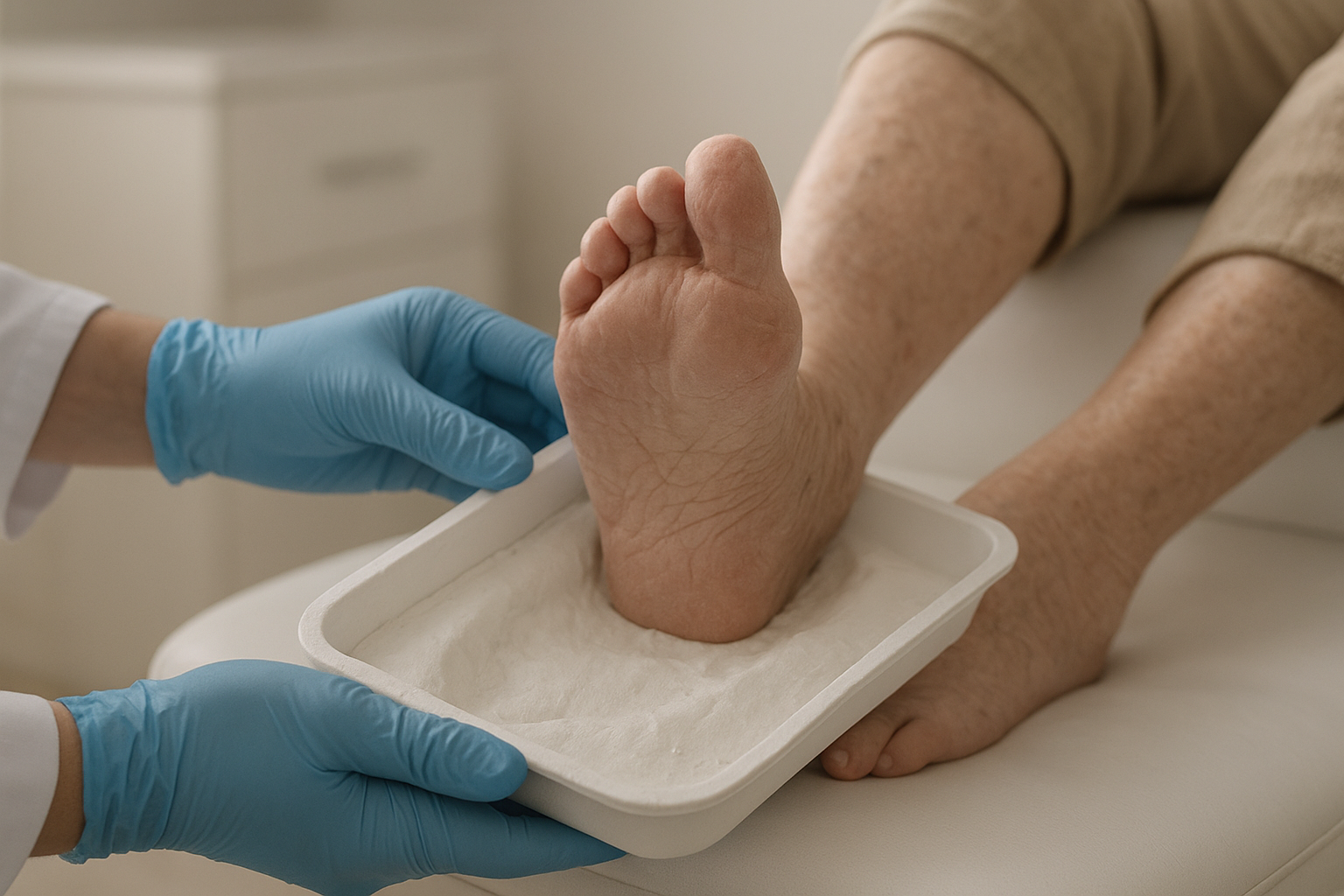
A custom mold ensures the orthotic matches the exact shape of a senior's foot.
How to Build a Daily Foot Care Routine for Seniors
Establishing a consistent daily routine is one of the most effective foot care solutions for seniors, and it doesn't need to be complicated. The following steps take about fifteen minutes and can be woven into an existing morning or evening routine.
- Inspect the feet daily. Check the tops, sides, and soles of each foot every evening, using a mirror if bending down is difficult, and look for cuts, redness, or swelling.
- Wash and dry thoroughly. Use lukewarm water and mild soap, then dry completely between the toes to prevent moisture-related skin problems.
- Moisturize, but skip between the toes. Apply lotion to the tops and soles to prevent cracking while avoiding the webbing, where dampness can encourage fungal growth.
- Trim nails carefully. Cut straight across and file sharp edges to reduce the risk of ingrown toenails, which can become painful quickly in older adults.
- Wear supportive footwear with orthotics. Pair well-fitted shoes with a custom orthotic device before standing or walking to reduce pressure points throughout the day.
For additional daily habits recommended by professionals, the article on expert podiatrist foot care advice offers further practical tips.
When Should a Senior See a Podiatrist?
A senior should schedule a podiatry visit whenever pain lasts more than a few days, a wound isn't healing, or there are visible signs of infection such as warmth, swelling, or discharge. Likewise, numbness or tingling should never be ignored, since it can indicate nerve damage linked to diabetes.
Routine podiatric checkups, even without an obvious problem, help catch structural changes early. The National Institute on Aging recommends regular foot exams for older adults as part of general preventive health care, particularly for those managing chronic conditions.
Finding Personalized Foot Care Near You
Not every foot care provider offers the same level of personalization, so it's worth comparing options before committing. Some clinics rely on generic templates, while others, like podiatrist-owned practices, fabricate devices from an individual's actual foot mold for a more precise fit.
Those wondering where to start can review guidance on finding personalized foot care in your area, which outlines what to look for in a qualified provider. Meanwhile, resources from the American Podiatric Medical Association can help verify credentials before choosing a clinic.

Proper footwear and orthotics help seniors stay active without foot pain.
Preventing Foot Fatigue and Everyday Discomfort
Foot fatigue often builds gradually, especially for seniors who spend long hours standing or walking on hard surfaces. Simple changes, such as taking seated breaks, stretching the calves, and rotating between two pairs of supportive shoes, can noticeably reduce end-of-day soreness.
For readers experiencing persistent tiredness or aching in their feet, the guide on relief from foot fatigue, causes, fixes, and prevention breaks down additional strategies. Combining these habits with proper orthotic support tends to produce the best long-term results.
Frequently Asked Questions
What are foot care solutions for seniors?
Foot care solutions for seniors are the combined habits, products, and medical treatments—like custom orthotics, proper footwear, and regular checkups—that keep aging feet healthy and pain-free. They address circulation issues, skin changes, and structural problems common in older adults.
How often should seniors check their feet for problems?
Seniors should visually inspect their feet every day, ideally in the evening when swelling is easier to spot. Daily checks catch cuts, blisters, or discoloration early, before they become serious infections.
Why do feet change so much as people age?
Feet change with age because the fatty padding on the soles thins out, ligaments lose elasticity, and circulation slows down. As a result, older adults often experience more pain, instability, and slower healing than younger people.
What is the difference between custom orthotics and over-the-counter insoles?
Custom orthotics are molded directly from an individual's foot shape to correct specific structural imbalances, while over-the-counter insoles offer generic cushioning. Consequently, custom orthotics typically provide more targeted, lasting relief for chronic foot pain.
How much do custom orthotics cost for seniors?
Custom orthotics generally cost more than drugstore insoles because they involve a personalized mold and fabrication process, though prices vary by provider and condition treated. Many practices, including podiatrist-owned providers, offer free consultations to outline exact pricing before ordering.
How long does it take to get used to new orthotics?
Most people adjust to new custom orthotics within one to three weeks of gradual, increasing wear. During this break-in period, minor pressure or tightness is normal and typically resolves as the foot adapts.
What are the most common foot problems in seniors?
Common foot problems in seniors include plantar fasciitis, bunions, hammertoes, fungal nails, and diabetic neuropathy. Each of these conditions can worsen balance and increase fall risk if left untreated.
What mistakes should seniors avoid when caring for their feet?
Seniors should avoid walking barefoot, ignoring numbness, trimming corns themselves, and wearing shoes that no longer fit properly. These habits can lead to injuries that are slower to heal in older age.
Can diabetes affect senior foot care needs?
Yes, diabetes significantly increases the need for careful, consistent foot care because nerve damage can mask injuries and reduce circulation. Therefore, diabetic seniors should have their feet professionally examined more frequently than the general population.
When should a senior see a podiatrist instead of self-treating?
A senior should see a podiatrist whenever pain persists beyond a few days, a wound isn't healing, or there are signs of infection such as redness and warmth. Self-treating structural issues like bunions or fallen arches rarely resolves the underlying cause.
What type of shoes are best for elderly feet?
The best shoes for elderly feet have a wide toe box, low heel, firm heel counter, and removable insoles that accommodate custom orthotics. Adjustable closures like Velcro also make shoes easier to put on for those with limited dexterity.
Are custom orthotics covered by insurance or Medicare?
Coverage varies widely; Medicare may help cover therapeutic shoes and inserts for patients with diagnosed diabetes, but general custom orthotics are often not covered. It's best to confirm benefits directly with the provider before ordering.
How can family caregivers help with senior foot care?
Family caregivers can help by assisting with daily foot inspections, trimming nails safely, and scheduling regular podiatry visits. In addition, caregivers can watch for changes in gait or balance that may signal an underlying foot problem.
Conclusion
Ultimately, effective foot care solutions for seniors come down to consistency: daily inspections, proper hygiene, supportive footwear, and timely visits to a podiatrist all work together to prevent pain and reduce fall risk. Custom orthotics, molded from an individual's own feet, offer one of the most reliable ways to address structural problems at their root rather than simply masking discomfort. For seniors and caregivers ready to take the next step, scheduling a free consultation with a podiatrist-owned practice like customorthotics.com is a practical place to start building healthier, more comfortable feet for the years ahead.