

Custom shoe inserts for pain relief are one of the most effective ways to address chronic foot, heel, and joint discomfort caused by structural imbalances. Unlike generic insoles found at the pharmacy, these devices are built from an exact mold of your foot, so every contour, arch height, and pressure point is accounted for. As a result, many patients notice real improvement within weeks rather than months of trial and error with store-bought products. This guide explains how custom orthotics work, which conditions they help, and how to get properly fitted.
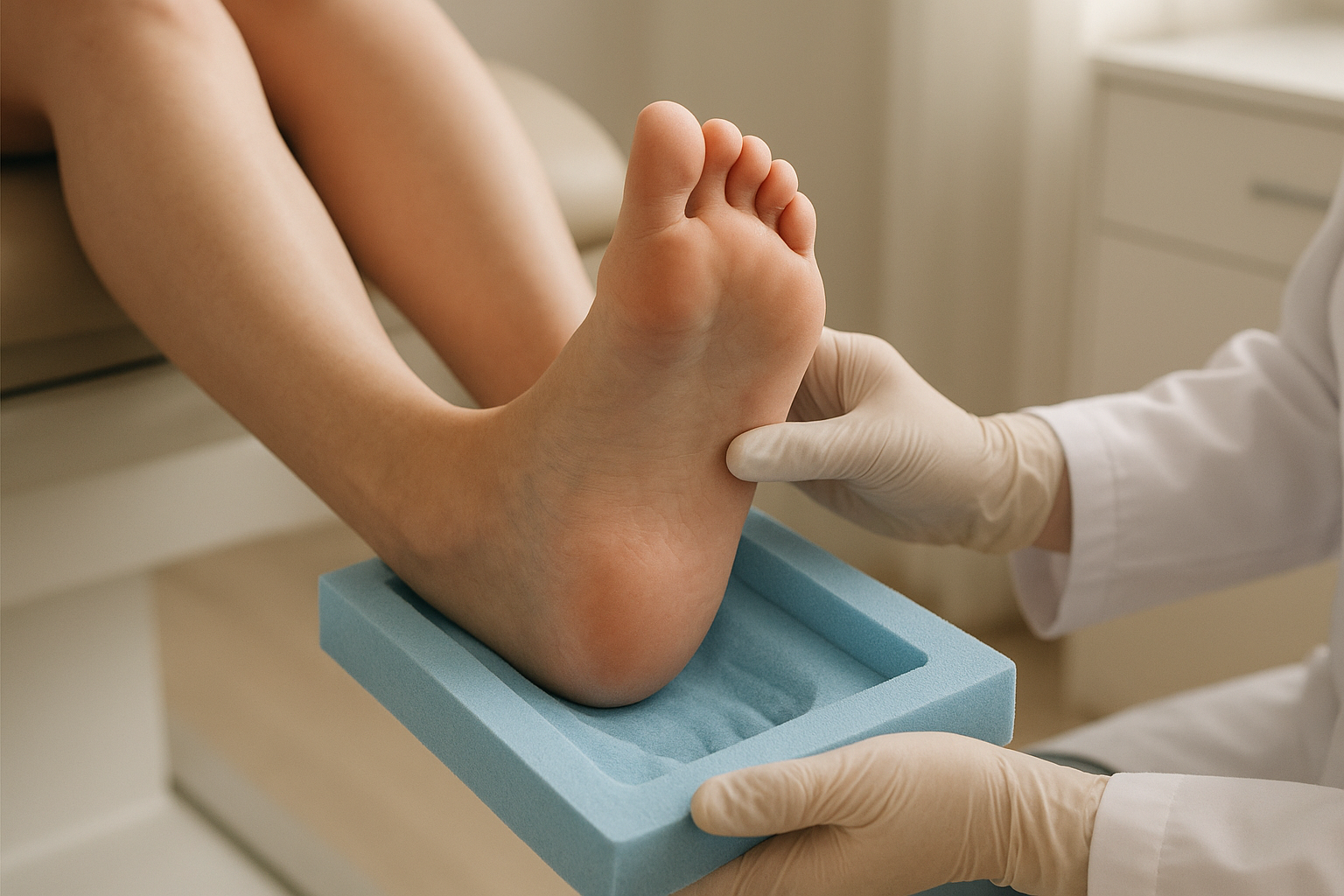
A podiatrist takes a precise foot mold, the first step in creating custom shoe inserts for pain relief.
What Are Custom Shoe Inserts for Pain Relief?
Custom shoe inserts for pain relief are podiatrist-designed devices molded to the unique shape of an individual's foot to correct alignment, redistribute pressure, and ease strain on joints and soft tissue. Unlike mass-produced insoles, they are fabricated from a physical or digital impression of the patient's foot. This precision allows them to target the specific structural cause of pain rather than simply masking symptoms with generic cushioning.
In particular, orthotics are considered supportive devices, a category that includes braces, splints, and inserts designed to correct or accommodate a physical condition, as outlined by Wikipedia's overview of orthotics. Because every foot has a slightly different shape, a properly molded insert can influence how weight travels through the ankle, knee, and hip during each step.
How Custom Orthotic Inserts Relieve Foot Pain
Custom orthotic inserts work by redistributing pressure away from painful areas and correcting the way the foot rolls during walking, a motion known as pronation. Consequently, joints that were absorbing excess shock, such as the knee or lower back, receive less strain over time. Furthermore, because the device is shaped to the patient's own arch, it provides support exactly where it is needed instead of a generalized fit.
For instance, someone with a collapsed arch may need firmer medial support, while someone with a high, rigid arch may need extra cushioning to absorb shock. In addition, gait analysis performed during the fitting process helps the podiatrist fine-tune these features before the device is finalized.
Common Conditions Treated by Personalized Shoe Inserts
Personalized shoe inserts are used for a wide range of foot-related issues, and their benefit often depends on how well the underlying cause is diagnosed. Above all, they tend to work best when the podiatrist identifies the specific structural pattern causing pain rather than treating symptoms alone. For a deeper look at one of the most common uses, see this full guide to custom shoe inserts for plantar fasciitis.
- Plantar fasciitis and chronic heel pain
- Flat feet and fallen arches
- Bunions and toe misalignment
- Diabetic foot complications requiring pressure offloading
- Knee, hip, or lower back pain linked to poor foot alignment
- Discomfort from prolonged standing at work
Custom Orthotics vs Over-the-Counter Insoles
Over-the-counter insoles are inexpensive and widely available, which makes them appealing as a first step. However, they are built using average foot shapes and rarely address a specific structural issue. If budget is the main concern, this comparison of affordable insoles for foot pain can help identify reasonable starting options.
In contrast, custom shoe inserts for pain relief are made from an individual mold, meaning they account for asymmetries between the left and right foot, arch height variations, and gait quirks unique to that patient. Therefore, while the upfront cost is higher, many patients find the results last longer and feel noticeably more supportive during daily activity.
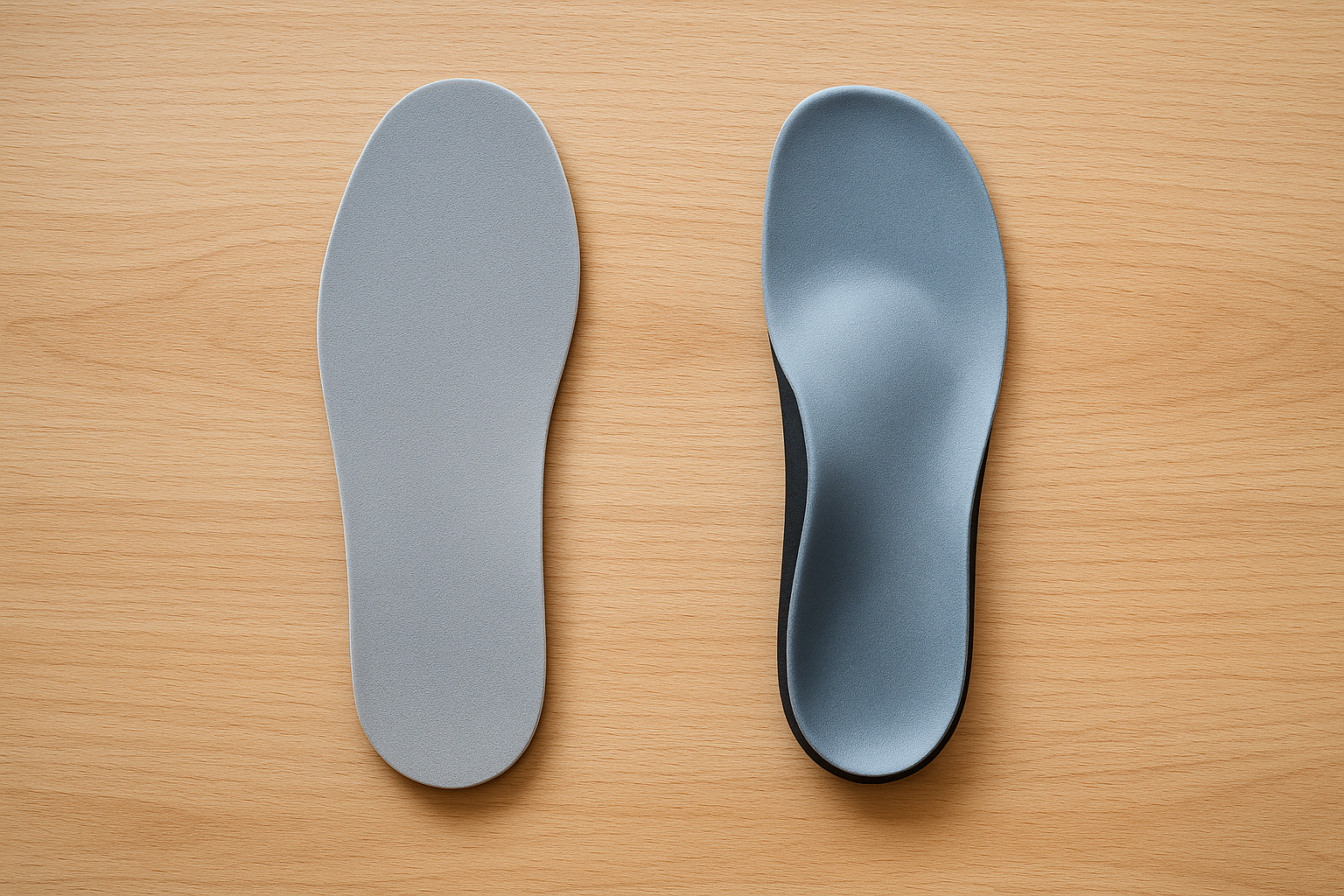
A flat generic insole next to a contoured custom orthotic highlights the difference in shape and support.
The Fitting Process: How Custom Foot Orthotics Are Made
Getting fitted for custom foot orthotics generally follows a consistent, straightforward sequence. Below is the typical process a patient can expect from consultation to final fitting.
- Schedule a consultation: Contact a podiatrist for a complimentary consultation to discuss your symptoms, footwear habits, and prior treatments before proceeding.
- Get a foot mold or scan taken: The podiatrist takes a physical impression or digital scan of each foot to capture exact arch height, width, and pressure distribution.
- Undergo a gait analysis: The provider studies how you walk and stand to identify imbalances, ensuring the orthotic corrects the underlying biomechanical cause.
- Orthotics are fabricated: Technicians build the device in a lab using your mold data, selecting materials suited to your activity level and shoe type.
- Attend a fitting session: The podiatrist checks the fit inside your shoes and makes small adjustments so the device feels supportive rather than restrictive.
How Much Do Custom Shoe Inserts Cost?
Custom shoe inserts typically cost between $200 and $800 per pair, depending on the materials used and the complexity of the correction needed. This is notably higher than mass-produced insoles, largely because of the individualized molding, gait analysis, and hands-on fabrication involved. According to research summarized by the National Center for Biotechnology Information, custom orthotic devices have shown measurable reductions in pain scores for patients with biomechanical foot conditions such as plantar fasciitis.
Since pricing varies by provider, it helps to ask about a complimentary consultation before committing. For example, customorthotics.com offers a free phone consultation directly with a podiatrist, which allows patients to understand expected costs before ordering.
Choosing a Provider for Custom Shoe Inserts for Pain Relief
Not all orthotic providers offer the same level of expertise, so it is worth checking credentials and experience before ordering. A podiatrist-owned practice, in particular, brings direct medical training to the fabrication process rather than outsourcing design decisions to a generic lab. Customorthotics.com, for example, is podiatrist-owned and operated with more than 20 years of industry experience and an A+ rating from the Better Business Bureau, and it fabricates every device from an individual mold of the patient's own feet.
Patients can connect with the podiatrist directly for a complimentary consultation by phone, or they can place an order conveniently through the online platform if an in-person visit is not practical. If you are wondering where to get personalized shoe inserts for better foot support, this remote-friendly process is designed to make professional-grade foot care accessible regardless of location. Standing professionals may also want to review these custom foot supports for work relief designed for long shifts on hard floors.
Frequently Asked Questions About Custom Shoe Inserts for Pain Relief
What are custom shoe inserts for pain relief?
Custom shoe inserts for pain relief are podiatrist-designed devices molded to the exact shape of a patient's foot to correct alignment and reduce strain on painful areas. They differ from store-bought insoles because they target the specific structural cause of discomfort.
How do custom orthotics differ from insoles bought at a store?
Store-bought insoles use a one-size-fits-most shape, while custom orthotics are fabricated from an actual mold or scan of the patient's foot. This gives custom devices far more precise support for individual arch height and gait patterns.
How long does it take to get custom shoe inserts made?
Most patients receive their finished orthotics within two to four weeks after the initial foot mold is taken. Rush fabrication is sometimes available for an added cost.
Can custom shoe inserts help with plantar fasciitis?
Yes, custom shoe inserts are commonly recommended for plantar fasciitis because they support the arch and reduce tension on the plantar fascia ligament. Many patients notice reduced heel pain within a few weeks of consistent use.
Are custom orthotics covered by insurance?
Coverage varies by plan, but many insurers reimburse part of the cost when a podiatrist documents medical necessity. It is best to confirm directly with your provider before ordering.
How much do custom shoe inserts cost?
Custom shoe inserts for pain relief typically cost between $200 and $800 per pair depending on materials and complexity. Prices are usually higher than mass-produced insoles because of the individualized molding involved.
How long do custom orthotics last?
With proper care, custom orthotics typically last three to five years before the materials compress and lose support. Active individuals may need replacements sooner.
What conditions can custom foot orthotics treat?
Custom foot orthotics are commonly used for plantar fasciitis, flat feet, bunions, and diabetic foot complications. They can also help reduce knee, hip, and lower back strain linked to poor foot alignment.
Do custom shoe inserts fit in all types of shoes?
Not always. Custom orthotics are usually fabricated for a specific shoe category, such as athletic or work shoes, so it helps to mention your primary footwear during the consultation.
What's the difference between custom orthotics and prefabricated insoles?
Prefabricated insoles are manufactured in bulk using average foot shapes, while custom orthotics are built from an individual mold or scan. As a result, custom devices generally offer more precise correction for structural foot problems.
How do I know if I need custom shoe inserts for pain relief?
If over-the-counter insoles have not resolved persistent heel, arch, or joint pain after several weeks, a podiatric evaluation can determine whether custom inserts are appropriate. Uneven shoe wear is another common indicator.
What common mistakes should be avoided when using custom orthotics?
A frequent mistake is switching shoes without transferring the orthotic properly or skipping the break-in period, which can cause temporary discomfort. Skipping follow-up adjustments is another common oversight.
How are custom orthotics made?
Custom orthotics are made by taking a mold, cast, or digital scan of the patient's foot, which is then used to fabricate a device matched to their exact structure and gait. A podiatrist typically reviews the design before final production.
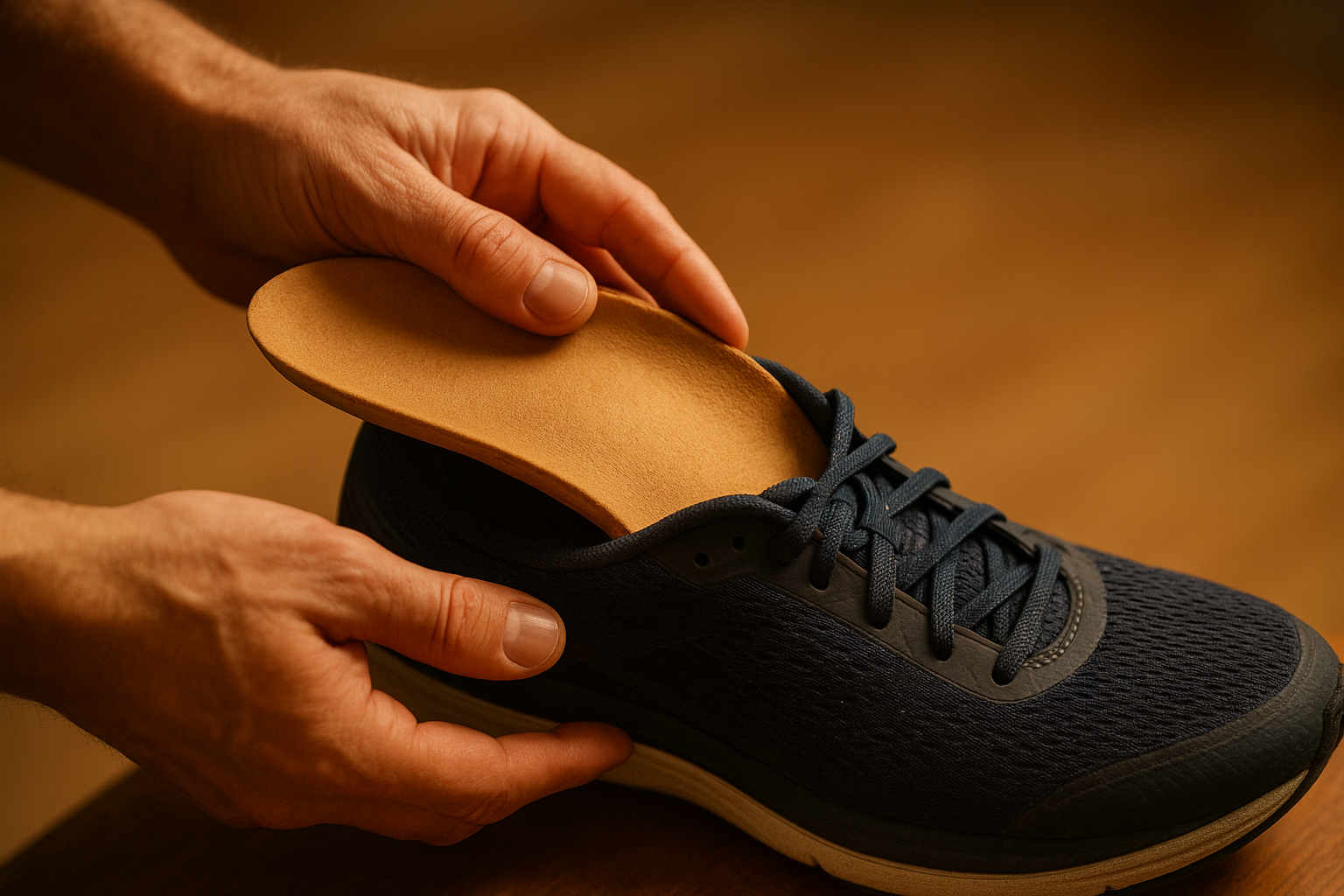
Placing a finished custom orthotic into a shoe completes the fitting process.
Final Thoughts on Custom Shoe Inserts for Pain Relief
In summary, custom shoe inserts for pain relief offer a targeted, evidence-informed alternative to generic insoles when chronic foot, heel, or joint discomfort has not responded to simpler fixes. Because each device is molded to an individual's exact foot structure, it can correct alignment issues at their source rather than masking symptoms temporarily. Whether you are managing plantar fasciitis, standing all day at work, or simply searching for the right foot pain relief insoles that actually work, starting with a podiatrist consultation is the most reliable path forward. Ultimately, investing in a properly fitted, custom-made device tends to deliver longer-lasting comfort than repeated trial and error with off-the-shelf products.