

Podiatrist recommended insoles are widely considered one of the most effective, non-invasive ways to relieve chronic foot pain — and for good reason. Unlike a generic insert grabbed at random off a drugstore shelf, these insoles are selected or custom-built only after a licensed podiatrist studies how your feet actually move, bend, and bear weight. As a result, they solve problems that mass-produced inserts routinely miss, including arch collapse, heel-strike imbalance, and uneven pressure across the ball of the foot.
According to the American Podiatric Medical Association (APMA), roughly 77% of Americans have experienced foot pain serious enough to limit daily activity. Consequently, more people are turning to professional guidance instead of guessing which off-the-shelf insert might help. This guide covers what podiatrist recommended insoles are, why podiatrists prescribe them, how leading over-the-counter brands compare, what they cost, and how to decide between a store-bought option and a fully custom orthotic from a provider like Custom Orthotics.
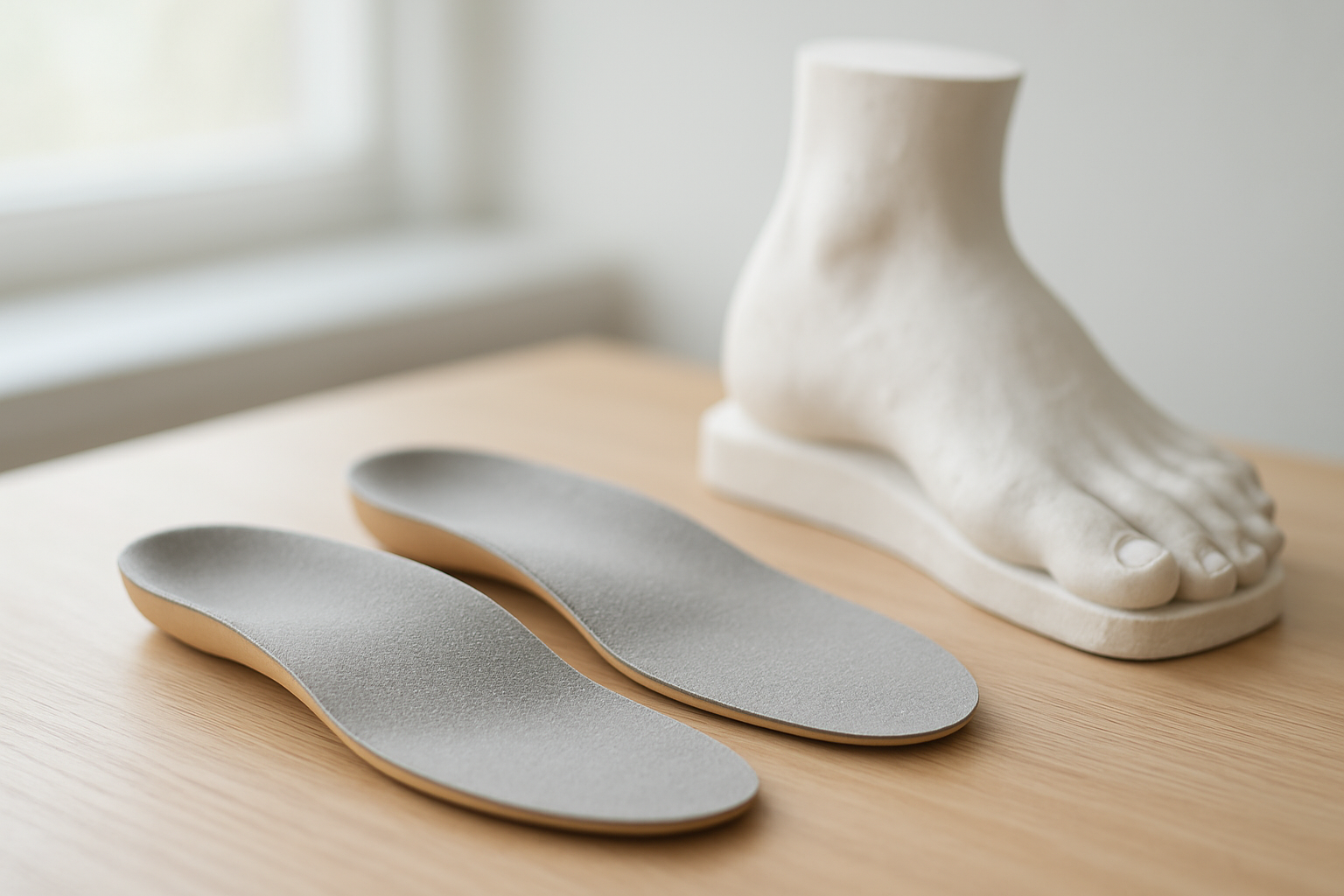
Podiatrist recommended insoles are often matched to a physical mold of the patient's foot for a precise fit.
What Are Podiatrist Recommended Insoles?
Podiatrist recommended insoles are shoe inserts a foot and ankle specialist suggests after assessing your gait, arch type, and specific pain points. They range from soft, cushioned over-the-counter insoles to rigid, custom-molded orthotics built from a cast or 3D scan of your foot. In every case, the goal is the same: correct biomechanical imbalances and reduce stress on painful areas.
In contrast to insoles picked at random off a shelf, podiatrist recommended insoles are matched to your unique foot structure. For example, someone with flat feet may need firm, structured arch support, while a person with high arches often benefits from extra cushioning instead. Furthermore, a podiatrist can spot underlying issues — such as plantar fasciitis or overpronation — that a shopper would easily miss while browsing alone.
Therefore, the recommendation process typically starts with a physical exam, a pressure-mapping scan, or a simple foot mold. This step ensures the insole matches the real shape and mechanics of your foot rather than a generic average size. For a deeper look at specific product picks, this guide on what insoles podiatrists suggest for foot pain relief covers common recommendations in more detail.
Why Podiatrists Recommend Insoles for Foot Pain
Podiatrists recommend insoles for several practical reasons. Above all, well-fitted insoles redistribute pressure away from sore or inflamed tissue, which can ease conditions like plantar fasciitis, bunions, and metatarsalgia (pain in the ball of the foot). In addition, they help correct structural issues such as overpronation (the foot rolling inward too far) or supination, which, if left unaddressed, can eventually contribute to knee, hip, or lower back pain.
Similarly, insoles can improve stability for people with diabetes or arthritis, which lowers the risk of pressure sores or joint strain. Consequently, many patients notice improved walking comfort within just a few weeks of consistent use. However, results vary depending on the severity of the condition and how closely the insole matches the patient's individual foot mechanics — this is precisely why a professional recommendation outperforms guesswork.
For chronic or severe pain, a podiatrist may suggest moving from an off-the-shelf option to a fully custom device. This progression is explored further in this resource on foot pain relief insoles and custom orthotics that work.
Key Features of Podiatrist-Approved Insoles
When evaluating podiatrist-approved insoles, a handful of features consistently matter more than brand name or price alone:
- Arch support matched specifically to your foot type — flat, neutral, or high-arched
- Cushioning appropriate for your activity level, from walking to running or standing all day
- Durable materials that hold their shape after months of regular wear
- Proper sizing and compatibility with your existing footwear, including available depth
- Breathable, moisture-wicking materials that reduce odor buildup
- A firm heel cradle that limits excess side-to-side motion during heel strike
Above all, fit matters more than any feature printed on a label. In particular, an insole that feels supportive while standing in a store may still shift or bunch during a long walk, which undermines lasting relief. For that reason, testing insoles during actual movement — not just while standing still — is a smart step before committing to a pair, a topic covered in more depth in this guide to supportive insoles for walking. Likewise, anyone on their feet for long shifts should review this expert guide to the best insoles for standing all day before buying.
Podiatrist Recommended Insoles for Arch Pain and Plantar Fasciitis
Arch pain and plantar fasciitis are two of the most common reasons people search for podiatrist recommended insoles in the first place. Specifically, plantar fasciitis involves inflammation of the thick band of tissue running along the bottom of the foot, and it typically causes sharp heel pain that is worst during the first steps in the morning. In contrast, general arch pain often stems from fatigue, overuse, or a mismatch between arch height and shoe support.
For both conditions, podiatrists generally look for three things: a deep heel cup to stabilize the heel bone, a firm arch contour that fills the space beneath the foot, and cushioning dense enough to absorb shock without collapsing under body weight. Notably, dual-density construction — a firmer support layer topped with a softer cushioning layer — tends to outperform single-density foam for moderate-to-severe arch pain.
Best Podiatrist-Approved Insole Brands Compared
Many shoppers researching this topic land on category pages from over-the-counter brands such as Powerstep, Superfeet, and Vionic, which sell semi-rigid inserts designed for arch pain and plantar fasciitis. These brands can be a reasonable starting point, so it helps to understand how they typically compare:
- Powerstep-style insoles: Semi-rigid support shell with moderate cushioning; widely available and moderately priced, but built to a standardized arch profile rather than your specific foot.
- Superfeet-style insoles: Firmer stabilizer cap intended for structure and control; better suited to athletic or work footwear with added depth.
- Vionic-style insoles: Built-in orthotic arch support inside complete shoes and sandals rather than standalone inserts.
- Custom-molded orthotics: Made from a direct cast or 3D scan of your foot, correcting your exact pressure points instead of an average shape.
Because off-the-shelf brands are manufactured in a handful of standard sizes, they cannot adjust for one foot being more pronated than the other, nor for asymmetries in arch height. Custom orthotics solve this by mapping the entire plantar surface of each foot individually — which is why podiatrists often start patients on an OTC brand, then escalate to custom orthotics if pain persists after four to six weeks.
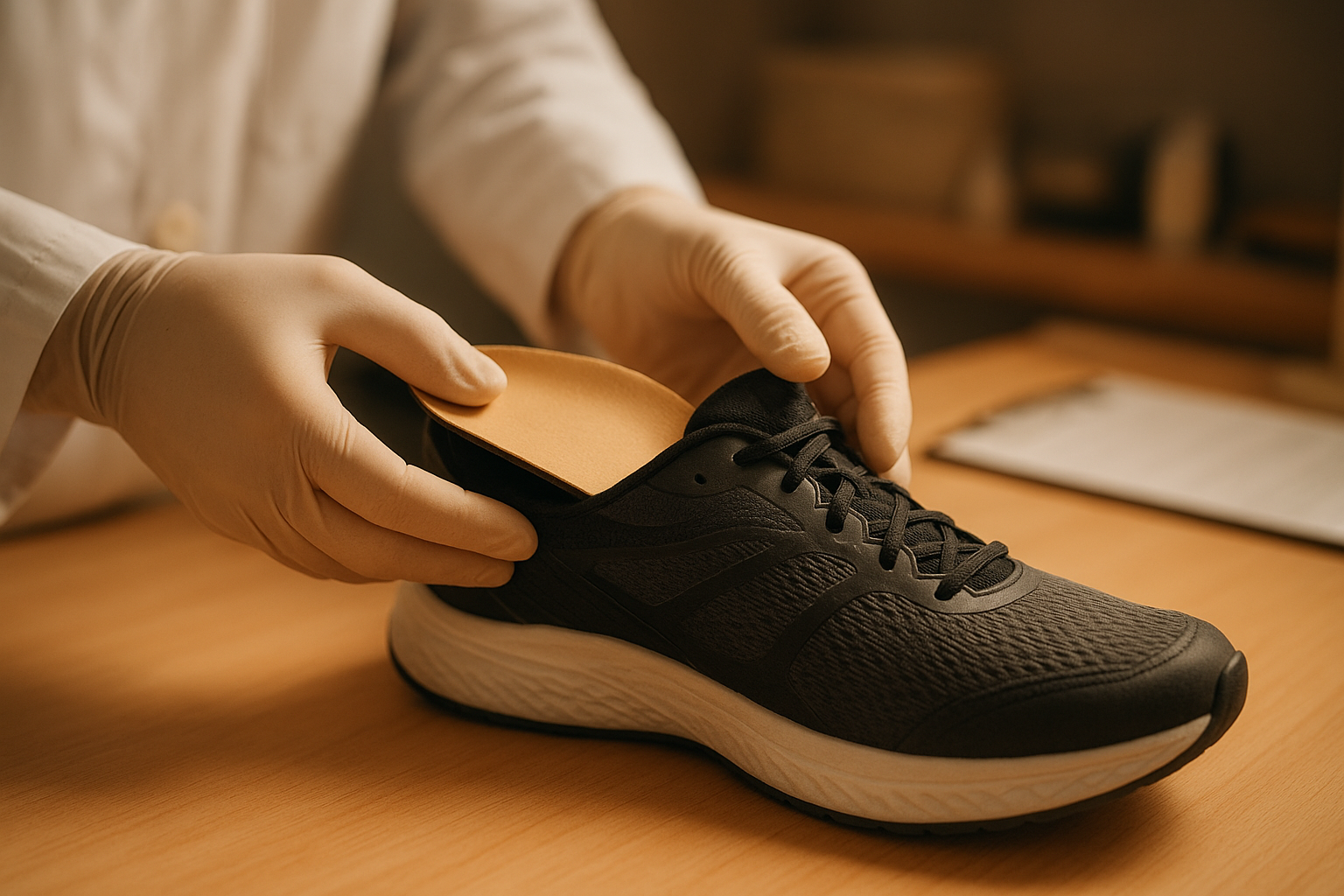
A podiatrist adjusts a custom orthotic insole for proper fit inside the patient's shoe.
Custom Orthotics vs Store-Bought Podiatrist Recommended Insoles
Custom orthotics are built from a direct mold or 3D scan of your foot, which allows a lab to correct precise imbalances that generic insoles simply cannot address. In contrast, store-bought insoles are manufactured in standard sizes meant to fit an average foot shape, not your specific one.
As a result, custom orthotics generally cost more upfront but often last longer and address root causes rather than just symptoms. On the other hand, quality over-the-counter insoles can be a reasonable starting point for mild discomfort or as a preventive measure before pain becomes chronic. Ultimately, a podiatrist can help determine which category fits your situation, since both fall under the broader umbrella of podiatrist recommended insoles. For more product-specific detail, browse this guide to premium quality foot insoles and custom orthotics.
Cost Comparison at a Glance
| Insole Type | Typical Price | Typical Lifespan |
|---|---|---|
| OTC podiatrist-approved insoles | $30–$80 | 6–12 months |
| Custom-molded orthotics | $200–$600 | 1–3 years (or longer) |
How to Choose the Right Podiatrist Recommended Insoles
Choosing the right insole does not have to be overwhelming. Instead, following a clear process helps narrow down the options quickly:
- Identify your foot condition. Talk with a podiatrist about symptoms like heel pain, arch strain, or plantar fasciitis so you can pinpoint the underlying cause before choosing insoles.
- Get a professional foot assessment. A podiatrist can evaluate your arch type, gait pattern, and pressure points to recommend the correct level of support, cushioning, and material.
- Match support level to your arch type. Flat feet typically need firmer, structured support, while high arches usually benefit from extra cushioning to absorb shock evenly.
- Compare custom versus off-the-shelf options. Decide whether a custom-molded orthotic or a podiatrist-approved over-the-counter insole better fits your budget and condition severity.
- Test the fit and break them in gradually. Wear new insoles for a few hours a day at first, then gradually increase wear time so your feet can adjust comfortably.
- Monitor results and follow up. Track pain levels and mobility over several weeks, then schedule a follow-up with your podiatrist to adjust or replace the insoles as needed.
For a broader breakdown of specific products worth considering, this buyer's guide to podiatrist recommended insoles worth trying walks through several well-reviewed choices.
Common Foot Conditions Treated With Supportive Insoles
Supportive insoles are commonly recommended for plantar fasciitis, one of the most frequent causes of heel pain. In addition, they help manage flat feet, high arches, bunions, and metatarsalgia. According to the National Institute of Arthritis and Musculoskeletal and Skin Diseases, structural foot problems often worsen without proper support, which is why early intervention matters.
Flat Feet and Overpronation
Flat feet lack a normal arch curve, which causes the foot to roll inward excessively during walking. Firm, structured arch support helps distribute weight more evenly and reduces strain on the ankles and knees.
High Arches and Supination
High arches often roll the foot outward, concentrating pressure on the outer edge. Extra cushioning, rather than rigid support, typically absorbs shock more effectively for this foot type.
Diabetic Foot Care
People with diabetes frequently rely on specialized insoles to reduce pressure points and prevent skin breakdown. Because reduced sensation can hide early injury, regular podiatric checkups paired with proper insoles are essential for this group.
Bunions and Metatarsalgia
Bunions and metatarsalgia both concentrate pain in the forefoot. Metatarsal pads built into certain insoles shift pressure away from the ball of the foot, easing discomfort with every step. For athletes, meanwhile, insoles absorb repetitive impact and reduce strain during running or jumping. Resources like Mayo Clinic note that addressing foot mechanics early often prevents pain from spreading to the knees, hips, or lower back.

Properly fitted insoles can make everyday walking noticeably more comfortable.
How Much Do Podiatrist Recommended Insoles Cost — and Does Insurance Help?
Over-the-counter podiatrist-approved insoles usually cost between $30 and $80, while custom-molded orthotics range from roughly $200 to $600 depending on materials and complexity. Because many insurance plans classify custom orthotics as durable medical equipment, coverage may apply once a podiatrist documents medical necessity. Over-the-counter insoles are less commonly covered but may qualify under FSA or HSA accounts.
How Long Do They Last, and How Should You Care for Them?
Over-the-counter insoles generally last six to twelve months with regular use, while custom orthotics can last several years when maintained properly. To extend their lifespan, rotate them between pairs of shoes, let them air out fully after sweaty activity, and avoid machine-drying them with heat, which can warp support shells.
Mistakes to Avoid When Choosing Insoles
A frequent mistake is buying insoles based on price alone without matching them to a specific foot condition. Similarly, skipping a professional assessment often leads to poor fit and limited relief. In particular, shoppers sometimes buy an insole sized for their shoe rather than their actual foot length, which throws off arch placement entirely. Above all, ignoring persistent pain instead of consulting a podiatrist tends to delay proper treatment and allow minor issues to become chronic.
Frequently Asked Questions About Podiatrist Recommended Insoles
What are podiatrist recommended insoles?
Podiatrist recommended insoles are shoe inserts suggested by a foot specialist after evaluating your arch type, gait, and pain points. They range from cushioned over-the-counter options to fully custom orthotics molded to your feet.
How do podiatrist recommended insoles differ from regular insoles?
Regular insoles are mass-produced for an average foot shape, while podiatrist recommended insoles are matched to your specific biomechanics. This targeted fit typically provides more effective pain relief.
What is the best insole for plantar fasciitis recommended by podiatrists?
Podiatrists generally recommend insoles with a deep heel cup, firm arch contour, and dual-density cushioning for plantar fasciitis. Severity determines whether an OTC option or a custom orthotic will work best.
Are brands like Powerstep considered podiatrist recommended insoles?
Some podiatrists do suggest well-made OTC brands, including Powerstep-style inserts, as a first step for mild arch pain. However, these are built to standardized arch profiles, so a custom orthotic often provides more precise, longer-lasting relief for chronic cases.
How much do podiatrist recommended insoles cost?
Over-the-counter podiatrist-approved insoles usually cost between $30 and $80, while custom-molded orthotics range from roughly $200 to $600. Insurance may cover part of the cost when deemed medically necessary.
How long do podiatrist recommended insoles last?
Over-the-counter insoles generally last six to twelve months, while custom orthotics can last several years. Replacement timing depends on activity level and how well the materials hold up.
Can podiatrist recommended insoles fix flat feet?
Insoles cannot permanently change bone structure, but they can significantly reduce discomfort and instability from flat feet. A podiatrist can recommend arch-supporting insoles to improve alignment during daily activity.
Do I need a prescription for podiatrist recommended insoles?
Over-the-counter insoles do not require a prescription, but custom orthotics are typically fitted directly by a podiatrist. A prescription may be needed for insurance reimbursement purposes.
What conditions do podiatrist recommended insoles treat?
Common conditions include plantar fasciitis, flat feet, high arches, bunions, metatarsalgia, and diabetic foot complications. Insoles help by redistributing pressure and improving alignment.
How long does it take to break in new insoles?
Most people need one to two weeks to fully adjust, starting with a few hours of wear per day. Gradually increasing wear time helps prevent soreness during the transition.
What's the difference between custom orthotics and podiatrist recommended insoles?
All custom orthotics are podiatrist recommended, but not all podiatrist recommended insoles are custom. Custom orthotics are molded directly from your foot, while recommended insoles can also include quality over-the-counter products.
Are podiatrist recommended insoles covered by insurance?
Many insurance plans cover custom orthotics when a podiatrist documents medical necessity, though coverage varies. Over-the-counter insoles are less commonly covered but may qualify under FSA or HSA accounts.
What common mistakes do people make when choosing insoles?
A frequent mistake is buying insoles based on price alone without matching them to a specific foot condition. Skipping a professional assessment often leads to poor fit and limited relief.
Can I wear podiatrist recommended insoles in any shoe?
Most insoles fit best in shoes with removable factory insoles and extra depth, such as sneakers or walking shoes. Narrow or minimalist shoes may not accommodate a full orthotic comfortably.
How often should I replace my insoles?
Replace over-the-counter insoles every six to twelve months and have custom orthotics reassessed every one to three years. Visible wear or returning pain signals it's time for a replacement.
Are over-the-counter insoles as effective as custom orthotics?
Quality over-the-counter insoles work well for mild discomfort, but custom orthotics typically provide better results for chronic or severe conditions. The right choice depends on symptom severity.
How do I know if I need podiatrist recommended insoles?
If you experience persistent foot, heel, or arch pain, notice uneven shoe wear, or have a diagnosed structural imbalance, it's worth consulting a podiatrist. A professional evaluation confirms whether insoles or custom orthotics are appropriate.
Can podiatrist recommended insoles help with arch pain from standing all day?
Yes — insoles with reinforced arch support and shock-absorbing cushioning are specifically designed to ease fatigue and arch pain caused by prolonged standing. Choosing the right thickness for your work shoes makes a noticeable difference.
Final Thoughts on Choosing Podiatrist Recommended Insoles
Ultimately, podiatrist recommended insoles offer a practical, evidence-informed way to manage foot pain rather than simply masking it. Whether you start with a quality over-the-counter option or move straight to a custom-molded orthotic, the key is matching the insole to your actual foot mechanics rather than guessing. As a result, patients who work directly with a podiatrist tend to see faster, longer-lasting relief than those who shop by price or brand name alone.
If chronic pain, structural imbalances, or mobility challenges are affecting your daily comfort, it may be time for a professional evaluation. Visit Custom Orthotics to schedule a complimentary consultation and find out whether custom orthotics or podiatrist recommended insoles are the right next step for your feet.