

Orthotics for plantar fasciitis are custom-molded shoe inserts designed to support the arch, cushion the heel, and reduce the tension that causes sharp, stabbing pain along the bottom of the foot. For many people, that first step out of bed each morning triggers a jolt of pain that can derail an entire day. However, the right pair of orthotics can redistribute pressure away from the inflamed plantar fascia, the thick band of tissue connecting the heel to the toes, and allow the tissue to heal properly. In this guide, we'll explain how these devices work, who needs them, and how to choose the best option for lasting relief.
What Are Orthotics for Plantar Fasciitis?
Direct answer: Orthotics for plantar fasciitis are supportive devices, either custom-fabricated or prefabricated, that fit inside a shoe to correct foot alignment and reduce strain on the plantar fascia. Custom versions are molded directly from a patient's foot for a precise, individualized fit.
In particular, custom orthotics differ from generic insoles because they are built from an actual impression of the patient's foot rather than a one-size-fits-all mold. As a result, they can target specific pressure points, correct overpronation, and provide firm arch support exactly where it is needed. Consequently, many podiatrists recommend custom devices as a first-line, non-invasive treatment before considering injections or surgery.
Furthermore, these devices are not just cushioning pads. Instead, they function as corrective tools that influence how weight travels through the foot with every step. For a deeper comparison of specific product options, this guide on which orthotics work best for relief breaks down the differences in detail.
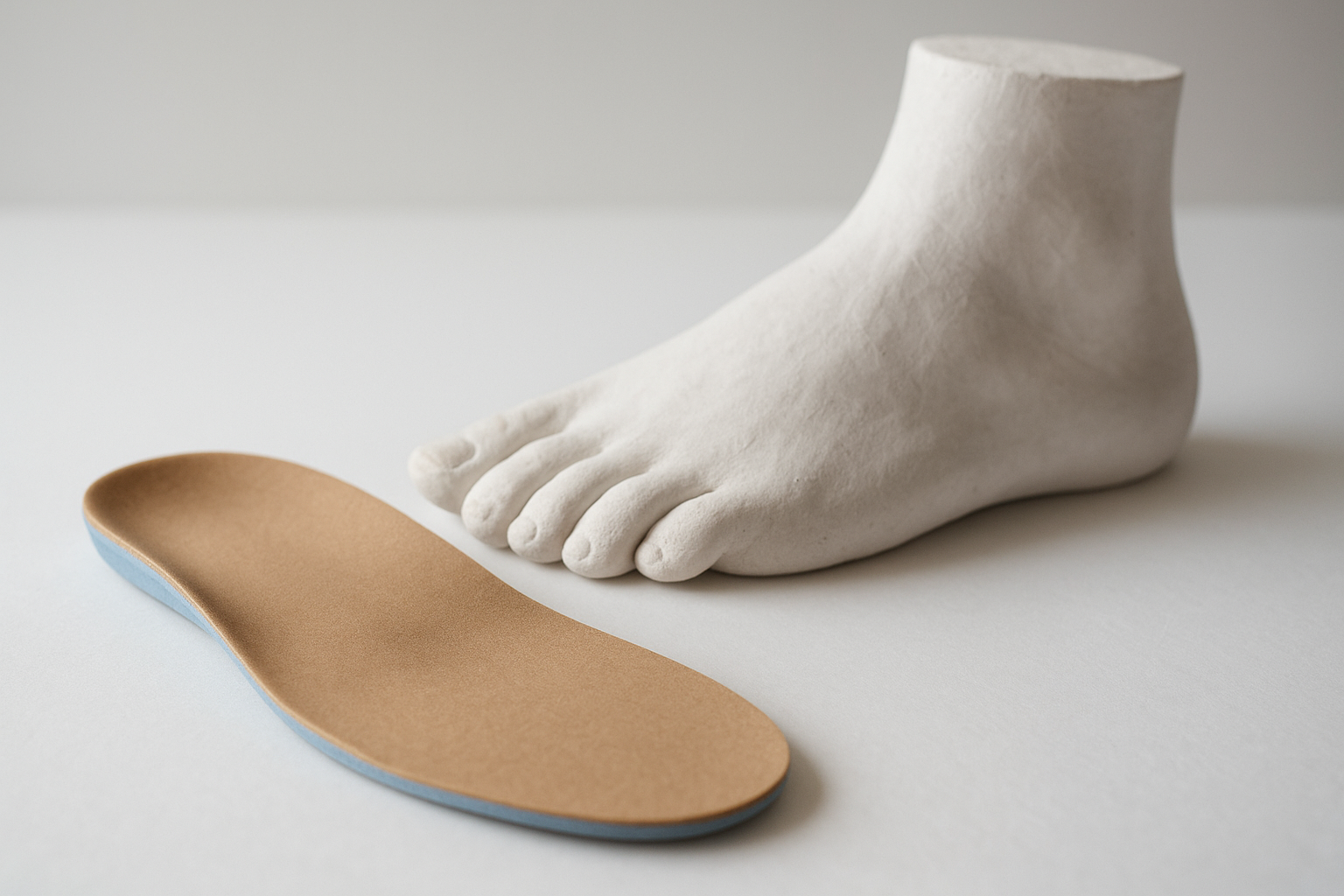
Custom orthotics for plantar fasciitis are fabricated directly from a mold of the patient's foot.
Understanding Plantar Fasciitis and Heel Pain
Plantar fasciitis is one of the most common causes of heel pain, affecting an estimated two million people in the United States each year, according to research summarized on Wikipedia's overview of the condition. The plantar fascia is a band of connective tissue, meaning a tough, fibrous structure, that runs from the heel bone to the toes and supports the foot's arch during walking and standing.
When this tissue becomes overstretched or repeatedly stressed, small tears develop and trigger inflammation. As a result, sufferers often describe a stabbing pain near the heel that is worst with the first steps in the morning or after long periods of rest. In contrast, the pain may lessen with activity but return after prolonged standing or exercise.
According to the Mayo Clinic, risk factors include obesity, tight calf muscles, high arches, flat feet, and jobs that require long hours on hard surfaces. Understanding these root causes helps explain why simply masking the pain with medication rarely solves the underlying mechanical problem.
How Custom Orthotic Inserts Relieve Plantar Fasciitis Symptoms
Custom orthotic inserts work by changing how force moves through the foot during each step. Specifically, a well-designed device cradles the heel, supports the medial arch, and limits excessive rolling of the foot inward, a motion known as overpronation. Therefore, less tension travels through the plantar fascia with every stride.
In addition, orthotics can offload pressure from the most painful area of the heel by shifting weight toward the surrounding tissue. This targeted redistribution allows micro-tears in the fascia to heal instead of being re-injured with every step. For patients wondering whether this approach genuinely works, this detailed breakdown on whether custom orthotics really help reviews the supporting evidence.
Arch Support and Pressure Redistribution
Above all, arch support is the foundation of effective plantar fasciitis treatment. When the arch collapses too much, the plantar fascia stretches further with every step, worsening inflammation. A properly contoured orthotic maintains the arch's natural height, which in turn reduces strain on the fascia.
Similarly, cushioning at the heel absorbs shock during impact, which further protects the inflamed tissue. Together, arch support and heel cushioning form a two-part strategy that addresses both the cause and the symptom of plantar fasciitis pain.
Custom Orthotics vs Store-Bought Inserts for Plantar Fasciitis
Store-bought inserts are widely available and inexpensive, which makes them an appealing first option. However, they are built on generic foot shapes and often lack the precision needed for moderate to severe plantar fasciitis. Consequently, many patients find only short-term relief before symptoms return.
Custom orthotics, in contrast, are fabricated from an actual mold or digital scan of the individual's foot. This means the arch height, heel cup depth, and pressure zones are matched exactly to that person's anatomy. For a side-by-side look at both options, this comparison of shoe inserts for plantar fasciitis outlines the top relief options available today.
Additionally, custom devices tend to last longer, often three to five years with proper care, whereas generic insoles frequently need replacement every three to six months. Therefore, while the upfront cost is higher, the long-term value often favors a custom-built solution.
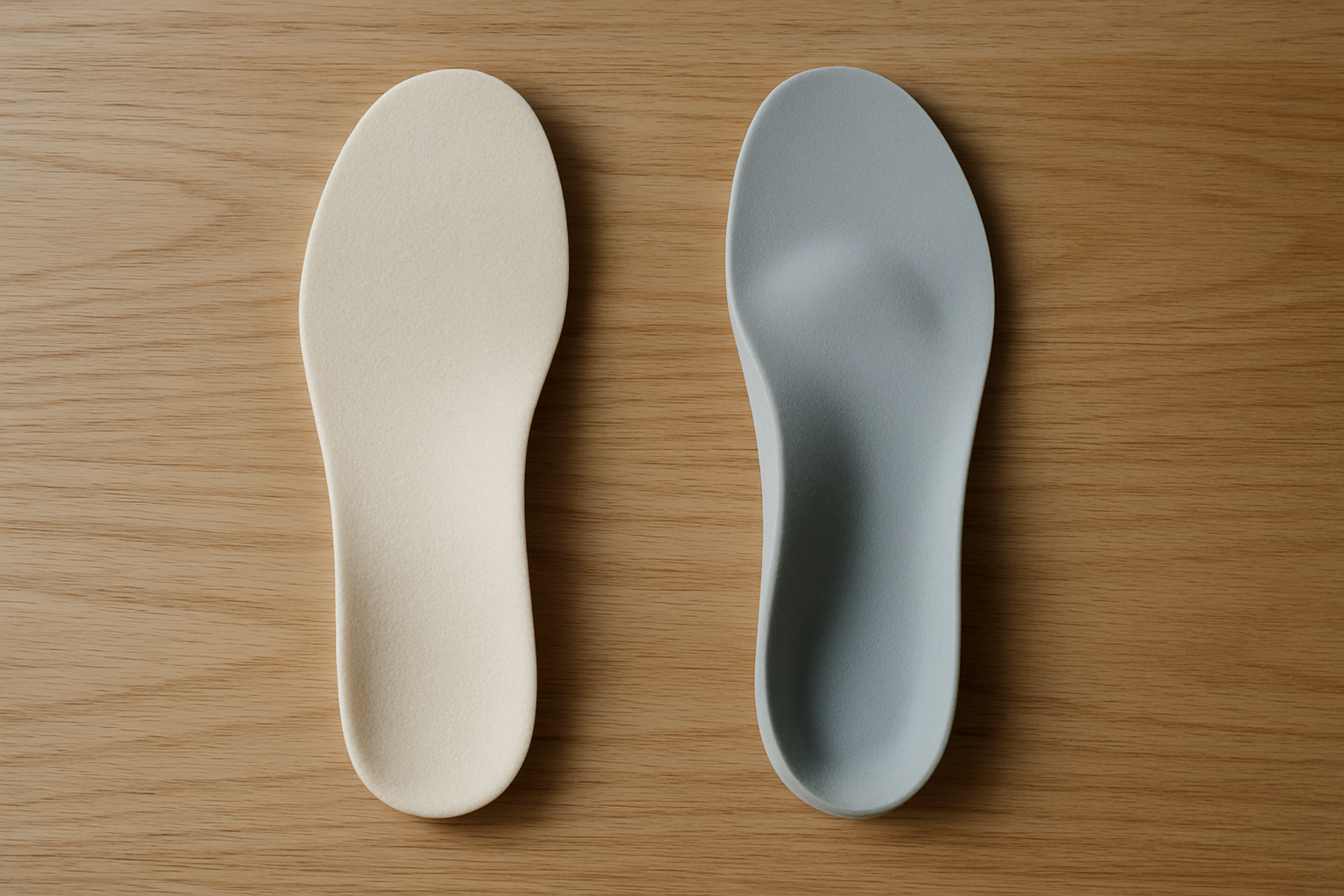
Generic insoles versus custom orthotics for plantar fasciitis: fit and durability differ significantly.
How to Get Custom Orthotics for Plantar Fasciitis: Step-by-Step Process
Getting fitted for custom orthotics is more straightforward than many people expect. Below is the typical process from consultation to final fitting.
- Schedule a consultation. Contact a podiatrist directly for a complimentary consultation to discuss your symptoms, footwear habits, and overall foot health history.
- Get a foot assessment. Undergo a gait analysis and physical examination so the podiatrist can identify the structural imbalances contributing to your heel pain.
- Have your feet molded. A precise mold or digital scan is taken of each foot to capture the exact arch height, pressure points, and heel shape needed for fabrication.
- Select materials and shoe fit. Choose orthotic materials and thickness based on your activity level and the type of shoes you wear most often throughout the day.
- Break in and follow up. Gradually increase daily wear time over one to two weeks and schedule a follow-up to confirm the orthotics are relieving plantar fasciitis symptoms effectively.
Patients who prefer a remote option can typically place an order through an online platform, such as customorthotics.com, which offers mold kits and direct podiatrist consultations without requiring an in-person visit.
Choosing the Right Orthotic Support for Your Foot Type
Not every foot needs the same type of support. For instance, individuals with high arches typically require a more rigid device that prevents excessive flexing, while those with flat feet often need a firmer arch support to correct overpronation. In particular, an experienced podiatrist can evaluate your foot type before recommending a specific design.
Moreover, activity level matters. Runners, for example, often benefit from thinner, more flexible orthotics that fit inside athletic shoes, whereas someone standing all day at work may need a thicker, cushioned design. This detailed 2025 guide to the best custom orthotics covers options tailored to different lifestyles.
Finally, if you split time between work shoes, casual shoes, and athletic footwear, consider asking about multiple orthotic pairs. This full guide to custom shoe inserts explains how to match orthotic thickness to different shoe styles without sacrificing support.
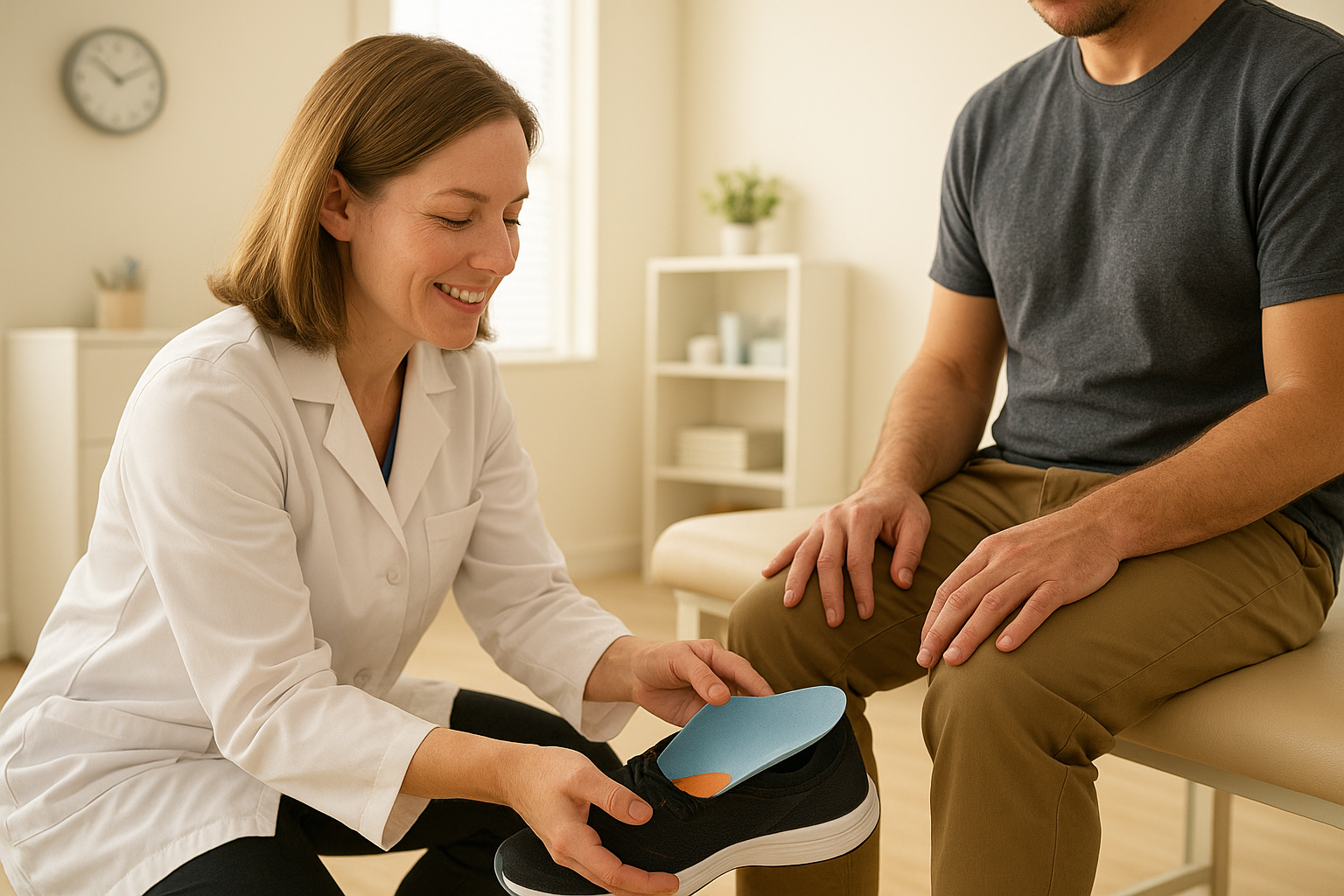
A podiatrist fits a patient with orthotics for plantar fasciitis during an in-office consultation.
Frequently Asked Questions About Orthotics for Plantar Fasciitis
What are orthotics for plantar fasciitis?
Orthotics for plantar fasciitis are custom-molded or prefabricated shoe inserts that support the arch and cushion the heel to reduce strain on the plantar fascia. They are designed to correct alignment and relieve the sharp heel pain associated with this condition.
How do custom orthotics help with plantar fasciitis pain?
Custom orthotics redistribute pressure away from the inflamed plantar fascia and support the foot's natural arch. This reduces the repetitive strain that causes micro-tears and ongoing heel pain.
How long does it take orthotics to relieve plantar fasciitis symptoms?
Many patients notice reduced morning heel pain within two to six weeks of consistent orthotic use. Full relief often takes three to six months as the plantar fascia heals.
Are custom orthotics better than over-the-counter inserts for plantar fasciitis?
Custom orthotics are molded to an individual's exact foot shape, offering more precise support than mass-produced inserts. For moderate to severe plantar fasciitis, custom devices typically provide longer-lasting relief.
How much do custom orthotics for plantar fasciitis cost?
Custom orthotics typically range from $200 to $800 depending on materials and the provider. Many practices offer complimentary consultations to discuss options before committing to a purchase.
Can orthotics cure plantar fasciitis permanently?
Orthotics do not cure plantar fasciitis outright, but they address the mechanical causes that lead to flare-ups. Combined with stretching and proper footwear, they can produce long-term, lasting relief.
What is the difference between orthotics and insoles for plantar fasciitis?
Insoles are generic cushioning products sold in stores, while orthotics are medical devices, often custom-fitted, that correct biomechanical issues. Orthotics generally offer more targeted arch and heel support.
Do I need a prescription for orthotics for plantar fasciitis?
A prescription is not always required, but a podiatrist evaluation helps ensure the orthotic matches your specific foot structure. Many providers, including podiatrist-led practices, offer direct consultations without a referral.
What common mistakes make plantar fasciitis worse despite using orthotics?
Wearing worn-out shoes, skipping calf stretches, and switching orthotics between multiple shoe types too often can undermine results. Consistency in wear and proper footwear pairing is essential for recovery.
Can I wear orthotics for plantar fasciitis in any type of shoe?
Most custom orthotics are designed to fit athletic shoes, walking shoes, and some work boots. Dress shoes and sandals may require slimmer, custom-built orthotic designs for a proper fit.
What foot conditions besides plantar fasciitis benefit from orthotics?
Orthotics also help with flat feet, high arches, bunions, and general structural imbalances that cause knee or back discomfort. They address root biomechanical causes rather than just symptoms.
How are custom orthotics for plantar fasciitis made?
A podiatrist or technician takes a precise mold or digital scan of each foot, which is then used to fabricate a device tailored to the individual's arch height and pressure points. This process ensures a far more accurate fit than off-the-shelf products.
Is it best practice to combine orthotics with stretching exercises for plantar fasciitis?
Yes, combining orthotic support with calf and plantar fascia stretches typically accelerates recovery. Orthotics manage mechanical stress while stretching improves tissue flexibility.
Final Thoughts on Finding Lasting Relief
In summary, orthotics for plantar fasciitis offer a practical, evidence-informed way to address the mechanical root causes of heel pain rather than simply masking symptoms. From arch support to precise heel cushioning, custom devices are molded to match each patient's unique foot structure, which generally means better results than generic store-bought inserts. As a result, patients often experience meaningful pain reduction within weeks, with continued improvement over several months.
Ultimately, whether you choose to consult a podiatrist in person or order through an online platform, taking the first step toward properly fitted orthotics for plantar fasciitis can make a lasting difference in daily comfort and mobility. For further reading on foot mechanics, the American Podiatric Medical Association offers additional resources on maintaining long-term foot health.