

Shoe inserts for plantar fasciitis are one of the most widely recommended, clinically supported tools for reducing the stabbing heel pain that affects an estimated 2 million Americans every year, according to the American Orthopaedic Foot and Ankle Society. However, not all inserts deliver the same results. Understanding how they work, what features matter most, and when a custom orthotic outperforms a generic insole can make a significant difference in your recovery.
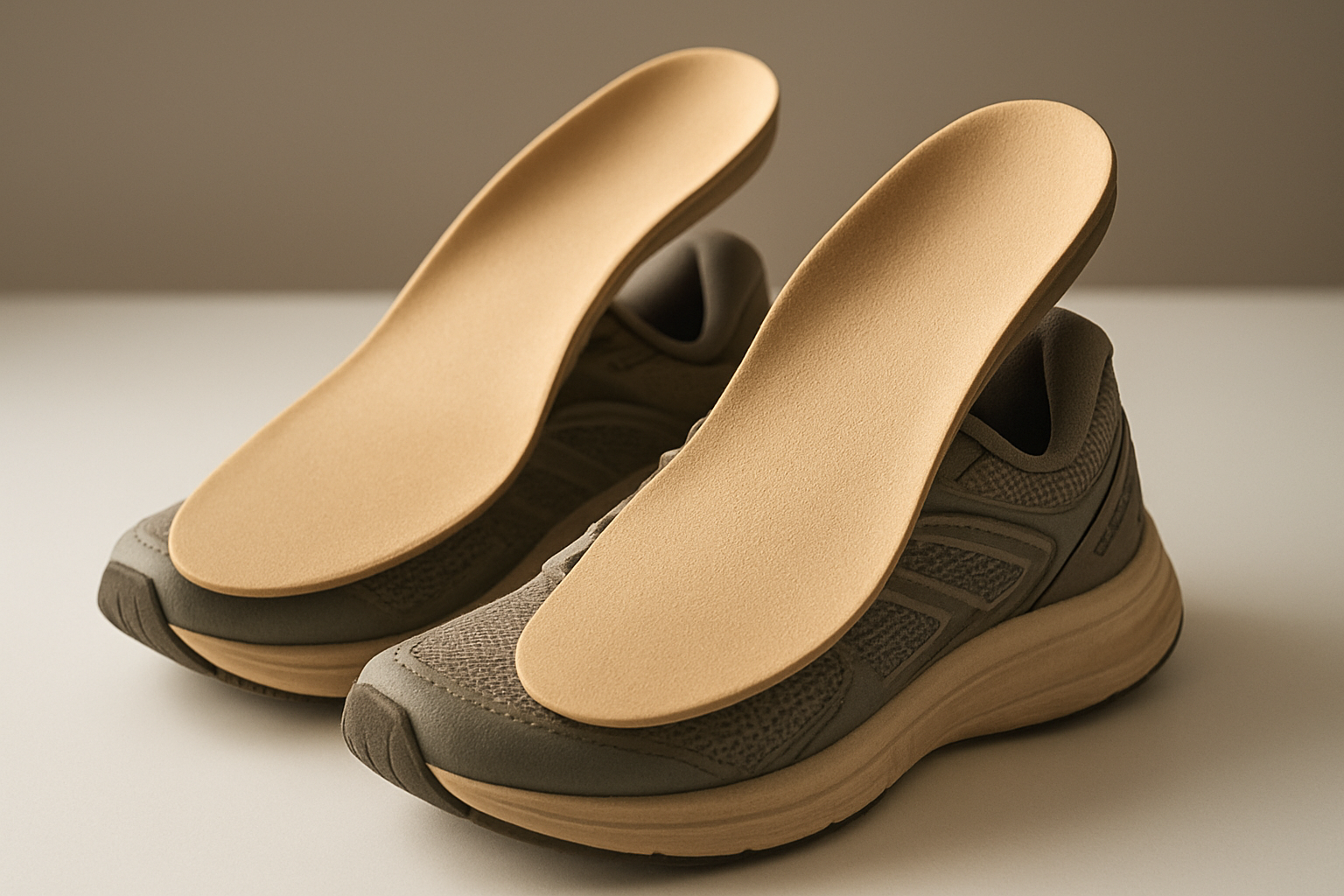
Custom shoe inserts for plantar fasciitis are fabricated from individual foot molds to deliver targeted arch support and heel relief.
What Is Plantar Fasciitis and Why Do Inserts Help?
Plantar fasciitis is inflammation of the plantar fascia — a thick band of connective tissue that runs along the bottom of the foot from the heel bone to the toes. When this tissue is repeatedly overstretched or strained, small tears develop and trigger the characteristic sharp pain felt with the first steps of the morning.
Specifically, shoe inserts address the problem by redistributing ground-reaction forces away from the inflamed fascia. They support the arch, cushion the heel, and — in the case of custom orthotics — correct the biomechanical imbalances that caused the injury in the first place. As a result, the fascia gets the mechanical unloading it needs to heal.
Custom Orthotics vs. Over-the-Counter Insoles: Key Differences
Over-the-counter insoles are mass-produced in generic sizes. They offer a reasonable starting point for mild heel discomfort, but they cannot account for the individual variations in arch height, foot length, gait pattern, and weight distribution that contribute to plantar fasciitis.
Custom orthotics, in contrast, are fabricated directly from molds of each patient's feet. This process captures the precise contours of the heel, arch, and forefoot, allowing the device to deliver corrective support exactly where it is needed. For chronic or recurring plantar fasciitis, this level of precision is often the difference between temporary relief and lasting resolution.
Furthermore, a study published in the Journal of Orthopaedic and Sports Physical Therapy found that custom foot orthoses significantly reduced plantar fasciitis pain scores compared to baseline measurements over a 12-week period. Therefore, patients with persistent symptoms are often better served by investing in a custom solution.
When to Upgrade from Generic Insoles to Custom Devices
Consider upgrading to custom orthotics if your heel pain has persisted for more than six weeks despite using store-bought insoles. Similarly, if you have flat feet, high arches, or a history of structural foot problems, generic sizing is unlikely to provide adequate correction. A podiatrist consultation can clarify whether a custom device is the right next step for your specific situation.
How to Choose the Right Shoe Inserts for Plantar Fasciitis
Choosing the most effective inserts involves matching the device to your foot type, footwear, and activity level. Follow these steps for the best outcome:
- Identify your foot type. Determine whether you have flat feet, high arches, or a neutral arch. A simple wet foot test — stepping on paper after wetting your foot — reveals your arch shape. Your foot type directly influences the level of support you need.
- Choose between custom and over-the-counter inserts. Mild occasional pain may respond to quality store-bought insoles. Chronic or recurring plantar fasciitis, however, typically requires custom orthotics fabricated from individual foot molds for precise biomechanical correction.
- Select the appropriate orthotic style. Full-length orthotics suit athletic and casual shoes with removable insoles. Sulcus-length styles end just behind the toe joints and fit better in dress shoes or tighter footwear. If you also experience forefoot discomfort, consider adding metatarsal support.
- Break in your inserts gradually. Start wearing your new inserts for two to three hours per day and increase the duration over one to two weeks. This gradual adaptation prevents additional soreness as your feet and lower limbs adjust to the new support.
- Combine inserts with stretching and supportive footwear. Pair your shoe inserts with daily plantar fascia and calf stretches. Wearing shoes with adequate heel height and cushioning further enhances the effectiveness of your orthotics and accelerates healing.
Key Features to Look for in Plantar Fasciitis Insoles
Not every insert is designed with heel pain in mind. Consequently, knowing which structural features matter most helps you make an informed choice.
- Deep heel cup: A deep, contoured heel cup cradles the fat pad under the heel, improving shock absorption and stabilizing the rearfoot.
- Firm arch support: Firm — not soft — arch support prevents the arch from collapsing under load, which is the primary mechanical trigger for plantar fascia strain.
- Heel post or rearfoot posting: A heel post controls excessive pronation (inward rolling of the foot), a common biomechanical contributor to plantar fasciitis. The full-length orthotic with heel post from customorthotics.com is specifically designed to provide this rearfoot stability.
- Forefoot cushioning: Adequate padding under the metatarsal heads reduces impact at toe-off, which indirectly decreases tension on the plantar fascia during the push-off phase of walking.
- Appropriate length: Match the insert length to your shoe. Sulcus-length orthotics are ideal for shoes with less depth, while full-length devices suit roomier athletic footwear.
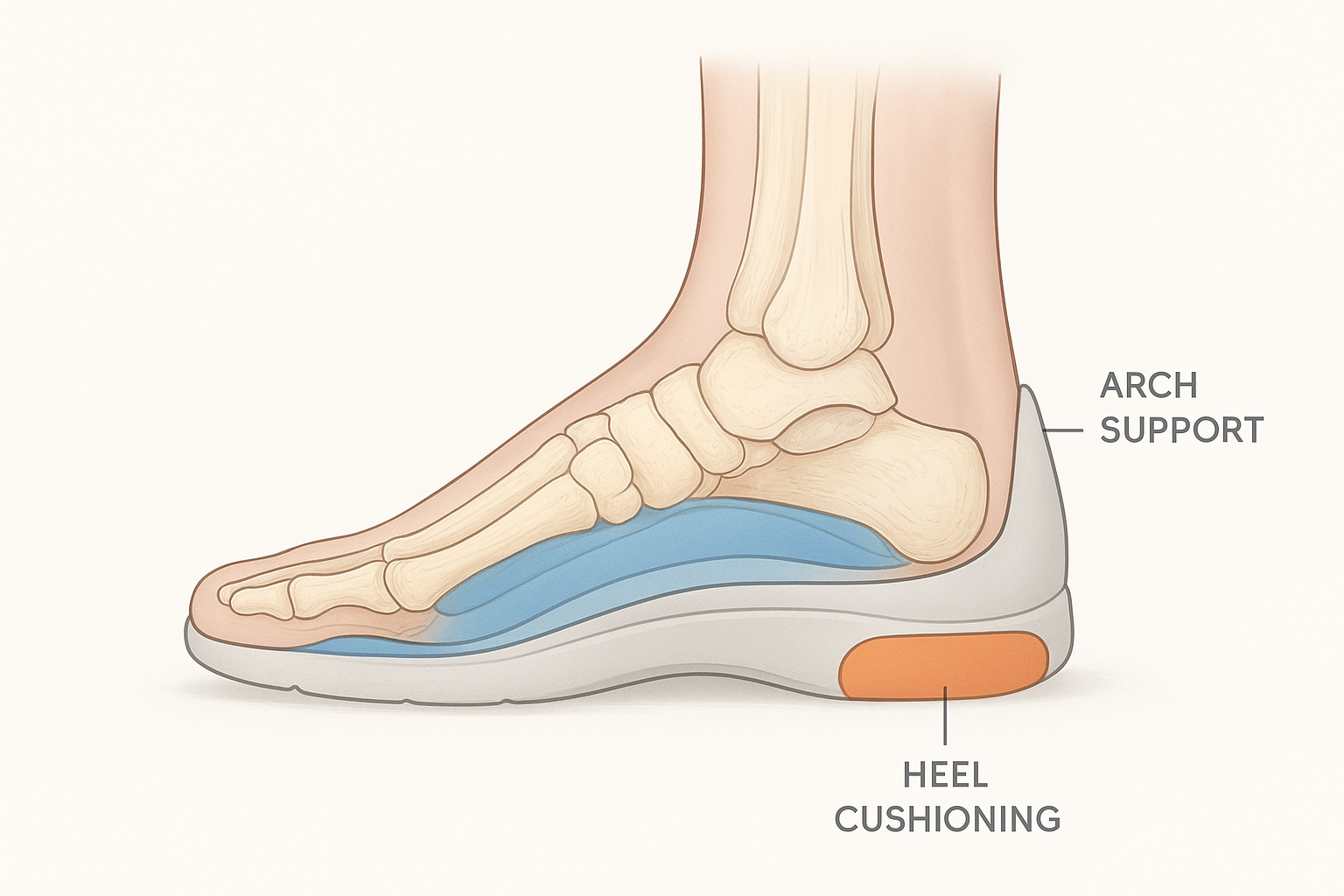
Effective insoles for heel pain target the arch and heel simultaneously, reducing mechanical stress on the inflamed plantar fascia.
Types of Custom Orthotics for Heel Pain Relief
Custom orthotics come in several configurations, each suited to different needs and footwear types. Understanding the options helps you and your podiatrist choose the most appropriate design.
Full-Length Orthotics With Heel Post
Full-length devices with a built-in heel post are among the most commonly prescribed options for plantar fasciitis. They control rearfoot motion, support the full length of the arch, and provide cushioning from heel strike to toe-off. These are particularly effective for runners, walkers, and individuals who spend long hours on their feet.
Metatarsal Support Orthotics
For patients who experience both heel pain and forefoot discomfort, metatarsal support orthotics add a pad or bar behind the metatarsal heads. This redistributes pressure away from the ball of the foot and reduces the compensatory gait patterns that can worsen plantar fasciitis over time.
Sulcus-Length Orthotics for Dress Shoes
Many plantar fasciitis sufferers struggle to fit standard orthotics into dress shoes or loafers. Sulcus-length orthotics end just behind the toe joints, making them slim enough for footwear with limited interior depth. Despite their shorter profile, they still deliver full heel and arch support where it matters most.
Sport-Specific Orthotics
Active individuals benefit from sport-specific designs that account for the higher impact forces and lateral movements involved in golf, running, and other activities. For example, the golfer orthotic is engineered to support the foot through the rotational demands of the golf swing, reducing heel strain across 18 holes.
Why a Podiatrist-Made Orthotic Delivers Superior Results
The fabrication process behind a truly custom orthotic is fundamentally different from anything available off the shelf. At customorthotics.com, each device is crafted directly from an individual mold of the patient's foot by a podiatrist with more than 20 years of experience. This ensures the orthotic mirrors the exact contours of the foot rather than approximating them with a generic template.
Additionally, the practice holds an A+ rating from the Better Business Bureau, reflecting a consistent commitment to quality and patient satisfaction. Patients can connect with the podiatrist directly for a complimentary phone consultation or conveniently place orders online — making professional-grade foot care accessible regardless of location.
For a deeper look at the top-rated options available, the best custom orthotics for plantar fasciitis 2025 guide covers the leading designs in detail, including material comparisons and clinical recommendations.
Frequently Asked Questions About Shoe Inserts for Plantar Fasciitis
What are the best shoe inserts for plantar fasciitis?
The best shoe inserts for plantar fasciitis are custom orthotics made from individual foot molds, as they address the root biomechanical causes of heel pain. Over-the-counter insoles can provide temporary relief, but custom devices offer superior long-term outcomes.
How do shoe inserts help plantar fasciitis?
Shoe inserts support the arch and redistribute pressure away from the inflamed plantar fascia, reducing strain on the tissue. This allows the fascia to heal while keeping you mobile and comfortable during daily activities.
Are custom orthotics better than store-bought insoles for heel pain?
Yes, custom orthotics are generally more effective for chronic or severe plantar fasciitis because they are fabricated from precise molds of your feet. Store-bought insoles use generic sizing that may not correct the specific structural issues causing your pain.
How long does it take for inserts to relieve plantar fasciitis pain?
Many patients notice reduced heel pain within a few weeks of consistently wearing properly fitted inserts. Full recovery can take several months depending on the severity of the condition and other treatments used alongside orthotics.
Can I wear shoe inserts in any type of footwear?
Most inserts fit into athletic shoes, casual shoes, and work boots with removable insoles. However, some dress shoes and sandals have limited space, so a lower-profile or sulcus-length orthotic may be needed for those styles.
What features should I look for in plantar fasciitis insoles?
Look for deep heel cups, firm arch support, and cushioning at the heel and ball of the foot. A heel post or rearfoot posting can also help control excessive pronation, which is a common contributor to plantar fasciitis.
How much do custom orthotics for plantar fasciitis cost?
Custom orthotics typically range from $200 to $600 depending on the materials, design, and provider. While the upfront cost is higher than over-the-counter insoles, custom devices often last several years and deliver better clinical results.
Do I need a prescription to get custom orthotics?
In many cases, you can order custom orthotics directly through a podiatrist or an online provider without a traditional prescription. A podiatrist consultation is recommended to ensure the device is designed for your specific condition.
What is a heel post and why does it matter for plantar fasciitis?
A heel post is a wedge or reinforcement built into the rear of an orthotic that controls rearfoot motion and reduces excessive pronation. For plantar fasciitis sufferers, this stabilization helps prevent the arch from collapsing and overstretching the fascia.
Can plantar fasciitis come back after using inserts?
Yes, plantar fasciitis can recur if the underlying biomechanical issues are not addressed long-term. Continuing to wear supportive inserts, maintaining a healthy weight, and stretching regularly can significantly reduce the risk of recurrence.
Are there different types of orthotics for different foot types?
Absolutely. Flat feet, high arches, and neutral arches each require different levels of support and correction. A podiatrist can assess your foot type and fabricate an orthotic tailored to your specific structure and gait pattern.
What is the difference between full-length and sulcus-length orthotics?
Full-length orthotics extend to the tip of the toes and are ideal for athletic and casual shoes with ample depth. Sulcus-length orthotics end just behind the toe joints and fit better in dress shoes or footwear with less interior space.
Conclusion: Finding the Right Insert Makes All the Difference
Choosing the right shoe inserts for plantar fasciitis is not a one-size-fits-all decision. In summary, the most effective approach combines the correct orthotic design — whether full-length, sulcus-length, or metatarsal-supported — with a precise fit based on your individual foot structure and biomechanics. Furthermore, pairing inserts with consistent stretching, supportive footwear, and professional guidance dramatically improves outcomes.
For patients dealing with persistent or severe heel pain, custom orthotics crafted from individual foot molds represent the gold standard in treatment. The podiatrist-owned team at customorthotics.com brings more than 20 years of experience to every device they fabricate, offering a complimentary consultation and a convenient online ordering process so that professional-grade relief is never out of reach.