

Orthotics for flat feet are custom-molded devices designed to support the arch, correct alignment, and reduce strain on the foot's connective tissues. If you have ever finished a long day on your feet only to feel a dull ache creeping from your heels into your lower back, flat feet may be the underlying culprit. This guide explains what causes flat feet, how custom orthotics for flat feet work, and how to know whether they are the right solution for your comfort and mobility.
Quick answer: Orthotics for flat feet are custom-fitted shoe inserts, molded from an individual's foot, that cradle the collapsed arch and redistribute pressure. As a result, they reduce overpronation, ease joint stress, and relieve pain in the feet, knees, and lower back.
What Are Orthotics for Flat Feet?
Orthotics for flat feet are shoe inserts built from an exact mold of your foot rather than a generic template. Because the arch is captured in a neutral, corrected position, the finished device supports the foot precisely where it needs it most. In contrast, mass-produced insoles are shaped for an "average" foot and rarely match the unique structure of a fallen arch.
These devices work by cradling the medial arch, stabilizing the heel, and controlling excess inward rolling of the ankle, known as overpronation. Consequently, the bones, tendons, and ligaments throughout the lower leg experience less repetitive stress during walking and standing.
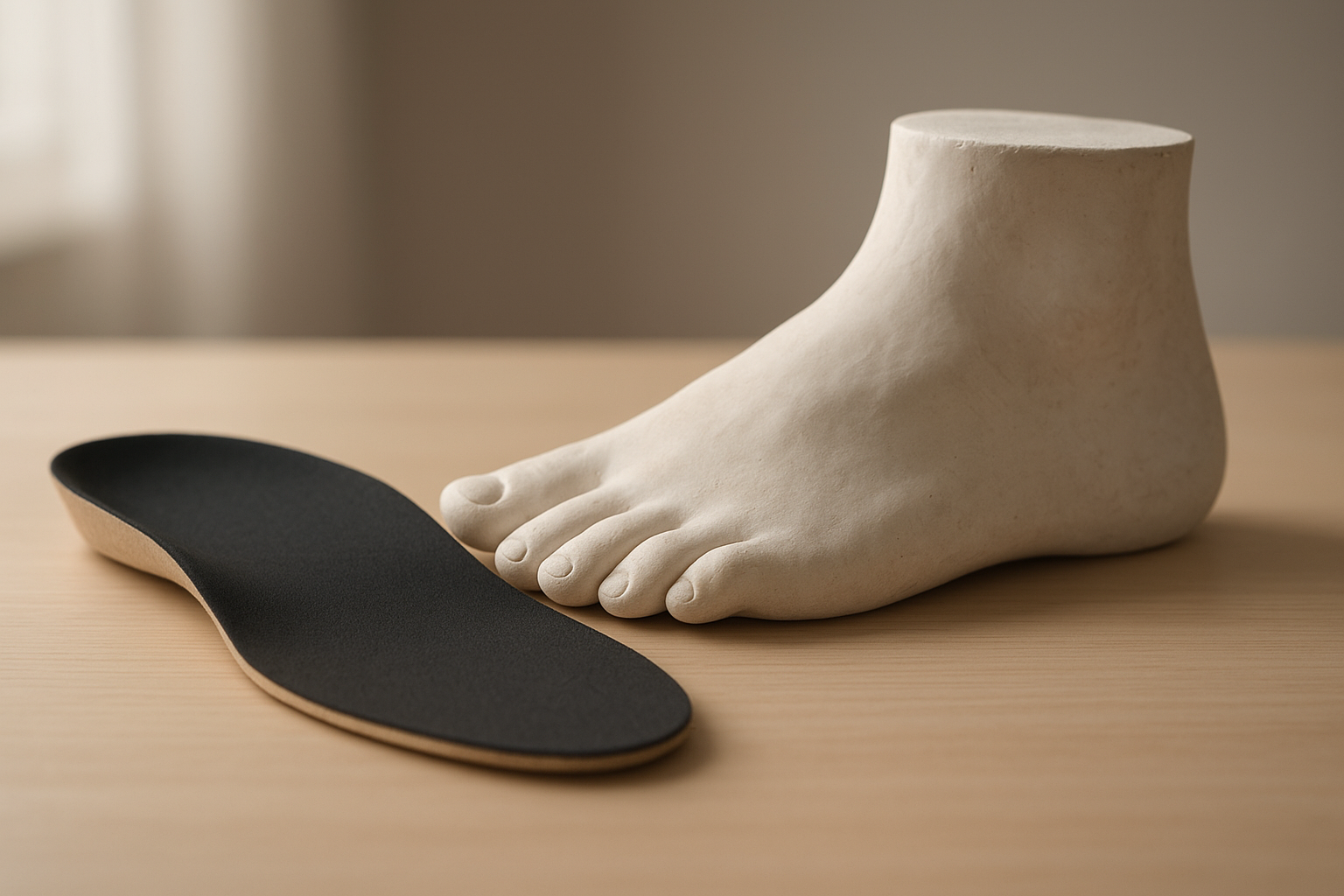
Custom orthotics for flat feet start with a precise mold of the patient's foot.
Understanding Flat Feet (Pes Planus)
Flat feet, medically referred to as pes planus, occur when the arch along the inside of the foot flattens either partially or completely, causing the sole to sit close to the ground. According to the Wikipedia overview of flat feet, the condition can be present from birth or develop over time due to aging, injury, or repetitive strain.
There are two main types. Flexible flat feet show a visible arch when the foot is lifted but flatten under body weight, while rigid flat feet lack an arch in any position. In particular, flexible flat feet respond well to orthotic support, whereas rigid cases sometimes require additional medical evaluation, as noted by resources like MedlinePlus.
Common contributing factors include genetics, obesity, pregnancy, diabetes, and age-related tendon weakening. As a result, many adults notice flat feet symptoms gradually intensifying rather than appearing suddenly.
How Custom Orthotics for Flat Feet Work
Custom orthotics for flat feet function by redistributing weight-bearing pressure across a larger surface area of the foot. Instead of the arch collapsing inward with every step, the device provides continuous, molded support that keeps the foot in a more neutral position.
Specifically, a well-fitted orthotic reduces the workload placed on the plantar fascia, the thick band of tissue along the sole of the foot. Because that tissue is under less tension, many patients experience noticeably less heel and arch pain within a few weeks of consistent use. For a deeper look at the fitting process, this podiatrist's complete guide to custom orthotics for flat feet walks through what to expect at each stage.
Furthermore, orthotics influence alignment further up the kinetic chain. Since the foot is the foundation for the ankle, knee, and hip, correcting arch collapse can indirectly ease strain in those joints as well.
Benefits of Custom Arch Support for Flat Feet
Above all, the primary benefit of arch support inserts is pain reduction. Patients frequently report relief from heel pain, arch fatigue, shin discomfort, and even lower back tension after consistent orthotic use. In addition, improved alignment can reduce abnormal shoe wear patterns, which extends the life of footwear.
According to the American Podiatric Medical Association's FootHealthFacts resource, roughly 20 to 30 percent of the population has some degree of flat feet, though not everyone develops symptoms. For those who do experience discomfort, however, properly designed orthotics remain one of the most conservative and effective first-line treatments.
Similarly, custom orthotics can improve balance and reduce fall risk in older adults, since a stable arch contributes to steadier footing on uneven surfaces.
Custom Orthotics vs. Over-the-Counter Inserts
Over-the-counter insoles are inexpensive and widely available, yet they are built from a single generic mold meant to fit a broad range of foot shapes. Therefore, they often fall short for anyone with moderate to severe flat feet, since the support does not match the individual's actual arch height or foot width.
Custom orthotics, by contrast, are fabricated from a direct mold of the patient's foot. This distinction matters because even small differences in arch shape can change how pressure travels through the foot during walking. To compare the causes and treatment paths in more depth, see this guide on flat feet causes, symptoms, and solutions.
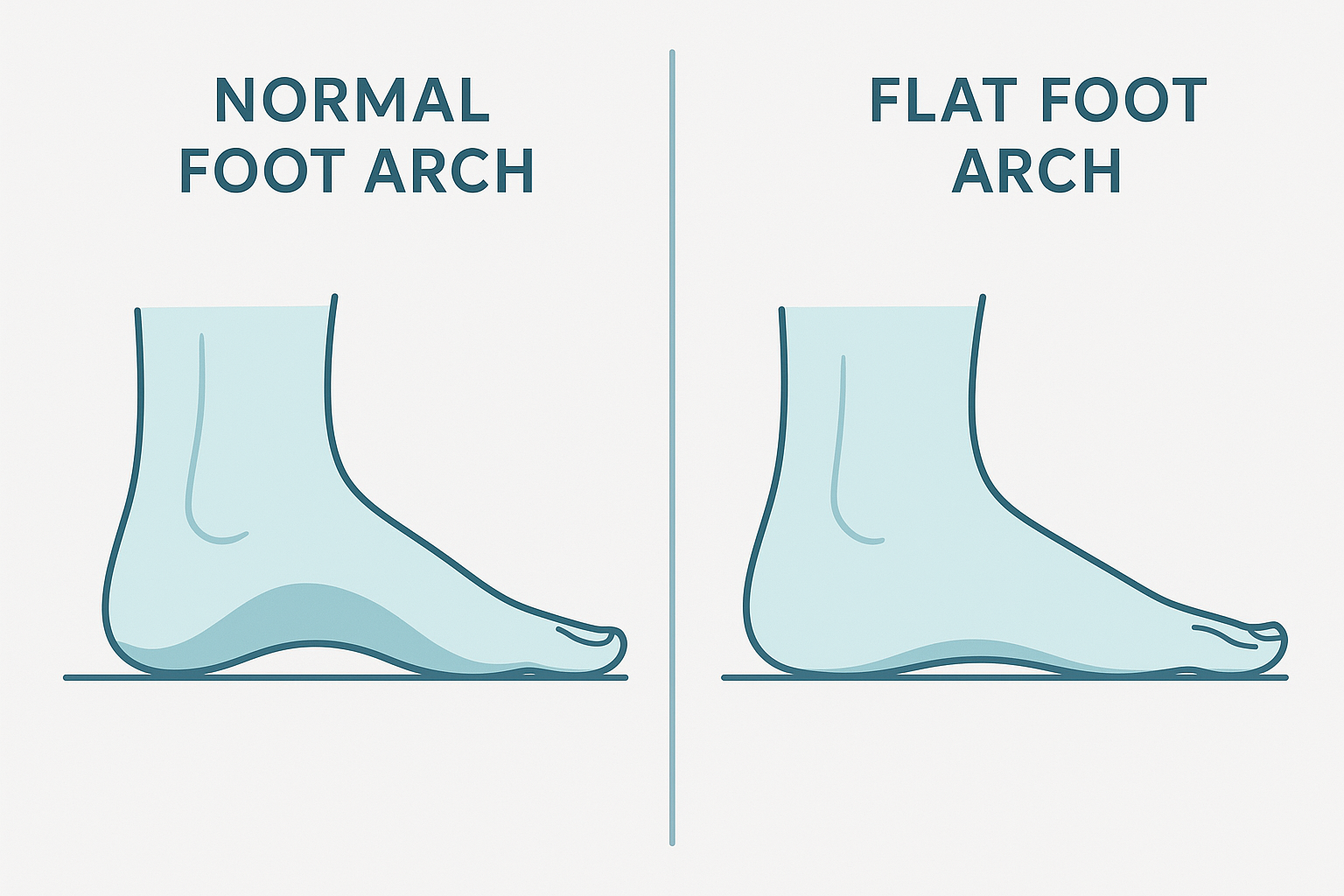
A flattened arch changes how pressure travels through the foot with every step.
How to Get Fitted for Custom Orthotics for Flat Feet
Getting properly fitted involves a clear, sequential process. Below is what that process typically looks like from start to finish.
- Schedule a consultation with a podiatrist, either by phone or online, to discuss your symptoms, daily activities, and footwear habits.
- Complete a foot mold or scan using an at-home impression kit or in-office casting to capture your foot's exact shape while non-weight-bearing.
- Select the appropriate materials, choosing between rigid, semi-rigid, or softer accommodative designs based on your specific level of flat feet.
- Wait for fabrication, during which a lab technician hand-builds your orthotic shell and padding to match your mold precisely.
- Break in the orthotics gradually, starting with a few hours per day and increasing wear time over one to three weeks.
Many practices, including podiatrist-led providers, now offer remote mold kits so patients outside the local area can still receive a fully custom device. You can review the full process and request a free consultation directly at customorthotics.com.
Choosing the Right Flat Feet Support Solution
Choosing between orthotic types depends on the severity of the flat feet, activity level, and any coexisting conditions such as plantar fasciitis or diabetes. For mild cases, semi-rigid orthotics often strike a good balance between support and comfort. For more pronounced arch collapse, however, a firmer rigid design may be necessary to control motion effectively.
Working directly with a podiatrist ensures the device addresses the root biomechanical cause rather than simply cushioning the symptom. This expert guide to customized arch support outlines additional considerations for selecting the right fit, while this complete relief guide for flat feet covers long-term management strategies.
In addition, pairing orthotics with supportive, properly fitted footwear amplifies their effectiveness. For a closer look at compatible footwear choices, see this resource on the best foot support options and relief tips.

Properly fitted orthotics for flat feet can restore comfortable, pain-free movement.
Frequently Asked Questions About Orthotics for Flat Feet
What are orthotics for flat feet?
Orthotics for flat feet are custom-molded shoe inserts built to support a collapsed arch, correct foot alignment, and reduce strain on the feet, ankles, and lower back. They are shaped directly from a mold of the patient's foot for a precise, individualized fit.
How do orthotics help with flat feet?
Orthotics redistribute pressure across the foot and cradle the arch, which reduces overpronation and stabilizes the ankle joint. This lowers stress on the plantar fascia and other connective tissue, easing pain during standing and walking.
Are custom orthotics better than over-the-counter inserts for flat feet?
Custom orthotics are molded to the exact contours of an individual's foot, while over-the-counter inserts use generic shapes that fit an average foot. For moderate to severe flat feet, custom devices typically provide more targeted and lasting support.
How much do custom orthotics for flat feet cost?
Custom orthotics generally range from a few hundred dollars per pair depending on materials and the provider, though some insurance plans partially reimburse the cost with a physician's referral. Prices vary based on whether the devices are rigid, semi-rigid, or soft accommodative designs.
How long does it take to get used to orthotics for flat feet?
Most people need one to three weeks of gradual wear to adjust, starting with a few hours a day and increasing slowly. Some mild soreness in the arch or calf during this break-in period is normal.
Can flat feet be corrected permanently with orthotics?
Orthotics do not permanently reshape the bone structure of the foot, but they effectively manage symptoms by supporting the arch during weight-bearing activity. For structural flat feet, consistent orthotic use is usually a long-term management strategy rather than a cure.
What is the difference between flexible and rigid flat feet?
Flexible flat feet show an arch when the foot is lifted off the ground but flatten under weight, and they are common and often manageable with orthotics. Rigid flat feet lack an arch in any position and may require additional medical evaluation.
Do children need orthotics for flat feet?
Many children have naturally flexible flat feet that resolve as the arch develops with age, so orthotics are not always necessary. However, a podiatrist may recommend supportive orthotics if a child experiences pain, frequent tripping, or uneven shoe wear.
What mistakes should be avoided when choosing orthotics for flat feet?
A common mistake is choosing a generic insert without a proper foot assessment, which can worsen alignment issues instead of correcting them. Another mistake is skipping the break-in period or wearing orthotics in shoes that do not accommodate the added volume.
Can orthotics help with plantar fasciitis caused by flat feet?
Yes, custom orthotics are frequently recommended for plantar fasciitis linked to flat feet because they support the arch and reduce tension on the plantar fascia ligament. Combined with stretching and proper footwear, they can significantly reduce heel pain.
How often should orthotics for flat feet be replaced?
Most custom orthotics last one to five years depending on materials, activity level, and body weight, though signs of wear like flattened padding or cracking mean it is time for a replacement. Active individuals or those with progressive foot changes may need more frequent replacements.
Can I order custom orthotics for flat feet online?
Yes, many podiatrist-led practices now offer at-home mold kits so patients can order custom orthotics online without an in-person visit. A phone consultation with a podiatrist beforehand helps ensure the device addresses the specific foot condition accurately.
What shoes work best with orthotics for flat feet?
Shoes with a removable insole, a sturdy heel counter, and enough depth to accommodate the orthotic work best. Athletic shoes, walking shoes, and many work boots are typically more compatible than narrow dress shoes or flats.
Conclusion
In summary, orthotics for flat feet offer a practical, non-invasive way to relieve pain, correct alignment, and support long-term foot health. Because they are molded directly from an individual's foot, custom devices consistently outperform generic inserts for anyone dealing with moderate to severe arch collapse. Whether the goal is reducing heel pain, managing plantar fasciitis, or simply standing comfortably through a full workday, a properly fitted orthotic addresses the underlying biomechanics rather than masking the symptoms. If flat feet have started affecting your daily comfort, speaking with a podiatrist about a custom fitting is a reasonable next step toward lasting relief.