

Discount custom orthotics deliver the same podiatrist-molded, prescription-grade arch support you'd get at a premium foot clinic — minus the hundreds of dollars in overhead that don't actually improve the finished product. Instead of settling for a stiff, one-size insert from the pharmacy aisle, you can get a device shaped around your own arch, pressure points, and walking pattern for a fraction of the typical clinic price. Below, you'll find exactly what drives orthotic pricing, real cost ranges by material and provider type, and every question worth asking before you buy, so you finish this page with everything you need and nothing left to search for.
Quick answer: Discount custom orthotics are podiatrist-designed inserts made from a real mold or scan of your own foot, sold well below typical in-office clinic rates — usually $100–$300 per pair instead of $400–$600. The savings come from streamlined consultations and direct-to-patient fabrication, not from cheaper materials or skipped medical review.
What Are Discount Custom Orthotics, Exactly?
Discount custom orthotics are shoe inserts built from a mold or precise scan of your own foot, then priced below the industry-standard clinic rate. In other words, the fitting process stays fully personalized, but the business model behind it removes expenses that never touch the finished device.
Orthotics, as defined by general medical references, are devices used to support, align, or correct musculoskeletal function, and feet are among the most common areas they treat. A true custom version requires a licensed provider — typically a podiatrist, a doctor who specializes in foot and ankle care — to capture your foot's exact shape and evaluate your gait, or walking pattern, before fabrication ever begins.
Because the American Podiatric Medical Association reports that foot pain affects a large share of adults at some point in their lives, demand for effective, lower-cost treatment has grown steadily. Consequently, more podiatrist-owned practices now offer streamlined, direct-to-patient pricing without cutting corners on materials or medical oversight.
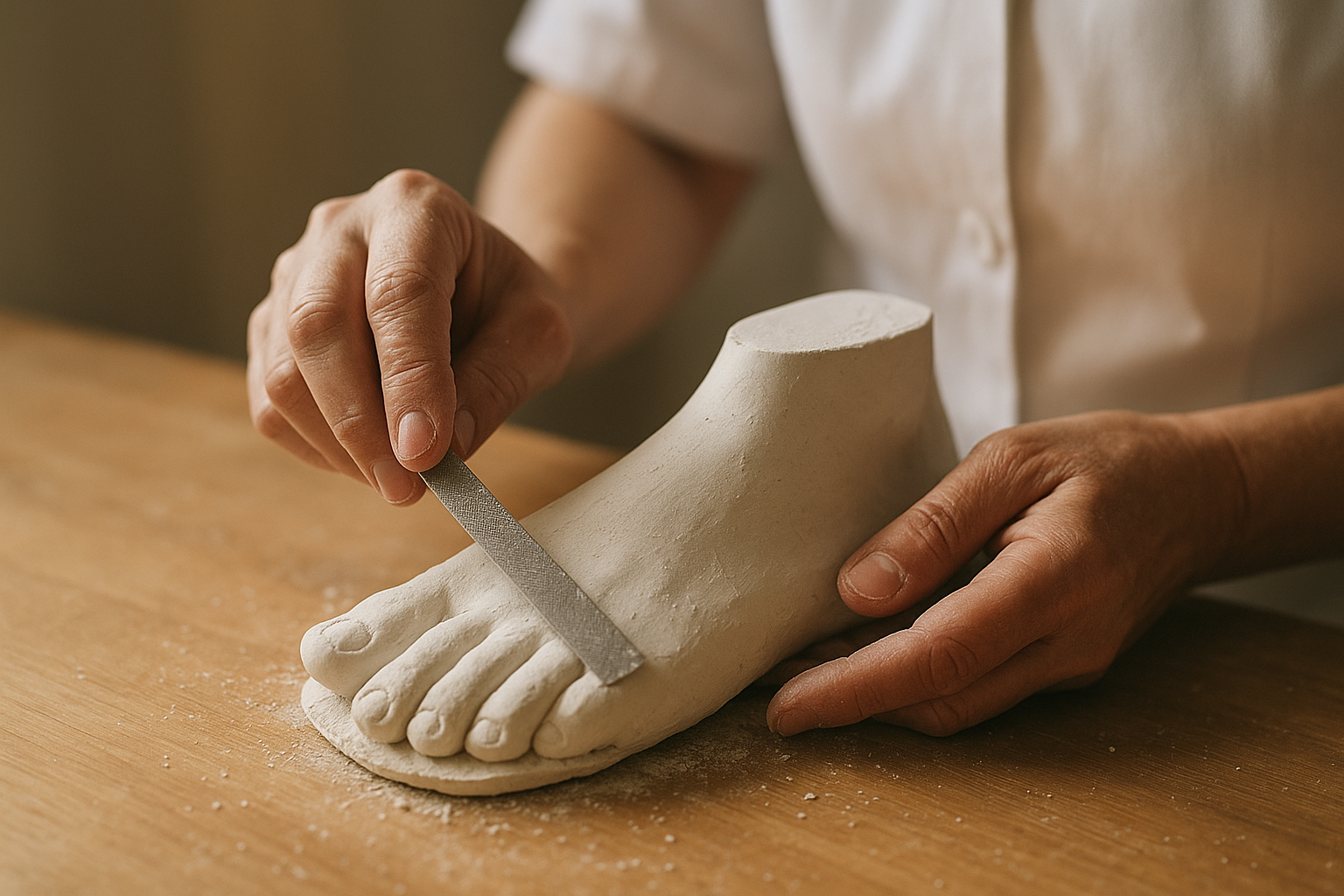
Discount custom orthotics start with the same careful mold-taking process used in traditional podiatry clinics.
How Custom Orthotics Are Made: From Mold to Finished Insert
Understanding the fabrication process helps explain why discount custom orthotics can be inexpensive without being inferior. Every legitimate custom orthotic starts with capturing an accurate impression of your foot in a neutral, corrected position — not simply tracing your foot on paper.
Digital 3D Scanning vs. Traditional Foam Box Molds
Some providers use a foam impression box, where you press your foot into dense foam to leave a 3D negative image. Others use a handheld or platform scanner that captures thousands of data points digitally. Both methods work well when performed correctly; however, the scanner tends to be faster, while the foam box is often preferred for capturing subtle pressure differences in complex cases.
Material Options: Rigid, Semi-Rigid, and Soft Accommodative Shells
Rigid shells, often made from carbon fiber or polypropylene, control motion aggressively and suit athletes or severe overpronation. Semi-rigid shells blend control with cushioning, making them the most common choice for everyday foot pain. Soft, accommodative shells prioritize comfort and are typically prescribed for diabetic feet or arthritic joints, where pressure redistribution matters more than rigid correction.
Common Foot Conditions Treated by Custom Orthotics
According to MedlinePlus, individually fitted support often outperforms generic cushioning for several chronic foot conditions. Discount custom orthotics are commonly prescribed for:
- Plantar fasciitis — inflammation of the tissue band running along the bottom of the foot.
- Overpronation and flat feet — where the arch collapses inward during walking or running.
- High arches (cavus foot) — which concentrate pressure on the heel and ball of the foot.
- Bunions and hammertoes — structural changes that shift weight distribution.
- Diabetic foot complications — where pressure redistribution helps prevent ulcers.
- Heel spurs and Achilles tendinitis — irritation aggravated by poor shock absorption.
- Leg-length discrepancy and arthritis — where custom builds correct alignment imbalances.
Because each of these conditions responds differently to shape, depth, and rigidity, a genuine custom mold — not a generic template — remains the most reliable way to address them.
Why Custom Orthotic Pricing Varies So Much
Custom orthotic pricing swings widely because several cost factors stack on top of each other. Materials range from lightweight foams to rigid carbon composites, and each tier changes both durability and price.
In addition, traditional clinics often bundle in multiple office visits, imaging, and consultation fees that inflate the final bill. Consequently, patients frequently pay $400 to $600 or more for a single pair, even when the actual fabrication cost is a fraction of that total.
By contrast, providers who focus on affordable custom orthotics reduce overhead through phone consultations, mail-in mold kits, or online ordering platforms. As a result, the core craftsmanship stays intact while unnecessary administrative costs disappear from the price tag.
The Real Cost Breakdown: What Discount Custom Orthotics Actually Cost
Numbers make this easier to compare than vague claims about "savings." Here's how typical pricing breaks down by provider type:
| Provider Type | Typical Price Range | What's Included |
|---|---|---|
| Traditional in-office podiatry clinic | $400 – $600+ | Multiple visits, imaging, consultation fees, mold, fabrication |
| Discount custom orthotics (direct-to-patient) | $100 – $300 | Free consultation, mold or scan, podiatrist review, fabrication |
| Semi-custom / kiosk inserts | $50 – $150 | Template-based fit, no true mold, no licensed review |
| Off-the-shelf drugstore insoles | $15 – $60 | Generic cushioning, no personalization |
For a closer look at how these savings are structured by material and provider, this breakdown of typical custom orthotic costs covers pricing tiers in even more detail.
How to Find Discount Custom Orthotics Without Sacrificing Quality
Finding genuine savings takes a bit of homework, but the process is straightforward once you know what to check. Follow these steps before placing an order:
- Schedule a complimentary consultation. Talk to a podiatrist about your foot pain, gait, and budget before committing to any custom orthotic order, so you understand what is medically necessary versus optional.
- Compare mold-based providers versus scan-only kiosks. Ask whether the company takes a physical mold or 3D scan of your foot, since accurate capture is what actually drives comfort and long-term value.
- Ask about material tiers and warranty. Request pricing for different shell materials and confirm how long the orthotic is guaranteed, because durable materials often cost less per year of actual use.
- Order online or in person and track your fit. Once you approve the mold, place your order through a secure platform, then wear the orthotics gradually and report any pressure points during the break-in period.
Above all, never assume a low price automatically means a lower-quality product. Many providers keep costs down by simplifying logistics, not by skipping the podiatrist's evaluation or the mold-taking step itself. This step-by-step guide to ordering custom-made orthotics online walks through the full process in more depth.
Discount Custom Orthotics vs. Off-the-Shelf Inserts
Off-the-shelf inserts are built in a handful of generic sizes and arch shapes, so they fit an average foot reasonably well but rarely address specific problems. Discount custom orthotics, however, start from your actual foot shape, which means they can target issues like plantar fasciitis, overpronation, or leg-length differences far more precisely.
Therefore, while store-bought inserts may relieve mild discomfort temporarily, they typically fall short for chronic or structural foot problems. People weighing both options for athletic use may also want to review this comparison of affordable sports orthotics built for a custom fit, which explains how activity level changes the right choice.
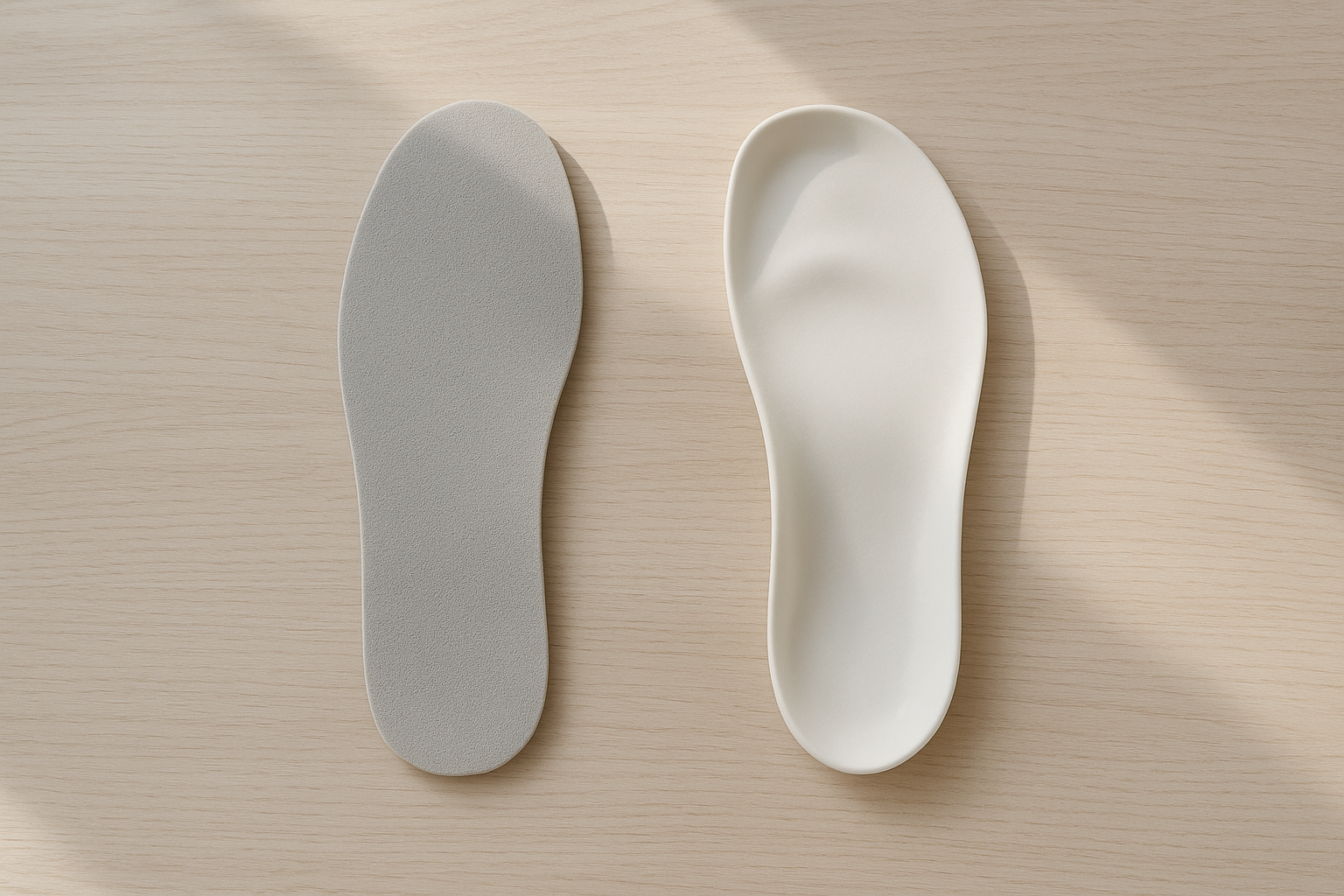
Custom-molded shells are shaped to an individual foot, unlike mass-produced generic insoles.
Insurance, FSA, HSA, and Financing: Stretching Your Budget Further
Beyond simply choosing a lower-priced provider, several funding sources can reduce your out-of-pocket cost even further. Some health insurance plans partially reimburse custom orthotics when a podiatrist documents medical necessity, such as a diagnosed structural condition or diabetic risk factor.
Similarly, Flexible Spending Accounts (FSA) and Health Savings Accounts (HSA) — pre-tax funds set aside for medical expenses — often cover custom orthotics outright, since they qualify as a prescribed medical device rather than a cosmetic purchase. In addition, many direct-to-patient providers offer payment plans or accept HSA/FSA cards directly at checkout, which effectively lowers the real cost below the sticker price.
Because coverage terms vary significantly between insurers, it's worth requesting an itemized receipt and a letter of medical necessity from your podiatrist before you order, so you have everything ready if you decide to file a claim later.
Where to Get Affordable Custom Orthotics Online or Locally
Patients today have two realistic paths: visiting a local podiatry office or ordering through a trusted online platform. Both can deliver genuine custom orthotics, provided a licensed professional reviews your foot mold before fabrication.
Podiatrist-owned practices like customorthotics.com combine both options, offering a complimentary phone consultation with a podiatrist along with a straightforward online ordering platform. With more than 20 years of hands-on fabrication experience and an A+ rating from the Better Business Bureau, this kind of direct-to-patient model is a practical way to access professional-grade care at a lower price point.
If you are still deciding between local versus remote fitting, this resource on where to get personalized shoe inserts for better foot support outlines what to expect from each route, while this complete guide to building custom orthotics online covers the ordering workflow step by step. For a broader look at pricing across different online sellers, this guide to finding affordable orthotics online is also worth reading before you commit.
Common Mistakes When Shopping for Cheap Custom Orthotics
One frequent mistake is confusing semi-custom inserts, which rely on a preset arch template, with true custom devices molded from your own foot. Semi-custom products can still cost less, but they will not match the precision of a genuine mold-based orthotic.
Another common error is skipping the podiatrist consultation entirely to save time. Similarly, shoppers sometimes choose the lowest price without checking warranty terms, return policies, or whether a licensed professional actually reviews the mold before production. Watch for these red flags in particular:
- No licensed podiatrist listed anywhere on the site or order form.
- Vague or missing warranty and return policy details.
- Pricing so low it doesn't cover basic mold and shipping costs.
- No verifiable business reviews or Better Business Bureau listing.
Finally, ignoring the break-in period can lead to premature returns. New orthotics often need one to two weeks of gradual wear before they feel fully comfortable, so patience matters as much as the initial purchase decision.
How Long Do Discount Custom Orthotics Last? Care & Maintenance
Well-made discount custom orthotics typically last between three and five years with regular use, depending on shell material and activity level. Rigid carbon shells tend to outlast soft foam builds, while high-mileage runners may need replacements sooner than someone who walks casually.
To extend their lifespan, rotate between two pairs of shoes so each orthotic dries fully between wears, and avoid submerging them in water. In addition, wipe the top cover with a damp cloth rather than machine washing, since heat and agitation can warp the shell over time.
Signs it's time for a replacement include a visibly flattened arch, cracks in the shell, uneven wear on the top cover, or the return of foot pain that had previously resolved.
Frequently Asked Questions About Discount Custom Orthotics
What are discount custom orthotics?
Discount custom orthotics are podiatrist-designed shoe inserts made from an individual mold of your foot but priced lower than typical in-clinic rates. They still provide a precise, personalized fit; the savings usually come from streamlined ordering or direct fabrication rather than lower-quality materials.
How can custom orthotics be discounted without losing quality?
Providers lower costs by cutting overhead, such as skipping unnecessary office visits or offering phone consultations instead of multiple in-person appointments. The mold-taking process, materials, and podiatrist oversight remain the same, so quality is preserved even as price drops.
Why do custom orthotics typically cost more than store-bought insoles?
Custom orthotics require a physical or digital mold of your foot, a licensed professional's assessment, and individualized fabrication, which all add labor and material costs. Off-the-shelf insoles are mass-produced in generic shapes, so they skip those personalized steps entirely.
How much do discount custom orthotics usually cost?
Discount custom orthotics often range from roughly $100 to $300 per pair, compared with $400 to $600 or more at traditional podiatry offices. Exact pricing depends on the materials, the condition being treated, and whether an in-person mold or remote kit is used.
How long does it take to receive custom orthotics after ordering?
Most providers deliver finished custom orthotics within two to four weeks after receiving your foot mold. Rush options are sometimes available for an added fee if you need them sooner.
What's the difference between custom orthotics and off-the-shelf inserts?
Custom orthotics are built from a mold of your exact foot shape and gait pattern, while off-the-shelf inserts use a generic size and arch profile. As a result, custom devices typically offer more targeted support for conditions like plantar fasciitis or overpronation.
Can I order discount custom orthotics online without visiting a clinic?
Yes, many providers now offer at-home mold kits or guided foam impressions that you mail back for fabrication. A podiatrist still reviews your foot shape and medical history remotely before the orthotics are made.
Does insurance cover custom orthotics?
Some health insurance plans and flexible spending accounts partially cover custom orthotics when a podiatrist documents medical necessity. Coverage varies widely, so it's worth checking your specific plan before ordering.
What common mistakes do people make when shopping for cheap custom orthotics?
A frequent mistake is confusing semi-custom inserts, which use preset arch templates, with true custom orthotics made from an individual mold. Another is choosing a provider based on price alone without confirming podiatrist involvement or warranty terms.
How long do custom orthotics last?
Well-made custom orthotics typically last between three and five years with regular use, depending on the shell material and activity level. Signs of wear, such as flattened arches or cracked shells, indicate it's time for a replacement.
Are discount custom orthotics safe for people with diabetes or arthritis?
Discount custom orthotics can be safe and beneficial for diabetic or arthritic patients, but a podiatrist should review foot sensation and joint alignment first. This ensures pressure points are properly accommodated to prevent skin breakdown or added joint strain.
Can children use discount custom orthotics?
Yes, children with flat feet, toe walking, or growth-related foot pain can benefit from custom orthotics, though sizing needs to be updated more often as feet grow. A pediatric-experienced podiatrist should evaluate the child before fabrication.
What should I look for in a trustworthy orthotics provider?
Look for a provider with a licensed podiatrist on staff, a physical or digital mold process, clear pricing, and verifiable credentials such as a strong Better Business Bureau rating. Transparent warranty and return policies are also important signs of a reliable company.
Do discount custom orthotics work as well as expensive designer orthotics?
Yes, as long as a licensed podiatrist takes the mold and reviews your gait, discount custom orthotics can perform identically to higher-priced versions. The price difference typically reflects overhead and branding, not the medical quality of the device itself.
Can I wear discount custom orthotics in any type of shoe?
Most custom orthotics fit best in shoes with a removable insole and enough depth, such as sneakers, walking shoes, or work boots. Slim dress shoes and sandals may require a slimmer orthotic profile, so mention your typical footwear during your consultation.
Final Thoughts on Choosing Discount Custom Orthotics
Ultimately, discount custom orthotics prove that a lower price does not have to mean lower quality. When a podiatrist still takes your mold, reviews your gait, and oversees fabrication, the savings simply reflect a smarter, more efficient process rather than a shortcut on craftsmanship.
Before ordering, take the time to confirm the provider's credentials, mold process, warranty, and insurance options, and don't hesitate to ask questions during a free consultation. With the research above, finding discount custom orthotics that truly fit your feet, your budget, and your daily life is well within reach.