

Custom molded orthotics for seniors are podiatrist-designed shoe inserts created from an exact impression of an individual's feet, built to correct alignment, cushion pressure points, and restore stability as the body ages. Unlike generic insoles picked up at a drugstore, custom molded orthotics for seniors account for the specific bone structure, gait pattern, and skin sensitivity that often changes after age 65. As a result, this precise fit can become the difference between painful, unsteady steps and confident, pain-free movement.
In particular, aging feet lose fat padding, joints stiffen, and years of wear catch up all at once. Consequently, many older adults experience heel pain, arch collapse, or balance trouble that off-the-shelf insoles simply cannot fix. This guide explains what custom orthotics are, how they are made, and how seniors can order them with confidence.
Direct answer: Custom molded orthotics for seniors are inserts made from a personal foot mold that correct alignment, absorb impact, and improve balance. They differ from mass-produced insoles because every curve is shaped to that individual's foot rather than an average size.

A hands-on foot exam is the first step toward custom molded orthotics for seniors.
What Are Custom Molded Orthotics for Seniors?
Custom molded orthotics for seniors are rigid or semi-rigid inserts fabricated from a physical mold or digital scan of the patient's foot. Therefore, the finished device fits the exact arch, heel angle, and pressure distribution of that person, rather than a generic average shape.
Unlike an over-the-counter insole, which is molded in a factory to suit a wide range of feet, a custom orthotic starts with the patient. A podiatrist takes an impression, reviews the patient's walking pattern, and designs support that targets specific problem areas such as a collapsed arch or a bunion. Above all, this individualized approach is why podiatrists frequently recommend custom foot orthotics for aging patients who have not found relief from standard shoe inserts.
Why Seniors Need Custom Foot Orthotics
As people age, the fat pad under the heel and ball of the foot thins out, leaving bones and joints with less natural cushioning. In addition, years of standing, walking, and wearing ill-fitting shoes can gradually shift bone alignment, leading to bunions, hammertoes, or a flattened arch.
Because of these changes, custom foot orthotics for older adults do more than add cushioning. They actively redistribute pressure away from painful areas and support the ankle and heel in a more stable position. According to the Centers for Disease Control and Prevention, roughly one in four adults aged 65 and older reports falling each year, and poor foot support combined with weak balance is a documented contributing factor. Consequently, well-fitted orthotics play a practical role in reducing fall risk alongside other prevention strategies.
Common Foot Problems in Older Adults That Orthotics Can Help
Several conditions become more common with age, and each responds well to a properly designed custom orthotic. For example, plantar fasciitis, or inflammation of the tissue along the bottom of the foot, causes sharp heel pain that custom arch support can significantly ease.
Similarly, arthritis in the foot and ankle joints benefits from orthotics that limit excessive motion and reduce joint strain. Diabetic patients, meanwhile, need orthotics with extra-soft materials to prevent skin breakdown, since reduced sensation can hide early signs of pressure sores. In contrast, a senior with flat feet or fallen arches may need a firmer device to restore proper alignment. In every case, a podiatrist evaluates the specific condition before designing the orthotic, rather than applying a one-size-fits-all fix.
How Custom Orthotics Are Made: Step-by-Step Process
Fabricating a custom orthotic follows a consistent process, whether the patient visits in person or completes the mold at home through an online kit. Below is the typical sequence a podiatrist-owned lab follows.
- Initial consultation: A podiatrist reviews the senior's medical history, foot pain patterns, and daily activity level to determine whether custom orthotics are the right solution before any mold is taken.
- Foot mold impression: A precise mold or digital scan is taken of each foot in a neutral position, capturing the exact arch height, pressure points, and structural quirks unique to that patient.
- Design and material selection: The podiatrist selects materials and cushioning levels based on the senior's weight, mobility needs, and any conditions such as diabetes or arthritis that affect skin sensitivity.
- Fabrication in the lab: Skilled technicians hand-fabricate the orthotic shell and padding directly from the mold, ensuring the finished device matches the contours of the patient's feet precisely.
- Fitting and follow-up adjustments: The senior tries on the finished orthotics, walks in them under supervision, and receives any minor adjustments needed for comfort before daily use begins.
Notably, this hands-on fabrication process is what separates true custom molded orthotics for seniors from the mass-produced insoles sold in most pharmacies.
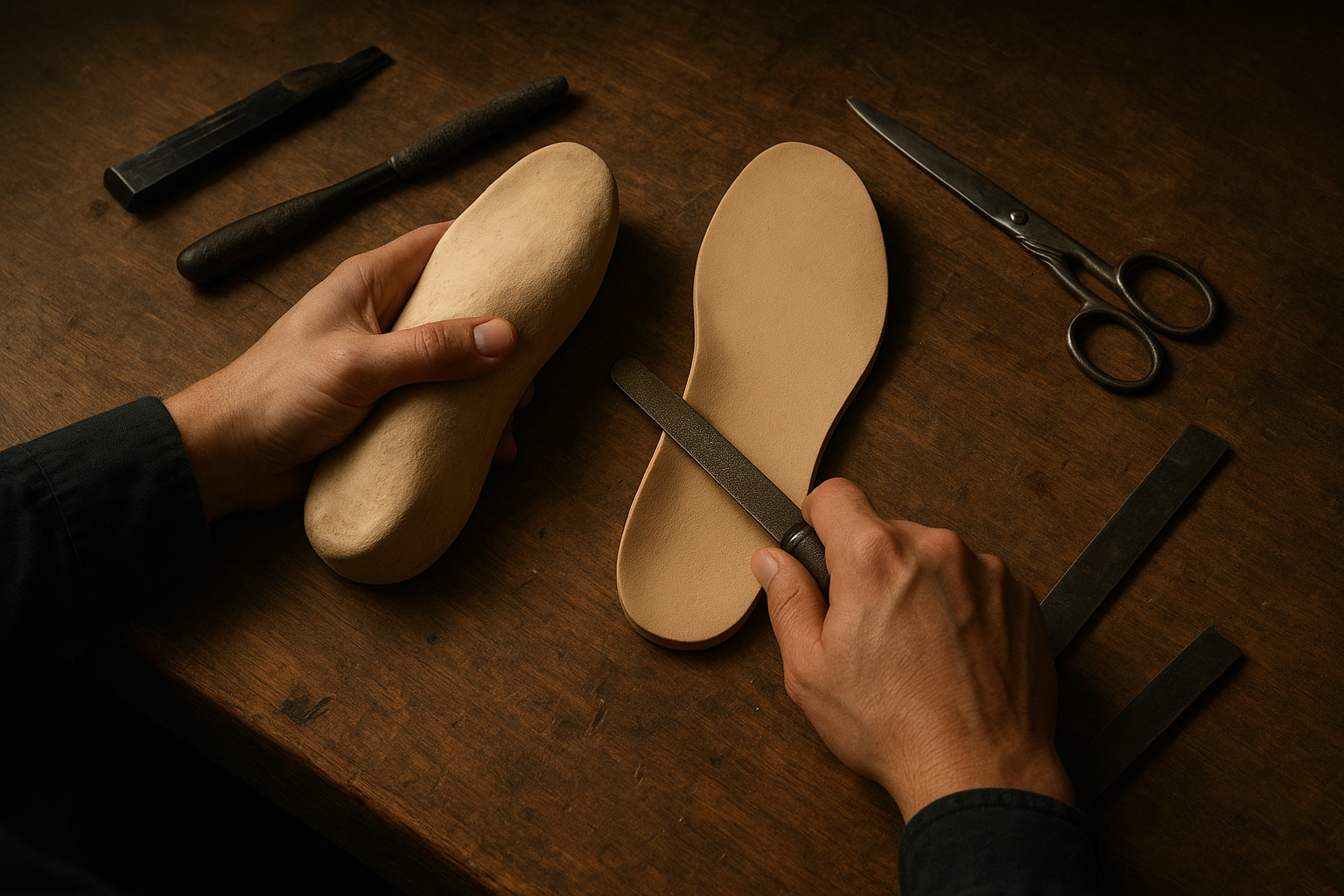
Every pair of custom molded orthotics for seniors is shaped by hand from the patient's own foot mold.
Benefits of Custom Orthotics for Elderly Patients
The advantages of custom orthotics for elderly patients extend well beyond simple comfort. First, they reduce chronic pain by correcting the underlying mechanical issue rather than just cushioning the symptom. Second, they improve balance and gait stability, which supports safer walking around the house and outdoors.
Third, custom devices last longer than generic insoles because the materials are chosen for the individual's weight and activity level. Fourth, they can be adjusted or rebuilt over time as a senior's foot shape or condition changes, something a store-bought insole cannot offer. For seniors managing diabetes, arthritis, or a history of falls, this level of personalized support often makes daily activities noticeably easier.
Custom Orthotics vs. Over-the-Counter Insoles for Seniors
Many families wonder whether an inexpensive drugstore insole can achieve similar results. In short, it usually cannot, because it is built for an average foot shape rather than a specific one.
Custom Molded Orthotics
Made from the patient's own foot mold, targets specific conditions, lasts several years, adjustable over time.
Over-the-Counter Insoles
Generic shape and sizing, offers general cushioning only, wears out faster, no adjustment for specific conditions.
Therefore, while an off-the-shelf insole may provide short-term relief for mild discomfort, it rarely resolves a structural issue like a collapsed arch or a diabetic pressure point the way a custom device can.
How to Order Custom Molded Orthotics for Seniors Online
For seniors who cannot easily travel to an office, ordering online has become a practical option. Patients typically start with a phone consultation with the podiatrist, then receive an at-home mold kit to capture their foot shape accurately.
This detailed guide on how to order custom made orthotics online walks through the process step by step. Meanwhile, the practice's complete guide to custom foot orthotics for seniors covers additional condition-specific advice worth reviewing before ordering. Once the mold is returned, the lab fabricates the device and ships the finished orthotics directly to the patient's home, keeping the entire process simple for those with limited mobility.
Cost of Custom Molded Orthotics for Seniors
Cost is often the first question families ask, and understandably so. Prices vary depending on materials, the complexity of the design, and whether the provider is a large retail chain or a dedicated podiatric lab.
Generally, ordering directly from a podiatrist-owned practice keeps costs lower than working through a retail middleman, since there is no added markup for a storefront visit. Readers can review this breakdown of affordable custom orthotics without sacrificing fit or quality for a closer look at pricing. In addition, some insurance plans and Medicare Advantage plans partially cover custom orthotics when prescribed for a qualifying medical condition, so it is worth checking benefits before placing an order.

Proper support helps seniors move through their day with more confidence.
Choosing the Right Provider for Senior Orthotic Devices
Not every orthotic provider offers the same level of medical oversight. Consequently, it helps to choose a practice where a licensed podiatrist is directly involved in both the evaluation and the fabrication process, rather than a purely retail operation.
A podiatrist-owned lab with decades of hands-on experience and a strong reputation, such as an A+ Better Business Bureau rating, offers an added layer of confidence. Patients can browse the full range of custom orthotic products or speak with a podiatrist directly for a complimentary consultation before committing to an order. For further background on orthotic design principles, the Wikipedia overview of orthotics and guidance from the American Podiatric Medical Association offer useful additional reading.
Frequently Asked Questions About Custom Molded Orthotics for Seniors
What are custom molded orthotics for seniors?
Custom molded orthotics for seniors are podiatrist-designed foot inserts made from an exact impression of an individual's feet. They correct alignment, cushion pressure points, and support the changes in bone structure and skin that often occur with age.
How do custom molded orthotics for seniors differ from store-bought insoles?
Store-bought insoles use a generic shape meant to fit many feet reasonably well, while custom orthotics are molded from the patient's own foot. As a result, custom devices address specific problem areas that mass-produced insoles cannot target.
How long does it take to get custom orthotics made?
Most custom orthotics take between two and four weeks to fabricate after the foot mold is taken. Some providers offer expedited turnaround for patients with urgent mobility needs.
How much do custom molded orthotics for seniors cost?
Custom orthotics typically range from a few hundred dollars to several hundred depending on the materials and complexity of the design. Ordering directly from a podiatrist-owned lab, rather than through a large retail chain, often reduces the cost significantly.
Are custom orthotics covered by insurance or Medicare?
Coverage varies by plan, and Medicare generally covers custom orthotics only when they are prescribed for a qualifying condition such as diabetes. It is best to confirm benefits directly with the insurer before ordering.
What foot conditions do custom orthotics help with in older adults?
Custom orthotics commonly help with plantar fasciitis, arthritis, bunions, diabetic foot complications, and flat feet. They also support balance for seniors dealing with instability or a shuffling gait.
How long do custom molded orthotics for seniors last?
With regular use, custom orthotics generally last three to five years before the materials compress and lose support. Seniors who walk frequently or have diabetes may need replacements sooner.
Is there a break-in period for new orthotics?
Yes, most patients need one to two weeks of gradual wear to adjust to a new orthotic. Starting with short periods of use and slowly increasing wear time helps prevent soreness.
Can seniors order custom orthotics online without visiting an office?
Yes, many providers now offer at-home mold kits so seniors can order custom orthotics online without an in-person visit. A phone consultation with a podiatrist is still recommended to confirm the fit is appropriate.
What common mistakes do people make when choosing orthotics?
A frequent mistake is choosing a generic insole for a complex foot issue, which rarely resolves the underlying problem. Another common error is skipping the professional mold, which leads to a poor and sometimes uncomfortable fit.
How often should seniors replace their custom orthotics?
Seniors should generally replace custom orthotics every three to five years, or sooner if they notice reduced cushioning, uneven wear, or returning pain. Regular podiatric checkups help determine the right replacement schedule.
Do custom orthotics help prevent falls in elderly patients?
Custom orthotics can improve balance and stability by correcting alignment issues that contribute to unsteady walking. Because falls are a leading cause of injury among older adults, better foot support is one practical piece of a broader fall-prevention plan.
What is the difference between custom orthotics and orthopedic shoes?
Orthopedic shoes are footwear built with extra depth and support features, while custom orthotics are inserts placed inside almost any shoe. Many seniors use both together for the best combination of support and comfort.
Final Thoughts on Custom Orthotics for Older Adults
In summary, custom molded orthotics for seniors offer a level of precision that generic insoles and standard shoes cannot match. Because they are built from an individual foot mold, they target specific pain points, support balance, and adapt as a senior's needs evolve over time.
Ultimately, the right pair of custom molded orthotics for seniors can make everyday walking safer and more comfortable, whether the patient visits a local podiatrist or orders through a trusted online platform such as customorthotics.com. For anyone ready to take that first step, reviewing the related guide on orthotic solutions for senior comfort and pain relief is a practical next move.