

Custom made orthotics are precision shoe inserts molded from an exact impression of your own feet and built to correct the biomechanical imbalances that generic insoles simply cannot fix. Unlike mass-produced inserts sold at a drugstore, these devices are engineered entirely around your unique foot structure, walking pattern, and medical history. Because every foot is different, a podiatrist typically takes a physical mold or digital scan before fabrication even begins. As a result, the finished device supports the exact contours of your arch, heel, and forefoot instead of an "average" shape pulled off a shelf. In this guide, we explain exactly how custom made orthotics are fabricated, what they cost in 2025, who benefits most, and how to decide whether ordering locally or online makes more sense for your situation.
What Are Custom Made Orthotics?
Custom made orthotics are medical-grade shoe inserts fabricated from a personalized mold or 3D scan of an individual's foot, which sets them apart from generic insoles bought off a shelf. A licensed podiatrist designs each device to correct specific alignment problems, redistribute pressure evenly, and relieve pain caused by conditions such as plantar fasciitis or flat feet.
Specifically, the process starts with a physical exam. A podiatrist studies your walking pattern, checks arch height, and often takes a plaster or foam impression of your foot. This impression, sometimes replaced today by digital scanning, becomes the template for the finished orthotic — a term referring to any device inserted into a shoe to correct foot function. For instance, the podiatrist-owned team at customorthotics.com combines more than 20 years of hands-on fabrication experience and an A+ Better Business Bureau rating with direct podiatrist consultations, so every device reflects clinical judgment rather than a generic template. According to Wikipedia's overview of orthotics, these devices are widely used in podiatry, orthopedics, and sports medicine to manage issues ranging from bunions to lower back pain.
In short, think of custom made orthotics as prescription eyewear for your feet. Just as glasses are ground to correct your exact vision, orthotics are shaped to correct your exact gait. Consequently, no two pairs are ever truly identical, even if two patients share the same diagnosis.
How Are Custom Orthotics Fabricated?
Once the mold or scan is complete, fabrication moves into a specialized lab. Technicians reinforce the impression and shape a rigid or semi-rigid shell using materials such as carbon fiber, EVA foam, or thermoplastic. Therefore, the final shape mirrors your foot's exact contours rather than an averaged size. Depending on the diagnosis, the podiatrist may add a metatarsal pad, heel cup, or wedge to correct pronation or supination, meaning the inward or outward rolling of the foot during walking. According to the American Podiatric Medical Association's patient resource, properly fabricated orthotics can reduce strain on tendons and joints by redistributing pressure across the foot. For a deeper breakdown of the buying process, this guide on what to know before you buy custom crafted orthotics covers material choices and turnaround times in more detail.
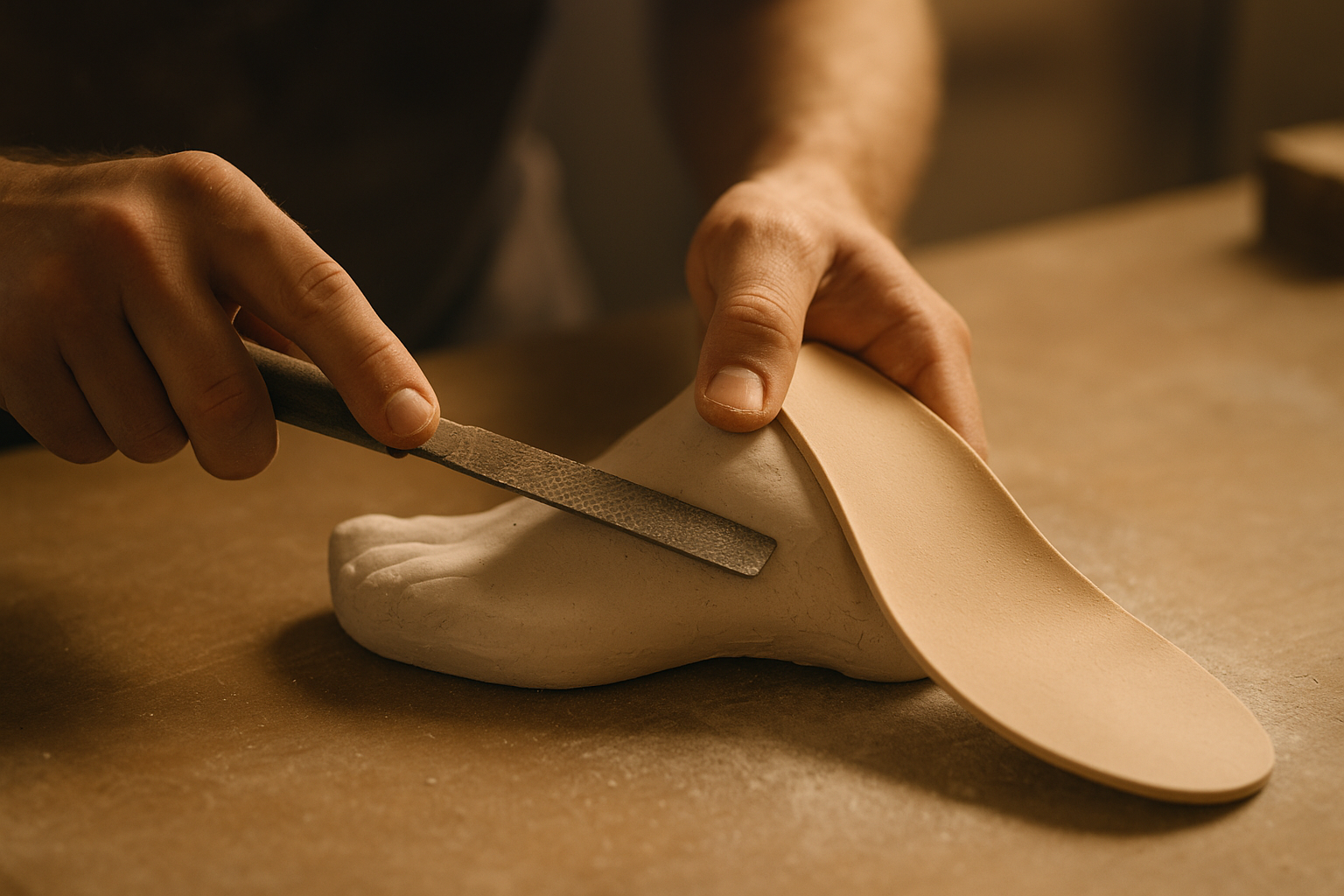
Custom made orthotics are shaped by hand from an exact mold of the patient's foot.
Rigid, Semi-Rigid, and Soft Custom Orthotics: Which Type Do You Need?
Not every pair of custom made orthotics is built the same way, and this is an important distinction many buyers never hear about. Rigid orthotics, usually made from carbon fiber or hard plastic, control motion at the ankle and hindfoot and work well for flat feet or tendon dysfunction. Semi-rigid orthotics, by contrast, blend a supportive shell with softer cushioning layers, making them a popular choice for athletes who need both control and shock absorption. Soft or accommodative orthotics, typically built from foam or gel-like materials, prioritize comfort over correction and are often prescribed for diabetic foot care or arthritis. Because the right category depends entirely on your diagnosis and activity level, this is precisely why a podiatrist consultation matters more than guessing from a catalog. For a side-by-side look at performance-grade materials, see this complete buyer's guide to high-performance custom orthotics.
Custom Orthotics vs. Off-the-Shelf Inserts
In contrast, store-bought insoles are manufactured in bulk, standard sizes, and generic arch shapes. Consequently, they offer cushioning but rarely correct the underlying mechanical issue causing pain. Custom orthotics, on the other hand, are shaped around your specific foot rather than an average size. Similarly, they are often covered under insurance or HSA/FSA plans when prescribed by a podiatrist, while drugstore inserts almost never qualify. Above all, the biggest difference lies in longevity: a well-made custom device can last three to five years, while foam inserts often wear out within months. For a closer comparison, see how custom made orthotics differ from generic inserts. If budget is a concern, it also helps to review options for affordable custom orthotics without sacrificing quality.
Who Benefits From Personalized Foot Orthotics?
Generally speaking, anyone with chronic foot, ankle, knee, or lower back pain linked to poor foot mechanics may benefit from personalized foot orthotics. Runners with recurring shin splints, for example, often see improvement once pressure is redistributed correctly. In particular, common candidates include:
- Patients diagnosed with plantar fasciitis or heel spurs
- Individuals with bunions, hammertoes, or structural deformities
- Athletes managing repetitive stress injuries
- Older adults dealing with balance or joint pain
- Diabetics who need pressure redistribution to prevent ulcers
As a result, a podiatrist evaluation is the best starting point, since not every foot issue calls for the same corrective design. If you are unsure where to start locally or online, this resource on where to get personalized shoe inserts for better foot support outlines both in-person and remote ordering options.

Properly fitted orthotics can make everyday walking noticeably more comfortable.
Custom Orthotics for Specific Conditions
Because each diagnosis places pressure differently across the foot, the right design varies quite a bit from one patient to the next. Specifically:
- Plantar fasciitis & heel spurs: A deep heel cup and firm arch support reduce tension on the plantar fascia, the band of tissue connecting heel to toes.
- Flat feet & overpronation: A rigid shell with medial posting prevents the arch from collapsing inward during each step.
- Bunions & hammertoes: Wider forefoot accommodation and metatarsal padding relieve pressure on deformed joints.
- Diabetic foot care: Soft, accommodative orthotics redistribute pressure to prevent ulcers, a priority highlighted by the CDC's diabetic foot care guidance.
- Arthritis & joint pain: Cushioned, low-profile designs absorb shock without restricting limited joint mobility.
- Sports injuries: Semi-rigid orthotics stabilize the hindfoot while still allowing the flexibility competitive movement requires.
Consequently, no single "one size fits most" orthotic can realistically address all of these conditions at once — which is exactly the gap generic insoles fail to close.
How Much Do Custom Made Orthotics Cost?
Typically, custom made orthotics range from $200 to $800 per pair, depending on materials, diagnosis complexity, and whether fabrication happens locally or through a specialized lab. However, many insurance plans and HSA or FSA accounts cover part of the cost when a podiatrist provides a prescription. For comparison, off-the-shelf inserts cost $20 to $60 but need replacing every few months, so long-term value often favors custom devices. In fact, research published through the FDA's medical device guidance notes that properly classified foot orthoses are regulated to ensure consistent quality and safety standards.
| Option | Typical Price | Average Lifespan |
|---|---|---|
| Drugstore insoles | $20–$60 | 3–6 months |
| Custom made orthotics (in-clinic) | $300–$800 | 3–5 years |
| Custom made orthotics (online lab) | $200–$500 | 3–5 years |
Because pricing varies so widely, it helps to compare providers directly. This complete guide on choosing the best custom orthotics for foot pain walks through pricing tiers and what drives the cost up or down. Additionally, many practices bill orthotics under standard durable medical equipment codes, so it is worth asking your provider whether they handle insurance claims directly rather than requiring reimbursement paperwork yourself.
Steps to Get Your Custom Foot Orthotics
Getting fitted for custom made orthotics is more straightforward than most patients expect. Below is the typical process from consultation to delivery.
- Schedule a consultation. Call or book online for a complimentary consultation with a licensed podiatrist who can review your symptoms, medical history, and daily footwear needs before recommending a device.
- Complete a foot assessment. During the visit, the podiatrist examines your gait, arch height, and pressure points, then takes a plaster mold or digital scan to capture your foot's exact shape.
- Select materials and features. Based on your diagnosis, you and the podiatrist choose the shell rigidity, cushioning, and any added corrections such as heel wedges or metatarsal pads.
- Wait for lab fabrication. Skilled technicians build your orthotic by hand, a process that usually takes two to four weeks since each pair is manufactured individually rather than pulled from stock.
- Attend your fitting appointment. Once the orthotics arrive, the podiatrist checks the fit inside your regular shoes and makes small adjustments to ensure comfort and proper alignment during walking.

A thorough foot assessment is the first step toward custom made orthotics that truly fit.
Ordering Custom Made Orthotics Online vs. Visiting a Local Clinic
Many patients assume custom made orthotics require an in-person clinic visit, but that is no longer the only path. In-person evaluation at a local practice offers the advantage of a hands-on gait analysis and face-to-face follow-up care. However, it also means scheduling around office hours, driving to appointments, and sometimes waiting weeks for an opening. Ordering online, by contrast, lets you complete an at-home impression kit on your own schedule and still consult a licensed podiatrist by phone before fabrication begins. As a result, patients in rural areas or with limited mobility gain access to the same clinical-grade devices without the logistical barriers of a brick-and-mortar visit. For a walkthrough of exactly how the remote process works, see this step-by-step guide to ordering custom made orthotics online, or browse the full collection of custom orthotics available for direct ordering.
In either case, the fabrication quality depends far more on the lab and podiatrist oversight than on whether the mold was taken in an office or at your kitchen table. Therefore, the real question is not "local or online" but rather whether the provider has verifiable credentials, a transparent process, and a clear return or adjustment policy.
How to Care for and Break In Your Custom Made Orthotics
Proper care extends the life of custom made orthotics well beyond their expected three-to-five-year range. Specifically, wipe the shell with a damp cloth and mild soap rather than submerging it in water, since excess moisture can warp thermoplastic materials over time. In addition, remove the insert and air it out overnight if your feet sweat heavily during the day, as trapped moisture encourages odor and bacterial growth. Furthermore, store orthotics away from direct heat or sunlight, since high temperatures can soften adhesives and distort the shell's shape.
Breaking in a new pair matters just as much as caring for an older one. Wear them for two to three hours on the first day, then gradually increase wear time by an hour or two each following day. Within one to two weeks, most patients comfortably wear their orthotics all day without soreness. If mild discomfort persists beyond that window, however, a follow-up adjustment visit is usually the fastest fix.
Common Mistakes to Avoid
Even with the right intentions, patients sometimes make avoidable errors when choosing foot orthotics. For instance, buying a generic insert online without a professional evaluation often wastes money if the underlying issue isn't addressed. Likewise, skipping the break-in period — wearing new orthotics for a full day right away — can cause soreness that discourages continued use; instead, gradually increase wear time as described above. Another common mistake is choosing shoes that don't accommodate the orthotic's shape, since a device that fits well in a running shoe may not fit inside dress shoes. Furthermore, some patients forget to schedule follow-up visits, even though feet change over time due to weight fluctuations, aging, or new injuries. Finally, ignoring persistent pain after several weeks of consistent use is a mistake, since it may signal the device needs adjustment rather than more time to adapt.
Signs You May Need Custom Made Orthotics
Not sure whether your discomfort rises to the level of needing a prescription device? In particular, watch for these warning signs:
- Heel or arch pain that is worse first thing in the morning
- Uneven wear patterns on the soles of your shoes
- Knee, hip, or lower back pain with no clear injury cause
- Visible rolling of the ankle inward or outward while walking
- Foot pain that returns despite trying several store-bought insoles
If any of these sound familiar, a podiatrist evaluation can confirm whether custom made orthotics are the right next step for your specific situation.
Frequently Asked Questions About Custom Made Orthotics
What are custom made orthotics?
Custom made orthotics are shoe inserts fabricated from an individual mold or scan of a patient's foot, designed to correct alignment and relieve pain. Unlike generic insoles, they are built specifically for one person's foot shape and gait.
How do custom made orthotics differ from generic inserts?
Custom made orthotics are shaped around your exact foot structure, while generic inserts use a standardized, average shape. As a result, custom devices typically correct the underlying mechanical cause of pain instead of just cushioning the foot.
How are custom made orthotics fabricated?
A podiatrist takes a mold or 3D scan of your foot, then a lab technician shapes a rigid or semi-rigid shell around that exact impression. The process usually takes two to four weeks from consultation to delivery.
Why do podiatrists recommend custom made orthotics?
Podiatrists recommend them because they address the specific biomechanical cause of foot, knee, or back pain rather than masking symptoms. In particular, they help patients with plantar fasciitis, flat feet, bunions, and diabetic foot complications.
How much do custom made orthotics cost?
Prices generally range from $200 to $800 per pair, depending on materials and diagnosis complexity. However, insurance or HSA/FSA benefits often cover part of the expense when prescribed by a podiatrist.
How long does it take to receive custom made orthotics?
Most patients wait two to four weeks between the initial mold and final delivery. This timeline allows the lab to fabricate each device by hand rather than pulling one from generic stock.
What conditions can custom made orthotics help treat?
They can help manage plantar fasciitis, heel spurs, bunions, flat feet, high arches, and diabetic foot ulcers, among other conditions. In addition, they are often used to reduce knee, hip, or lower back pain caused by poor foot alignment.
Can I order custom made orthotics online?
Yes, many providers, including podiatrist-led practices, allow patients to complete an at-home mold kit and consult by phone before ordering online. This makes professional-grade foot care accessible even for patients who cannot visit in person.
What common mistakes should I avoid when choosing custom made orthotics?
Common mistakes include skipping a professional evaluation, rushing the break-in period, and choosing shoes that don't accommodate the device's shape. Avoiding these errors helps ensure the orthotics deliver lasting comfort and support.
How long do custom made orthotics last?
Well-made custom orthotics typically last three to five years with regular use, depending on material and activity level. In contrast, generic foam inserts often need replacing every few months.
Are custom made orthotics covered by insurance?
Many insurance plans and HSA or FSA accounts cover part of the cost when a licensed podiatrist prescribes the device. Coverage varies, so it is wise to confirm benefits before starting the fabrication process.
How do I know if I need custom made orthotics?
Persistent foot, heel, or arch pain that doesn't improve with generic inserts or rest is a common sign you may need custom made orthotics. A podiatrist evaluation can confirm whether your pain stems from a structural or biomechanical issue.
What's the difference between rigid and soft custom made orthotics?
Rigid orthotics control motion and work best for flat feet or tendon issues, while soft orthotics prioritize cushioning and suit arthritis or diabetic foot care. The right choice depends on your specific diagnosis and daily activity level.
Can custom made orthotics fit in any type of shoe?
Not always. A device molded for an athletic shoe may be too bulky for a dress shoe, so many patients order a second, slimmer pair for formal footwear. It's best to tell your podiatrist which shoes you wear most before fabrication begins.
Final Thoughts on Custom Made Orthotics
Ultimately, custom made orthotics offer a level of precision that mass-produced insoles cannot replicate, since each device is built from an exact mold of your foot. Throughout this guide, we've covered how they're fabricated, what they typically cost, who benefits most, and how to care for them long after your fitting appointment. In addition, we've compared local clinic visits against online ordering and flagged the mistakes worth avoiding along the way. If chronic foot, knee, or back pain has been affecting your daily comfort, a professional evaluation is often the most reliable next step. The podiatrist-led team at customorthotics.com offers complimentary phone consultations for patients ready to explore custom made orthotics, whether ordering locally or online. As a result, taking that first step toward a proper diagnosis can make the difference between temporary relief and a lasting solution.