

Comfortable insoles for everyday use are shoe inserts engineered to deliver cushioning, arch support, and improved foot alignment throughout your daily life — whether you're on your feet for eight hours at work, running errands, or simply walking the dog. The right insole doesn't just make your shoes feel better; it can reduce fatigue, prevent chronic pain, and protect your knees, hips, and lower back from downstream damage.
According to the American Podiatric Medical Association, approximately 77% of Americans experience foot pain at some point in their lives — yet a significant majority never seek treatment. In many cases, selecting the right comfortable insole for everyday use is the simplest, most affordable, and most immediate first step toward lasting relief.
This guide covers everything you need to know: what comfortable daily insoles actually are, how to match them to your foot type and lifestyle, how they compare to custom orthotics, which specific situations call for which type of insole, what the clinical evidence says, and when you should see a podiatrist instead of shopping online. For a deeper walkthrough, see our Consult a Podiatrist for Foot Pain: The Complete Guide to When, Why & What to Ex.
What Are Comfortable Insoles for Everyday Use?
Comfortable insoles for everyday use are removable inserts that sit inside your shoes, supplementing or replacing the factory footbed. They span a wide spectrum — from simple foam pads that add a layer of cushioning, to biomechanically engineered orthotic devices that correct the way your foot strikes the ground with every step.
Understanding the difference between insoles, orthotics, and inserts is essential before you buy:
- Insoles / Inserts: A broad category encompassing any removable layer placed inside a shoe. May provide cushioning only, or a combination of cushioning and support.
- Over-the-Counter (OTC) Orthotics: Mass-produced insoles that offer semi-structured arch support. Designed around statistical averages of foot shape, not your individual foot.
- Custom Orthotics: Fabricated from a precise mold of your individual foot by a podiatrist. Address specific biomechanical faults such as overpronation, supination, leg length discrepancy, or structural deformity.
- Cushioning Insoles: Designed primarily for shock absorption and softness, not structural correction. Suitable for mild foot fatigue with no underlying biomechanical issue.
The best comfortable insoles for everyday use typically combine a semi-rigid supportive base (to control motion and maintain alignment) with a cushioned top layer (to absorb impact and reduce pressure-point pain). The ideal balance depends on your foot type, activity level, and any existing conditions.
Two of the most common mechanical problems that insoles address are overpronation (the inward rolling of the foot during gait, which strains the arch, ankle, and knee) and supination (outward rolling, which concentrates stress on the outer edge of the foot and increases injury risk). Neither condition is adequately treated by cushioning alone — both require a degree of structural correction.
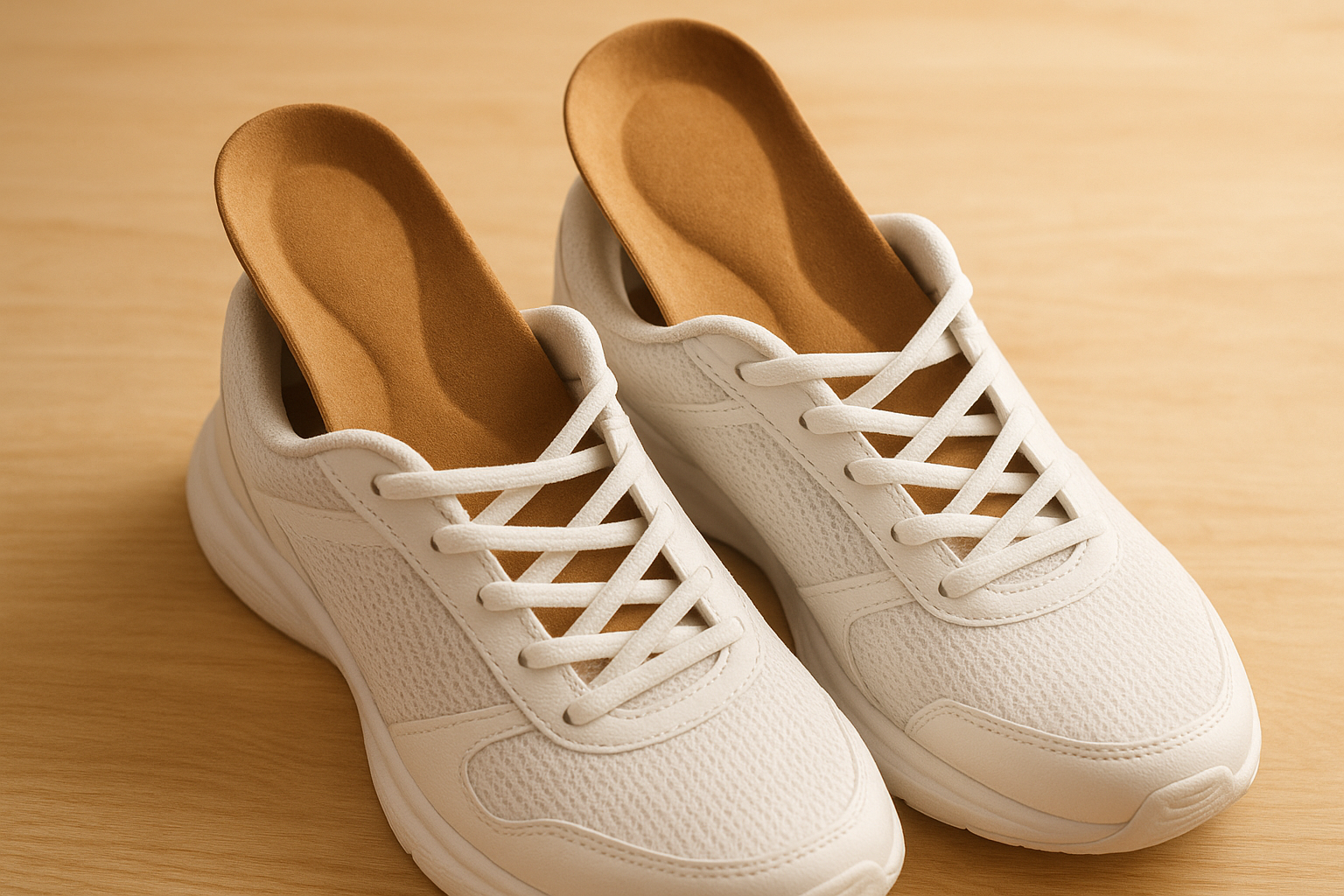
Choosing comfortable insoles for everyday use starts with understanding your foot type, arch height, and how you move. For a deeper walkthrough, see our Which Insoles Provide Good Arch Support for Daily Use?.
How to Identify Your Foot Type Before Buying Insoles
Buying insoles without knowing your foot type is one of the most common and costly mistakes people make. Your arch height is the single most important factor in determining which insole category is right for you.
The Wet Footprint Test
Wet the sole of your foot and step firmly onto a piece of cardboard or brown paper bag. Step off and examine the print:
- Flat foot (low arch): You see nearly the entire sole of your foot with little or no inward curve. You likely overpronate and need firm, structured arch support.
- Normal arch: You see a moderate inward curve cutting roughly halfway into the footprint. Most insole types work for you; focus on comfort and activity match.
- High arch: You see a very narrow band or almost no connection between the forefoot and heel. You likely supinate and need cushioning more than rigid structure, with some arch fill to prevent collapse.
Gait Analysis: The Next Level
A wet print tells you about your arch, but not about how your foot actually moves. A gait analysis — performed by a podiatrist or at a specialty running store — evaluates your biomechanics in motion. This is especially valuable if you experience knee pain, shin splints, or recurring ankle issues, as these often trace back to how your foot strikes and rolls during each step.
For persistent or complex problems, a podiatrist-conducted gait analysis is the gold standard. It informs whether a generic OTC insole will help you or whether you need a custom device designed specifically for your mechanics.
Key Features to Look for in Comfortable Daily Insoles
Not all insoles are created equal. Knowing which features matter most saves you time, money, and discomfort. Here is a detailed breakdown of every quality worth evaluating.
Arch Support Matching Your Foot Type
Arch support is the most critical feature in any everyday insole. Flat feet require firm, structured support to prevent the arch from collapsing inward — this reduces strain on the plantar fascia, Achilles tendon, and posterior tibial tendon. High arches need cushioning and gentle arch fill rather than aggressive structure, since their rigid arch already can't absorb impact effectively. Neutral arches have the most flexibility in terms of insole choice and can benefit from a moderate combination of both.
A common mistake is buying a "maximum cushion" insole for flat feet. Without structural correction underneath, you're masking the symptom while the biomechanical problem continues to cause damage to surrounding joints and tendons.
Deep Heel Cup
A deep heel cup cradles the fat pad of the heel, keeping it centered directly beneath the calcaneus (heel bone). This concentrates your body's natural shock-absorbing fat pad where it does the most good, rather than allowing it to splay outward under load. For people with plantar fasciitis, heel spurs, or general heel pain, a heel cup depth of at least 14mm is typically recommended. Shallow heel cups provide inadequate lateral stability and allow the heel to shift during the push-off phase of walking.
Materials and Cushioning: A Full Breakdown
The material composition of an insole determines its durability, cushioning quality, and structural function. Here is how the most common materials compare:
- EVA Foam (Ethylene-Vinyl Acetate): Lightweight, affordable, and provides good shock absorption. Degrades with heavy use but is ideal for general everyday comfort at a budget price point.
- Memory Foam: Conforms to the unique shape of your foot over time, providing personalized cushioning. However, it offers little structural correction and can compress significantly under prolonged standing, losing effectiveness.
- Gel: Provides targeted pressure relief at specific hot spots — heel, metatarsal heads, or ball of foot. Often combined with foam for a dual-layer effect. Heavier than foam but excellent for localized pain.
- Polypropylene (Semi-Rigid/Rigid Shell): The material of choice for functional correction. Provides the structural control necessary to address overpronation and supination. Used in most custom orthotics and higher-end OTC insoles.
- Carbon Fiber: Extremely thin and stiff. Used in custom orthotics for dress shoes or athletic applications where space is at a premium and maximum rigidity is required.
- Cork: Natural, moldable, and breathable. Cork insoles conform to foot shape and provide moderate arch support. Commonly found in footwear brands known for comfort. Less durable than synthetic options.
Metatarsal Support
Often overlooked, metatarsal support addresses pain in the ball of the foot — a condition called metatarsalgia. A metatarsal pad or dome behind the ball of the foot helps redistribute pressure away from the metatarsal heads, reducing the burning and aching that many people experience after extended walking or standing on hard surfaces.
Moisture Management and Antimicrobial Top Cover
For everyday use — especially during warm months or high-activity days — a moisture-wicking, antimicrobial top cover is important for both hygiene and comfort. Fabrics treated with silver ions, bamboo charcoal, or Polygiene technology inhibit odor-causing bacteria and keep the insole surface drier throughout the day.
Full-Length vs. Three-Quarter Length
Full-length insoles replace the factory insert entirely and run the full length of the shoe. They offer the most comprehensive support but require adequate shoe volume. Three-quarter insoles stop just behind the toe box, making them more versatile across shoe styles — particularly dress shoes, heels, and narrow athletic shoes — without crowding the forefoot.
Thickness and Shoe Compatibility
A thicker insole does not always mean more comfort. An insole that raises your foot too high inside the shoe can create heel slippage, reduce ankle stability, or make the shoe too tight. Always check that your insole fits flush inside your shoe without causing bunching or tightness across the instep before committing to daily wear.
How to Choose Comfortable Insoles for Everyday Use: Step-by-Step
Selecting the right insole doesn't need to be complicated. Follow these six steps to find the best match for your individual needs.
- Identify your foot type and arch height. Use the wet footprint test described above or visit a podiatrist for a clinical assessment. Your arch type — flat, neutral, or high — is the foundational variable that determines which insole category will provide the most support and comfort for daily wear. Do not skip this step; buying the wrong arch profile is the number one reason insoles fail to relieve pain.
- Assess your daily activity level and surface type. Consider how many hours you spend on your feet, whether you stand on hard concrete or tile floors, and whether your work involves walking, climbing, or lifting. These factors determine the required thickness, density, and rigidity of your insole. Someone standing on concrete for eight hours daily needs significantly more shock absorption than someone who walks on carpet for two.
- Match the insole to your shoe type. Identify the shoes you wear most — athletic trainers, dress shoes, work boots, casual sneakers. Full-length insoles work best in athletic shoes and boots with removable factory inserts. Three-quarter insoles are more appropriate for dress shoes and narrow footwear. Confirm the insole profile matches the shoe's interior geometry before buying.
- Decide between over-the-counter and custom orthotics. If you have mild, general fatigue or discomfort with no diagnosed condition, a quality OTC insole with appropriate arch support may be sufficient. However, if you experience chronic pain, recurring injuries, structural imbalances, or conditions like plantar fasciitis, Achilles tendinopathy, or metatarsalgia, a custom orthotic fabricated from a mold of your foot delivers far superior and more durable results.
- Break in your insoles gradually. Wear new insoles for two to three hours on your first day, adding an hour or two each subsequent day. A new insole changes the mechanics of how you walk, and your feet, calves, and lower back need time to adapt. Jumping straight to full-day wear is a common cause of new pain and premature abandonment of an otherwise good insole.
- Replace insoles on a regular schedule. Inspect your insoles every six months for signs of compression, cracking, delamination, or loss of structural integrity. A compressed foam insole that looks superficially intact may have lost 50% of its functional cushioning. Worn insoles not only fail to provide support — they can actively worsen pain by creating uneven pressure distribution.
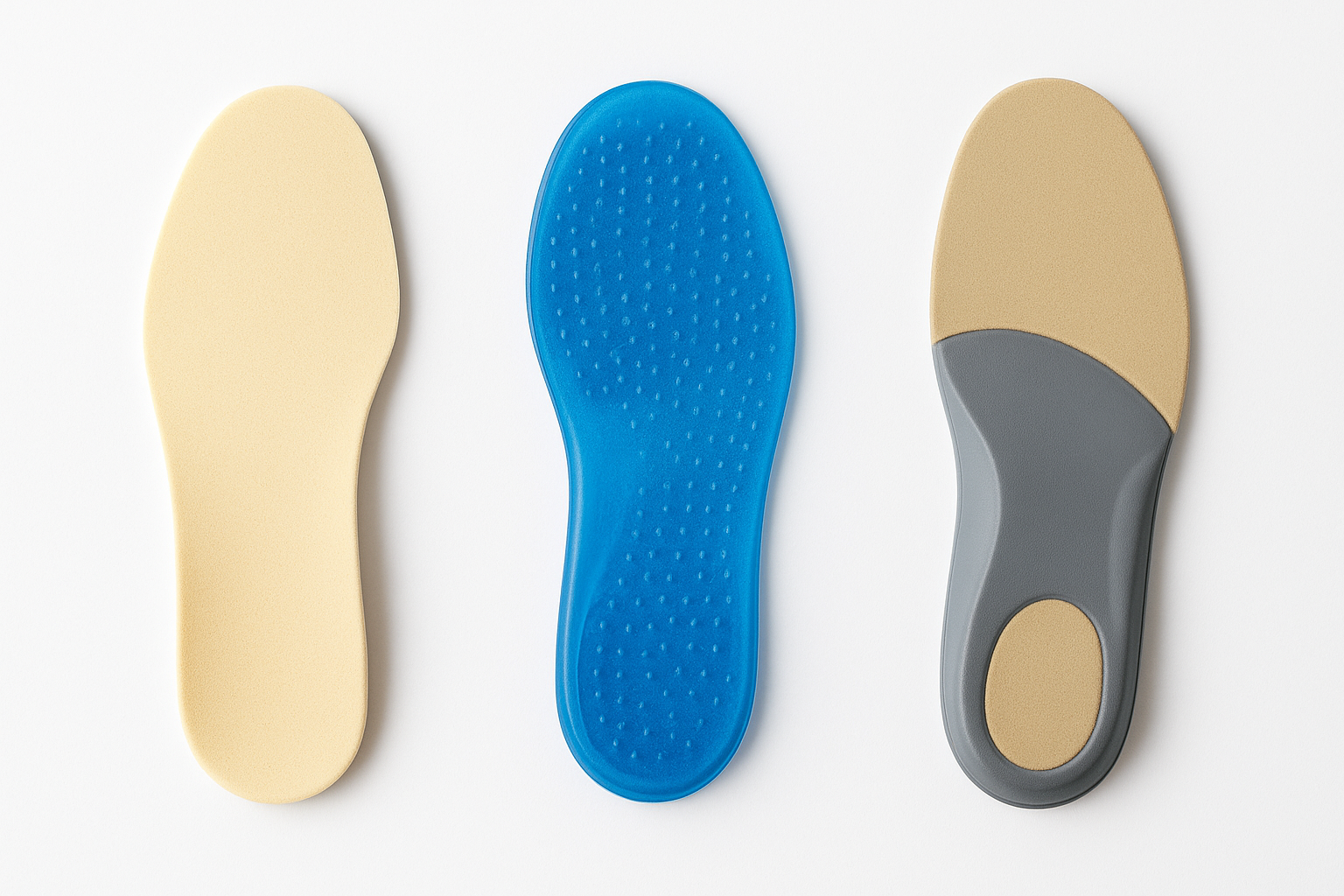
From foam to gel to rigid orthotics, different insole materials serve different comfort and biomechanical correction needs.
Over-the-Counter Insoles vs. Custom Orthotics: A Detailed Comparison
The choice between over-the-counter insoles and custom orthotics is one of the most frequently debated topics in foot health. Here is an honest, clinically grounded comparison.
What OTC Insoles Do Well
Quality over-the-counter insoles provide meaningful relief for mild foot fatigue, general soreness, and minor arch discomfort. They are immediately accessible, cost between $15 and $60, and require no professional involvement. For people without structural foot problems or diagnosed conditions, a well-chosen OTC insole can make a significant positive difference.
Where OTC Insoles Fall Short
OTC insoles are engineered around population averages — they fit no one's foot perfectly. They cannot account for individual differences in arch curvature, heel shape, forefoot width, leg length discrepancy, or gait pattern. For people with chronic pain, structural deformity, or biomechanical dysfunction, the gap between an OTC insole and a custom orthotic is clinically significant.
A 2019 study published in the Journal of Foot and Ankle Research found that custom foot orthotics produced significantly greater improvements in pain and function compared to sham insoles for patients with plantar heel pain. Additional research has demonstrated benefits of custom orthotics for knee osteoarthritis, Achilles tendinopathy, and patellofemoral pain syndrome — conditions that OTC insoles rarely address adequately.
Custom Orthotics: The Precision Advantage
Custom orthotics are fabricated from an individual plaster cast, foam impression, or 3D scan of your foot. Every contour — the arch curvature, heel depth, forefoot angulation, and any corrective posting needed — is built to your exact anatomy. This precision means the orthotic addresses the root cause of your pain, not just the symptom.
Custom orthotics typically last two to five years, making their higher upfront cost ($200–$800) more cost-effective per year of use than replacing OTC insoles every six to twelve months. Insurance coverage for custom orthotics is available in many cases when prescribed by a podiatrist for a documented medical condition.
For a comprehensive breakdown of this comparison, see this resource on custom orthotics versus prefabricated insoles from customorthotics.com.
Quick Decision Guide: Choose OTC insoles if your foot discomfort is mild and you have no structural issues. Choose custom orthotics if you have chronic pain, a diagnosed foot condition (plantar fasciitis, flat feet, high arches, bunions), recurring injuries, or if OTC insoles have not provided adequate relief after 4–6 weeks of consistent use.
What the Clinical Research Actually Says About Insoles
Marketing claims for insoles are everywhere. Here is what the peer-reviewed evidence actually supports:
- Plantar fasciitis: Multiple randomized controlled trials have demonstrated that foot orthotics — particularly custom devices — significantly reduce plantar heel pain and improve function. A 2018 Cochrane Review confirmed that orthoses (both custom and prefabricated) reduce short-term pain for plantar fasciitis.
- Occupational fatigue: Research published in Applied Ergonomics found that insoles with arch support and cushioning meaningfully reduced lower limb fatigue and discomfort in workers who stood for prolonged periods on hard floors.
- Knee and lower back pain: Studies have shown that correcting foot overpronation with appropriate insoles can reduce valgus stress at the knee and alter lumbopelvic alignment, providing measurable improvements in knee and back pain.
- Running injuries: A systematic review in the British Journal of Sports Medicine found that foot orthoses reduce the risk of stress fractures and shin splints in military recruits and recreational runners.
The CDC notes that musculoskeletal conditions — including foot and ankle disorders — are among the leading causes of disability in adults. Addressing foot problems early with proper support is one of the most effective preventive strategies available.
Comfortable Insoles for Specific Everyday Situations
The best insole for you depends heavily on how and where you spend your day. Here is what works best across the most common everyday scenarios.
Standing All Day at Work
Workers in retail, healthcare, manufacturing, hospitality, and construction often spend eight or more hours on hard floors. These occupational demands place enormous cumulative stress on the plantar fascia, metatarsal heads, and Achilles tendon. For this scenario, prioritize insoles with:
- A firm arch support structure that doesn't compress under sustained weight
- Deep heel cup with substantial cushioning (gel or dual-density foam)
- Metatarsal support to relieve forefoot pressure
- Antimicrobial top cover for hygiene during extended wear
For detailed product guidance on this use case, see this resource on the best insoles for standing all day. For a deeper walkthrough, see our Best Orthotics for Everyday Use: A Complete Guide.
Walking and Light Exercise
For walking, errands, and light exercise, a moderate-density insole with good arch support and some forefoot cushioning is ideal. The insole should be flexible enough to allow the foot's natural toe-off motion, but supportive enough to prevent arch collapse during the midstance phase of gait. Avoid overly soft insoles that compress fully under body weight — they provide little functional benefit after the first few minutes of use.
Dress Shoes and Narrow Footwear
Dress shoes and narrow footwear leave minimal room for insoles. Bulky inserts will crowd the toe box, increase heel slippage, and create new pressure points. In this situation, a slim three-quarter insole or a sulcus orthotic — which ends just behind the toes — is the optimal solution. Carbon fiber custom orthotics are also available for dress shoe use; they are extremely thin while providing excellent structural control.
Athletic and Running Shoes
Running and athletic activities amplify ground reaction forces by three to five times body weight. For runners and active individuals, an insole must provide dynamic shock absorption, mediolateral stability, and metatarsal support capable of withstanding repeated high-impact loading. Sport-specific custom orthotics are especially valuable here, as they can be designed to address the specific mechanics of your sport (heel strike vs. forefoot strike, lateral cutting, and so on).
Diabetic Foot Care
Diabetic patients require specialized insoles designed for total contact pressure offloading — reducing peak pressure at ulcer-prone areas to prevent tissue breakdown. Standard OTC insoles are not appropriate for diabetic foot care. A podiatrist should be consulted to design a custom diabetic insole that accommodates neuropathy, limited joint mobility, and circulatory concerns.
Managing Foot Pain on a Budget
Cost is a legitimate concern. Several well-engineered OTC insoles provide meaningful relief at accessible price points. This resource on affordable insoles for foot pain covers the best budget-friendly options with real arch support rather than pure cushioning. For a deeper walkthrough, see our Best Insoles for Standing All Day: Expert Guide to Relief and Support.
Common Foot Conditions That Insoles Address
Comfortable insoles for everyday use are not just about general comfort — they actively treat and manage a wide range of clinical foot conditions. Here is how:
Plantar Fasciitis
Plantar fasciitis is inflammation of the thick band of tissue running along the bottom of the foot, causing sharp heel pain — especially with the first steps in the morning. Insoles address plantar fasciitis by: (1) supporting the arch to reduce tension on the fascia, (2) cushioning the heel to reduce direct impact loading, and (3) redistributing pressure away from the inflamed insertion point. Custom orthotics are the gold standard for moderate to severe cases.
Flat Feet (Pes Planus)
Flat feet cause the arch to collapse with each step, leading to overpronation that stresses the ankle, knee, and hip. Structured insoles with medial arch support and rearfoot posting help maintain proper foot alignment, reducing stress on the posterior tibial tendon and preventing downstream joint damage.
High Arches (Pes Cavus)
High arches are rigid and poorly shock-absorbing, concentrating pressure on the heel and ball of the foot. Insoles for high arches prioritize cushioning across the entire plantar surface with gentle arch fill — not aggressive arch elevation. Lateral posting may also help prevent ankle rolling.
Metatarsalgia (Ball-of-Foot Pain)
Metatarsalgia causes burning, aching, or sharp pain in the ball of the foot — most commonly from prolonged standing or wearing thin-soled shoes. A metatarsal pad or dome positioned just behind the ball of the foot offloads the metatarsal heads, providing immediate and meaningful relief.
Heel Spurs
Heel spurs are bony growths on the underside of the calcaneus, often associated with chronic plantar fasciitis. While the spur itself rarely causes pain (it's the surrounding inflammation that hurts), cushioned heel cups and arch-supporting insoles reduce the mechanical stress that provokes that inflammation.
Achilles Tendinopathy
A slight heel lift built into an insole can reduce tensile load on the Achilles tendon, providing symptomatic relief during the recovery process. This must be combined with appropriate rehabilitation exercises — insoles alone are a supportive measure, not a cure for Achilles tendinopathy.
How Insoles Affect Your Knees, Hips, and Lower Back
Your feet are the foundation of your entire musculoskeletal system. When that foundation is misaligned, the compensation travels upward through the kinetic chain — affecting the ankles, knees, hips, and lumbar spine. This is why many people with chronic lower back or knee pain find unexpected relief after starting to wear properly fitted insoles.
Overpronation, for example, causes the tibia to internally rotate excessively, increasing valgus stress at the knee. Over time, this contributes to patellofemoral pain syndrome (runner's knee) and medial compartment knee osteoarthritis. Correcting overpronation with an appropriate insole reduces that tibial rotation, lowering the mechanical load on the knee joint with every step.
Similarly, asymmetric pronation — where one foot overpronates more than the other — can create a functional leg length discrepancy that tilts the pelvis and forces the lumbar spine into a compensatory lateral curve. A posted orthotic that equalizes foot alignment can measurably improve pelvic symmetry and reduce chronic low back pain.
How to Care for Your Insoles and Maximize Their Lifespan
Proper maintenance extends the functional life of your insoles and ensures they keep delivering the comfort and support you paid for.
- Air them out daily. Remove your insoles at the end of each day and allow them to air dry in a ventilated space. This prevents moisture buildup that accelerates material breakdown and odor development.
- Hand wash gently when needed. Most foam and fabric-topped insoles can be hand washed in cool water with mild soap. Avoid machine washing and tumble drying, which compress foam cells and degrade adhesive bonds.
- Never force-dry with heat. High heat — from a dryer, radiator, or direct sunlight — causes EVA foam and memory foam to shrink, harden, or deform. Always air dry at room temperature.
- Rotate between two pairs. If possible, own two pairs of insoles and alternate them between shoes or across days. Rotation allows each insole time to recover its original shape between uses, particularly important for memory foam varieties.
- Inspect every six months. Check for cracks in the shell (for rigid orthotics), delamination of the top cover, or visible compression of the foam layer. Replace promptly when any of these signs appear.
When to See a Podiatrist About Your Foot Comfort
In many cases, a well-chosen OTC insole provides all the relief you need. However, there are clear indicators that professional evaluation is warranted. Consult a podiatrist if you experience any of the following:
- Persistent heel or arch pain that does not improve after two to four weeks of wearing supportive insoles
- Pain that radiates from the foot up into the ankle, knee, hip, or lower back
- Visible structural deformities such as bunions, hammertoes, claw toes, or severe flat feet
- Numbness, tingling, or burning sensations in the feet or toes, which may indicate nerve involvement or diabetic neuropathy
- Foot wounds that are slow to heal, particularly in diabetic patients
- Significant asymmetry in wear patterns between left and right insoles, which may indicate a structural leg length or gait discrepancy
- Children who toe-walk, have visibly flat feet, or complain of frequent foot or leg pain — early intervention is especially important in developing feet
customorthotics.com is a podiatrist-owned practice with over 20 years of experience fabricating fully custom orthotics from individual molds of each patient's feet. Their team offers a complimentary phone consultation, making it straightforward to get expert guidance before committing to a solution. Patients can also order conveniently through their online platform, regardless of location — custom orthotics are mailed directly to your door after you complete an at-home impression kit.
Insole Cost Breakdown: What to Expect at Every Price Point
Understanding what you get at each price tier helps you make a smarter buying decision.
- $10–$25: Basic foam or gel insoles. Primarily cushioning only. Minimal arch structure. Suitable for short-term general fatigue with no underlying condition. Lifespan: 3–6 months.
- $25–$60: Better-quality OTC insoles with semi-structured arch support, deeper heel cups, and superior top covers. Can provide meaningful relief for mild to moderate conditions. Lifespan: 6–12 months.
- $60–$150: Premium OTC or semi-custom insoles. Some brands offer heat-moldable shells that conform more closely to individual foot shape. Better durability and more sophisticated arch support geometry. Lifespan: 9–18 months.
- $200–$800: Fully custom orthotics fabricated from an individual foot mold by a podiatrist. Maximum precision, therapeutic effectiveness, and durability. Insurance may cover part or all of the cost. Lifespan: 2–5 years.
Frequently Asked Questions About Comfortable Insoles for Everyday Use
What are comfortable insoles for everyday use?
Comfortable insoles for everyday use are cushioned or supportive shoe inserts placed inside footwear to improve comfort, reduce foot fatigue, provide arch support, and address pain during daily activities. They range from simple foam pads that add cushioning to precision-fabricated custom orthotic devices prescribed by a podiatrist and built from an individual mold of your foot.
How do I know which insole is right for my foot type?
Start with the wet footprint test: wet your foot and step on cardboard. A full imprint indicates flat feet needing firm arch support. A narrow band indicates high arches needing cushioning. A moderate curve indicates neutral arches compatible with most insole types. For complex or chronic issues, a podiatrist gait analysis gives the most accurate prescription.
Are custom orthotics significantly better than over-the-counter insoles?
For people with structural foot problems, chronic pain, or biomechanical dysfunction, custom orthotics are substantially superior. They are fabricated from an individual mold of your feet, addressing root causes rather than symptoms. For mild general fatigue without structural issues, a well-chosen OTC insole can be adequate. Clinical research supports custom orthotics for plantar fasciitis, knee pain, and occupational foot fatigue with statistically significant improvements over generic alternatives.
How long do comfortable everyday insoles last before needing replacement?
Over-the-counter insoles typically last 6 to 12 months with regular use, depending on activity level and materials. Memory foam compresses most quickly. Custom orthotics last 2 to 5 years. Inspect all insoles every six months for compression, cracking, or delamination — a visually intact insole can still have lost most of its functional support.
Can insoles help relieve plantar fasciitis pain?
Yes. Insoles with deep heel cups and firm arch support reduce tension on the plantar fascia by supporting the arch and redistributing heel pressure. A 2018 Cochrane Review confirmed that orthotic insoles (both custom and prefabricated) provide clinically meaningful short-term pain reduction for plantar fasciitis. Custom orthotics are especially effective for persistent or severe cases.
What materials make the best comfortable daily insoles?
The best everyday insoles combine a semi-rigid polypropylene shell for structural control with a dual-density EVA or memory foam top layer for cushioning. Gel additions at the heel and metatarsal area provide targeted pressure relief. Antimicrobial fabric top covers manage moisture and odor. Carbon fiber is ideal for thin, dress-shoe applications requiring maximum structure in minimum volume.
Can I transfer my insoles between different pairs of shoes?
Yes, most full-length insoles can be transferred between shoes of the same size, provided the shoe has sufficient volume. However, a thicker OTC insole may not fit into dress shoes or low-profile athletic shoes without causing tightness or heel slippage. Three-quarter insoles and slim custom orthotics are more versatile across different shoe styles.
Are insoles worth the investment for people who stand all day at work?
Absolutely. Research published in Applied Ergonomics confirms that insoles with arch support and heel cushioning significantly reduce lower limb fatigue and musculoskeletal discomfort in workers who stand for extended periods on hard surfaces. Custom orthotics offer the greatest benefit for occupational use, as they are designed to the individual's specific foot mechanics and can be built for the particular footwear used at work.
What is the difference between insoles and orthotics?
"Insoles" is a broad commercial term for any shoe insert. "Orthotics" refers specifically to medically designed devices — either prefabricated (OTC) or custom — that correct biomechanical foot dysfunction. Custom orthotics are prescribed and fabricated by a podiatrist based on clinical assessment and an individual foot mold. The key distinction is therapeutic intent: orthotics correct mechanics; basic insoles primarily add comfort.
How much do comfortable everyday insoles cost?
Basic OTC insoles cost $10–$25. Quality semi-structured OTC options run $25–$60. Premium semi-custom insoles range from $60–$150. Fully custom orthotics fabricated by a podiatrist cost $200–$800. Custom orthotics often provide the lowest cost-per-year over time due to their two-to-five-year lifespan, and may be partially covered by health insurance when prescribed for a documented condition.
Do insoles help with knee and lower back pain?
Yes. Foot overpronation causes tibial internal rotation that increases stress at the knee, and can create pelvic asymmetry that strains the lumbar spine. Correcting foot mechanics with appropriate insoles reduces these cascading forces. Many patients report meaningful improvement in knee and back pain after consistent use of properly fitted orthotics — sometimes even when their primary complaint was not foot-related.
What are the most common mistakes people make when buying insoles?
The most frequent mistakes include: (1) buying based on softness rather than structural suitability for their foot type; (2) ignoring arch height and purchasing a one-size-fits-all insole; (3) failing to break in new insoles gradually; (4) wearing insoles past their effective lifespan without replacement; and (5) choosing OTC insoles for conditions that require custom prescription orthotics, delaying proper treatment and allowing the underlying issue to worsen.
Can children benefit from comfortable supportive insoles?
Yes. Children with flat feet, in-toeing, out-toeing, or growing pains often benefit significantly from pediatric orthotics. Early intervention during skeletal development can correct foot mechanics before compensatory patterns become entrenched in higher joints. A pediatric podiatrist should assess any child showing visible foot irregularities or complaining of frequent leg or foot pain.
Conclusion: The Right Comfortable Insole for Everyday Use Changes Everything
Finding the right comfortable insoles for everyday use comes down to three things: understanding your foot type, matching the insole to your daily demands, and choosing the right level of correction for the problems you actually have. For mild discomfort, a quality over-the-counter insole with proper arch support and cushioning can make a genuine and immediate difference. For chronic pain, structural issues, or conditions like plantar fasciitis, flat feet, or metatarsalgia, a custom orthotic fabricated from an individual mold of your foot is the most precise, durable, and therapeutically effective solution available.
Don't ignore persistent foot pain. Your feet support every other joint in your body, and problems that start at ground level travel upward — to your ankles, knees, hips, and lower back — if left unaddressed. The earlier you find the right support, the less damage accumulates over time.
If you're ready to take the next step toward lasting comfort, visit customorthotics.com to explore custom orthotic options and connect with an experienced podiatrist for a complimentary consultation. Their team can help you determine whether a custom device is right for you — and if so, guide you through the process from impression to delivery, wherever you are.