

Chronic foot pain solutions matter most when aching arches, stabbing heel pain, or stiff toe joints start controlling which shoes you wear, how far you can walk, and whether you make it through a workday without wincing. If that sounds familiar, you're in good company — foot pain is one of the most common reasons people visit a doctor's office each year. This guide goes further than most articles on the topic. It maps out every major cause of persistent foot pain, compares real treatment options side by side, and shows exactly how a podiatrist-crafted custom orthotic corrects the root biomechanical problem instead of just cushioning the symptom.
What Are Chronic Foot Pain Solutions?
Chronic foot pain solutions are the treatments, devices, and daily habits used to relieve foot pain that has lasted longer than a few weeks and hasn't improved with rest alone. Effective solutions usually combine four elements: a professional foot evaluation, a custom orthotic molded to your unique foot shape, supportive footwear, and a targeted stretching routine. Unlike a quick fix, this combination addresses the underlying mechanical cause of your pain rather than simply masking it for a few hours.
For example, someone with flat feet might feel short-term relief from a cushioned drugstore insole, yet the underlying arch collapse keeps straining the tendons and joints above it. Therefore, lasting relief usually requires correcting how weight actually moves through the foot with every step — not just softening the landing. According to the American Podiatric Medical Association, most adults will experience a significant foot ailment at some point in their lives, which is exactly why proper diagnosis, not guesswork, has to come first.
Mapping Foot Pain by Location: What Your Symptoms Reveal
Where your pain shows up often tells you more than how it feels. Consequently, podiatrists frequently start by narrowing down the pain's location before running any tests.
Heel Pain
Heel pain that's sharpest during your first steps in the morning usually points to plantar fasciitis, an inflammation of the thick band of tissue running along the bottom of the foot. Heel spurs and Achilles tendinitis (irritation of the tendon connecting your calf to your heel bone) can produce similar symptoms, which is why an accurate diagnosis matters before choosing a treatment.
Arch Pain
Arch discomfort typically stems from flat feet, overly high arches, or posterior tibial tendon dysfunction — a condition where the tendon supporting the arch weakens over time. In each case, the arch loses its ability to distribute weight evenly, so pressure builds up in one concentrated area.
Ball-of-Foot and Toe Pain
Pain under the ball of the foot often signals metatarsalgia or Morton's neuroma, a thickening of tissue around a nerve between the toes. Meanwhile, bunions and hammertoes — structural changes at the big toe or smaller toe joints — tend to worsen gradually and are frequently aggravated by narrow, unsupportive shoes.
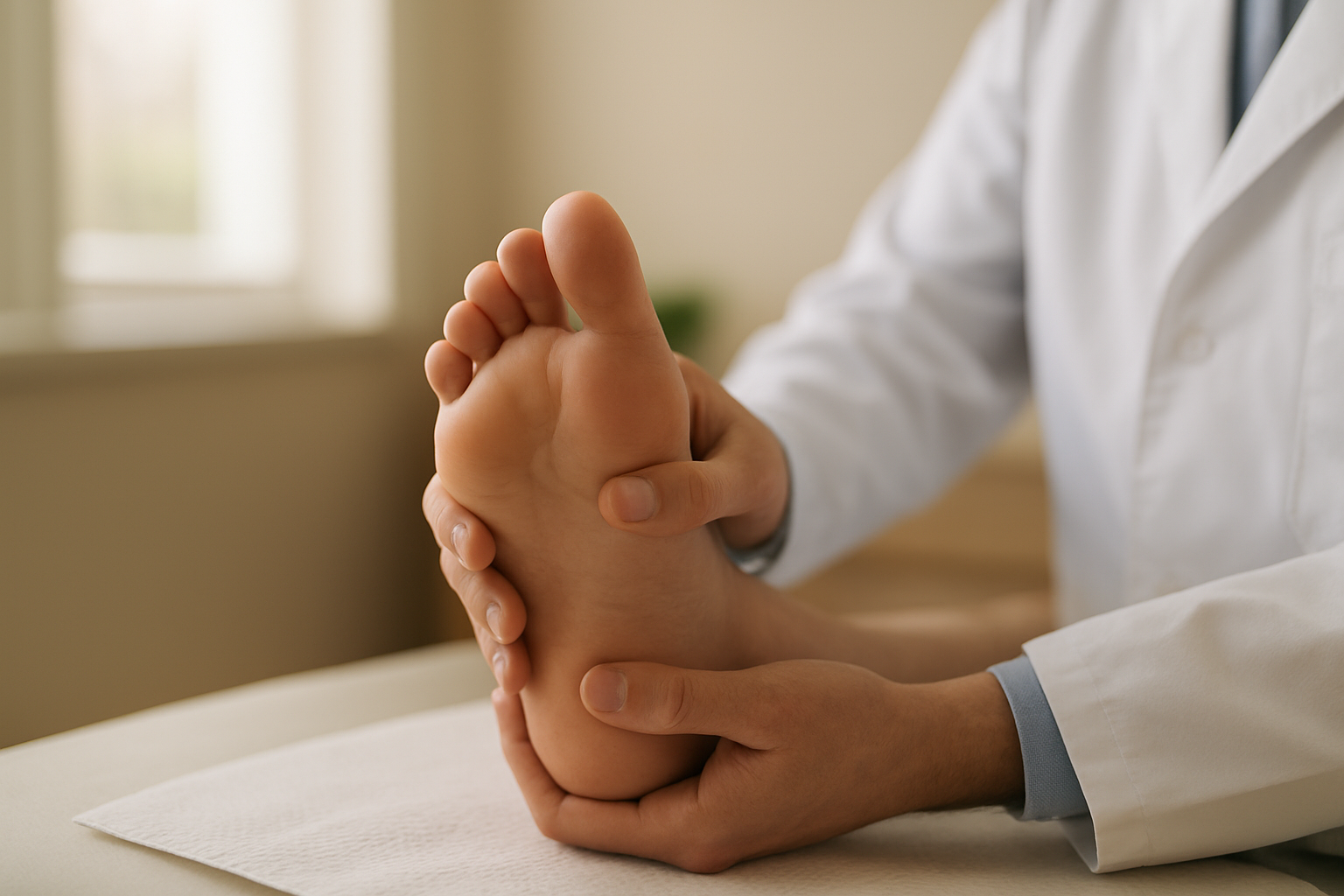
A thorough foot exam is often the first step toward effective chronic foot pain solutions.
Common Causes of Persistent Foot Pain
Several conditions can trigger foot pain that lingers well beyond a normal recovery window. Flat feet or overly high arches can throw off natural alignment, placing extra stress on the ankles, knees, and lower back over time. Similarly, arthritis in the small joints of the foot can make walking painful, particularly for older adults, while simple overuse from standing on hard floors or wearing unsupportive shoes gradually wears down the foot's natural shock absorption.
Diabetic peripheral neuropathy — nerve damage caused by prolonged high blood sugar — deserves special mention because it can mask pain signals while still causing serious tissue damage underneath. Anyone managing diabetes should read the MedlinePlus overview of diabetic foot problems to understand why daily foot checks are non-negotiable. Gout, stress fractures, and even poorly managed weight gain round out the list of frequent contributors.
Because these causes overlap and vary from person to person, self-diagnosing is risky. As a result, identifying the specific source of pain is essential before choosing among the many chronic foot pain solutions available today.
Top Treatments for Long-Term Foot Pain Relief
Once the cause is identified, several proven approaches can provide lasting relief rather than temporary comfort.
Custom Orthotics: The Foundation of Lasting Relief
Custom orthotics are shoe inserts molded directly from an individual's foot, unlike mass-produced insoles sold in stores. Because they're built from a precise mold, they correct the specific imbalance causing pain rather than offering generic cushioning. As a result, patients often notice more consistent, longer-lasting relief. For a deeper comparison, this complete guide to custom orthotics for foot pain breaks down the differences in detail.
Footwear and Lifestyle Adjustments
Supportive, properly fitted shoes matter more than most people realize. Worn-out soles, narrow toe boxes, or unsupportive flats can undo the benefits of any treatment plan. In addition, maintaining a healthy weight reduces the load placed on the feet with every step, which can meaningfully ease chronic discomfort over time.
Physical Therapy and Stretching
Targeted calf and plantar fascia stretches, along with strengthening exercises for the small stabilizing muscles in the foot, can improve flexibility and reduce strain. Furthermore, a physical therapist can identify gait abnormalities — like overpronation, where the foot rolls too far inward with each step — that contribute to ongoing pain. For readers dealing with tired, aching feet after long days, this guide on foot fatigue causes and fixes offers additional prevention tips.
Medical and Clinical Interventions
For more severe or unresponsive cases, a podiatrist may recommend anti-inflammatory medication, corticosteroid injections, or short-term immobilization in a walking boot. Surgery is typically reserved as a last resort after conservative measures — including custom orthotics — have been given a fair trial, usually several months.
Quick Answer
The most effective chronic foot pain solutions combine a proper diagnosis with custom orthotics, supportive footwear, and targeted stretching — addressing the biomechanical cause rather than just the symptom.
Custom Orthotics vs. Off-the-Shelf Arch Supports vs. Drugstore Insoles
Not all shoe inserts are created equal, and this distinction is exactly where many shoppers get misled. Drugstore insoles are flat, generically sized cushioning pads. Off-the-shelf "arch support systems" sold at retail kiosks are a step up — they come in preset firmness levels and general size ranges — but they still aren't molded to your individual foot. Truly custom orthotics, by contrast, are fabricated from a direct mold or digital scan of your own foot, which means they correct your specific pressure points rather than an average approximation of them.
| Feature | Drugstore Insoles | Off-the-Shelf Arch Supports | Custom Orthotics |
|---|---|---|---|
| Fit basis | Shoe size only | Preset size range | Individual foot mold or scan |
| Corrects biomechanics | No | Partially | Yes, precisely |
| Professional evaluation included | No | Sometimes | Yes, podiatrist-guided |
| Typical lifespan | 3–6 months | 1–2 years | 2–5 years |
In short, if you've already tried a generic arch support and only found partial or short-lived relief, that's usually a sign your feet need a solution built around your own mold — not a preset shape.
How Custom Orthotics Deliver Chronic Foot Pain Solutions
Custom orthotics work by redistributing pressure across the foot, supporting the arch, and correcting how the foot strikes the ground. Because each device is fabricated from an individual mold, it addresses that specific patient's structural imbalance instead of a generalized foot shape. This is why podiatrist-crafted orthotics often outperform generic insoles for chronic conditions like plantar fasciitis or flat feet.
Specifically, a well-fitted orthotic can:
- Reduce excess strain on the plantar fascia and Achilles tendon
- Improve alignment through the ankles, knees, and hips
- Distribute body weight more evenly across the foot
- Slow the progression of structural issues like bunions or hammertoes
- Reduce compensatory strain that often leads to lower back or hip pain
To understand the full range of benefits these devices offer beyond pain relief, this overview of the benefits of custom orthotics for foot pain is a helpful next read. If you're still deciding where to start, this resource on finding personalized orthotics for your foot pain walks through your options. At customorthotics.com, the process starts with a complimentary consultation with a podiatrist, followed by an in-person or at-home mold kit, and ends with a device fabricated specifically for the patient's feet — no guesswork involved.
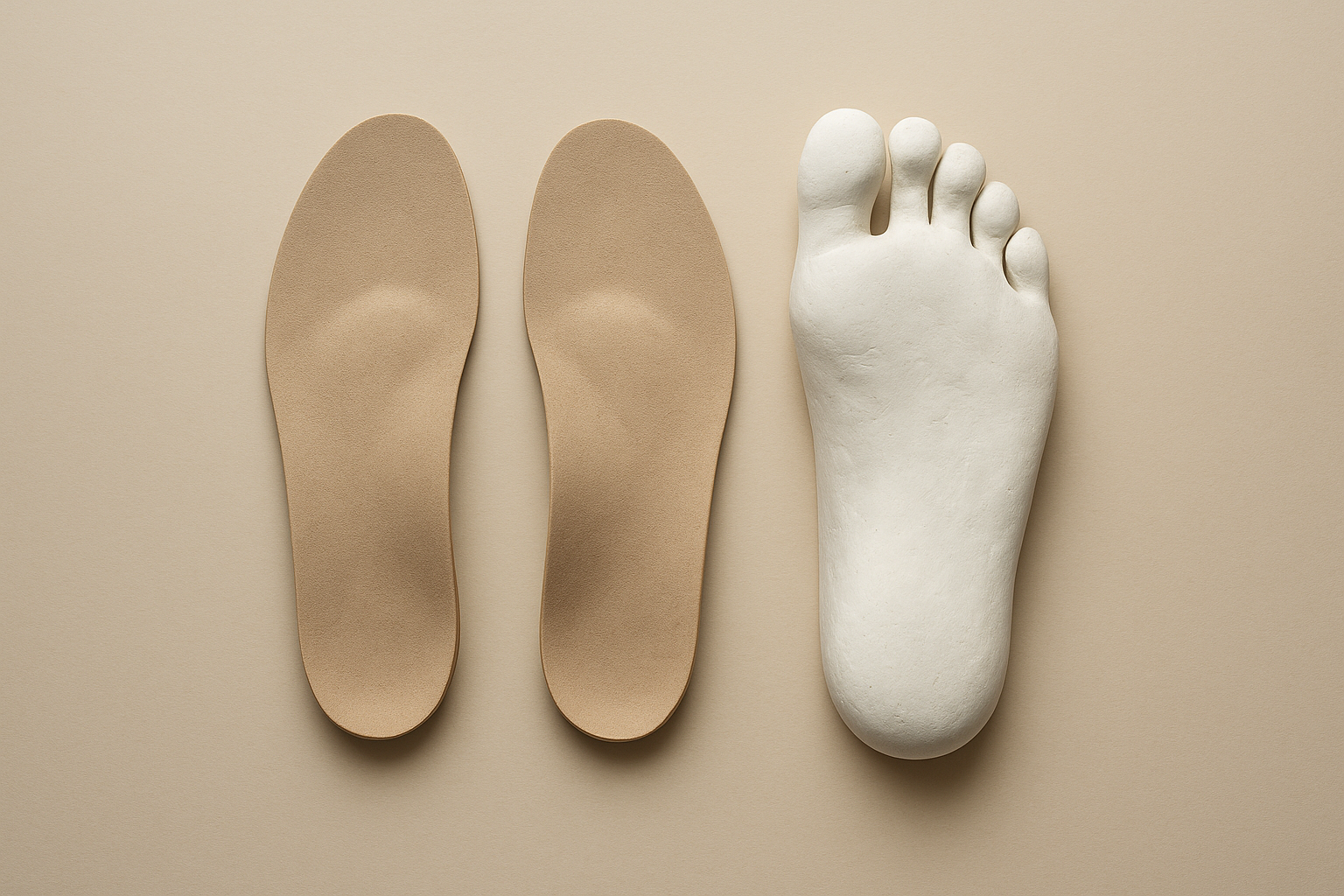
Custom orthotics are fabricated directly from an individual foot mold for a precise fit.
Step-by-Step: Getting Custom Orthotics for Foot Pain Relief
Getting started with custom orthotics is more straightforward than many people expect. Below is the general process most patients follow.
- Schedule a consultation. Speak directly with a podiatrist, either by phone or online, to discuss your symptoms, medical history, and daily activity level so the right approach can be planned.
- Get a foot mold made. A precise mold or digital scan of your foot is taken, either in-office or through an at-home kit, capturing your unique arch height and pressure points.
- Review your treatment plan. The podiatrist evaluates the mold alongside your reported pain patterns to determine the correct level of support, cushioning, and correction needed.
- Receive your custom orthotics. The devices are fabricated to match your mold exactly, then shipped or fitted for immediate use in your regular footwear.
- Follow up and adjust. Most patients check in after a few weeks of wear to confirm the fit is providing the intended relief and make any necessary adjustments.
Once your orthotics are dialed in, it's worth thinking about how they fit into the rest of your day — not just your walking shoes. This guide to foot support for everyday activities covers everything from standing at work to weekend workouts.
Foot Pain by Situation: Standing, Walking, Running, and Nighttime
Pain patterns often shift depending on what you're doing, and recognizing the pattern helps target the right fix. Standing on hard floors for long shifts tends to produce a dull, spreading ache across the whole foot by mid-afternoon. Meanwhile, running or high-impact activity often triggers sharper, localized pain at the heel or ball of the foot from repetitive impact.
Nighttime pain, in contrast, is frequently linked to nerve involvement — such as tarsal tunnel syndrome or peripheral neuropathy — since nerve pain often intensifies when the body is at rest and other sensory input quiets down. If you've noticed your feet hurt more at night than during the day, that distinction is worth mentioning directly to your podiatrist, since it can point toward a different treatment path than mechanical daytime pain. For a closer look at solutions built for real, everyday routines, see this guide on foot pain relief insoles and custom orthotics that work.
When Should You See a Podiatrist for Ongoing Foot Pain?
Generally, foot pain lasting longer than two to three weeks despite rest, ice, and over-the-counter treatment warrants a professional evaluation. Similarly, pain accompanied by numbness, swelling, or changes in foot shape should never be ignored. If you're unsure whether your symptoms warrant a visit, this guide on when and why to consult a podiatrist for foot pain walks through the warning signs worth watching for.
For those wondering what type of support their doctor might recommend, this breakdown of insoles podiatrists suggest for foot pain relief covers the most common recommendations. Above all, early evaluation tends to prevent minor issues from becoming chronic ones — making it one of the simplest ways to protect long-term mobility. You can learn more about the official diagnostic criteria for musculoskeletal pain through the National Institute of Arthritis and Musculoskeletal and Skin Diseases.
Preventing Chronic Foot Pain From Coming Back
Treating pain is only half the equation; keeping it from returning is just as important. Consequently, most podiatrists recommend building a handful of habits into your routine long after the initial pain subsides.
- Rotate footwear regularly and retire shoes once the tread or midsole cushioning wears down
- Continue calf and plantar fascia stretches even after pain resolves, not just during a flare-up
- Replace custom orthotics every two to five years as materials compress with use
- Maintain a healthy body weight to reduce cumulative load on the joints of the foot
- Schedule an annual podiatry check-in, especially if you have diabetes or arthritis
Frequently Asked Questions About Chronic Foot Pain Solutions
What are chronic foot pain solutions?
Chronic foot pain solutions are treatments, devices, and lifestyle changes designed to relieve foot pain that lasts longer than a few weeks and doesn't resolve on its own. They typically combine a professional evaluation, custom orthotics, supportive footwear, and targeted stretching to address the underlying cause.
What causes chronic foot pain?
Common causes include plantar fasciitis, flat feet, arthritis, diabetic neuropathy, bunions, and overuse from unsupportive shoes. Because these conditions overlap, a podiatrist evaluation is usually needed to pinpoint the exact source.
How long does it take for custom orthotics to relieve foot pain?
Most patients notice improvement within two to six weeks of consistent wear. Full adaptation can take up to three months as the foot adjusts to the new support pattern.
Are custom orthotics better than over-the-counter insoles?
Custom orthotics are molded to an individual's exact foot shape, while OTC insoles and off-the-shelf arch supports use generic or preset sizing. As a result, custom devices generally provide more precise, longer-lasting correction for chronic conditions.
How much do custom orthotics cost?
Pricing varies depending on the provider, materials, and level of correction needed. Many providers, including podiatrist-owned practices, offer a complimentary consultation to discuss options and pricing beforehand.
Can chronic foot pain be cured completely?
Many structural causes can be managed effectively rather than fully cured, though symptoms can often be reduced to a minimal, manageable level. Consistent use of proper support and stretching tends to produce the best long-term results.
What is the difference between orthotics and insoles?
Insoles are typically flat cushioning inserts, while orthotics are structured devices designed to correct biomechanical alignment. Custom orthotics go a step further by being molded from an individual patient's foot.
When should I see a podiatrist for foot pain?
You should see a podiatrist if pain lasts longer than two to three weeks, worsens with activity, or comes with swelling or numbness. Early evaluation often prevents minor issues from becoming chronic.
What are common mistakes people make when treating foot pain?
Common mistakes include ignoring pain until it becomes severe, relying only on generic insoles or off-the-shelf arch supports, and skipping professional diagnosis. These habits often allow minor issues to develop into chronic conditions.
Do custom orthotics work for plantar fasciitis?
Yes, custom orthotics are commonly recommended for plantar fasciitis because they support the arch and reduce strain on the plantar fascia. Many patients report meaningful relief within a few weeks of consistent use.
How often should I replace custom orthotics?
Most custom orthotics last between two and five years, depending on materials and daily activity level. Replacing them once cushioning or support noticeably breaks down helps maintain consistent relief.
Can shoes alone fix chronic foot pain?
Supportive shoes help, but they usually aren't enough on their own for structural issues like flat feet or plantar fasciitis. Combining proper footwear with custom orthotics tends to produce better, longer-lasting results.
Does foot pain at night mean something different than daytime pain?
Yes. Nighttime foot pain often signals nerve involvement, such as tarsal tunnel syndrome or neuropathy, while daytime pain during standing or walking is more often mechanical. Mentioning this distinction to your podiatrist helps guide the right treatment path.
Final Thoughts on Chronic Foot Pain Solutions
Ultimately, chronic foot pain solutions work best when they're matched to the specific cause of the pain rather than applied as a one-size-fits-all fix. Whether the issue stems from plantar fasciitis, flat feet, arthritis, nerve involvement, or years of unsupportive footwear, a proper evaluation makes all the difference. Custom orthotics, in particular, offer a personalized way to correct biomechanical imbalances at their source instead of just masking discomfort — a meaningful step up from generic insoles or preset arch supports.
As a result, many patients find that combining a well-fitted orthotic with supportive footwear, targeted stretching, and preventive habits provides more lasting relief than any single approach alone. If persistent foot pain has been limiting your daily life, scheduling a consultation is a practical first step toward lasting comfort, better mobility, and finally putting chronic foot pain solutions to work for you.