

Supportive footwear solutions are the foundation of long-term foot comfort, especially for people who spend hours standing, walking, or managing chronic pain. Choosing the right shoes and orthotic inserts can mean the difference between a pain-free day and one spent shifting weight to avoid discomfort. In this guide, we will explain what makes footwear truly supportive, how to spot the signs you need an upgrade, and how custom orthotics can enhance any pair of shoes you already own.
Quick Answer
Supportive footwear solutions combine well-built shoes with proper arch, heel, and cushioning support to relieve foot pain and prevent injury. For most people, the best results come from pairing quality shoes with custom orthotics molded to their exact foot shape, as explained in this complete guide to orthotic foot support.
What Are Supportive Footwear Solutions?
Supportive footwear solutions are shoes, insoles, or orthotic devices engineered to stabilize the foot, absorb shock, and correct alignment problems. Rather than simply covering the foot, they actively reinforce the arch, heel, and forefoot to reduce strain during standing and movement.
In practice, this term covers a spectrum of options. On one end sit generic, cushioned sneakers marketed as "supportive." On the other end are fully custom orthotic devices, molded directly from a patient's foot, that fit inside almost any shoe. According to the American Podiatric Medical Association, roughly 75% of Americans will experience foot health problems at some point in their lives, which is why proper support matters so much over a lifetime of walking and standing.
Understanding where a product falls on that spectrum helps determine whether it will actually solve a pain problem or merely offer temporary comfort. Consequently, evaluating support level, not just brand name, is the smarter starting point.
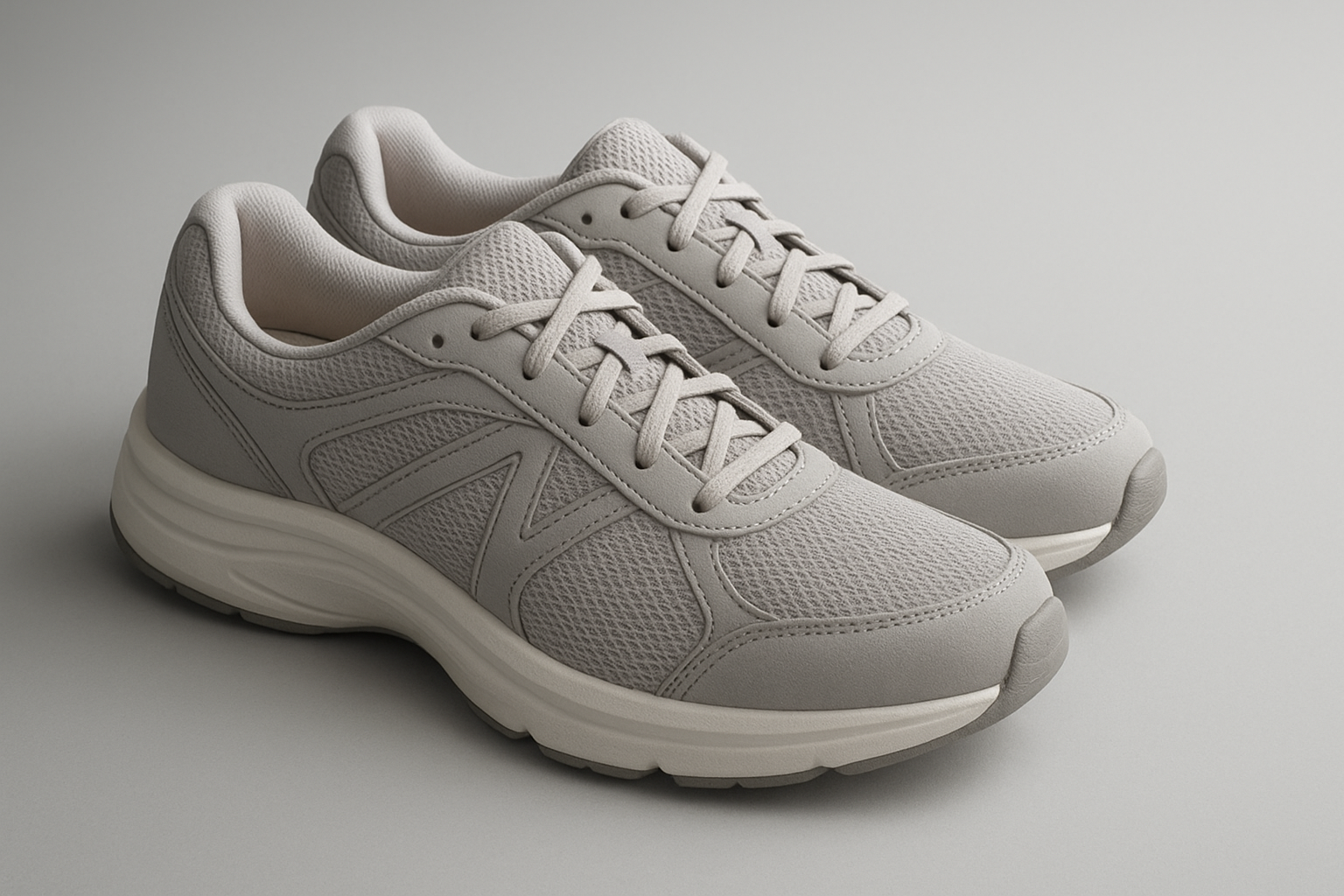
Well-built supportive footwear solutions start with a stable heel and reinforced arch.
Why Shoe Support Matters for Long-Term Foot Health
Every step places pressure equal to roughly 1.5 times body weight through the foot, and that force multiplies during running or jumping. Without adequate shoe support, that pressure concentrates on small areas of the foot instead of spreading evenly, which over time contributes to conditions such as plantar fasciitis, bunions, and stress fractures.
Furthermore, poor support does not stay isolated to the feet. Because the feet form the base of the entire skeletal chain, misalignment there often travels upward, contributing to knee, hip, and lower back discomfort. For this reason, podiatrists frequently treat foot pain as a whole-body issue rather than an isolated complaint, as outlined by MedlinePlus foot health resources.
In contrast, well-fitted supportive footwear reduces this domino effect. As a result, many patients notice improvements not just in foot comfort, but also in knee and back symptoms after switching to properly supportive shoes.
Signs You Need Better Supportive Footwear
Several warning signs suggest current shoes are not providing enough support. These include uneven wear on the outsole, arch pain by midday, heel discomfort when standing from a seated position, and visible creasing or collapse in the shoe's midsole.
Similarly, if standard shoes feel comfortable in the store but painful after a few hours of wear, that mismatch usually points to inadequate arch or heel structure. In particular, people who stand all day at work often notice this pattern, a topic covered in more detail in this guide on custom insoles for people standing all day.
How to Choose Supportive Footwear Solutions: A Step-by-Step Guide
Choosing the right combination of shoes and inserts does not have to be complicated. The following process, used by podiatrists and fitting specialists alike, breaks the decision into five manageable steps.
- Assess your foot type. Examine your arch height and gait pattern, since flat, high, or neutral arches each require a different level of structural support.
- Identify pain points and activity level. Note where discomfort occurs most and how many hours per day involve standing, walking, or exercising.
- Check structural features. Look for a firm heel counter, wide toe box, shock-absorbing midsole, and a removable insole that can accommodate a custom orthotic.
- Test the fit with insoles. Walk in the shoes with your current insoles or orthotics inserted to confirm there is enough depth and no new pressure points.
- Get a professional consultation. Schedule time with a podiatrist for a proper foot assessment and guidance on custom orthotics matched to your foot shape.
Notably, skipping the final step is one of the most common mistakes people make. Without a professional assessment, it is easy to choose shoes that look supportive but do not match an individual's actual foot mechanics.
Custom Orthotics vs. Off-the-Shelf Supportive Insoles
Off-the-shelf supportive insoles are mass-produced to fit a general foot shape, which means they offer moderate cushioning but limited correction for specific structural issues. Custom orthotics, by contrast, are molded directly from an impression of the patient's own foot, allowing for precise correction of arch height, heel angle, and pressure distribution.
According to industry data referenced by the Wikipedia entry on orthotics, custom devices are generally recommended when structural imbalances, chronic pain, or specific medical conditions are present, while generic insoles may suffice for mild, occasional discomfort.
For walkers specifically, matching the right insole to the right activity level makes a measurable difference in comfort. This comparison is explored further in the guide to supportive insoles for walking.
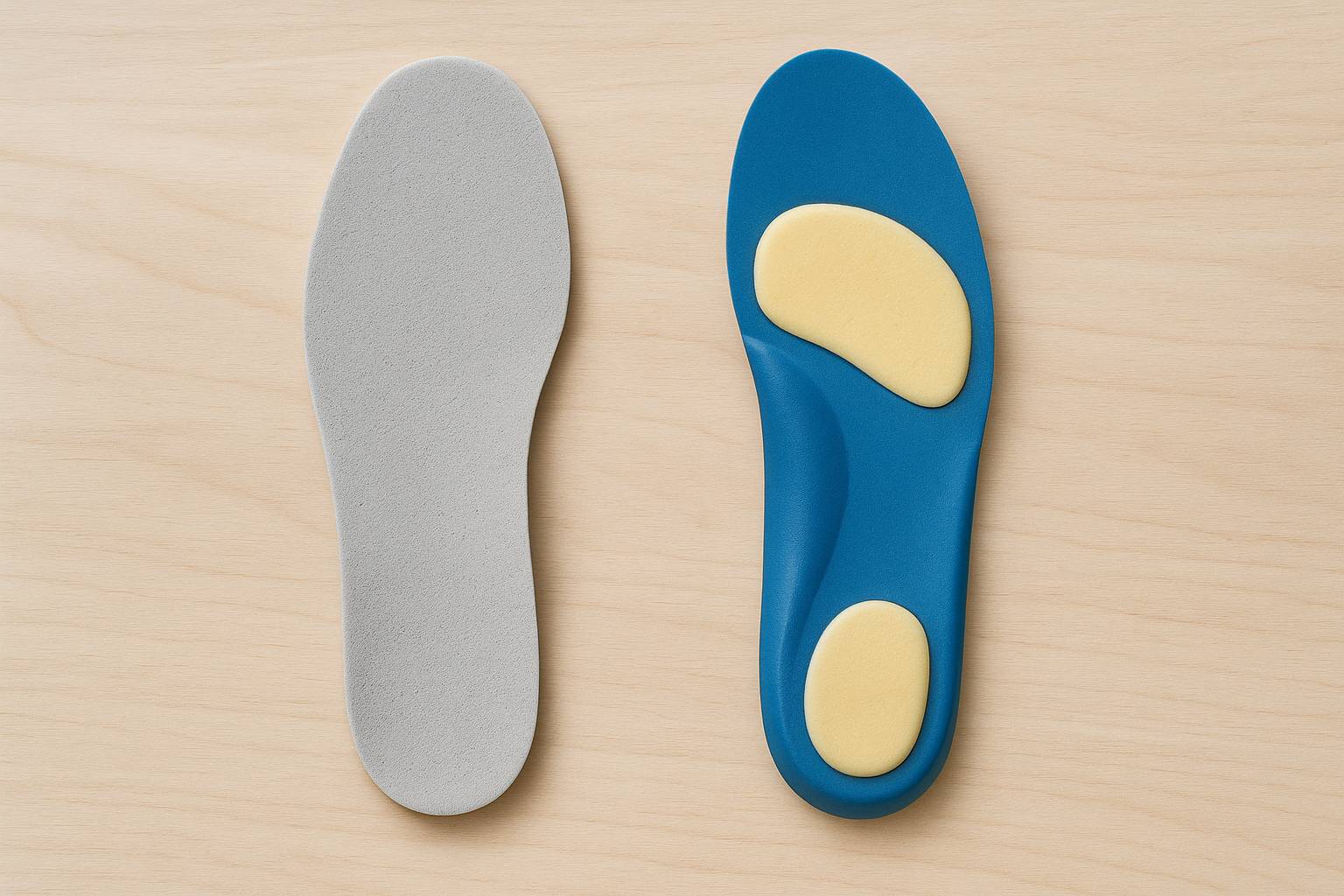
Custom orthotics differ from generic insoles by matching the exact contour of the foot.
Preventing Foot Fatigue With the Right Support
Foot fatigue often builds gradually, starting as mild soreness and progressing into persistent aching by evening. Because this fatigue stems largely from repetitive, unsupported pressure, addressing the root cause with proper footwear tends to work better than treating symptoms alone.
In particular, rotating between two pairs of supportive shoes allows cushioning materials to recover between wears, which extends their lifespan and maintains consistent support. Additionally, replacing insoles as soon as they show visible compression prevents the slow decline in support that often goes unnoticed day to day.
For a deeper look at causes and fixes, the article on relief from foot fatigue outlines additional prevention strategies worth reviewing.
Supportive Footwear for Specific Activities
Different activities place different demands on the feet, which is why activity-specific supportive footwear solutions often outperform general-purpose shoes. Runners need forward shock absorption, while golfers need lateral stability to handle the twisting motion of a swing.
For golfers specifically, a dedicated device like the Golfer Orthotic is built to stabilize the foot through rotational movement, reducing strain that generic insoles typically cannot address.
Frequently Asked Questions About Supportive Footwear Solutions
What are supportive footwear solutions?
Supportive footwear solutions are shoes, insoles, or custom orthotic devices designed to stabilize the foot, cushion impact, and correct alignment issues. They work by distributing pressure evenly and reinforcing the arch, heel, and forefoot.
How do supportive footwear solutions help with foot pain?
They reduce strain on muscles and ligaments by correcting how weight moves through the foot with each step. This lowers stress on painful areas like the heel, arch, and ball of the foot.
Why do standard shoes fail to provide enough support?
Mass-produced shoes are built around an average foot shape, so they rarely match an individual's arch height or gait pattern. As a result, many people experience pressure points, slippage, or inadequate cushioning.
What is the difference between supportive footwear solutions and custom orthotics?
Supportive footwear is the shoe itself, while custom orthotics are inserts molded to the exact contours of a patient's feet. Combining both typically delivers better results than either option alone.
How much do supportive footwear solutions typically cost?
Supportive shoes generally range from $80 to $200, while custom orthotics often cost between $200 and $500 depending on materials and complexity. Prices vary based on the provider and the level of customization involved.
How long does it take to adjust to new supportive footwear?
Most people need one to two weeks of gradual wear to adjust fully. Starting with a few hours a day and slowly increasing wear time helps the feet acclimate without soreness.
What are common mistakes people make when choosing supportive shoes?
A frequent mistake is buying shoes based on style rather than fit, arch match, or heel stability. Another common error is skipping a professional fitting or foot assessment before purchasing.
What are best practices for maintaining supportive footwear solutions?
Rotate between two pairs of shoes, replace worn insoles promptly, and inspect the tread and heel counter regularly. Consistent maintenance extends the life of both the shoe and any orthotic inserts inside it.
Can supportive footwear solutions help with plantar fasciitis?
Yes, supportive footwear with strong arch reinforcement and heel cushioning can significantly reduce plantar fasciitis pain. Pairing supportive shoes with custom orthotics often produces even better relief.
Are supportive footwear solutions necessary for people who stand all day?
For anyone standing for long shifts, supportive footwear is strongly recommended to prevent fatigue, swelling, and long-term joint strain. Cushioned, stable shoes help distribute pressure more evenly across the workday.
What features should I look for in supportive footwear?
Look for a firm heel counter, adequate arch support, a wide toe box, and shock-absorbing midsoles. Removable insoles are also useful since they allow custom orthotics to be inserted easily.
Can custom orthotics be used with any supportive footwear?
Most orthotics fit best in shoes with removable factory insoles and enough depth in the toe box. A podiatrist can confirm whether a specific shoe style will accommodate a custom device.
How often should supportive footwear be replaced?
Most supportive shoes should be replaced every 300 to 500 miles of wear, or roughly every six to twelve months for daily use. Visible sole wear or reduced cushioning are signs it is time for a new pair.
Do supportive footwear solutions work for athletes and golfers?
Yes, athletes and golfers benefit from sport-specific supportive footwear paired with activity-designed orthotics that stabilize lateral movement and improve balance. A golf-specific orthotic, for example, is built to handle the twisting motion of a swing.
Where can I get a personalized consultation about supportive footwear solutions?
A podiatrist-led consultation is the most reliable way to determine which supportive footwear solutions match your foot type and condition. Many practices, including CustomOrthotics.com, offer complimentary phone consultations for this purpose.
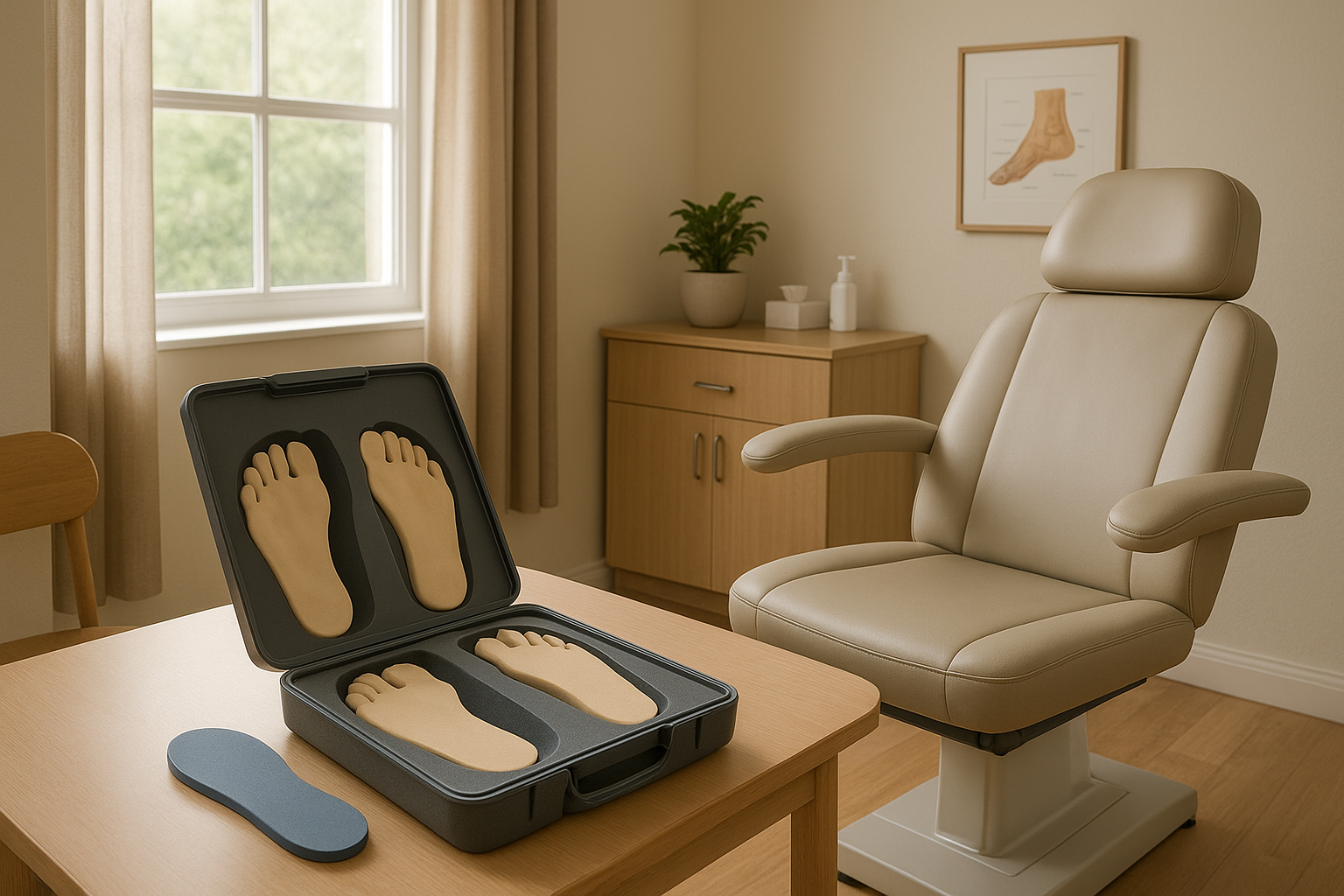
A podiatrist consultation helps confirm the right supportive footwear solutions for your feet.
Conclusion
Ultimately, supportive footwear solutions work best when they are matched to an individual's foot shape, activity level, and specific pain points rather than chosen off a shelf at random. Whether that means upgrading to sturdier shoes, adding quality insoles, or investing in fully custom orthotics, the goal remains the same: even pressure distribution and lasting comfort.
Because feet form the foundation for the entire body, taking the time to get supportive footwear solutions right pays off well beyond the feet themselves. For anyone ready to take that step, a complimentary consultation with a podiatrist, such as the one offered through CustomOrthotics.com, is a practical place to start.