

Over-the-counter orthotics alternatives are widely available at pharmacies, sporting goods stores, and online retailers, but many people wonder whether these mass-produced insoles actually fix foot pain or just mask it temporarily. If you deal with plantar fasciitis, flat feet, or chronic heel pain, choosing the right support matters as much as the price tag. This guide walks through what OTC options really offer, how they compare to custom-molded orthotics, and how to decide which path fits your feet best.
Quick Answer: Over-the-counter orthotics alternatives are non-custom shoe inserts that provide generic arch and heel support. They can ease mild, short-term foot discomfort, but they don't correct structural imbalances the way custom-molded orthotics do.
What Are Over-the-Counter Orthotics Alternatives?
Over-the-counter orthotics alternatives are foot inserts manufactured in a limited range of standard sizes rather than shaped to an individual's foot. Consequently, they rely on generalized arch profiles and cushioning zones that fit an "average" foot reasonably well but rarely match anyone's foot exactly.
These products are convenient because you can buy them off the shelf without a prescription or appointment. However, that convenience comes with a trade-off: the support is broad rather than precise. According to the Wikipedia overview of orthotics, devices are traditionally grouped by how closely they're customized to the wearer, and OTC insoles sit firmly on the "least customized" end of that spectrum.
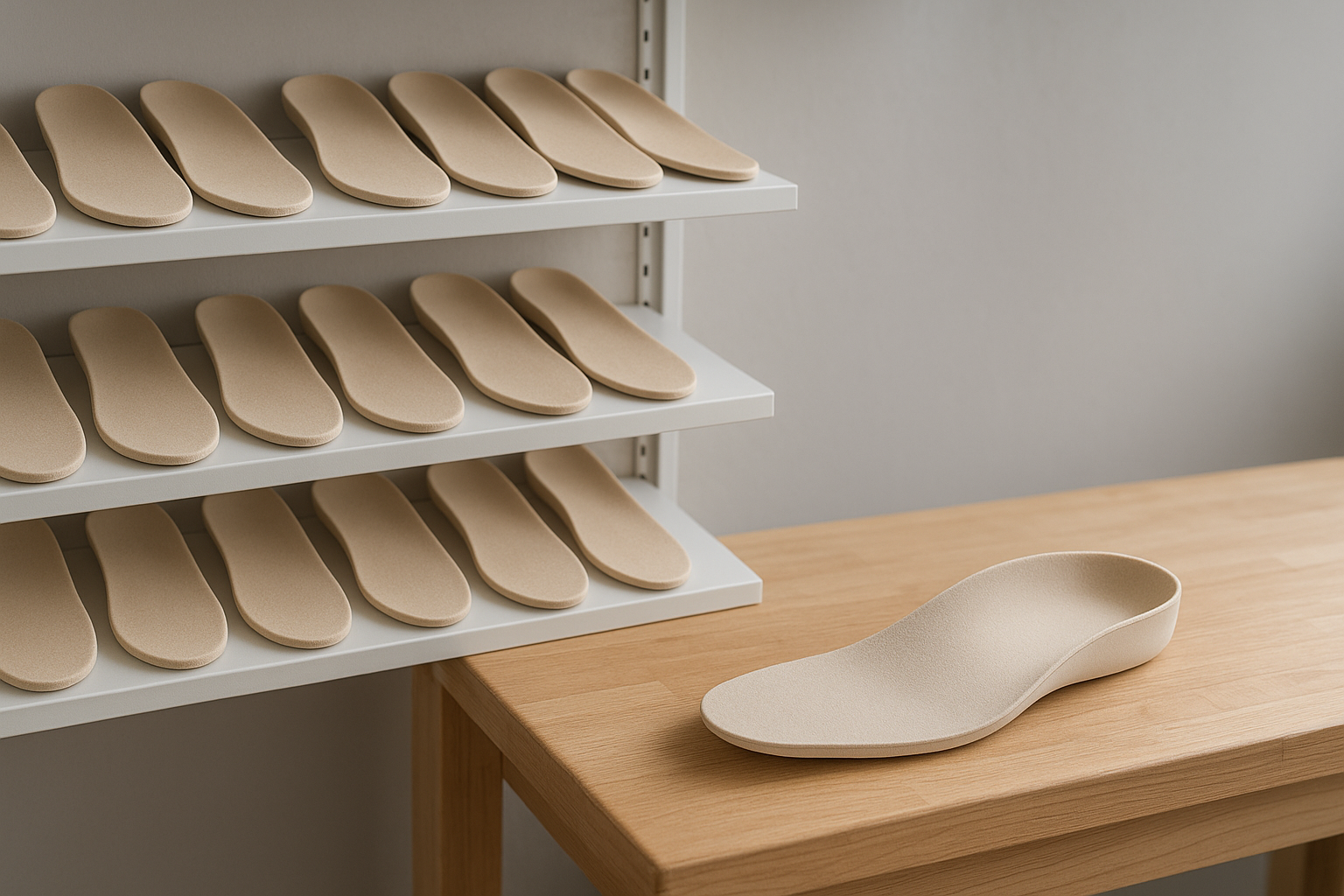
Store-bought insoles offer generic support, while custom orthotics are shaped from an individual foot mold.
Common Types of Off-the-Shelf Insole Options
Not all OTC insoles are built the same way. Understanding the main categories helps you match a product to your specific complaint before spending money on something that won't help.
- Cushioning insoles: Focus on shock absorption using foam or gel, best for general comfort rather than correction.
- Arch support inserts: Add a raised arch shape to reduce strain from flat or fallen arches during walking.
- Heel cups: Provide extra padding under the heel bone, often used for mild heel spur or bruise discomfort.
- Semi-rigid trim-to-fit inserts: Offer slightly firmer structure and can be trimmed to fit various shoe sizes.
Each of these can provide short-term relief for minor aches. In contrast, they generally lack the precision needed for chronic pain rooted in bone structure, muscle imbalance, or biomechanical misalignment.
Custom Orthotics vs. Store-Bought Insert Alternatives
The core difference comes down to fabrication. Custom orthotics start with a physical mold or digital scan of your foot, capturing its unique arch height, pressure points, and alignment. Store-bought inserts, however, are shaped from averaged data across thousands of feet, which is why they rarely match anyone perfectly.
| Feature | OTC Alternatives | Custom Orthotics |
|---|---|---|
| Fit Basis | Standard sizing | Individual foot mold |
| Typical Lifespan | 3-6 months | 3-5 years |
| Best For | Mild, short-term discomfort | Chronic or structural conditions |
| Upfront Cost | Lower | Higher |
For a deeper breakdown of how fabrication methods affect performance, the article on how custom-made orthotics differ from generic inserts covers the manufacturing side in more detail. Similarly, if plantar fasciitis is your main concern, the guide comparing custom versus OTC options for plantar fasciitis relief is worth reviewing.
How to Choose the Right Foot Support Option
Deciding between an off-the-shelf insert and a custom-molded device doesn't have to be complicated. The following steps outline a practical decision-making process.
- Assess your symptoms and activity level. Note where the pain occurs, how long it lasts, and whether it worsens during walking, running, or long shifts on your feet.
- Try a basic OTC insole for mild discomfort. For minor, short-term soreness, test a drugstore insole with moderate arch support for two to three weeks first.
- Get a professional gait assessment. If pain persists beyond a few weeks, schedule an evaluation with a podiatrist to check your gait, arch height, and pressure distribution.
- Consider a custom mold for chronic or structural issues. When symptoms are recurring or tied to a diagnosed imbalance, request a custom orthotic built from your exact foot shape.
- Compare cost, durability, and expected results. Weigh the upfront price of custom orthotics against their multi-year lifespan versus repeated OTC purchases.
Above all, the right choice depends on how long your discomfort has lasted and whether it's tied to a structural issue rather than simple fatigue.
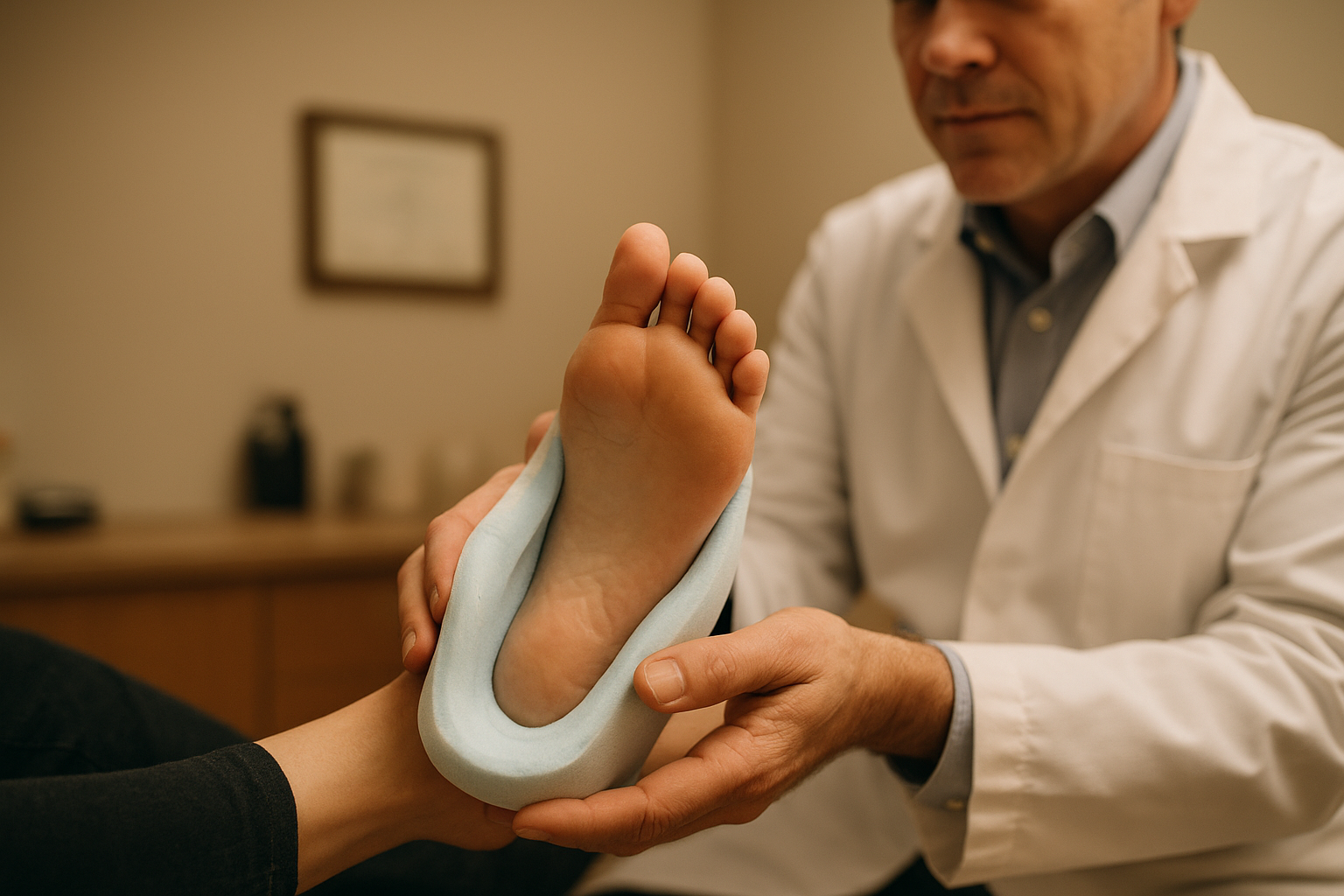
A custom foot mold captures details that over-the-counter orthotics alternatives simply cannot replicate.
When Generic Orthotic Alternatives Aren't Enough
Generic inserts work reasonably well for temporary soreness from long shifts or new footwear. Therefore, they're a sensible first step for mild cases. However, research published through the National Center for Biotechnology Information has noted that custom foot orthoses tend to produce more consistent pressure redistribution for chronic biomechanical conditions than prefabricated devices.
In particular, watch for these warning signs that OTC support isn't sufficient:
- Pain returns within days of switching insoles.
- Discomfort spreads to your knees, hips, or lower back.
- You've replaced multiple OTC products without lasting relief.
- A doctor has diagnosed a structural condition like severe flat feet or overpronation.
If any of these apply, a professional consultation is usually the faster path to lasting comfort than continuing to cycle through store-bought products. The American Podiatric Medical Association also recommends professional evaluation once foot pain becomes persistent rather than occasional.
For readers weighing price against quality, the comparison in discount custom orthotics and quality relief for less shows that custom fabrication doesn't always mean a high price tag. It's also worth reading whether shoe inserts and custom orthotics are really different, since terminology often causes confusion during the buying process.
Getting Expert Guidance Before You Buy
Because foot pain has so many possible causes, a short consultation often saves both time and money. Specifically, a podiatrist-owned practice like customorthotics.com offers a complimentary phone consultation before any purchase, which allows patients to describe their symptoms and get direct guidance on whether a custom mold is necessary.
This approach combines more than 20 years of hands-on fabrication experience with straightforward online ordering, so patients don't have to guess between dozens of over-the-counter orthotics alternatives on a store shelf. For a broader buying framework, the complete guide to podiatrist-recommended insoles outlines what to look for at every price point.
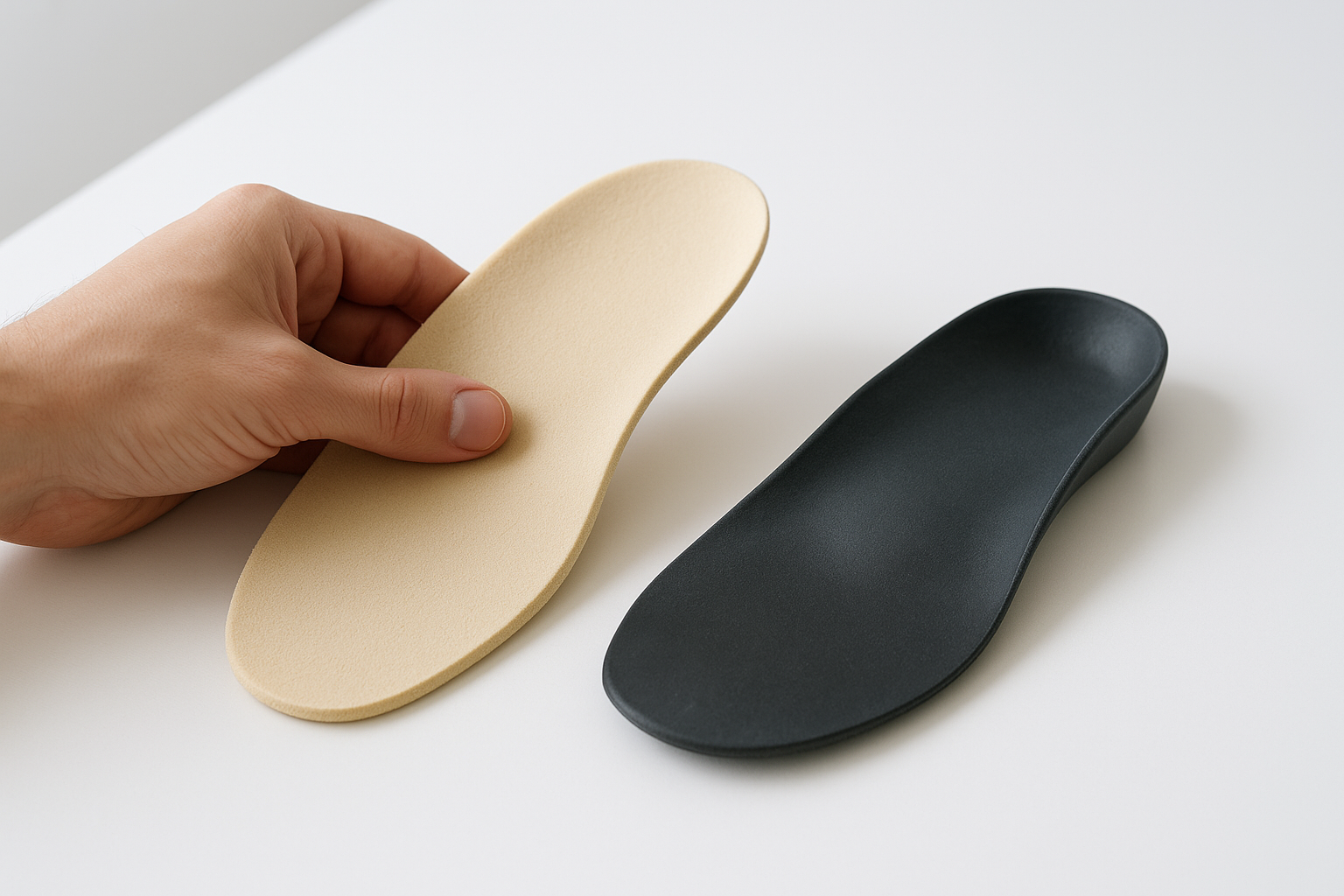
Texture and rigidity differences between generic insoles and custom orthotic shells.
Frequently Asked Questions About Over-the-Counter Orthotics Alternatives
What are over-the-counter orthotics alternatives?
Over-the-counter orthotics alternatives are pre-made shoe inserts sold at pharmacies, sporting goods stores, and online retailers without a custom mold of your foot. They offer general arch and heel support but aren't shaped to your individual foot structure.
How do OTC insoles differ from custom orthotics?
OTC insoles are mass-produced in a handful of standard sizes and shapes, while custom orthotics are fabricated from a direct mold or scan of each patient's foot. This means custom devices target the specific angles causing your pain, whereas OTC options only offer generalized cushioning.
Can over-the-counter orthotics alternatives fix plantar fasciitis?
OTC inserts can reduce mild plantar fasciitis discomfort through added cushioning and light arch support, but they rarely resolve the underlying biomechanical cause. Persistent or severe heel pain usually responds better to a custom orthotic designed around your specific gait.
How much do over-the-counter orthotics alternatives cost?
Most OTC insoles range from $15 to $75 per pair depending on the brand and materials used. Custom orthotics typically cost more upfront but often last several years longer, which can make them more cost-effective over time.
How long do OTC insoles last?
Standard drugstore insoles usually break down within three to six months of regular use because the foam compresses quickly. Custom orthotics, in contrast, are built from more durable materials and often last three to five years with proper care.
Are over-the-counter orthotics alternatives safe to wear daily?
Yes, most OTC insoles are safe for everyday use as long as they fit your shoes correctly and don't create new pressure points. However, people with diabetes or severe structural deformities should consult a podiatrist before relying on generic inserts long-term.
What's the biggest mistake people make when choosing OTC insoles?
The most common mistake is buying based on cushioning alone rather than matching the insert to your specific foot type, such as flat feet or high arches. This mismatch can worsen alignment issues instead of correcting them.
When should I see a podiatrist instead of buying OTC insoles?
You should schedule a visit if foot pain lasts longer than two to three weeks, worsens with activity, or comes with swelling or numbness. A professional evaluation can confirm whether a custom orthotic is actually necessary.
Do over-the-counter orthotics alternatives work for flat feet?
Some OTC arch supports offer temporary relief for mild flat feet symptoms, but they rarely provide enough structural correction for moderate to severe cases. Custom orthotics are generally recommended once flat feet cause consistent pain or fatigue.
What's the difference between gel insoles and rigid orthotic inserts?
Gel insoles focus on shock absorption and comfort, which is useful for standing on hard surfaces. Rigid orthotic inserts, especially custom ones, focus on controlling foot motion and correcting alignment instead.
Can insurance cover custom orthotics instead of OTC alternatives?
Many insurance plans and flexible spending accounts partially cover custom orthotics when prescribed by a podiatrist for a diagnosed condition. OTC insoles are rarely covered since they don't require a medical prescription.
How do I know if my current insoles are wearing out?
Signs of worn-out insoles include flattened cushioning, visible cracks, uneven wear patterns, or the return of foot, knee, or back pain that had previously improved. Replacing insoles every few months is a reasonable habit for regular OTC users.
Final Thoughts
Ultimately, over-the-counter orthotics alternatives serve a real purpose for mild, short-term foot discomfort, and they remain an affordable first step for many people. However, when pain becomes chronic, spreads to other joints, or stems from a diagnosed structural issue, a custom-molded orthotic tends to deliver more reliable, longer-lasting relief. As a result, the smartest approach is often to start with a basic OTC insert, monitor your symptoms closely, and seek a podiatrist's guidance if comfort doesn't improve within a few weeks. Whether you choose a drugstore insole or a fully custom device, matching the solution to the actual cause of your foot pain is what ultimately makes the difference.