

Foot orthotics for plantar fasciitis are custom-molded shoe inserts designed to support the arch, cushion the heel, and reduce the strain that causes chronic heel pain. If you wake up each morning with a sharp stab in your heel, you're likely dealing with plantar fasciitis, and the right orthotic can make a measurable difference. This guide explains how these devices work, what to expect during fabrication, and how to choose the best option for lasting relief.
Quick Answer: Foot orthotics for plantar fasciitis relieve pain by supporting the arch, cushioning the heel, and correcting abnormal foot mechanics that overstretch the plantar fascia. Custom-molded orthotics generally outperform generic inserts because they address each patient's unique foot structure.
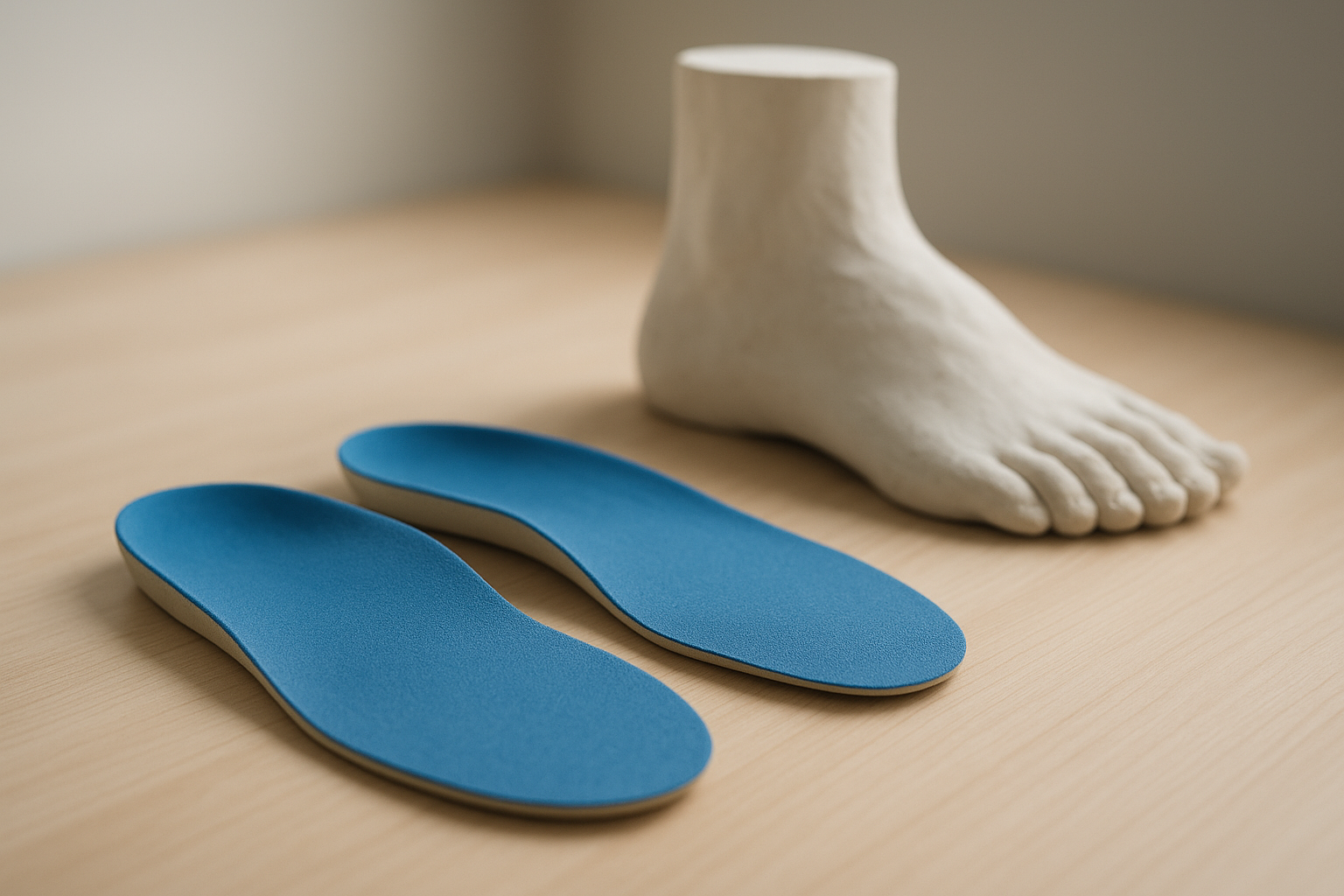
Custom foot orthotics for plantar fasciitis begin with a precise mold of the patient's foot.
What Is Plantar Fasciitis?
Plantar fasciitis is inflammation of the plantar fascia, the thick band of tissue that runs along the bottom of the foot connecting the heel to the toes. It's one of the most common causes of heel pain, often triggered by repetitive stress, tight calf muscles, or unsupportive footwear. As a result, many people feel a sharp, stabbing sensation with their first steps in the morning that gradually eases as the day goes on.
According to the American Academy of Orthopaedic Surgeons, plantar fasciitis affects roughly two million Americans each year, making it a leading complaint among podiatry patients. In particular, runners, people who stand for long shifts, and those with flat feet or high arches face a higher risk. Consequently, addressing the underlying mechanical cause, rather than just the symptom, is essential for lasting relief.
How Foot Orthotics for Plantar Fasciitis Relieve Heel Pain
Foot orthotics for plantar fasciitis work by redistributing pressure across the foot and supporting the arch so the plantar fascia doesn't stretch beyond its normal range with every step. Because the device is molded to the individual's exact foot shape, it corrects the specific imbalance, whether that's overpronation, a rigid high arch, or uneven weight distribution, that's straining the ligament.
In contrast to generic drugstore insoles, a well-fitted orthotic cushions the heel strike and stabilizes the midfoot throughout the entire gait cycle. As a result, the plantar fascia experiences less repetitive tension, which allows inflamed tissue to heal. Many patients also notice improved posture and reduced knee or lower-back discomfort, since foot alignment affects the whole kinetic chain.
For more detail on which devices tend to perform best, this guide to choosing plantar fasciitis orthotics breaks down the differences between rigid, semi-rigid, and soft designs.
Custom Orthotic Devices vs. Off-the-Shelf Inserts
Off-the-shelf insoles are built to a generic average foot shape, which means they rarely match an individual's specific arch height or pressure points. Custom orthotic devices, on the other hand, are fabricated directly from a mold or digital scan of the patient's foot, so the fit is precise from the very first wear.
Above all, a podiatrist-designed orthotic accounts for gait analysis, weight distribution, and any structural abnormalities that a mass-produced insert simply cannot address. Therefore, patients dealing with moderate to severe plantar fasciitis often see faster, more durable results with custom devices. To explore real patient outcomes, see this detailed look at custom orthotics and plantar fasciitis relief.

A thorough foot assessment helps determine the right orthotic design for lasting relief.
How to Get Custom Foot Orthotics: Step-by-Step
Getting properly fitted arch supports for foot pain involves a straightforward process. Here's what typically happens from consultation to final fitting:
- Schedule a consultation with a podiatrist to review symptoms, foot structure, and activity level.
- Have a custom foot mold or digital scan taken to capture exact arch height and pressure points.
- Undergo a gait analysis so the podiatrist can identify mechanical imbalances contributing to heel pain.
- Wait while technicians fabricate the orthotic from durable materials matched to your weight and activity level.
- Return for a fitting appointment, where the orthotics are placed in your shoes and adjusted as needed.
Patients who prefer a remote option can often complete the mold and consultation steps by phone before placing an order online at customorthotics.com, making professional-grade orthotics accessible even without a local visit.
Choosing the Right Plantar Fasciitis Orthotics
Selecting the right device depends on foot shape, activity level, and the severity of symptoms. For instance, runners often need semi-rigid orthotics that absorb shock during impact, while someone who stands all day may benefit more from a firmer, structural support that prevents excess arch collapse.
In addition, footwear compatibility matters. Orthotics designed for athletic shoes may not fit properly in dress shoes, so it's worth discussing multiple shoe types during the consultation. This overview of orthotic solutions that actually work covers practical tips for matching devices to daily footwear needs.
According to research published by the National Institutes of Health, custom foot orthoses combined with stretching exercises showed measurable improvement in pain scores for plantar fasciitis patients within eight weeks. This finding, referenced by the National Library of Medicine, supports combining orthotics with a broader treatment plan rather than relying on a single approach.
Who Benefits Most From Custom Foot Support?
People with flat feet, high arches, or noticeable gait abnormalities tend to see the most benefit from custom foot support. Similarly, athletes, nurses, retail workers, and anyone who spends long hours standing or walking on hard surfaces are common candidates, since repetitive strain is a primary driver of plantar fasciitis.
Meanwhile, individuals recovering from a previous foot injury or managing conditions like diabetes-related foot changes should consult a podiatrist before choosing an orthotic, since their needs often require specialized adjustments. For a broader look at symptom patterns and relief timelines, this complete relief guide offers additional context.

Properly fitted foot orthotics for plantar fasciitis help patients return to daily activity without heel pain.
Common Mistakes to Avoid
One frequent mistake is switching to full-day wear immediately, which can cause soreness rather than relief. Instead, easing into orthotic use over one to two weeks allows the feet, ankles, and calves to adapt gradually.
Another common error is skipping the professional assessment altogether and purchasing generic inserts based on shoe size alone. However, foot pain rarely responds well to a one-size-fits-all fix, so a proper mold and gait evaluation typically produce better long-term outcomes. Learn more about the assessment process on the plantar fasciitis pain relief resource page.
Frequently Asked Questions
What are foot orthotics for plantar fasciitis?
Foot orthotics for plantar fasciitis are custom-molded inserts placed inside shoes to support the arch and reduce strain on the plantar fascia ligament. They redistribute pressure across the foot to ease heel pain and improve alignment.
How do foot orthotics for plantar fasciitis relieve pain?
They cushion the heel, support the arch, and correct abnormal foot mechanics that overstretch the plantar fascia. This reduces the daily micro-tears that cause inflammation and pain.
Why does plantar fasciitis cause heel pain?
Plantar fasciitis develops when the thick band of tissue connecting the heel to the toes becomes inflamed from repeated stress. Standing, walking, or running without proper support worsens the irritation.
Are custom orthotics better than over-the-counter inserts?
Custom orthotics are molded to an individual's exact foot shape, offering more precise support than generic store-bought inserts. Many patients find longer-lasting relief with custom devices because they address specific structural imbalances.
How much do custom orthotics cost?
Custom orthotics typically range from a couple hundred dollars to several hundred, depending on materials and design. Cost varies by provider, and some insurance plans partially cover the expense.
How long does it take to feel relief from plantar fasciitis orthotics?
Many patients notice reduced discomfort within two to four weeks of consistent wear. Full adaptation and maximum relief often take six to eight weeks.
What mistakes do people make when using orthotics for plantar fasciitis?
A common mistake is wearing new orthotics all day immediately instead of breaking them in gradually. Another is choosing generic inserts instead of getting a proper foot assessment first.
What is the best practice for wearing new orthotics?
Start by wearing the orthotics for one to two hours daily and gradually increase the time over one to two weeks. This allows the foot muscles and ligaments to adjust without added strain.
Who should consider custom foot orthotics?
Anyone with chronic heel pain, flat feet, high arches, or gait abnormalities may benefit from custom orthotics. Athletes and people who stand for long hours are also common candidates.
How long is the break-in period for custom orthotics?
Most people need one to two weeks to fully adjust to new custom orthotics. Gradual wear during this period helps prevent soreness in the feet, calves, or lower back.
Does insurance cover custom orthotics for plantar fasciitis?
Coverage depends on the insurance provider and whether the orthotics are deemed medically necessary. Checking with the insurer and obtaining a podiatrist's documentation can help with reimbursement.
Can orthotics be combined with other plantar fasciitis treatments?
Yes, orthotics work well alongside stretching exercises, physical therapy, and proper footwear. Combining treatments often speeds up recovery compared to relying on one method alone.
Final Thoughts
Ultimately, foot orthotics for plantar fasciitis offer a practical, evidence-supported way to address heel pain at its mechanical root rather than just masking symptoms. Whether you choose a custom-molded device from a podiatrist or start with guided professional advice, the key is getting a fit tailored to your unique foot structure and activity level.
If chronic heel pain has been slowing you down, a complimentary consultation with a podiatrist-owned practice like customorthotics.com can be a helpful first step toward lasting, pain-free movement.