

Custom orthotics with precision crafting are built from an exact mold of your own foot, not a generic template pulled off a shelf. Because every foot carries its own arch height, pressure points, and alignment quirks, a precisely fitted device can address pain at its source instead of simply cushioning the symptom. This guide explains how precision-based fabrication works, why it matters for long-term foot health, and what to expect when you order a pair through a podiatrist-led practice such as customorthotics.com.
Quick answer: Custom orthotics with precision crafting means a podiatrist or technician builds your insert from a direct mold of your foot, then hand-shapes the materials to match your specific arch, heel, and pressure pattern. This method generally outperforms off-the-shelf inserts for chronic pain, structural imbalance, and mobility problems because the fit is unique to you rather than averaged across a shoe size.
What Is Custom Orthotics With Precision Crafting?
Custom orthotics with precision crafting is a fabrication method where a device is shaped around an exact three-dimensional impression of a patient's foot. Unlike mass-market insoles that come in generic sizes, a precisely crafted orthotic accounts for small differences in arch height, bone structure, and gait that influence how weight moves through the foot with every step.
In practice, this means a podiatrist examines the foot, takes a mold, and then a lab technician builds the final device by hand to match the prescription. According to the general definition of orthotics, these devices support, align, or correct musculoskeletal function, and precision in the mold is what separates a therapeutic device from a simple cushioned pad.
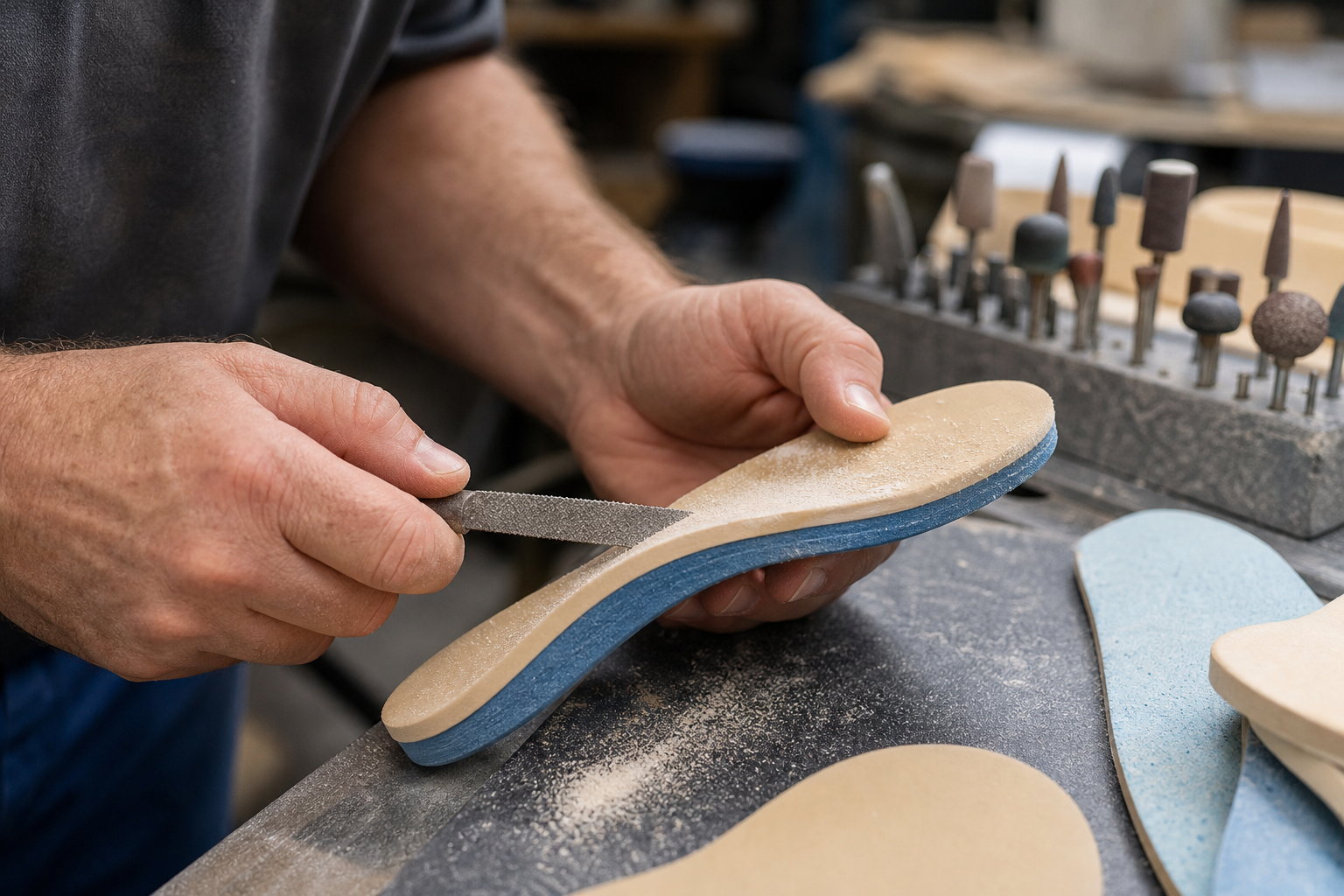
Precision crafting means every custom orthotic is shaped by hand to match a single patient's foot mold.
Why Precision Crafting Changes the Fit Equation
Standard insoles are designed around averages, so they fit many people reasonably well but rarely fit anyone perfectly. In contrast, precision-crafted custom orthotics are built around a single set of measurements, which allows the device to support exactly where a specific foot needs it.
This difference matters most for people with structural issues such as flat feet, high arches, or uneven leg length. Because the support sits precisely under the correct pressure points, patients often notice reduced strain on the knees, hips, and lower back as well as the feet themselves. Above all, precision reduces the trial-and-error that frustrates many people who have already tried several pairs of drugstore inserts without lasting relief.
The Step-by-Step Molding and Fabrication Process
Getting a pair of precision-crafted custom orthotics generally follows a consistent sequence. The steps below outline what most patients can expect, whether they visit a clinic in person or request an at-home mold kit.
- Book a podiatrist consultation. A licensed podiatrist reviews your symptoms, foot shape, and activity level before any mold is taken.
- Take a precise foot mold. A specialist captures a 3D impression using plaster, foam, or digital scanning so the device mirrors your exact anatomy.
- Fabricate the orthotic by hand. Lab technicians shape rigid or semi-rigid materials around the mold to match the prescribed arch and heel support.
- Fit, test, and adjust. You try the finished orthotics, walk in them, and request fine adjustments until the fit feels correct.
For a closer look at how molds are captured, the article on how accurate foot molds really are breaks down the measurement process in more detail.
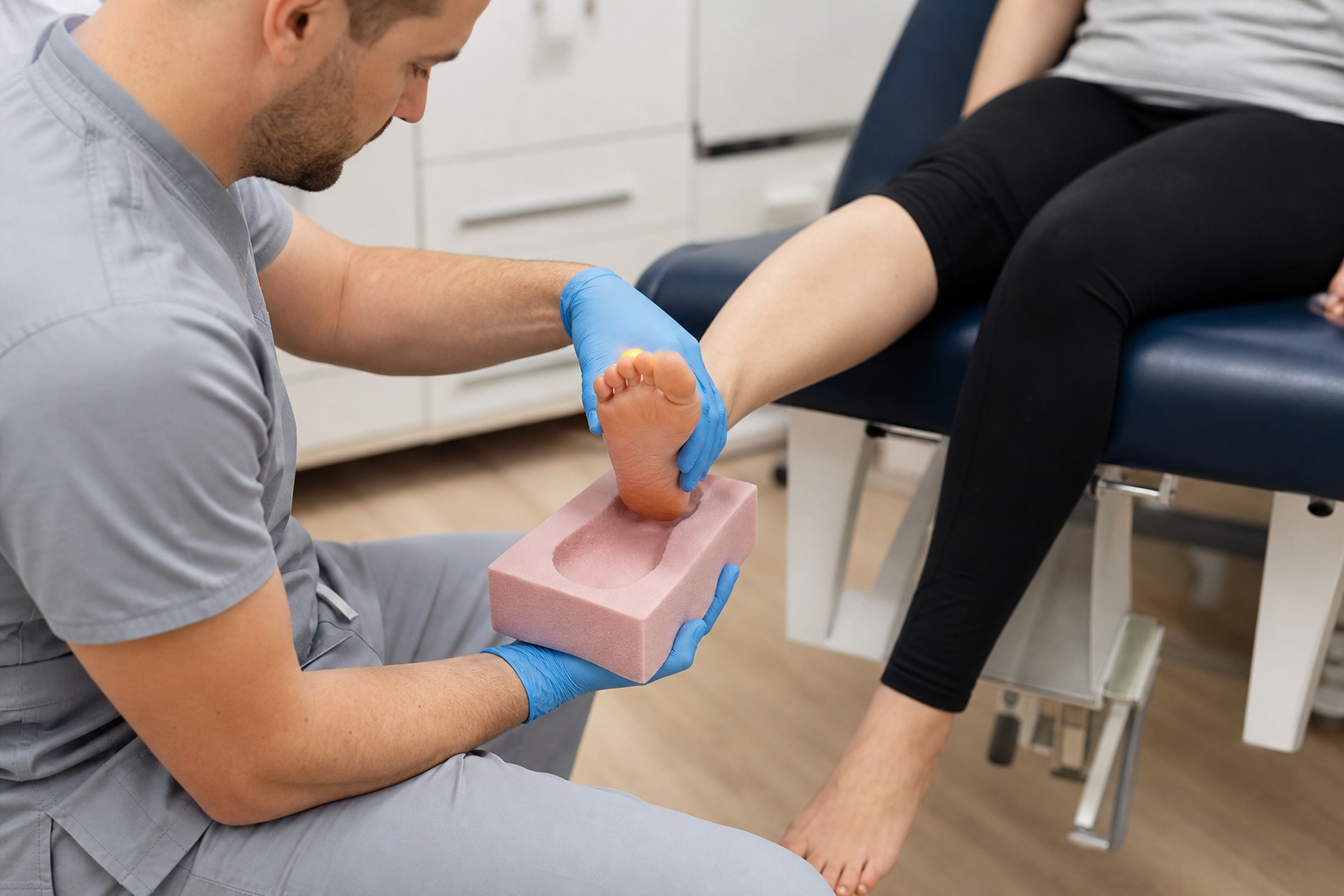
Every precision-crafted orthotic starts with an accurate foot mold taken under podiatrist supervision.
Key Benefits of Precision-Crafted Custom Orthotics
Patients who switch from generic insoles to precision-crafted devices typically report several advantages. First, the fit distributes pressure more evenly, which reduces hot spots that cause blisters or calluses. Second, proper arch support can ease strain that travels up through the ankles, knees, and lower back.
In addition, a well-made orthotic tends to last longer than a cheap insert because it is built from durable materials chosen for a patient's weight and activity level. For example, a review summarized by the National Library of Medicine's research database found that custom foot orthotics reduced pain intensity in patients with chronic plantar fasciitis by a meaningful margin compared with generic devices, which underscores why precision matters clinically, not just for comfort.
How Foot Mold Accuracy Affects Your Results
The accuracy of the original foot mold directly determines how well the finished orthotic performs. Even a small measurement error can shift support to the wrong part of the foot, which may limit pain relief or, in some cases, create new discomfort.
Consequently, many practices use a combination of trained hands and quality control checks before sending a mold to fabrication. Readers who want a deeper walkthrough of this stage can review the complete guide to getting fitted for practical tips on preparing for a mold appointment.
Choosing the Right Provider for Custom Orthotics
Not every company that sells "custom" orthotics actually involves a podiatrist in the process. Therefore, it helps to ask who examines your mold, who fabricates the device, and what credentials the practice holds before ordering.
A podiatrist-owned practice with more than two decades of fabrication experience and an A+ Better Business Bureau rating, such as the team behind customorthotics.com, brings both clinical judgment and hands-on craftsmanship to each pair. Patients can request a complimentary phone consultation first, which is a useful way to confirm the provider understands your specific condition before committing to an order. For a broader comparison of what sets one provider apart from another, see what makes these orthotics unique.
Common Mistakes to Avoid When Ordering Custom Orthotics
Several avoidable errors can undermine even a well-designed orthotic. Skipping the podiatrist consultation is one of the most common, since it removes the clinical judgment that guides correct arch height and material choice.
Similarly, wearing the wrong socks or shoes during a mold appointment, rushing the fitting stage, or ignoring a mild break-in soreness can all reduce the final result. The article on what to know before you order covers these pitfalls in more depth, and the American Podiatric Medical Association offers additional guidance on choosing qualified foot care providers.

Precision-fitted support helps many patients return to daily walking and activity without foot pain.
Frequently Asked Questions About Custom Orthotics With Precision Crafting
What is custom orthotics with precision crafting?
Custom orthotics with precision crafting is a fabrication method where devices are built from an exact 3D mold of a patient's foot rather than a mass-produced shape. This approach matches arch height, heel angle, and pressure points to the individual, which improves comfort and correction compared to generic insoles.
How are custom orthotics different from over-the-counter insoles?
Over-the-counter insoles use one generic shape in a handful of sizes, while custom orthotics are molded to a single patient's foot. As a result, custom devices typically address specific structural imbalances that store-bought insoles cannot correct.
How long does it take to get custom orthotics made?
Most custom orthotics take two to four weeks from the initial mold appointment to delivery, since skilled technicians hand-shape each pair. Rush options are sometimes available for patients with urgent mobility needs.
How much do custom orthotics with precision crafting cost?
Pricing for custom orthotics with precision crafting generally ranges from a few hundred dollars per pair, depending on materials and the complexity of the correction needed. Many practices offer a free consultation before any cost commitment is made.
Why does foot mold accuracy matter so much?
Foot mold accuracy determines whether the finished orthotic actually matches a patient's unique anatomy. Even small measurement errors can shift pressure to the wrong area, which may reduce pain relief or create new discomfort.
What conditions can custom orthotics help treat?
Custom orthotics commonly help with plantar fasciitis, flat feet, high arches, bunions, and diabetic foot complications. They are also used to correct gait imbalances that contribute to knee, hip, or lower back pain.
How do I know if I need custom orthotics?
Persistent heel, arch, or ball-of-foot pain that does not improve with standard insoles is a common sign that custom orthotics may help. A podiatrist consultation can confirm whether a structural issue is driving the discomfort.
Can I order custom orthotics online without visiting in person?
Yes, many practices, including customorthotics.com, allow patients to request an at-home mold kit and consult with a podiatrist by phone. This makes professional-grade custom orthotics accessible to patients outside a local service area.
What common mistakes should I avoid when ordering custom orthotics?
The biggest mistakes are skipping the consultation step, choosing a generic online mold kit without podiatrist oversight, and wearing the wrong shoes during fitting. Each of these can compromise the accuracy of the final device.
How long do custom orthotics typically last?
Well-made custom orthotics usually last three to five years with regular use, depending on material choice and activity level. Rigid materials tend to outlast softer, cushioned designs.
Are custom orthotics covered by insurance?
Some insurance plans partially cover custom orthotics when a podiatrist documents medical necessity, though coverage varies widely by provider. Patients should check their plan details or ask the practice to verify benefits before ordering.
What is the break-in period for new custom orthotics?
Most patients need one to two weeks to adjust to new custom orthotics, starting with short wear periods and gradually increasing daily use. Mild soreness during this stage is normal, but sharp pain should be reported to the podiatrist.
In summary, custom orthotics with precision crafting give patients a device built specifically for their own foot shape, not an averaged template. Because the process starts with an accurate mold and ends with a hands-on fabrication and fitting stage, the final product can target pain at its structural source rather than masking it. Whether you consult a podiatrist in person or request an at-home mold kit through customorthotics.com, understanding each step helps you make a confident, informed decision toward lasting foot comfort.
