

Custom orthopedic inserts are podiatrist-engineered devices molded from an exact impression of your feet, making them the most effective way to correct alignment, cushion pressure points, and relieve chronic pain that generic insoles simply cannot resolve. Unlike stock insoles sold at drugstores or sporting goods stores, every custom orthopedic insert is built around your foot's specific shape, gait pattern, and biomechanical needs. Consequently, people struggling with plantar fasciitis, flat feet, bunions, or joint pain often find that the right insert is the difference between temporary comfort and lasting, root-cause relief. This guide covers everything about custom orthopedic inserts — the types available, how they're made, what they cost, how they compare to off-the-shelf and "semi-custom" shop alternatives, and exactly how to choose the right provider.
Quick Answer
Custom orthopedic inserts are prescription-grade shoe inserts molded from an individual's feet to correct biomechanical imbalances, relieve pain, and support proper alignment. In contrast, shelf insoles and most "custom" shop products are mass-produced or only partially adjustable — they are not built from your exact foot mold.
What Are Custom Orthopedic Inserts?
Custom orthopedic inserts are devices fabricated from a physical mold or digital scan of an individual's foot, then engineered by a podiatrist (a doctor specializing in foot and ankle care) to correct specific structural problems. Each device accounts for arch height, foot width, pressure distribution, and gait pattern.
Materials range from rigid polypropylene shells for motion control to softer foam layers for cushioning sensitive areas. Because they're built around your exact foot shape, custom orthopedic inserts typically address the underlying cause of discomfort rather than simply padding the shoe. As a result, they're often recommended for conditions that don't respond well to generic insoles or the pre-made "orthotic" products sold in bulk online.
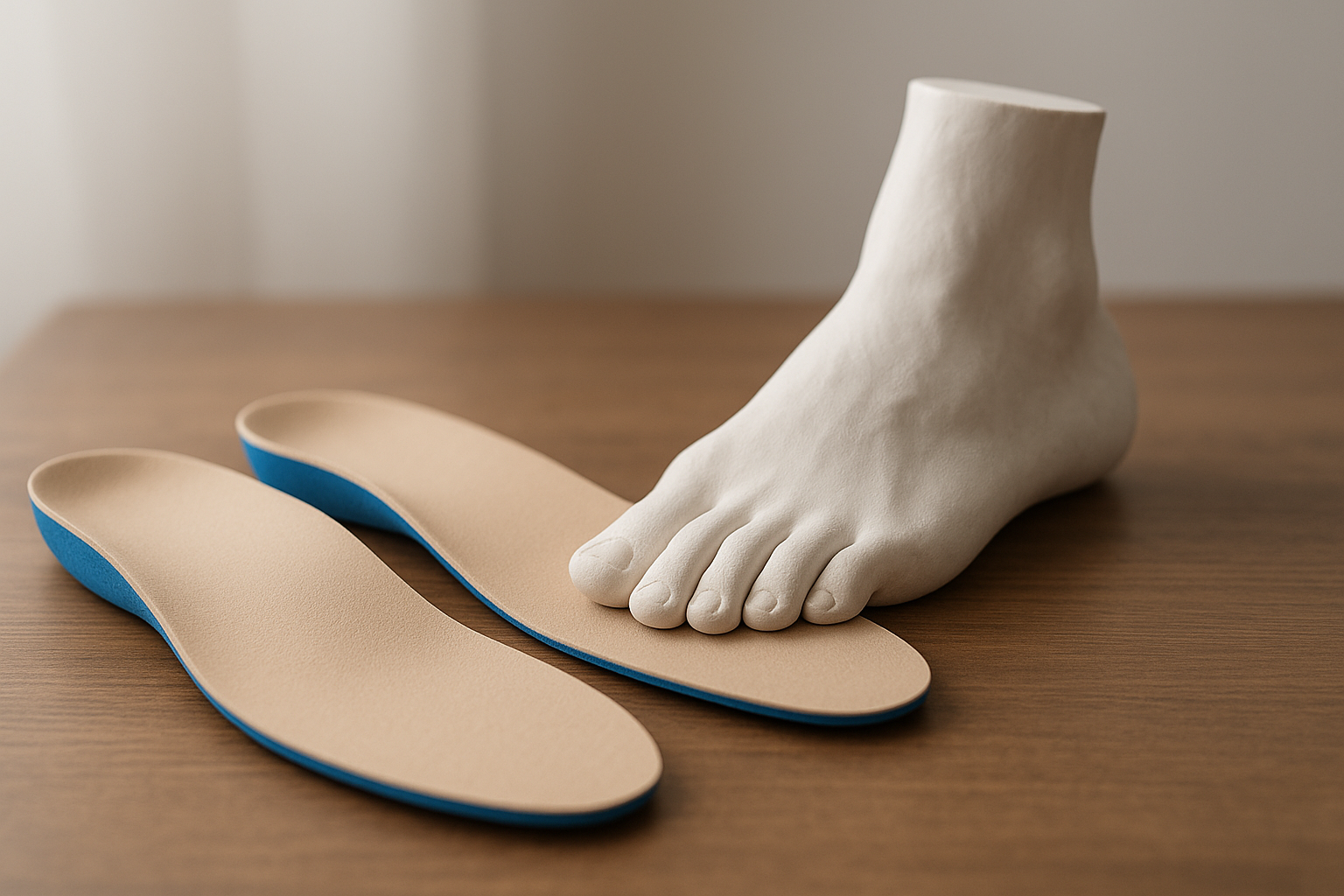
Custom orthopedic inserts are shaped directly from a mold of the patient's foot for a precise, corrective fit.
Types of Custom Orthotic Devices: Rigid, Semi-Rigid, and Soft
Not every custom orthopedic insert is built the same way, and this is one area where generic retail listings tend to gloss over important detail. Podiatrists generally classify custom orthotic devices into three functional categories:
- Rigid inserts — made from firm materials like polypropylene or carbon fiber; designed to control motion and correct overpronation or supination in the rearfoot and midfoot.
- Semi-rigid inserts — combine a flexible shell with layered cushioning; commonly prescribed for athletes who need both support and shock absorption.
- Soft, accommodative inserts — built from dense foam; typically prescribed for diabetic patients, arthritis sufferers, or anyone needing pressure redistribution rather than motion control.
Because the right category depends entirely on your diagnosis and activity level, a one-size-fits-all product label rarely tells the full story. This is precisely why a podiatrist assessment — not a product filter on a shopping page — should guide your choice of insert type.
How Custom Orthotic Devices Differ From Off-the-Shelf Insoles
Generic insoles are manufactured in bulk, standard sizes and shapes with minimal arch variation. In contrast, custom orthotic devices are built individually, which allows a podiatrist to correct issues like overpronation, leg-length discrepancies, or uneven weight distribution.
For a deeper side-by-side comparison, this breakdown of how custom-made orthotics differ from generic inserts covers material quality, fit accuracy, and long-term durability in more detail. Similarly, if you're still weighing your options, this guide on the difference between shoe inserts and custom orthotics explains why price alone shouldn't drive the decision. Likewise, this companion resource on the difference between customorthotics.com orthotics and generic inserts walks through fabrication quality side by side.
Common Conditions Treated With Custom-Molded Foot Orthotics
Podiatrists frequently prescribe custom-molded foot orthotics for a range of conditions, including:
- Plantar fasciitis and heel pain
- Flat feet or fallen arches
- Overpronation or supination
- Bunions and hammertoes
- Diabetic foot complications
- Arthritis-related joint pain
Specifically, patients with plantar fasciitis often see the clearest improvement, since a well-designed insert reduces tension on the plantar fascia with every step. This detailed look at how effective custom-made orthotics are for plantar fasciitis reviews expected results and realistic timelines, while this guide to the best orthotic options for treating plantar fasciitis compares specific device styles. For readers managing flatter arches, this guide to orthopedic arch supports and complete relief options is also worth reading. According to the American Podiatric Medical Association, a large share of adults report experiencing foot pain that affects their daily activities, underscoring why proper support matters.
How Custom Foot Orthotics Are Made: A Step-by-Step Process
Although details vary by provider, fabricating custom foot orthotics generally follows the same sequence:
- Schedule a foot assessment. Book a consultation with a podiatrist, in person or by phone, to discuss symptoms, footwear habits, and structural concerns.
- Take a mold or scan of the feet. The podiatrist captures a precise impression using a plaster cast, foam box, or digital 3D scanner.
- Design the orthotic specifications. Arch height, material density, and corrective posting are determined based on the mold and gait analysis.
- Fabricate the device in a lab. Technicians hand-build the shell and padding layers around the original foot mold.
- Fit and adjust the finished inserts. The podiatrist checks pressure points and trim lines, making small adjustments for comfortable, long-term wear.
Research published through the National Library of Medicine's PubMed database has examined foot orthoses for reducing plantar pressure and improving gait mechanics, supporting the clinical rationale behind this fabrication process.
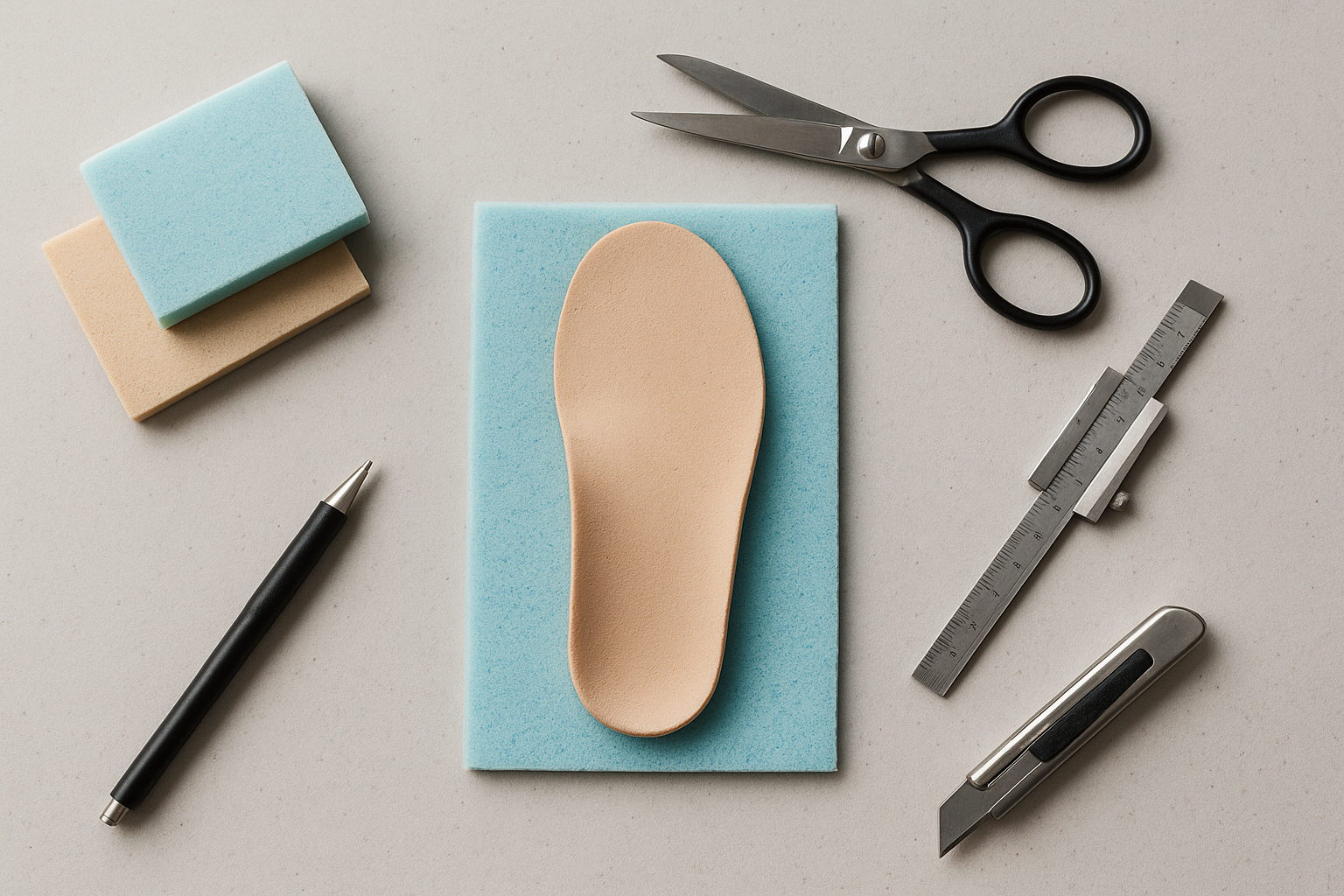
Skilled technicians hand-build each pair of custom orthotics from the original foot mold.
Benefits of Wearing Custom Insoles Every Day
Consistent use of custom insoles offers several advantages over generic alternatives. First, they distribute weight evenly across the foot, which reduces localized pressure points that cause pain. Second, they help correct posture and gait, which can ease strain on the knees, hips, and lower back over time.
In addition, custom orthopedic inserts tend to last longer than drugstore insoles because they're built from higher-grade materials suited to your specific activity level. For orthopedic guidance on how foot alignment affects the rest of the body, the American Academy of Orthopaedic Surgeons' OrthoInfo resource offers useful background on biomechanics and joint health.
Materials Used in Custom Orthopedic Inserts
Material choice directly shapes how a custom orthopedic insert feels and performs. Understanding the options helps you ask better questions during a consultation.
| Material | Best For | Feel |
| Polypropylene | Motion control, overpronation | Firm, durable |
| Carbon fiber | Athletes, slim dress shoes | Thin, very rigid |
| EVA foam | Diabetic feet, arthritis | Soft, cushioned |
| Cork/leather top cover | Durability, moisture control | Moderate, breathable |
Above all, the "best" material depends on diagnosis, not personal preference alone — which is another reason a podiatrist-guided fitting outperforms browsing a generic product catalog.
Sizing, Fit, and Shoe Compatibility
Most custom orthopedic inserts fit standard athletic and dress shoes without issue. However, bulkier footwear like work boots, hiking boots, or narrow heels often requires a slimmer profile to avoid crowding the toe box. If you wear boots or heavy work footwear regularly, it's worth reviewing this orthotic inserts for boots fit guide before ordering, since a standard-thickness shell can shift sizing up a half size or more.
Meanwhile, expect a short break-in period of one to two weeks as your feet adjust to the new alignment. Wearing the inserts for a few hours daily during the first week, then gradually increasing wear time, tends to produce the most comfortable long-term result.
Cost, Insurance, and Timeline Considerations
Custom orthopedic inserts typically cost between $200 and $800, depending on materials, complexity, and whether a consultation fee is included. Some insurance plans and HSA or FSA accounts partially cover the cost when a podiatrist prescribes them, though coverage varies widely.
The timeline from mold to finished product usually runs two to four weeks. Therefore, if you're planning around a specific activity, trip, or event, it's wise to order well in advance rather than waiting until symptoms become severe.
Custom Orthopedic Inserts vs. Prefabricated vs. Over-the-Counter Options
Shopping pages often blur these categories together, which makes comparison confusing. Here's a clear breakdown:
| Category | How It's Made | Typical Cost |
| Custom orthopedic inserts | Molded from your exact foot, podiatrist-designed | $200–$800 |
| Prefabricated / "semi-custom" | Standard shell with minor adjustable padding | $50–$200 |
| Over-the-counter insoles | Mass-produced, no individual shaping | $15–$60 |
In other words, many online shops market "custom" insoles that are actually prefabricated shells with adjustable arch pads — not true custom orthopedic inserts molded from your own foot. Knowing this distinction before you buy can save both money and disappointment.
Common Buying Mistakes to Avoid
Even well-intentioned shoppers make avoidable errors when purchasing orthotic inserts online. Watch out for these:
- Assuming any product labeled "custom" is actually molded from your foot rather than a standard shell.
- Buying generic insoles for a condition that requires structural correction, which only masks symptoms temporarily.
- Skipping a proper foot assessment, which often leads to a poor or ineffective fit.
- Choosing based on price alone instead of material suitability for your diagnosis and activity level.
- Ignoring shoe compatibility, especially with boots or narrow dress shoes.
How to Choose the Right Provider
Choosing a provider matters as much as choosing the insert itself. Look for a podiatrist-owned practice with hands-on fabrication experience, transparent pricing, and a straightforward consultation process. For example, customorthotics.com is a podiatrist-owned and operated practice with more than 20 years of industry experience and an A+ Better Business Bureau rating, offering a complimentary phone consultation before you order.
Because every device is fabricated directly from an individual mold, patients ordering locally or remotely through the online platform go through the same careful process described earlier. Above all, prioritize providers who involve a licensed podiatrist in the design step rather than skipping straight to manufacturing.
Frequently Asked Questions About Custom Orthopedic Inserts
What are custom orthopedic inserts?
Custom orthopedic inserts are prescription-grade shoe inserts molded directly from an individual's feet to correct biomechanical imbalances, cushion pressure points, and relieve chronic pain. They differ from mass-produced insoles because every device is built around your unique foot shape and gait.
How do custom orthopedic inserts work?
They redistribute weight across the foot, support the arch, and correct abnormal motion during walking or running. This reduces strain on the plantar fascia, ankles, knees, and lower back.
How are custom orthopedic inserts different from over-the-counter insoles?
Over-the-counter insoles are made in generic sizes and shapes, offering only mild cushioning. Custom orthopedic inserts are fabricated from an exact mold or scan of your foot, targeting your specific structural issues.
How much do custom orthopedic inserts cost?
Costs typically range from $200 to $800 depending on materials, complexity, and whether a podiatrist consultation is included. Prices vary by provider and region.
How long do custom orthopedic inserts last?
Most custom orthopedic inserts last between three and five years with regular use. Lifespan depends on materials, activity level, and body weight.
How long does it take to get custom orthopedic inserts made?
After the initial foot mold or scan, fabrication usually takes two to four weeks. Rush options are sometimes available through certain providers.
Can custom orthopedic inserts help with plantar fasciitis?
Yes, custom orthopedic inserts are commonly recommended for plantar fasciitis because they support the arch and reduce tension on the plantar fascia. Many patients report meaningful pain reduction within weeks of consistent use.
Are custom orthopedic inserts covered by insurance?
Some health insurance plans and HSA or FSA accounts partially cover custom orthopedic inserts when prescribed by a podiatrist. Coverage varies widely, so it's best to check your specific policy.
What conditions do custom orthotic devices treat?
Custom orthotic devices commonly address plantar fasciitis, flat feet, overpronation, bunions, diabetic foot complications, and arthritis-related joint pain. They can also support recovery after certain foot or ankle injuries.
Is there a difference between custom orthotics and custom orthopedic inserts?
No, these terms are generally used interchangeably in the podiatry field. Both refer to devices molded from an individual's feet for a precise, corrective fit.
What common mistakes should I avoid when choosing orthotic inserts?
A common mistake is buying generic insoles for a condition that requires structural correction, which only masks symptoms temporarily. Another is skipping a proper foot assessment, leading to a poor or ineffective fit.
How do I care for custom orthopedic inserts?
Wipe them down with a damp cloth regularly and let them air dry away from direct heat. Avoid machine washing or drying, since heat and moisture can warp the shell material.
Do I need a prescription for custom orthopedic inserts?
Many providers require a podiatrist evaluation before fabrication to ensure the device addresses your specific biomechanical needs. Some online platforms offer consultations to fulfill this step remotely.
Can custom orthopedic inserts fit in any shoe?
Most custom orthopedic inserts fit standard athletic and dress shoes, though bulkier footwear like boots may need specific styles. Providers often offer slimmer profiles designed for tighter footwear.
Are custom orthopedic inserts worth it?
For people with persistent foot, knee, or back pain linked to foot mechanics, custom orthopedic inserts often provide longer-lasting relief than generic insoles. The upfront cost is higher, but the targeted support can reduce the need for repeated insole purchases or other interventions.
What's the difference between custom orthopedic inserts and orthopedic arch supports?
Orthopedic arch support is a broader category that includes semi-custom and prefabricated products, while custom orthopedic inserts are always molded from an individual's foot. For a full breakdown of support types, see this guide to orthopedic arch supports and complete relief options.
Can children wear custom orthopedic inserts?
Yes, pediatric podiatrists frequently prescribe custom orthopedic inserts for children with flat feet, toe-walking, or growth-related alignment issues. Because children's feet grow quickly, these devices typically need rechecking and resizing every six to twelve months.
Ready to Take the Next Step?
If chronic foot pain is affecting your daily life, a complimentary consultation is a low-risk way to find out whether custom orthopedic inserts are right for you. Visit customorthotics.com to speak with a podiatrist or place an order online.
Conclusion
Ultimately, custom orthopedic inserts offer a level of precision and pain relief that generic insoles — and even shop-labeled "custom" products — simply can't match, since every true custom device is built from an individual mold of your feet. Whether you're managing plantar fasciitis, flat feet, bunions, or joint pain linked to poor alignment, a properly fitted orthotic addresses the root cause rather than just masking symptoms. As a next step, consider scheduling a consultation with a qualified podiatrist to determine whether custom orthopedic inserts fit your specific diagnosis, footwear, and lifestyle.