

Orthotic inserts for boots are supportive devices placed inside footwear to correct alignment, cushion impact, and relieve chronic foot pain — and choosing the right type can make a dramatic difference in how you feel after a long day on your feet. Whether you work construction, spend hours hiking rugged trails, or simply wear boots as everyday footwear, the insole that ships inside a standard boot is rarely enough to address underlying structural issues. In fact, according to the American Podiatric Medical Association, roughly 77% of Americans experience significant foot pain at some point in their lives — and improper footwear support is a leading contributor.
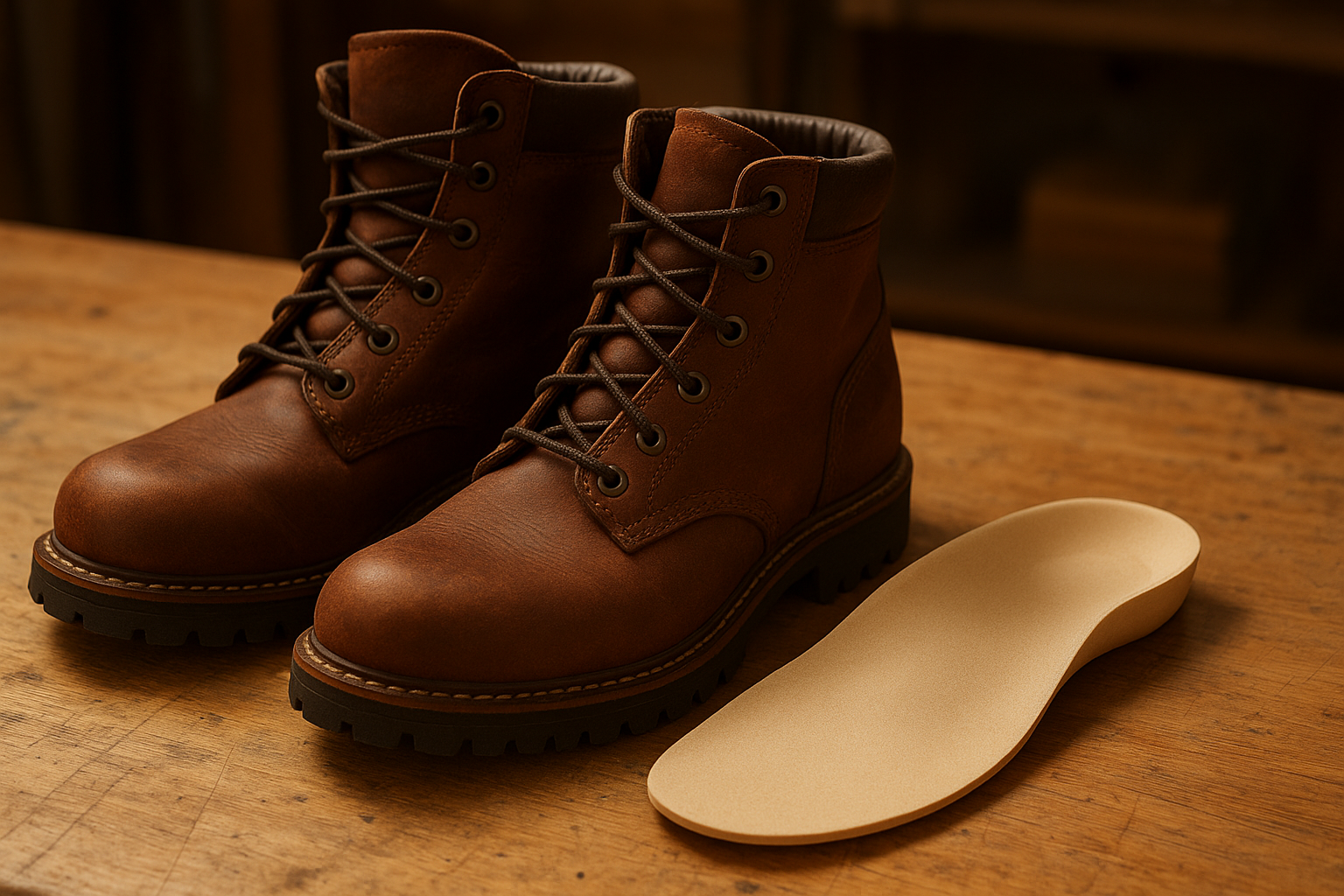
Orthotic inserts for boots are designed with deeper heel cups and firmer arch support to match the structured environment of boot footwear.
What Are Orthotic Inserts for Boots?
Orthotic inserts for boots are specially engineered insoles that replace or supplement the standard footbed inside a boot. They are designed to support the arch, stabilize the heel, and redistribute pressure across the entire foot. Unlike thin cushioned insoles, true orthotics — especially custom-fabricated ones — address the biomechanical root causes of foot pain rather than simply adding padding.
There are two broad categories. Prefabricated (prefab) insoles are mass-produced in standard sizes and available over the counter. Custom orthotics, by contrast, are fabricated from individual molds of each patient's feet by a qualified podiatrist. The difference in precision is significant: a custom device accounts for your unique arch height, heel angle, and pressure distribution in ways that no generic product can replicate.
Furthermore, boots present a unique fitting challenge compared to athletic shoes. They have stiffer soles, deeper heel counters, and often less toe-box volume. Therefore, the orthotic you choose must be specifically compatible with boot geometry to function correctly.
Why Boot Wearers Need Proper Arch Support
Boots are built for durability and protection, not necessarily for biomechanical support. As a result, the factory insoles in most boots are thin, flat, and offer minimal arch engagement. Over time, this lack of support can lead to a cascade of problems that extend well beyond the foot itself.
Poor foot alignment transmits stress up the entire kinetic chain — through the ankles, knees, hips, and into the lower back. Research published by the National Institutes of Health has demonstrated that custom foot orthoses can meaningfully reduce lower-limb pain and improve functional outcomes in individuals with flat feet and overpronation. Consequently, the right orthotic insert does far more than make your feet feel better — it protects your entire musculoskeletal system.
Common conditions that benefit from boot orthotics include:
- Plantar fasciitis — inflammation of the band of tissue along the bottom of the foot, often causing sharp heel pain with the first steps of the day
- Flat feet (fallen arches) — a structural condition where the arch collapses inward, causing overpronation and widespread fatigue
- Achilles tendinitis — irritation of the Achilles tendon, frequently aggravated by improper heel positioning inside stiff boots
- Metatarsalgia — pain and inflammation in the ball of the foot, often caused by excessive forefoot pressure
- Supination (underpronation) — outward rolling of the foot that increases stress on the outer ankle and knee
To explore the full range of conditions that orthotics can address, visit this helpful resource on what foot problems custom orthotics can help with.
Full-Length vs. 3/4-Length Orthotics for Boots
One of the most practical decisions when selecting orthotic inserts for boots is choosing between full-length and 3/4-length designs. Both offer meaningful support, but each suits different boot styles and foot needs.
Full-length orthotics run from the heel to the tip of the toes. They provide comprehensive support across the entire plantar surface and are ideal for boots with a wider, roomier toe box. If your boots have removable factory insoles, a full-length device typically slots in cleanly after you remove the original footbed. Explore the full-length orthotic with heel post for a custom option built for this purpose.
3/4-length orthotics end just behind the ball of the foot, leaving the forefoot area free. This design is particularly well-suited to tighter-fitting boots — such as cowboy boots, dress boots, or narrow work boots — where a full-length insert would crowd the toe box and cause discomfort. The 3/4-length orthotic with heel post is a popular choice for exactly this reason.
In general, if you are unsure which length is right for your specific boot, a podiatrist can assess your footwear and foot structure together to make the most appropriate recommendation.
Custom Orthotics vs. Prefab Insoles: Which Is Right for You?
This is one of the most common questions people ask, and the answer depends largely on the severity of your foot condition and how long you need relief. For a detailed side-by-side breakdown, the article on custom orthotics vs. prefab insoles covers the key differences thoroughly.
In summary: prefab insoles are affordable and accessible, making them a reasonable starting point for mild discomfort. However, they cannot replicate the precision of a device molded directly from your foot. Custom orthotics, fabricated by an experienced podiatrist, address the specific biomechanical patterns unique to your anatomy — something a mass-produced product simply cannot do.
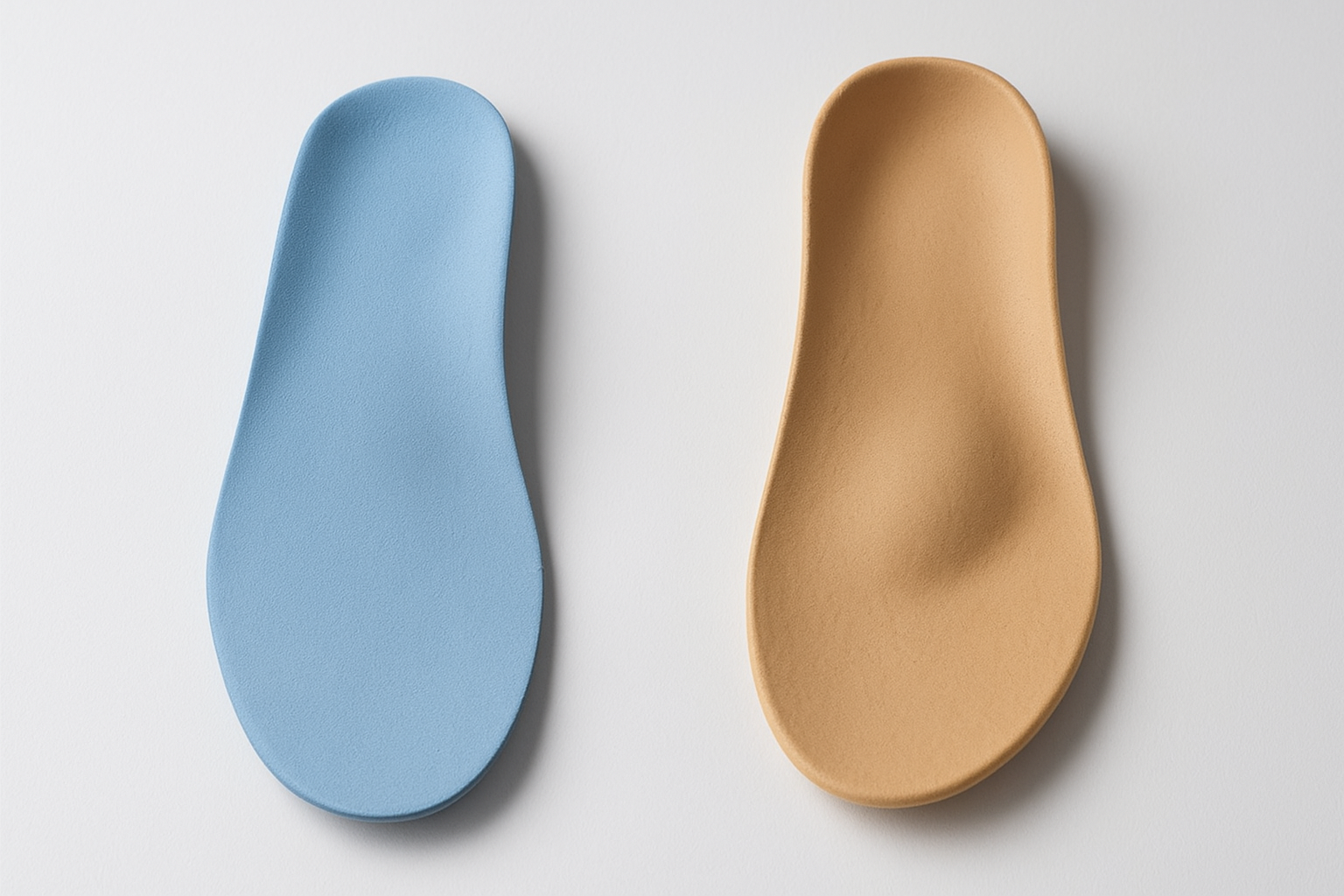
Custom orthotics (right) are molded precisely to each individual's foot, offering a level of support that prefab insoles cannot match.
How to Fit Orthotic Inserts Into Boots: Step-by-Step
Fitting orthotic inserts correctly is just as important as choosing the right device. Follow these steps to ensure a proper fit and avoid common mistakes.
- Remove the factory insole. Pull out the original insole that came with your boots. This creates the necessary depth for the orthotic to sit flush without raising your foot uncomfortably high inside the boot.
- Align the orthotic with the boot. Place the orthotic inside and ensure the heel cup lines up precisely with the boot's heel counter. Proper heel alignment is essential for effective motion control and arch engagement.
- Trim to fit if necessary. If the orthotic extends past the toe box, use the factory insole as a template and carefully trim the front edge with scissors, following the manufacturer's guidelines to avoid cutting into the supportive structure.
- Test fit and lace up. Put on the boot, lace it to your normal tension, and walk for a few minutes. Your heel should feel secure, the arch support should contact your foot without pressure points, and your toes should have adequate room.
- Begin a gradual break-in period. Wear the orthotics for two to four hours on the first day. Increase daily wear time by one to two hours each day over one to two weeks, allowing your feet and postural muscles to fully adapt to the corrected alignment.
Key Features to Look for in Boot Orthotics
Not every insole marketed for boots is genuinely orthotic in function. Therefore, when evaluating your options, look specifically for the following features:
- Deep heel cup: Encapsulates and stabilizes the heel fat pad, reducing impact and controlling pronation
- Firm arch support: Provides true structural support rather than soft cushioning that compresses under load
- Heel post: A wedge built into the base of the heel that corrects the angle at which your foot strikes the ground
- Durable top cover: Moisture-wicking material that withstands the demands of boot wear without breaking down prematurely
- Appropriate length: Full-length for roomier boots; 3/4-length for narrow or dress boots
According to the Wikipedia overview of orthotics, functional orthotics are specifically designed to control abnormal motion, while accommodative orthotics focus primarily on cushioning and offloading pressure. Most people with structural foot conditions benefit most from functional devices.
How Long Do Boot Orthotic Inserts Last?
Durability varies considerably between prefab and custom options. Prefab insoles typically need replacement every six to twelve months, especially under the stress of daily boot wear. Custom orthotics, however, are fabricated from higher-grade materials and can last two to five years with proper care — making them a more cost-effective long-term investment for anyone dealing with ongoing foot pain.
Additionally, because custom devices are built from individual molds, they maintain their corrective geometry far longer than mass-produced foam insoles, which compress and lose their supportive shape relatively quickly.
Getting Custom Orthotic Inserts From a Podiatrist
For anyone dealing with chronic pain, structural imbalances, or conditions like plantar fasciitis or flat feet, the most effective path forward is a consultation with a qualified podiatrist. A podiatrist-owned and operated practice like customorthotics.com specializes in fabricating fully custom orthotics crafted directly from individual molds of each patient's feet — ensuring a level of precision that off-the-shelf solutions simply cannot match.
With more than 20 years of industry experience and an A+ rating from the Better Business Bureau, the team brings credibility and craftsmanship to every device they produce. Patients can connect directly with the podiatrist for a complimentary consultation by phone, or conveniently place orders through the online platform — making professional-grade foot care accessible regardless of location.
This approach is particularly valuable for boot wearers who spend extended hours on their feet in demanding environments, where the consequences of poor support compound quickly over time.
Frequently Asked Questions About Orthotic Inserts for Boots
What are orthotic inserts for boots?
Orthotic inserts for boots are supportive devices placed inside footwear to correct foot alignment, redistribute pressure, and relieve pain. They range from over-the-counter prefab insoles to fully custom-molded devices made by a podiatrist. Custom versions are fabricated from individual foot molds, offering far greater precision.
Can I use regular orthotics in my boots?
Yes, but fit matters. Boots have deeper heel cups and more structured toe boxes than sneakers, so you may need to trim a standard insole or choose a 3/4-length orthotic to avoid crowding the toe area. Always remove the factory insole first for the best result.
Are custom orthotics better than prefab insoles for boots?
Custom orthotics are fabricated from individual molds of your feet, making them far more precise than prefab insoles. For chronic pain or structural imbalances, custom devices typically deliver superior and longer-lasting results. Prefab insoles are a reasonable short-term option for mild discomfort.
How do I know if I need orthotic inserts in my boots?
Common signs include heel pain, arch fatigue, knee or lower-back discomfort, or noticeable uneven wear on your boot soles. A podiatrist can assess your gait and foot structure to confirm whether orthotics are appropriate for your situation.
What conditions do boot orthotics help with?
Boot orthotics are commonly used for plantar fasciitis, flat feet, overpronation, supination, Achilles tendinitis, metatarsalgia, and general arch fatigue. They can also help address knee, hip, and lower-back pain caused by poor foot alignment transmitted up the kinetic chain.
Should I choose full-length or 3/4-length orthotics for boots?
Full-length orthotics provide support from heel to toe and work well in roomier boots. A 3/4-length orthotic ends just before the ball of the foot, making it ideal for tighter-fitting boots where toe space is limited. A podiatrist can help you decide based on your boot style and foot needs.
How long do orthotic inserts for boots last?
Quality custom orthotics typically last two to five years with proper care, though high-impact use can shorten that lifespan. Prefab insoles generally need replacement every six to twelve months, particularly under the stress of daily boot wear.
Do orthotic inserts make boots feel tighter?
Adding an orthotic insert does raise the foot slightly inside the boot, which can feel snug at first. Removing the boot's factory insole before inserting your orthotic usually resolves any tightness. In some cases, sizing up half a boot size may also help.
How do I fit orthotic inserts into work boots?
Remove the existing factory insole first, then place your orthotic insert flat inside the boot. Ensure the heel cup aligns with the boot's heel counter. If needed, trim the front edge according to the manufacturer's guidelines, using the original insole as a cutting template.
Can orthotic inserts help with lower back pain caused by standing in boots all day?
Yes. Poor foot alignment transmits stress up the kinetic chain to the knees, hips, and lower back. Properly fitted orthotic inserts for boots correct that alignment at the source, which often reduces back and joint discomfort significantly over time.
How much do custom boot orthotics cost compared to prefab insoles?
Prefab insoles typically cost between $20 and $80, while custom orthotics range from $200 to $600 or more depending on the provider and complexity. However, custom devices last much longer and address specific structural issues, making them cost-effective over time.
What is the break-in period for new orthotic inserts in boots?
Most people need one to two weeks to fully adjust to new orthotics. Start by wearing them for two to four hours per day, gradually increasing wear time as your feet and muscles adapt to the corrected alignment. Some mild initial soreness is normal and typically resolves within the first week.
Conclusion
Choosing the right orthotic inserts for boots is one of the most impactful decisions you can make for your long-term foot health, comfort, and overall mobility. As this guide has shown, the key considerations include selecting the appropriate length, understanding the difference between custom and prefab devices, and fitting the insert correctly to your specific boot style. For mild discomfort, a quality prefab insole may offer temporary relief. However, for lasting results — particularly if you are dealing with a diagnosed condition or structural imbalance — custom orthotics fabricated from individual foot molds remain the gold standard. If you are ready to take the next step toward pain-free days in your boots, explore the custom orthotic options available at customorthotics.com or schedule a complimentary consultation with the podiatrist directly.