

Treatment for metatarsalgia typically combines supportive footwear, targeted padding, and custom orthotics to reduce pressure on the ball of the foot. If you have ever felt a deep, aching soreness under your second, third, or fourth metatarsal heads after a long day on your feet, you already know how disruptive this condition can be. Fortunately, a focused combination of care can calm the inflammation, redistribute weight across the forefoot, and help you return to comfortable walking and standing. This guide breaks down what causes metatarsalgia, which treatments actually work, and how custom orthotics from a podiatrist-led practice can provide lasting relief.
Quick Answer: The most effective treatment for metatarsalgia combines activity modification, supportive shoes, and custom orthotics molded to your foot. Most people notice meaningful relief within two to six weeks once pressure is properly redistributed away from the metatarsal heads.
What Is Metatarsalgia?
Metatarsalgia is a general term for pain and inflammation in the ball of the foot, specifically around the metatarsal heads, the rounded ends of the long bones behind your toes. The discomfort often feels like walking on a pebble or a bruise that never quite heals. According to the Wikipedia overview of metatarsalgia, the condition is frequently linked to high-impact activity, poorly fitted shoes, or structural foot differences rather than a single injury.
In addition, metatarsalgia tends to worsen gradually rather than appearing overnight. As a result, many people delay treatment until the pain starts interfering with daily walking, exercise, or standing at work.
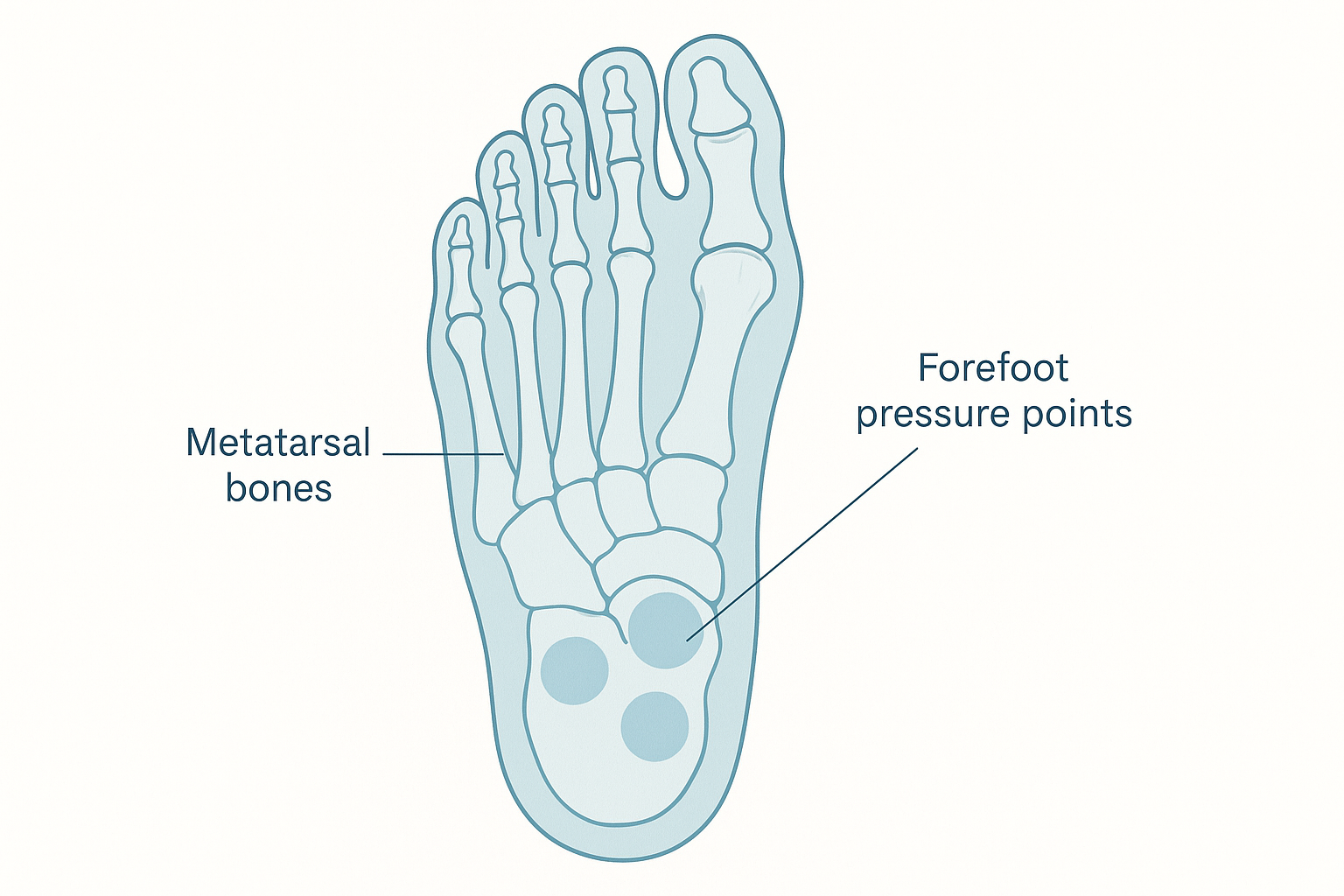
Understanding forefoot anatomy helps explain why targeted treatment for metatarsalgia focuses on the metatarsal heads.
What Is the Best Treatment for Metatarsalgia?
The best treatment for metatarsalgia addresses both the symptoms and the underlying mechanical cause. Short-term measures like rest, ice, and cushioned padding reduce inflammation quickly. However, lasting relief usually requires correcting how weight is distributed across the forefoot, which is where custom orthotics come in.
For example, a patient with a high arch may need different support than someone with flat feet, even though both report similar ball-of-foot pain. Consequently, a one-size-fits-all insert rarely solves the problem for long.
Common Causes of Forefoot Pain
Several factors commonly contribute to metatarsalgia, including tight calf muscles, high-impact sports, excess body weight, and footwear with inadequate cushioning. In particular, narrow or high-heeled shoes push extra pressure onto the forefoot with every step. Similarly, structural issues like hammertoes or a prominent metatarsal head can concentrate stress on one specific area.
The American Podiatric Medical Association notes that forefoot complaints, including metatarsalgia, are among the most frequently reported foot conditions seen in podiatric practices, particularly among runners and people who stand for long hours. You can review general foot health guidance through the American Podiatric Medical Association.
At-Home Metatarsalgia Pain Relief Strategies
Before seeking professional care, many people try simple at-home strategies for metatarsalgia pain relief. These include resting from high-impact activity, icing the forefoot for fifteen minutes at a time, and switching to shoes with a wider toe box. Over-the-counter metatarsal pads placed just behind the ball of the foot can also help redistribute pressure temporarily.
Nevertheless, these measures mainly manage symptoms rather than correct the underlying cause. The MedlinePlus foot pain resource from the National Library of Medicine recommends combining rest with supportive footwear and, when pain persists, professional evaluation to rule out stress fractures or nerve-related conditions.
If symptoms continue beyond two to three weeks despite these efforts, it is generally a sign that the forefoot needs more targeted, structural support rather than temporary cushioning alone.
How Custom Orthotics Help Treat Metatarsalgia
Custom orthotics are built from an exact mold of your foot, which allows them to target the precise location of your pain rather than offering generic cushioning. Unlike off-the-shelf inserts, a properly designed orthotic places a metatarsal dome or pad exactly behind the affected joints, lifting pressure off the inflamed area with every step.
As detailed in this guide on whether custom orthotics can help with metatarsalgia pain, the podiatrist-led fabrication process at customorthotics.com starts with a free consultation, followed by a precise mold of each foot. This hands-on approach, backed by more than two decades of experience, aims to correct the root biomechanical imbalance rather than simply masking discomfort.
For patients specifically dealing with ball-of-foot pain, a dedicated metatarsal support orthotic can be designed with extra padding placed exactly where it is needed most.
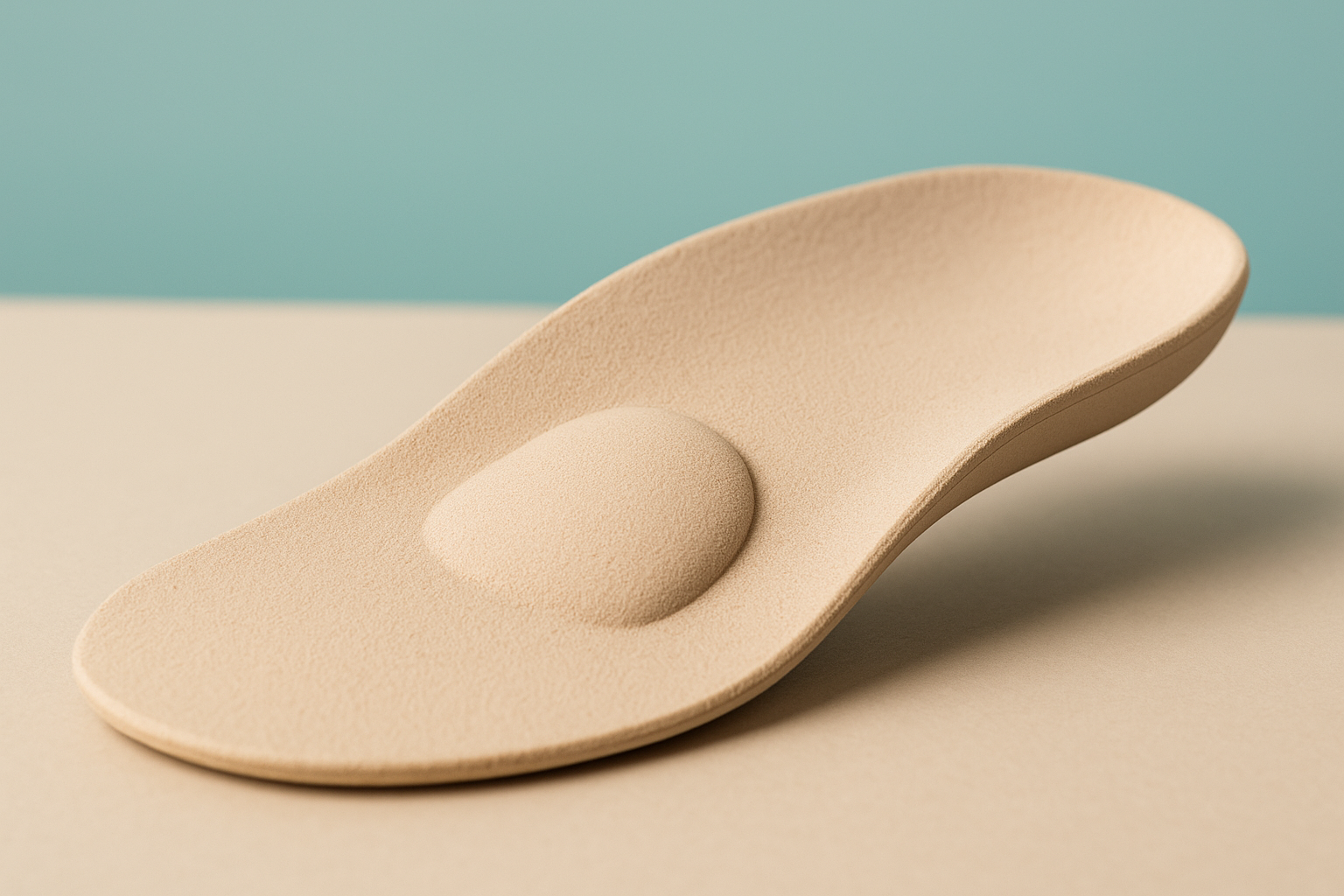
A custom orthotic with a built-in metatarsal pad is a core part of effective treatment for metatarsalgia.
How to Get Custom Orthotics for Metatarsalgia Relief
Getting fitted for custom orthotics is a straightforward process when working with an experienced, podiatrist-led provider. Below is the typical step-by-step path from first contact to wearing your finished orthotics.
- Schedule a complimentary consultation with a podiatrist to discuss your symptoms, footwear habits, and activity level.
- Complete a foot evaluation, either in person or through a guided at-home impression kit, to assess your arch type and pressure points.
- Provide a precise mold or scan of your foot so the lab can capture the exact shape, including the location of your metatarsal heads.
- Review the proposed orthotic design, including metatarsal pad placement, arch height, and cushioning materials suited to your pain pattern.
- Wear the finished orthotics gradually over one to two weeks, reporting any discomfort so fine adjustments can be made.
For more detail on this process, this orthotics for metatarsalgia recovery guide walks through what to expect at each stage, from consultation through long-term follow-up care.
What Are the Best Arch Supports for Metatarsal Pain?
The best arch supports for metatarsal pain are those built specifically for your foot shape rather than purchased off a generic shelf display. A support that is too flat fails to redistribute pressure, while one that is too aggressive can create new pressure points elsewhere in the foot.
This comparison of arch supports for metatarsal foot pain explains how arch height, material firmness, and metatarsal pad placement all factor into an effective design. Similarly, this overview of expert relief strategies for metatarsalgia pain covers additional options worth discussing with a podiatrist.
When Should You See a Podiatrist for Metatarsal Pain?
You should see a podiatrist if forefoot pain lasts more than two to three weeks despite rest and supportive footwear, or if you notice swelling, numbness, or a burning sensation between your toes. Above all, sudden sharp pain after an impact should be evaluated promptly to rule out a stress fracture.
Early evaluation matters because untreated metatarsalgia can alter your gait, which sometimes leads to secondary knee or hip discomfort. A free consultation through customorthotics.com is one accessible way to get a professional opinion before symptoms progress, whether you visit in person or order a custom orthotic remotely.
Frequently Asked Questions About Treatment for Metatarsalgia
What is the fastest treatment for metatarsalgia?
Rest, ice, and a metatarsal pad under the forefoot provide the fastest short-term relief. For lasting results, custom orthotics are typically needed to correct the pressure distribution that caused the pain.
What is metatarsalgia?
Metatarsalgia is inflammation and pain in the ball of the foot, usually around the second through fourth metatarsal heads. It often develops from repetitive stress, poor footwear, or structural foot imbalances.
Can custom orthotics cure metatarsalgia permanently?
Custom orthotics cannot guarantee a permanent cure, but they address the underlying biomechanical causes rather than masking symptoms. Many patients experience long-term relief when orthotics are combined with proper footwear and activity modification.
How long does metatarsalgia take to heal?
Mild cases often improve within a few weeks with rest and supportive footwear. More persistent cases tied to structural issues may take several months of consistent orthotic use to fully resolve.
What is the difference between metatarsalgia and a stress fracture?
Metatarsalgia causes a dull, generalized ache under the ball of the foot, while a stress fracture typically produces sharp, localized pain over a specific bone. A podiatrist can distinguish the two with a physical exam and imaging.
Are over-the-counter inserts effective treatment for metatarsalgia?
Over-the-counter inserts can offer mild, temporary cushioning but rarely correct the structural imbalances behind metatarsalgia. Custom orthotics molded to your foot generally provide more targeted and durable relief.
How much does metatarsalgia treatment typically cost?
Basic at-home care costs very little, while custom orthotics usually range from a few hundred dollars depending on the provider and materials. Many patients find the investment worthwhile given the long-term relief and reduced need for repeat treatments.
What shoes help with metatarsalgia pain relief?
Shoes with a wide toe box, low heel, and a rocker-bottom sole help redistribute pressure away from the metatarsal heads. Avoiding narrow, high-heeled shoes is one of the simplest ways to reduce daily forefoot stress.
What causes metatarsalgia to flare up?
Flare-ups are commonly triggered by high-impact activity, worn-out footwear, sudden weight gain, or prolonged standing on hard surfaces. Identifying and limiting these triggers is an important part of any treatment plan.
Is walking bad for metatarsalgia?
Walking itself is not harmful, but walking in unsupportive shoes on hard surfaces can worsen symptoms. Supportive footwear and custom orthotics allow most people to stay active without aggravating the condition.
What is the biggest mistake people make when treating metatarsalgia?
The most common mistake is relying only on temporary padding or rest without addressing the underlying foot mechanics causing the pressure. Skipping a proper evaluation often leads to repeated flare-ups.
When should I see a podiatrist for metatarsal pain?
See a podiatrist if forefoot pain lasts more than two to three weeks despite rest, or if you notice swelling, numbness, or difficulty bearing weight. Early evaluation helps prevent the condition from becoming chronic.
Do custom orthotics work better than physical therapy alone for metatarsalgia?
Custom orthotics and physical therapy address different aspects of metatarsalgia and often work best together. Orthotics correct pressure distribution while therapy strengthens supporting muscles, giving more complete and lasting relief.

Effective treatment for metatarsalgia helps patients return to comfortable, pain-free walking.
Final Thoughts on Treating Metatarsalgia
In summary, effective treatment for metatarsalgia rarely relies on a single fix. Instead, it combines short-term relief methods like rest and padding with longer-term solutions such as supportive footwear and custom orthotics molded to your exact foot shape. Because every case of forefoot pain has a slightly different underlying cause, a personalized approach consistently outperforms generic inserts.
If your symptoms persist despite at-home care, reaching out for a professional evaluation is a reasonable next step. A podiatrist-led consultation through customorthotics.com can help determine whether custom orthotics are the right treatment for metatarsalgia in your specific situation, so you can get back to standing, walking, and moving without that familiar ache in the ball of your foot.