

Orthotics for metatarsalgia are precision-built shoe inserts designed to cushion the ball of the foot and lift pressure off the inflamed metatarsal heads — the rounded ends of the long bones just behind your toes. If walking has started to feel like stepping on a pebble that is not actually there, metatarsalgia is the likely cause, and the right orthotic can make a real, measurable difference within weeks. This guide goes further than most: it covers the anatomy behind the pain, how orthotics compare to Morton's neuroma inserts, what fitting actually involves, real cost expectations, stretches that speed recovery, and the warning signs that mean it is time to call a podiatrist.
Quick Answer
Yes — orthotics for metatarsalgia work by cushioning the metatarsal heads, redistributing pressure across the forefoot, and correcting the alignment faults that cause repetitive stress. Most people wearing a custom device notice reduced pain within two to four weeks of consistent, daily wear.
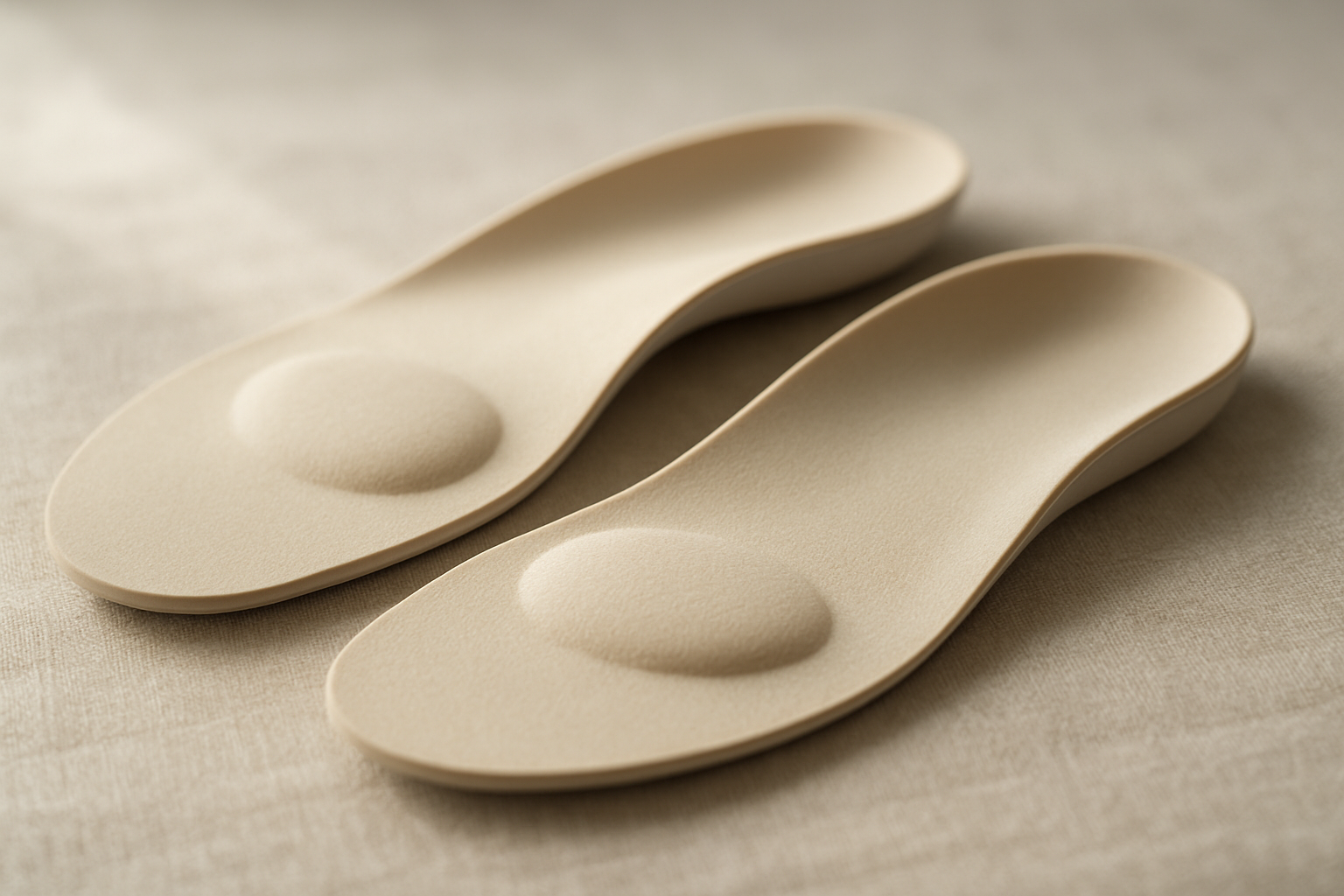
Custom orthotics for metatarsalgia are shaped to cushion and offload the ball of the foot.
What Is Metatarsalgia? Causes, Symptoms, and Risk Factors
Metatarsalgia refers to pain and inflammation centered in the ball of the foot, around the five long bones known as the metatarsals. According to Wikipedia's overview of the condition, it is not a single disease but a symptom that can stem from several underlying causes, including high-impact activity, poorly fitted shoes, or structural foot imbalances. In other words, two people with the exact same diagnosis can arrive there through very different routes.
Common risk factors include excess body weight, high-arched or flat feet, bunions, hammertoes, and a thinning of the natural fat pad that happens with age. Runners and dancers face elevated risk too, since repetitive impact concentrates force directly under the forefoot. Similarly, tight, narrow, or high-heeled shoes push body weight forward onto the metatarsal heads with every step, which accelerates irritation.
Typical symptoms include a sharp, burning, or aching pain that worsens with standing or walking and eases with rest. Some people also describe numbness or a tingling sensation that radiates into the toes. Because these symptoms overlap with other forefoot conditions, an accurate diagnosis matters before choosing a treatment path.
How Do Orthotics for Metatarsalgia Work?
Orthotics for metatarsalgia relieve forefoot pain through three main mechanisms: cushioning, redistribution, and correction. Cushioning materials absorb shock before it reaches sensitive tissue. Redistribution spreads body weight across the whole foot instead of letting it concentrate under the metatarsal heads. Correction, meanwhile, addresses the root biomechanical issue — such as an overly rigid arch or an unstable joint — that caused the pressure imbalance in the first place.
Because custom devices are built from an individual mold rather than a generic template, they can target the exact location of a patient's pain with a precisely placed pad or dome. This is one reason many patients ask whether custom orthotics outperform generic insoles, a question explored further in this detailed explanation of how custom orthotics address metatarsalgia pain.
In particular, devices that include a metatarsal pad placed just behind the painful area — not directly underneath it — lift and separate the bones slightly, which reduces friction between them. Consequently, patients with recurring or severe metatarsalgia often find more lasting relief from a custom-molded device than from a store-bought pad that shifts out of place during the day.
Metatarsalgia vs. Morton's Neuroma: Why the Distinction Matters
Many shoppers searching for forefoot relief encounter products marketed broadly for "ball of foot pain" without clarifying which condition they actually address. This matters because metatarsalgia and Morton's neuroma — a thickening of tissue around a nerve between the third and fourth toes — are related but distinct. Metatarsalgia is primarily a mechanical and inflammatory issue in the bones and joints, whereas Morton's neuroma involves nerve compression that often causes numbness, tingling, or a feeling of a bunched-up sock.
According to a clinical overview published by the National Center for Biotechnology Information, Morton's neuroma typically responds best to a metatarsal pad combined with a wider toe box, while metatarsalgia often requires broader structural correction across the whole forefoot. As a result, a generic "ball of foot" insole built mainly for nerve pain may under-support the bony structures that cause true metatarsalgia.
Above all, an orthotic specifically engineered for metatarsalgia addresses both the mechanical pressure and the alignment faults behind it, rather than only cushioning a nerve-related hot spot. Patients unsure which condition they have should confirm the diagnosis with a podiatrist before investing in either style of insert.
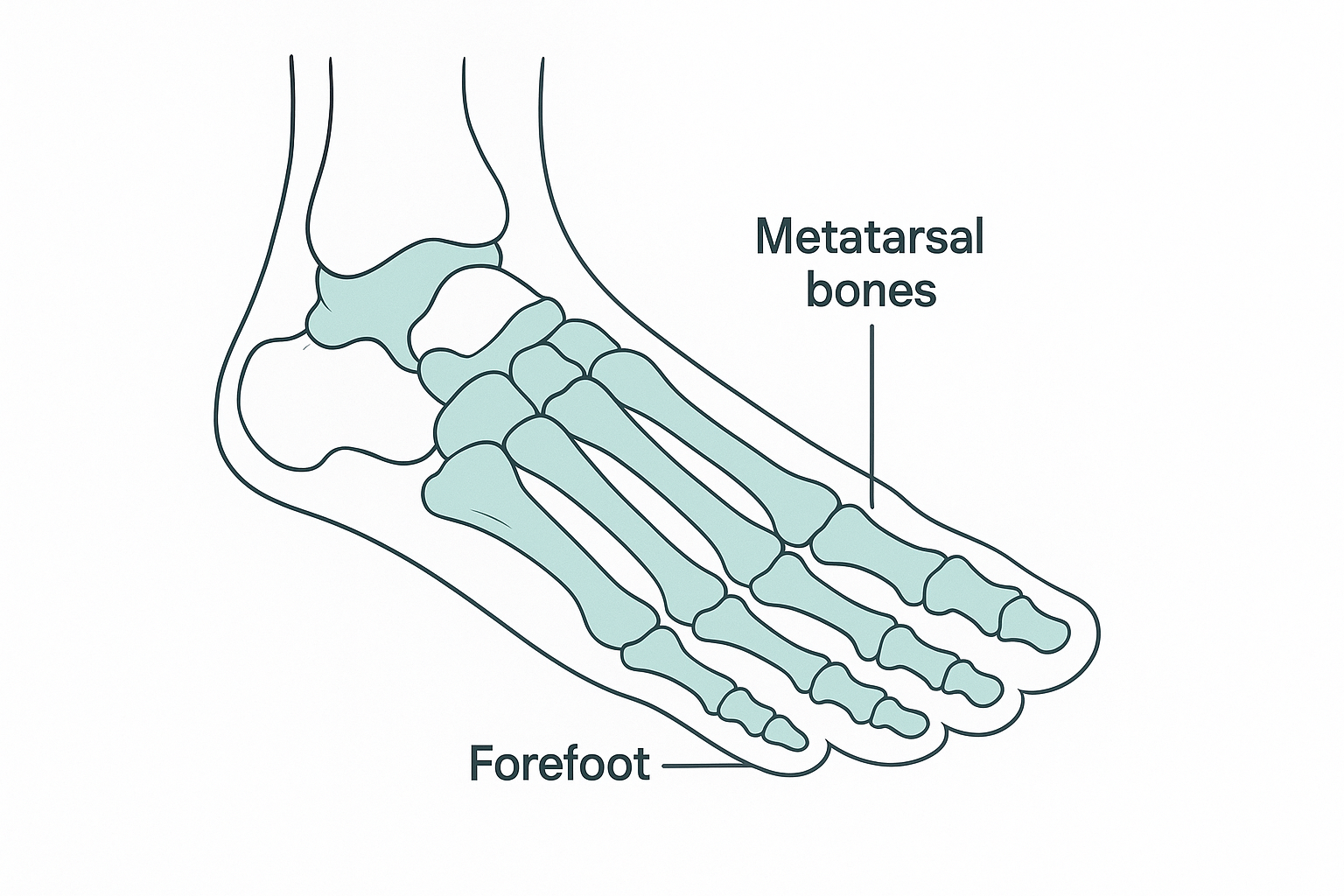
The metatarsal bones, highlighted here, are the source of pain that orthotics for metatarsalgia are designed to relieve.
Custom Orthotics vs. Off-the-Shelf Metatarsal Pain Inserts
Off-the-shelf inserts are widely available and inexpensive, which makes them a reasonable first step for mild, occasional discomfort. However, they are built to a generic foot shape and cannot account for individual differences in arch height, toe alignment, or the exact location of a patient's metatarsal pain.
- Off-the-shelf inserts: low cost, instant availability, generic cushioning, but the pad position rarely matches the exact pain point.
- Custom orthotics for metatarsalgia: molded from the patient's own foot, pad and shell placement precisely targeted, typically lasting three to five years.
- Hybrid prefabricated devices: a middle-ground option offering some adjustability without a full custom mold.
Why Custom Orthotics for Metatarsalgia Outperform Generic Insoles
Custom orthotics start with a mold of the patient's actual foot. Every ridge, arch curve, and pressure point is captured, allowing the fabrication team to place support material with precision. For a side-by-side comparison of features and outcomes, review this review of custom orthotic effectiveness for metatarsal pain.
Therefore, while off-the-shelf products can offer temporary relief, patients dealing with chronic or structural metatarsalgia typically benefit more from a device built specifically around their foot.
How to Get Fitted for Custom Metatarsalgia Orthotics
Getting fitted for a custom device is a straightforward process when working with an experienced podiatry team. Below is the typical sequence patients follow from first phone call to final fitting.
- Schedule a complimentary phone consultation with a podiatrist to discuss forefoot pain symptoms, activity level, and any prior treatments that have already been tried.
- Complete a biomechanical assessment, either in person or through guided at-home instructions, to identify the structural imbalance contributing to the pain.
- Have an impression taken of each foot using a foam box or casting kit so the fabrication lab can replicate the exact contours of the arch and forefoot.
- Work with the podiatrist to select the appropriate shell rigidity and metatarsal pad placement based on symptom severity and daily activity level.
- Gradually increase daily wear time over one to two weeks, then schedule a follow-up to confirm the device is relieving pressure from the metatarsal heads effectively.
Patients who prefer a specific product built for this exact condition can explore the metatarsal support orthotic option directly.
Choosing the Best Arch Support for Metatarsal Foot Pain
Not every arch support is designed with metatarsalgia in mind. The most effective options combine a supportive arch shell with a dedicated metatarsal pad positioned just behind the ball of the foot rather than directly under it, since placement directly under the painful area can worsen symptoms.
Material choice also matters. A semi-rigid shell offers structural correction, while a softer top layer adds shock absorption where the foot needs it most. In addition, footwear compatibility should be considered; a wide toe box and removable factory insole make it far easier to accommodate a custom device comfortably. For a closer look at specific product treatments and expert-recommended relief strategies, see this expert relief strategies resource.
For a more detailed comparison of arch-support designs and outcomes, see this guide to arch supports for metatarsal foot pain.
Best Shoes to Pair With Metatarsalgia Orthotics
Even the best orthotic cannot fully do its job inside the wrong shoe. A wide, deep toe box prevents the forefoot from being squeezed, while a low, stable heel keeps body weight from shifting forward onto the metatarsal heads. Removable factory insoles are essential too, since the orthotic needs that space to sit correctly.
Athletic shoes, structured walking shoes, and supportive work boots generally pair well with orthotics for metatarsalgia. In contrast, high heels, flip-flops, and narrow dress shoes concentrate pressure exactly where it should be avoided, often undoing the benefit of the device entirely.
Stretches and Exercises That Support Orthotic Treatment
Orthotics work best when paired with simple at-home exercises that keep the surrounding muscles flexible and strong. For example, calf stretches reduce tension that would otherwise pull extra weight onto the forefoot with every step. Toe curls using a towel on the floor strengthen the small muscles that help stabilize the metatarsal joints.
- Calf stretch: hold against a wall for 30 seconds, twice daily, to reduce forward pressure on the forefoot.
- Towel toe curls: scrunch a towel with the toes for 10 repetitions to build intrinsic foot strength.
- Frozen bottle roll: roll the arch over a chilled water bottle for five minutes to ease inflammation after activity.
Importantly, these exercises complement an orthotic rather than replace one. Skipping the device and relying on stretching alone rarely resolves structural metatarsalgia on its own.
Cost, Insurance, and Timeline for Custom Orthotics
Custom orthotics generally cost more upfront than mass-produced insoles, though the exact price depends on materials and design complexity. Many patients find the investment worthwhile given the durability, often three to five years of daily use, compared with off-the-shelf pads that need frequent replacement.
According to guidance published on MedlinePlus, a service of the National Library of Medicine, conservative treatments such as supportive footwear and orthotic devices are commonly recommended before more invasive interventions are considered for forefoot conditions like metatarsalgia. Similarly, the American Podiatric Medical Association's patient resource on metatarsalgia lists custom orthotic devices among the first-line, non-surgical treatment options. The American Academy of Orthopaedic Surgeons' patient guide to metatarsalgia echoes this, noting that most cases improve without surgery.
Insurance coverage varies by provider and plan. That said, many HSA and FSA accounts accept custom orthotics as an eligible medical expense when a podiatrist documents medical necessity, so it is worth checking before paying out of pocket.
Patients local to the practice or ordering remotely can start the process through the customorthotics.com online platform, which combines a free podiatrist consultation with a guided at-home molding kit for those unable to visit in person.
Common Mistakes That Delay Metatarsalgia Recovery
One frequent mistake is continuing to wear narrow or high-heeled shoes that concentrate pressure directly on the forefoot, undoing much of the benefit an orthotic provides. Another is skipping the break-in period; jumping straight to all-day wear can cause soreness that leads people to abandon a device that would otherwise help.
Above all, ignoring persistent pain instead of consulting a podiatrist can allow a manageable issue to progress into a more serious condition, such as a stress fracture. Consequently, early evaluation and consistent orthotic use together produce the best long-term outcomes.
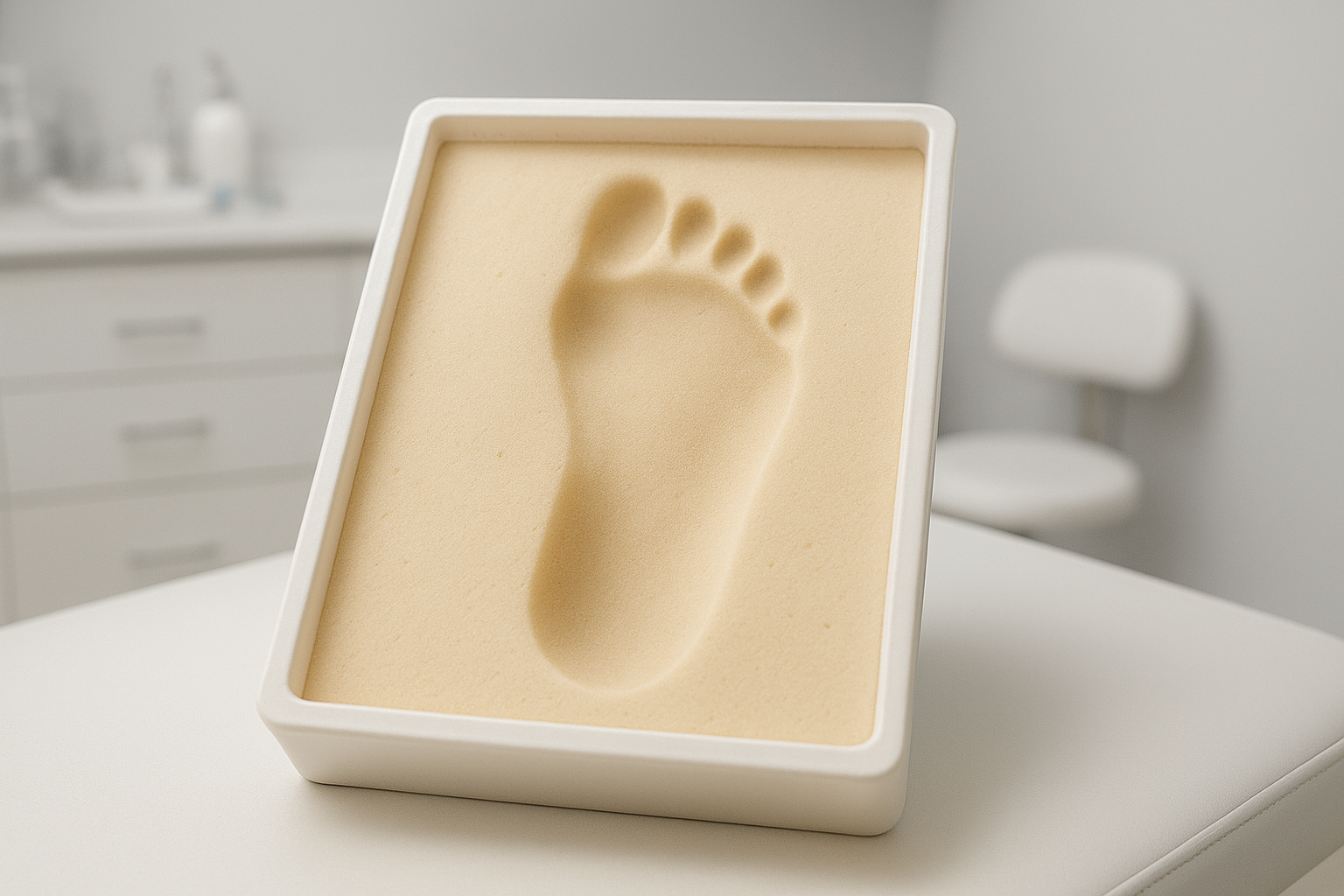
A foam impression captures the precise foot shape needed to fabricate effective orthotics for metatarsalgia.
When to See a Podiatrist About Forefoot Pain
Mild, occasional discomfort often responds to rest, better shoes, and an off-the-shelf pad. However, certain warning signs call for professional evaluation rather than more home remedies.
- Pain that persists for more than two to three weeks despite rest and shoe changes.
- Numbness, tingling, or a burning sensation that radiates into the toes, which may signal nerve involvement.
- Visible swelling, bruising, or a sudden inability to bear weight, which can indicate a stress fracture.
- Diabetes or circulation problems, since reduced sensation can mask the severity of forefoot damage.
In any of these situations, a podiatrist can confirm the diagnosis with imaging if needed and recommend the orthotic design best suited to the underlying cause.
Frequently Asked Questions About Orthotics for Metatarsalgia
What is metatarsalgia?
Metatarsalgia is a general term for pain and inflammation in the ball of the foot, specifically around the metatarsal heads. It often feels like a burning ache or the sensation of walking on a pebble.
What are orthotics for metatarsalgia?
Orthotics for metatarsalgia are custom or prefabricated shoe inserts built with a metatarsal pad or dome that redistributes pressure away from the painful forefoot area. They also correct alignment issues that contribute to repetitive stress on the metatarsal heads.
How do orthotics help relieve metatarsal pain?
Orthotics help by cushioning the ball of the foot, redistributing weight across a wider surface, and improving overall foot alignment. This reduces the repetitive impact that irritates the metatarsal heads with every step.
Why does metatarsalgia happen in the first place?
Metatarsalgia usually develops from high-impact activity, ill-fitting footwear, excess body weight, or structural foot issues like high arches or bunions. In addition, aging tissue in the fat pad beneath the forefoot can lose its natural cushioning.
Is metatarsalgia the same as Morton's neuroma?
No. Metatarsalgia is a mechanical and inflammatory condition affecting the bones and joints of the forefoot, while Morton's neuroma involves nerve tissue thickening between the toes. Both can cause ball-of-foot pain, but they often need differently designed orthotic support.
Are custom orthotics better than off-the-shelf inserts for metatarsalgia?
Custom orthotics are molded to an individual's exact foot shape, so pressure is offloaded precisely where it is needed most. Off-the-shelf inserts offer general cushioning but rarely address the specific structural cause of a person's metatarsalgia.
How much do custom orthotics for metatarsalgia cost?
Custom orthotics typically involve a higher upfront cost than off-the-shelf pads, depending on materials and mold complexity. Many patients find the durability of custom devices offsets the higher initial investment over several years of use.
Are custom orthotics covered by HSA or FSA funds?
Many HSA and FSA accounts accept custom orthotics as an eligible medical expense, particularly when a podiatrist documents medical necessity. It is best to confirm eligibility with your plan administrator before submitting a claim.
How long does it take to feel relief after wearing orthotics?
Many patients notice reduced pain within two to four weeks of consistent daily wear as the foot adapts to the new support. Full benefits, however, can take six to eight weeks as tissue inflammation subsides.
What common mistakes make metatarsalgia worse?
A common mistake is continuing to wear narrow, unsupportive, or high-heeled shoes that concentrate pressure on the forefoot. Skipping the break-in period for new orthotics or ignoring persistent pain instead of consulting a podiatrist can also delay recovery.
What type of shoes work best with metatarsalgia orthotics?
Shoes with a wide toe box, low heel, and removable insole work best, since they leave room for the orthotic without cramping the forefoot. Athletic shoes and structured walking shoes are generally more compatible than dress shoes or sandals.
Can running shoes alone fix metatarsalgia without orthotics?
Supportive running shoes help, but they rarely correct the specific alignment fault or pinpoint pressure point causing the pain. Most runners need an orthotic alongside proper footwear for lasting relief.
Can orthotics for metatarsalgia prevent the pain from returning?
Yes, when worn consistently, orthotics address the underlying biomechanical causes of metatarsalgia rather than just masking symptoms. This ongoing support significantly lowers the chance of flare-ups returning once initial pain has resolved.
When should someone see a podiatrist for metatarsalgia?
A podiatrist visit is recommended if forefoot pain lasts longer than a few weeks, worsens with activity, or is accompanied by numbness or swelling. Early evaluation helps rule out stress fractures or nerve-related conditions that mimic metatarsalgia.
Can orthotics help diabetic patients with metatarsalgia?
Yes, but diabetic patients should always involve a podiatrist, since reduced sensation can hide the severity of forefoot pressure damage. A custom device can be built with extra protective padding for diabetic foot care needs.
How long do custom orthotics for metatarsalgia last?
Most custom orthotics last between three and five years with regular use, depending on materials and activity level. Signs it is time to replace them include visible wear, flattened padding, or the return of forefoot pain.
Final Thoughts on Orthotics for Metatarsalgia
In summary, orthotics for metatarsalgia offer a practical, non-invasive way to address the burning, aching pain that develops in the ball of the foot. By cushioning the metatarsal heads, redistributing pressure, and correcting underlying alignment issues, a well-fitted device can meaningfully reduce daily discomfort within just a few weeks.
Ultimately, patients dealing with chronic or recurring forefoot pain often find the greatest, most lasting relief from a custom-molded orthotic built specifically around their own foot shape rather than a generic insert. Anyone experiencing ongoing symptoms is encouraged to speak with a podiatrist and explore a complimentary consultation at customorthotics.com to determine the right next step.