

Podiatrist custom orthotics are medical-grade shoe inserts fabricated from a direct mold of your own feet, engineered to correct the exact biomechanical issues causing your pain. Unlike mass-produced insoles found at drugstores, these devices are prescribed and shaped under the direct supervision of a licensed foot specialist. As a result, they address the root cause of discomfort rather than simply cushioning the symptom. In this guide, you'll learn exactly how podiatrist custom orthotics are made, which conditions they treat, what they typically cost, and how to choose a provider with the clinical expertise to get the fit right the first time.
What Are Podiatrist Custom Orthotics?
Podiatrist custom orthotics are custom orthotic devices designed from an exact cast or 3D scan of an individual's feet, then fabricated to correct alignment, redistribute pressure, and relieve pain at its source. Unlike generic insoles, each device is unique to the patient's foot shape, gait pattern, and diagnosis.
In practice, a podiatrist first examines your gait, posture, and foot structure to identify the underlying issue — whether that's overpronation, flat arches, or heel pain. Then, a mold or digital scan captures the precise contours of your feet. Specifically, this data guides the fabrication team in building an orthotic shell tuned to your correction needs.
Furthermore, the finished device is fitted and adjusted during a follow-up visit to ensure comfort and proper function. According to Wikipedia's overview of orthotics, these devices function by correcting, accommodating, or preventing physical deformities of the musculoskeletal system.

A podiatrist checks alignment during the final fitting of podiatrist custom orthotics.
Why Choose Podiatrist-Fitted Orthotics Over Off-the-Shelf Inserts
Off-the-shelf insoles are built to fit an average foot shape, which means they rarely address an individual's specific imbalance. In contrast, podiatrist-fitted orthotics are shaped from your own foot mold, so the arch support, heel cup, and pressure zones match your anatomy precisely. Therefore, patients often experience faster and more lasting pain relief compared with generic inserts.
Above all, a licensed podiatrist can diagnose the underlying condition — such as plantar fasciitis, bunions, or flat feet — before prescribing the correction. Consequently, the orthotic is built to treat the cause, not just cushion the symptom. In addition, custom devices are typically made from more durable materials designed to hold their shape for years, whereas drugstore insoles often compress and lose support within months.
| Feature | Off-the-Shelf Insoles | Podiatrist Custom Orthotics |
|---|---|---|
| Fit | Generic, average shape | Molded to your exact foot |
| Diagnosis | None | Podiatrist evaluation included |
| Durability | 6 to 12 months | 3 to 5 years |
How Custom Orthotics Are Made: The Fabrication Process
Building a pair of podiatrist custom orthotics is a hands-on process that combines clinical assessment with precise fabrication. Below is the typical sequence a practice follows from your first appointment to the final fitting.
- Comprehensive foot exam and gait analysis. The podiatrist evaluates your posture, gait pattern, and foot structure to identify imbalances, pain points, and the biomechanical cause of your symptoms.
- Casting or digital foot scan. A plaster mold, foam box impression, or 3D scanner captures the exact shape and pressure distribution of your feet in a neutral, corrected position.
- Prescription and design specifications. The podiatrist writes detailed fabrication specs covering material, arch height, heel posting, and padding based on your diagnosis and daily activity needs.
- Custom fabrication in the lab. Skilled technicians build the orthotic shell layer by layer, shaping it precisely to the mold and specifications before adding top covers and padding.
- Fitting, break-in, and follow-up adjustments. You return for a fitting appointment where the podiatrist checks alignment and comfort, then makes fine adjustments as you break the orthotics in over one to two weeks.
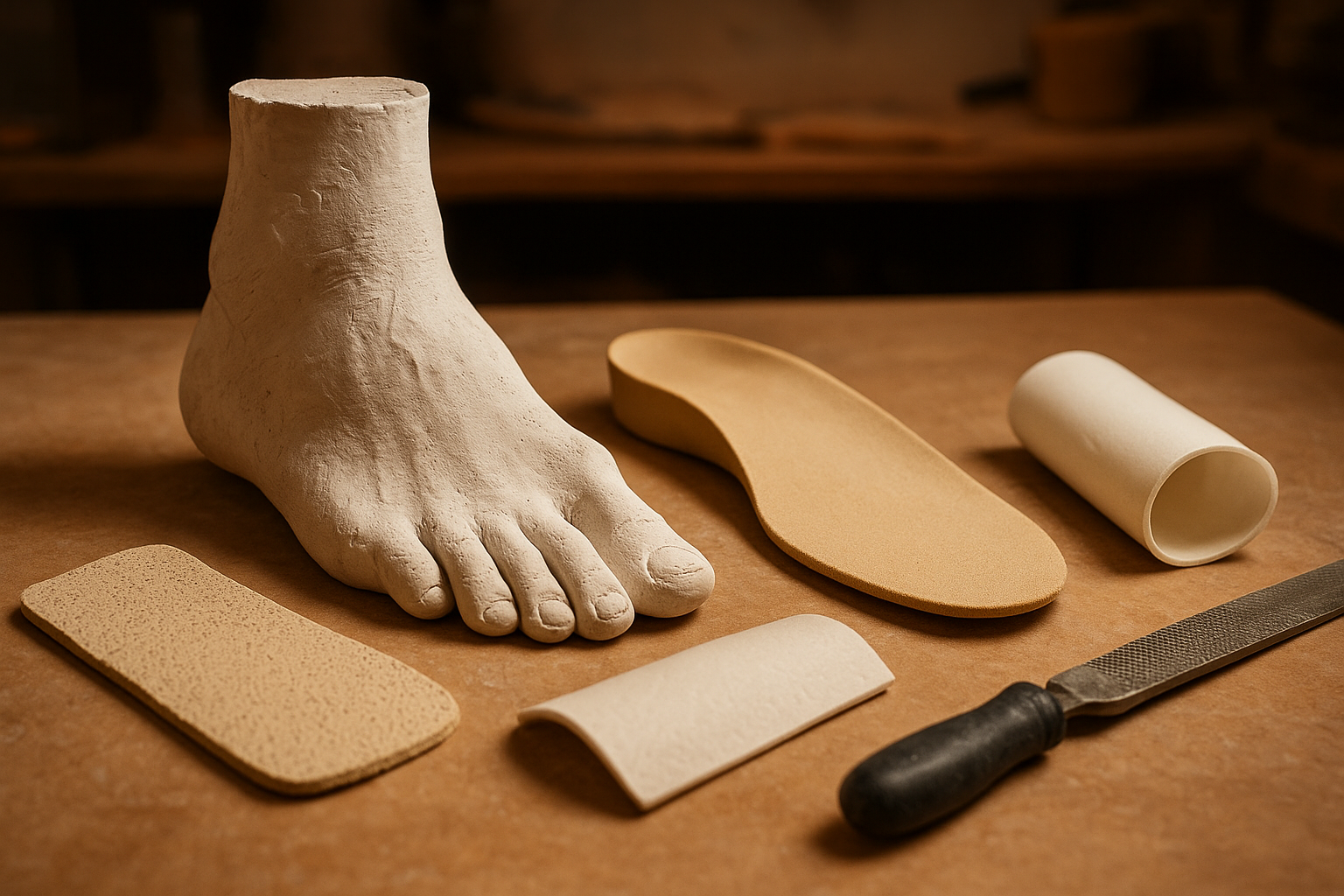
Foot molds like this one form the foundation of every pair of custom orthotic devices.
Conditions Treated by Custom Orthotic Devices
Custom orthotic devices are prescribed for a wide range of foot and lower-body conditions. For example, they are frequently used to manage plantar fasciitis, flat feet, bunions, heel spurs, and overpronation. In particular, patients with structural imbalances often find that a molded device relieves pain in the knees, hips, or lower back as well, since foot alignment affects the entire kinetic chain.
Similarly, individuals with diabetes or arthritis may use custom orthotics to reduce pressure points and prevent complications such as ulcers. If flat feet are part of your concern, our complete guide to custom orthotics for flat feet covers arch types and correction strategies in more depth. For general foot health information, MedlinePlus also offers a helpful overview of common foot injuries and disorders.
What Do Podiatrist Custom Orthotics Cost?
Podiatrist custom orthotics typically cost between $300 and $600 per pair, depending on materials, diagnosis complexity, and whether imaging or lab fabrication is involved. Although this is higher upfront than drugstore insoles, the cost often evens out over time since custom devices last three to five years with proper care.
In addition, many insurance plans partially reimburse custom orthotics when prescribed for a diagnosed medical condition, and HSA or FSA funds can frequently be applied. Therefore, it's worth checking coverage details before your appointment so you understand your out-of-pocket cost in advance.
How to Order Custom Orthotics Online
Not every patient lives near a podiatry clinic, and that's where remote ordering becomes useful. Many practices, including customorthotics.com, offer a complimentary phone consultation followed by an at-home impression kit or scan submission. As a result, patients anywhere can receive a podiatrist-reviewed device without traveling to an office.
Specifically, the process usually involves a phone intake with the podiatrist, mailing in your foot mold, and waiting for lab fabrication before your custom orthotics ship directly to your door. For a step-by-step breakdown, see our guide on how to order custom-made orthotics online.
Choosing the Right Podiatrist for Custom Orthotics
Not all providers offer the same level of craftsmanship, so credentials matter. Look for a podiatrist-owned practice with direct access to the specialist, transparent pricing, and a strong track record. For instance, a practice with more than 20 years of experience and an A+ Better Business Bureau rating signals both clinical skill and consistent customer satisfaction.
Before committing, our article on what to know before you buy podiatrist-approved orthotics outlines key questions to ask any provider. You can also browse the custom orthotic blog for additional patient guidance on fittings, materials, and aftercare. According to background on the profession from Wikipedia's entry on podiatry, licensed podiatrists complete specialized medical training focused entirely on the foot and ankle, which is why their involvement matters for a properly corrected device.

Properly fitted custom orthotics can restore comfortable, pain-free movement.
Frequently Asked Questions About Podiatrist Custom Orthotics
What are podiatrist custom orthotics?
Podiatrist custom orthotics are shoe inserts molded from an individual's own feet and prescribed by a licensed foot specialist to correct alignment and relieve pain. Unlike generic insoles, each device is built to match one person's exact foot shape and diagnosis.
How are custom orthotics different from over-the-counter insoles?
Custom orthotics are fabricated from a direct mold or scan of your feet, while off-the-shelf insoles are mass-produced to fit an average foot shape. As a result, custom devices address the specific cause of pain rather than offering generic cushioning.
How long does it take to get custom orthotics from a podiatrist?
Most patients receive their finished orthotics within two to four weeks after the initial mold or scan is taken. Lab fabrication time and any custom adjustments can affect the final turnaround.
How much do podiatrist custom orthotics cost?
Podiatrist custom orthotics typically cost between $300 and $600 per pair, depending on materials and diagnosis complexity. This is higher than drugstore insoles upfront but often more cost-effective over time due to durability.
Will insurance cover custom orthotics?
Many insurance plans partially cover custom orthotics when they are prescribed for a diagnosed medical condition. Patients should check with their provider, and many practices also accept HSA or FSA funds.
What conditions can custom orthotic devices treat?
Custom orthotic devices commonly treat plantar fasciitis, flat feet, bunions, heel spurs, and overpronation. They are also used to manage diabetic foot complications and arthritis-related pain.
How long do custom orthotics last?
Well-made custom orthotics typically last three to five years with regular use. Durability depends on materials, body weight, activity level, and how well the device is maintained.
Do custom orthotics hurt or need a break-in period?
Most patients need a one- to two-week break-in period as their feet adjust to the new support. Mild pressure or stiffness during this time is normal and typically resolves as the muscles adapt.
Can I order podiatrist custom orthotics online without an in-person visit?
Yes, many practices now offer remote consultations along with mail-in impression kits so patients can order custom orthotics online. A podiatrist still reviews the mold and medical history before fabrication begins.
What is the biggest mistake people make when buying orthotics?
The most common mistake is choosing a generic insole without a proper diagnosis of the underlying foot problem. This often masks symptoms temporarily instead of correcting the root biomechanical issue.
How do I know if I need custom orthotics instead of standard shoe inserts?
If you experience persistent foot, knee, or back pain that doesn't improve with standard insoles, a custom evaluation is worth considering. A podiatrist can determine whether your pain stems from a structural imbalance that requires a tailored device.
What should I look for when choosing a podiatrist for custom orthotics?
Look for a podiatrist-owned practice with verifiable experience, transparent pricing, and direct access to the specialist for consultations. Credentials such as a strong Better Business Bureau rating and years of hands-on fabrication experience are good indicators of quality.
Final Thoughts
In summary, podiatrist custom orthotics offer a level of precision and lasting relief that off-the-shelf insoles simply cannot replicate. From the initial gait analysis to the final fitting, every step is guided by clinical expertise aimed at correcting the root cause of your foot pain. Whether you visit a clinic in person or order remotely, choosing a podiatrist-led practice with proven experience gives you the best chance at a comfortable, long-term fix. If you're ready to take the next step, visit customorthotics.com to schedule a complimentary consultation and start your path toward pain-free movement.