

Personalized orthotic footbeds are custom-molded shoe inserts built from the exact shape of an individual's feet, designed to correct alignment issues and relieve chronic pain rather than simply cushion the sole. Unlike the flat, one-size-fits-all insoles sold at drugstores, these footbeds start with a direct mold or scan of each foot and are then engineered by a podiatrist to match a patient's arch, gait, and pressure points. Consequently, they tend to deliver more consistent relief for people dealing with plantar fasciitis, flat feet, or general foot fatigue.
Quick Answer
Personalized orthotic footbeds are custom-fabricated inserts made from a mold of your own feet, prescribed by a podiatrist to correct imbalances and reduce pain. They typically outperform generic insoles because the fit and correction are specific to your foot structure, not an average shape.
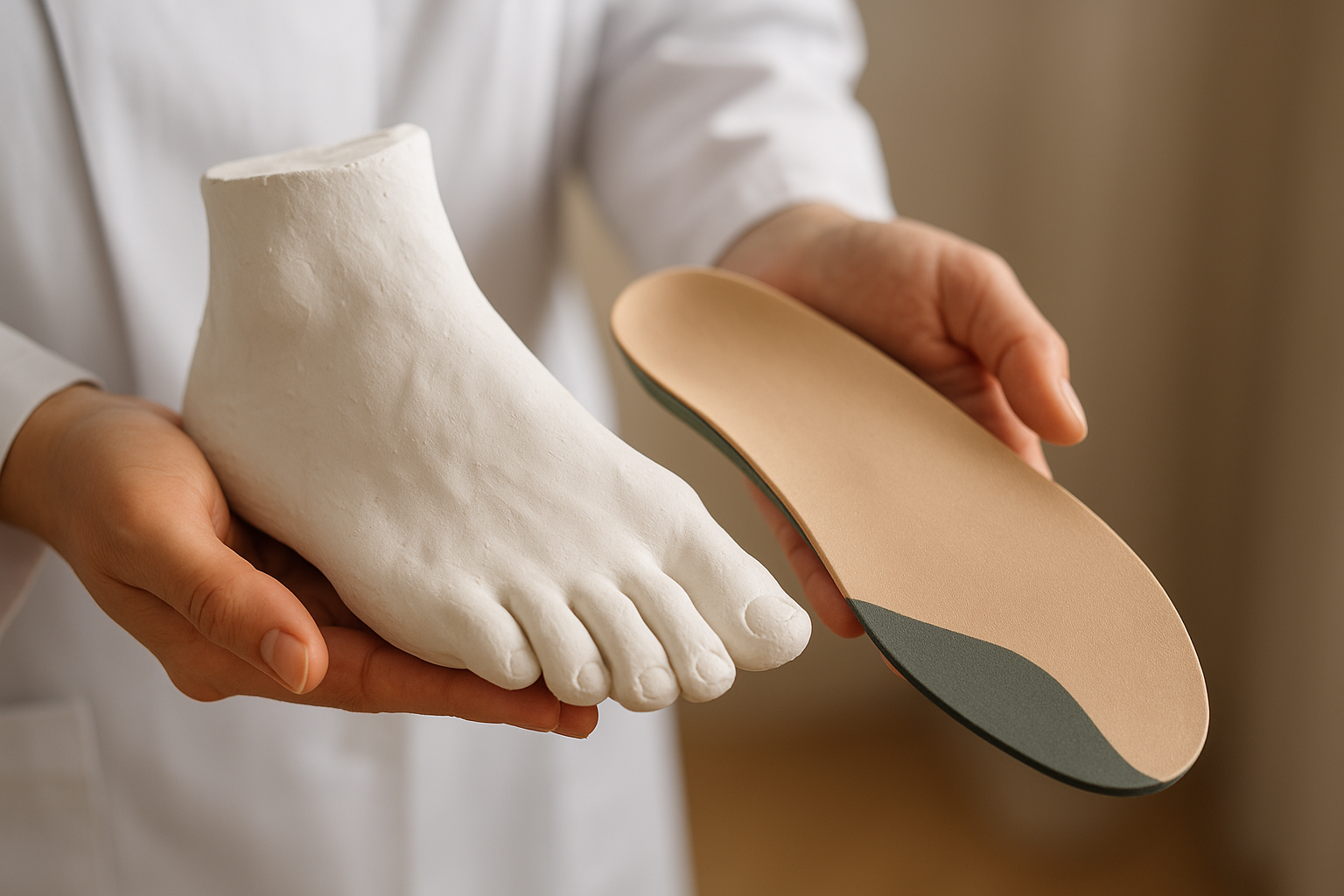
A precise foot mold is the foundation of every pair of personalized orthotic footbeds.
What Are Personalized Orthotic Footbeds?
In short, personalized orthotic footbeds are shoe inserts shaped around an individual's actual foot, rather than a generic template. A podiatrist typically starts by capturing a plaster mold, foam impression, or 3D scan of the patient's foot while it is held in a neutral, corrected position. From there, a lab fabricates the device to match precise measurements, arch contours, and pressure distribution.
Because the footbed is derived from real foot geometry, it can address specific issues like overpronation, high arches, or uneven weight-bearing. As a result, patients often experience more targeted relief than they would from a padded insole bought off a shelf. According to the Wikipedia overview of orthotics, custom devices are widely used in clinical podiatry precisely because they can be tailored to correct biomechanical faults rather than just pad the foot.
Why Custom-Fit Orthotic Inserts Outperform Generic Insoles
Generic insoles are manufactured in a handful of standard sizes meant to fit an "average" foot. However, few feet are truly average. Arch height, heel width, and toe alignment vary significantly from person to person, which means a mass-produced insole often misses the pressure points that actually cause pain.
In contrast, custom-fit orthotic inserts are built directly from a patient's own foot shape. Therefore, they can provide targeted support exactly where it is needed, whether that is under the metatarsal heads, along the medial arch, or around the heel cup. For a closer look at how mold accuracy affects outcomes, see this detailed comparison of how precise custom foot molds are compared to generic ones.
Research published through the National Library of Medicine has found that custom foot orthoses can meaningfully reduce pain scores in conditions like plantar fasciitis and patellofemoral pain, particularly when the device is individually fitted rather than prefabricated. This underscores why a precise mold matters more than a generic template.
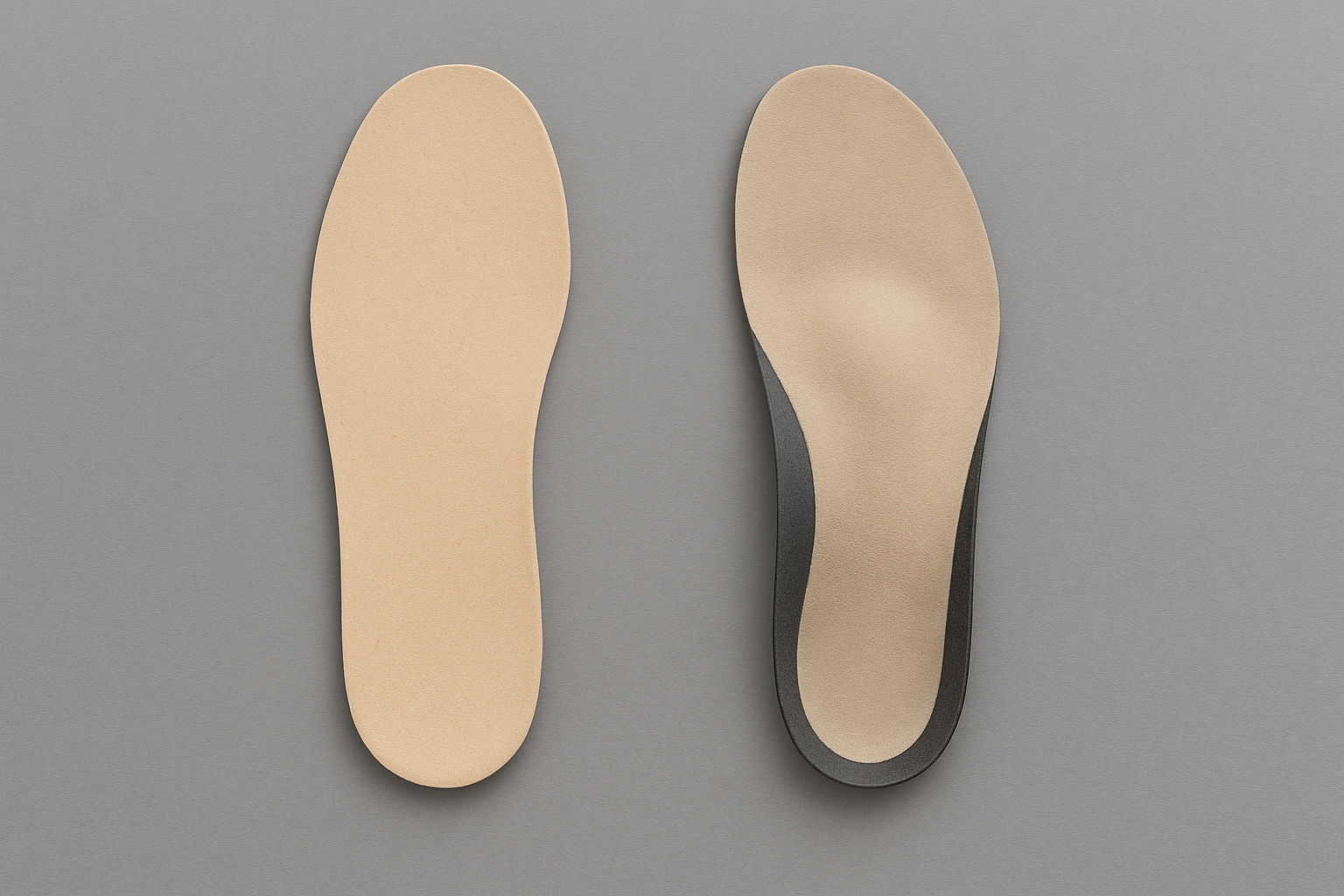
Personalized orthotic footbeds (right) contour to the arch, while generic insoles stay flat.
How Personalized Orthotic Footbeds Are Made, Step by Step
The fabrication process follows a fairly consistent sequence across most podiatry practices. Understanding each stage can help set expectations for anyone considering custom footbeds for the first time.
- Schedule a consultation. A podiatrist reviews symptoms, activity level, and footwear habits during a free phone or in-office visit.
- Capture a precise foot mold. The provider takes a plaster, foam, or digital scan of each foot in a corrected, neutral position.
- Analyze gait and biomechanics. Walking patterns and posture are reviewed to identify imbalances that need correction.
- Fabricate the footbed. A lab builds the device to the podiatrist's exact specifications using the chosen materials.
- Fit, test, and adjust. The finished orthotics are placed in the patient's shoes and fine-tuned until the fit feels comfortable.
Notably, this process is what distinguishes true personalized orthotic footbeds from kiosk-style "custom" insoles, which usually rely on a quick foot scan without any hands-on correction by a licensed provider.
Who Actually Needs Custom Orthotic Footbeds?
Not every foot problem requires a custom device, but several conditions respond particularly well to individualized correction. For example, people with flat feet often struggle with overpronation, which can strain the arch and ankle over time. Similarly, those with high arches may experience poor shock absorption and heel pain.
In addition, patients managing diabetes, arthritis, or plantar fasciitis frequently benefit from the pressure redistribution that a personalized footbed provides. Athletes and people who stand for long shifts at work also use custom orthotics to prevent overuse injuries. If you suspect flat feet are contributing to your discomfort, this guide on choosing the best custom orthotics for flat feet offers a deeper breakdown of options.
The American Podiatric Medical Association notes that foot pain affects a substantial share of adults at some point in their lives, which is one reason podiatrists routinely recommend a professional evaluation before assuming an over-the-counter insole will solve the problem.
Personalized Orthotic Footbeds vs. Off-the-Shelf Insoles: Key Differences
At first glance, both product types look similar sitting inside a shoe. However, the differences become clear once you examine how each is made and how long the relief actually lasts.
Off-the-shelf insoles are typically produced in bulk from a single mold size, then trimmed to fit a shoe size range. As a result, they offer general cushioning but little true correction. Personalized orthotic footbeds, on the other hand, are built entirely around one person's foot shape, so the arch support, heel cradle, and forefoot posting all match that individual's biomechanics.
Consequently, custom footbeds tend to last longer under regular use, since the materials and shape are matched to how a specific person walks and stands. For a closer look at what separates a professionally fabricated device from a mass-market one, this article on what makes custom orthotics unique covers the fabrication details in more depth.
What Do Personalized Orthotic Footbeds Cost?
Cost is often the first question patients ask, and understandably so. Custom orthotic footbeds generally cost more than drugstore insoles because they require a professional mold, individualized design, and skilled fabrication. That said, prices vary widely depending on the provider, materials, and whether insurance contributes to the cost.
Many patients find that the investment pays off over time, since a well-made pair can last three to five years with proper care, compared to the few months a generic insole might hold up. For patients looking to manage the cost without sacrificing quality, this resource on getting quality custom orthotics for less outlines practical ways to reduce out-of-pocket expenses. Similarly, checking directly with your insurance provider before ordering can clarify what portion, if any, is covered.
Choosing a Provider for Personalized Orthotic Footbeds
Above all, the provider matters just as much as the materials. A podiatrist-owned practice with hands-on fabrication experience can catch subtle biomechanical issues that a purely automated scanning kiosk might miss. Look for a provider who offers a direct consultation, whether by phone or in person, before any mold is taken.
For example, CustomOrthotics.com is a podiatrist-owned and operated practice with more than 20 years of experience and an A+ Better Business Bureau rating, offering both a complimentary consultation and an online ordering process for patients who cannot visit in person. You can browse available options directly through their custom orthotics collection to compare designs suited to different foot conditions.
Regardless of which provider you choose, it helps to ask how the mold is taken, how corrections are determined, and what the adjustment process looks like if the initial fit needs refinement.

Properly fitted footbeds allow for a more natural, pain-free stride.
Frequently Asked Questions About Personalized Orthotic Footbeds
What are personalized orthotic footbeds?
Personalized orthotic footbeds are shoe inserts custom-molded from an individual foot to correct alignment, cushion pressure points, and reduce pain. They differ from mass-produced insoles because a podiatrist designs each pair around the patient's own foot shape and biomechanics.
How do personalized orthotic footbeds differ from store-bought insoles?
Store-bought insoles are made in generic shapes meant to fit an average foot, while personalized orthotic footbeds are built from a direct mold of the patient's foot. As a result, custom footbeds provide more precise arch support and correction than off-the-shelf products.
How are personalized orthotic footbeds made?
A podiatrist evaluates gait and foot structure, takes a mold or scan of each foot, and sends specifications to a lab for fabrication. The finished orthotic is then fitted and adjusted to the patient's shoes and comfort level.
How long do personalized orthotic footbeds last?
Most personalized orthotic footbeds last between three and five years with regular use, depending on materials and activity level. Athletes or people on their feet all day may need replacements sooner due to faster wear.
How much do personalized orthotic footbeds cost?
Custom orthotic footbeds typically range from a few hundred dollars per pair, depending on materials and the level of correction needed. This is higher than drugstore insoles, but many patients find the longer lifespan and targeted relief worth the investment.
Can personalized orthotic footbeds help with plantar fasciitis?
Yes, personalized orthotic footbeds are commonly prescribed for plantar fasciitis because they support the arch and redistribute pressure away from the inflamed heel tissue. Many patients notice reduced morning heel pain after consistent use.
Are personalized orthotic footbeds covered by insurance?
Coverage varies by insurance plan and often depends on whether the orthotics are deemed medically necessary by a podiatrist. It is best to check with your provider and request documentation from your podiatrist before ordering.
Who benefits most from personalized orthotic footbeds?
People with flat feet, high arches, diabetes-related foot issues, plantar fasciitis, or chronic joint pain often benefit most. Athletes and individuals who stand for long hours also use custom footbeds to prevent injury.
What common mistakes do people make when choosing custom orthotics?
A common mistake is ordering generic "custom-fit" kiosk insoles instead of true podiatrist-designed personalized orthotic footbeds made from an actual mold. Another mistake is skipping the follow-up fitting appointment, which can lead to discomfort.
How long does it take to get personalized orthotic footbeds?
After the mold is taken, fabrication typically takes two to four weeks depending on the lab and design complexity. Some providers offer faster turnaround for standard corrections.
Do I need an in-person visit to get personalized orthotic footbeds?
Many practices offer an in-person mold appointment, though some now support remote ordering with an at-home impression kit reviewed by a podiatrist. A phone consultation can help determine which option fits your situation.
How should I care for personalized orthotic footbeds?
Wipe footbeds with a damp cloth, let them air dry away from direct heat, and avoid tossing them in a washing machine or dryer, since heat can warp the custom shape. Rotate them between shoes only if each pair was specifically fitted for that footwear.
Can personalized orthotic footbeds fit in any shoe?
Most personalized orthotic footbeds fit well in athletic shoes, work boots, and supportive everyday footwear, but they may not fit narrow dress shoes or thin sandals. It helps to bring a few pairs of shoes to the fitting appointment.
Final Thoughts on Personalized Orthotic Footbeds
Ultimately, personalized orthotic footbeds offer a level of precision that generic insoles simply cannot match, since they are built from an exact mold of each patient's feet and refined by a podiatrist to address specific biomechanical issues. Whether the goal is relieving plantar fasciitis, correcting flat feet, or supporting long hours on your feet at work, a properly fitted custom footbed can address the root cause of discomfort rather than masking it temporarily.
Before choosing a provider, it is worth scheduling a consultation, asking detailed questions about the molding process, and comparing options like those available through CustomOrthotics.com. With the right guidance, personalized orthotic footbeds can become a lasting, practical step toward healthier, pain-free feet.