

Custom orthotics designed by foot specialists provide a level of precision and comfort that generic insoles simply cannot replicate. Because every foot is shaped differently, a podiatrist-guided mold captures the exact contours, pressure points, and alignment needs unique to each patient. For anyone dealing with chronic heel pain, flat feet, or recurring joint strain, this specialist-driven approach often makes the difference between short-term relief and lasting correction. Consequently, patients who invest in professionally fabricated orthotics typically report better outcomes than those relying on mass-produced alternatives.
In short: Custom orthotics designed by foot specialists are built from an individual foot mold under a podiatrist's guidance, correcting the specific biomechanical issue causing pain rather than just cushioning the symptom.
What Are Custom Orthotics Designed by Foot Specialists?
Custom orthotics designed by foot specialists are medical-grade shoe inserts built from an individual mold of a patient's foot, rather than mass-produced in standard shoe sizes. A podiatrist or trained foot specialist evaluates gait, posture, and pressure distribution before fabricating a device tailored to that specific foot structure. This targeted process addresses the root cause of discomfort instead of simply masking it with extra padding.
According to the American Podiatric Medical Association, a large share of adults will experience a foot health problem at some point, and structural issues like overpronation or high arches are among the most common contributors. For a deeper look at the broader health impact of properly fitted inserts, this guide on how custom orthotics improve overall foot health is a helpful next read. In addition, the general concept is well documented on Wikipedia's overview of orthotics.
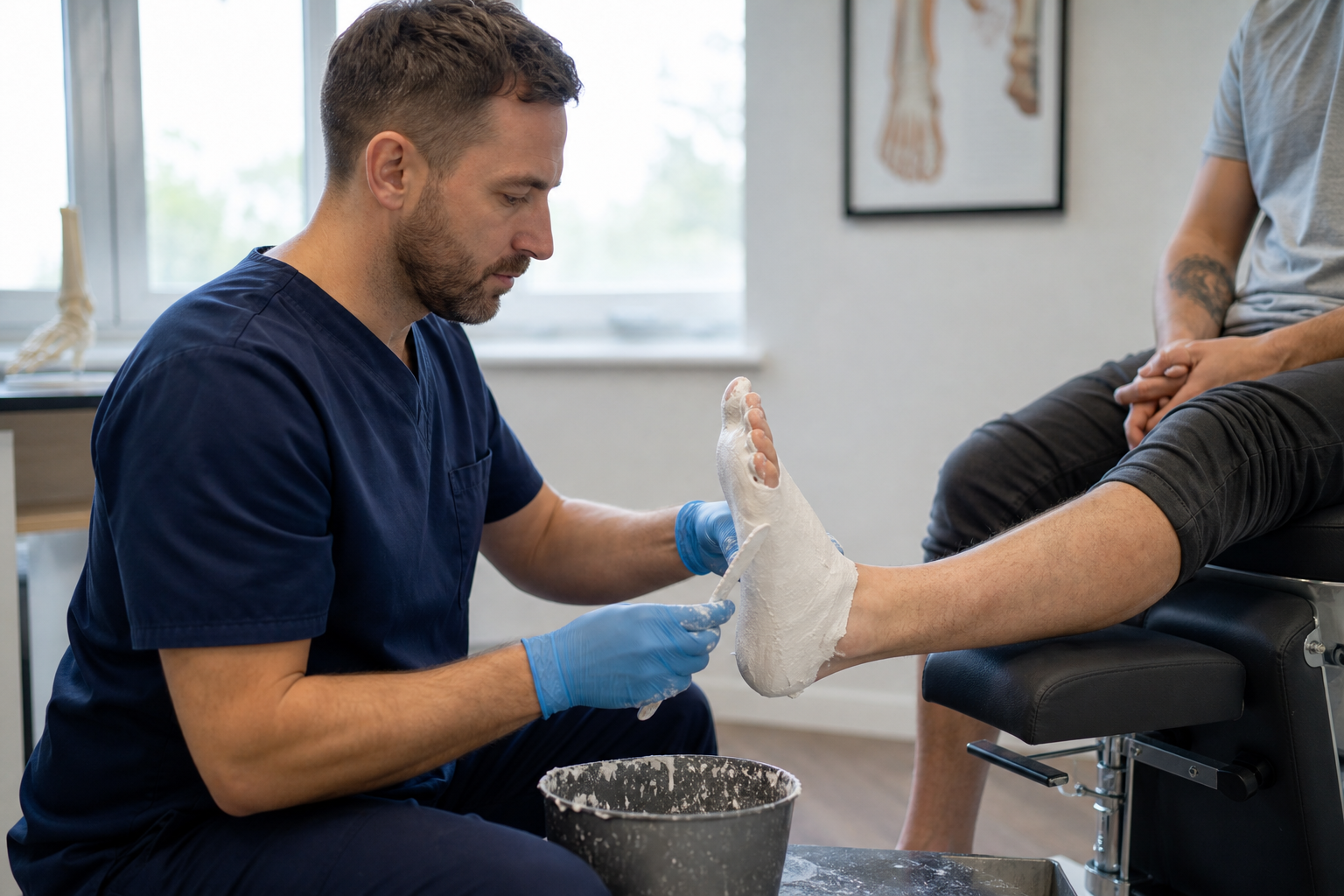
A specialist takes a precise foot mold, the first step toward custom orthotics designed by foot specialists.
Why Podiatrist-Crafted Orthotics Outperform Off-the-Shelf Insoles
Podiatrist-crafted orthotics are shaped around one person's actual foot structure, so they correct the exact imbalance causing pain. Store-bought insoles, on the other hand, are produced in a handful of generic sizes and shapes. As a result, they rarely match the arch height, heel angle, or pressure distribution of any individual foot precisely.
Furthermore, a specialist examines walking patterns, old injuries, and footwear habits before fabrication begins. This clinical insight is something a shelf product can never offer. For readers who want to understand the fabrication details further, the precision crafting process for pain relief breaks down each material choice and how it affects comfort.
| Feature | Custom Orthotics | Off-the-Shelf Insoles |
|---|---|---|
| Fit | Molded to one foot | Generic sizing |
| Clinical Assessment | Included with a podiatrist | None |
| Durability | 2 to 5 years | A few months |
How Custom Foot Orthotics Are Made: A Step-by-Step Look
Understanding the fabrication process helps explain why specialist-made devices cost more than generic inserts. In particular, each stage below involves hands-on clinical judgment rather than an automated production line.
- Free Consultation and Gait Assessment: A podiatrist reviews symptoms, footwear habits, and medical history, then observes walking patterns to identify the imbalance that needs correcting.
- Custom Foot Mold or Impression: The specialist takes a detailed impression of each foot while holding it in its proper corrected position to capture an accurate structural map. This step is covered in more detail in the individual foot molding guide.
- Lab Fabrication by Orthotic Technicians: Skilled technicians shape a rigid or semi-rigid device from medical-grade materials, building in the specific corrections the podiatrist prescribed.
- Fitting, Break-In, and Adjustment: The patient tests the finished orthotics inside their own shoes while the specialist checks fit, comfort, and pressure distribution, making small adjustments as needed.
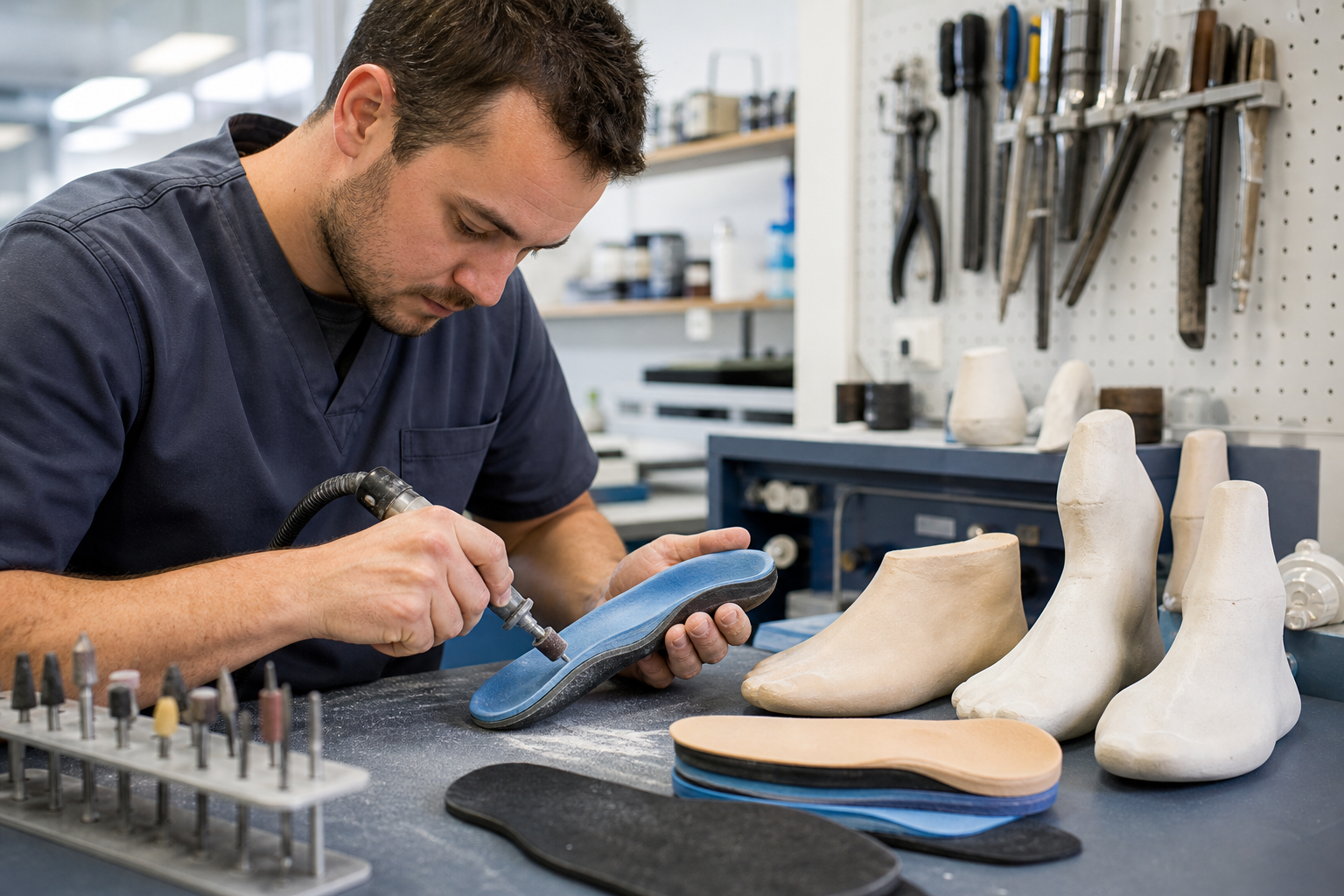
Skilled technicians shape each insert by hand after the mold is complete.
Which Foot Conditions Benefit From Specialist-Designed Orthotics?
Specialist-designed orthotics are prescribed for a wide range of conditions, not just general foot fatigue. For example, plantar fasciitis, one of the most common causes of heel pain, often responds well because the device redistributes pressure away from the inflamed arch tissue.
Similarly, flat feet, bunions, and diabetic foot complications each call for a slightly different corrective shape. In contrast, a generic insole treats every foot the same way, regardless of the underlying issue. Patients with chronic overpronation, uneven leg length, or post-surgical recovery needs also tend to see meaningful improvement once their device is molded specifically for them.
What to Expect From Your Free Consultation
Most practices, including those offering podiatrist-led care, begin with a complimentary phone consultation. During this call, the podiatrist asks about symptoms, daily activity levels, and footwear, then explains whether an in-office mold or an at-home impression kit makes more sense.
Patients can browse available options on the full catalog of custom orthotic products before their call, which helps them ask more informed questions. Those ready to begin can also visit customorthotics.com directly to request a consultation or place an order online.

Many patients notice steadier, more comfortable steps once their orthotics are fitted.
Frequently Asked Questions About Custom Orthotics Designed by Foot Specialists
What are custom orthotics designed by foot specialists?
Custom orthotics designed by foot specialists are shoe inserts built from an individual mold of a patient's foot rather than mass-produced in standard sizes. A podiatrist assesses gait and pressure points, then a technician fabricates the device to correct that specific foot's structural needs.
How long does it take to get custom orthotics made?
Most custom orthotics take between two and four weeks from mold to delivery, depending on the lab's workload. Rush options are sometimes available for patients with urgent mobility needs.
Why are podiatrist-crafted orthotics better than drugstore insoles?
Podiatrist-crafted orthotics are molded to an individual foot, so they correct the exact alignment issue causing pain. Drugstore insoles only add generic cushioning and cannot address structural imbalances like overpronation or fallen arches.
How much do custom orthotics cost?
Custom orthotics typically range from a few hundred dollars per pair, depending on materials and the complexity of the correction needed. Many practices offer a free consultation first so patients understand the investment before committing.
Can custom orthotics help with plantar fasciitis?
Yes, custom orthotics are one of the most commonly recommended treatments for plantar fasciitis because they redistribute pressure away from the inflamed arch tissue. Many patients notice reduced heel pain within a few weeks of consistent use.
What is the difference between custom orthotics and orthopedic insoles?
Orthopedic insoles are pre-made in a range of sizes and shapes, while custom orthotics are built from a mold of one person's foot. As a result, custom devices fit more precisely and target specific biomechanical issues rather than general comfort.
How long do custom orthotics last?
Well-made custom orthotics generally last between two and five years with regular use, depending on the materials and how often they are worn. Signs of wear, such as flattened cushioning or visible cracking, indicate it is time for a new pair.
What common mistakes do people make when choosing orthotics?
A frequent mistake is buying generic insoles online without any professional assessment of foot structure or gait. This often masks symptoms temporarily instead of correcting the underlying cause, leading to recurring pain.
Do I need to see a specialist in person to get custom orthotics?
Many practices offer an in-office mold along with remote ordering options that include an at-home impression kit. A phone consultation with a podiatrist beforehand still helps confirm the right type of device for each condition.
What foot conditions benefit most from specialist-designed orthotics?
Specialist-designed orthotics commonly help with plantar fasciitis, flat feet, bunions, diabetic foot complications, and chronic overpronation. Each condition responds to a slightly different corrective shape, which is why individual molding matters.
Final Thoughts
In summary, custom orthotics designed by foot specialists offer a level of precision that generic insoles cannot match, because every device is built from an individual mold under direct podiatrist guidance. Whether the goal is relieving plantar fasciitis, correcting flat feet, or simply walking more comfortably through the day, a specialist-led fitting process addresses the root cause rather than just the symptom. For readers ready to take the next step, learn more at the National Institute on Aging's foot care resource, or reach out directly through customorthotics.com to arrange a complimentary consultation and begin the molding process.
