

Full length orthotics are podiatrist-prescribed or prefabricated insole devices that span every millimeter of the foot — from the back of the heel to the tips of the toes. By supporting the entire plantar surface, they redistribute pressure, correct biomechanical faults, and cushion every zone of the foot simultaneously. For the millions of people dealing with chronic foot pain, structural imbalances, or activity-related injuries, full length orthotics are among the most effective and evidence-backed solutions available without surgery.
According to the American Podiatric Medical Association, approximately 77% of Americans experience significant foot pain at some point in their lives. Research published in the Journal of Foot and Ankle Research found that custom orthotic devices reduced pain scores by up to 50% in patients with plantar fasciitis. The right foot support is not a luxury — it is a clinical priority.
This guide covers everything you need to know about full length orthotics: how they work, who needs them, how they compare to alternatives, what they are made of, how to get them, and exactly what separates a high-quality custom device from a generic drugstore insert. For a deeper walkthrough, see our How Do I Get a Custom Made Insole? Complete Step-by-Step Guide.
What Are Full Length Orthotics and How Do They Work?
Full length orthotics are orthopedic insole devices that run the complete length of the shoe — from the heel cup all the way to the toe. Unlike ¾-length or heel-only insoles, they make contact with and support every region of the foot: the rearfoot, midfoot arch, and forefoot simultaneously. This whole-foot engagement is what makes them uniquely effective for conditions that involve multiple zones of the foot at once.
The mechanism of action involves three interconnected functions:
- Pressure redistribution: By spreading load across a larger surface area, they eliminate the high-pressure focal points responsible for pain, calluses, and tissue breakdown.
- Biomechanical correction: A strategically shaped arch and heel cup guides the foot into its optimal alignment during each phase of the gait cycle — heel strike, midstance, and toe-off.
- Kinetic chain realignment: Because the foot is the base of the body's entire weight-bearing chain, correcting its alignment influences the ankle, knee, hip, and lumbar spine above it.
The human foot is a marvel of structural complexity — 26 bones, 33 joints, and more than 100 muscles, tendons, and ligaments all working in concert. When any element of that system is misaligned or overloaded, the dysfunction travels upward. Full length orthotics interrupt that chain reaction at its source.
Custom versions are fabricated directly from individual three-dimensional molds of each patient's feet, ensuring that every contour, structural deviation, and pressure point is accounted for. This precision is something a mass-produced, off-the-shelf insert cannot replicate — and the clinical difference is significant.
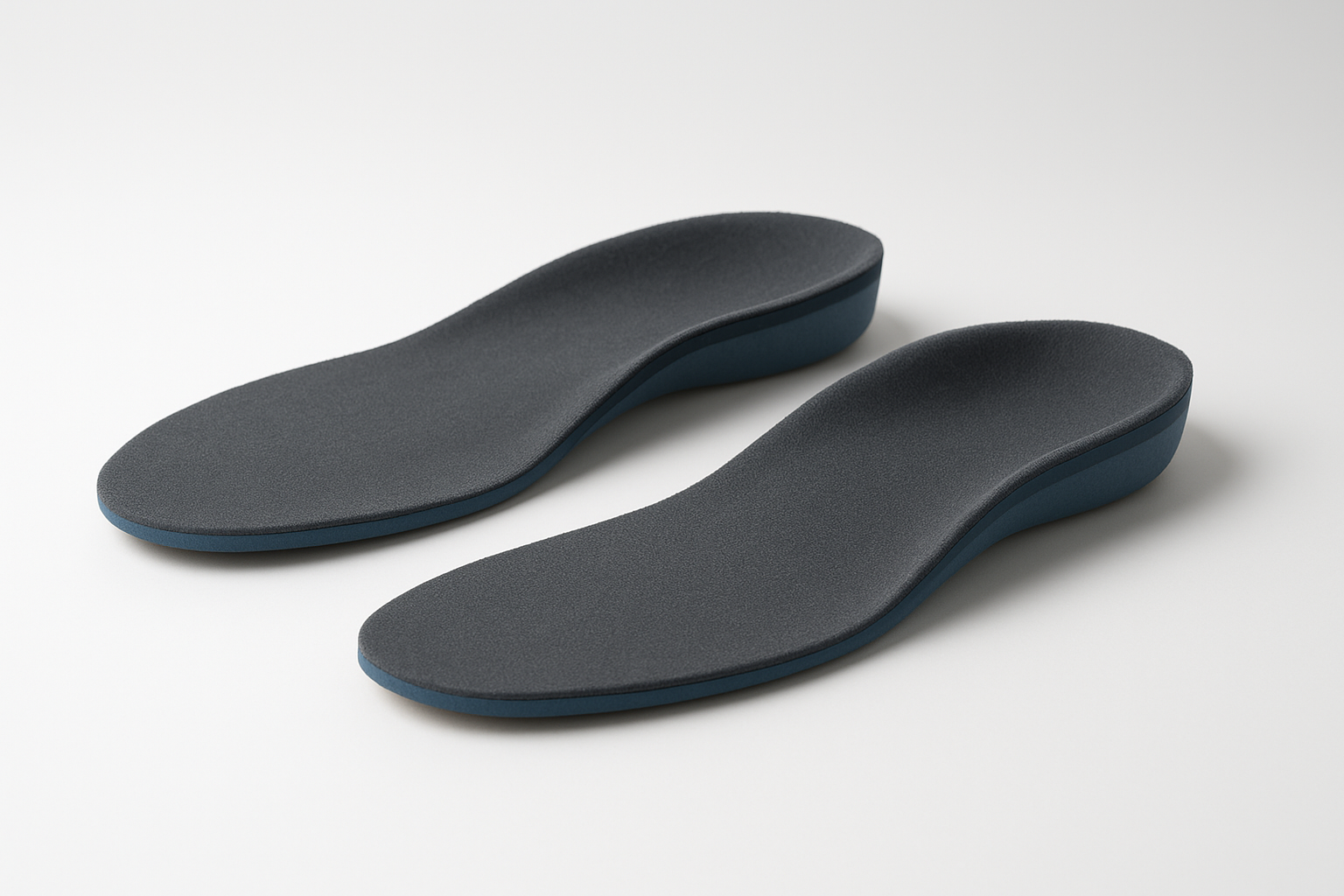
Custom full length orthotics are molded to the precise contours of each individual foot, providing targeted support from heel to toe.
Full Length Orthotics vs. ¾ Length Orthotics vs. Heel Cups: A Complete Comparison
Choosing the right orthotic format is as important as choosing between custom and prefabricated. The three most common styles — full length, ¾ length, and heel cups — each serve different clinical needs, footwear situations, and patient profiles.
Full Length Orthotics
Full length orthotics are the most comprehensive option. They support the heel, arch, and forefoot, making them the preferred choice when:
- Forefoot pain (metatarsalgia, ball-of-foot pressure) is present alongside heel or arch symptoms
- Maximum, even pressure distribution across the entire plantar surface is the treatment goal
- Wearing athletic shoes, work boots, or casual lace-up footwear with ample toe box space
- The patient has multiple foot zones affected simultaneously
¾ Length Orthotics
¾ length orthotics end just before the toe box and are typically chosen when:
- Dress shoes or fashion footwear with limited toe box depth is involved
- Forefoot pain is absent and only heel and arch support is needed
- A more discreet, lower-profile insert is preferred
Heel Cups and Heel-Only Inserts
Heel cups address rearfoot pain in isolation — typically calcaneal (heel) stress fractures, plantar fasciitis limited to the heel insertion, or Sever's disease in children. They provide no arch or forefoot support and are not a substitute for full length orthotics when multiple foot regions are involved.
What Is a Heel Post and When Is It Added?
Both full length and ¾ length orthotics can be manufactured with or without a heel post — a wedge-shaped extension built into the rearfoot section of the device. A full length orthotic with heel post provides additional rearfoot varus or valgus correction, tilting the heel into a more neutral alignment. This is typically prescribed for patients with more pronounced overpronation, supination, or rearfoot instability. Similarly, a ¾ length orthotic with heel post delivers the same rearfoot control in a more compact profile for narrower footwear.
Quick Reference: Which Orthotic Style Do You Need?
- Heel + arch + forefoot pain → Full length orthotics
- Heel + arch pain only, dress shoes → ¾ length orthotics
- Overpronation or supination → Add a heel post to either style
- Heel pain only → Heel cup (but consider full length for long-term management)
Key Benefits of Full Length Orthotic Insoles
The clinical and functional advantages of full length orthotics go considerably beyond simple cushioning. Because they engage the entire plantar surface — heel, arch, and forefoot together — they address a wider range of conditions and deliver benefits that partial-length alternatives cannot match:
- Whole-foot pressure redistribution: Eliminates hot spots, reduces callus formation, and protects vulnerable soft tissues by spreading load uniformly across every plantar zone.
- Forefoot pain relief: Extends support into the metatarsal heads where shorter insoles leave off, making them essential for metatarsalgia, Morton's neuroma, and ball-of-foot discomfort.
- Arch support and fatigue reduction: Maintains the medial longitudinal arch in its natural position, reducing the muscular effort required with every step and decreasing fatigue significantly during prolonged standing or walking.
- Heel stabilization: A deep heel cup prevents excessive rearfoot motion — both pronation and supination — reducing the cumulative stress on tendons, ligaments, and joints with each step.
- Improved gait mechanics and posture: Correcting foot alignment sends a ripple effect upward through the kinetic chain, improving knee tracking, reducing hip rotation, and alleviating lumbar strain.
- Injury prevention for athletes: By controlling excessive motion and absorbing impact forces, full length orthotics reduce the risk of overuse injuries including shin splints, IT band syndrome, and stress fractures.
- Reduced reliance on pain medication: Many patients with chronic foot and lower limb pain report reduced or eliminated use of NSAIDs and other analgesics after consistent use of properly fitted orthotics.
- Diabetic foot protection: Pressure redistribution is critically important for people with diabetes, where localized pressure and poor circulation can lead to ulceration and serious tissue damage.
Furthermore, older adults experiencing age-related fat pad atrophy under the heel and metatarsal heads find that full length orthotics restore much of the shock absorption their feet have naturally lost over time — without the need for surgical intervention.
Who Should Wear Full Length Orthotics? Conditions and Candidates
Full length orthotics are not a one-size-fits-all recommendation, but a wide range of specific conditions respond exceptionally well to this format of orthotic support. Below is a detailed breakdown of the primary candidates:
Plantar Fasciitis
The most common cause of heel pain in adults, plantar fasciitis results from inflammation of the thick band of connective tissue running along the bottom of the foot. Full length orthotics address this condition from multiple angles: the heel cup absorbs impact at the site of maximum pain, the arch support reduces tension on the fascia throughout its length, and the forefoot coverage prevents compensatory loading patterns that worsen the injury.
Flat Feet (Pes Planus)
Collapsed arches place chronic strain on the plantar fascia, posterior tibial tendon, and medial ankle structures. Full length orthotics with medial arch support physically lift and maintain the arch in its correct anatomical position, preventing the tendon elongation and joint stress that leads to progressive flatfoot deformity and associated knee and hip problems.
High Arches (Pes Cavus)
Rigid high-arched feet have a reduced contact surface area and absorb shock poorly, leading to metatarsalgia, lateral ankle instability, and stress fractures. Full length orthotics bridge the natural gap between the arch and the ground, distributing impact across a larger surface area and providing the cushioning that a high-arched foot cannot generate on its own.
Overpronation and Supination
Abnormal rearfoot motion during the gait cycle — whether excessive inward rolling (overpronation) or outward rolling (supination) — places asymmetrical stress on the knees, hips, and lower back over time. Full length orthotics with or without a heel post guide the rearfoot into a neutral alignment, breaking the damaging motion pattern that drives overuse injuries in these patients.
Metatarsalgia and Ball-of-Foot Pain
Pain and inflammation at the metatarsal heads is where full length orthotics have a decisive advantage over shorter insoles. A metatarsal pad or forefoot cushion built into the full-length device offloads the painful metatarsal heads directly — something a ¾ length or heel-only insert is physically incapable of achieving.
Diabetic Foot Complications
Peripheral neuropathy reduces sensation in the diabetic foot, making pressure points and friction the unseen causes of serious ulceration and infection. Full length orthotics with total contact design and specialized top covers (such as Plastazote foam) are often a cornerstone of diabetic foot management, distributing pressure so evenly that no single area reaches tissue-damaging thresholds.
Athletes and High-Activity Individuals
Running, jumping, and lateral movement multiply the forces transmitted through the foot by three to seven times body weight. For athletes, the combination of impact absorption, motion control, and biomechanical correction that full length orthotics provide is not just therapeutic — it is performance-protective. Conditions including shin splints, IT band syndrome, Achilles tendinopathy, and stress fractures are all significantly influenced by foot mechanics.
People Who Stand for Extended Periods
Healthcare workers, teachers, retail employees, and tradespeople who spend six or more hours per day on their feet experience cumulative loading that full length orthotics are specifically well-suited to manage. The reduction in muscular fatigue and joint stress is often immediately noticeable, with many patients reporting dramatically less end-of-day foot and leg pain.
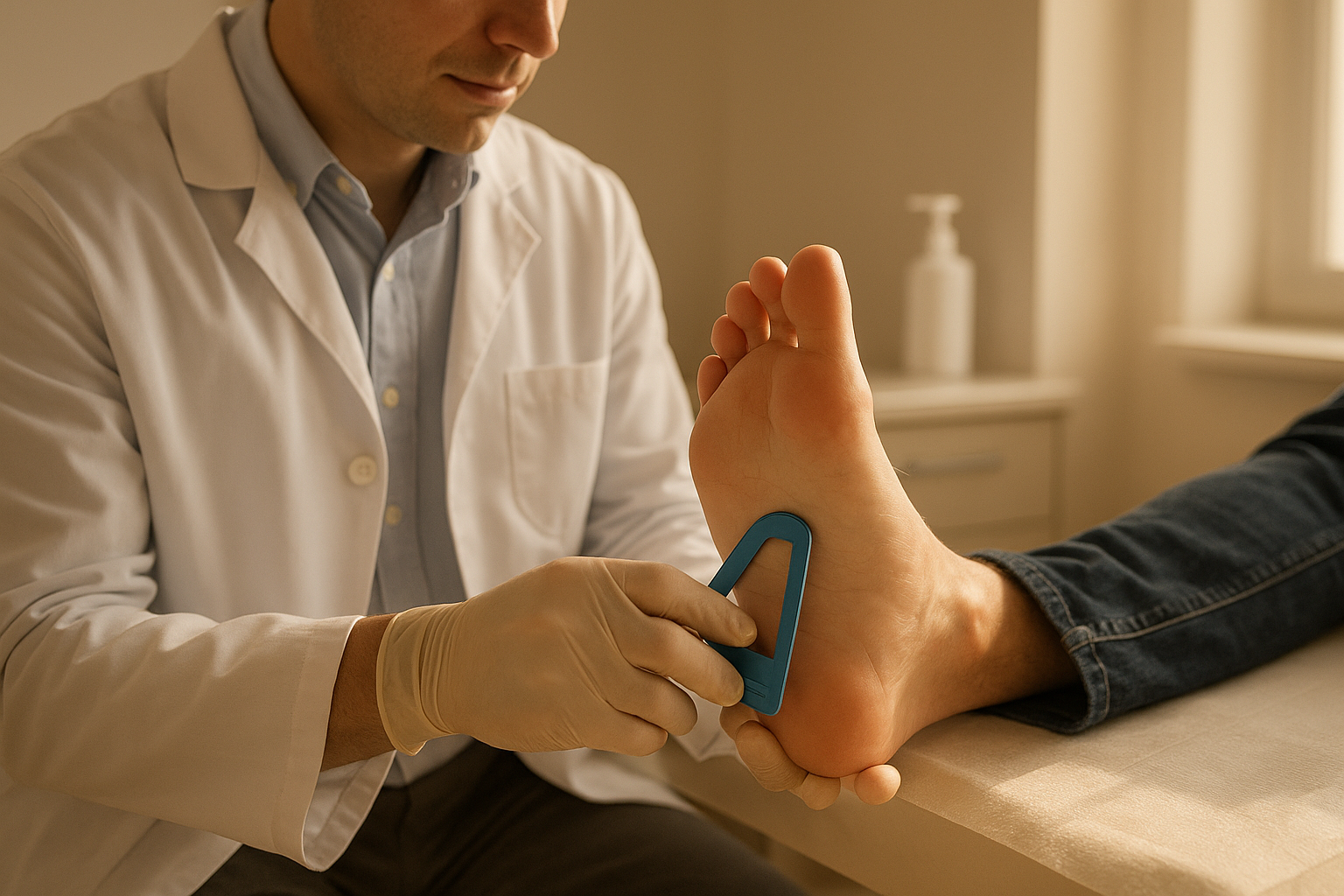
A thorough podiatric foot assessment identifies the structural patterns that determine whether full length orthotics, a posted variation, or an alternative design will deliver the best outcome.
Custom vs. Prefabricated Full Length Orthotics: The Real Difference
The orthotic market is flooded with prefabricated, over-the-counter insoles marketed with impressive-sounding terms. Understanding the genuine differences between these and true custom full length orthotics is essential for making an informed decision.
Prefabricated (Over-the-Counter) Orthotics
Prefabricated orthotics are manufactured in standardized sizes to approximate average foot geometry. Their advantages are immediate availability and low upfront cost. However, they carry significant limitations:
- Designed around a statistical average, not your specific foot shape or pathology
- Cannot correct individual structural deviations such as asymmetrical arch height, tibial torsion, or leg length discrepancy
- Made from lower-grade materials that compress and lose effectiveness within two to six months of regular use
- May provide temporary symptomatic relief without addressing the underlying biomechanical cause
Custom Full Length Orthotics
Custom full length orthotics are fabricated from a three-dimensional model of your individual foot — typically a plaster cast, foam impression, or digital scan — combined with a clinical biomechanical assessment. Every contour, deviation, and pressure point specific to your anatomy is captured and replicated in the device. This results in:
- Precise correction of your specific structural problems, not a generic approximation
- Materials selected specifically for your body weight, activity level, and footwear type
- A lifespan of two to five years with proper care — far exceeding prefabricated alternatives
- Documented clinical superiority for conditions like plantar fasciitis in long-term outcomes research
A systematic review published in the Journal of Foot and Ankle Research confirmed that custom orthotics demonstrate superior long-term pain reduction outcomes compared to prefabricated devices for plantar fasciitis patients. When the cost is amortized over their two-to-five-year lifespan, custom orthotics frequently prove to be the more economical choice.
Custom vs. Prefabricated: At a Glance
| Feature | Custom Full Length | Prefabricated |
|---|---|---|
| Fit precision | Individual mold | Average size |
| Lifespan | 2–5 years | 2–6 months |
| Condition-specific correction | Yes | Limited |
| Material customization | Yes | No |
| Long-term cost efficiency | Higher | Lower upfront |
Materials and Construction: What Makes a Quality Full Length Orthotic
The therapeutic effectiveness of full length orthotics is inseparable from the materials used to construct them. Quality custom orthotics typically consist of two primary components — a structural shell and a top cover — each serving a distinct clinical function.
Structural Shell Materials
The shell provides the corrective architecture of the device. Common materials include:
- Polypropylene: The most widely used orthotic shell material. Rigid enough to control motion and correct alignment, but thin enough to fit within most standard footwear. Thickness and flexibility are adjusted based on patient weight and activity demands.
- Carbon fiber composites: Extremely thin and lightweight with high tensile strength, making them the preferred choice for high-performance athletic orthotics where weight and bulk are critical considerations.
- Semi-rigid thermoplastics: Used when a balance between corrective control and flexibility is needed — common in pediatric orthotics and for patients with arthritis who cannot tolerate rigid correction.
- Soft foam shells (e.g., Plastazote): Used in diabetic and accommodative orthotics where pressure reduction and cushioning take priority over motion control.
Top Cover Materials
The top cover is the surface in direct contact with the foot. It contributes to comfort, shock absorption, and moisture management:
- EVA foam: A closed-cell foam offering excellent cushioning and shock absorption at a low weight. Available in varying densities to match required firmness.
- Poron (polyurethane foam): Higher durability than EVA, with superior energy return and compression resistance — particularly valued for high-use athletic applications.
- Leather: A breathable, traditional top cover material that molds slightly to the foot over time and resists moisture effectively in dress footwear applications.
- Microfiber and suede: Smooth, low-friction covers that reduce hotspots and rubbing, commonly used when blistering or skin sensitivity is a concern.
According to the National Institutes of Health, material selection in orthotic fabrication significantly influences both patient compliance and clinical outcomes. An orthotic made from the wrong materials for a patient's weight or activity level will fail prematurely or fail to deliver the intended biomechanical correction — which is precisely why material selection must be guided by clinical expertise rather than manufacturer defaults.
At customorthotics.com, material selection for every pair of full length orthotics is matched specifically to the patient's body weight, activity level, footwear type, and clinical diagnosis. A marathon runner's orthotic is constructed very differently from a diabetic patient's — and that distinction is the foundation of effective orthotic therapy.
What to Expect: Break-In Period, Fit, and Long-Term Care
Understanding what to expect when you first start wearing full length orthotics sets realistic expectations and significantly improves outcomes. Many patients are surprised to learn that even well-made, precisely fitted orthotics require a structured break-in period.
The Break-In Period
Your muscles, joints, and connective tissues have adapted — sometimes over years — to compensatory movement patterns driven by faulty foot mechanics. Orthotics correct those patterns, which means your musculoskeletal system needs time to recalibrate. The recommended approach:
- Week 1: Wear for 1–2 hours per day in your most supportive footwear (athletic shoes or work boots are ideal)
- Week 2: Gradually increase to 4–6 hours per day
- Weeks 3–4: Full daily use in all appropriate footwear
Mild muscle aching during the break-in period is normal. Sharp pain, blistering, or persistent discomfort after two weeks warrants a call to the prescribing podiatrist for an adjustment evaluation.
Footwear Compatibility
Full length orthotics are best suited to shoes with removable insoles and a sufficiently roomy toe box. Ideal footwear categories include:
- Athletic running and training shoes
- Work boots and safety footwear
- Casual lace-up shoes and sneakers
- Wide-toe box walking shoes
For dress shoes, narrow fashion footwear, or high heels, a ¾ length orthotic (with or without heel post) is the more practical solution. Always remove the manufacturer's existing insole before inserting orthotics, as stacking them reduces effectiveness and creates fit issues.
Caring for Your Full Length Orthotics
Proper maintenance extends the life of your orthotics and preserves their clinical effectiveness:
- Allow orthotics to air dry completely if they become damp — never use direct heat sources such as dryers or radiators
- Clean the top cover periodically with a damp cloth and mild soap
- Inspect the top cover quarterly for signs of compression or wear; covers can often be replaced without replacing the entire shell
- Replace custom full length orthotics every 2–5 years depending on activity level and material wear
- If your symptoms return or new pain develops, schedule a reassessment — your foot structure can change over time
How to Get Custom Full Length Orthotics: A Step-by-Step Guide
Getting properly fitted custom full length orthotics through customorthotics.com is a straightforward process whether you are local or ordering remotely — and the process is backed by over 20 years of podiatric expertise and an A+ Better Business Bureau rating.
- Assess your symptoms and foot health history: Document the specific location and character of your foot pain, note any diagnosed conditions (plantar fasciitis, flat feet, overpronation), and identify which footwear you primarily need orthotic support in. The more detail you can provide, the more precisely your orthotics can be designed.
- Schedule a complimentary phone consultation: Contact the podiatrist-owned team at customorthotics.com by phone or through the online platform. During this consultation, the podiatrist will review your symptoms, ask about your lifestyle and footwear, and determine the most appropriate orthotic design for your needs — including whether a heel post is indicated.
- Complete and submit your foot molds: You will receive a home molding kit with detailed instructions for capturing accurate impressions of both feet. These molds form the precise three-dimensional template from which your orthotics are fabricated — capturing every unique contour of your individual foot anatomy.
- Receive your custom full length orthotics and begin the break-in process: Once fabricated and delivered, begin wearing your orthotics for 1–2 hours per day in your primary footwear. Increase daily wear time gradually over 2–4 weeks to allow your muscles and joints to adapt to the corrected alignment pattern.
- Monitor your progress and follow up as needed: Track changes in your pain levels, activity tolerance, and mobility over the first 4–8 weeks of consistent wear. If any discomfort persists or adjustments appear necessary, contact the team directly — refinements and modifications are part of the service.
For a complete overview of all available orthotic styles and formats, visit the full orthotic collection online.
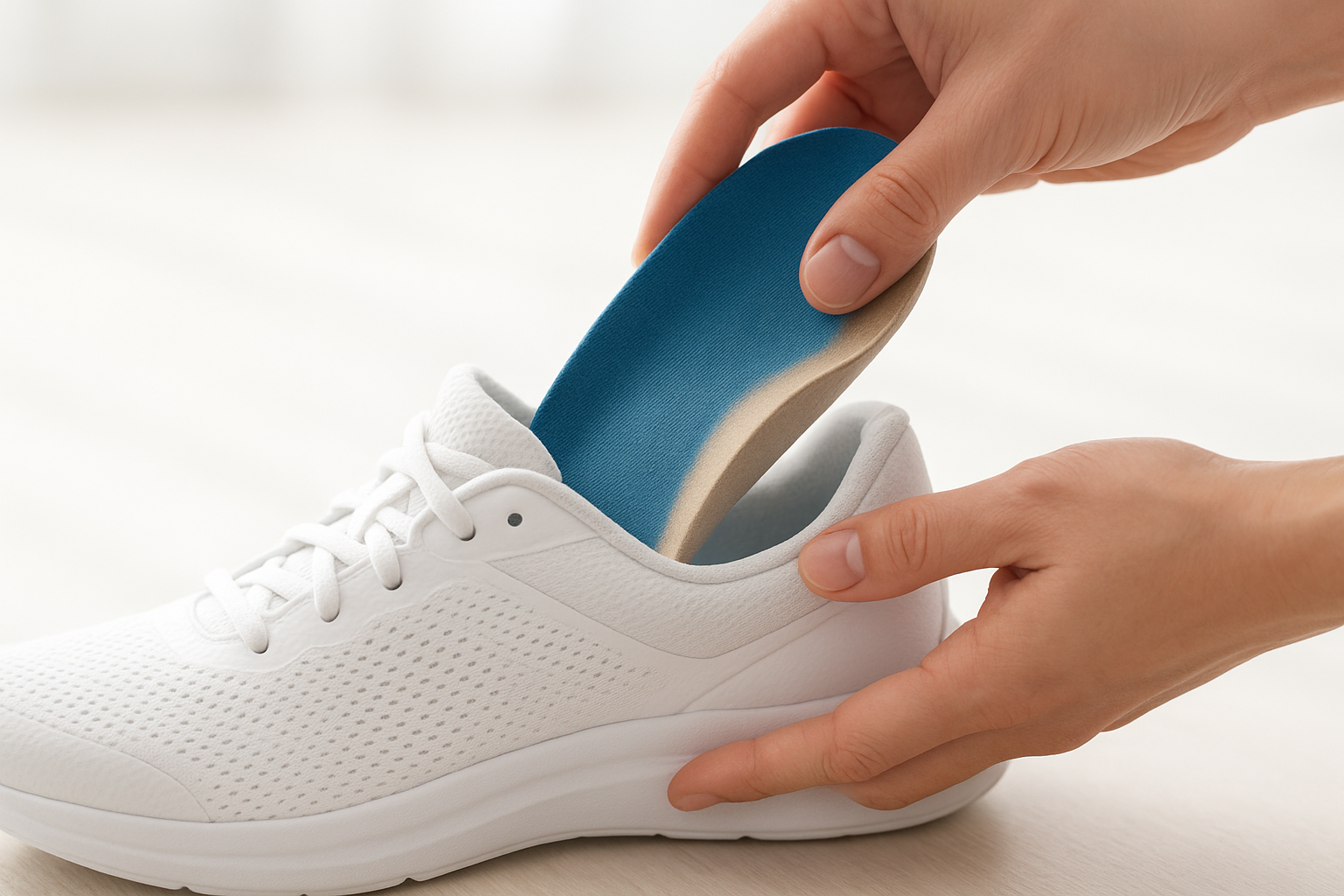
Placing full length orthotics into supportive athletic footwear maximizes their biomechanical effectiveness and comfort throughout the day.
Full Length Orthotics for the Whole Body: Beyond the Feet
One of the most underappreciated aspects of full length orthotics is how far their benefits extend beyond the foot itself. The foot is the structural foundation for the entire weight-bearing kinetic chain — and dysfunction at the base invariably propagates upward.
Knee Pain and Full Length Orthotics
Overpronation causes the tibia to rotate internally with each step, altering the tracking of the kneecap (patella) and increasing stress on the medial knee compartment. This mechanism directly contributes to patellofemoral pain syndrome, medial knee arthritis, and IT band syndrome. By correcting rearfoot alignment, full length orthotics reduce this tibial rotation and its downstream effect on knee loading patterns — a connection supported by multiple peer-reviewed biomechanical studies.
Hip Pain and Gait Asymmetry
Leg length discrepancies — even subtle ones of 3–5mm — and asymmetrical foot mechanics create uneven loading across the hip joints. Over years, this asymmetrical stress accelerates hip joint degeneration on the overloaded side. Full length orthotics can incorporate heel lifts or asymmetrical posting to equalize leg length and redistribute hip loading more evenly.
Lower Back Pain and Lumbar Alignment
Pelvic tilt and lumbar rotation patterns are directly influenced by foot mechanics. Patients with chronic low back pain who also demonstrate significant overpronation frequently report measurable reductions in lumbar pain symptoms after consistent orthotic use — particularly when full length orthotics are combined with targeted core and gluteal strengthening.
Frequently Asked Questions About Full Length Orthotics
What are full length orthotics?
Full length orthotics are orthopedic insole devices that run the entire length of the foot from heel to toe. They provide arch support, pressure redistribution, heel stabilization, and forefoot cushioning across every zone of the foot simultaneously — making them the most comprehensive orthotic format available.
How do full length orthotics differ from ¾ length orthotics?
Full length orthotics extend from the heel to the tips of the toes, supporting the forefoot and metatarsal heads. ¾ length orthotics stop before the toe box and are primarily used when dress or fashion footwear makes a full-length device impractical, or when forefoot symptoms are absent. Full length orthotics are the superior choice when metatarsalgia or ball-of-foot pain is present.
Who benefits most from wearing full length orthotics?
People with plantar fasciitis, flat feet, high arches, overpronation, supination, metatarsalgia, or diabetic foot complications benefit most. Athletes, people who stand for prolonged periods, and older adults experiencing fat pad atrophy are also strong candidates for full length orthotic support.
Are custom full length orthotics better than over-the-counter insoles?
Yes, significantly. Custom full length orthotics are fabricated from individual three-dimensional molds of your feet, meaning every correction addresses your specific structural profile. Over-the-counter insoles are built around statistical averages and cannot correct individual biomechanical deviations. Research in the Journal of Foot and Ankle Research confirms that custom orthotics outperform prefabricated alternatives in long-term outcomes for plantar fasciitis.
How long do full length orthotics typically last?
With proper care, custom full length orthotics typically last two to five years. The shell often outlasts the top cover, which can be replaced independently. Prefabricated orthotics, by contrast, typically compress and lose effectiveness within two to six months of regular use.
Can full length orthotics help with knee, hip, or back pain?
Yes. Correcting foot alignment with full length orthotics reduces the faulty tibial rotation, pelvic tilt, and gait asymmetry patterns that transmit excessive stress to the knees, hips, and lumbar spine. Many patients report significant improvement in knee and lower back pain after consistent orthotic use — particularly those with overpronation as a contributing factor.
What is a heel-posted full length orthotic and when is it prescribed?
A heel-posted full length orthotic includes a wedge-shaped extension built into the rearfoot of the device to tilt the heel into a more neutral alignment. This varus or valgus correction is prescribed for patients with more pronounced overpronation or supination where standard arch support alone is insufficient to control rearfoot motion.
How do I get custom full length orthotics made?
You can order custom full length orthotics through customorthotics.com by completing a complimentary phone consultation, submitting home foot molds using the supplied kit, and receiving your finished orthotics by mail. The process is designed to be accessible whether you are a local patient or ordering from across the country.
Do full length orthotics fit in all types of shoes?
Full length orthotics fit best in footwear with removable insoles and adequate toe box depth — including athletic shoes, work boots, and casual lace-ups. They are not well suited to narrow dress shoes, pointed-toe footwear, or high heels, where ¾ length orthotics are the more appropriate solution.
Is there a break-in period for new full length orthotics?
Yes. A structured break-in period of two to four weeks is recommended. Begin with one to two hours of wear per day in week one, increase gradually through week two, and progress to full daily use in weeks three and four. This gradual approach allows your muscles, joints, and connective tissues to adapt to the corrected alignment without excessive soreness.
What conditions can full length orthotics treat?
Full length orthotics are used to treat plantar fasciitis, flat feet, high arches, overpronation, supination, metatarsalgia, heel spurs, Morton's neuroma, Achilles tendinopathy, shin splints, and chronic heel and forefoot pain. They are also used in the management of diabetic foot complications and post-surgical rehabilitation.
What materials are used in quality full length orthotics?
Quality custom full length orthotics use structural shells of polypropylene, carbon fiber, or semi-rigid thermoplastics, paired with top covers of EVA foam, Poron polyurethane, leather, or microfiber depending on the clinical application. Material selection is matched to your specific body weight, activity level, footwear, and diagnosis.
How much do custom full length orthotics cost?
The cost of custom full length orthotics varies depending on design complexity, materials selected, and whether additions such as a heel post are included. While the upfront investment exceeds that of prefabricated insoles, the two-to-five-year lifespan and clinical superiority of custom devices typically make them the more cost-effective choice long-term. Contact customorthotics.com directly for current pricing and consultation options.
Conclusion: Full Length Orthotics as a Long-Term Investment in Your Health
Full length orthotics represent one of the most effective, evidence-backed, and non-invasive tools available for managing chronic foot pain, correcting structural imbalances, and preventing the cascade of musculoskeletal problems that originate in the feet. Whether the primary concern is plantar fasciitis, flat feet, metatarsalgia, diabetic foot protection, or athletic overuse injuries, a properly fitted full length orthotic addresses the root biomechanical cause rather than simply suppressing symptoms.
The superiority of custom full length orthotics over prefabricated alternatives is well documented in peer-reviewed research — and that superiority is a product of precise individual fit, clinically matched materials, and the expertise of the podiatrist who designs them. These are not interchangeable with drugstore insoles, and treating them as such means accepting a fraction of the potential benefit.
The podiatrist-owned team at customorthotics.com brings more than 20 years of clinical experience and an A+ BBB rating to every pair of full length orthotics they fabricate. With complimentary phone consultations, a simple home molding process, and the complete orthotic collection available online, there is no reason to delay. Your feet — and everything they support above them — deserve the right foundation.