

The bottom line: Ordering diabetic orthotics online is one of the most clinically sound, cost-effective steps you can take to protect your feet from the most serious complications of diabetes — including ulcers, infections, and amputation. With the right provider, a licensed orthotist, and the correct prescription, you can receive medical-grade diabetic foot orthotics shipped directly to your door — no clinic visit required.
According to the American Diabetes Association, approximately 15% of people with diabetes will develop a foot ulcer during their lifetime — and up to 85% of all diabetes-related amputations are preceded by an ulcer. Therapeutic orthotics are a proven, non-invasive intervention that dramatically reduces that risk. This guide covers everything: what diabetic orthotics are, how to choose and order them online, what materials to look for, how insurance works, and how to avoid the most common ordering mistakes.
What Are Diabetic Orthotics — and Why Are They Different?
Diabetic orthotics are medical-grade foot inserts — also called diabetic insoles or therapeutic orthotics — engineered specifically to manage the mechanical risks that diabetes creates in the feet. They are fundamentally different from standard shoe insoles sold at pharmacies or sporting goods stores.
Here is why the distinction matters: Diabetes triggers two damaging processes in the feet simultaneously. Peripheral neuropathy destroys the nerve signals that normally warn you about pain and pressure. Peripheral arterial disease reduces blood flow, meaning wounds heal slowly or not at all. Together, these conditions create a situation where even a minor pressure point — from a wrinkled sock or a slightly tight shoe — can progress silently into a serious ulcer or infection.
A diabetic orthotic's primary engineering goal is pressure redistribution: spreading the load of every step across the entire plantar surface rather than concentrating it at the ball of the foot, the heel, or a bony prominence. Standard insoles add cushioning; diabetic orthotics actively manage biomechanical forces.
Conditions Diabetic Orthotics Are Designed to Address
- Peripheral neuropathy: Reduced sensation means pressure injuries go undetected. Orthotics eliminate the dangerous pressure spikes that cause them.
- Diabetic foot ulcers: Custom offloading redistributes weight away from active or healed ulcer sites, allowing tissue to recover and preventing recurrence.
- Charcot foot: Severe bone and joint deformity that requires custom accommodative orthotics to protect the collapsed arch structure.
- Plantar fasciitis in diabetics: Heel cushioning and arch support reduce strain on the plantar fascia without creating new pressure points.
- Hammertoes and bunions: Toe boxes and metatarsal pads relieve pressure on deformed toes common in long-term diabetic patients.
- Callus formation: Calluses signal dangerous pressure concentration. Orthotics eliminate the mechanical cause rather than just treating the symptom.
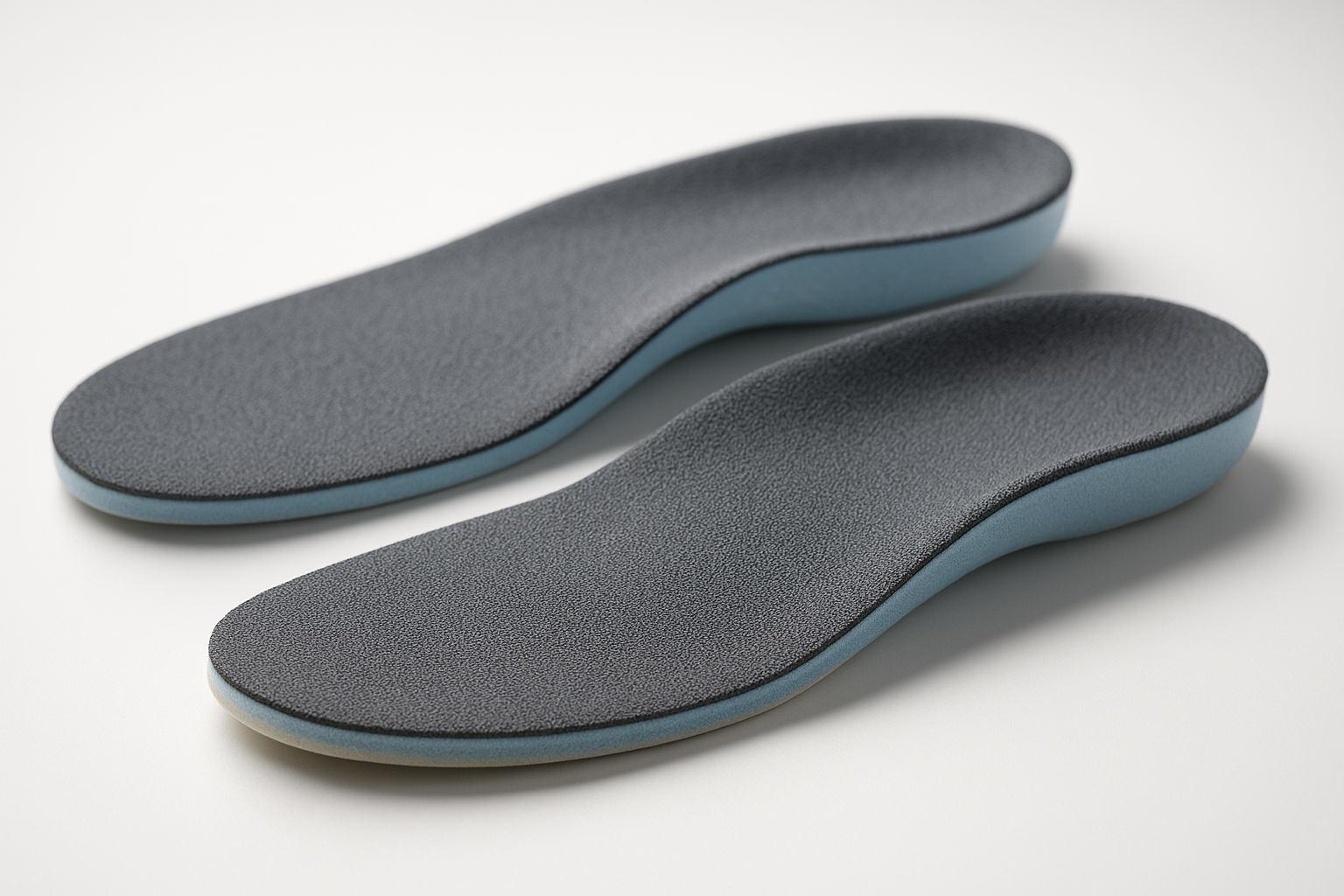
Custom diabetic orthotics feature layered medical-grade foam and antimicrobial covers designed to protect neuropathic feet.
Why Ordering Diabetic Orthotics Online Is a Smart Choice
Convenience is the obvious advantage — but it is far from the only one. The online diabetic orthotic market has matured substantially in recent years. Reputable providers now offer services and quality that rival or exceed many brick-and-mortar orthotics labs, with several distinct advantages:
- Access to dedicated specialists: Online providers focused exclusively on diabetic footwear often have more clinical expertise in this specific area than a general orthotics clinic that treats a wide range of patients.
- Faster turnaround: Many online labs operate dedicated diabetic orthotic production lines, reducing wait times to 7–14 business days — often faster than local clinics.
- Insurance billing support: Leading online providers have dedicated insurance departments that handle Medicare Part B claims and private insurer billing directly, minimizing your out-of-pocket expense.
- Transparent material selection: Online ordering often allows you to review and select your specific foam densities, top cover materials, and modifications before fabrication begins.
- Accessibility for mobility-limited patients: Patients with severe neuropathy, pain, or limited transportation can access clinical-quality care without leaving home.
For example, Custom Orthotics provides a fully guided online ordering process that includes a foam impression kit mailed to your home, licensed orthotist review of every impression, and medical-grade lab fabrication — making clinical-quality diabetic orthotics genuinely accessible from home.
Semi-Custom vs. Fully Custom Diabetic Orthotics: Which Do You Need?
The right level of customization depends on your individual risk profile. Here is a clear breakdown:
Patients with active neuropathy, previous foot ulcers, Charcot foot, hammertoes, or significant bony prominences should always choose fully custom devices. The difference is not merely comfort — it is clinical safety. A semi-custom orthotic fitted to an average foot profile will still leave high-pressure zones in a foot with structural deformity. Only a device fabricated from your exact foot geometry can reliably offload those zones.
Materials Used in Diabetic Orthotics: What the Science Says
Material selection is one of the most critical aspects of diabetic orthotic fabrication. The wrong material density can create new pressure points even as it cushions others. Understanding the core materials helps you evaluate any provider's quality claims.
Core Diabetic Orthotic Materials
- Plastazote foam (EVA-based, cross-linked polyethylene): The gold standard top layer for diabetic orthotics. Plastazote is heat-moldable, extremely soft, and self-conforming — it literally molds to bony prominences under body weight. Available in three densities (10, 22, 45 kg/m³), with the softest (10 kg/m³) reserved for the most vulnerable neuropathic feet.
- PPT (Polypropylene Thermoplastic): A shock-absorbing, energy-returning foam used in the mid-layer. PPT is durable and resistant to compression fatigue, meaning it maintains its cushioning properties over months of use rather than compressing flat.
- Poron (Polyurethane foam): High-resilience urethane that provides excellent impact absorption at the heel and metatarsal heads. Poron is often layered beneath Plastazote in high-activity patients.
- Carbon fiber or rigid polypropylene shell: Used in functional diabetic orthotics where biomechanical correction (arch support, rearfoot control) is required alongside cushioning. The rigid shell controls foot motion while the soft layers above it prevent pressure injury.
- Antimicrobial top covers: Fabrics impregnated with silver ions or other antimicrobial agents reduce bacterial colonization on the orthotic surface — critically important because neuropathic feet are highly vulnerable to infection from even minor skin breakdown.
- Leather or Cambrelle top covers: Breathable, moisture-wicking alternatives for patients in warmer climates or those prone to hyperhidrosis (excessive sweating), which also increases infection risk.
⚠ Clinical Note: A seam, ridge, or any surface irregularity inside the shoe — including a poorly trimmed orthotic edge — can function as a pressure point for a neuropathic patient who cannot feel it. Always confirm your orthotic provider trims and finishes edges smoothly, and that top covers are bonded flat with no wrinkles or bubbles.
How to Order Diabetic Orthotics Online: Complete Step-by-Step Guide
Following a structured process protects you from common ordering mistakes and ensures your orthotics are both safe and clinically effective. Each step below is essential — skipping any one of them increases your risk of receiving an orthotic that does not adequately protect your feet.
-
1 Get a podiatrist assessment and written prescription
Schedule a comprehensive diabetic foot exam with a podiatrist or your endocrinologist before placing any online order. The clinician will assess your current neuropathy level using monofilament testing, evaluate your vascular status, identify foot deformities, and write a prescription specifying orthotic type, materials, and any required modifications (e.g., metatarsal pads, heel cups, toe fillers). This prescription is also required to file a Medicare or insurance claim. Do not skip this step — an incorrect orthotic can create dangerous new pressure points rather than relieving them.
-
2 Select and vet a reputable online diabetic orthotic provider
Not all online orthotic companies are equal. Look for providers that employ licensed orthotists (CO or CPO designation) to review every order, fabricate in a certified orthotics lab rather than outsourcing manufacturing overseas, use genuine Plastazote and PPT materials (not generic foam), offer insurance billing assistance including Medicare Part B, and provide a documented adjustment or remake policy. Read patient reviews specifically mentioning diabetic orthotics — not just general custom insoles — and verify the company's Better Business Bureau or Google Business ratings.
-
3 Submit your foot measurements, impression, or 3D scan
Depending on the provider, you will use one of three methods: a foam impression kit (a box of moldable foam mailed to your home — you step into it and mail it back), a 3D scanning app (you use your smartphone camera to capture a point cloud of your foot, which uploads digitally to the lab), or a plaster or fiberglass cast completed at a local clinic and mailed to the fabrication lab. Follow instructions exactly: use bare feet, stand with full weight on the impression, and do not rush the process. The accuracy of your impression is the single biggest factor in how well your orthotic fits and functions.
-
4 Submit your prescription and confirm orthotic specifications
Upload or mail your physician's prescription alongside your foot impression. A licensed orthotist will review your prescription and impression together, then specify the exact construction: Plastazote density, PPT thickness, top cover material, arch fill, any metatarsal pads or offloading accommodations, and trim line (whether the orthotic is full-length, three-quarter length, or sulcus length). Some providers send you a specification sheet to review and approve before fabrication begins — always review this carefully and confirm it matches your prescription.
-
5 Break in your new diabetic orthotics gradually and monitor your feet
When your orthotics arrive, begin wearing them for no more than one to two hours on the first day. Increase by one to two hours each day over the following two weeks. After each wear session, remove your shoes and inspect your feet — front, back, and between toes — for any redness, blistering, or skin breakdown. Because neuropathy masks pain, visible skin changes are your only warning system. If you notice persistent redness (lasting more than 20 minutes after removing footwear), stop use and contact your orthotist immediately for an adjustment. Most providers offer free or low-cost adjustments within a defined break-in period.
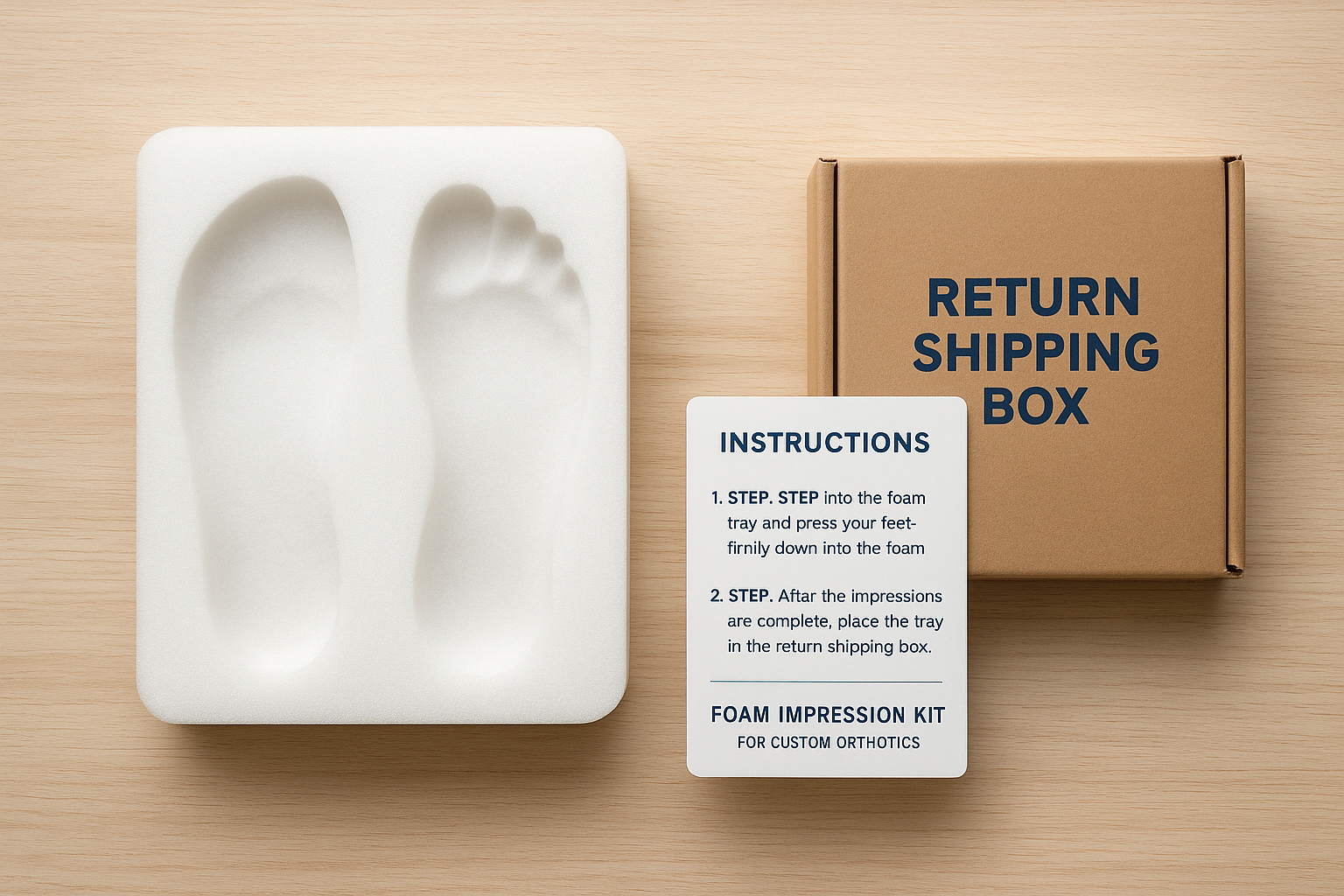
A foam impression kit allows you to capture your precise foot shape at home and mail it to the fabrication lab for custom orthotic production.
Essential Features to Look for in Diabetic Foot Orthotics
Knowing what to look for protects you from purchasing an ineffective or potentially harmful product. These are the non-negotiable features of a clinically appropriate diabetic orthotic.
- Multi-density foam construction for pressure redistribution: A single-density foam insole cannot adequately redistribute pressure. True diabetic orthotics use layered construction — typically a soft Plastazote or Poron top layer over a firmer PPT base — so the device conforms to the foot while still maintaining structural integrity underfoot.
- Antimicrobial top cover: Bacteria thrive in the warm, moist environment inside a shoe. An antimicrobial fabric layer (silver-impregnated or copper-infused) dramatically reduces bacterial load on the orthotic surface — a critical feature for diabetic patients whose immune response to foot infections is compromised.
- Completely smooth, seam-free surface: Any seam, adhesive ridge, or surface irregularity — however small — can function as a pressure point against a neuropathic foot. The surface that contacts your skin must be absolutely smooth.
- Extra-depth shoe compatibility: Diabetic orthotics are inherently thicker than standard insoles. If your shoes do not have removable insoles and sufficient depth to accommodate the additional volume, the orthotic will push your foot upward, reducing toe clearance and creating dorsal (top-of-foot) pressure — exactly what you are trying to avoid.
- Full plantar coverage or extended heel cup: Short orthotics that end at the metatarsal heads leave the heel exposed. A deep heel cup (at least 12–15 mm) cradles the heel fat pad and prevents it from spreading flat under load, which is a major cause of plantar heel pressure injuries in diabetics.
- Custom accommodations: For patients with specific risk areas — a healed ulcer site, a bony prominence, a previous amputation site — the orthotic should include carved-out accommodations (extrinsic additions of soft foam) directly over those sites. This is not possible with any off-the-shelf product.
- Licensed orthotist oversight: Every diabetic orthotic order should be reviewed and approved by a certified orthotist (CO) or certified pedorthist (C.Ped) before fabrication. Automated systems that use algorithms alone — without human clinical review — are not appropriate for high-risk diabetic patients.
Understanding Insurance Coverage for Diabetic Orthotics Online
Insurance coverage for diabetic orthotics is more accessible than many patients realize — but it requires navigating specific requirements. Here is a clear breakdown of what is available.
Medicare Part B: The Therapeutic Shoes for Persons with Diabetes Benefit
Medicare Part B covers therapeutic diabetic footwear and custom insoles under the Therapeutic Shoes for Persons with Diabetes benefit (HCPCS codes A5512 and A5513 for custom insoles). Qualifying beneficiaries are entitled to:
- One pair of extra-depth therapeutic shoes per calendar year
- Up to three pairs of custom-molded insoles per calendar year (or two pairs of custom-molded insoles if the shoes are themselves custom-molded)
- Medicare typically pays 80% of the approved amount after the Part B deductible; a Medigap supplement often covers the remaining 20%
To qualify for Medicare coverage, you must: (1) have diabetes and be enrolled in Medicare Part B, (2) have a physician certify that you have diabetes and at least one qualifying foot condition (neuropathy, history of pre-ulcerative calluses, poor circulation, foot deformity, previous ulceration, or previous amputation), and (3) have the orthotics fitted and/or prescribed by a qualified provider enrolled in Medicare.
Private Insurance and Medicaid Coverage
Most major private insurers follow similar coverage guidelines to Medicare for diabetic footwear, though specific benefits vary. Key steps for private insurance:
- Call your insurer before ordering and specifically ask about DME (Durable Medical Equipment) coverage for diabetic orthotics and therapeutic footwear
- Request the specific HCPCS billing codes your insurer accepts for diabetic insoles — provide these to your online orthotic provider
- Obtain a written prescription from your physician that includes your diagnosis code (ICD-10 E10.x or E11.x for diabetes), the clinical indication, and the specific items being ordered
- Confirm whether the online provider is enrolled as an in-network DME supplier with your insurer — this affects your cost-sharing significantly
Medicaid coverage for diabetic orthotics varies by state. Contact your state Medicaid office or a certified diabetic footwear provider to verify your specific benefits before ordering.
You can learn more about how custom foot orthotics are made to better understand what goes into a quality diabetic insert before you buy.

A comprehensive podiatric assessment is the essential first step before ordering diabetic orthotics online — and required for insurance qualification.
Diabetic Orthotics and Footwear: Getting the Combination Right
A diabetic orthotic is only as effective as the shoe it goes into. Placing a clinical-quality custom insole into an incompatible shoe completely undermines its protective function. Here is exactly what to look for in shoes designed to work with diabetic orthotics.
Shoe Features Required for Diabetic Orthotic Compatibility
- Extra depth (at least 3/8 inch more than standard shoes): Required to accommodate the additional volume of a therapeutic orthotic without crowding the toes or causing dorsal pressure.
- Removable factory insole: The existing insole must be removable to create space for your custom orthotic. Non-removable insoles are incompatible with any custom device.
- Wide and high toe box: The toe box must be wide enough to accommodate any toe deformities (hammertoes, bunions) without compressing them, and high enough that toes do not rub against the shoe upper.
- Seamless interior lining: Just as the orthotic must be smooth, the shoe interior should have minimal or heat-bonded seams to eliminate additional friction and pressure sources.
- Adjustable closure: Velcro or lace closures that allow precise fit adjustment throughout the day are essential, since feet often swell in the afternoon and evening.
- Rigid or rocker sole: Many therapeutic diabetic shoes use a rocker-bottom or semi-rigid sole that reduces forefoot pressure during toe-off — the phase of gait when metatarsal pressure peaks. This works synergistically with your orthotic to further offload the ball of the foot.
✓ Practical Tip: When sizing shoes to wear with diabetic orthotics, bring your orthotics to the shoe fitting appointment (or, if ordering online, place your orthotic into the shoe before wearing). You may need to order shoes a half-size longer or in a wider width to maintain proper toe clearance with the orthotic installed.
Common Mistakes When Ordering Diabetic Pressure Relief Insoles Online
Even well-informed buyers make ordering errors that undermine the clinical effectiveness of their orthotics — and in the context of diabetic foot care, an ineffective orthotic is not just a wasted purchase; it can be actively dangerous. Avoid these critical mistakes.
❌ Skipping the medical assessment
Ordering without a professional foot evaluation is the most dangerous mistake. Without knowing your neuropathy level, vascular status, and foot structure, you have no way to determine whether you need an over-the-counter product, a semi-custom, or a fully custom device — and an incorrect choice can create new pressure points rather than relieving existing ones. High-risk patients who order without assessment are gambling with their foot health.
❌ Selecting incompatible footwear
Placing a diabetic orthotic into a standard depth shoe with a non-removable insole physically eliminates the protective space the orthotic needs to function. The result: your foot sits higher, toes jam against the upper, and the shoe now applies the very pressure it was designed to prevent. Always confirm shoe compatibility before ordering orthotics.
❌ Ignoring the break-in period
Wearing new orthotics all day on the first day is a common and potentially harmful mistake. Even a well-fitted orthotic alters your foot's load distribution significantly. Muscles, tendons, and skin need time to adapt. Gradual introduction over two weeks is essential — and daily foot inspection is non-negotiable during this period.
❌ Ordering based on price alone
The cheapest diabetic insole online is rarely the most cost-effective choice when the alternative is a foot ulcer, hospitalization, or surgical intervention. A custom diabetic orthotic that prevents even one emergency wound care visit more than pays for itself. Prioritize clinical quality, licensed oversight, and appropriate materials over price.
❌ Failing to replace orthotics on schedule
Foam materials compress and lose their cushioning properties over time. A diabetic orthotic that felt soft and protective when new may be providing minimal pressure relief after 12–18 months of daily use — without any visible external sign of wear. Replace diabetic orthotics at least every 12 months, or immediately if you notice visible compression, surface breakdown, or new pressure symptoms.
Clinical Evidence: Do Diabetic Orthotics Actually Work?
The clinical evidence for therapeutic orthotics in diabetic foot care is substantial and consistent. Here is what the research shows:
- Plantar pressure reduction: Multiple peer-reviewed studies confirm that custom-molded diabetic insoles reduce peak plantar pressure by 30–50% compared to standard footwear alone — a clinically meaningful reduction given that pressure spikes above 700 kPa are consistently associated with ulcer formation.
- Ulcer prevention: A landmark 2004 randomized controlled trial published in Diabetes Care found that patients who received custom therapeutic footwear had a significantly lower recurrence rate of plantar ulcers compared to those who returned to their usual footwear.
- Amputation risk reduction: The American Diabetes Association's Standards of Medical Care in Diabetes explicitly recommends therapeutic footwear for high-risk patients as part of a comprehensive foot care program, citing evidence that integrated foot care — including appropriate orthotics — reduces amputation rates by 45–85%.
- Neuropathy pain management: Cushioning orthotics reduce mechanical stress on peripheral nerve endings in the feet. Multiple studies report reductions in reported pain scores for burning and tingling neuropathy symptoms with consistent orthotic use — though the primary mechanism is mechanical, not pharmacological.
Important context: Clinical evidence applies specifically to properly fitted, medically appropriate diabetic orthotics — not to generic cushioned insoles sold as "diabetic." The research outcomes cited above were achieved with custom-molded devices fabricated from appropriate materials and prescribed by clinicians. Generic products cannot be assumed to replicate these outcomes.
Frequently Asked Questions About Diabetic Orthotics Online
What are diabetic orthotics online and how do they differ from regular insoles?
Diabetic orthotics online are custom or semi-custom foot inserts engineered specifically to redistribute plantar pressure, protect neuropathic feet, and prevent ulcers. Unlike regular insoles — which simply add cushioning — diabetic orthotics are fabricated from medical-grade materials (Plastazote, PPT, Poron), designed to an individual's exact foot geometry, and produced under licensed orthotist oversight. They address the unique biomechanical risks of diabetes rather than providing generic comfort.
Are custom diabetic orthotics covered by insurance?
Yes. Medicare Part B covers up to three pairs of custom diabetic insoles per calendar year under the Therapeutic Shoes for Persons with Diabetes benefit, provided you have a qualifying diagnosis and physician's written order. Most major private insurers offer similar coverage under their DME (Durable Medical Equipment) benefit. Always verify your specific benefits and obtain the correct HCPCS billing codes from your provider before ordering.
How do I measure my feet for ordering diabetic orthotics online?
Most online diabetic orthotic providers use one of three methods: a foam impression kit mailed to your home (you step in with full body weight and return it), a smartphone-based 3D scanning app that captures your foot's geometry digitally, or a plaster/fiberglass cast completed at a local clinic. The foam impression method is the most common and produces highly accurate results when the instructions are followed precisely — bare feet, standing weight-bearing, no rushing.
How long does it take to receive custom diabetic insoles ordered online?
Standard turnaround is 7 to 14 business days from the date the lab receives your foot impression or scan. This includes orthotist review, fabrication, quality check, and shipping. Some providers offer expedited 5–7 business day processing for an additional fee. Factor in 2–4 business days for your impression kit to arrive after ordering, plus return shipping time.
Can diabetic orthotics help prevent foot ulcers?
Yes — and the evidence is strong. Research shows custom-molded diabetic orthotics reduce peak plantar pressure by 30–50%, directly addressing the primary mechanical cause of diabetic foot ulcers. A randomized controlled trial published in Diabetes Care found significantly lower ulcer recurrence rates among patients using custom therapeutic footwear. The American Diabetes Association explicitly recommends therapeutic orthotics for high-risk patients as part of its clinical standards.
What materials are used in diabetic orthotic insoles?
Medical-grade diabetic orthotics typically use Plastazote foam (a soft, heat-moldable polyethylene foam available in three densities), PPT cushioning (a durable shock-absorbing polyurethane), and Poron foam for high-impact zones. The structural layer may be carbon fiber or rigid polypropylene when biomechanical correction is needed. All are topped with an antimicrobial fabric cover. The specific combination depends on the patient's risk level, foot type, and the orthotist's prescription.
Is it safe to buy diabetic orthotics online without seeing a podiatrist?
For very low-risk individuals — those with well-controlled diabetes, no neuropathy, and no foot deformities — over-the-counter or semi-custom diabetic insoles can be purchased safely online. However, anyone with peripheral neuropathy, previous foot ulcers, Charcot foot, significant toe deformities, or previous partial amputation must consult a podiatrist before ordering. For these patients, an incorrect orthotic can be worse than no orthotic at all.
How often should diabetic orthotics be replaced?
Replace diabetic orthotics every 12 months at minimum, or sooner if you notice visible compression of the foam layers, surface breakdown, or return of pressure symptoms. Foam materials lose their mechanical properties long before they look visually worn. Medicare allows one pair of custom insoles per calendar year; most private insurers follow similar annual replacement guidelines. Do not rely on appearance alone — schedule replacement proactively.
What is the difference between semi-custom and fully custom diabetic orthotics?
Semi-custom orthotics are prefabricated in a range of sizes and heat-molded to provide a closer fit. They offer meaningful pressure relief and cost $100–$250, but cannot accommodate individual bony prominences, deformities, or specific offloading needs. Fully custom orthotics are fabricated from a cast or 3D scan of your specific foot and provide the highest possible level of pressure redistribution and biomechanical correction — essential for high-risk patients. They cost $300–$600 before insurance.
Do diabetic orthotics help with neuropathy pain?
Yes — though through a mechanical rather than pharmacological mechanism. Cushioned diabetic orthotics reduce the impact forces and pressure concentrations that irritate peripheral nerve endings in the feet. Many patients with peripheral neuropathy report significant reductions in burning, tingling, and aching sensations with consistent orthotic use. Orthotics do not repair the underlying nerve damage, but they substantially reduce the mechanical stressors that worsen neuropathic symptoms day-to-day.
What shoes work best with diabetic orthotics?
Extra-depth shoes with a wide toe box, removable factory insoles, adjustable closures (lace or Velcro), seamless interior lining, and a rocker or semi-rigid sole are ideal. Look for shoes certified under the PDAC (Pricing, Data Analysis and Coding) as therapeutic footwear (A5500 diabetic shoes) if using Medicare — these meet defined depth and construction standards. When sizing, add a half-size or full size in length to maintain adequate toe clearance with your orthotic installed.
How much do diabetic orthotics cost online?
Over-the-counter diabetic insoles cost $30–$80 and require no prescription. Semi-custom options range from $100–$250. Fully custom diabetic orthotics cost $300–$600 before insurance. With Medicare Part B coverage, your out-of-pocket cost for custom insoles is typically 20% of the approved amount after your deductible — often under $80 per pair. Private insurance coverage varies but can reduce costs comparably. Always verify coverage before ordering.
Conclusion: Your Next Step Toward Safer Diabetic Foot Care
Ordering diabetic orthotics online is one of the most clinically meaningful, accessible, and cost-effective interventions available for protecting diabetic feet. The evidence is clear: properly fitted, custom-molded diabetic insoles reduce peak plantar pressure by up to 50%, dramatically lower ulcer recurrence rates, and are a core component of every evidence-based diabetic foot care protocol.
The key principles are: always start with a comprehensive podiatric assessment and a written prescription; choose a provider staffed by licensed orthotists using genuine medical-grade materials; understand your insurance benefits before ordering; ensure your shoes are compatible with a therapeutic orthotic; and introduce your new orthotics gradually with daily foot inspection throughout the break-in period.
Providers like Custom Orthotics have made the entire process clinically sound and genuinely straightforward — with guided impression kits, licensed orthotist review, and insurance support built into every order. Proactive diabetic foot care starts with the right foundation. The right orthotic, properly fitted and consistently worn, can make a measurable difference not only in your daily comfort but in your long-term outcomes with diabetes.